
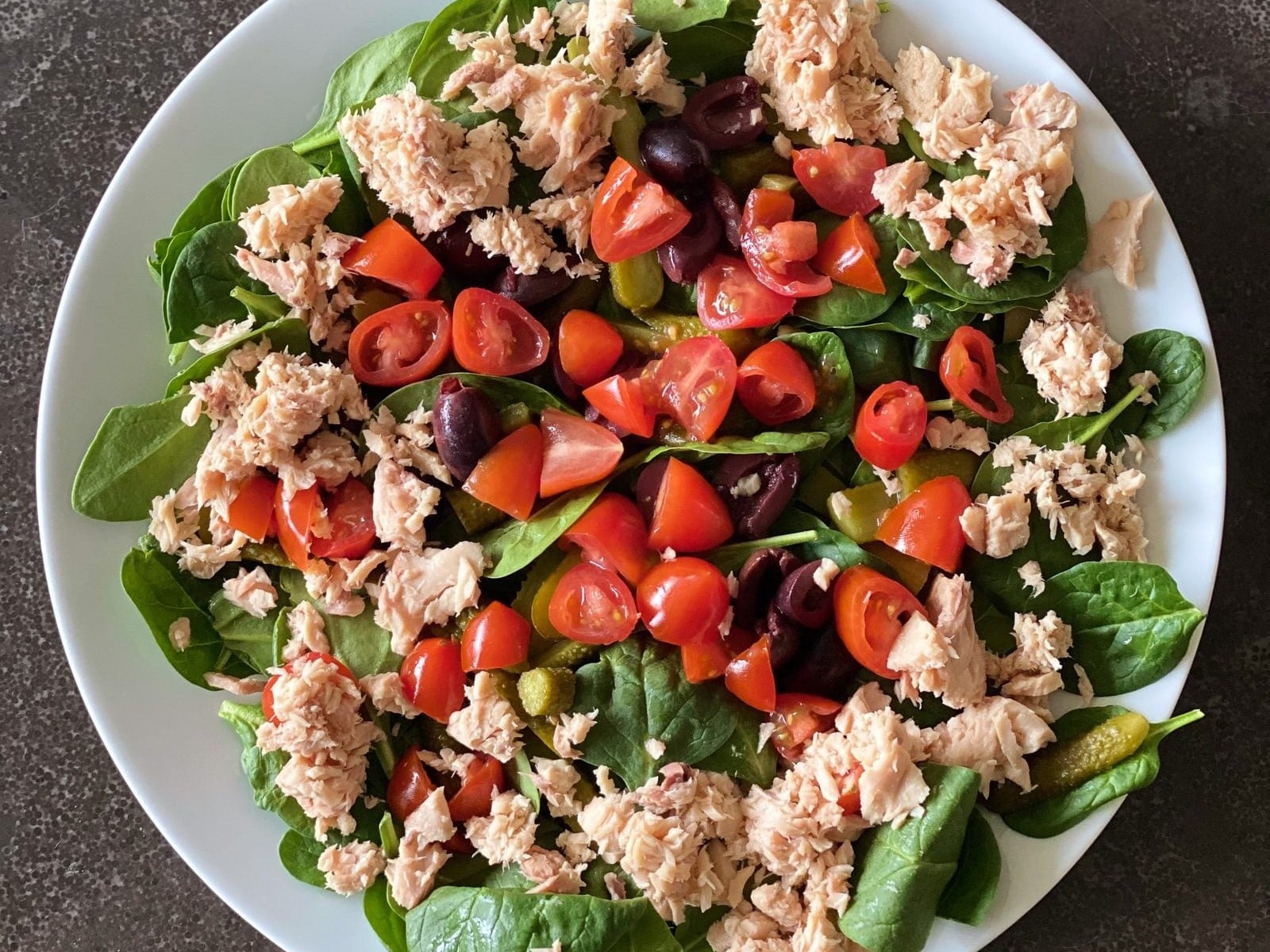
I enjoy a good salad, but I don’t want to eat one that will have me looking for a snack 47 minutes after finishing it. The trick is protein. Not protein that is something like “salad-with-chicken-on-top,” but rather intentional quantities of 30 grams or more per bowl, built to the structure so the salad doesn’t come off like a starter course. A well-balanced lunch should keep you satisfied right up until dinner. If done poorly, it’s just an appetizer with some lettuce.
Here are some of the rules that I have gained experience with throughout the years. Calculate the grams before writing. If one isn’t enough, stack two smaller proteins. There is a lack of interchangeability within the ‘greens’ category; some will hold up for three days dressed and others will start wilting within two hours. The dressing will determine whether a make-ahead salad succumbs or survives. Below are 35 salads I rotate through (with notes for the chicken-heavy and canned fish saviors and the plant protein bowls). Everyone has an assembly or protein cue assigned a real number, so you aren’t guessing, and a swap if you lack the headline ingredient.
Contents
- 1) Chicken Caesar Salad
- 2) Tuna Niçoise Salad
- 3) Turkey Cobb Salad
- 4) Steak Salad
- 5) Salmon Salad
- 6) Shrimp Avocado Salad
- 7) Greek Chicken Salad
- 8) Lentil Vegetable Salad
- 9) Chickpea Tuna Salad
- 10) Edamame Cabbage Salad
- 11) Egg Avocado Salad
- 12) Cottage Cheese Tomato Salad
- 13) Southwest Quinoa Salad
- 14) Buffalo Chicken Salad
- 15) Pesto Chicken Salad
- 16) Cucumber Salad
- 17) Tempeh BLT Salad
- 18) Turkey Taco Salad
- 19) Sardine Salad
- 20) Roast Beef Salad
- 21) Chicken Shawarma Salad
- 22) Broccoli Crunch Salad
- 23) Chicken Farro Salad
- 24) Soba Noodle Salad
- 25) Egg Salad Over Greens
- 26) Green Goddess Chicken Salad
- 27) Halloumi Chickpea Salad
- 28) Rotisserie Chicken Salad
- 29) Mediterranean Tuna Salad
- 30) Beef Taco Salad
- 31) Crab Avocado Salad
- 32) Chicken Mango Salad
- 33) Warm Chicken Salad
- 34) Chicken Asparagus Salad
- 35) Protein-Packed Fridge Salad
1) Chicken Caesar Salad
Why this earns lunch: when it comes to the salad and the name it stands out as something I don’t enjoy. The chicken does the counting and the dressing does the lifting.
Add chopped romaine, real anchovies, garlic Caesar dressing (not bottled), shaved parmesan, and some croutons. Top with sliced grilled chicken breast (6 oz, about 38g protein) and a crack of pepper. Add all the ingredients to the mason jar the night before and shake well to combine. To keep the croutons crunchy, assemble your salad no more than 15 minutes before eating. If you’re getting the salad to go, put the croutons in a different container.
Swap: If you don’t want to grill, use rotisserie chicken. For a leaf that’s more friendly to the lunch box, consider a kale Caesar (just don’t forget to massage the kale first with a pinch of salt). Avoid bottled Caesar dressings since they usually have a high sugar content and are generally less flavorful than other options.
2) Tuna Niçoise Salad
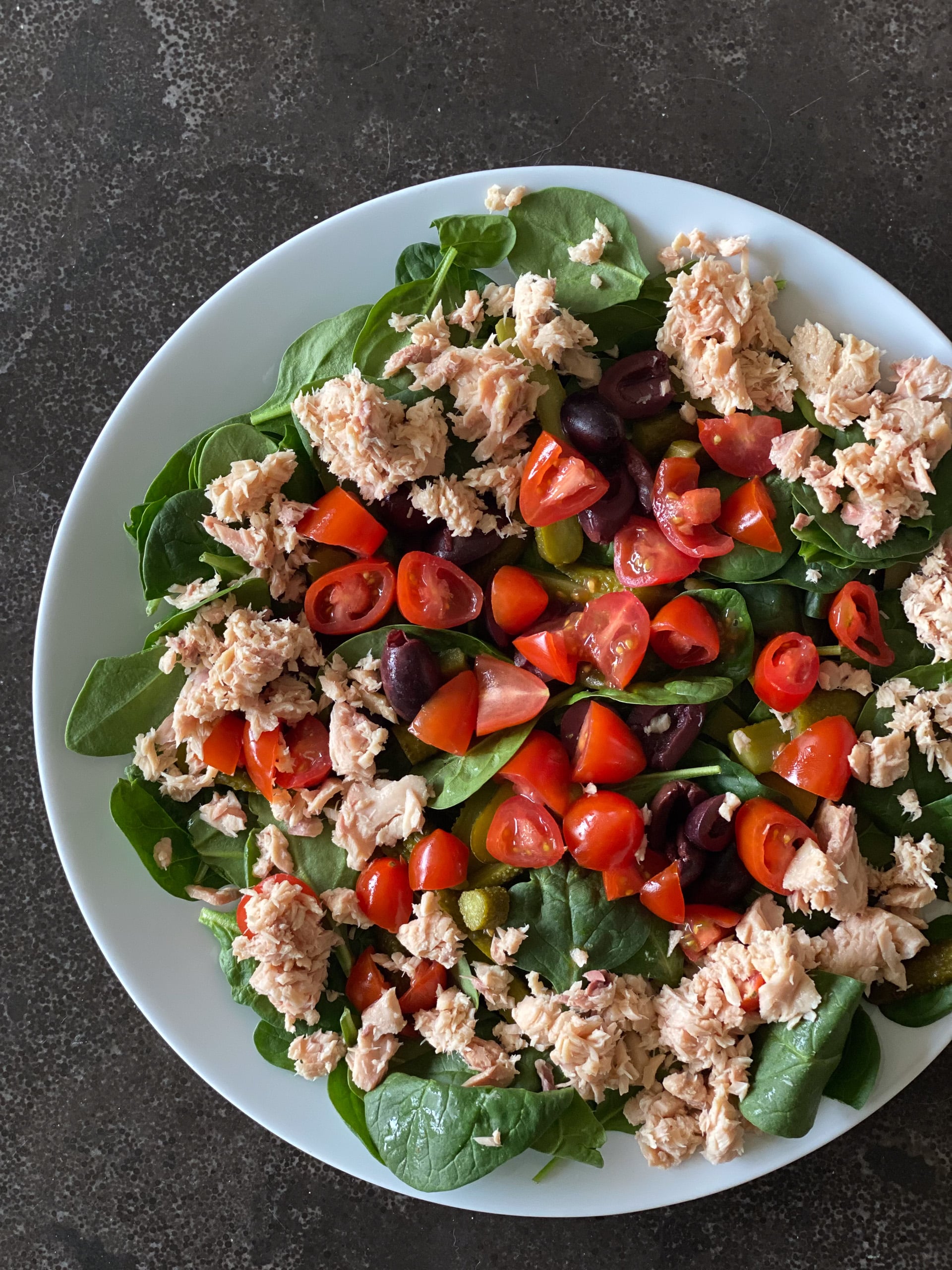
Why this earns lunch: This is the salad I make when I want to pretend I have my life together, even though I’m really just opening cans.
Layer seared or oil-packed tuna over butter lettuce and add halved soft-boiled (8-minute) eggs, baby potatoes, blanched green beans, niçoise olives, cherry tomatoes, and capers. Drizzle some of the sharp shallot-Dijon vinaigrette on top. One bowl contains over 35 grams of protein when you combine tuna and eggs. Organize what goes into the plate; a muddled niçoise is a niçoise without dignity.\n\nSwap: For a more interesting option, consider using canned salmon (which is oilier and richer) or hot-smoked trout. As a vegetarian option, use cooked chickpeas. The dressing doesn’t have watery tuna to mix with.
3) Turkey Cobb Salad
Why this earns lunch: Cobb salads seem complicated, but they are actually ”use what you have in your fridge and organize it into rows”.
Create layers of chopped romaine, sliced roast turkey, hard-boiled eggs, crumbled bacon, blue cheese, avocado, cherry tomatoes, and red onion. Dressing with red wine Dijon vinaigrette. Combining turkey, eggs, bacon, and cheese should give you about 35-40g of protein. Lay the salad out in stripes for a photo before tossing; Toss it at the table.
*Swap: Turkey can be replaced with grilled chicken, or rotisserie chicken.* Use feta or goat cheese instead if you do not like blue cheese. Avoid the bacon bits. They taste like cardboard.
4) Steak Salad
Why this earns lunch: i made steak for dinner and have 4 oz left over, this is the salad i crave. There is nothing else quite like eating cold leftover steak.
Cut leftover steak into thin slices against the grain. Make sure to slice 4oz of steak. Combine arugula, red onion, blue cheese, cherry tomatoes, and balsamic-Dijon vinaigrette. Top with flaky salt. For the best slicing, cold steak should be sliced at refrigerator temperature. However, it is optimal to let the steak rest for about 10 minutes at room temperature before serving. Serve with a thick slice of crusty bread to soak up the juices.
For a similar effect, attempt carne asada, skirt steak, or sliced flank. An even heartier option would be Roasted sweet potato cubes. Never order a well done steak, it’s going to end up cold and chalky.
5) Salmon Salad
Why this earns lunch: Instead of something I just endure, baked salmon makes lunch more enjoyable.
Flake 4 to 6 ounces of baked salmon into a salad of mixed greens, sliced cucumbers, avocado, radishes, and a yogurt dill sauce. Top it off with some everything-bagel seasoning and add a little lemon juice. Each serving of salmon has over 30g of protein and includes omega-3 fatty acids. If you have salmon from previous dinner, you can use that instead. Otherwise, having salmon cooked to order is a bit excessive for lunch. *Swap: Substitute salmon with hot-smoked trout (no cooking required, has a smokier flavor) or with canned salmon (drained and slightly mashed). Avoid overcooking this salmon. It will dry out as it sits.
6) Shrimp Avocado Salad
Why this earns lunch: My lunch is starting to get a bit beach-adjacent even if that’s because I’m eating it at a cubicle.
Combine cubed avocado, halved cherry tomatoes, red onion, chopped cilantro, and lime-cumin dressing with cooked shrimp (6 oz, about 35g of protein). You can serve this in a bowl with some brown rice, or on butter lettuce. Shrimp should be fully cooled and dry; wet shrimp will cause the dressing to become diluted. To prevent browning of the avocado, please assemble within one hour of eating.
Chicken or canned crab can be swapped for shrimp. For a Southwest variation, add some charred corn. Avoid using the pre-cooked frozen shrimp from the bag; they have to be thawed and dried first.
7) Greek Chicken Salad
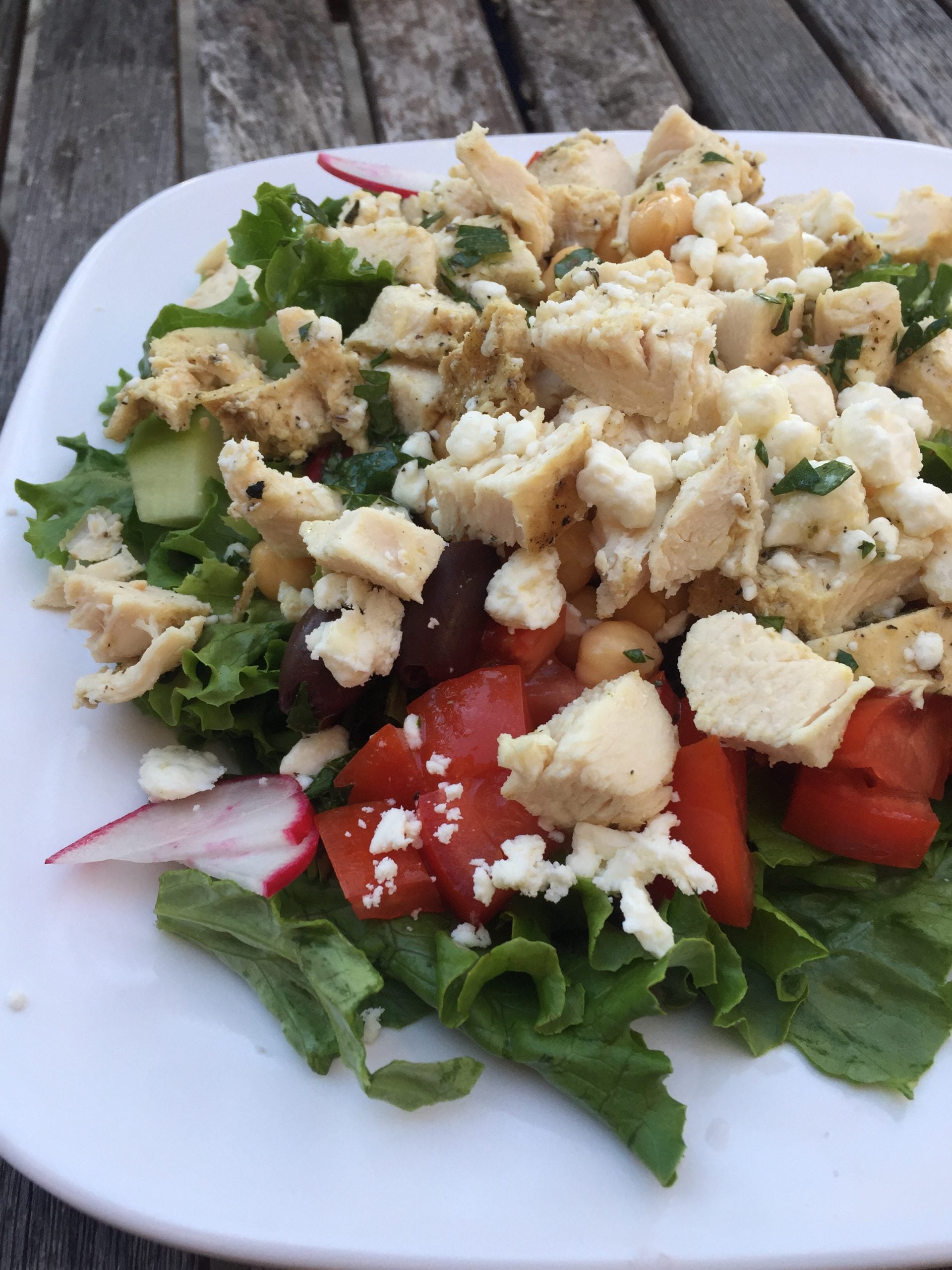
Why this earns lunch:I make this when I want a lot of flavor and don’t want to deal with a lot of ingredients. Most of the flavor comes from the feta and olives.
For the chicken, marinate cubed chicken breast in olive oil, lemon, oregano, and garlic for 30 minutes, after that, sear in a hot pan for 3 to 4 minutes on each side until it reaches an internal temperature of 165°F. Cool slightly. Combine chopped romaine with cucumber, cherry tomatoes, red onion, kalamata olives, and crumbled feta. Condimento con vinaigrette al limone e origano Every bowl contains more than 35g of protein.
Swap: Replace chicken with grilled lamb or canned chickpeas. For additional sharpness, add some pickled pepperoncini. Avoid pre-crumbled feta cheese. Brine-packed cubes have real flavor.
8) Lentil Vegetable Salad
Why this earns lunch: This is the salad I make to include my plant protein that is fridge stable for 3 days. It only gets better.
Mix with cooked French green lentils (about 1 cup, 18g protein), diced cucumber, bell pepper, cherry tomatoes, red onion, parsley, and feta. Dressing with a spicy mustard vinaigrette. Lentils should be firm; simmer for 18 to 22 minutes, then drain immediately. For added crunch, top with a tablespoon of pumpkin seeds for an extra 3g of protein.
If lentils frighten you, chickpeas or black beans can be used instead. To get over 30g of protein, add 4 oz of canned tuna or a hard boiled egg. Avoid red lentils, as they become mushy and will not be suitable for a salad.
 Nathaniel’s Pantry Notes: The 30-Gram Question (Protein Math for Salads)

I recounted, and 24 of these 35 salads hit the 30g protein mark with one serving of one of the main proteins: 5 to 6 oz of cooked chicken, one tin of oil-packed tuna or sardines, or 6 oz of shrimp. The other eleven stack two smaller proteins to reach that point. Looking at the numbers ends the guessing about whether the salad will keep you full until dinner.
I usually try to get close to 30 grams for lunch. This is the level where I don’t have the urge to grab a granola bar at 3 p.m., and where a salad actually gets to be considered a meal instead of an appetizer. The key is not to purchase costlier proteins but to keep adding to what you already have until the amounts reach a total.
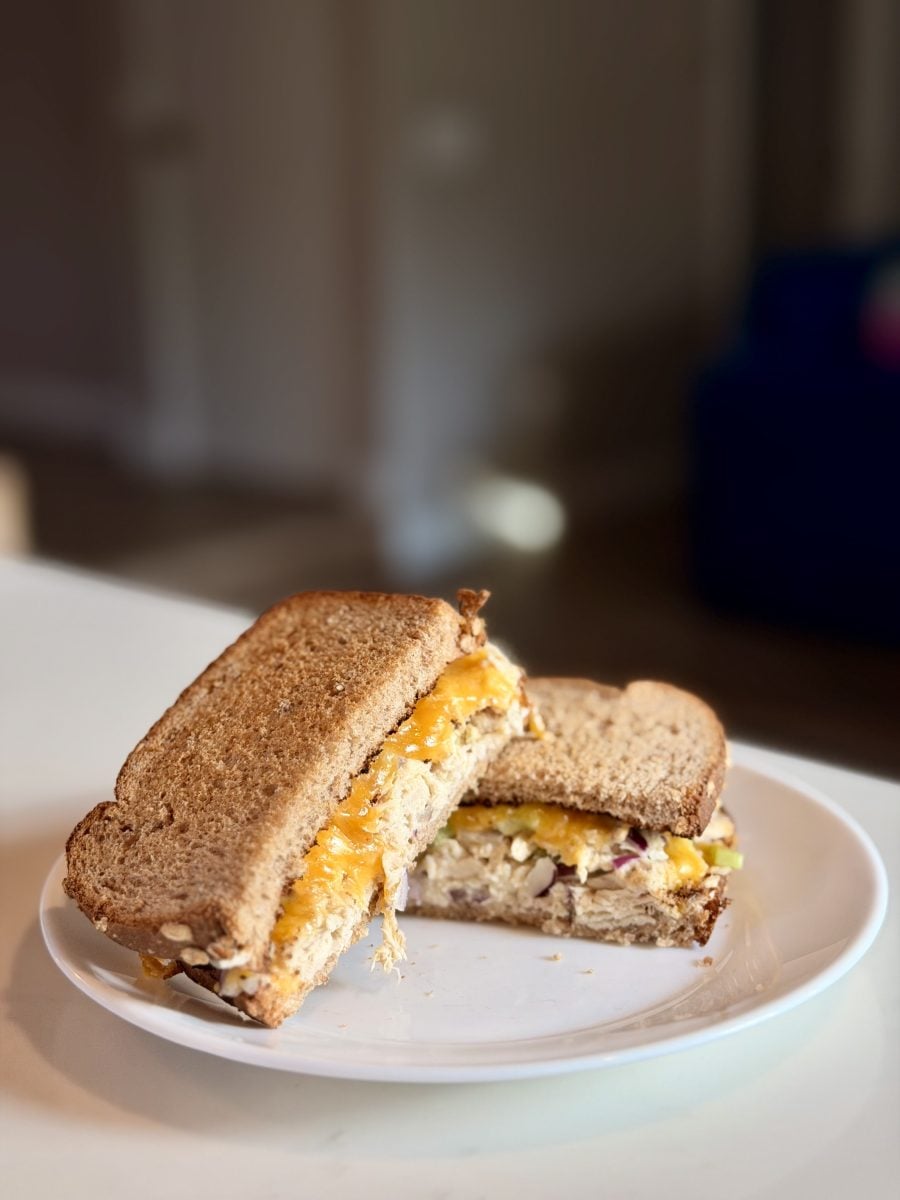
• The single-source 30 club. 5 to 6 oz of cooked chicken (35g), a tin of oil-packed tuna (28g + an egg gets you there), 6 oz of cooked shrimp (35g), 4 oz of cooked salmon (28g + cheese to finish), 1 cup of full-fat cottage cheese (25g + a soft egg).
• The two-source stack. Lentils + feta + nuts. Chickpeas + tuna. Cottage cheese + smoked salmon. Halloumi + chickpeas. Egg + edamame + tofu. Two smaller proteins almost always beat one big one for variety and crunch.
• The pantry shelf. Canned tuna, sardines, salmon, chickpeas, lentils. Each pulls 15 to 28g out of a 5-minute lunch. Sardines especially are absurdly under-bought for $3 a tin.
• The fridge anchors. Rotisserie chicken, hard-boiled eggs, cooked grain (farro/quinoa), pre-cooked shrimp. A rotisserie chicken plus a half-dozen boiled eggs covers four lunches without thinking.
• The cheese cheat. Hard cheeses like parmesan and pecorino are 10g protein per ounce. A heavy hand on shaved parm pulls a salad from 24g to 34g without anyone noticing. Feta and cottage cheese do the same in a different lane.
The list doesn’t include those small bacon bits that are labeled “protein” Although bacon does provide some crunch and flavor, its protein content is measly at only 6 grams per slice, meaning it is more of a condiment than an actual ingredient. The same thing goes for sliced almonds. Individually, neither of these changes moves a 12g salad to 30g, but together they do add to the math. First, lay the foundation, and then furnish it.
9) Chickpea Tuna Salad
Why this earns lunch: It is a 5 minute effort to combine two pantry proteins in one bowl and it is a great reward.
Open and drain a can of chickpeas and a can of tuna. Using a fork, gently mash the chickpeas. Mix with chopped celery, red onion, parsley, lemon juice, olive oil, salt, and pepper. You can enjoy this with crackers, in a wrap, or on top of some salad. Combined protein hits 32g+. What makes this salad delightful is the acid. Si cela semble plat, ajoutez un peu plus de citron.
\
\
\
\
\
\
\
\
\
\
\
\
\
\
Replace tuna with canned salmon or sardines. Add capers and chopped dill for a Mediterranean flavor. Water-packed tuna has no flavor and shouldn’t be bought. Buy oil-packed.
10) Edamame Cabbage Salad
Why this earns lunch: This one tends to show up when I want to crunch, want color, and want to maintain the texture throughout the entire week.
Combine shelled edamame (17g of protein) with shredded napa cabbage, grated carrot, chopped scallion, cilantro, and sesame-ginger dressing. Top with some chopped peanuts and a sprinkle of sesame seeds. When dressed, cabbage will soften nicely in the dressing and will last 3 days in the fridge. Adding cooked chicken or tofu will increase your protein content to over 30g.
You may exchange the edamame for snap peas if you would like another crunchy option. Swap peanuts for cashews. Consider using napa cabbage instead of the regular green cabbage as, napa cabbage is more delicate and smaller making it easier to fit into lunch boxes.
11) Egg Avocado Salad
What gets to go to lunch? It’s the salad that the grocery store run motivates. I eat eggs and an avocado every day.
Combine 3 chopped hard-boiled eggs (18g protein) with 1/2 an avocado. Squeeze lime juice over it and season with salt, pepper, and chopped chives. Spread over toast or place on top of the arugula. Use 9-minute eggs for a set yolk with no gray ring. For extra depth, feel free to try a bit of smoked paprika or some hot sauce. It has 22g protein on its own; for added staying power, combine with a slice of seedy bread.
Swap: To make your lunch more filling and add some extra protein, consider including canned tuna or smoked salmon. If you prefer something with more tang, use Greek yogurt instead of avocado. Avoid buying packs of pre-mashed avocado as they quickly turn gray.
12) Cottage Cheese Tomato Salad
Why this earns lunch: I may be late for the cottage cheese hype train, but it had its moment. It’s now one of my quickest desk lunches.
Spoon one cup of full-fat cottage cheese (25g protein) into a bowl. Add halved cherry tomatoes, sliced cucumber, fresh basil or dill, a pinch of salt and pepper, and a drizzle of olive oil. To add more crunch, use everything-bagel seasoning. For a more creamy consistency, go for small-curd cottage cheese. A larger curd will be more textured.
Substituting a soft-boiled egg or smoked salmon adds another 10-15g of protein. In the summer, use slices of peach and some basil. Avoid low-fat cottage cheese; it tastes thin and watery.
13) Southwest Quinoa Salad
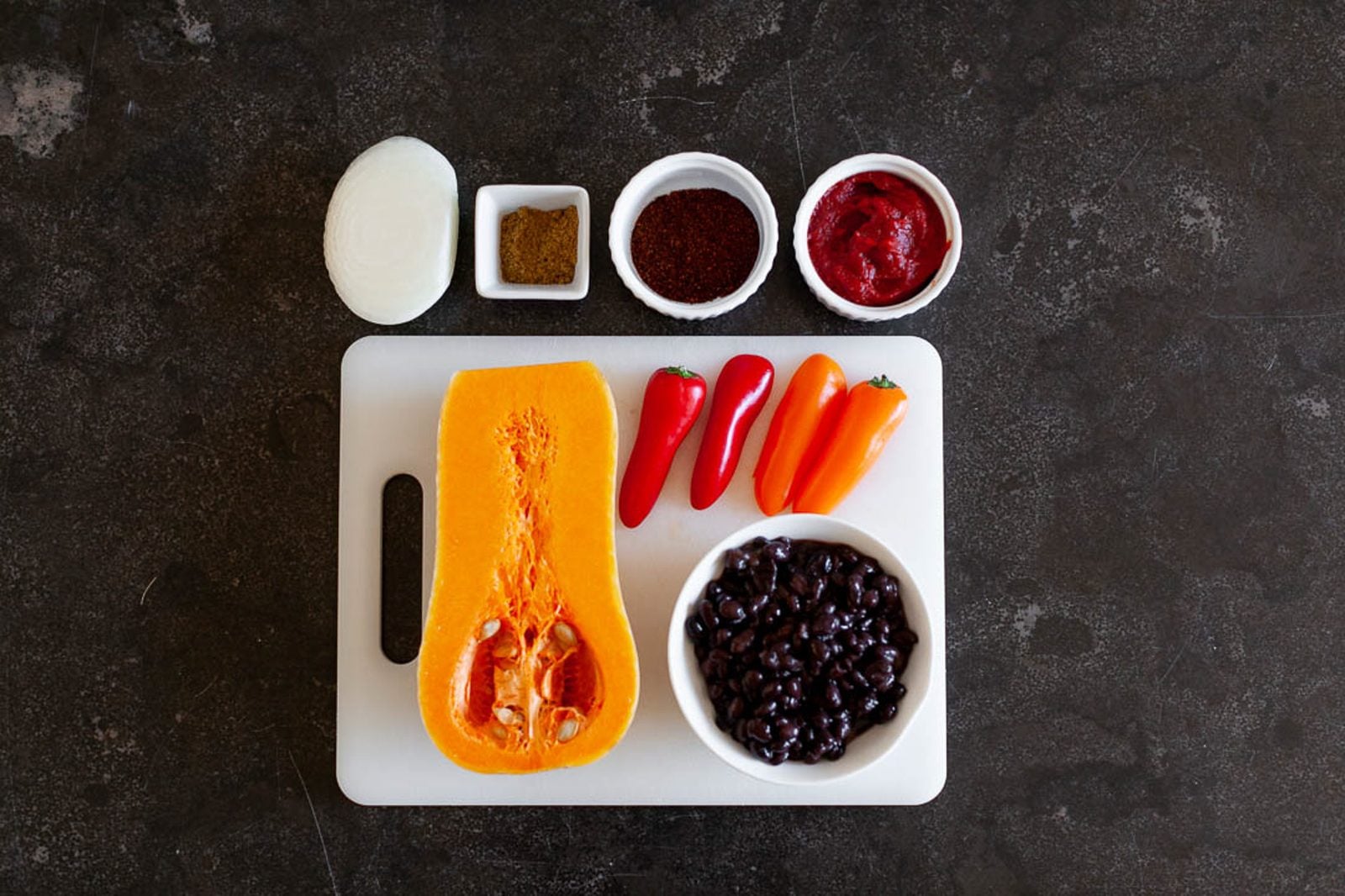
Why this earns lunch: This is also the salad I bring to potlucks when I need something that travels well and feeds the vegans without asking questions.
Combine cooked quinoa (1 cup), black beans, charred corn, diced bell peppers, red onion, cilantro, and a dressing made of lime and cumin. Top with crumbled cotija cheese and diced avocado. Adding grilled chicken or shrimp increases protein content to over 30g. Beans and quinoa together have between 18 and 22g of protein. Avocado will mush if you mix it before quinoa cools.
Swap: For farro or brown rice, use quinoa instead. For some extra heat, you can add jalapenos, or for a sweet contrast you could add diced mango. I would advise against purchasing pre-cooked quinoa cups due to their preservative additives, chewy consistency, and lack of taste.
14) Buffalo Chicken Salad
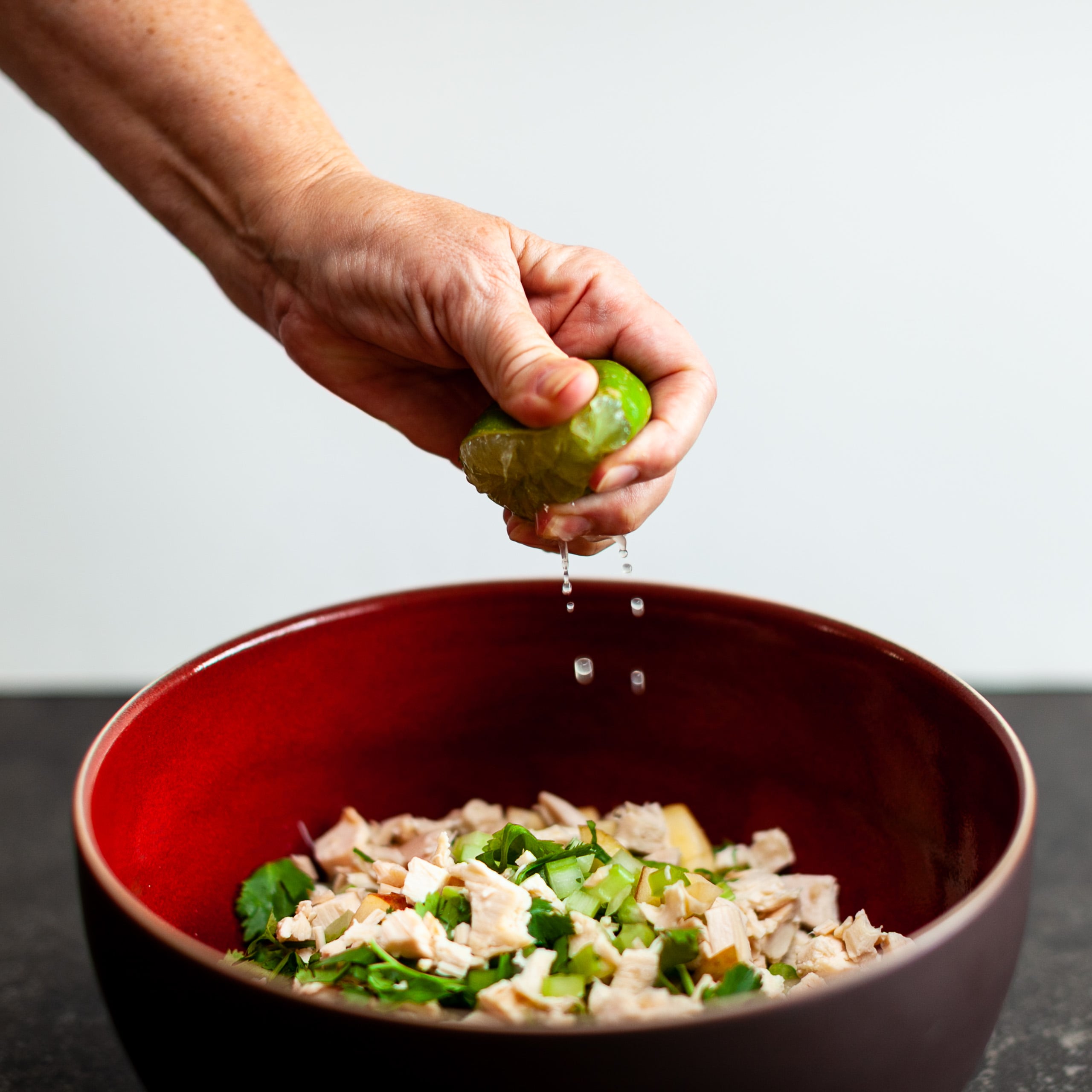
Why this earns lunch: Wings are messy and you get a ton of napkins. The blue cheese dressing balances the spicy heat.
The shredded rotisserie chicken (5oz, 35g protein) is to be coated completely with the Buffalo sauce and then mixed. Chopped romaine with diced celery, shredded carrots, cherry tomatoes (halved), and crumbled blue cheese. Drizzle on blue cheese dressing or ranch. For the authentic Buffalo glow, combine melted butter and Frank’s RedHot.
Swap: Replace with air fried chicken tenders (15 mins at 400°F) for rotisserie. You could always switch to ranch dressing if you don’t like blue cheese. Avoid using pre-packaged Buffalo seasoning mixes. Their taste is much more one dimensional than real hot sauces.
15) Pesto Chicken Salad
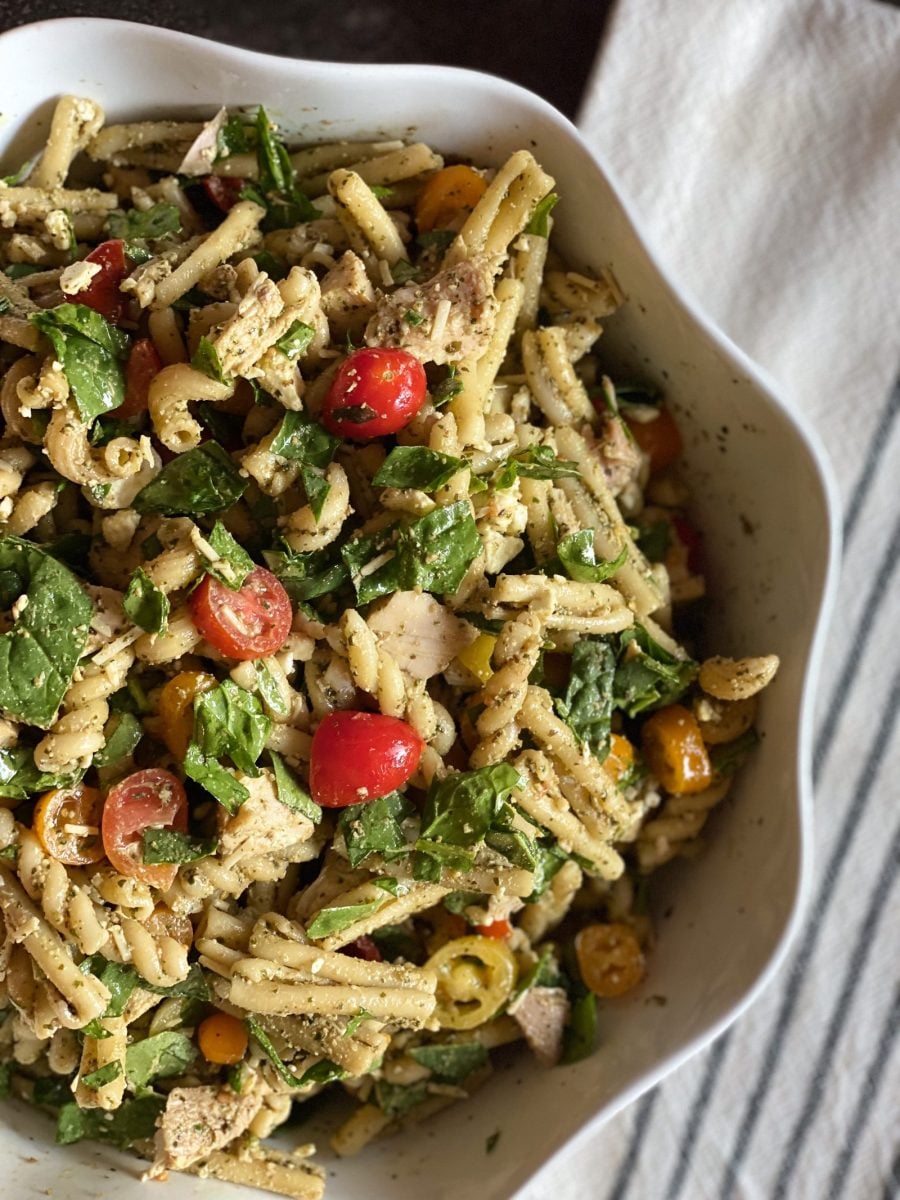
Why this earns lunch: Meal enhancement is made easy with basil pesto. One tablespoon keeps a salad from becoming lunch math.
Combine 5 oz of cooked, cubed chicken breast (35g protein) with a tablespoon of basil pesto. Finish your stack with some fresh mozzarella pearls, cherry tomatoes cut in half, toasted pine nuts, and arugula. Finish with flaky salt and a drizzle of balsamic glaze. Since cold meat loses its flavor, chicken should be kept at room temperature instead of being refrigerated. *Note: If you’d prefer to skip the prep step of shredding the chicken, you can use a rotisserie chicken. Substitute the pine nuts with either toasted walnuts or sliced almonds. Avoid the green tube pesto at the grocery store; the olive oil is usually rancid.
16) Cucumber Salad
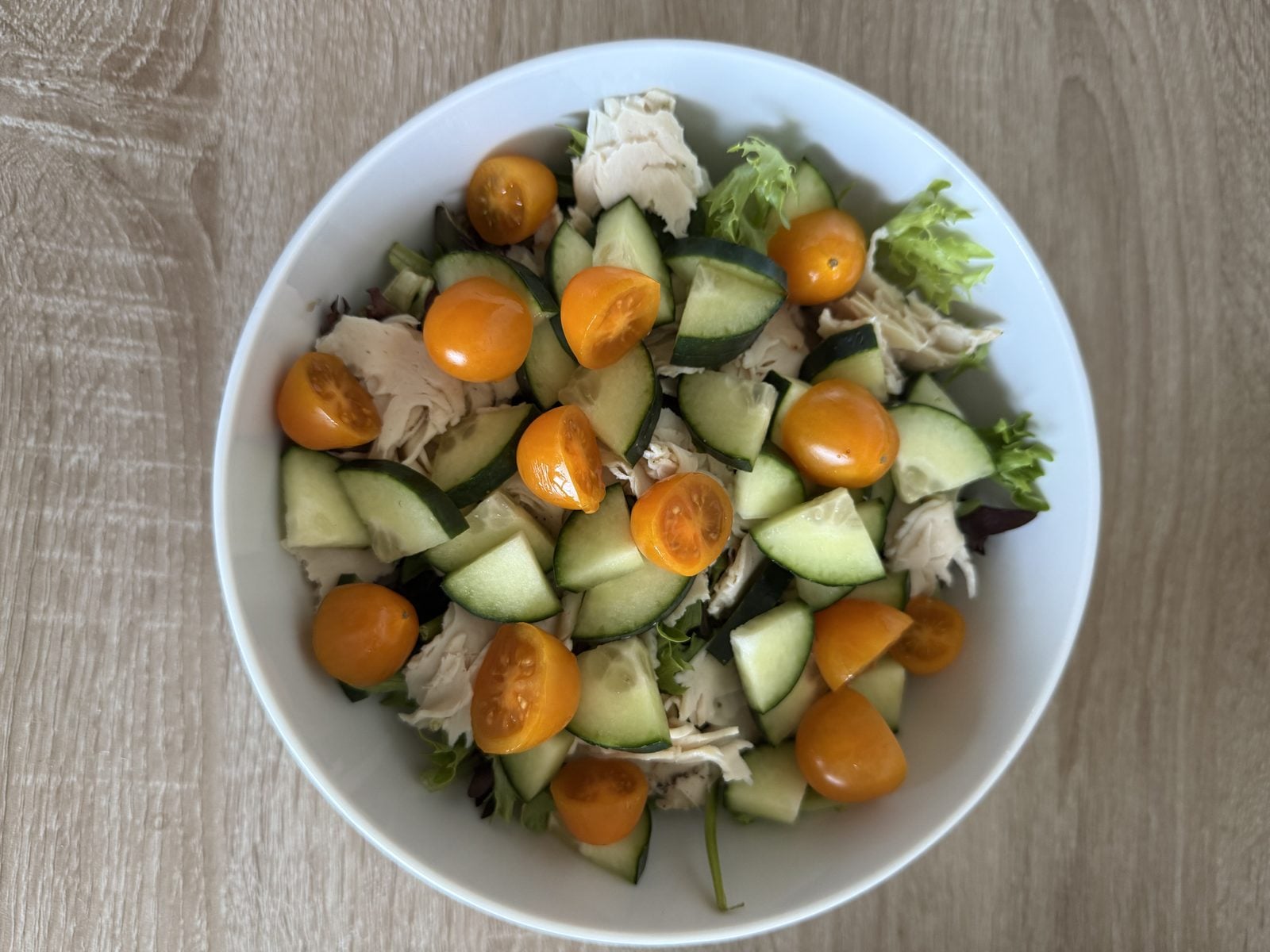
Why this earns lunch: This is my hot-day lunch, the one that feels refreshing like air conditioning, as well as feta.
Cut 2 English cucumbers into thin slices. After 15 minutes, drain the salt, then squeeze. Mix sliced red onion, cherry tomatoes cut in half, feta cheese, kalamata olives, and a lemon-oregano dressing, and then toss. To make it a full meal, consider adding chickpeas (15g protein) or grilled chicken. Be sure to drain the cucumbers well, or you will have a soup situation.
Swap: For protein, use cooked shrimp or hard boiled eggs. Replace oregano with mint for a Vietnamese twist. Be certain to complete the salt-and-drain step; moisture from the cucumbers will make the rest of the ingredients soggy.
17) Tempeh BLT Salad
Why this earns lunch: Tempeh is the plant-based protein that earns the bacon imitation. It soaks up flavors, has a good chew, and gets really crisp in the pan.
In a bowl, combine liquid smoke (just a bit), smoked paprika, maple syrup, and soy sauce. Laissez reposer pendant environ 20 minutes. Sear for 3-4 minutes on each side in olive oil and over medium-high heat until browned and crispy. Mix cherry tomatoes cut in half, romaine, and avocado with creamy ranch or mustard dressing, and toss to combine. Tempeh contains 22 grams of protein in each serving.
\emph{Note: If you don’t have tempeh, feel free to use bacon as a substitute. The salad will taste good regardless of what you choose. Rather than dressing, try a pepper sauce. Don’t eat raw tempeh. It tastes like fermentation and bitterness.
Nathaniel’s Pantry Notes: The Sturdy Green Rule (Which Leaves Survive Lunch)

I learned this the hard way. The kale salad I dressed on Monday morning was still contentedly holding together Wednesday. By noon, the salad I dressed at 7 AM had become a puddle of brown goo. Greens come in a wide variety, and that is part of the reason why prepackaged salads can be so unsatisfying.
Once you become informed about it, you will no longer waste salads. It’s a simple guideline: thicker and more fibrous leaves usually last longer. This tender baby leaf stuff is for eating directly. Set it aside for the bowls you will use for plating at home.
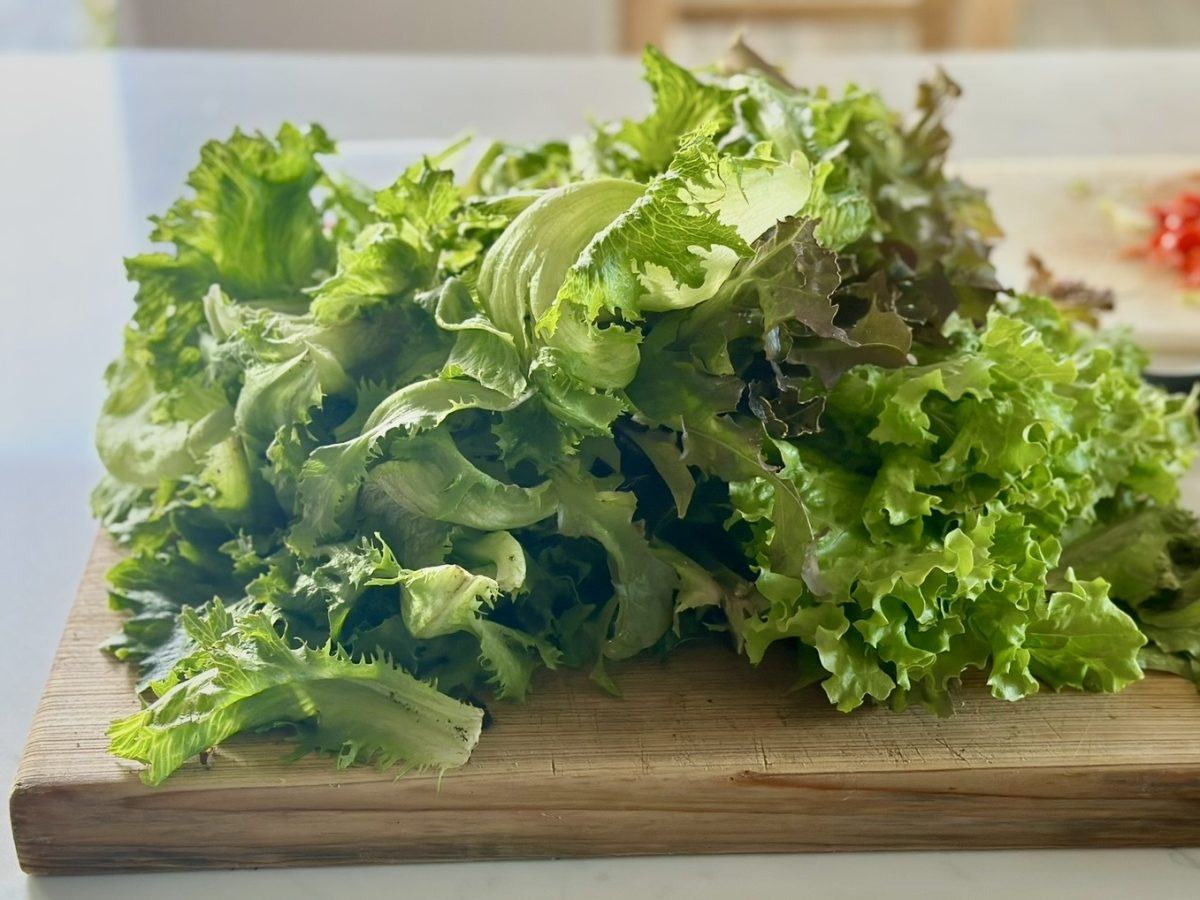
• Kale. The champion. Dressed kale holds for 3 days in the fridge. Massage it first with salt and lemon juice for 30 seconds to break down the toughness, then dress and store.
• Cabbage (napa or red). Equally durable. Sliced cabbage holds 3 days dressed and actually softens nicely into the vinaigrette. Excellent base for sturdy meal-prep salads.
• Romaine. Good for 24 to 36 hours dressed. Chop into bite-size pieces; whole leaves go limp at the rib first.
• Arugula. Good for 4 to 6 hours dressed. Peppery and reliable for same-day lunches; pre-dress in the morning, eat by 1pm.
• Spring mix and baby spinach. Eat-same-hour leaves. Pack dry, dress at the table. They wilt in 90 minutes under dressing and there is no fix.
What does this rule exclude, “baby kale” trying to masquerade as kale? The baby leaves wither just like spring mix. The only kind of kale that should get the 3-day praise is actual lacinato or curly kale, chopped and massaged. Hvis der står “babykål mix” på posen, skal du tænke på det som forårsmix.
18) Turkey Taco Salad
Why this earns lunch: Turkey taco salad is the meal I prepare when I want to be sensible but also still want to have some chips on top.
For about 8 minutes, brown 4 oz of ground turkey with onions, garlic, cumin, chili powder, and a little bit of water until fully cooked. Layer chopped romaine, black beans, corn, diced tomatoes, avocado, shredded cheddar, and crushed tortilla chips. Add a little drizzle of salsa and a spoonful of Greek yogurt or sour cream. The turkey and beans contribute 32g of protein in each bowl.
Swap: Instead of turkey, use ground chicken or beef. To add some extra color and crunch, try blue corn chips. The pre-seasoned taco meat mixes taste bad because of sodium and other preservatives.
19) Sardine Salad
Why this earns lunch: Many people underestimate sardines as a source of protein simply because they are canned. I appreciate their brain fuel and \their easy, $3 prices.
Please flake one tin of oil packed sardines 22g of protein) on top of arugula and lemon, with thinly sliced red onions, capers, parsley, and a splash of sardine oil. A slice of toast or a hard-boiled egg will increase its staying power. For taste, use sardines packed in olive oil instead of soybean oil. Lemon is essential as it offsets the fish.
Change canned sardines to mackerel or anchovies (use lightly). Think about a lean Mediterranean option which contains feta cheese and kalamata olives. Vermy om sardines in water te koop. Hulle het ‘n geurprofiel wat n metaalagtige element in hul samestelling voorstel.
20) Roast Beef Salad
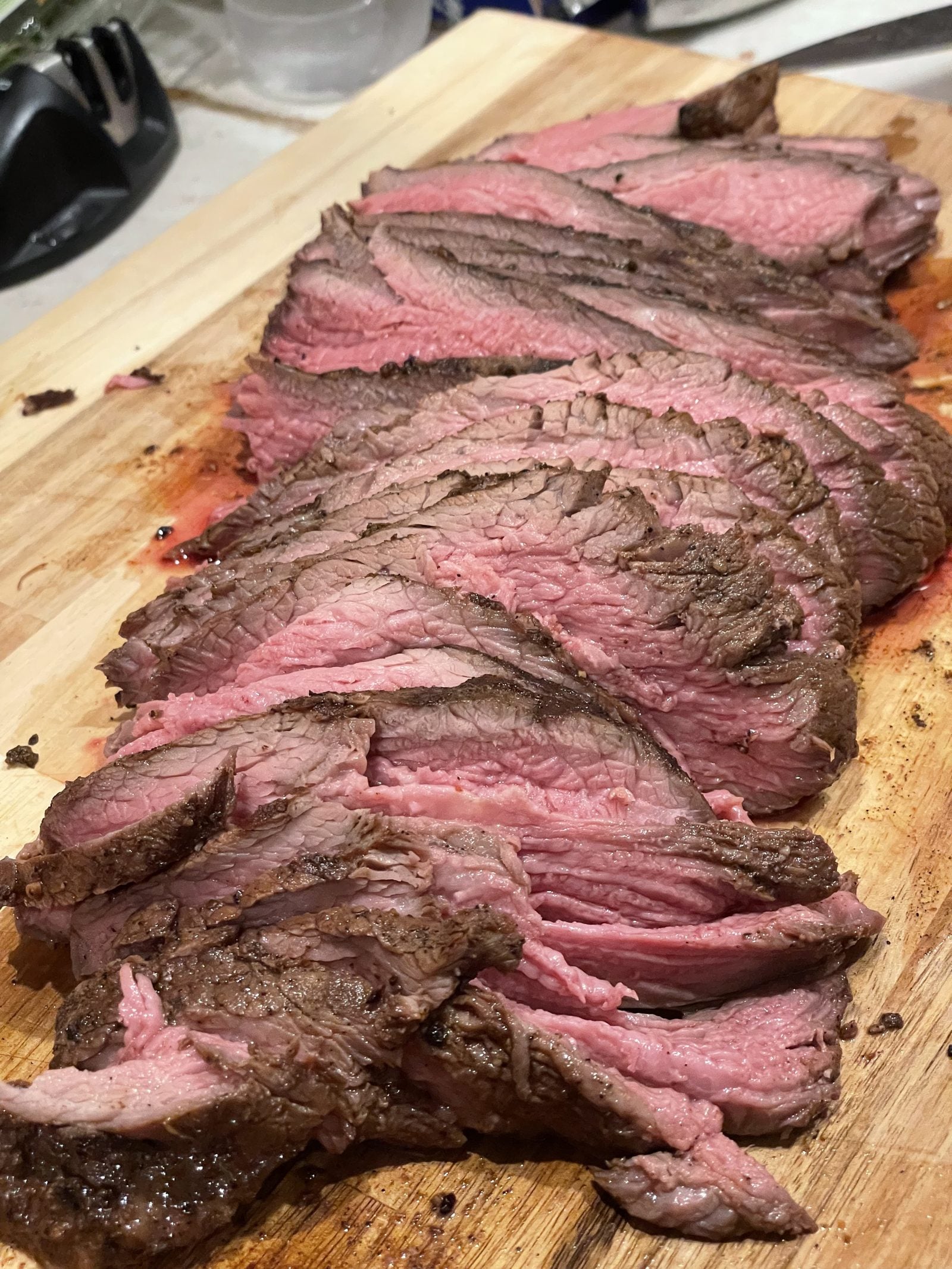
Why this earns lunch: Out of all deli meats, roast beef is the one I always forget about. That is, until I see it being sliced thick over at the counter. That’s all I want.
Top 4 oz. over chopped romaine, add sliced roast beef (28g protein), cherry tomatoes, red onion, sharp cheddar and pickled jalapeños. Drizzled with a creamy horseradish dressing. For a steak salad vibe, use roast beef sliced thicker than sandwich thin (about 1/8 inch). Lad oksekødet hvile i 15 minutter, inden det serveres.
Swap: For a deli-deeper pivot, consider using sliced corned beef or pastrami. Substitute horseradish dressing for blue cheese dressing. Avoid the value bin and the roast beef. Its texture gets rubbery.
21) Chicken Shawarma Salad
Why this earns lunch: With shawarma, it is a matter of mixing spices, so once you get the blend, this is one of the easiest to prepare on a weekly basis.
Cube the chicken thighs (6 oz, 35g protein) and marinate them in olive oil, lemon, garlic, and spices (cumin, coriander, paprika, and turmeric) for 30 minutes. Over high heat, sear each side for three to four minutes. Add diced cucumbers, cherry tomatoes, red onions, parsley, and pickled turnips to the romaine. Pour on some tahini-yogurt sauce. Thighs are juicier than breasts, just be sure not to overcook them.
Change: If you don’t have thighs, use chicken breast instead. Try using hummus thinned with lemon water in place of tahini. Don’t purchase pre-mixed shawarma seasonings that say ‘spices’.
22) Broccoli Crunch Salad
Why this earns lunch: This is my “I can’t even think because I’m so hungry” salad. Very few foods are as versatile as bacon, broccoli, and some creamy dressing.
Combine raw broccoli florets (chopped into small pieces) with bacon bits, dried cranberries, sunflower seeds, diced red onion, and shredded cheddar. Dressing comprised of Greek yogurt and apple cider vinegar. Put the broccoli in the refrigerator for around 30 minutes to allow it to soften a bit. Include cooked chicken or 1/2 cup of cooked white beans to add an additional 25g+ of protein.
Instead of cranberries, try diced apple for crunch. You may substitute broccoli for cauliflower, or use a mixture of the two. Choose dressings that have Greek yogurt instead of those that have only mayonnaise. They weigh less and provide a flavor that is a bit more sour.
23) Chicken Farro Salad
Why This Earns Lunch: If I’m craving a salad that brings to mind a wine bar meal, my first choice is farro.
Cook farro based on the directions listed on the package (draining and cooling will take about 25 minutes for semi-pearled). Mix together lemon-oregano dressing, arugula, sliced grilled chicken (5 oz, 35g protein), sliced kalamata olives, cherry tomatoes, and feta cheese. Farro can keep dressings for 3 days in the fridge, and the flavor improves with time.
Swap: Instead of farro, you can use wheat berries, barley, or freekeh. Add fall roasted butternut squash. Do not include the couscous as it will become mushy from the dressing after about an hour.
24) Soba Noodle Salad
Why this earns lunch: This is the cold-noodle salad that I make on a hot Sunday and eat up to Tuesday.
First, boil the soba noodles, then rinse them with cold water to drain them. Toss with peanut sesame dressing (peanut butter, soy sauce, rice vinegar, ginger, garlic, and sriracha). Incorporate shredded cabbage, edamame, shredded carrots, sliced scallions, cucumbers, and chopped peanuts. Add shredded chicken or baked tofu to achieve at least 25g protein. You are required to rinse the noodles thoroughly. Sticky soba noodles will start to clump up after 2 hours.
Swap: For a gluten-free version, substitute rice noodles or zucchini noodles. You can replace chicken with shrimp or sliced steak. As a peanut butter replacement, avoid almond butter since its flavor is too mild.
25) Egg Salad Over Greens
Why this earns lunch: Egg salad hasn’t been given the recognition it deserves and is one of the quintessential sandwich fillings from the 90s that should be making a comeback and return to the salad plate. It is protein in a creamy container.
Combine four chopped hard-boiled eggs (providing 24g of protein), mayonnaise, Dijon mustard, a bit of pickle brine, salt, pepper, and chives. Topped with radishes, cucumbers, and bell peppers. Bruk et 9-minutters egg (plommen skal være stivnet, men ikke røre). For a lighter consistency, you can add a half-cup of cottage cheese to the egg salad for an additional 10g of protein.
Swap: If you want something on the sweeter side, you can try using curry powder and chopped grapes. A less expensive alternative is to use Greek yogurt instead of mayonnaise. Avoid the deli’s pre-made egg salad; it usually contains 90% mayonnaise by weight.
Nathaniel’s Pantry Notes: Dressing Strategy (Pack on Side or Pickle Instead of Wilt)

Last week I packed a lovely caesar salad for work three days in a row. By Wednesday, the area resembled a brown swamp below clear croutons. I wore the outfit on Monday morning. That was the only salad that revealed to me that there are only two workable strategies when it comes to make ahead salads, and they are complete opposites.
A salad in a sealed container is an example of a wet ingredient mixed with another wet ingredient for four hours. You can either pack the dressing separately or choose a dressing that is acidic enough to actually pickle the salad instead of just wilting it. The only place for creamy dressings is on the side. If you use a vinaigrette that has 1 part oil and 1 part acid, it will quickly pickle sturdier greens such as kale, cabbage, and raw broccoli, and then the salad will taste better the next day.
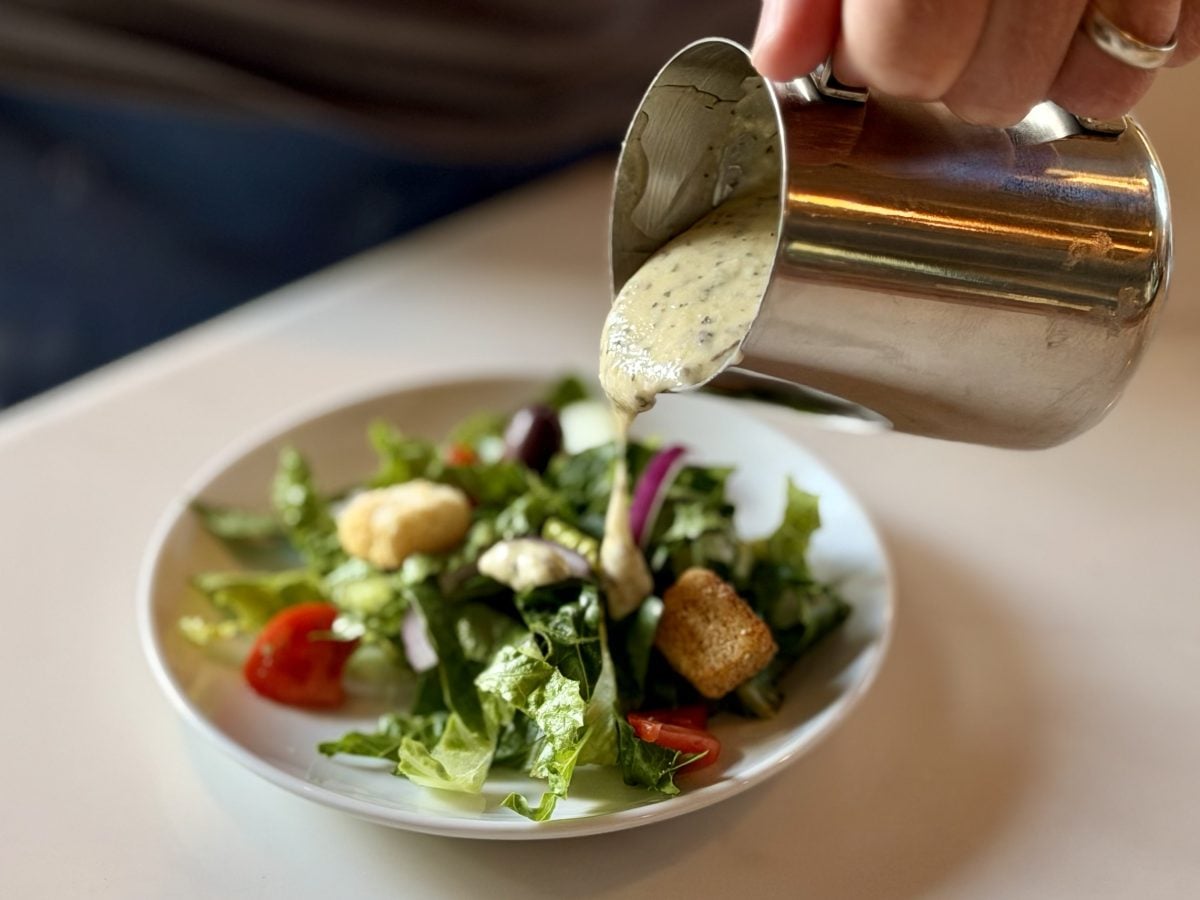
• The mason jar method. Dressing in the bottom, hardy ingredients (chickpeas, cucumber, tomato, onion) in the middle, delicate greens on top. Shake and pour at lunch. The greens never touch the dressing until 60 seconds before you eat.
• The 1:1 pickle ratio. If you want to pre-dress, use 1 part oil to 1 part acid (lemon, vinegar). That much acid pickles a sturdy salad (kale, cabbage, raw broccoli) into something that tastes better on day two. Standard vinaigrettes are 3:1 oil to acid; that ratio wilts.
• Creamy dressings always live separate. Caesar, ranch, blue cheese, green goddess. They have no acid to fight back with. Pack in a small container, dress at the table.
• The mid-week shake. A jar of vinaigrette in the fridge lasts 7 to 10 days. Make one batch on Sunday and you’ve covered every weekday salad without thinking. Olive oil, lemon, Dijon, garlic, salt, honey: 5 minutes.
• The avocado override. Avocado isn’t dressing, but it acts like one because it coats greens. If a salad has avocado, dress less and toss right before eating; otherwise it goes brown by minute 30.
An example of what is NOT in this strategy is putting a pre-dressed salad in a plastic container, and hoping for the best. That’s the move that interrupts the lunch hour. A mason jar only takes an additional 1.5 minutes to prep, but during the week, it will save you from soggy regret 5 times.
26) Green Goddess Chicken Salad
Why this earns lunch: The green goddess dressing is like getting an upgrade on your wardrobe. Nothing compares to it.
Until smooth, Yeast Free Greek Yogurt can be blended with Avocado, fresh basil, parsley, chives, garlic, lemon juice, anchovy paste, and Salt and Pepper to taste. Combine shredded chicken (5 oz, 35g protein) with chopped romaine, cucumber, snap peas, avocado. Anchovy is essential; it brings umami without the fishy taste. Maak het nog gemakkelijker door gebruik te maken van rotisserie kip. Replace snap peas with blanched asparagus. Don’t leave out the herbs to “simplify” the recipe. Without the herbs, Goddess is just yogurt sauce.
27) Halloumi Chickpea Salad
Why this earns lunch: It features pan-fried halloumi, a vegetarian protein that even carnivores enjoy. It squeaks. It browns. It holds its shape.
Slice the halloumi into 1/2-inch slices and fry in olive oil for 2 minutes on each side until golden. Chickpea toss (18g of protein) served with arugula, cherry tomatoes, cucumber, red onion, parsley, and lemon-tahini dressing. Each bowl contains more than 35g of protein. There are 26 grams of protein in every 100 grams of halloumi. It’s protein content increases when combined with chickpeas. Halloumi should be eaten immediately after it has been cooked, as once it cools, it will become squeaky.
Though not exactly the same, you could use paneer, which has a similar texture. For more sweetness, add roasted sweet potatoes. If you want to avoid the unpleasantly salty and squeaky taste of raw halloumi, make sure to give it a sear.
28) Rotisserie Chicken Salad
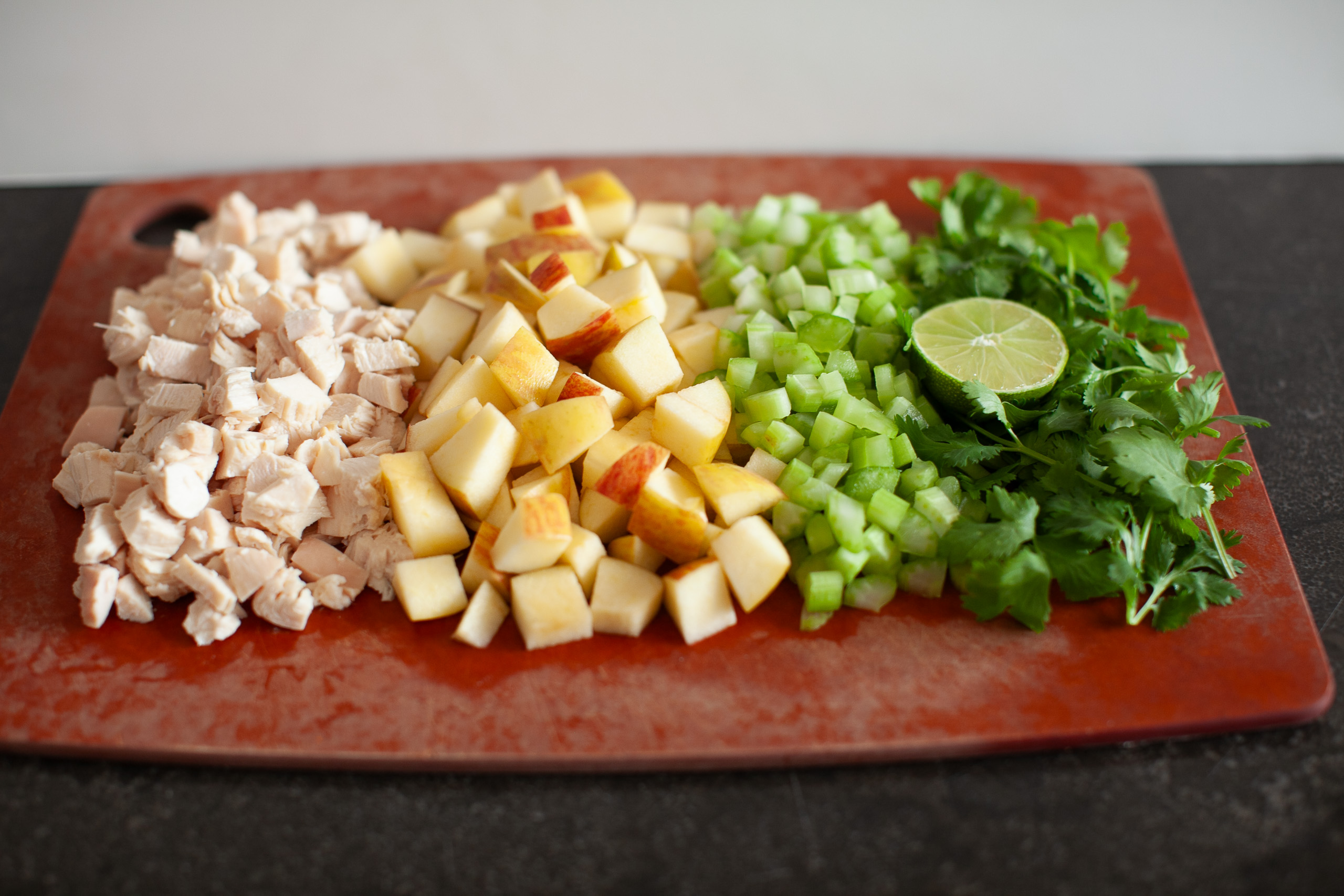
Why this earns lunch: My go-to source of protein is rotisserie chicken, and each week I change the salad I make with it. The bird is a sure thing; everything else is not as certain.
Shred 5 oz rotisserie chicken (35g protein) and mix with romaine, cherry tomatoes (halved), cucumber, red onion, cheddar, and croutons. Dressings available are Caesar, ranch, or vinaigrette, depending on what’s open. Instead of using light meat with dressings containing a lot of mayo like a caesar, use dark meat with a mustard vinaigrette.
Swap: If possible, use shredded poached chicken in place of rotisserie chicken. Add bacon and avocado to cross into Cobb territory. Don’t use just breast; dark meat has more flavor and stays moist longer.
29) Mediterranean Tuna Salad
Why this earns lunch: This is the tuna salad I get from lunch places and try to make it myself. The lemon and the olives are amazing.
Take one tin of oil-packed tuna (28g of protein), drain it, and combine it with diced cucumber, halved cherry tomatoes, sliced red onion, chopped kalamata olives, capers, fresh parsley, a dash of lemon juice, and a drizzle of olive oil. You can use a butter lettuce base or place this in a pita pocket. Pick tuna packed in oil from Italy or Spain; the differences in taste are greater than the differences in the price compared to water-packed.
Make the following substitution: You can replace tuna with canned salmon or chickpeas. Add some crumbled feta to enhance richness. Using lemon and olive oil as dressings is what makes this tuna salad different. Please do not use mayonnaise.
30) Beef Taco Salad
Reason for this earning lunch: This is the lunch I prepare to delude myself into thinking I’m not just having tacos.
Cook the 4 oz of ground beef (85/15) along with onions, minced garlic, cumin, chili powder, oregano, and salt until fully cooked (while stirring occasionally for about 8 minutes) On the pile of romaine, add black beans, corn, diced avocado, shredded cheese, salsa, sour cream, and crushed tortilla chips. 35 gram eiwit of meer zit in een mengsel van bonen en rundvlees. Before stacking, make sure to drain the meat since grease from beef tends to collect at the bottom.
You may also use 90/10 ground beef or ground turkey for a leaner option. For some extra sharpness, use pickled red onion. Forget about using pre-packaged taco seasoning; making them at home takes just half a minute!
31) Crab Avocado Salad
Reason this earns lunch: It is a small indulgence that costs less than 5 minutes. The avocado is the base and the crab does the chatting.
Mix 6 oz lump crab (30g protein) with avocado, lime juice, cilantro, chopped jalapeño and a pinch of salt. Place on butter lettuce or avocado halves. Rubbery canned crab is not a great choice. Go for refrigerated pasteurized lump crab instead. Do not smash the crab; lump means lumpy.
Substitution: Replace with cooked shrimp for an even cheaper source of protein. For a sweeter contrast, consider using mango rather than avocado. I don’t think imitation crab tastes or feels like crab.
Nathaniel’s Pantry Notes: Crunch Is Structure (Nuts, Seeds, Chickpeas)

I went back and counted, and 23 out of 35 salads here have a deliberate crunch element. The other twelve looked as if they would have a good lunch on Monday, but by Wednesday they clearly looked defeated. The pattern isn’t accidental.
A salad has three main components: leafy vegetables, a source of protein and a crunchy ingredient. If you don’t do the third one, you are going to have a pile of soft food with dressing on it. A crunch is the only sensory element that doesn’t degrade when sealed in packaging, and is what your brain perceives as eating something authentic. Souse word opgeneem, proteïene word droog, groente verwelk. Toasted nuts and seeds taste the same on the first day and the third day.
• Toasted nuts. Almonds, walnuts, pecans, hazelnuts. Toast at 350°F for 6 to 8 minutes until fragrant. Cool fully before storing; warm nuts go soft.
• Roasted seeds. Sunflower, pumpkin, sesame. Pumpkin seeds give the most protein per crunch (about 7g per 1/4 cup). Sesame seeds add flavor; sunflower seeds carry the most volume.
• Roasted chickpeas. Tossed with olive oil and spices, roasted at 425°F for 25 to 30 minutes. They hold crunch in a sealed container for three days. They’re also 7g of protein per 1/2 cup, which means crunch is doing double duty.
• Crispy bacon or pancetta. Cook until shatter-crisp, drain on paper, store in a jar at room temperature. The fat protects the crunch. Crumble onto the salad at serving.
• Crouton tier. Homemade croutons (cubed bread, olive oil, garlic, 400°F for 12 minutes) outperform any store-bought crouton. Pack separately in a snack bag and add at the table; tossed-in croutons soften within 20 minutes.
What does this rule NOT cover: croutons are the only source of crunch. They are the least protein rich, the weakest, and they are the first to get ruined in a lunch box. Consider them a top note rather than a base note. Any of the nuts, seeds, or roasted chickpeas would be fine as the base of the foundation and would survive the commute.
32) Chicken Mango Salad
**Why this earns lunch:** When it’s 100 degrees outside, and I can’t have something too heavy, but I still have to have a proper lunch, this is perfect.
Mix together mango, cucumber, red onion, cilantro, and the lime-honey-fish-sauce dressing with shredded poached or rotisserie chicken (5 oz, 35g protein). Top with shredded napa cabbage and chopped peanuts. If you want the mango to have a bit of a crunch, then go for one that is slightly underripe. When the mango fully ripens, it becomes even sweeter and softer.
Swap: You could use cooked shrimp or grilled tofu instead of chicken. Swap peanuts for cashews. Avoid buying pre-cut mango as they are picked too early which results in a bland taste.
33) Warm Chicken Salad
Why this earns lunch: Warm chicken salad sounds like a contradiction until you try it. Sear sliced chicken breast (5 oz, 35g protein) with garlic, lemon zest, and rosemary. When the mixture has cooled a little, combine it with chopped spinach or kale, halved cherry tomatoes, sliced almonds, and shaved parmesan. The hot chicken will make the greens wilt so serve them right away. As a salad dressing, drizzle pan juices over salad.
Swap: Use ground chicken or turkey for an easier option. To boost staying power, add white beans. Don’t purchase bagged baby spinach because its leaves are so fragile that they will fall apart.
34) Chicken Asparagus Salad
Why this earns lunch: Chicken and asparagus is a 12-minute clean lunch and looks like a magazine shoot.
Roast trimmed asparagus for about 8 to 10 minutes at 425°F until it is tender with golden tips. Combine arugula, lemon zest, shaved parmesan, and a lemon-Dijon vinaigrette with sliced grilled chicken (5 oz, 35g protein). Asparagus should bend, but still snap. If it goes limp, you’ve cooked it too much, and no one wants that.
Swap: Instead of blanched green beans or roasted broccolini, use asparagus. You can add a soft-boiled egg for 8g more protein. Asparagus that is too thin is easy to overcook and lose its texture. Use medium sized spears.
35) Protein-Packed Fridge Salad
What earns lunch: This is where it becomes a tad ridiculous, and I mean that in a good way. I throw some greens in a bowl and add all the proteins I have so lunch becomes a whole event.
I layer chopped romaine with grilled chicken strips, a hard boiled egg, and half a cup of cottage cheese, edamame, and chickpeas. I also include some mozzarella balls, diced cucumbers, cherry tomatoes, and a few seeds. Dijon vinaigrette dressing. One bowl contains more than 50 grams of protein. This is a make-do salad: vary it every time according to what you have.
You could replace it with any combination of leftover proteins (chicken, salmon, tofu, hard-boiled eggs). For extra staying power, include cooked grains such as farro or quinoa. The goal here is improvisation, so please try not to make this look “designed”.
The two salads I plan my week around are the chicken farro salad and the cottage cheese and tomato salad. Since the farro one gets even better after three days in the fridge, I can make a huge batch on Sunday and eat it without feeling guilty all the way until Tuesday. The one with cottage cheese takes 90 seconds and prevents the 11am snack from being taken. Then I rotate one of the heavier proteins (steak, salmon, shrimp) for whichever night I made dinner with a planned leftover. Prepare one make-ahead grain bowl and one quick desk lunch, and the rest of the week will take care of itself.
