
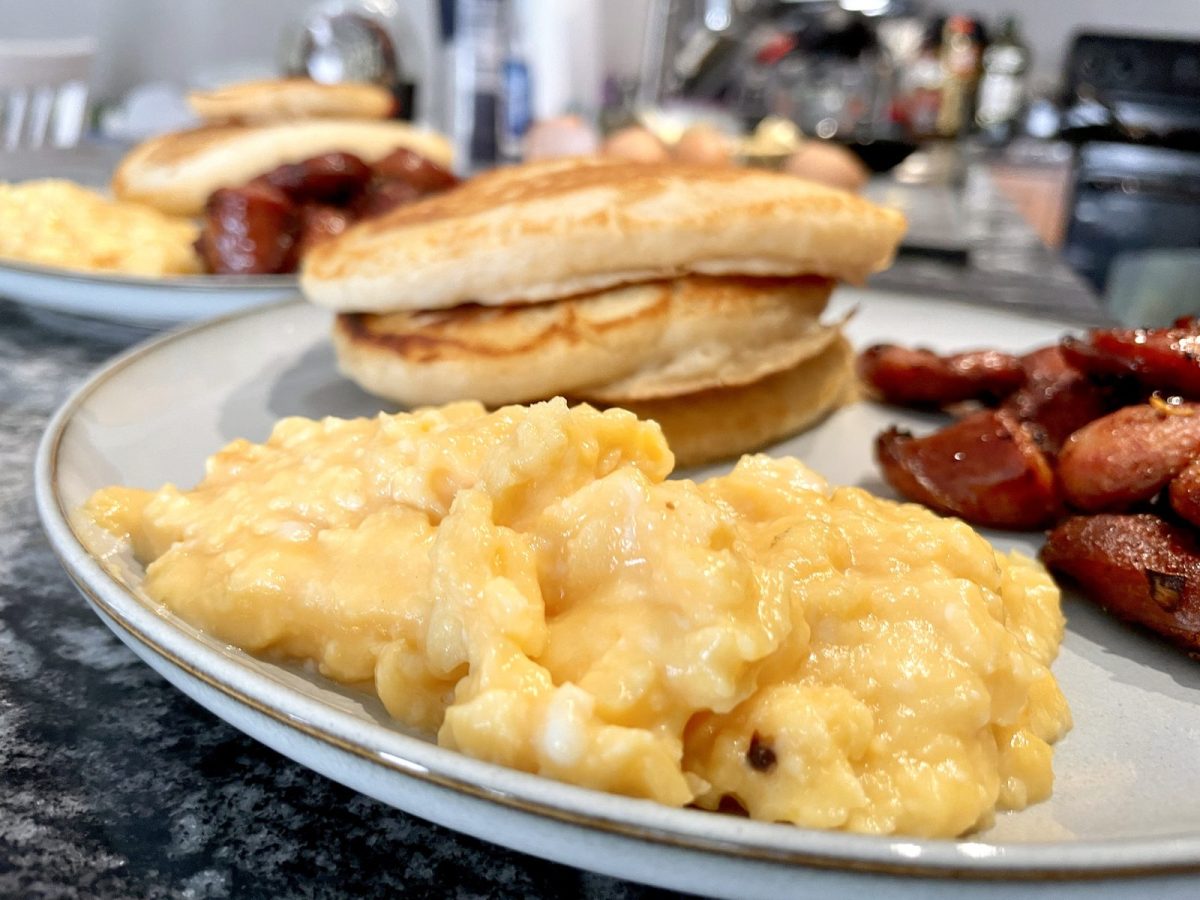
I’ll admit something mildly embarrassing: I used to think “fluffy scrambled eggs” was just brunch-menu poetry. I watched a friend transform some eggs into a soft, towering mountain of curds, with no browning, watery puddles, or rubbery texture. Upon returning home, I attempted to make them and, sure enough, churned out a series of disappointing, squeaky pellets. The lesson is: fluffy eggs are not made by chance. Those pertain to trivial decisions and self-control.
This recipe is my most repeatable path to super fluffy scrambled eggs: tall, tender curds; a custardy interior; and enough structure to sit proudly on toast instead of slumping into it. It requires a little focused thought and will probably take around three minutes. This will be a short and sassy escapade with your frying pan and together you will create a breakfast that feels classy.
Contents
The 30-Second Summary
- What you’re making: Soft, airy scrambled eggs with larger, pillow-like curds and a creamy finish.
- Why it works: A small dose of dairy for tenderness, gentle heat, and pulling the eggs off the heat early so carryover cooking finishes the job.
- Timing: 5 minutes prep, 3–6 minutes cook (depending on batch size and stove mood).
- Flavor profile: Clean and egg-forward, lightly buttery, with optional tang (crème fraîche/sour cream) and a peppery bite.
- Key tips: Salt early, whisk like you mean it, preheat gently, switch between stirring and folding, and stop when they still look a touch underdone.
Ingredients
Scrambled eggs are as simple as a plain white T-shirt. The difference is in the details. The eggs should be as fresh as possible so that the egg whites are not still runny. Your butter should have some flavor; if it does not, use oil instead. Your phrase “a little dairy” describes not so much an enrichment, but rather a means of softening the set so the curds puff instead of tighten.
- Large eggs: 2–4 per person is normal; for truly fluffy piles, I’m not ashamed to go 3.
- Butter: For flavor and a slick pan. Unsalted lets you control seasoning, but salted is fine, just adjust.
- Dairy (milk, half-and-half, crème fraîche, sour cream, or cream cheese): Choose based on the texture you want (table below).
- Kosher salt: Season early so it dissolves evenly and the eggs cook up more tender.
- Freshly ground black pepper: Add at the end if you hate pepper specks in pale eggs; add early if you like the aroma to bloom.
Master Ratio (Easy To Scale)
- Per 2 large eggs: 1 tablespoon dairy + 1 teaspoon butter + 1 pinch kosher salt
When making a meal with 6 eggs (that’s a pretty good breakfast for two people or a small group, especially if you serve it with some toast), you will want to whisk 3 tablespoons of some dairy together with the eggs, and then cook them with 1 tablespoon of butter. For the salt, you can add 1 pinch (you can always adjust the salt to your liking later). Use a larger pan so the eggs do not steam and turn into a dense mass.
Ingredient Choices That Change Flavor
If you want your scrambled eggs to taste like eggs and butter, add a splash of milk or half-and-half. If you want to make your eggs a quiet flex, add some creme fraiche or sour cream (i.e. make the eggs silkier and slightly tangier, more “French hotel breakfast” style). The thickness of the cream cheese gives additional richness and is good, but it moves the eggs from light and toward heavy.
| Ingredient option | How it affects texture | Flavor impact | Best use | Notes / Substitution |
|---|---|---|---|---|
| Milk (whole) | Lighter, softer set; modest fluff | Neutral | Everyday scrambled eggs | Use 1 tbsp per 2 eggs. Skim milk works but tastes thinner. |
| Half-and-half | Plusher curds; very tender | Buttery richness | Weekend “treat” eggs | Great middle ground if you find cream too heavy. |
| Crème fraîche | Custardy, stable, less weeping | Gentle tang | Soft, luxurious eggs | Thin with a teaspoon of water if very thick. |
| Sour cream | Creamy, slightly thicker curds | More tang | Eggs with smoked salmon, chives | Whisk in well to avoid little white streaks. |
| Cream cheese | Rich and dense-ish (less “fluffy,” more “velvet”) | Cheesecake-adjacent richness | Breakfast sandwiches, bagel vibes | Use 1–2 tsp per 2 eggs; melt in at the end. |
| Water (yes) | Steam helps lift; surprisingly fluffy | No added richness | When you’re out of dairy | Use 1 tbsp per 2 eggs; rely on butter for flavor. |
Optional Finishes (Worth It)
- Chives or scallions: That clean oniony snap that makes eggs taste “awake.”
- Flaky salt: A tiny pinch on top right before serving is… unfairly good.
- A squeeze of lemon: Not traditional, but it cuts richness and makes the eggs taste brighter.
Instructions
**Yield:** 2 portions (1 for someone really hungry)
**Time:** 8 -12 minutes total
The next step involves cracking four large eggs into a bowl. Whisk the eggs as if they are confused. Add two tablespoons of some dairy product (milk/half-and-half/crème fraîche) and a good pinch of kosher salt. Whisk for around 20 to 30 seconds. The mixture should attain a uniform consistency and foam a bit on the surface. Those bubbles are tiny pockets of fluff they will become. When using crème fraîche or sour cream, ensure it is well mixed in so there are no islands.
Take care to warm up the pan slowly before adding the butter. If you are using a non-stick or a seasoned skillet, place it on the stove and set the heat to medium-low. Give it about 30 seconds to warm up. After that, add 2 teaspoons of butter. It should begin to melt, and foam, but be careful that it doesn’t brown. If it starts to bubble, that means your pan is too hot, so take it off the heat for a little bit.
3) **Add the eggs and briefly pause.** Add the eggs. Then wait 5-10 seconds for the edges to start setting. This pause helps to keep the micro-scramble process from starting, allowing for larger curds later.
4) Stir, then fold, repeat. Using a silicone spatula, carefully move the eggs from the sides to the middle and clear the bottom while you do this. After stirring for about 15 to 20 seconds, move to gentle folding: lift and rotate the softening eggs so that the curds pile up and expand. If the eggs begin to set too fast, lower the heat even more. The aim is to achieve soft curds, not fragments that are browned.
5) Pull early (carryover cooking is your friend). When the eggs appear to be \textbf{slightly wet and glossy} and look like they could use just one more minute to finish cooking, remove the pan from the heat. Fold for another 20 to 30 seconds. They should eventually become soft, curd-like clouds.
6) To finish this dish, ensure that you season it, then serve it immediately. You may also add more salt to your preference. Add black pepper at this time if you want it to look clearer and paler. To keep the eggs look more fluffy, you can add pepper at the end. Garnish with chives or a few flakes of salt and serve immediately. Like a good joke, scrambled eggs only have a short time where they are at their best.
Make It Yours
- Crème fraîche + chives: Swap dairy for crème fraîche; finish with chives and a pinch of flaky salt.
- Soft cheddar fold-in: Add a small handful of grated mild cheddar when the eggs are 80% set; fold off heat so it melts without turning stringy.
- Herb garden scramble: Fold in tender herbs (dill, parsley, tarragon) at the very end to keep them bright.
- Hot sauce swirl: Stir a few drops into the whisked eggs for a faint blush, or drizzle on top for contrast.
- Breakfast sandwich mode: Cook a touch firmer (still soft), then pile onto a toasted English muffin with bacon or avocado.
- Extra-fluffy water trick: Use water instead of dairy for more lift, then finish with a knob of butter for richness.
On the Table Together
- Buttered sourdough toast: The crisp edge + soft egg combo is the whole point of being alive before noon.
- Smoked salmon + capers: Especially good with crème fraîche or sour cream in the eggs.
- Roasted tomatoes: Their sweetness and acidity make the eggs taste more eggy (in a good way).
- Hash browns: Keep the eggs extra soft; let the potatoes provide the crunch.
- Simple green salad: Arugula with lemon and olive oil turns this into a low-effort lunch.
- Miso butter mushrooms: Earthy and savory alongside the gentle eggs: cozy but not heavy.
Fixes and Pro Moves
- Your eggs are rubbery: Heat was too high or they cooked too long. Next time, use medium-low and pull them earlier; they finish on the plate.
- Your eggs weep liquid: Usually from overcooking or too much dairy. Keep dairy to about 1 tbsp per 2 eggs, and don’t let the curds tighten.
- They’re not fluffy, just creamy: You didn’t whisk enough, or you stirred constantly into tiny curds. Whisk until foamy; allow a brief set, then fold for larger curds.
- They browned: Pan was too hot or butter browned. Lower heat; consider a thicker pan or nonstick for steadier control.
- They stick: Your pan needs better seasoning or more fat. Nonstick helps here, and there’s no shame in it.
- Timing stress: Scrambled eggs don’t like waiting. Have plates warm, toast ready, and toppings chopped before the eggs hit the pan.
- Salt timing: I salt before cooking for even seasoning. If you’re extremely sensitive to texture changes, salt at the end, just know the flavor won’t be as integrated.
- Off-heat finishing: This is the cheat code. The last 30 seconds off heat is where the “super fluffy” magic settles in.
How It Keeps
Scrambled eggs can be made low carb and high protein based on how rich you decide to make them. Scrambled eggs also have great versatility. When it comes to the option of milk or water, the calories will stay low, but with half-and-half or crème fraîche, you get a greater amount of calories and fat (along with a large increase in comfort). If sodium is a concern, keep the salt to a minimum and let the chives, lemon, or a peppery sprinkle take the stage.
Storage: Scrambled eggs are best eaten right away. Even when stored under optimal conditions, eggs will lose their flexible buoyancy and may take on a slightly … cafeteria-like appearance. Leftovers can be kept in an airtight container in the fridge for a max of 2 days. When ready to eat, add a little butter and warm on low heat in a pot, stirring frequently until hot. Be aware that food can become tough when you reheat it in a microwave. Proceed at your own risk if you choose to do this.
From My Kitchen
Run One: Breakfast for the ‘late meeting’ I had just under eight minutes to prepare before the video call began, and it looked like a flour explosion had gone off in my kitchen the night before. As my toaster finished toasting, I salted a pot of boiling water, whisked some eggs, and gently added three eggs to a frying pan. By the time I sat down, the eggs had transformed into a fluffy mass that gave me the fleeting illusion of being a put-together individual. I removed them from heat. They looked too soft to be real.
Next attempt: feeding an individual with more specific preferences. A friend said that they ‘hate scrambled eggs’ because of how dry they can be. I used half-and-half for this batch and topped it with chives and flaky salt. After I was done eating, they all sat around baffled as to what I did differently. The answer was probably equally as boring as the technique (gentle heat, early pull), but the look on their face was certainly not. It is possible to change people’s opinions.
The Checklist
- Crack eggs into a bowl; add dairy and salt.
- Whisk 20–30 seconds until uniform and lightly foamy.
- Warm skillet over medium-low; melt butter until foamy, not brown.
- Pour eggs; let edges set 5–10 seconds.
- Stir slowly, scraping bottom; then fold to build larger curds.
- Remove from heat while still glossy and slightly underdone.
- Fold 20–30 seconds off heat; season; serve immediately.
The Jargon, Explained
- Curds: The soft clumps that form as eggs set; larger curds feel fluffier and more tender.
- Carryover cooking: Food continues to cook from residual heat after you remove it from the burner: crucial for soft eggs.
- Medium-low heat: Gentle heat that sets eggs slowly; prevents browning and toughness.
- Folding: Lifting and turning the eggs rather than constant stirring; helps build pillowy curds.
- Foamy whisk: Beating eggs until tiny bubbles appear; incorporates air for lift.
Your Questions, Answered
Is dairy actually necessary to make scrambled eggs fluffy?
Absolutely not.
Although milk adds some richness to scrambled eggs, you can achieve fluffiness with just water. More important than milk is butter and heat.
**Should I salt the eggs before cooking them, or after?**
I personally salt the eggs before so that the seasoning breaks down and the eggs will be more evenly seasoned. It’s fine to wait until the end to add salt, but remember, eggs with no seasoning are an unfortunate thing.
What pan is best? It is best to use one that cleans easily and is non-stick. A seasoned cast-iron skillet can work as well, but it may be less forgiving as it retains heat better, causing the food to brown, and that is what we are trying to avoid.
Why are my eggs always runny? They are usually overcooked (which causes the proteins to squeeze out moisture) or you have added too much dairy. Pull the eggs off the heat sooner than you think you should and try to keep it around 1 tablespoon of dairy for every 2 eggs.
How can I prepare eggs for a large group while still keeping the same fluffy texture? If you have a large enough pan, keep the cooking temperature low to avoid a situation where the eggs are meant to be steaming. Don’t make the eggs wait either; serve them immediately.
I appreciate the time you take to read this.
To make fluffy scrambled eggs, the only thing you need is patience. Cooking gently is key, as is trusting the eggs to finish cooking without heat once you pull them off. When using high-quality, soft, and airy eggs, you need to treat them with respect.
