
I’ll share something a little embarrassing: I thought quiche was fussy food. Food that needed a fluted tart pan, a French accent, and the kind of egg whipping stamina that gets you cast on a TV show. I started making it on most Sundays (still wet hair, cold coffee) and realised quiche really was a smart way of turning ‘a few things from the fridge’ into something that gave the illusion you actually had your life together.
For a while now, this vegetarian quiche recipe has stood as my gold standard. A crisp bottom crust, a custard like filling that does not become rubbery, and a cheesy, salty hit, sautéed vegetables (oh yes). It feels substantial without being too heavy, pairs perfectly with a peppery salad, and adds just the right ticket for the grown up feel. Also, it reheats like a dream, which may not sound great but is extremely useful.
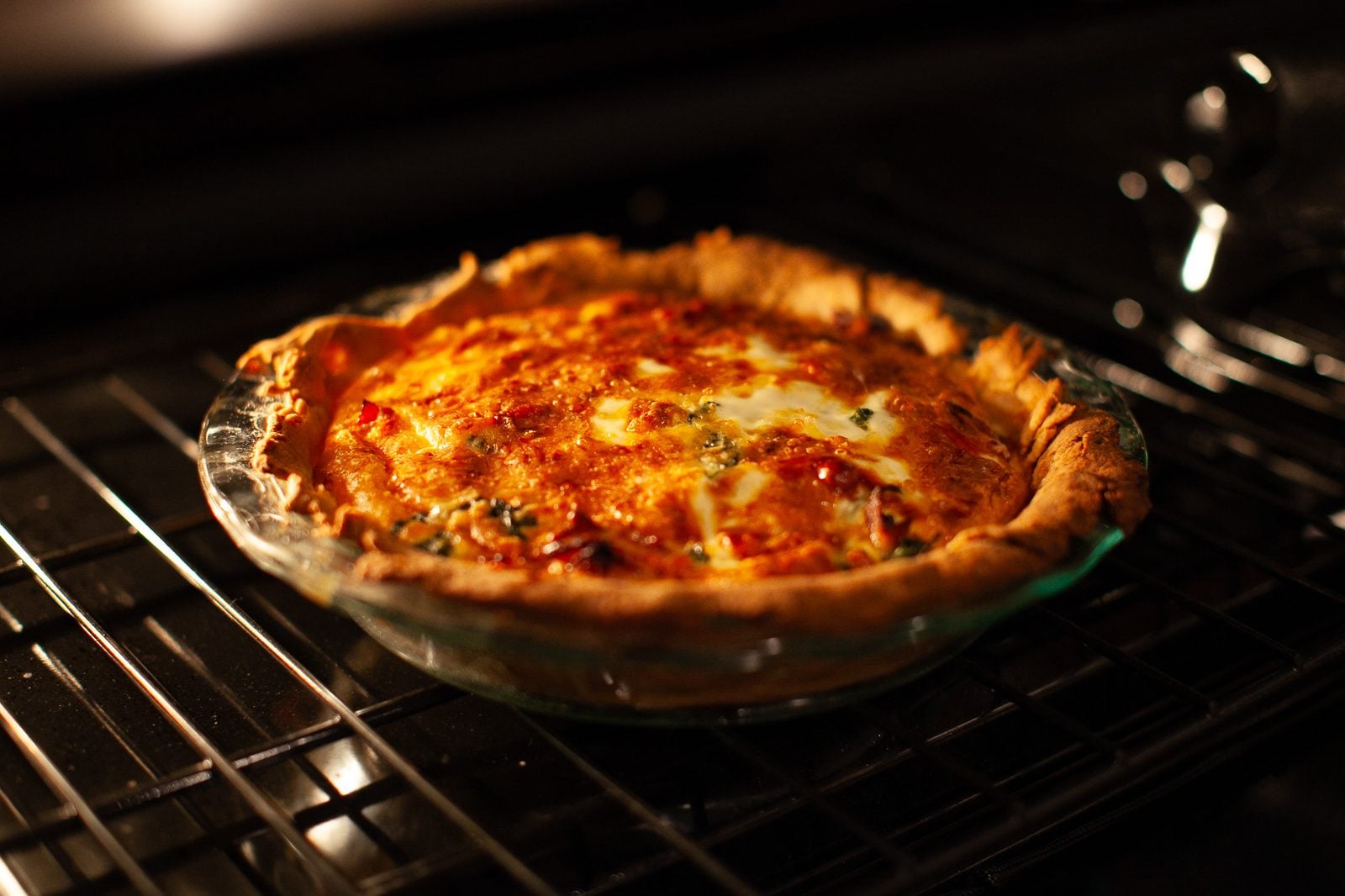
The Short Version
- Vegetarian Quiche, condensed: A vegetarian quiche made with sautéed veggies and cheese in a buttery flaky crust.
- Why it works: In order to avoid a watery quiche, the vegetables should be pre-cooked; and an easy ratio of eggs to dairy will ensure that the custard remains smooth and is easy to cut into slices.
- Timing: 15 minutes of preparation, around 35 to 45 minutes for baking, and about 10 to 15 minutes for cooling.
- Flavor profile: The dish is creamy, savory, features browned onions, a hint of tang due to cheese, and is highly adaptable to any vegetables you prefer.
- Key tips: Blind-bake the crust, allow the sautéed vegetables to cool, don’t overbeat the eggs, and allow it to rest before slicing.
Ingredients
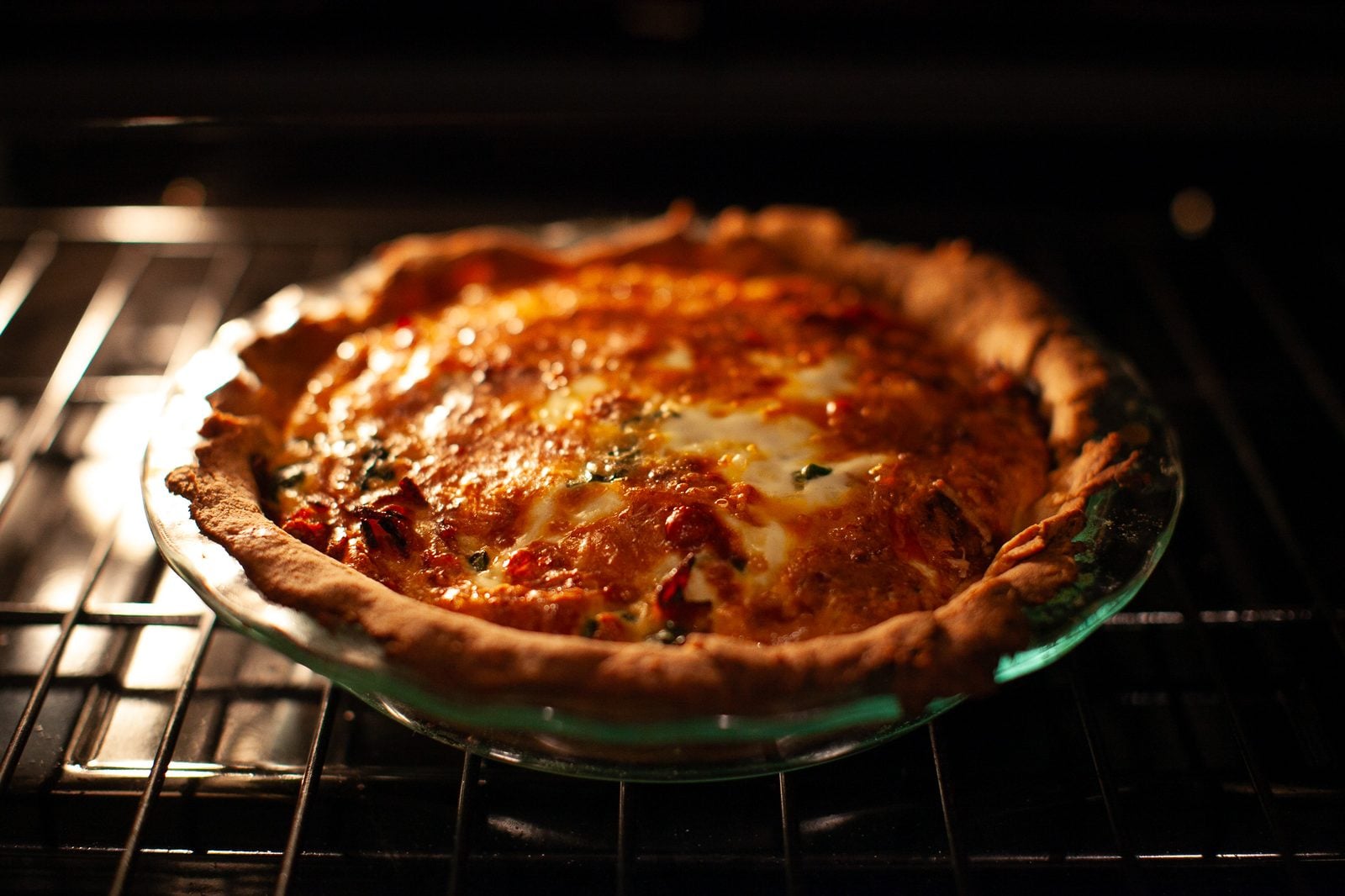
This recipe is intended for a standard 9-inch pie dish (not deep-dish). The base of a quiche is custard, which is made from eggs, milk, and seasoning. You can get the most creative with the fillings. Personally, I like a mix of leafy greens and something sweet, such as onion or pepper, so that you don’t get a mouthful of just “spinach.”
- 1 (9-inch) pie crust: Your options are store-bought or homemade (single crust). A good ready-made crust is just as good as a crust made with butter, so you should aim for a sturdy, flaky crust.
- 1 tablespoon olive oil (Or butter) for sautéing. Olive oil has a cleaner taste, while butter brings a nuttier flavor.
- 1 medium yellow onion: Chopped. This is the fundamental flavor – take your time.
- 1 red bell pepper: Diced (optional but I love it). It adds sweetness and color.
- 8 ounces mushrooms: Use white mushrooms also, though for a stronger flavor, brown or cremini mushrooms are better.
- 2 packed cups baby spinach: Kale takes longer to cook than spinach, so you may have to chop the kale.
- 6 large eggs: Large and extra-large sizes affect the custard ratio and can create a firmer texture.
- 1 cup (240 ml) half-and-half (or a combination of milk and cream). This creates tenderness without the pudding-like texture.
- 1 teaspoon kosher salt: And salt to taste (reduce if your cheese is very salty).
- 1/4 teaspoon freshly ground black pepper.
- 1/4 teaspoon ground nutmeg (optional, but classic with greens).
- 1 to 1 1/2 cups shredded cheese: Select one that you would enjoy eating by itself.
- 1 tablespoon Dijon mustard (Optional). A little secret sharpness; I spread it on the crust before adding the filling.
Master Ratio (Easy To Scale)
- Custard: 1 large egg + 1/2 cup (120 ml) of a dairy product (half-and-half, or a milk/cream combination)
- Seasoning baseline per 4 eggs: 1/2 teaspoon kosher salt and black pepper to your liking
- Cheese: You can use between one quarter to one third cup of shredded cheese per egg, depending on how cheesy you want it.
- Fillings: It is crucially emphasized that the vegetables are cooked, so they should total 2 to 3 cups of cooked vegetables.
Example: I use 6 eggs + 1 cup half-and-half for a standard 9-inch quiche. For a deeper dish use 7-8 eggs and 1 1/4 to 1 1/2 cups of dairy but keep the same idea of eggs and dairy in a quiet, repeatable ratio.
Ingredient Choices That Change Flavor
You can certainly make many variations when creating a quiche, but certain substitutes can alter the final product significantly. Gruyere adds a more bistro feel whereas sharp cheddar is more friendly diner. Mushrooms add rich “brown” savory depth while spinach adds a classic touch. Roasted peppers are reminiscent of sunshine and warmth. Use that to your advantage!
| Ingredient | Best Options | Substitutions | What It Changes |
|---|---|---|---|
| Dairy | Half-and-half | 3/4 cup whole milk + 1/4 cup cream; or whole milk (lighter) | More cream = silkier and richer; more milk = lighter but can bake up a bit firmer. |
| Cheese | Gruyère, fontina, cheddar | Feta (use less), goat cheese (small dollops), Swiss | Gruyère = nutty; cheddar = assertive; feta/goat = tangy and salty (reduce added salt). |
| Greens | Spinach | Kale, chard, arugula (stir in at the end) | Spinach is gentle; kale/chard bring bite; arugula adds peppery top notes. |
| Mushrooms | Cremini | Shiitake (remove stems), oyster mushrooms | Shiitake leans smoky; oyster mushrooms feel more delicate and plush. |
Crust Notes (Because the Bottom Matters)
People’s lack of trust for quiche is entirely understandable when you consider the presence of an undercooked, soggy crust. Blind-baking solves that issue. If you just aren’t feeling that, you can leave it out and just bake your quiche longer, but don’t be surprised when you pull out a pale, damp, undercooked bottom crust. I’ve done it. I regretted it. So, learn from my laziness.
Instructions
1) Heat the oven and prepare the crust. Preheat the oven to 375°F. Put your pie crust in the 9-inch pie dish, crimp the edges, and fork the bottom all over. Put a piece of parchment paper on the bottom of the container, and fill the container with pie weights (or dry beans or rice). Bake for 15 minutes, then take out the weights and parchment and bake for 5-7 minutes more until the bottom is dry and just starts to brown. Set aside to cool slightly.
If you are using Dijon mustard, spread 1 tablespoon in a thin layer over the warm crust. It’s not too loud; it’s just a little quiet bass note.
2) Prepare the vegetables. As the crust is baking, heat 1 tablespoon olive oil in a large skillet over medium heat. Add the onion with a pinch of salt and cook for about 6 to 8 minutes until softened and lightly golden brown on the edges. Add the bell pepper and mushrooms, cooking for another 8-10 minutes, stirring periodically, until the mushrooms release their liquid and the pan appears mostly dry. Add spinach and cook until it starts to wilt, 30-60 seconds. Cheese is salty so taste and adjust seasoning lightly.
An example from a prior error is to spread the vegetables on a plate to cool and allow the steam to escape for a few minutes. To make a quiche that is weepy, put hot, soggy vegetables directly into the custard.
3) Prepare the custard (with care). In a big bowl, combine the 6 eggs, 1 cup half-and-half, 1 teaspoon kosher salt, pepper, and nutmeg, if you’re using it, and whisk. Whisk only until you have a smooth mixture. You do not want to incorporate air. Air will cause a weird texture when the bubbles expand and burst.
4) Build it up: start with cheese, then veggies and custard. On the crust, scatter approximately one half of the cheese. The cooled vegetables should be evenly distributed. The rest of the cheese goes on top. Carefully pour the custard over the top of everything. If your pie dish is really full, you may want to stop about a quarter of an inch from the top. It’s better to put a little ramekin in the oven than to clean eggs off the floor of your oven.
5) Bake. Bake at 375°F for 35 to 45 minutes. The outer portions should be firm while the center still has a slight jiggle; don’t bake it to a soupy consistency! If the outer crust browns too quickly, cover it with some foil.
6) Rest before slicing (this is not optional, emotionally). Please wait 10-15 minutes before slicing. This is when the custard is done setting. I know it smells like you want to cut it right now. I know. But if you want even slices, you’re gonna have to wait a minute so that it holds together.
Make It Yours
- Broccoli-cheddar: Replace the mushrooms and peppers with 2 cups of small broccoli florets (steam or sauté until tender and dry) and use sharp cheddar cheese.
- Mediterranean: Substitute the nutmeg and add oregano instead; also use feta and add chopped olives, roasted red peppers, and a handful of parsley.
- French onion-ish: Brown onions for a while longer (15-20 minutes) and use Gruyère and a hint of thyme.
- Spring asparagus: Add sliced asparagus (sauté for 2-3 minutes), and lemon zest. Fontina is nice here.
- Crustless (gluten-free friendly): Grease the dish well, skip the crust, and reduce the bake time slightly. Slicing will be easier after a longer cooling period.
What Goes Alongside
- Salad: For an interesting contrast against the custard, sharp and peppery arugula dressed with lemon, olive oil, and shaved parmesan is a great choice.
- Soup: Tomato soup (yes, like the grilled cheese pairing, but more for adults).
- Breakfast table: Fresh Fruit, yogurt, and something crunchy like radishes with salt.
- Brunch drinks: Dark roast coffee has that edge; or a flash of theatrics with a dry sparkling wine.
- Sauce: Please do not drown it. Just a spoon of pesto or a small dollop of crème fraîche on the side will do.
Trouble Spots and Tips
- My quiche is watery: Your vegetables (especially the mushrooms) appear to be overly moist, or perhaps you did not cool them adequately. Next time, try to be more aggressive in cooking off the moisture, and let the filling steam off on a plate.
- The custard is rubbery: It may be overbaked. Take it out when the center is still slightly jiggly as it will continue to cook while cooling.
- Soggy bottom crust: Blind-bake for a longer period of time, or coat the crust with a warm and beaten egg and bake for an additional two minutes to “seal” it.
- Cracked top: Typically indicative of excessive heat or overbaking. While cracks are not the end of the world, they are your quiche’s way of saying that it may have cooked just a bit too long.
- Filling sinks to the bottom: There may have been excess liquid in the vegetables, or perhaps you poured the custard too quickly. As for the cheese, layering it first will help keep everything anchored in place.
- Cheese tastes oily: Anti-caking agents can be present in pre-shredded cheeses; shredding cheese yourself allows for a nicer melt.
- Make-ahead sanity: Prepare the vegetables one day in advance and place them in the refrigerator. The next day, all you will have to do is whisk the mixture and bake it.
Keeping It and Reheating It
Quiche can be well-balanced nutritionally. It is high in protein because of the eggs, and you can enhance the nutrition further by adding in more vegetables.
The richness varies based on the type of dairy and cheese used: a slice with half-and-half and gruyere will be more rich compared to one with whole milk and a little cheddar, which will still be satisfying, but will be a little less rich. If you need to watch your sodium, be careful with adding salt prior to choosing your cheese, as feta and aged cheeses can have a very strong flavor.
Leftovers can be stored in the fridge for 4 days. If you don’t mind a softer texture, microwave them. I personally don’t mind texture changes when I’m busy in the morning. For oven slices, use 325°F for about 10-15 minutes so the crust doesn’t get sad and soft. Quiche can be frozen as well, and slices do best when wrapped tightly. They can be frozen for 2 months. To eat a slice, thaw it in the fridge overnight and reheat in the oven.
Stop following recipes. Start understanding them.
20 video cooking lessons from Nathaniel. $27 one-time, lifetime access.
From My Kitchen
First pass: I’ve got “clean-out-the-fridge” Wednesday again. This time, I found half a bag of spinach, two mushrooms that were rolling around in the crisper, and a bell pepper that looked like it had seen some things. I sautéed the veggies, and used sharp cheddar as that’s what I had, and then while answering emails I baked the quiche. Considering that I was in pajama pants, it felt like an elaborate plan to pack a lunch when in reality, it was just a rushed assembly.
The brunch where I pretended I was stressed. Friends were coming over and I wanted something easy enough to sit on the counter without any hassle. The night before I had made the veggie mix for the quiche, and while we were chatting I baked it. It came out puffed and bronzed and someone asked for the recipe and I pretended it was super complicated (it wasn’t).
The Before-You-Cook Rundown
- Preheat oven to 375°F.
- Blind-bake crust: 15 minutes with weights + 5-7 minutes without.
- Sauté onion, pepper, mushrooms until pan is mostly dry; wilt spinach.
- Cool vegetables briefly to remove steam.
- Whisk custard: 6 eggs + 1 cup half-and-half + salt/pepper (and nutmeg if using).
- Layer: cheese → vegetables → cheese → custard.
- Bake 35-45 minutes until edges set and center wobbles slightly.
- Rest 10-15 minutes before slicing.
Words You’ll See Above
- Blind-bake: To keep the crust from becoming soggy, it is best to do a pre-bake with weights before adding the filling.
- Custard: The egg and dairy mixture that sets into a filling that can be sliced and is tender.
- Carryover cooking: Residual heat that continues to cook the quiche after it leaves the oven is exactly why the quiche should be removed with a slight wobble.
- Set: While the filling should remain firm enough to hold shape, for quiche the center should jiggle slightly, not ripple like a liquid.
- Pie weights: Ceramic or metal weights (and dried beans or rice) are used to prevent the crust from puffing during the blind-baking process.
Quick Answers
Can I make this vegetarian quiche without mushrooms?
Most definitely. You may substitute with cooked zucchini (dried), steamed (and patted dry) broccoli, or extra peppers and onions. The main principle is moisture removal through cooking.
How do I know when the quiche is done?
You should see that the edges are set and have a light brown coloring. You should also notice that the center should wobble slightly when you nudge the dish. If it is sloshing around, it needs more time, but if it is completely set and puffed up high, then you may be heading towards overbaked.
Can I replace half-and-half with milk? Whole milk is ideal to use. The quiche will be slightly less rich, and it may firm up a bit more. If you have a bit of cream, a milk/cream combination will replicate that nice texture.
Do I need to blind-bake the crust?
You don’t need to, but I highly recommend it.
Without blind baking, crusts usually appear pale and become soggy, particularly with vegetable fillings.
Can I make it ahead for a party?
Yes. Baking, cooling, and refrigerating are followed by covering loosely with foil and warming up to 325°F until heated all the way through. You can also bake it the same day and let it cool at room temperature for about one hour. Quiche is quite forgiving.
Why does my quiche puff up like a balloon and then sink?
A little puff-and-settle is normal.
If there’s a big puff, it can mean the oven was too hot, or too much air was whipped into the custard. Whisk gently and bake until it’s just set.
Closing Thoughts
You can have vegetarian quiche for any meal. The vegetarian quiche will definitely add some joy to your week. While it may look like something perfect for a brunch table, it certainly works for lunch, and also reheats incredibly well.
Once you grasp the concepts of dried veggies, a steady custard, and a blind-baked pastry, the world is really your oyster. Pulling a perfectly golden slice out of the pan on a random Tuesday is sure to lift your spirits, even if just a little. And that is reason enough to do it.
