
I’ll admit I was once skeptical of creamy garlic Parmesan sauce. It sounded like the scent of a loud cologne: dominating, persistent, and inescapable. Then I made it properly (actual butter, actual garlic, actual parmesan, and a light touch with the heat) and I finally grasped why people seem to go bread-diving in the pan like they’ve been cast away on a desert island.
This is the version I make when I want a bowl of pasta to feel like an occasion, or when chicken breasts need a bit of emotional support. It’s rich, but not overwhelmingly so, garlicky, but not an attack, and it comes together fast enough that you can still pretend it was, “no big deal,” when someone says, “Wait… you made this?”
Contents
TL;DR (Quick Summary)
- What it is: A quick stovetop sauce built on butter, garlic, cream, and Parmesan: silky, savory, and spoon-coating.
- Why it works: You gently bloom garlic in butter, reduce cream slightly for body, then melt in Parmesan off the harshest heat to prevent graininess.
- Timing: About 12–15 minutes start to finish.
- Flavor profile: Creamy, nutty-salty Parmesan, sweet roasted-garlic vibes (without actually roasting), black pepper warmth.
- Key tips: Keep the heat moderate, grate your own Parmesan, and add cheese gradually while stirring.
- Best uses: Pasta, chicken, shrimp, roasted vegetables, pizza drizzle, dipping sauce for breadsticks.
Ingredients
Each ingredient has nowhere to hide since the ingredient list is short. Unless you enjoy heartbreak, now is not the time for shelf-stable “Parmesan” in the green can. Also, the sauce is forgiving, but it’s not psychic. So measure fairly, pay attention to the pan, and taste like you mean it.
- Unsalted butter: Gives the sauce its round, sweet richness. Unsalted lets you control the final salt, especially since Parmesan varies wildly in salinity.
- Garlic (fresh): The main character. Minced fine so it perfumes the butter quickly without turning into bitter little freckles.
- Heavy cream: The backbone. It reduces into silk and helps the cheese melt smoothly. Half-and-half works, but it’s a different (thinner) party.
- Freshly grated Parmesan: Use a wedge and a microplane or the small holes of a box grater. Pre-grated often contains anti-caking agents that can make the sauce grainy.
- Black pepper: Not optional in my book. It sharpens the richness and makes the garlic taste more “awake.”
- Salt: Add at the end, carefully, Parmesan is unpredictable.
- Optional pinch of nutmeg: A tiny whisper makes the sauce taste more “restaurant” without announcing itself.
Master Ratio (Easy To Scale)
- Butter: 2 tablespoons (28 g)
- Garlic: 3 cloves, minced (about 1 tablespoon)
- Heavy cream: 1 cup (240 ml)
- Parmesan: 3/4 cup finely grated (about 60–75 g, depending on grate)
- Black pepper: 1/4 teaspoon, plus more to taste
- Salt: to taste (usually 1/8 to 1/4 teaspoon, but sometimes none)
Example for scaling: Want enough sauce for a large family-sized bowl of pasta? The amounts of ingredients you listed will be doubled as follows: 8 tablespoons of butter, 12 cloves of garlic, 4 cups of cream, and 3 cups of parmesan. Keep the same technique, and you”ll get the same texture; the only thing you need to change is to let the cream come to a simmer for a few more minutes.
Ingredient Choices That Change Flavor
The difference is surprisingly big, given the little changes made here. Using the same method but different ingredients, I have created versions that are bright and peppery, and others that are nearly sweet and mellow.
| Choice | Best For | Flavor/Texture Effect | Notes |
|---|---|---|---|
| Heavy cream | Classic silky sauce | Thick, stable, glossy | Most forgiving; hardest to break. |
| Half-and-half | Lighter finish | Thinner, less luxurious | Reduce a bit longer; watch heat to avoid splitting. |
| Parmesan (Parmigiano-Reggiano) | Deep, nutty intensity | Smoother melt, more savory | My favorite; pricey but worth it here. |
| Domestic Parmesan | Budget-friendly | Milder, sometimes saltier | Still good: taste before salting. |
| Garlic minced fine | Even garlic flavor | Sweet, integrated aroma | Less risk of bitter browned bits. |
| Garlic sliced | More dramatic garlic presence | Pockets of garlic flavor | Cook gently; slicing browns faster at edges. |
Optional Add-Ins (Use With Restraint)
- Italian seasoning or thyme: 1/4 to 1/2 teaspoon for a herby nudge.
- Red pepper flakes: 1/8 to 1/4 teaspoon for gentle heat.
- Lemon zest: A pinch right at the end to cut richness (excellent with shrimp).
- Cream cheese: 1–2 tablespoons for extra stability and a tangy, thicker body (not traditional, but useful).
Instructions
**Yield**: Approx. 1 1/2 cups sauce (sufficient for 8 oz pasta, or 12 oz lightly)
**Time**: 12–15 minutes
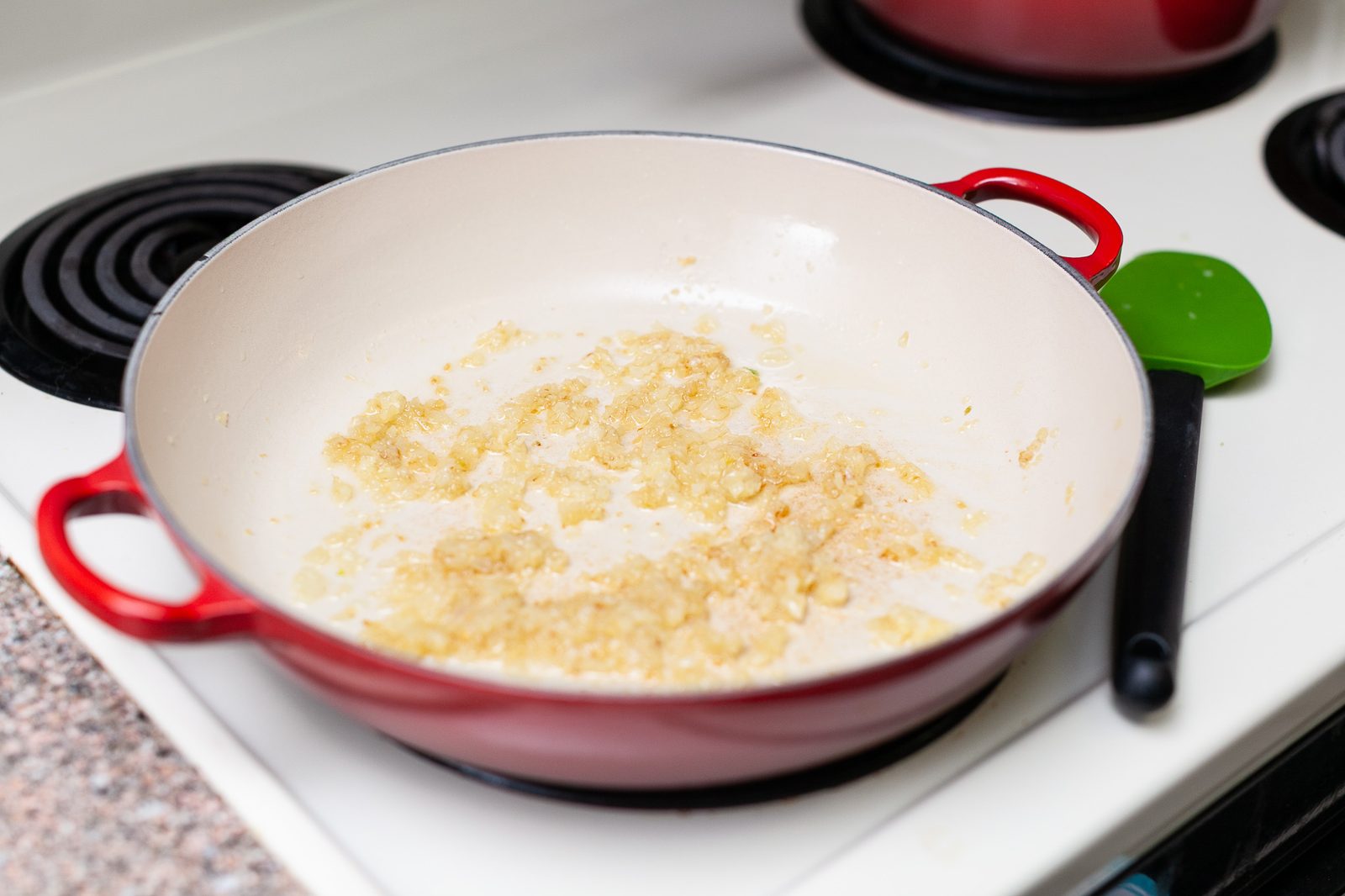
1) Melt the butter and then bloom the garlic. Place a medium sauce pan on medium heat and melt the butter. Add the minced garlic and stir continuously for 30–60 seconds until it smells sweet and bold (you might want to take a closer sniff), but do not let it brown. Very aggressive sizzling? Lower the heat, garlic browns quickly.
2) Add cream and gently simmer. Pour in the heavy cream and add the black pepper (and nutmeg if using). Bring the mixture to a gentle simmer, and let it bubble softly for 3-5 minutes, stirring occasionally, until it thickens a bit. You’re not attempting to boil it down to glue; you’re trying to get it to coat the back of a spoon with a thin trail.
3) Reduce the heat and add the Parmesan cheese. Set heat to \strong{low}\strong. Stir in small handfuls of grated Parmesan and melt it completely before adding more. This is where patience pays off. If you throw everything all at once you invite clumping. To loosen the sauce, add a splash of cream (or warm water) if it appears to be too thick.
4) Check the flavor, then season with salt. Remove the pan from the heat for a moment and do a taste test. Add salt only if it needs it. I’ve had some batches where the Parmesan was so salty I didn’t add even a grain.
5) Serve immediately (or keep it happy). Use straight over pasta, chicken, shrimp, or veggies. If it sits, it thickens; just rewarm gently with a splash of cream or pasta water, and stir until it becomes glossy again.
Popular Variations
- Garlic Parmesan pasta sauce: Toss with hot pasta and a little pasta water until it clings; finish with more pepper.
- Garlic Parmesan wing sauce: Add 1 tablespoon hot sauce and a pinch of cayenne; thin with 1–2 tablespoons warm water for tossing.
- Alfredo-leaning version: Add 1 tablespoon grated Pecorino Romano for bite (taste for salt).
- Roasted garlic version: Swap in 4–6 roasted garlic cloves (mashed) and cook them briefly in butter before adding cream.
- Herb garden version: Stir in chopped parsley or basil off heat for a fresh top-note.
- Mushroom-y umami version: Sauté 1 cup sliced mushrooms in butter first; remove, make sauce, then add back.
Pairing And Serving Ideas
- With pasta: Fettuccine is classic, but I love it with rigatoni because the sauce hides inside the tubes like a secret.
- Over chicken: Pan-seared cutlets or grilled chicken thighs; spoon sauce over and finish with cracked pepper.
- With shrimp: Quick-sauté shrimp separately, then fold into the sauce with lemon zest.
- As a drizzle: Over roasted broccoli, charred cauliflower, or even a baked potato when you’re feeling indulgent.
- For dipping: Warm breadsticks, pizza crust, or toasted sourdough (I’ve been known to “test” it four times in a row).
- On pizza: Use as a white sauce base; add spinach, mushrooms, and mozzarella.
Troubleshooting And Pro Tips
- Sauce is grainy: Usually from too-high heat or pre-grated cheese. Lower the heat, add cheese gradually, and whisk patiently. If it’s already grainy, whisk in 1–2 tablespoons warm cream off heat to help smooth it.
- Sauce is too thick: Thin with a splash of warm cream, milk, or pasta water (pasta water is magic because the starch helps re-emulsify).
- Sauce is too thin: Simmer 1–3 minutes longer before adding cheese, or add a bit more Parmesan. Keep it gentle.
- Garlic tastes bitter: It browned. Start over if it’s truly bitter; no amount of cheese will fix scorched garlic. (Ask me how I know. The trash can got a very expensive snack.)
- Sauce separated/oily: Heat was too high or it boiled hard. Pull off heat, whisk in a tablespoon of cream or a small cube of cold butter to bring it back together.
- Make it ahead: You can, but it’s happiest fresh. If making ahead, under-thicken slightly and rewarm gently with added cream.
- Use the right pan: A heavy-bottomed saucepan keeps the heat even; thin pans make hot spots that punish cheese.
Nutrition And Storage Basics
There is no pretending this sauce is rich, with cream, butter, and cheese. If you’re keeping an eye on calories or saturated fat, think about using it as a finisher instead of a flood: coat some veggies or chicken in just enough to give them a shine and thin it out with some pasta water or a squeeze of lemon. You still get the full flavor hit, just in a lighter form.
You can keep leftovers in the fridge for 3–4 days as long as they are in an airtight container. To restore the silky texture, reheat on low heat (or in a few short bursts in the microwave), stirring frequently, and add a splash of cream, milk, or water. It is possible to freeze the sauce, but the dairy may become a bit grainy after thawing; to thaw, keep it in the fridge overnight and rewarm it gently while whisking.
Examples
Weeknight “I’m tired” pasta: One Tuesday, I had exactly 20 minutes before the rest of the house got weird and started snagging. I boiled some spaghetti, made this sauce, and combined them with some of the reserved pasta cooking liquid and a handful of frozen peas. It seemed like I had some sort of scheme. It’s funny, but the peas did actually make it feel like a more balanced meal.
Mission to rescue the chicken: A friend came over and brought some baked chicken breasts (which if we’re being honest are boring). We warmed them up in a skillet with a little bit of broth, then drizzled the sauce on top and cracked pepper like we meant it. All of a sudden, the chicken acted confidently. The plate was wiped clean with bread and why wouldn’t it be?
Actionable Steps / Checklist
- Grate Parmesan fresh (fine grate melts faster and smoother).
- Mince garlic finely; keep heat moderate so it doesn’t brown.
- Simmer cream gently 3–5 minutes before adding cheese.
- Lower heat and add Parmesan in small handfuls, stirring well.
- Taste before salting (Parmesan varies).
- Adjust consistency with pasta water/cream (thin) or extra Parmesan (thicken).
- Serve immediately, or rewarm slowly with a splash of liquid.
Glossary
- Bloom (garlic): Gently cooking garlic in fat to release aroma without browning it.
- Simmer: Small, steady bubbles, not a vigorous boil.
- Reduce: Simmering to evaporate water and concentrate/thicken a liquid.
- Emulsify: Combining fat and water into a smooth mixture (a glossy sauce that doesn’t look oily).
- Coat the back of a spoon: A doneness cue: drag your finger through the sauce on the spoon; if it leaves a clean path, it has thickened.
FAQ
Is it possible to prepare creamy garlic Parmesan sauce with no heavy cream?
Yes, however the consistency will be thinner. If using half-and-half, simmer a little longer on low heat. If you make a quick roux (like the one you just mentioned), then you can also use whole milk, although this will mean that the flavor will take on a somewhat “gravy-ish” quality.
Why did my Parmesan cheese clump instead of melting?
Most likely: cheese was added too quickly, heat was too high, or the cheese was pre-grated and has anti-caking agents. For the best melt, lower the heat, add slowly, and use fresh grated Parmesan.
How do I thin this sauce for pasta?
Use some of the water you boiled the pasta in. Add one tablespoon at a time while tossing until the sauce is shiny and sticks. Cream is fine, but pasta water gives you that restaurant cling.
Can I use this as pizza sauce?
Definitely. Allow it to cool a bit to thicken, spread a light layer and cover with mozzarella and some earthy toppings like mushrooms or spinach. Bake until bubbles form but do not dry out.
What is the best kind of Parmesan cheese?
The best is Parmigiano-Reggiano. It has a beautiful nutty flavor, and it melts well. It’s fine to use a decent domestic Parmesan, but definitely steer clear of shelf-stable powdered “Parm” for this sauce.
Final Thoughts
As long as you have butter, garlic, some cream, and a wedge of Parmesan, you’re always ready to prepare a meal that feels a bit gourmet. This sauce shows you how simple creativity can give you that rush of confidence and glee. It is simplistic in its approach but the way it hits the plate gives it a touch of elegance. It can turn anything it touches into pure comfort.
