I remember the first time I made loaded baked potatoes as the main event (not a side). My brother-in-law looked at his plate and said something I’ve replayed in my head a hundred times: “I keep forgetting this is just a potato.” Not exactly a compliment, huh?
It was the sort of mild confusion that occurs when a food item you’ve classified as filler dishes stands up and calls for a fork. No steak in sight? The three of us however have a different story. I think I remember a Wednesday evening where we were all working on a single potato. Before he had even finished building his first one, his second one was already half constructed.
Here’s the trick: a baked potato is at least three different things depending on the cooking method used. In a microwave, a potato is a dense and steamy potato. In an oven, it’s a fluffy and crispy potato. If you do neither, you get a sad half-fluffy compromise. This recipe focuses on the moment when the interior has the right amount of fluff and the exterior maintains some texture. That is the moment when the butter, cheese, and broccoli go from being toppings to becoming fully integrated.
Before You Start: The Gist
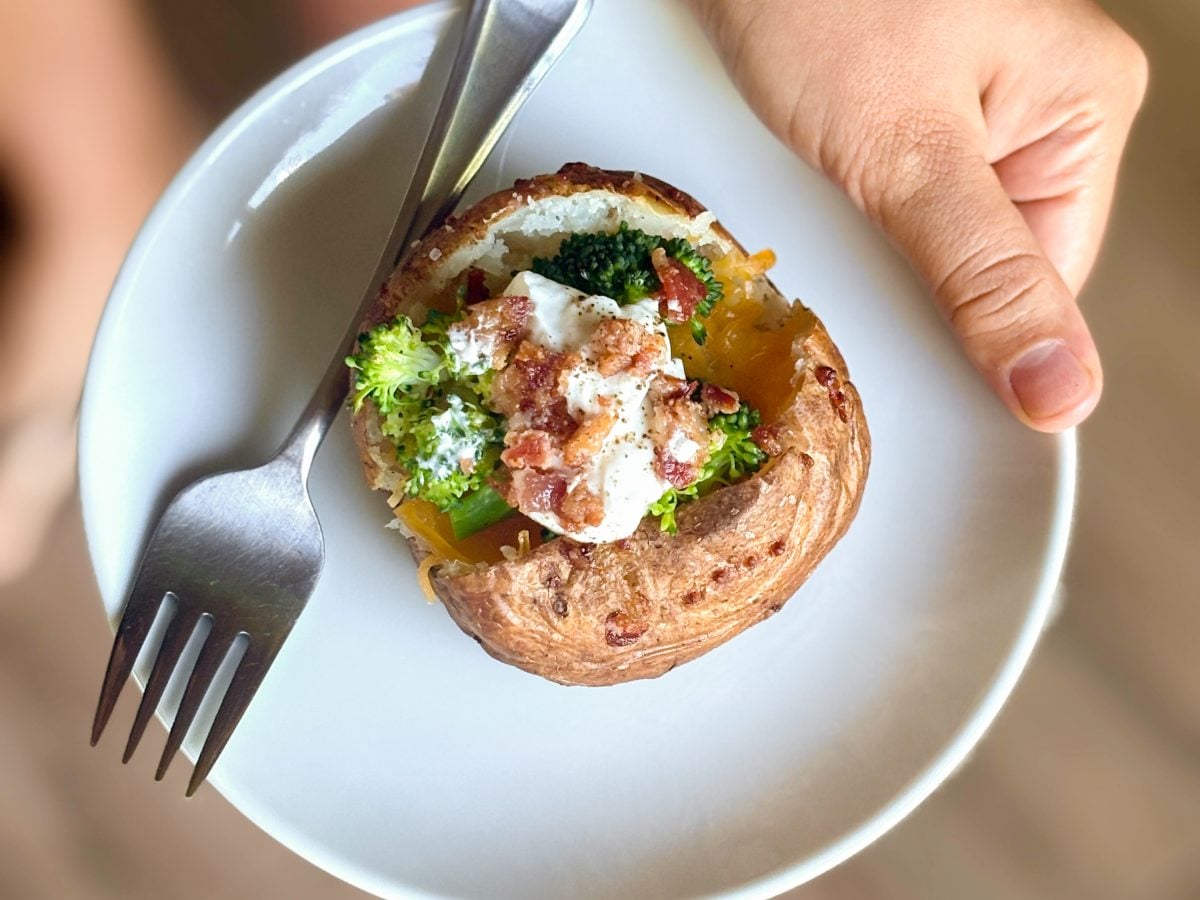
- Loaded Baked Potato, before the details: A fluffy-inside, crisp-skinned baked potato loaded with butter, melted cheese, steamed broccoli, and a cool topping like sour cream.
- Why it works: Piercing plus a dry, oiled skin gives you crisp outside without sogginess; resting the potato 2 minutes lets the interior fluff instead of glue; freshly grated cheese melts properly.
- Timing: About 5 minutes prep, 50–60 minutes oven (or 10–12 minutes microwave for the fast route).
- Flavor profile: Buttery, salty, sharp from cheese, grassy from broccoli, cool tang from sour cream.
- Key tips: Pierce 6–8 times, salt the skin, rest before fluffing, grate your own cheese, eat within 90 seconds of plating.
Ingredients
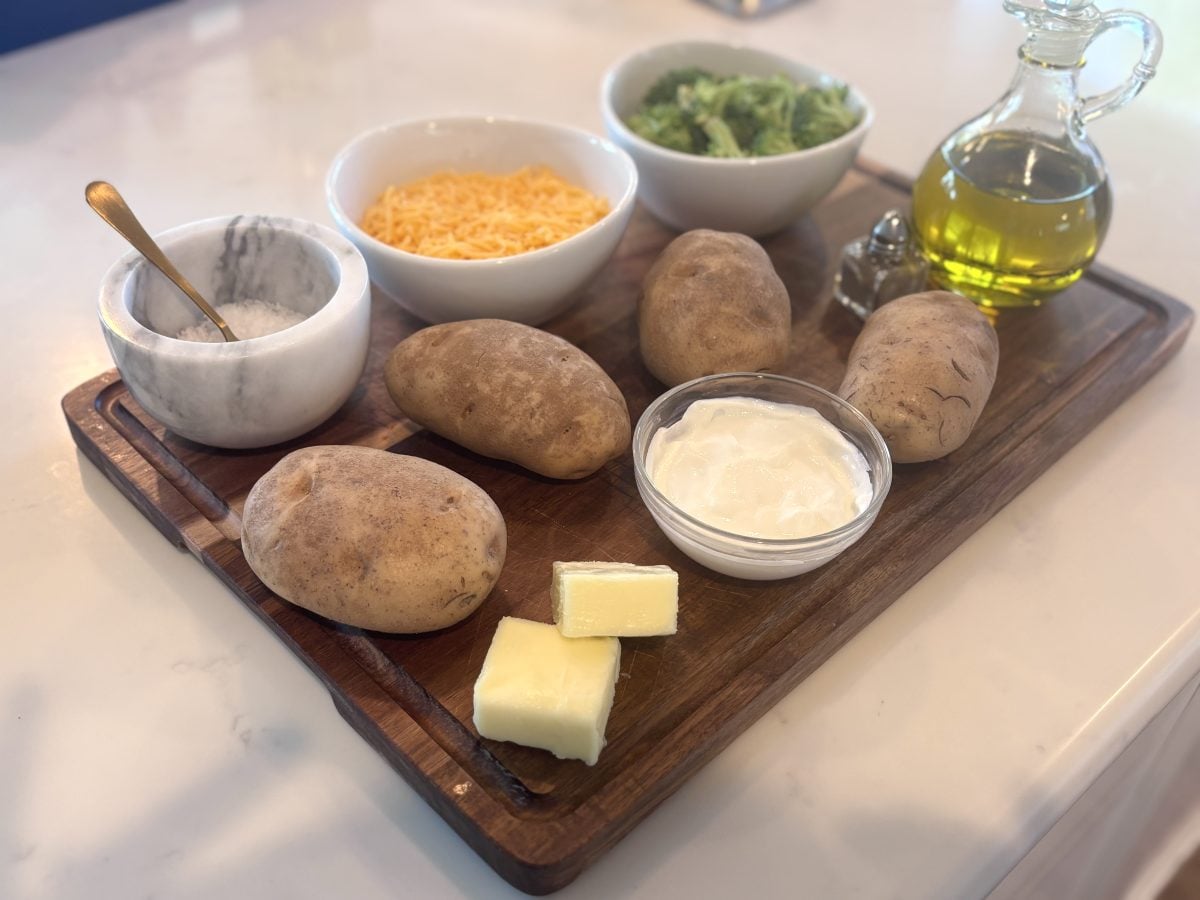
This recipe has some wiggle room with a few details. The primary one: potato choice. Russets are high in starch and have thick skins which bake into a dry and fluffy interior which withstands toppings. Yukon Golds and red potatoes are denser and creamier. While this is great for other dishes, here, we want something dry and fluffy.
Additionally, do not wrap the potatoes in foil. Foil traps steam and instead of giving you the crisp skin that makes the whole dish come together, you get sad, leathery skin. Patata, olio, sale, griglia del forno That’s the move.
- Russet potatoes (1 per person, medium to large): Their starch profile breaks down into the dry, fluffy interior that holds toppings instead of pooling under them. Russet potatoes are a great source of potassium, which is beneficial for heart health.
- Olive oil (1 tsp per potato): Coats the skin so it crisps in the oven instead of steaming. Skip this for the microwave route.
- Kosher salt (a generous pinch per skin): The skin is the most underrated part of the potato. Salt it like you mean it.
- Butter (1–2 tbsp per potato): Goes in first while everything is still hot enough to melt it into the flesh.
- Shredded cheese (1/4–1/2 cup per potato): Freshly grated melts better than pre-shredded. The anti-caking coating on bagged cheese fights you on this.
- Broccoli (1 small head, about 1 1/2 cups florets): The vegetable that makes a loaded baked potato feel like a complete plate instead of a snack.
- Sour cream (1–2 tbsp per potato): Cool, tangy, and the contrast that ties the whole thing together. Plain Greek yogurt subs in cleanly; a small dab of mayo works if that’s where you live.
- Optional finishers: crumbled bacon, sliced scallions, chopped chives, hot sauce, smoked paprika, black pepper, flaky salt.
Master Ratio (Easy To Scale)
- Per 1 medium russet (8–10 oz): 1 tsp olive oil, a pinch kosher salt, 1–2 tbsp butter, 1/3 cup shredded sharp cheddar, 3/4 cup steamed broccoli, 2 tbsp sour cream
- Topping mix: roughly 1 part fat (butter) to 2 parts cheese to 3 parts broccoli to 1 part cool topping (sour cream)
Example: cooking for four? 4 potatoes, 1 small head of broccoli, ~ 1 1/3 cups of cheese, 1/2 stick of butter, 1/2 cup sour cream. For anyone who wants to stack extra toppings such as bacon, scallions, or hot sauce, place these ingredients in bowls so everyone can make their own creations. After the initial set up, everything else is automatic for a baked potato bar!
Ingredient Choices That Change Flavor
| Ingredient/Choice | Best For | Flavor/Texture Effect | Notes & Substitutions |
|---|---|---|---|
| Russet potato | Classic loaded baked | Dry, fluffy interior; crisp skin | The reference; nothing else hits the same texture |
| Yukon Gold | Creamier, denser bake | Buttery, less fluff | Better for mashing; works in a pinch but reads as a different dish |
| Sweet potato | A different mood entirely | Sweet, soft, almost custardy | Pair with feta, chili oil, scallions instead of cheddar and sour cream |
| Sharp cheddar | Most people, most nights | Tangy, melts cleanly | Grate from a block; pre-shredded fights the melt |
| Pepper jack | Households that like a kick | Mild heat, smooth melt | Good with Tex-Mex toppings |
| Gruyère or fontina | Slightly grown-up version | Nuttier, silkier melt | Pairs well with chives and black pepper |
| Sour cream | The reference experience | Cool, tangy, classic | Full-fat melts into the heat best |
| Plain Greek yogurt | Lighter, leaner build | Sharper tang, more protein | Use whole-milk yogurt if you can |
| Steamed broccoli | Soaks up butter and cheese | Tender, mild | Drain well or it waters down the potato |
| Roasted broccoli | Bigger flavor, oven already on | Browned edges, nuttier | Roast at 425°F alongside the potatoes for the last 15 minutes |
Instructions
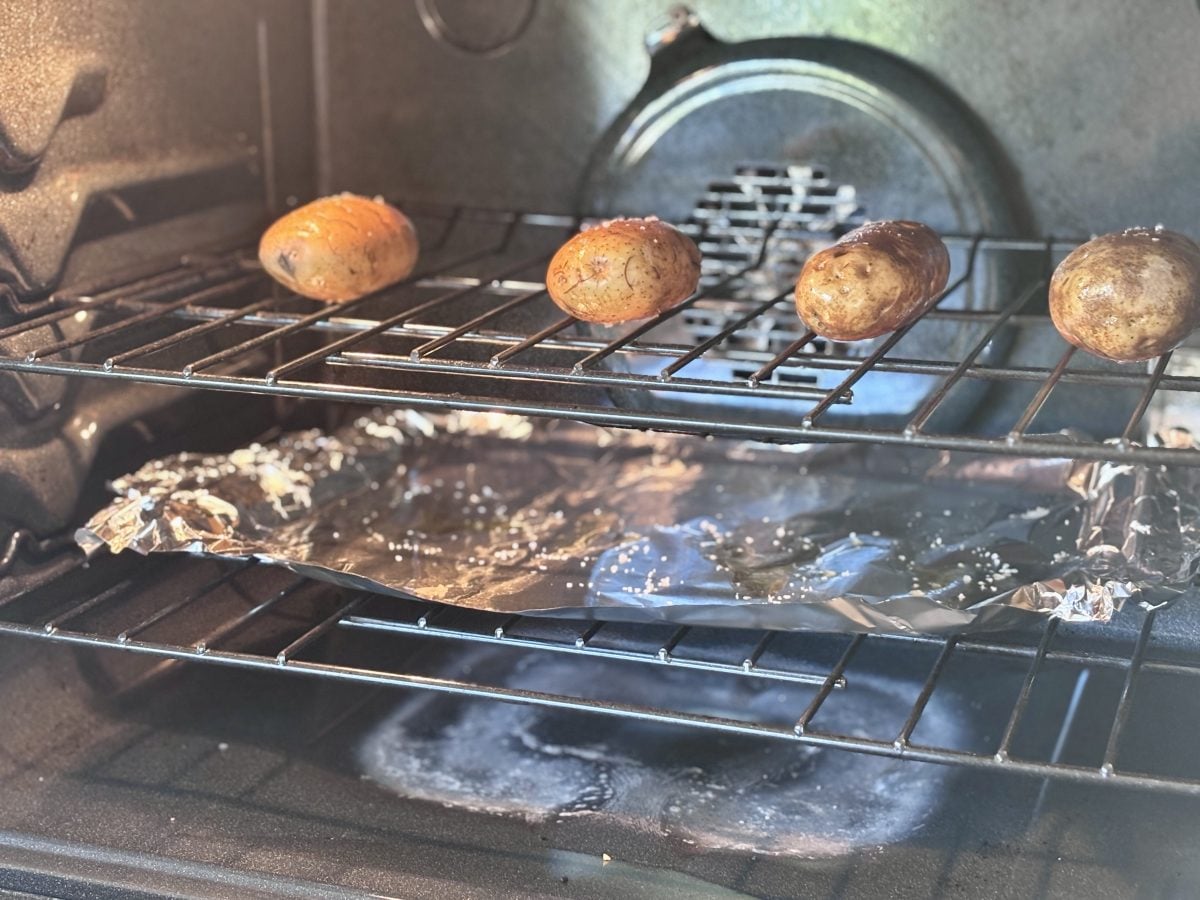
Oven route: 425 degrees Fahrenheit (degrees Celsius 220). Pan: a foil-lined sheet pan placed on the rack below the potatoes (catches any drips to prevent smoke from filling the kitchen).
1) Prepare the potatoes. Scrub some russet potatoes, dry them, and poke holes in them with a fork about 6 to 8 times (steam needs an exit or it’ll find one). Fast route: microwave them for 5 minutes on a plate with space between them, flip them, and then cook for another 4–6 minutes until a knife slides easily into the center.
Better route: coat each potato with some olive oil and a good pinch of salt and then place them onto a foil covered rack in the oven. Set the oven to 425°F and then bake them for 50-60 minutes until you see the skin has become crispy.
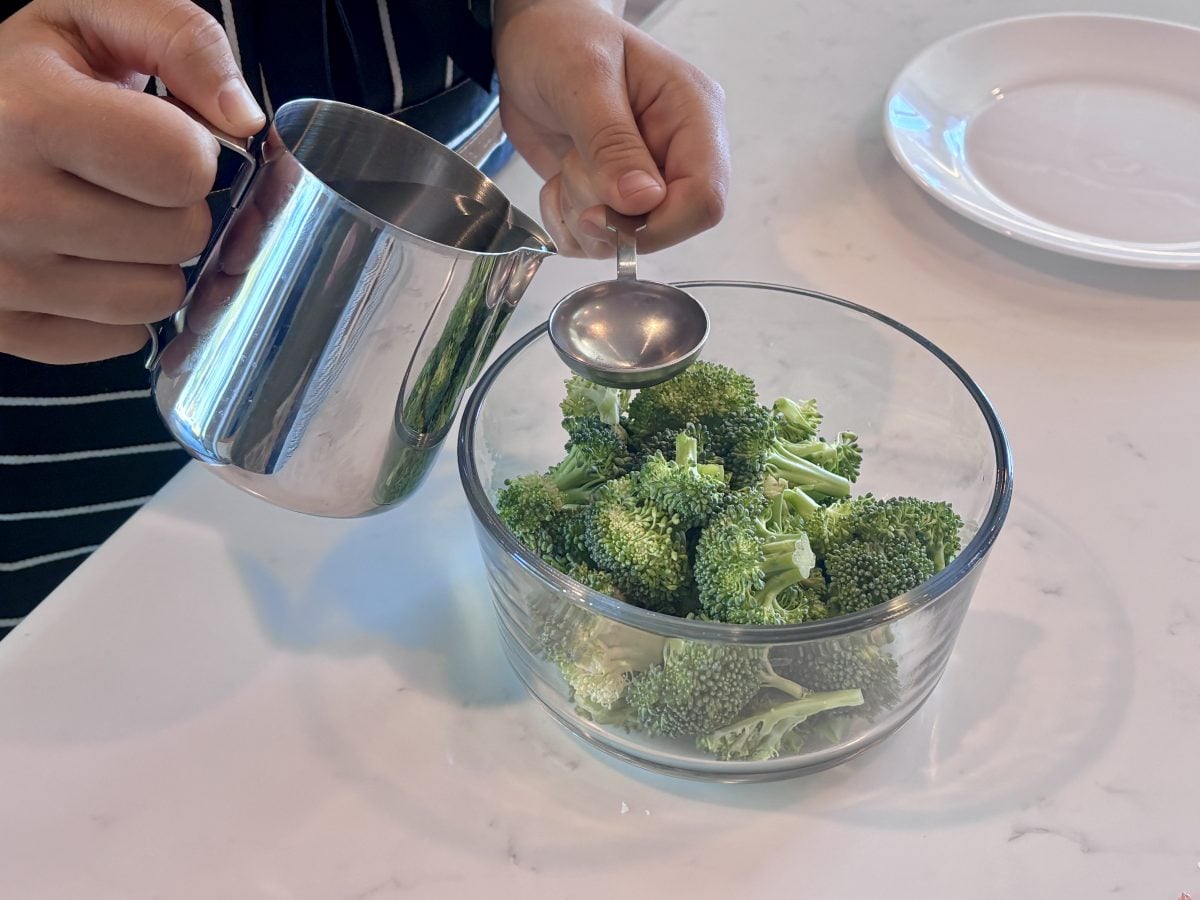
2) Steam the broccoli while you wait. Cut into small florets and place in a microwave-safe bowl with 2 to 3 tablespoons of water. Cover with a plate, then microwave for 3 to 4 minutes. The broccoli should be tender and bright green. Drain well. Moist broccoli will soak the inside of a potato.
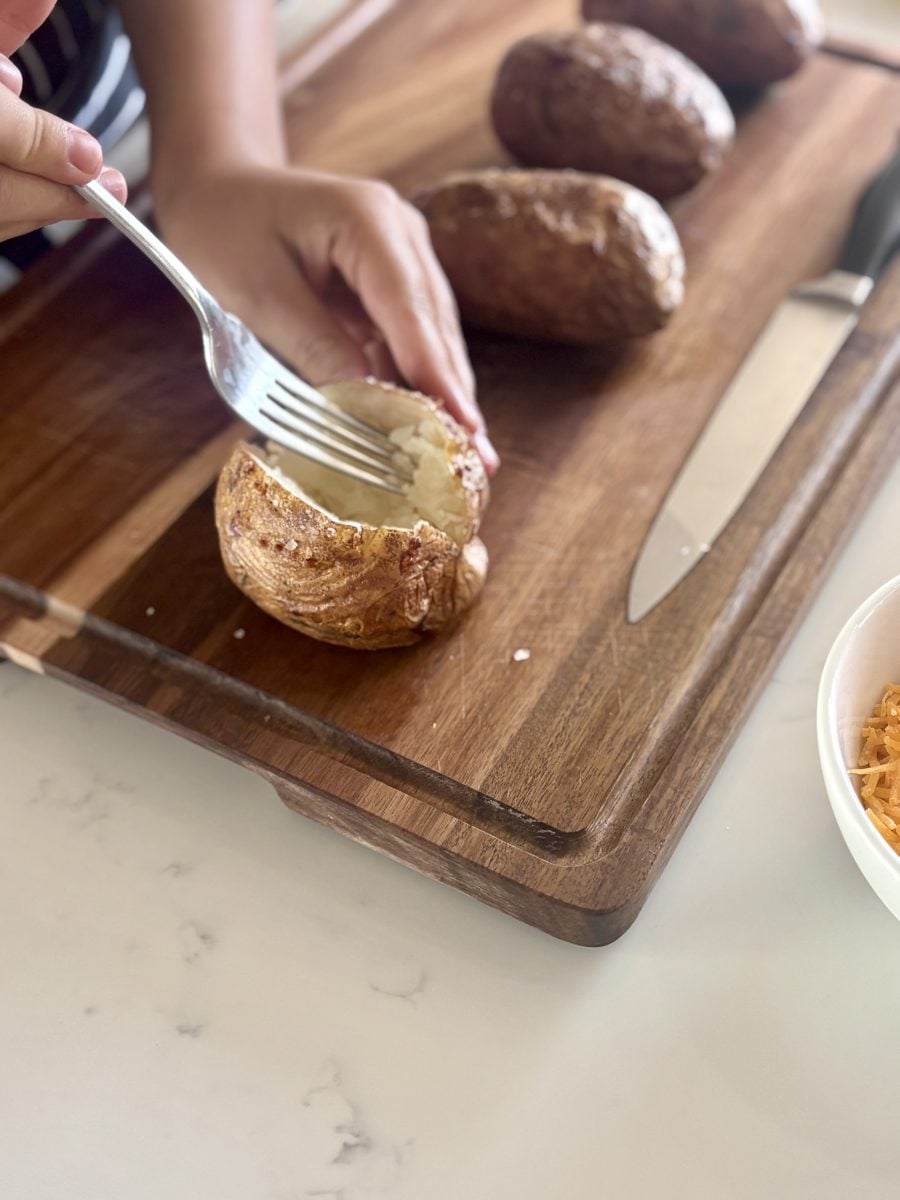
3) Open and fluff, don’t squash. Allow the cooked potatoes to sit for 2 minutes. Make a long cut on top of each one. Then squeeze the sides toward the center to push the steaming filling up and out. Fork-fluff the inside gently. Saddest baked potato outcome is when fluffy turns into gluey and mashing vertically creates this.
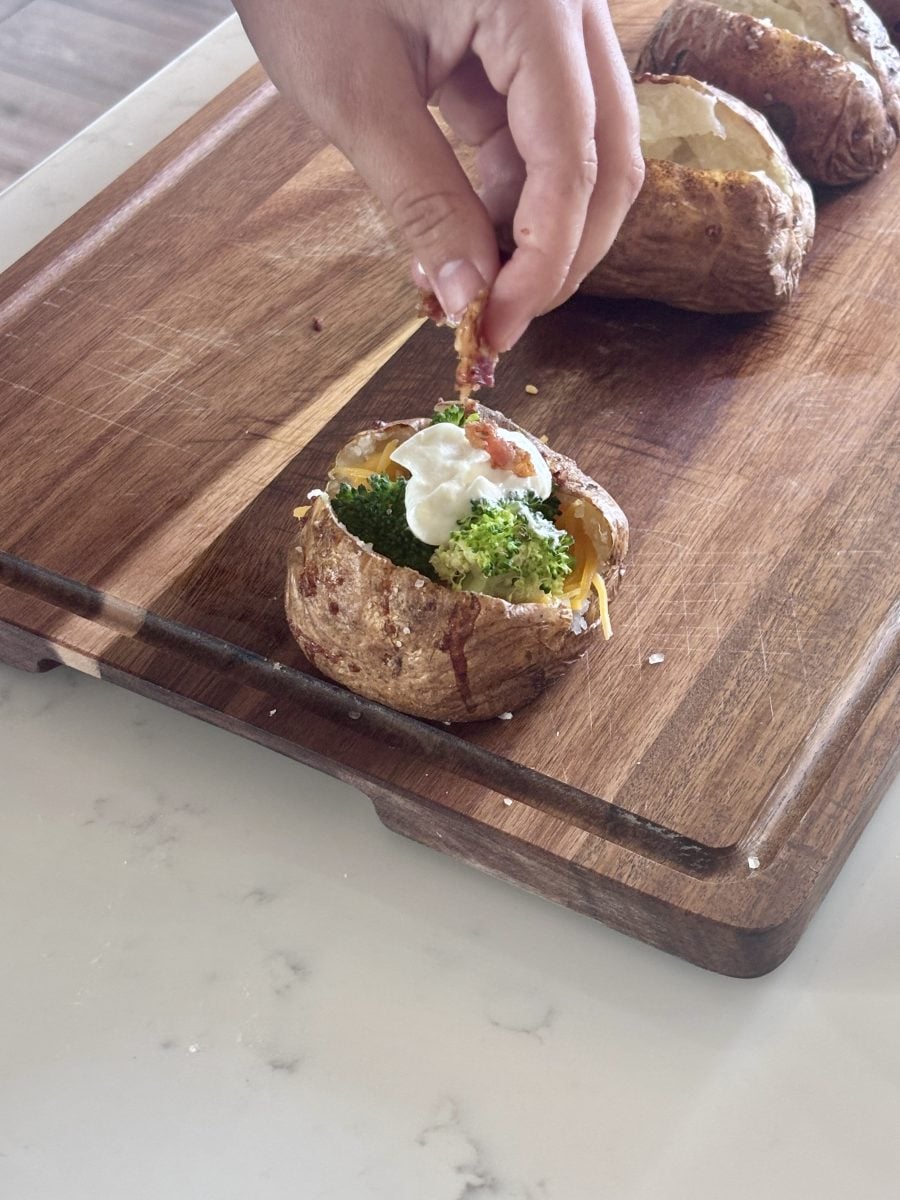
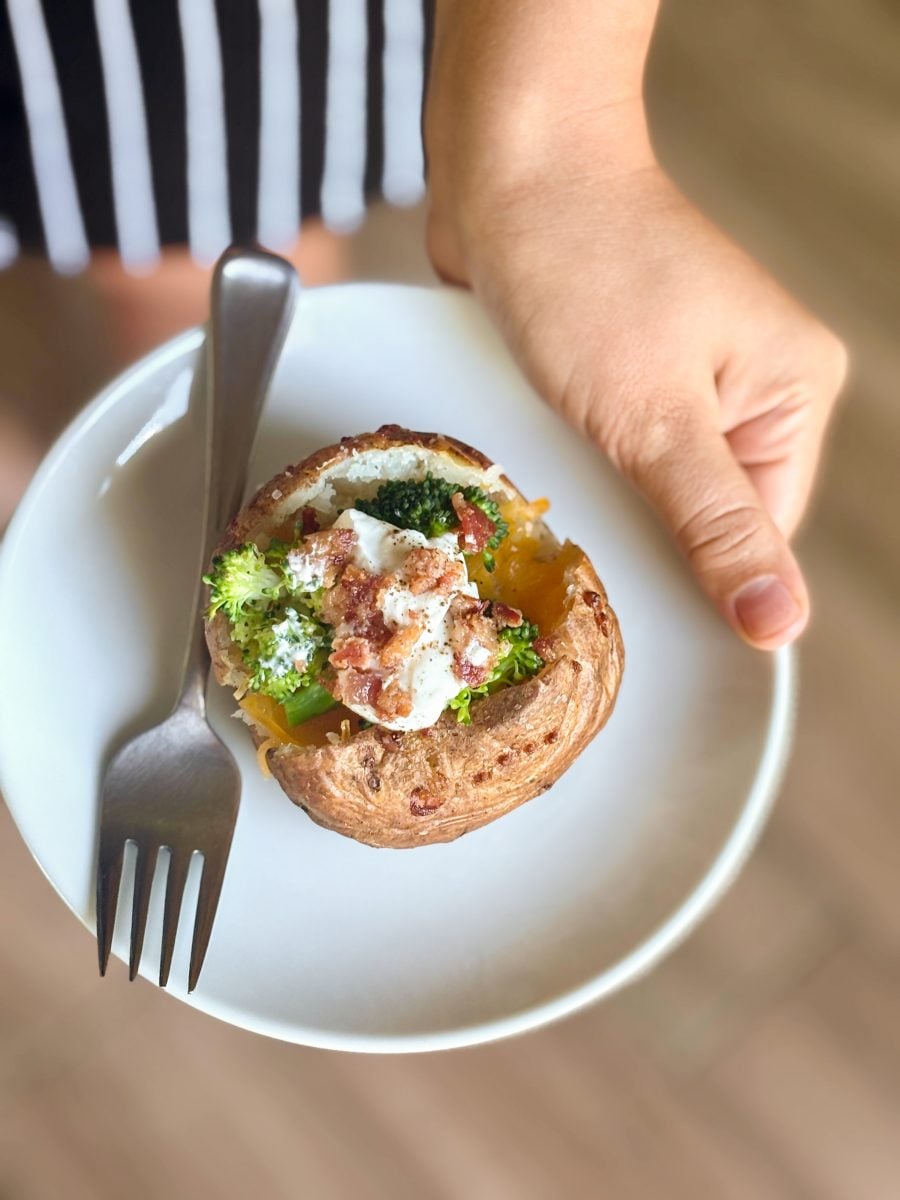
4) Build it: fat, cheese, then everything else. Place a pat of butter inside the fluffy mass and allow it to melt. Sprinkle a good amount of shredded cheese on top. (Cheese that you grate yourself will melt much better. Pre-shredded cheese has anti-caking dust that keeps it from melting.) Pile on the broccoli. Add sour cream, Greek yogurt, or a bit of mayo if that’s what you prefer.
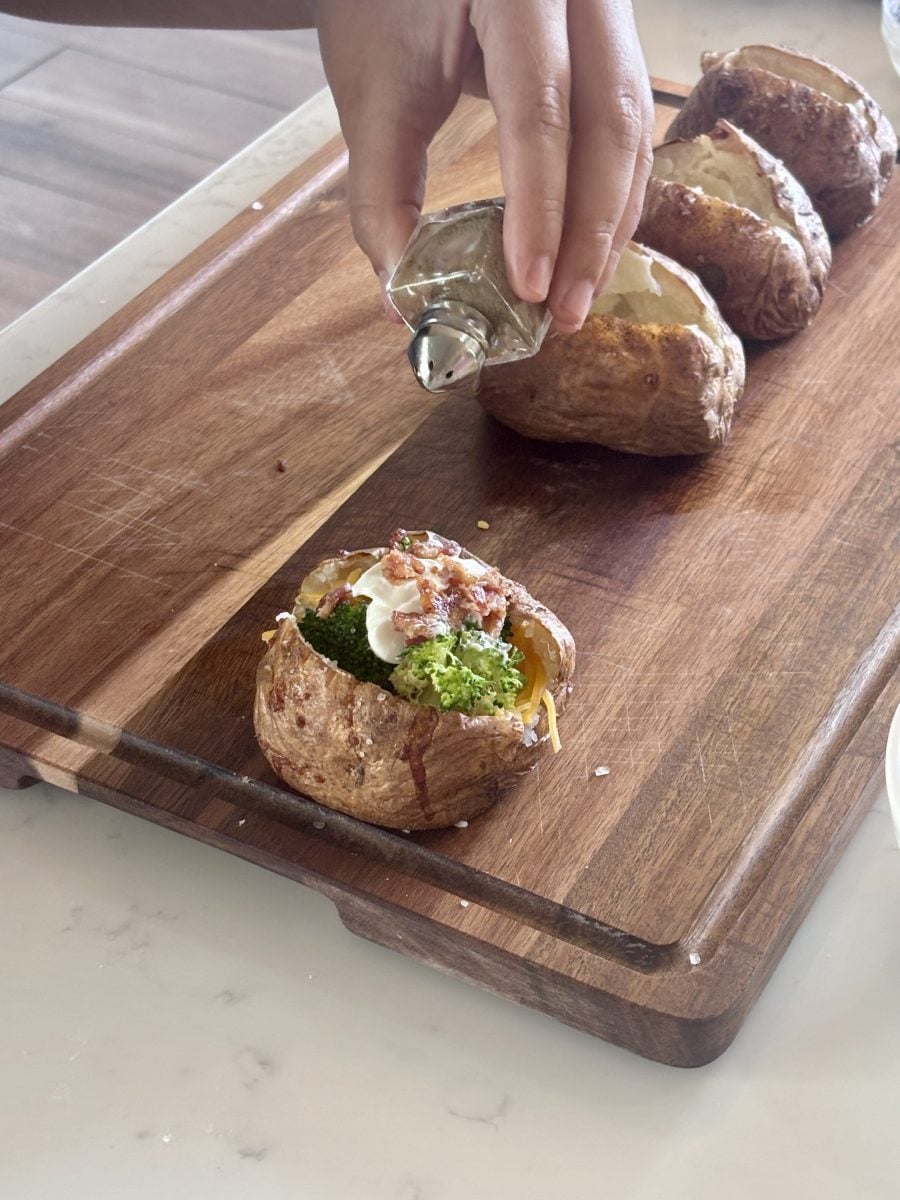
5) Season and eat right away. Salt, pepper, and anything else that compliments: crumbled bacon, sliced scallions, hot sauce, smoked paprika, chives. A loaded baked potato will be perfect in about 90 seconds after you plate it, so don’t dawdle.
Spins and Swaps
- Steakhouse loaded: bacon, scallions, sour cream, and extra-sharp cheddar. The full diner experience.
- Broccoli-cheddar deluxe: double the broccoli, double the cheese, hit it with a quick pass under the broiler before topping with sour cream.
- Tex-Mex potato: pepper jack, black beans, salsa, a spoon of sour cream, and a quick sprinkle of cilantro and lime.
- Pesto-and-mozzarella: a smear of pesto into the flesh before the cheese, then fresh mozzarella and a few cherry tomato halves.
- Buffalo chicken stuffed: shredded chicken tossed in buffalo sauce, blue cheese crumbles, and scallions. The potato becomes a vessel.
- Breakfast version: scrambled eggs, cheese, crumbled sausage, a drizzle of hot sauce, and chives. Tastes startlingly correct at 7 a.m.
- Lighter build: olive oil instead of butter, Greek yogurt instead of sour cream, lots of broccoli, a small handful of cheese, and a heavy hand with black pepper.
What to Serve With It
- As a main, with salad: something acidic to cut the richness, like a sharp vinaigrette.
- With protein: a quick grilled chicken breast or a simple steak alongside makes this a steakhouse-at-home plate.
- With soup: a cup of tomato soup or chicken noodle next to a loaded baked turns it into a winter dinner that costs nothing.
- For a crowd: build a baked potato bar with three cheeses, two proteins (bacon and shredded chicken), broccoli, sour cream, scallions, and hot sauce. People build their own; you sit down.
- Leftover idea: scoop tomorrow’s potato out, mash with extra cheese and an egg, and pan-fry as potato cakes.
If Something Looks Off
- Skin turned out soggy. You skipped the oil, or wrapped the potato in foil, or didn’t pierce enough. Next time: pierce 6–8 times, rub with oil, and bake naked on the rack.
- Interior is gluey instead of fluffy. You squashed the potato instead of fluffing it. Russets get gluey when their starch is overworked. Cut the top, pinch the ends, and fork-fluff lightly.
- Cheese didn’t melt. Either the potato cooled off before the cheese hit it, or you used pre-shredded cheese. Hot potato plus fresh-grated cheese fixes both.
- Microwave potatoes taste dense. Microwaves cook by steaming from the inside out, no crisp skin. If you want the texture without the wait, do 8 minutes microwave plus 10 minutes in a 425°F oven to finish.
- Broccoli watered down the inside. It wasn’t drained. Steamed broccoli holds a surprising amount of water. Drain in a strainer or pat with a paper towel before piling on.
- Tastes plain after all that work. Salt the skin before baking, salt the flesh after fluffing, and add an acidic finisher (a squeeze of lemon, a dash of hot sauce, or a spoon of salsa).
- Oven smells like burning. A potato split open and is dripping starch onto the heating element. That foil-lined sheet pan on the rack below is the fix.
Keeping It and Reheating It
Nutrition varies with the body type. A medium russet potato topped with butter, a big handful of cheese, broccoli, and sour cream is a hearty, mostly veggie meal with good protein from the cheese, and good fiber from the skin and broccoli. You can lighten it by replacing butter with olive oil, reducing the amount of cheese, and increasing the amount of broccoli. For a complete comfort plate, load it up with bacon, extra cheese, and a thicker layer of sour cream.
You can keep your cooked, unloaded baked potatoes in the refrigerator for a maximum of 4 days. Reheating in the microwave is possible, but the skin will get soft; for best results, place in the oven at 350°F for 15 minutes. Do not store topped potatoes; the toppings get soggy and the potato gets weird. Build them fresh. You can use cold baked potatoes to make breakfast hash, or to prepare twice-baked potatoes for dinner the following night.
From My Kitchen
Example 1 (Project Pantry Rescue): I got a call from my sister in law at around 6 p.m. and mentioned that all she had in the house was some russets, broccoli, and a block of cheddar. I instructed her to follow this recipe, take the oven route, and call me back. She did, in all likelihood to brag, about an hour later. She said her children had not even that year eaten broccoli without any negotiations. I’ll give the cheese some credit, but I’ll take credit for the order of assembly.
Example 2 (the overly engineered version): Once, I attempted to add some sort of “elevation” to this dish with truffle butter and some kind of fancy, aged cheddar. I liked it, but it took away the home cooked feel and taste that makes it special and felt like a restaurant meal instead. The standard version (regular butter, sharp cheddar, broccoli, sour cream) was somehow more satisfying than the upgrade. One should avoid overthinking a baked potato.
Your Game Plan
- Buy russet potatoes, sharp cheddar (a block, not pre-shredded), broccoli, butter, and sour cream.
- Preheat oven to 425°F; line a sheet pan with foil for the rack below.
- Scrub potatoes, pat dry, pierce 6–8 times, rub with oil, salt the skin.
- Bake 50–60 minutes until a knife slides in easily.
- Steam broccoli; drain well.
- Rest potatoes 2 minutes; cut and fluff (don’t mash).
- Build: butter, cheese, broccoli, sour cream, salt, pepper, optional toppings.
- Eat within 90 seconds of plating.
Kitchen Words, Decoded
- Russet: A high-starch potato with thick skin and a dry, fluffy interior when baked. The reference baked-potato variety.
- Fluffing: Gently breaking up the cooked potato flesh with a fork so it stays light and airy instead of compressing into a paste.
- Steaming (vs. baking): Microwaving cooks by steaming the potato from the inside. Oven baking dries the skin while cooking the interior. Different textures, both useful.
- Anti-caking agent: A coating (usually cellulose or starch) on pre-shredded cheese that keeps strands from sticking together but also slows melting.
- Resting: Letting a cooked potato sit briefly before cutting so steam redistributes and the flesh doesn’t collapse when opened.
Quick Answers
Do I have to use russets?
Not exactly, but yes if you’re looking for the classic loaded baked potato texture. In this case, denser and creamier Yukon Gold or Red potatoes won’t work, as you want that dry, fluffy interior.
Microwave or oven, really?
Both have a place. Microwave this if you have 12 minutes and don’t care if it has crispy skin. Even when there is an hour, and you want the real thing. The hybrid (8 minutes microwave plus 10 minutes at 425°F to finish) is ok.
Can I make these ahead?
Sort of. Bake the potatoes in advance, store them whole in the fridge, and then rewarm them at 350°F for 15 minutes before adding toppings. Do not pre-load the toppings; they deteriorate rapidly. The entire appeal is hot potato and fresh toppings.
Why does the skin matter?
The skin retains the potato`s form, provides additional texture, and contains most of the potato`s fiber. Everything feels like baby food with bonus toppings because of rubbery, soggy skin.
Can I cook a baked potato in an air fryer?
Yes, and that is a strong option. Rub the chicken with oil and salt, pierce it, and air fry for about 40 minutes at 400°F. The outer part becomes crunchy while the inner part remains soft. If you are only cooking a few, then it will use less energy than an oven.
How long do leftovers keep?
Unloaded and cooked potatoes last for 3-4 days in the refrigerator. Stuffed potatoes do not keep well. Enjoy what you’ve constructed and prepare to bake even more tomorrow.
Parting Notes
A loaded baked potato is the dinner that silently packs a powerful punch. It uses ingredients you probably already have on hand, takes one good piece of equipment (oven or microwave), and ends up feeling like a proper emergency meal instead of an emergency meal.
Take the potato as the main event. Salt the skin, fluff the inside, grate your own cheese, and don’t let it sit while you answer the phone. The 90-second window from plate to fork is real, and it’s the difference between a great loaded baked potato and one you mentally note as ‘fine.’