
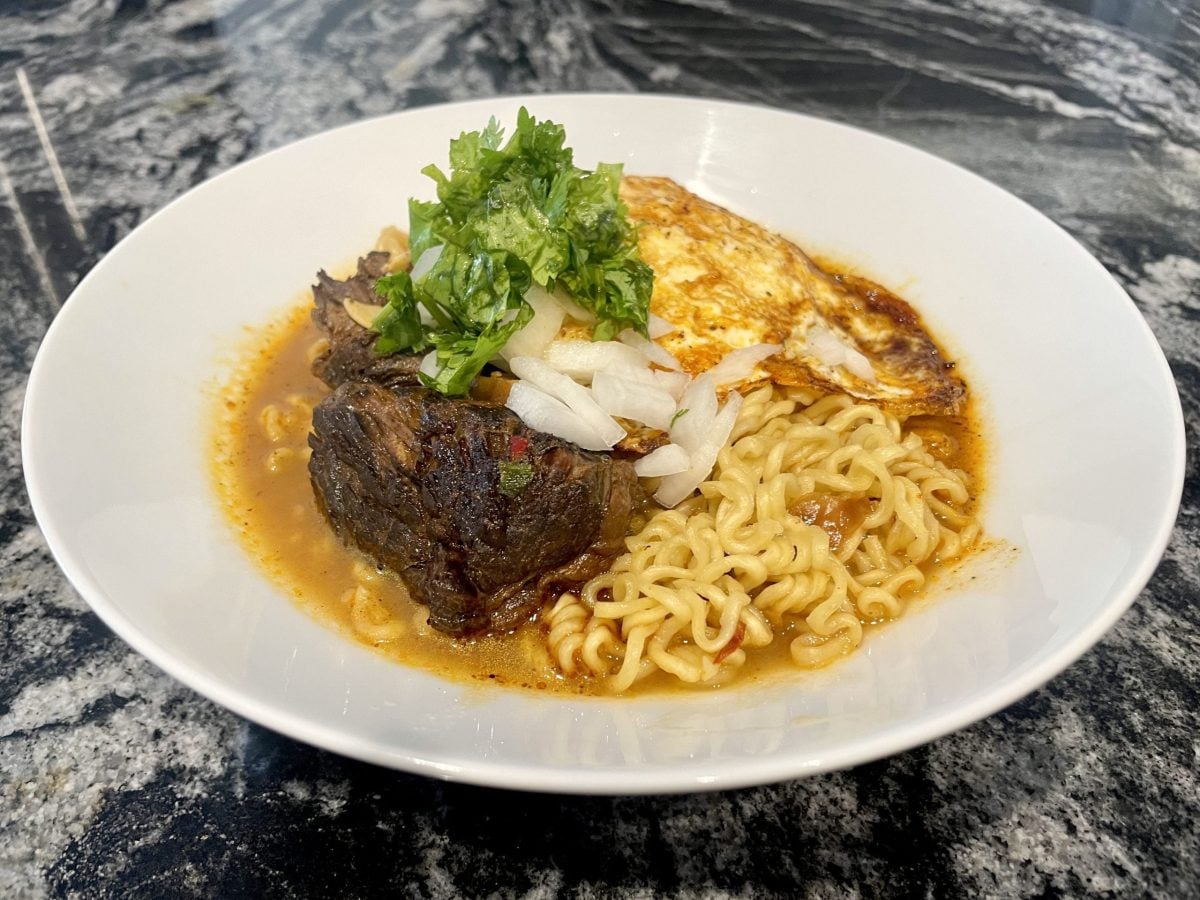
I’ll be honest, I enjoy the concept of an all-day ramen broth, but I don’t relish the prospect of having to babysit a pot for six hours while life crumbles around me. This recipe for beef ramen noodles is my compromise. It’s made for the evenings when you crave that deep slurpable, glossy, and savory bowl, but want to eat before you start dry cereal out of the box nibble.
The secret is a quick, multi-tiered broth (beef stock, augmented with some brash, salty, and aromatic components) and the beef is prepared in a manner that remains succulent and pronounced. You get springy noodles, beef with caramelized edges, and broth that tastes like it has a backstory. I made it the first time as a “just testing,” and my family just hovered like seagulls. That’s usually a good sign.

The Cheat Sheet
- Weeknight Beef Ramen, condensed: Beef ramen noodles with a quick, deeply savory broth, seared beef, and customizable toppings.
- Why it works: Searing builds flavor fast; broth gets instant complexity from soy, miso, aromatics, and a touch of sweetness.
- Time: About 30 minutes total (15 minutes if you move like you mean it).
- Flavor profile: Beefy, soy-rich, gingery, a little sweet, gently spicy if you want, with a toasty sesame finish.
- Key tips: Cook noodles separately, slice beef against the grain, and add miso off the heat so it stays smooth and fragrant.
- Best use case: Weeknight dinner that feels like takeout but cleaner and more customizable.
Ingredients
While this recipe is meant to be adaptable, some specifics are important. Use a low sodium beef stock if possible; there will be plenty of salt from the soy sauce, miso, and any spicy sauces. For the beef, target quick-cooking cuts (ribeye, sirloin, flank, skirt) that can be seared heavily and cut into thin slices. And don’t skip the aromatics: ginger and garlic are the ‘ramen perfume’ that makes the bowl smell like something you’ve waited for.
- Beef: 12 ounces (340 g) ribeye, sirloin, flank, or skirt steak, sliced thin against the grain
- Ramen noodles: 2 to 3 portions fresh or dried (about 6 to 9 ounces total)
- Beef stock: 4 cups (960 ml), preferably low-sodium
- Soy sauce: 3 to 4 tablespoons (use less if your stock is salty)
- Miso paste: 1 to 2 tablespoons (white or yellow is easiest and mellow)
- Sesame oil: 1 to 2 teaspoons, toasted
- Garlic: 3 cloves, finely grated or minced
- Ginger: 1 tablespoon, finely grated
- Sweetness: 1 to 2 teaspoons brown sugar, honey, or mirin
- Acid (optional but bright): 1 to 2 teaspoons rice vinegar or a squeeze of lime
- Heat (optional): chili crisp, sriracha, or gochujang to taste
- Oil for searing: 1 tablespoon neutral oil (canola, grapeseed, avocado)
- Toppings: scallions, soft-boiled eggs, baby spinach, mushrooms, corn, nori, sesame seeds
Master Ratio (Easy To Scale)
- Broth: 2 cups stock per 1 generous serving
- Soy sauce: 1 1/2 tablespoons per 2 cups stock
- Miso: 1/2 to 1 tablespoon per 2 cups stock
- Beef: 4 to 6 ounces per serving
- Noodles: 2 to 3 ounces dried (or 4 to 5 ounces fresh) per serving
- Aromatics: 1 clove garlic + 1 teaspoon ginger per serving
How would you feed 4 hungry people? Begin with 8 cups of stock, 6 tablespoons of soy sauce, 2 to 4 tablespoons of miso, and 1 1/2 pounds of beef. Then you adjust like a real cook: taste the broth, add a little more soy for more depth, a little more sugar to round it out, maybe some vinegar if it feels heavy.
Ingredient Choices That Change Flavor
You can direct the bowl to what you desire. I have made it spicy and zesty as well as smooth and nearly buttery. Same method, different mood.
| Ingredient / Option | What it does | Best if you want… | Notes / Substitutions |
|---|---|---|---|
| Soy sauce (regular) | Deep salt + umami backbone | Classic ramen shop vibe | Use low-sodium stock to control salt |
| Tamari | Slightly rounder, less sharp | Smoother broth | Gluten-free if labeled |
| Miso (white) | Gentle sweetness, creamy umami | Mellow, cozy bowls | Stir in off-heat to avoid harshness |
| Miso (red) | Darker, funkier, stronger | More intensity | Use less; it can dominate |
| Chili crisp | Heat + crunchy aromatics | Spicy, textured finish | Add at the end so it stays vivid |
| Gochujang | Sweet heat + fermented depth | Korean-leaning flavor | Whisk into broth; start with 1 teaspoon |
| Mirin vs honey | Mirin is clean-sweet; honey is round-sweet | Mirin for lighter; honey for plush | Brown sugar works in a pinch |
Toppings That Actually Pull Their Weight
- Soft-boiled eggs: Creamy yolk makes the broth feel richer than it is.
- Quick sautéed mushrooms: Add chew and extra savor (shiitake is king, cremini is fine).
- Greens: Baby spinach wilts in seconds; bok choy adds crunch.
- Scallions and sesame seeds: Not optional in my house. They make it taste “finished.”
- Nori: Salty ocean note that screams ramen in the best way.
Instructions
1) Prepare the beef and make your future self grateful. Slice the steak thinly against the grain. If it is being stubborn, place it in the freezer for 10 minutes. Beef that is partially firm is easier to cut cleanly. Pat it dry, and then sprinkle on some soy sauce (1 teaspoon), a dash of pepper, and a little sesame oil (a few drops). You’re not so much marinating as much as you’re giving it a head start.
2) Prepare the noodles separately. Boil water in a separate pot for the ramen and cook according to the instructions on the packet. To prevent them from overcooking, drain and rinse, then toss them with a small amount of a neutral oil so they don’t stick together. (At one point I cooked the noodles in the broth to avoid washing another pot.) The broth became starchy and oddly cloudy. I regret my choices.)
3) Sear beef quickly and aggressively. Preheat a large skillet or wok over medium-high heat until it is sufficiently hot. Add 1 tablespoon neutral oil. If necessary, work in batches. Then lay the beef in a single layer. Sear for 45 to 90 seconds on each side, just until the edges are brown. Remove to a plate. You want color, not sadness.
4) Construct the broth in the same pot. Lower the heat to medium. Put garlic and ginger into the pan and stir for 15 to 30 seconds, until aromatic. Pour in the beef stock and scrape the bottom of the pan where the brown bits are. Pour in 3 tablespoons of soy sauce and 1 teaspoon of sweetener. Simmer very gently for 5 minutes. Taste. If it’s flat, add more soy; if sharp, add more sweet; if it feels heavy, add a splash of rice vinegar.
5) Incorporate the miso properly. Reduce the heat. In a separate bowl, combine the miso paste with a few spoonfuls of hot broth and whisk until smooth. Stir the mixture back into the pot. After adding miso, don’t boil. It dulls the flavor. Incorporate 1 to 2 teaspoons of toasted sesame oil.
6) Heat beef and put together. Place the beef (and any juices) back into the broth for 30 to 60 seconds to heat through. Separate noodles into bowls, add broth and beef, then top with. Chili crisp is optional, but scallions are a must, and feel free to add a squeeze of lime if you’re feeling zesty and a bit smug.
Riffs That Work
- Spicy Beef Ramen: Whisk 1 to 2 teaspoons gochujang into the broth and finish with chili crisp.
- Ginger-Heavy “Cold Season” Bowl: Double the ginger and add a handful of spinach right at the end.
- Mushroom-Boosted Umami: Sauté sliced mushrooms after the beef, then build broth on top of them.
- Shabu-Style Beef Ramen: Skip searing. Slice beef paper-thin and swish it in the hot broth at the end.
- Peanut-Sesame Beef Ramen: Stir 1 tablespoon peanut butter (or tahini) into the broth for a richer, almost creamy texture.
- Extra-Luxe: Add a pat of butter to the broth right before serving. It’s slightly ridiculous. It’s also extremely good.
What Goes Alongside
- Cucumber salad: Thin cucumbers with rice vinegar, a pinch of sugar, and sesame seeds. Cold crunch against hot broth.
- Quick pickles: Pickled radish or carrots cut the richness.
- Edamame with flaky salt: Minimal effort, maximum snack energy.
- Gyoza or dumplings: If you’re feeding people who expect “a spread.”
- Beer: Crisp lager or something lightly hoppy.
- Tea: I like hot jasmine tea if the ramen is spicy. It cools the edges.
Fixes and Pro Moves
- Broth tastes too salty: Add more unsalted or low-sodium stock, or even a bit of hot water. A squeeze of lime can also distract your tongue in a helpful way.
- Broth tastes flat: Add a touch more soy, a pinch of sugar, and a few drops of sesame oil. Flat broth usually needs either salt or aroma (or both).
- Beef turns chewy: You cooked it too long or sliced with the grain. Sear fast, slice thin, and warm briefly at the end.
- Noodles get mushy: Cook them separately and assemble right before eating. If you’re storing, keep noodles and broth apart.
- Miso clumps: Always dissolve miso with hot broth in a bowl first, then stir it in.
- Want a clearer broth: Skip rinsing the pan with too much scraping aggression if the fond looks very dark. A little fond is good; scorched fond is bitter.
- High-impact topping move: Toast sesame seeds in a dry pan for 60 seconds. Smells like you know what you’re doing.
Storage, Reheating, and Nutrition
Depending on the type of noodles, beef being used, and what toppings are included, the nutrition information could change drastically. Generally speaking, they are structured to contain a solid serving of protein, moderate (possibly more, if you use ribeye along with a generous coating of chili crisp) fat, plus carbohydrates from the noodles. If you want a lighter bowl, try using sirloin, a leaner stock, and loading up on greens and mushrooms. To maintain the comfort, stick with the ribeye and simply add the egg. No moralizing from me.
For storage, keep broth, noodles, and toppings separate. Beef and broth can be refrigerated in a sealed container for 3 to 4 days. Noodles only last 2 to 3 days, but when you reheat them, they lose some of their bounciness. To be completely honest, I would rather make fresh noodles than reheat some sad noodles. Heat the broth carefully. Once the miso is added, be careful not to boil it. Then, warm the beef quickly, and assemble.
Stop following recipes. Start understanding them.
20 video cooking lessons from Nathaniel. $27 one-time, lifetime access.
Real Runs of This Recipe
The pilot batch: A friend texted, “I have five minutes and a cranky partner.” I suggested she use store-bought beef broth, soy, tube ginger, and pre-sliced steak. She did, and her only complaint was that she should have made a double batch since the leftovers mysteriously disappeared at midnight.
The redo: I tried to be economical, so I thickly sliced the beef to stretch my budget. The bowl was full of beef that resisted. The following night I cut, seared, and everything became tender and luxurious again. Thin slices are not distracting; in fact, it is the whole purpose.
Your Game Plan
- Slice beef thinly against the grain (freeze 10 minutes if needed).
- Cook ramen noodles in separate water; drain and lightly oil.
- Sear beef quickly in a hot pan; remove.
- Sauté garlic and ginger briefly in the same pan.
- Add stock, soy, and sweetener; simmer 5 minutes and taste-adjust.
- Whisk miso with hot broth, then stir in off the boil.
- Warm beef in broth for 30 to 60 seconds.
- Assemble bowls; add toppings; finish with sesame oil and chili crisp if desired.
Terms Worth Knowing
- Against the grain: Slicing perpendicular to the muscle fibers so meat eats tender instead of stringy.
- Fond: The browned bits stuck to the pan after searing; flavor gold if not burnt.
- Miso: Fermented soybean paste that adds deep savory flavor; best stirred in gently, not boiled.
- Toasted sesame oil: Dark, aromatic finishing oil used sparingly for fragrance, not for high-heat frying.
- Umami: Savory depth from ingredients like soy sauce, miso, mushrooms, and beef.
- Shabu-style: Very thin meat briefly swished in hot broth to cook gently.
Asked and Answered
Can I use ground beef instead of steak?
Yes. Brown 3/4 to 1 pound ground beef with a dash of salt and then create the broth in the same pot. You will have a greater “beefy crumble” feeling and less steakhouse atmosphere, but it is still a great bowl.
What types of ramen noodles should I buy? Fresh noodles are springier and more satisfying, but dried ramen works fine. If you are concerned about the high sodium content in instant ramen, feel free to ditch (or reduce) the seasoning packet and build your broth as written.
Can I make the broth ahead?
Absolutely. Prepare the broth (including the miso), cool it down, and refrigerate for up to 4 days. When you are ready to eat, reheat gently and prepare fresh noodles.
How do I make it gluten-free?
Substitute tamari (labeled gluten-free), gluten-free miso if needed, and use rice noodles or ramen that is gluten-free.
Please also check the labels for the chili crisp and gochujang.
My broth tastes weak. How can I make it stronger without simmering a stock for 12 hours?
You can try adding a teaspoon of butter, a spoon of tahini (or, if you want to use it, peanut butter), or. small splash of cream (sounds weird, but it really works).
The stock can also be simmered up to 10 more minutes to concentrate it further.
Can I add veggies without turning this into a stew?
Of course. During the last steps of cooking, throw in some quick-cooking vegetables, such as thinly sliced mushrooms, spinach, or bok choy. If using carrots or broccoli, slice them thinly and simmer them in broth for a few minutes before adding the miso.
The Last Word
This beef ramen noodles bowl is my favorite type of cooking because it’s a little bit scrappy, a little bit clever, and is super comforting for the effort involved. Make it once as is, then start customizing it to your tastes; add more ginger, extra spice, extra mushrooms, additional egg, etc. The most enjoyable ramen nights are those when you look down into your bowl and think, “Oh. I did that.”
