
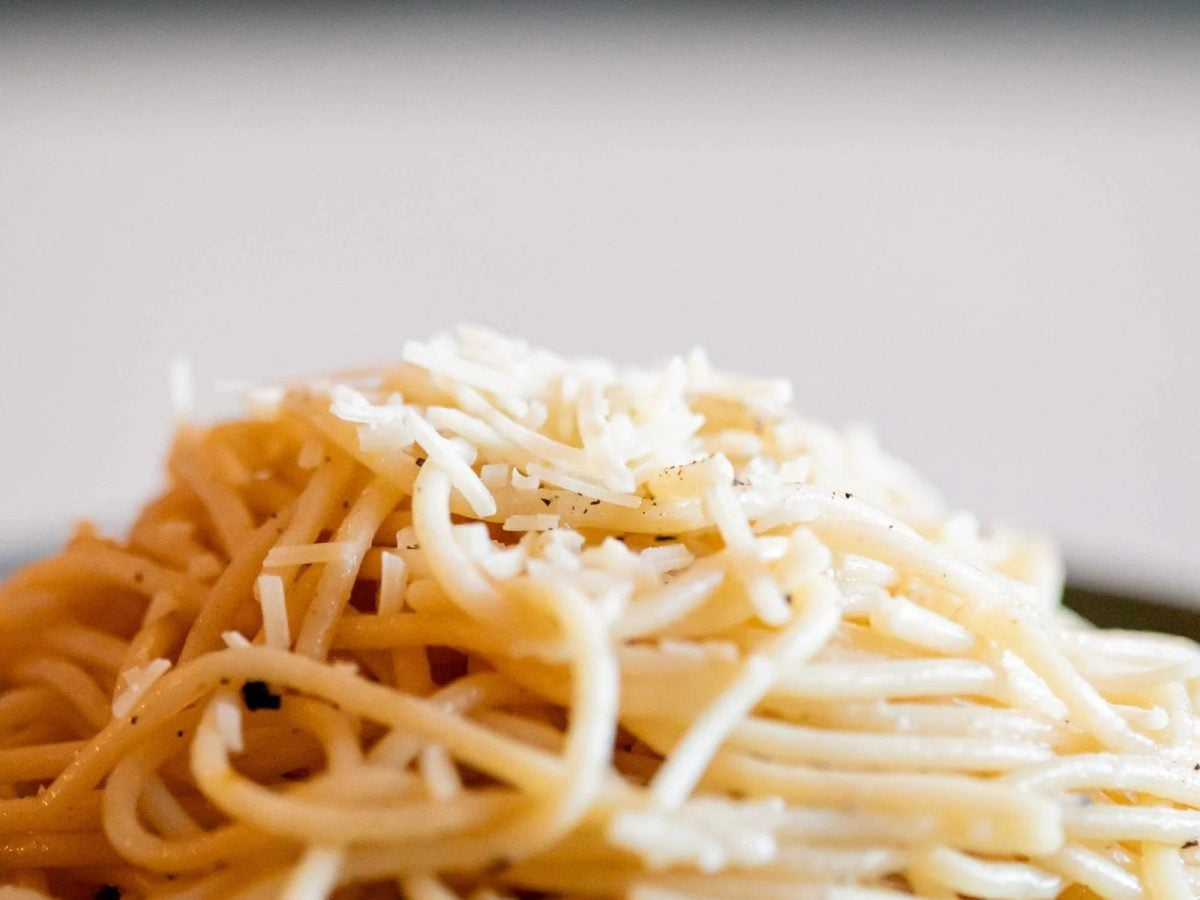
Buttered noodles are often seen as a meal made with little thought or sentiment. I may be a little strange, but I’m picky about it. When they are done right, they are quietly luxurious, buttery glistening, appropriately salty, and lightly peppery. When they’re awful, they’re a beige mass made of warm starch and regret.
This recipe is my ‘real’ version, still absurdly easy and pantry-friendly, but based on two small decisions that change everything. To prevent pooling, first emulsify butter with a splash of pasta water so it clings. Then, season like you mean it. The outcome has a warmth and purpose to it; it is the kind of dinner that makes you feel both capable and fortunate, regardless of how chaotic your day was or how full the sink is.

The Short Version
- Buttered Noodles That Taste, quickly: Hot pasta tossed with butter, salty pasta water, Parm (optional but encouraged), black pepper, and a whisper of garlic.
- Why it works: Starchy pasta water + butter = a quick emulsion that coats every strand instead of sliding off.
- Time: 12 to 18 minutes total (mostly boiling time).
- Flavor profile: Buttery, savory, gently peppery, comforting; can lean Italian (Parm) or more diner-simple (just butter and salt).
- Key tips: Salt the water well, reserve pasta water, toss off-heat, and add butter in pieces so it melts into a sauce.
- Best noodles: Egg noodles for nostalgia, spaghetti for silk, fettuccine for heft, or any shape you love.
Ingredients
Buttered noodles are simple to make, requiring only a few ingredients. Use any pasta that you’ve got, but be mindful regarding the salt and butter. Now is not the time for cautious seasoning or butter that tastes like a fridge.
- Pasta (8 oz / 225 g): Any shape works, but long noodles (spaghetti, linguine) feel elegant; egg noodles feel like childhood. Bronze-cut pasta grabs sauce well, but don’t panic if you’re using a basic box.
- Butter (3 to 4 tbsp / 42 to 56 g): Unsalted lets you control salinity, but salted is fine if that’s what you keep. Use the good stuff if you have it.
- Kosher salt: For the pasta water and final seasoning. The pasta water should taste like the sea (not like a salt lick, but unmistakably seasoned).
- Black pepper (freshly ground): The gentle heat and perfume makes butter taste more like… itself.
- Garlic (1 small clove, optional): Grated or smashed, just enough to whisper.
- Parmesan or Pecorino (1/4 to 1/2 cup, optional): Adds salty depth and helps the sauce thicken slightly. Grate it yourself if possible; the pre-grated stuff can be waxy.
- Pasta water (1/4 to 1/2 cup, reserved): Not an “ingredient” you buy, but it’s the trick.
- Optional finish: Chopped parsley, lemon zest, red pepper flakes.
Master Ratio (Easy To Scale)
- Per 8 oz (225 g) pasta: 3 tbsp (42 g) butter + 1/4 cup (60 ml) reserved pasta water + 1/4 cup (25 g) finely grated Parmesan (optional) + black pepper to taste
For four people you would cook 1 lb (450 g) of pasta. Use 6 tbsp butter (or 4 tbsp butter + 2 tbsp olive oil if you want it lighter), reserve at least 1/2 cup pasta water, and start with 1/2 cup grated cheese. Toss, then choose whether you want more butter or more water. It often seems to suddenly perk up and want a splash more water right at the end.
Ingredient Choices That Change Flavor
| Choice | What you get | Best with | Notes |
|---|---|---|---|
| Unsalted butter | Clean dairy sweetness, precise seasoning | Parmesan, herbs, lemon | My preference. You can salt to taste without surprises. |
| Salted butter | Instant savory pop | Egg noodles, simple comfort bowls | Go easier on the pasta water salt if you’re sensitive to saltiness. |
| Parmesan | Nuttier, more rounded | Spaghetti, linguine | Melts smoothly; use finely grated for best texture. |
| Pecorino Romano | Saltier, sharper, a little funky | Short shapes, lots of pepper | Great if you like a bolder edge. Add slowly. |
| Garlic (raw grated) | Bright bite | Parsley, lemon zest | Use a small clove; it can take over if you get enthusiastic. |
| Garlic (gently toasted in butter) | Sweeter, mellow aroma | Any pasta | Toast briefly; browned garlic turns bitter fast. |
Optional Add-Ins (If You Want It to Feel Like a Meal)
- Protein: Rotisserie chicken, crispy bacon bits, a jammy fried egg, or a can of tuna (yes, really) with lemon.
- Veg: Peas, spinach, blistered cherry tomatoes, sautéed mushrooms.
- Crunch: Toasted breadcrumbs in butter, chopped walnuts, or crispy fried shallots.
Instructions
**Total time**: 12 – 18 minutes
**Yield**: 2 – 3 servings (or 1 very hungry individual )
1) Boil the water like you mean it. Get a large pot of water to a vigorous, rolling boil. Salt it generously. I won’t be measuring since pot sizes differ, but you’d want it to be pleasantly briny. Add the pasta and cook for about 1 minute less than the package instructions for al dente. (It’ll be completed in the butter sauce.)
2) Reserve some pasta water before draining. Before you drain the pasta, scoop out at least 1/2 cup of pasta water and set it aside. I tend to forget this when I am in a rush, and every time I do so, I end up regretting it. Then drain the pasta. Don’t rinse.
3) Prepare the butter base. For a brief period, return the hot pot to low heat to dry it out, then turn the heat off. Add the butter in chunks so that it melts uniformly. If you are using garlic, you should put it in now: you can either grate it for a sharper garlic flavor or gently warm a smashed clove in the butter for 30 to 60 seconds (then remove it) for a milder taste.
4) Toss vigorously, slowly add water, and see it become glossy. Return the drained pasta to the pot. Add 1/4 cup of the reserved pasta water and toss vigorously with tongs (or a wooden spoon for shorter shapes). In approximately 30 seconds, the mixture should change from ‘wet butter’ to ‘silky coating.’ If the pasta looks dry, or the butter is sitting stagnant in puddles, continue to add pasta water a tablespoon at a time while tossing.
5) Cheese (optional) and seasoning. If you’re using Parmesan or Pecorino, sprinkle it in while tossing so it melts and doesn’t clump. Add a considerable amount of black pepper. Taste, then adjust with salt. This part can be somewhat enjoyable or actually craveable, so go ahead and give it a try.
6) Complete the dish and serve right away. If desired, sprinkle some parsley, lemon zest, or red pepper flakes. Serve hot in warm bowls. If you leave buttered noodles sitting around, they go from glossy to sticky as though they are punishing you for abandoning them.
Variations Worth Trying
- Buttered noodles with toasted breadcrumbs: Toast 1/2 cup breadcrumbs in 1 tbsp butter until golden; sprinkle on top for crunch.
- Lemony buttered noodles: Add 1 tsp lemon zest and a squeeze of juice right at the end; especially nice with Parmesan.
- Brown butter noodles: Brown the butter until nutty (not burned), then toss with pasta water and lots of pepper.
- Garlic and herb noodles: Add minced garlic (briefly warmed) and a handful of chopped parsley or chives.
- Cheesy buttered noodles: Go heavier on cheese and pepper for a cacio e pepe adjacent vibe, without the stress.
- Gochugaru butter noodles: Add Korean chili flakes and a tiny splash of soy sauce for a savory, spicy twist.
What to Serve With It
- With a simple green salad: Something sharp and crunchy (arugula, lemon vinaigrette) cuts the richness.
- With roast chicken or meatballs: The noodles act like a buttery blankie for anything savory.
- With sautéed greens: Garlicky spinach, broccoli rabe, or kale on the side makes it feel grown-up.
- As a kid-friendly main: Serve with peas and a little extra Parm; keep pepper light if needed.
- As a late-night bowl: Add red pepper flakes and a fried egg. Eat it standing at the counter if that’s the mood.
Common Stumbles, Easy Saves
- My noodles are greasy. You need more pasta water and more tossing. Add 1 tbsp water at a time and mix like you’re trying to prove a point.
- My noodles are bland. The pasta water probably wasn’t salted enough, or you under-seasoned at the end. Add salt, pepper, and if you’re using cheese, a bit more.
- The cheese clumped. Pot was too hot or cheese went in all at once. Turn heat off, add cheese gradually, and loosen with a splash of water.
- It turned sticky after a few minutes. That’s buttered noodles being buttered noodles. Reheat with a splash of water and a tiny pat of butter, tossing until glossy again.
- Garlic tastes harsh. Use less, or toast a smashed clove in the butter and remove it. Raw grated garlic can be loud.
- Want restaurant sheen? Use slightly undercooked pasta, toss longer, and finish with a final tablespoon of pasta water right before serving.
- Use warm bowls. It sounds fussy, but cold bowls steal the gloss in seconds.
Nutrition and Storage Notes
Buttered noodles are not a health project; they are a comfort food. They’re primarily made up of carbs and butter, and maybe a protein or vegetable that you decide to add. Parmesan can boost your protein and calcium levels, but you’ll also get more sodium. As a side, 2 to 3 oz of dry pasta per person is reasonable; 3 to 4 oz is more like a dinner portion.
Storage is possible, but not miraculous. Refrigerate leftovers in an airtight container. Leftovers will keep for 3 days. Prior to reheating, splash a bit of water into the skillet or microwave. If you want it cozier, use some milk before tossing it in. If you just heat dry noodles without adding any liquid, they will stick together into one big mass. If an item is going to be used for soup or a casserole, I will bother freezing it, but I find that when something is frozen, the texture gets soft and it doesn’t work as well.
Free lesson · 3 min
Watch The Hot Pan Rule, free from the Technique Library
Times I’ve Made This
Weeknight save: One Tuesday, I had precisely nine minutes before a call and absolutely no desire to “cook.” I prepared some spaghetti, stirred it with butter, pepper, and Parmesan, and then added a handful of baby spinach to wilt in the remaining heat. It looked like I planned it. I did not. It still felt like a minor triumph.
**Noodle Kids:** It’s a family gathering, the kids wanted plain noodles, and the adults wanted “real food.” I didn’t want to do two dinners. I made plain buttered noodles, served half of the noodles like that, and I made the other half lemony garlic-herb noodles with extra pepper and parsley. Same pot, different finishing touches, no drama.
The Before-You-Cook Rundown
- Salt a big pot of water and bring to a rolling boil.
- Cook pasta 1 minute shy of al dente.
- Reserve at least 1/2 cup pasta water before draining.
- Off-heat: melt butter in the warm pot (add garlic if using).
- Toss pasta with 1/4 cup pasta water; add more as needed.
- Add cheese gradually (optional), then pepper and salt to taste.
- Serve immediately while glossy; reheat leftovers with a splash of water.
Terms Worth Knowing
- Al dente: Just shy of fully tender, with a slight bite left at the center. Soft noodles cannot carry butter.
- Emulsion: A stable mixture of fat and water; here, butter and starchy pasta water become a clingy sauce.
- Reserved pasta water: The salty, starchy water from boiling pasta; it helps sauces bind and coats noodles.
- Off-heat: Cooking with the burner turned off, using residual heat to prevent splitting or clumping.
- Finely grated cheese: Cheese grated into small, fluffy bits that melt quickly and evenly.
Your Questions, Answered
Is it necessary to keep pasta water?
You can make buttered noodles without it, but it will have a much better texture with it. Without using the reference of an oil slick, it can be noted that heated emulsified butter contains milk solids that provides buttery flavor and an overall sense of silkiness to the liquid state of butter.
What is your favorite shape of pasta for buttered noodles?
Noodles made from egg are traditional and warming. Spaghetti and linguine feel slick. Short shapes like penne work too, but you’ll want to add a bit more pasta water to coat the nooks.
Can I make this dairy-free?
Yes. Try a quality vegan butter, and feel free to omit the Parmesan cheese (or use a dairy-free alternative). For extra zest, add extra pepper and a squeeze of lemon.
Why did my butter separate?
Usually, it’s due to either excessive heat or insufficient tossing. Remove the pot from the heat, add a little more pasta water, and toss until it looks smooth and glossy.
May I add olive oil?
Most certainly. I do 2 tbsp butter and 1 tbsp olive oil when I want a lighter feel. You’ll still want pasta water for the silky sauce.
What can I do to make this easier and more filling?
You can add frozen peas (just add them in the last minute of boiling) and then mix with butter and Parm. Or add a fried egg, and you can consider it dinner.
One Last Thing
Buttered noodles might be simple, but they’re certainly not nothing. When you properly salt the water, treat the pasta water like a secret ingredient, and finish with pepper and a little patience, the whole bowl tastes like care. Not caring in a fussy, aspirational manner. Care is about feeding yourself well instead of easily settling for less.
