
I’ll admit I also cook chicken thighs in white wine because I needed an excuse to drink the rest of the bottle. And then the pan sauce happens and suddenly you’re treating Tuesday like it has a tablecloth. Some recipes just make you feel lucky and competent at the same time. With this you get to enjoy skin that is crispy and meat that is tender with a sauce that is glossy and makes you feel like you really did plan out your life.
The secret isn’t some fancy technique; it’s a series of simple, good choices. Brown the thighs (leave them be, even if it’s hard), build the sauce in the same pan and let the wine do its thing; it’ll lift the brown bits and turn them into something bistro-ish. I’ve cooked this for my friends who “don’t cook much,” and they always seem suspiciously happy. As they should.
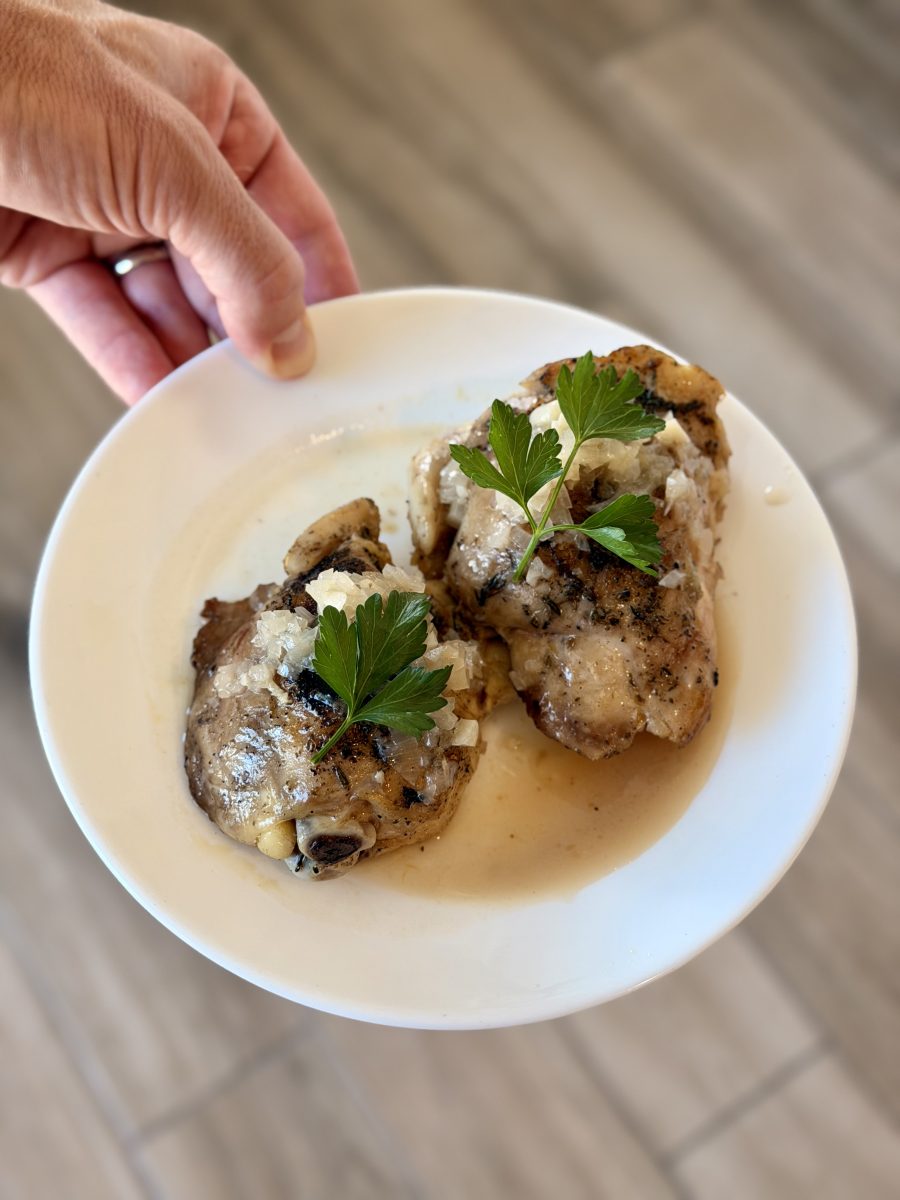

The Quick Rundown
- Golden Chicken Thighs, distilled: Bone-in, skin-on chicken thighs seared until crisp, then braised in a quick white wine pan sauce with garlic, shallots, lemon, and herbs.
- Why it works: Thighs stay juicy; the wine deglazes the fond (those browned bits) and reduces into a silky, intensely savory sauce.
- Timing: About 10 minutes prep, 35 to 45 minutes cook time, 45 to 55 minutes total.
- Flavor profile: Bright and savory: white wine, garlic, thyme, lemon, and chicken drippings, with a gentle richness from butter (optional but persuasive).
- Key tips: Dry the skin, sear patiently, don’t drown the pan in wine, and reduce the sauce until it lightly coats a spoon.
- Best pan: Stainless steel or enameled cast iron for fond; nonstick works but you’ll lose some depth.
Ingredients
This recipe is straightforward enough for every ingredient to shine on the finished dish. So, the dusty garlic, and the “white wine” that tastes like regret are not needed. You won’t be needing anything expensive. Just decent will do.
- Chicken thighs: Bone-in, skin-on thighs give you crispness on top and juiciness underneath. Boneless works too, but the sauce won’t taste as deep.
- Dry white wine: Think Sauvignon Blanc, Pinot Grigio, or an unoaked Chardonnay. Avoid sweet wines.
- Shallot or onion: Shallot makes the sauce a little more graceful; onion makes it more homey. I use whatever I have and pretend it was intentional.
- Garlic: Fresh cloves, smashed or sliced. Jarred garlic has its place, but not here.
- Chicken stock: Helps the sauce feel like a sauce, not just reduced wine. Low sodium is easier to control.
- Lemon: Zest for aroma, juice for brightness. This is the difference between “nice” and “can’t stop eating.”
- Herbs: Thyme is my default. Rosemary is louder. Parsley at the end makes everything look alive.
- Butter (optional): A small knob at the end gives you that restaurant sheen. You can skip it. I rarely skip it.
- Olive oil: Just enough to help the skin start crisping without scorching.
- Salt and black pepper: Season the chicken generously. Under-seasoning is the quiet killer of this whole vibe.
Master Ratio (Easy To Scale)
- Per 1 pound (450 g) chicken thighs: 1/2 cup (120 ml) dry white wine
- 1/2 cup (120 ml) chicken stock
- 1 small shallot (or 1/4 onion), minced
- 2 cloves garlic
- 1 to 2 teaspoons lemon juice (plus a pinch of zest)
- 1/2 teaspoon dried thyme or 3 to 4 sprigs fresh
For a family-sized batch of 2 pounds chicken thighs (typically 4 to 6 thighs), use 1 cup of wine and 1 cup of stock. Also, keep the aromatics about doubled. The sauce reduces, so don’t worry if it looks like “a lot” in the beginning.
Ingredient Choices That Change Flavor
| Ingredient Choice | Best Option | Swap | What Changes in the Final Dish |
|---|---|---|---|
| White wine | Sauvignon Blanc | Pinot Grigio or unoaked Chardonnay | Sauvignon Blanc is brighter and zippier; Chardonnay is rounder and softer; Pinot Grigio stays clean and light. |
| Herb | Thyme | Rosemary, tarragon, or bay leaf | Rosemary is piney and bold; tarragon adds a faint anise note (very French); bay leaf gives a quiet, savory backbone. |
| Aromatic | Shallot | Yellow onion or leeks | Shallot is sweet and subtle; onion is more assertive; leeks make it soft and slightly buttery. |
| Finishing fat | Butter | Olive oil or skip | Butter gives gloss and a velvety mouthfeel; olive oil keeps it lighter but less “silky.” |
| Brightness | Lemon | White wine vinegar (tiny splash) | Lemon tastes fresh and fragrant; vinegar is sharper and more direct. Use less than you think. |
Secondary Ingredients: Optional Add-Ins
- Mushrooms (8 oz / 225 g): Add after the shallots; they drink up the wine and make the sauce feel earthy and extra.
- Capers (1 to 2 tablespoons): Stir in at the end for briny pops that cut through richness.
- Green olives (a handful): Not traditional, but extremely persuasive if you like salty, winey sauces.
- Cream (2 to 4 tablespoons): Turns it into a softer, richer sauce. I use it when the day has been rude.
Instructions
Yield: 4 servings Equipment: large skillet with a lid (preferably 12 inches), tongs, spoon
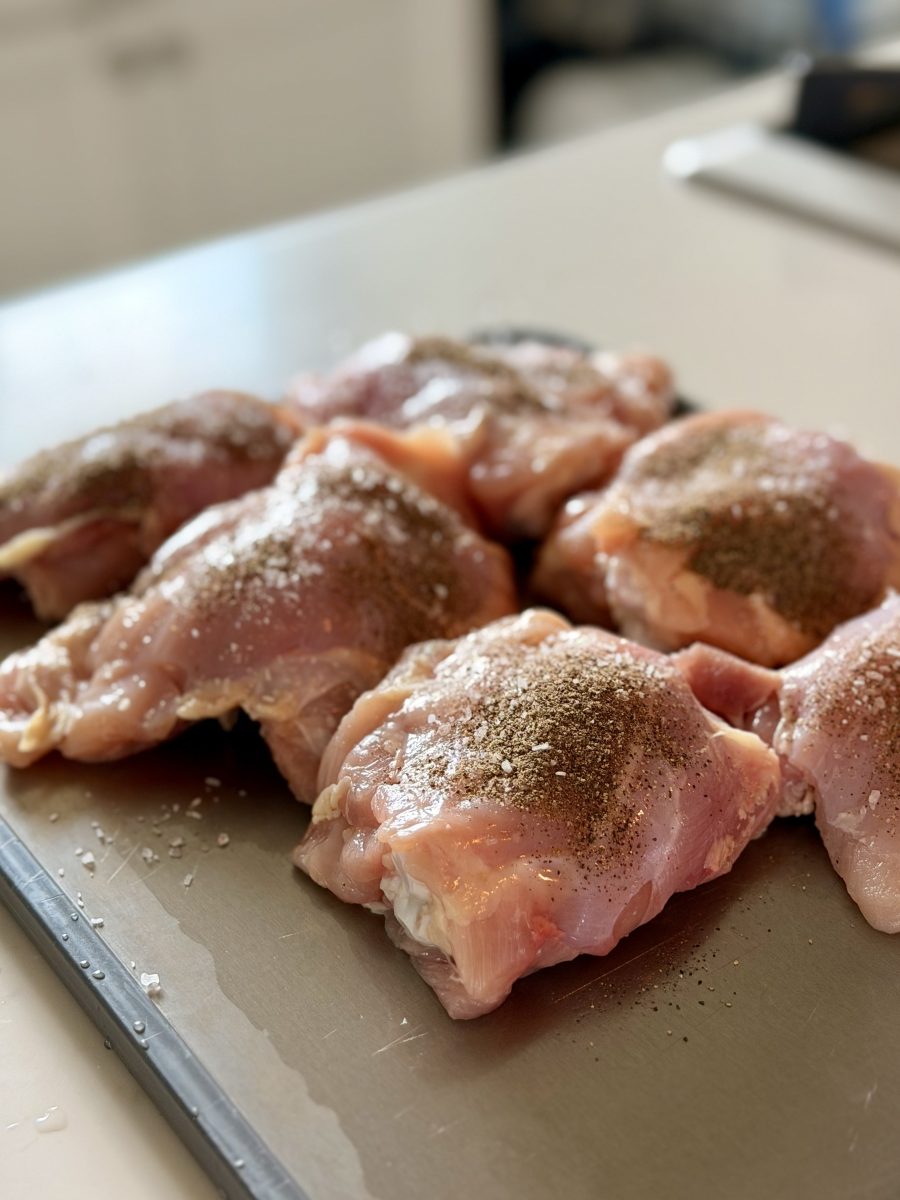
1) Prepare the chicken by drying and seasoning it. Use paper towels to absorb as much moisture as possible from the thighs, especially the skin. Use kosher salt and black pepper to season the chicken. If possible, leave the chicken uncovered for 15 minutes (this aids skin crispiness). It may seem tedious, but you will appreciate the difference in taste.
2) Sear the thighs until they are golden brown. To do this, heat a large skillet over medium-hgh heat and add 1 tablespoon of olive oil. Once the oil sizzles, add the thighs skin-side down. You should hear a good amount of sizzling. Do not move the thighs for 8 to 12 minutes. You may need to adjust the heat so the fat is rendered and the skin turns brown, but not black. (When I did this for the first time, I was really anxious and kept checking the thighs. Just relax and let the thighs sear.)
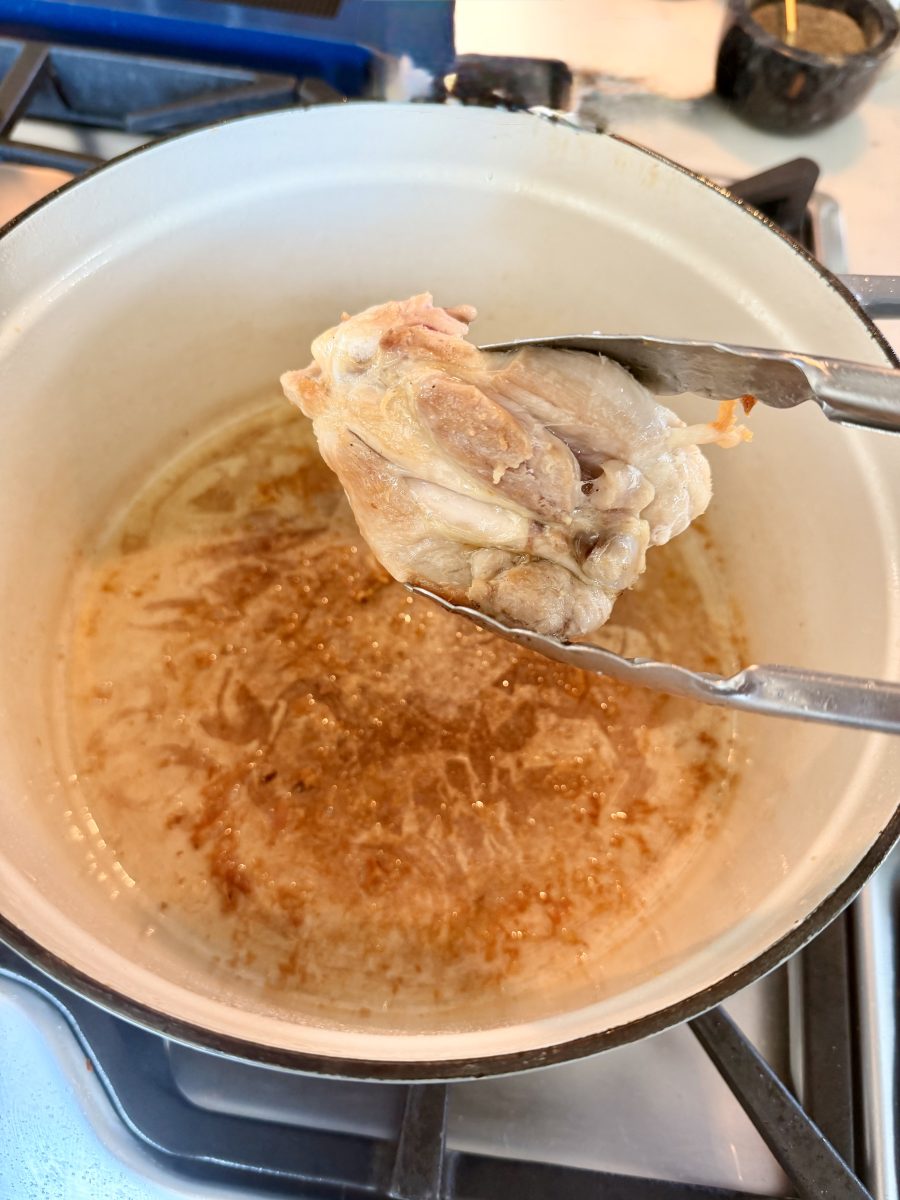
After 2 minutes, flip each thigh and then take them out. If there is more than 1 tablespoon of fat, pour off the excess.
4) Start the base with shallot and garlic. Reduce heat to medium. Put in the minced shallot and a dash of salt. Stir for 2 to 3 minutes, scraping a bit to loosen the browned bits. Add garlic and thyme and cook for 30 seconds to 1 minute, until just fragrant. If the garlic starts browning, you’re flirting with bitterness, so pull back the heat.
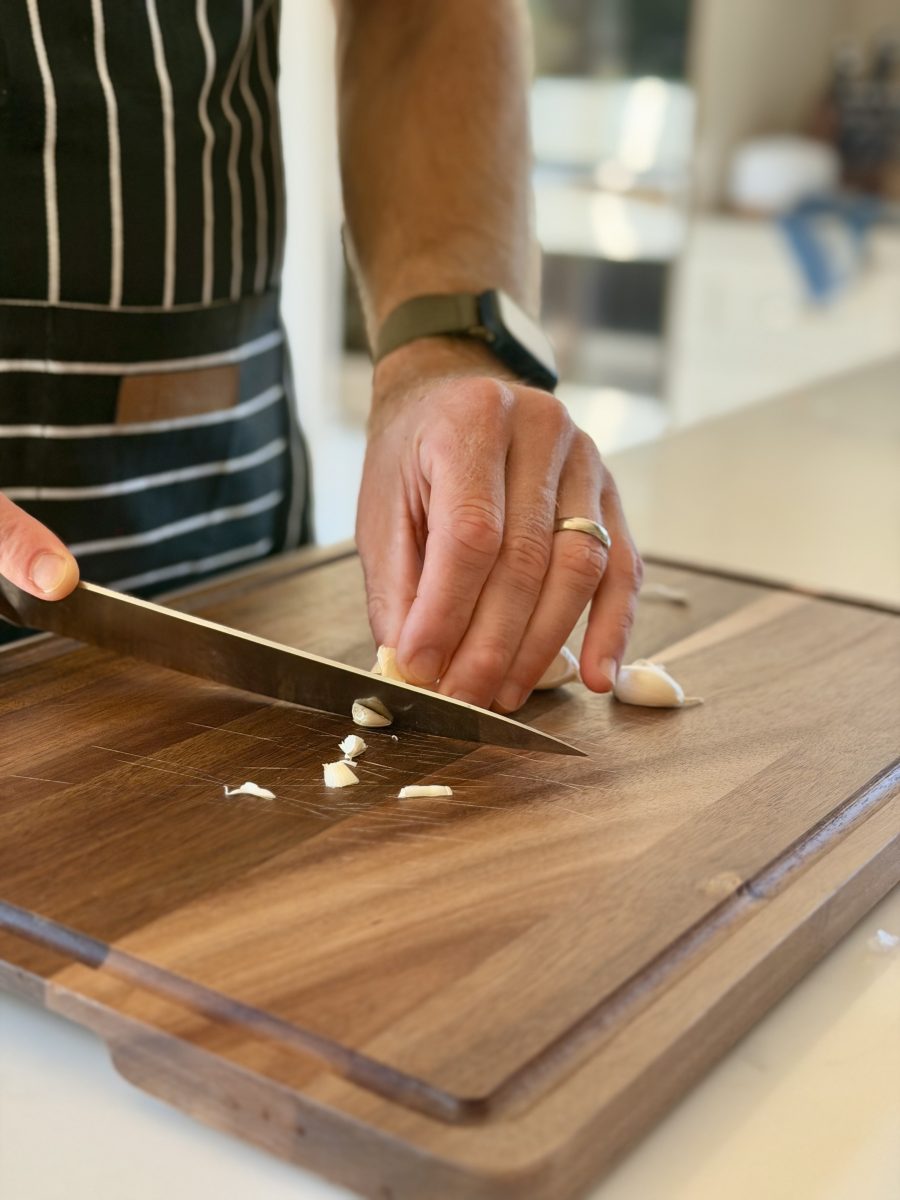
5) Deglaze with white wine and reduce. Pour in 3/4 cup (180 ml) dry white wine. It should hiss and smell like something good is happening. Scrape the pan to dissolve the fond. Simmer 3 to 5 minutes until the wine reduces by about half and the sharp alcohol smell mellows.
6) Incorporate stock and return chicken to the pan. Include 3/4 cup (180 ml) chicken stock. Place the thighs back in skin-side up, and return any plate juices. Get to a steady simmer.
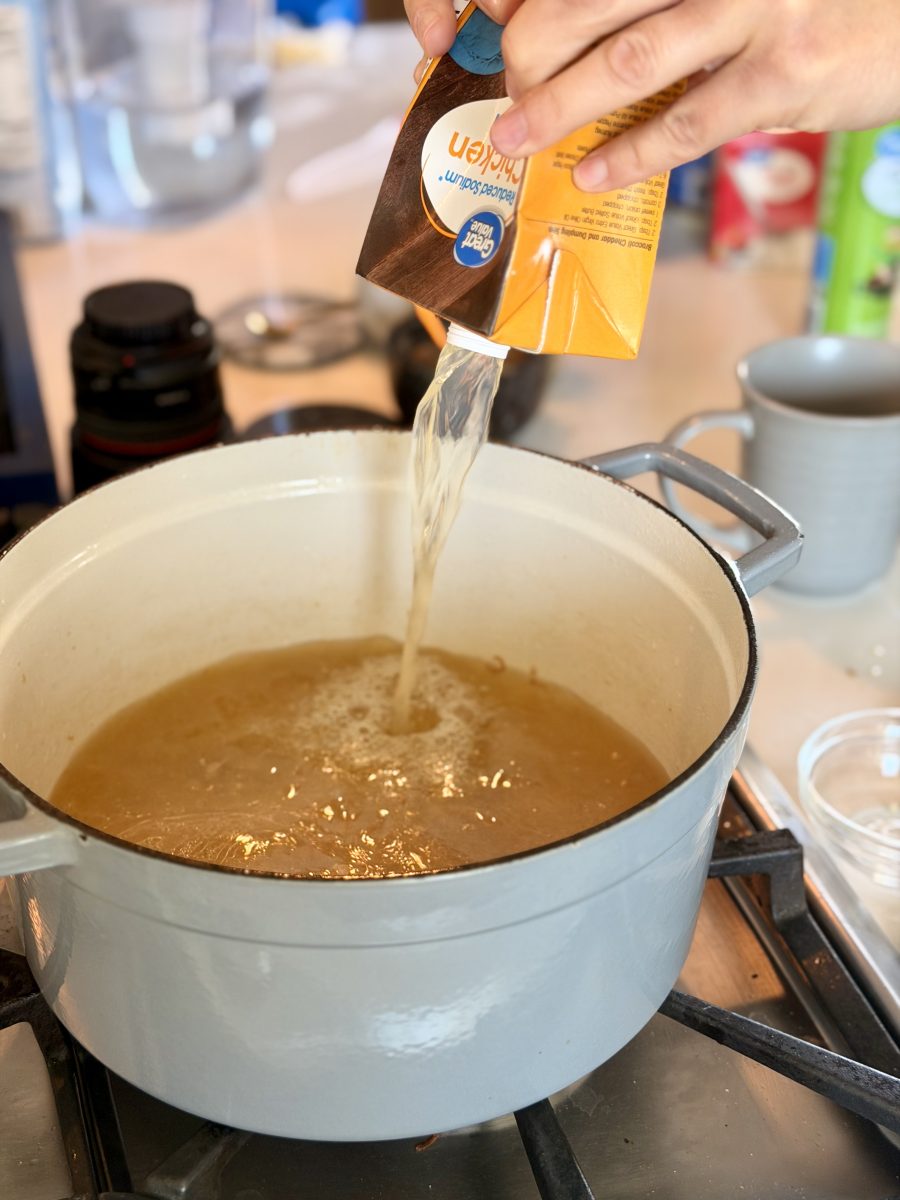
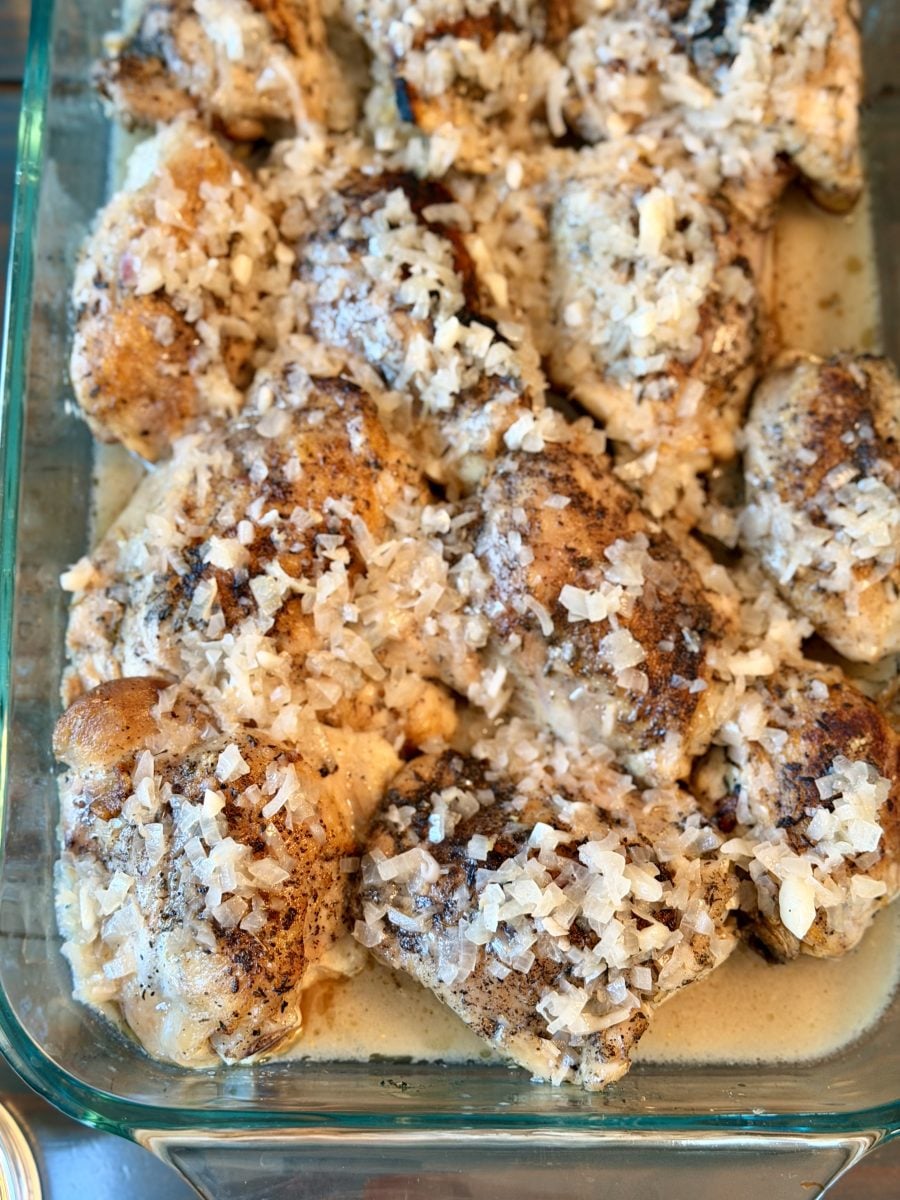
Cover and braise, then uncover to finish. Cover and cook for 15 minutes. After that, uncover and simmer for an additional 10 to 15 minutes, until the chicken is fully cooked (165°F / 74°C in the thickest part of the meat, or until the juices run clear) and the sauce has slightly thickened. If extra-crisp skin is desired, keep the heat gentle and avoid splashing the skin with sauce.
Finish off the sauce. Turn the heat off and stir in 1 tsp of lemon zest and 1-2 tbsp of lemon juice. Taste and check for salt and pepper. If you want a shiny look to the sauce, add 1-2 tbsp of cold butter and swirl until melted. Spoon sauce over the chicken. If you are the kind of person who appreciates the appearance of the meal, shower with chopped parsley (I try to be that person).
Spins and Swaps
- Creamy white wine chicken thighs: Add 2 to 4 tablespoons heavy cream at the end and simmer 1 minute to thicken.
- Mushroom and white wine: Sauté sliced mushrooms after the shallot until browned, then proceed with wine.
- Mustard-laced sauce: Whisk in 1 tablespoon Dijon at the end for a gentle tang and extra body.
- Tomato-leaning version: Add 1 tablespoon tomato paste with the garlic, letting it darken slightly before deglazing.
- Garlic-forward “party” version: Use 6 to 8 cloves and add a few whole cloves (lightly smashed) to mellow in the sauce.
- Herby spring version: Finish with tarragon and chives instead of thyme and parsley.

What to Serve With It
- Starches that love sauce: Mashed potatoes, buttered egg noodles, polenta, or crusty bread for mopping.
- Vegetables: Roasted asparagus, sautéed green beans with lemon, or a heap of wilted spinach stirred right into the pan at the end.
- Salad side: Bitter greens (arugula, radicchio) with a sharp vinaigrette to balance the richness.
- Wine pairing: Drink what you cooked with. If you used Sauvignon Blanc, it will be especially friendly at the table.
- For a cozy bowl dinner: Shred leftover chicken into the sauce and spoon over rice with parsley and black pepper.
Rescue Notes
- Skin isn’t crisp: The chicken was wet, the pan wasn’t hot enough, or you moved it too soon. Pat dry and sear longer, undisturbed. Also keep the skin above the liquid during the braise.
- Sauce tastes sharp or boozy: Reduce the wine longer before adding stock. The alcohol needs a few minutes of simmering to calm down.
- Sauce is thin: Uncover and simmer 5 to 10 minutes more. Reduction is the real thickener here.
- Sauce is too salty: Add a splash more stock or a bit of water, then re-taste with lemon. Using low-sodium stock prevents this in the first place.
- Chicken seems tough: It probably needed more time. Thighs get tender when they’re given a little patience. A low simmer for another 10 minutes often fixes it.
- Garlic went bitter: It browned. Next time, add garlic after the shallot has softened and keep the heat moderate.
- Not enough flavor: Add a pinch of salt, more lemon zest, and reduce the sauce a touch. Bland sauces are usually under-salted or under-reduced.
- Want deeper savoriness: Add 1 teaspoon soy sauce or a tiny dab of anchovy paste while sautéing the shallots. Sounds odd. Works.
How It Keeps
Because of the skin the butter, and possible potato accompaniment, nutrition will vary. While all chicken thighs will have more fat, that fat is doing constructive work by maintaining the meat’s succulence and making the gravy thick and flavorful like it came from a restaurant with waiters.
Store in the fridge in an airtight container for up to four days. To reheat, use a stovetop on low so you can add a bit of stock or water to loosen the sauce. You can microwave it, but be warned it may turn the skin from crisp to floppy. If you want to maintain the crispness, reheat the chicken on a sheet pan in a 400°F / 205°C oven for 8 to 12 minutes, and warm the sauce in a separate container.

Kitchen Stories
Take one: An example would be a friend arriving “for a quick bite”, which is a sneaky way of saying, “I didn’t eat lunch and I’m gonna hover.” I plated these thighs on top of a polenta with a salad of parsley. The pan sauce was the first thing to disappear, dragged through the bowl with a piece of bread as if it was an extremely important chore. Almost as an insult, the chicken was an afterthought, but that sounds like an insult until you’ve met this sauce.
A second run: One weeknight, I used whatever I had in the fridge to make some food. I had to use an onion instead of a shallot, used some dried thyme, and the last half of a lemon rolling around in the crisper. It still worked because the method is sturdy, but it did disappoint me once. I rushed the sear and the skin stayed pale while the entire dish felt oddly timid. I learned my lesson, brown is flavor and patience is a seasoning.
The Short List
- Pat chicken thighs very dry; salt and pepper generously.
- Sear skin-side down 8 to 12 minutes until deeply golden.
- Remove chicken; pour off excess fat, leaving about 1 tablespoon.
- Sauté shallot, then garlic and thyme briefly.
- Deglaze with white wine; reduce by about half.
- Add stock; return chicken skin-side up.
- Cover 15 minutes; uncover 10 to 15 minutes to finish and reduce sauce.
- Finish with lemon zest and juice; swirl in butter if using; add parsley.
Terms Worth Knowing
- Fond: The browned bits stuck to the pan after searing; they dissolve into the wine and become the backbone of the sauce.
- Deglaze: Adding liquid (here, wine) to a hot pan to loosen fond and build flavor.
- Reduce: Simmering a liquid to evaporate water and concentrate flavor, thickening the sauce naturally.
- Braise: Cooking partially submerged in liquid, covered, at a gentle simmer so meat turns tender.
- Render: Melting fat out of the chicken skin slowly enough that it crisps rather than burns.
Questions I Get
Are boneless skinless thighs acceptable? Yes. For such thighs you will want to brown them quickly (about 3–4 minutes on each side), and then uncovered, cook them in the sauce until they reach 165°F/74°C, which is usually 10–15 minutes. The sauce will be somewhat less rich due to the absence of skin and bone, so you might want to finish with some butter.
What is the best white wine for chicken thighs in white wine? Dry and drinkable. My favorite is Sauvignon Blanc because it stays bright through reduction. Avoid anything sweet or heavily oaked.
Do I need a lid? If you’re cooking bone-in thighs, using a lid allows the chicken to cook through and stay moist. If you don’t have a lid, loosely cover the section with foil, and then uncover it to reduce.
What are some ways to keep the skin crispy while braising? The chicken should be cooked skin-side up and ensure that the braising liquid only reaches the chicken thighs partially. Additionally, it is best to simmer at a gentle boil rather than a full rolling boil, and avoid spooning sauce over the skin until you are serving the dish.
Can I prepare this in advance? Yes, and it will taste even better. If you wish to preserve the chicken skin, you may need to recreate the chicken in the oven. Otherwise, gently reheat in the sauce.
My sauce tastes flat. What should I add? Start with salt then add lemon juice or lemon zest. If it still tastes flat, reduce it a bit more. A tiny spoon of Dijon can also wake it up without changing the whole personality.
Wrapping Up
Chicken thighs in white wine are the type of meal that can elevate your evening without asking too much in return. You’re basically searing, simmering and letting a few straightforward ingredients act like their hiding something special. After making this dish once, you’ll purposefully start keeping a ‘cooking wine’ around, and while that seems like a minor change, it’s actually quite a life upgrade.
