
For years I scrubbed the best part of dinner down the drain. After searing chicken, the pan is left with a layer of browned, stuck-on bits, and I treated them like a mess to scour off. They are not a mess. They are concentrated flavor, and a two-minute technique called deglazing turns them into a sauce that tastes like you fussed for an hour.
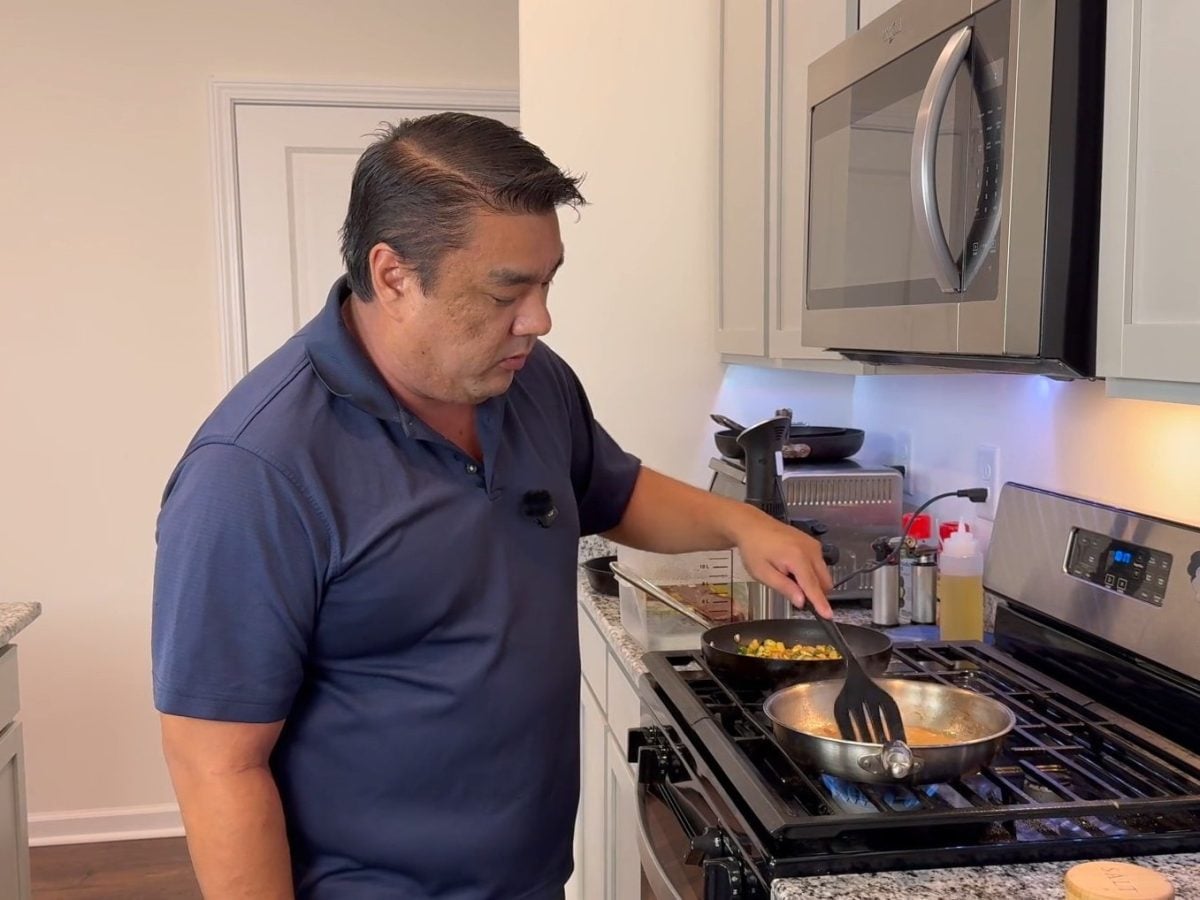
Those browned bits have a name: fond. They are cooked specks of protein, fat, and salt left behind by the sear, and they carry the deep, savory flavor of the Maillard reaction, the browning of proteins and sugars under heat. Deglazing simply lifts that flavor off the pan and into a liquid so you can serve it instead of washing it away.
It’s basically little cooked pieces of protein, salt, fat. That’s all the flavor.
Nathaniel, HomeViable
The liquid you choose sets the character of the sauce.
| Liquid | What it brings | Good for |
|---|---|---|
| Dry white wine | Acidity and brightness | Chicken, fish, cream sauces |
| Red wine | Body and depth | Beef and hearty dishes |
| Stock or broth | Savory roundness | Gravies and all-purpose pan sauces |
| Splash of vinegar | Sharp lift | Cutting through a rich, fatty pan |
| Water or juice | Neutral or fruity | When you want the fond itself to lead |
Deglaze in four moves
- Pull the meat out and pour off excess fat, leaving the browned bits behind.
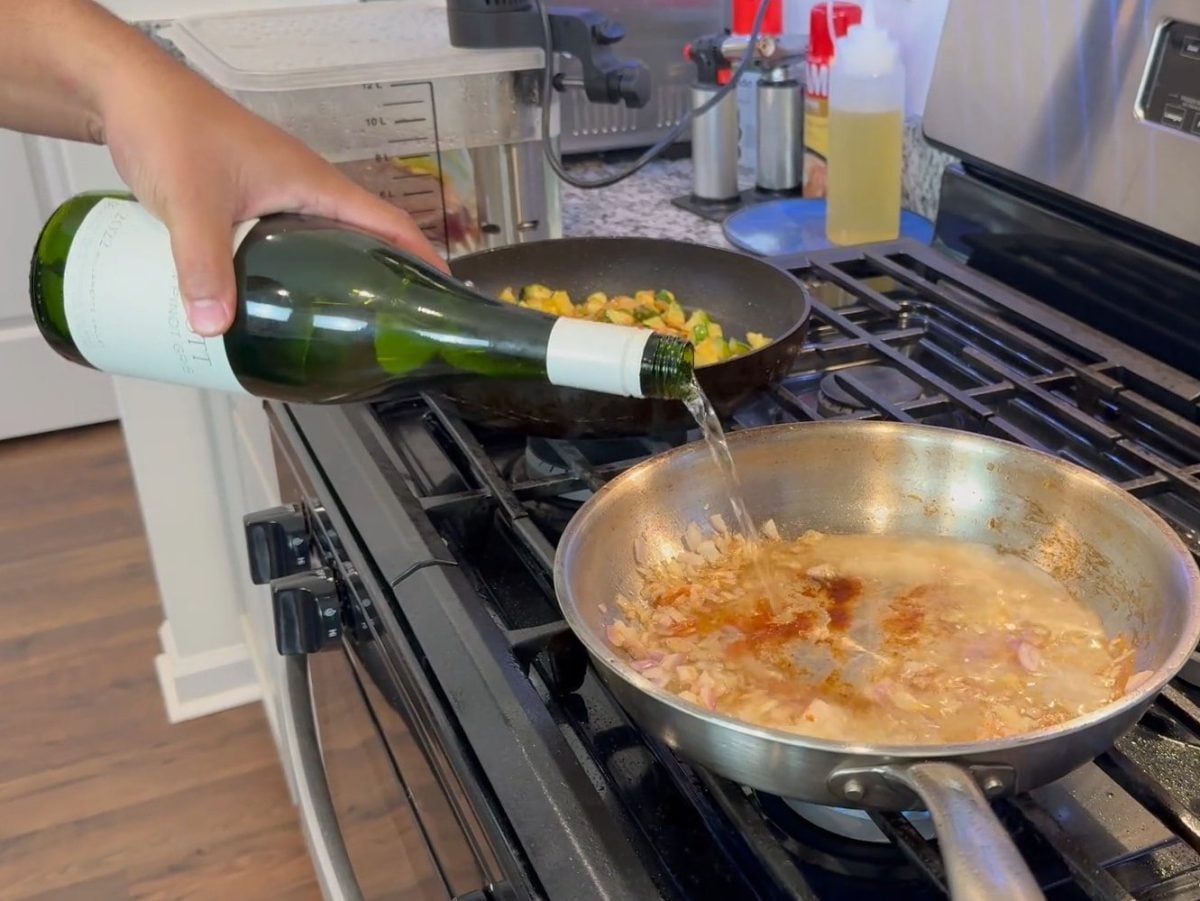
- Take the pan off high heat, then add a splash of your liquid.
- Scrape the bottom with a spoon until every brown bit lifts and dissolves.
- Simmer to reduce, then enrich with cream, butter, or herbs and spoon it over.


Why it works
Fond is water-soluble flavor. It clings to the hot metal, but the moment liquid hits the pan and you scrape, it dissolves and disperses into the sauce. Pulling the pan off the heat first keeps the liquid from flashing away before it can do that work. Then, as the sauce simmers and reduces, the water cooks off and the flavor concentrates, which is why a small amount of pan sauce tastes so deep. In the video, that base becomes a quick chicken sauce with garlic, fresh rosemary, green peppercorns, cream, and a finish of lemon.
It is also why you should never reach for the sink first. Scrubbing the pan throws away the most flavorful thing in it.
Don’t throw that stuff out. Don’t scrub out that pan. Use it to enhance the dish that you’re serving.
Nathaniel, HomeViable
So the next time you sear something and see that brown layer on the pan, do not see a cleanup job. Pull the meat, kill the heat, add a splash of wine or stock, and scrape. In two minutes you will have a real sauce built entirely from flavor you were about to throw out.
