
I will admit that I was a bit skeptical about the pot roast pressure cooker recipe. Personally, I always believed pot roast was the type of food that took forever. It’s the type of meal that tells everyone in the house that you have everything under control. Even though the pile of dirty laundry might say otherwise. I later on made it in the instant pot on a week night, and had an epiphany. It can actually taste amazing and be tender and beefy in about an hour.
This dish is a great option for classic comfort food and is a great choice for me. Searing a chuck roast, making a decent onion gravy, and throwing in some carrots and potatoes that don’t turn into mush, as well as a little acidity at the end to make everything taste more like itself, means that it’s anything but fussy. Sure, it’s not sophisticated but it pays attention to the specifics, and that’s where the magic is.

Before You Start: The Gist
- Instant Pot Pot Roast, in a nutshell: An Instant Pot classic pot roast (beef, potatoes, carrots) with gravy.
- Why it works: A pressure cooker will make a chuck roast tender in a hurry while searing and deglazing will bring true roasted flavor.
- Timing: Prep time is approximately 15 minutes. Pressure cooking takes about 60 minutes. Natural releasing takes 10-15 minutes. You should also add a few minutes to your schedule to allow the gravy to thicken.
- Flavor profile: Seasoned beef, onion, garlic, and a hint of tomato with a meaty, salty, and tingly finish.
- Key tips: When browning the meat, don’t forget to deglaze, chop the veggies larger, and add a splash of vinegar or lemon at the end.
- Texture goal: Meat that can be shredded with a spoon, potatoes that hold their shape, and sweet, intact carrots.
Ingredients
Pot roast is an uncomplicated meal, but all the ingredients have a role to play. The beef gives the body, gelatin, and that stick to your ribs richness. The gravy is built from broth and aromatics. The vegetables grab all the good stuff and silently take center stage. For those of you thinking “a roast is a roast” I am begging you to buy chuck and not a lean and overpriced cut that will only make you miserable.
- Beef chuck roast (3 to 4 pounds): When buying meat, it’s best to look for a cut with good marbling and is evenly shaped. Chuck has connective tissues melting into tenderness, while brisket could work, chuck is definitely the sweet spot.
- Kosher salt and black pepper: Salt your food early. If you’re worried about the pepper scorching, add it after the sear (though I usually add it before and live on the edge).
- Neutral oil (1 to 2 tablespoons): You can use olive oil if that’s what you have. Otherwise, use avocado, canola, or grapeseed oil.
- Onion (1 large), garlic (4 to 6 cloves): For the gravy’s base, slice the onion. Don’t chop it too small, as you still want it to melt away, but not completely disappear.
- Tomato paste (1 tablespoon): To deepen the flavor and darken the sauce.
- Beef broth (2 cups): Broths tend to be salty and are hard to fix once over salted. Please try to keep it low sodium.
- Worcestershire sauce (1 tablespoon): Savory base. If you’re out of something, soy sauce works in a pinch.
- Bay leaves (2) and dried thyme (1 teaspoon) or fresh thyme (3 to 4 sprigs): To me, the aroma of pot roast brings memories of thyme. Bay leaves add a sense of completion.
- Carrots (4 large): Cut in larger pieces so they do not turn to mush under pressure.
- Yukon Gold potatoes (1.5 to 2 pounds): Halved or quartered, Yukon Gold potatoes hold up nicely and have a buttery taste.
- Cornstarch or flour (for thickening): Optional but highly recommended unless you prefer your gravy thin and philosophical.
- Finish acid: 1 to 2 teaspoons of apple cider vinegar or a squirt of lemon. That’s the sneaky trick.
Master Ratio (Easy To Scale)
- Beef: For every pound of chuck roast, use 1 to 1.25 cups of broth.
- Onion: 1/2 large onion per pound beef
- Garlic: 1 to 2 cloves per pound beef
- Veg: 1/2 pound of potatoes plus 1/3 pound of carrots for every pound of beef
- Seasoning anchors: 1 teaspoon of Worcestershire sauce per pound of beef (round down if sensitive to it), along with thyme and bay.
If you have a 2 lb chuck roast, you would use approximately 2 to 2.5 cups of broth, 1 large onion, 3 to 4 cloves of garlic, 1 pound of potatoes, and 2/3 of a pound of carrots. The pressure time stays the same for thickness (as long as the roast is whole), but you can decrease smaller roasts by 5 to 10 minutes.
Ingredient Choices That Change Flavor
This recipe allows for a lot of versatility and creativity while cooking. Experiment with what you have on hand. Stout beer can add a dark and cozy touch to the recipe. Red wine can give a classy touch. Adding a spoonful of miso can give a dish a sophisticated twist. While adding those ingredients is not a must, it can be enjoyable to feel like you are dressed up for a special occasion.
| Ingredient Choice | Best Option | Swap | What Changes | Notes |
|---|---|---|---|---|
| Cooking liquid | Beef broth | Half broth + half red wine | Deeper, more complex, faint tannic edge | Use wine you’d actually drink. Reduce salt slightly until the end. |
| Umami boost | Worcestershire | 1 to 2 tsp soy sauce or tamari | Savory punch, slightly different salt profile | Go easy at first; soy is saltier. |
| Herbs | Thyme + bay | Rosemary + bay | More piney and assertive | Rosemary can take over fast; use 1 small sprig. |
| Thickener | Cornstarch slurry | Flour slurry or beurre manié | Different gravy texture: cornstarch is glossy, flour is more classic | For flour: whisk thoroughly to avoid raw taste and lumps. |
| Acid finish | Apple cider vinegar | Lemon juice or a splash of pickle brine | Brightens and wakes up the gravy | Sounds odd, tastes right. Add in tiny amounts. |
Vegetables (How to Keep Them Intact)
The Instant Pot doesn’t make cooking easier for you. If you cut carrots into cute little coin shapes, they will disappear into the broth. Keeping the carrots chunky will encourage them to stay in their natural form instead of being liquefied with the beef broth.
- Carrots: You can cut them into 2 inch pieces, and cut them on a bias if you want to try something a little more fancy.
- Potatoes: If you have small Yukon potatoes, cut them in half, and for the large potatoes, you will want to cut them into quarters. Try to achieve 2-inch pieces.
- Optional: Slice some celery into two-inch pieces to use for a savory background.
Instructions
Equipment: other electric pressure cookers or 6-quart instant pots
1) Begin with the seasoning and drying of the roast. With paper towels, remove any moisture from the chuck roast and season with kosher salt (a good starting point is about 1 to 1 1/2 teaspoons per pound) and black pepper. For meat to properly brown, it must be dried. If the meat is wet it will steam instead of brown.
2) If you want an authentic experience (yes, it’s great), switch the Instant Pot to Sauté (High) and add the oil. While it shimmers, sear the roast for 4 to 6 minutes on each side and do a quick sear on any thick edges. You are not cooking it, you are putting a crust on it. Put the roast onto the plate. If the bottom looks very dark (and not just browned), reduce the heat slightly before continuing.
3) Make the gravy base. Add sliced onion to the pot with a little bit of salt. For 3 to 5 minutes, keep scraping and stirring so that the onion softens and starts to brown. Add the garlic and the tomato paste, and cook about 30 to 60 seconds stirring continuously until the tomato paste changes color a bit and you can smell it toasted.
4) Deglaze like you mean it. To get some of the brown bits off the bottom of the pot, pour in about 1/2 cup of the broth and use a wooden spoon or spatula to scrape the bottom. This helps reduce your chances of getting a Burn notice. Once the bottom is cleared, add the rest of the broth, along with the Worcestershire sauce, thyme, and bay leaves.
5) Add the vegetables now. Put the roast back in the pot with all the juices collected from the plate. Scatter the potatoes and carrots around the roast. Avoid tightly bunching the vegetables on top of the roast so that steam and juices can flow around the pot.
6) Pressure cook. Lid should be sealed and the valve should be set to Sealing. For a 3 to 4 pound chuck roast, you should pressure cook for 60 minutes. If your roast is about 2.5 pounds you can start checking at 50 to 55 minutes. If your roast is 4.5 pounds and very thick, you should check at 70 minutes.
7) Check tenderness after natural release. For 10-15 minutes, allow the pressure to release on its own. Then, once you switch to venting, be careful about releasing any remaining pressure. After that, open the lid. The roast should be shreddable and fork-tender. If it is too tight or chewy, then you should close the lid and set the pressure cooker for 10 more minutes. Afterwards, you should let it release pressure on its own for 5 minutes. I’ve had stubborn chuck roasts for many strange reasons. It happens.
8) Prepare some gravy that you want to eat. Place the roast and vegetables on the serving platters and cover them with foil. Remove bay leaves and stems from the herbs. Set the pot to Sauté. For the cornstarch slurry, mix 2 tablespoons of cornstarch with 2 tablespoons of water that is cold. While the liquid is bubbling, whisk the mixture into it. Let it simmer for 2 to 5 minutes, or until the sauce thickens and gets glossy enough to coat the back of the spoon.
Taste it and adjust the salt and pepper. End with 1 to 2 teaspoons apple cider vinegar or a squeeze of lemon to add brightness.
9) Slice or Shred, then Saucy Reunion. To make serving easier, slice the roast against the grain. Or, if you want to take a more casual and gravy-drenched approach, just shred it. Then, pour gravy over everything. If you have leftovers, congrats! Tomorrow’s sandwich plans just got even better.
Variations Worth Trying
- Mississippi-style-ish: Mix in 2 tablespoons of ranch seasoning and 6 to 8 pepperoncini (with a splash of brine). Skip the thyme. It’s more tangy, and harder to stop eating.
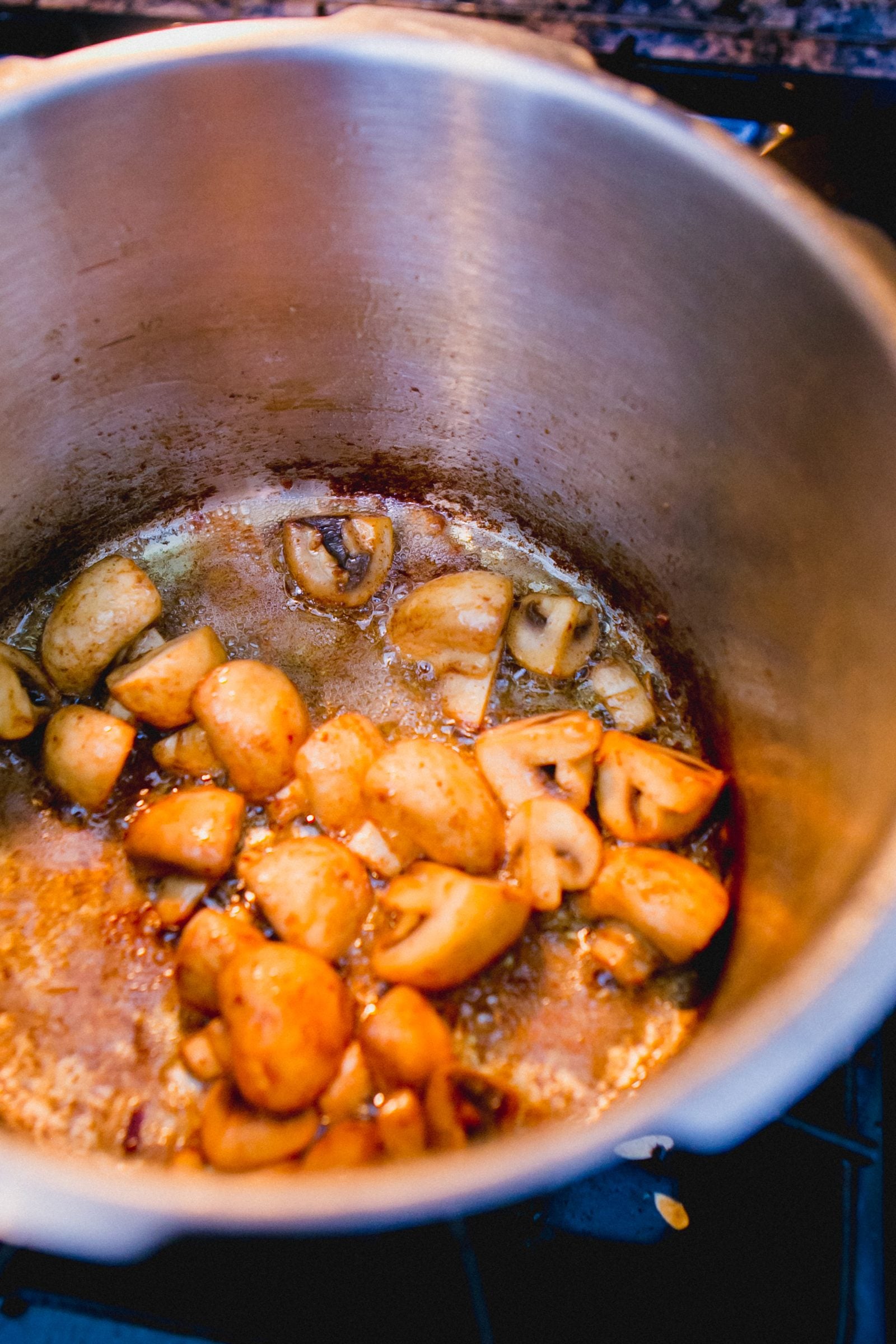
- Red wine and mushroom: Along with the onions, add the 8 ounces of sliced cremini mushrooms. Use 1 cup of broth plus 1 cup of red wine.
- Garlic lover’s pot roast: Once you deglaze the pan, add one entire head of garlic (cloves peeled) and stir it into the sauce.
- Root-veg swap: For a spicey touch, substitute half of the potatoes with parsnips or turnips.
- Chili-cumin pot roast: Add 1 teaspoon of ground cumin and 1 teaspoon of smoked paprika along with the tomato paste, then finish with lime.
- No potatoes in the pot: Pressure cook only the beef and carrots. Then serve them over mashed potatoes, buttered noodles or polenta.

What to Serve With It
- Buttered egg noodles with extra gravy (this is my “stormy night” preference).
- Mashed potatoes with some sour cream and a mountain of roast on top.
- Crusty bread for dunking, ideally the kind that makes crumbs everywhere.
- Simple garden salad with a sharp vinaigrette to contrast the richness.
- Roasted Brussels sprouts or broccoli for a bitter, toasty counterpoint.
- Horseradish cream (mix horseradish into sour cream and add salt and lemon).
- Consider getting a glass of Cabernet or even a dark beer if you’re in the mood to get all cozy.
Rescue Notes
- Burn notice fear: Before you start pressure cooking, always deglaze with a liquid and scrape the bottom until it’s clean. If you don’t stir and deglaze well, tomato paste may stick.
- Meat is tough after cooking: More time is needed, not less. Under pressure, add 10 to 15 minutes. Toughness is usually “not done yet” especially with chuck.
- Vegetables turned mushy: Next time, either cut them bigger or cook them separately. If you prefer firmer carrots, you can place them on top of the potatoes so they sit a bit higher.
- Gravy tastes flat: First, add salt. Then add a splash of vinegar or lemon juice. That little bit of acidity makes it go from fine to “why is this so good?”
- Gravy is greasy: You can chill the liquid for a little bit to allow for an easy fat removal. Spoon the fat off the top to remove it. There’s usually plenty to skim off.
- Gravy too thin: To avoid a starchy flavor, reduce first. Then add the slurry.
- Gravy too thick: Gradually incorporate the warm broth or water by whisking to loosen it.
- Don’t skip the sear: I’ve tried, and while it’s still edible, it straight up looks like you took a shortcut. Because you did.
Storage and Leftovers
Nothing beats the heartiness of a pot roast. It’s a high-protein, moderate-fat meal that has built-in veggies! Its exact nutrition will vary with the size and marbling of your chuck roast and how much gravy you end up ladling (be honest). To make it lighter, remove large surface fat, use a low-sodium broth, and serve extra vegetables on the side.
For best quality, keep in an airtight container and refrigerate within 4 days of making. The gelatin in the sauce helps keep moisture in the dish, so it can be reheated easily. You can reheat it either on the stove or in the microwave with a little broth to help it. It also freezes well for 2-3 months. When you’re ready to reheat it, be sure to thaw it overnight in the fridge. After it’s thawed, reheat it slowly so the meat stays tender.

How It’s Gone for Me
I made this for a friend who says she “doesn’t do beefy beef.” I used half broth half red wine (finished with lemon) along with a sharp arugula salad. She came back for more and pretended it was for the potatoes. Right.
My Instant Pot had a freak-out yesterday, and I think I remember some burnt stuff at the bottom. I got a burn notice. I opened it, and out of desperation scraped the bottom. I put in some more broth and restarted it. The roast was still tender and not once did anyone at the table notice that I considered ordering pizza.
The Before-You-Cook Rundown
- Purchase a chuck roast of 3 to 4 pounds that has visible marbling.
- Chop the carrots and potatoes into larger pieces about 2 inches big.
- Pat beef dry, salt and pepper generously.
- Sear well on Sauté; remove roast.
- Sauté onion, then garlic and tomato paste.
- Use broth to deglaze and scrape the bottom good as new.
- Add roast, broth seasonings, then vegetables.
- Cook under pressure for 60 minutes and allow a natural release for 10 to 15 minutes.
- Check tenderness; add 10 minutes if needed.
- To finish your gravy, add a bit of vinegar or lemon and thicken it up with a slurry.
Kitchen Words, Decoded
- Deglaze: Pouring a liquid into a hot pot will dissolve the browned bits (fond) to create a sauce.
- Fond: The brown caramelized pieces that are stuck to the bottom after searing are flavor gold.
- Natural release (NR): It is best to allow the pressure to drop naturally, as this helps keep the meat tender and reduces splatter.
- Quick release (QR): Manually venting pressure may be faster, but it could cause meat to become tougher and can cause liquids to bubble up.
- Slurry: Cornstarch (or flour) mixed with a cold liquid will thicken hot sauces without creating clumps.
- Against the grain: Cutting across the muscle fibers will help create more tender pieces.
Common Questions
Can I place frozen beef in the Instant Pot for pot roast? Sure, but I wouldn’t advise that for this recipe. You would miss out on the sear (and a ton of flavor) and the timing becomes a bit more unpredictable. If you want to use a pressure cooker, it’s best to set it for a longer time to cook (typically anywhere from 75 to 90 minutes) and then you will have to simmer the sauce later to concentrate the flavors.
What is the best cut for making pot roast in the Instant Pot? Chuck roast is ideal. The connective tissue will break down nicely with the pressure cooking. If you’re not careful, round roasts can be dry and stringy.
How do I keep potatoes from getting mushy? Cut the Yukon Golds (or red potatoes) into larger pieces. Russets break down more. Also, don’t overcook; if your roast is smaller, reduce the pressure cooking time by a bit (less time).
Can I steam the vegetables separately? Yes, you can. Pressure cook the beef first. Then remove the beef and pressure cook the potatoes and carrots in the sauce for 3 to 5 minutes with a quick release. It’s a few more steps but good for firmer vegetables.
Can I make this ahead for guests? Definitely. It might even taste better tomorrow! For instructions, chill overnight, skim the fat (if you want to), and reheat gently. It is very satisfying how the flavors intertwine.
Wrapping Up
The romance of having an all-day braise is definitely worth trying but I understand it’s a little difficult to justify the time and effort put into it. People will always stick around the table for this dinner and share the gravy like it’s a top secret recipe. If what you do takes time and effort, it will be worth it! If you make a great sear, scrape the pan, and finish it off with a small splash of acid, you’ll get a roast that tastes like patience, even if you were, in fact, impatient.
