
I don’t always feel the need to elevate mac and cheese. However, there are times when I want to embrace the silliness of it and have it be a little comforting. I want mac and cheese to be the bowl of oozy cheese that gives you the illusion of having your life together.
Even when you are slogging through a day of emails and nursing a cold coffee. This version is stovetop only. No oven, no breadcrumbs. It’s fast and creamy and made with a sauce that actually coats the pasta shapes instead of sliding off like a sad rain coat.
This recipe shows my mix of the ease of your years of growing up and the control of being an adult. You start with real cheese flavor (sharp, nutty, a bit tangy), but the sauce behaves because we start with a real roux and treat the cheese with care.
The first time I got the texture right, I just stood there, stirring, staring, and thinking about what had just happened as though the pot had just performed some kind of magic trick. Then someone walked into the kitchen and took a spoonful from the pot. I guess it’s mac and cheese: pure joy, and no shame.

The 30-Second Summary
- Creamy, Glossy Stovetop Mac, in a nutshell: Classic stovetop mac and cheese features a creamy sauce made using the béchamel method.
- Why it works: The milk is thickened with a butter-flour roux, then cheese is added off heat for a smooth, creamy, and non-grainy texture.
- Timing: Total time is between 25 and 30 minutes. This breaks down to 10 minutes for the pasta. 10 minutes for the sauce. 5 minutes to combine the two.
- Flavor profile: The cheese is creamy and incorporates a sharp cheddar flavor and light notes of mustard. It can also feature a touch of warmth from some paprika.
- Key tips: Bring the pot of water to a boil, and add salt. While the pasta is cooking, warm the milk, and before most of the cheese is added, turn the heat off. If needed, loosen it with the milk. Remember to grate your cheese.
Ingredients
The essence of the classic mac and cheese dish is composed of three key ingredients: pasta, cheese and sauce. The finer details of the dish do matter. While it’s true that shredding cheese yourself is an added hassle, it will pay off by being much smoother.
Remember to heed my warning when it comes to salt in the pasta water – you need to make sure that there is enough salt added to the water. You can put as much cheese as you want on bland noodles, and there is no way to save them (Believe me, I speak from experience).
- Elbow macaroni (or similar short pasta): Elbows are classic because they trap sauce. Cavatappi will be even better for maximum sauce cling. For a cozy 4 servings use 12 oz (340 g) of pasta, or a full 1 lb (454 g) if you want leftovers.
- Butter: With Unsalted, you can manage your own seasoning. Salted is fine, just be sure to taste it before adding additional salt.
- All-purpose flour: This creates a roux to help thicken the milk. Ensure to measure accurately so your sauce doesn’t turn out too thin or too pasty.
- Milk: Whole milk makes for the creamiest consistency. 2% milk gets the job done. Skim milk is like asking the sauce to do some emotional labor that it just can’t.
- Cheese (grated): For the backbone use a sharp cheddar, then for the silk use a melting cheese like Monterey Jack. A touch of Parmesan rounds out the flavor and adds some savoriness.
- Dijon mustard: Not for ‘mustard flavor’ per se, but for the brightness and structure. It makes the cheese taste more like itself.
- Garlic powder (optional) and paprika (optional): A touch of each makes it taste like the version you recall, but even better.
- Kosher salt and black pepper: Layer each component of the dish: pasta water, sauce, and the finishing taste.
- Pasta cooking water: Save a mug of it. That’s your emergency valve for texture.
Master Ratio (Easy To Scale)
- Pasta: 8 oz (225 g)
- Butter: 2 tbsp (28 g)
- Flour: 2 tbsp (16 g)
- Milk: 2 cups (480 ml), warmed
- Total cheese: 2 cups packed grated (approximately 8 oz / 225 g)
- Dijon: 1 tsp
- Salt: to taste (plus plenty for pasta water)
You can double the ratio for the standard 1 lb (454 g) box of pasta: Use 4 tbsp of butter, 4 tbsp of flour, 4 cups of milk, and 16 oz of cheese. If you are feeding hungry people and want it extra saucy, don’t add more pasta. Just add another half cup of milk and another handful of cheese.
Ingredient Choices That Change Flavor
The top mac and cheese is honestly based on how you are feeling. Maybe you want a giant smack in the face of only cheddar cheese. Or there are times that you want a more comforting dish that has a creamier cheese sauce and a touch of sweetness to it. The mac and cheese experience can change based on the type of cheese blend used and if you add in some small extras.
| Choice | What it does | Best for | Notes / Substitutions |
|---|---|---|---|
| Sharp cheddar (aged) | Big tangy flavor, classic “mac” identity | Comfort-food purists | Can get grainy if overheated; melt off-heat |
| Monterey Jack | Melts silky, softens sharper cheeses | Ultra-creamy texture | Sub: low-moisture mozzarella (milder) |
| Gruyère | Nutty, toasty depth | “Grown-up” mac nights | Sub: Emmental or Comté if you’re fancy |
| Smoked gouda | Smoky, almost bacon-like aroma | Barbecue pairings | Use 2 to 4 oz max or it takes over |
| Evaporated milk (swap for some milk) | Extra stable, glossy sauce | Make-ahead or reheating | Replace up to half the milk; slightly sweeter |
| American cheese (a slice or two) | Insurance policy for smoothness | No-stress, always-creamy sauce | Use a little; it shouldn’t taste like itself |
Add-Ins (Use Restraint, or Don’t)
- Hot sauce: A few dashes wakes everything up without being “spicy.”
- Worcestershire: A small splash adds a tasty umami flavor, but if you add too much, it will taste like you put a steak in it.
- Onion powder: More rounded than garlic powder, quietly addictive.
Instructions
Serves: about 4 people Total time: about 30 minutes
1) Prepare the pasta. Fill a sizable pot with water, bring it to a vigorous boil, and don’t be shy about salting the water (it should taste like the ocean, or at least like a confident chef). Add the elbow macaroni (12 oz)(340 g) and cook it for a minute less than the box instructions. Before draining the pasta, reserve about 1 to 2 cups of the starchy water. After draining the pasta, set it aside.
2) Quickly warm the milk. While the pasta cooks, grab a microwave safe measuring cup or a small saucepan, and heat 3 cups (720 ml) of whole milk until it is warm (not boiling). This will help the milk and sauce combine easily. If you use cold milk, it will take a long time to whisk and you will wish you had heated it up.
3) Prepare the roux. In the same big pot with a thick bottom that you will use for the pasta, over medium heat, melt 3 tablespoons (42 grams) of unsalted butter to make a roux. While the butter is foaming, add 3 tablespoons (24 grams) of flour. Whisk for about a minute until you smell a faint toast aroma and it looks like wet sand. Don’t let this brown too much, we are not making gravy.
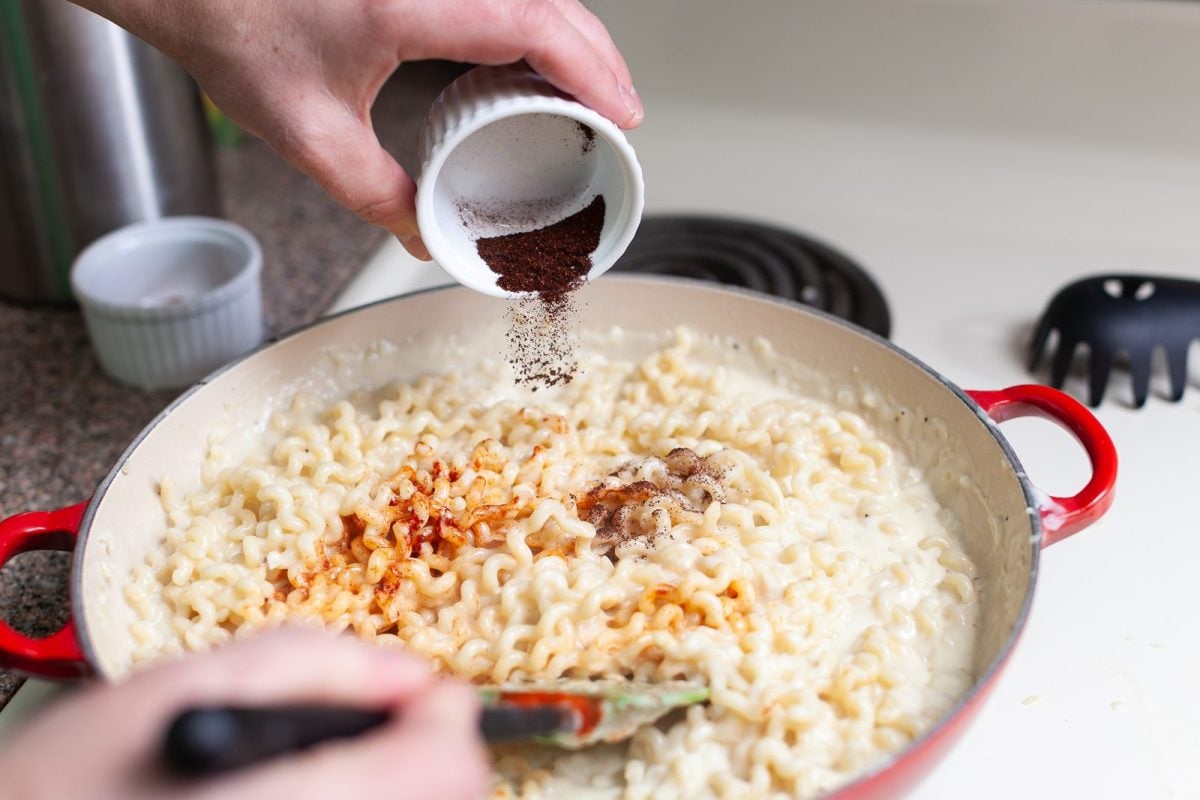
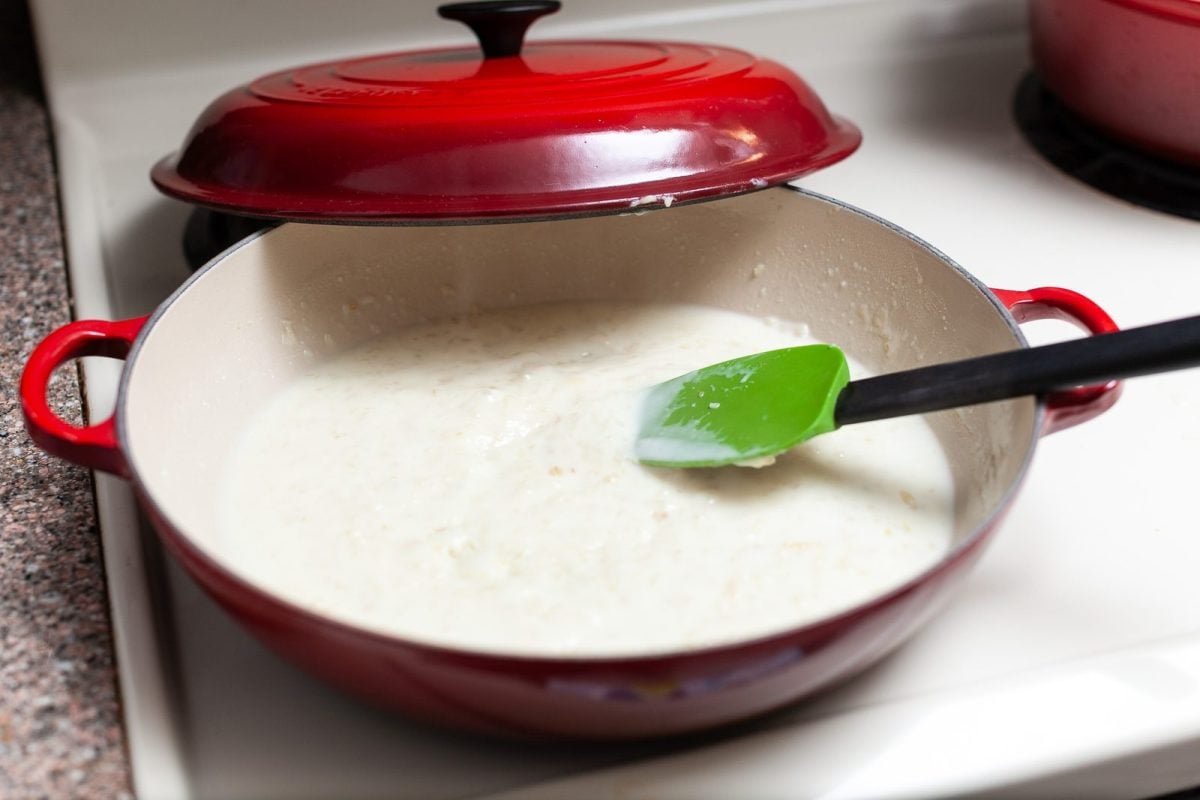
4) Prepare the sauce base. While whisking, pour in the warm milk slowly. Initially, it may seize and look lumpy. Keep whisking and it will smooth out. Heat to a gentle simmer and, while whisking often, cook for another 3-5 minutes, or until the sauce thickens enough to coat the back of a spoon. Then, add 1 teaspoon of kosher salt, a good amount of ground black pepper, 1 teaspoon of Dijon mustard, and for extra flavor you can add 1/4 teaspoon of garlic powder and 1/4 teaspoon of smoked paprika (both are optional).
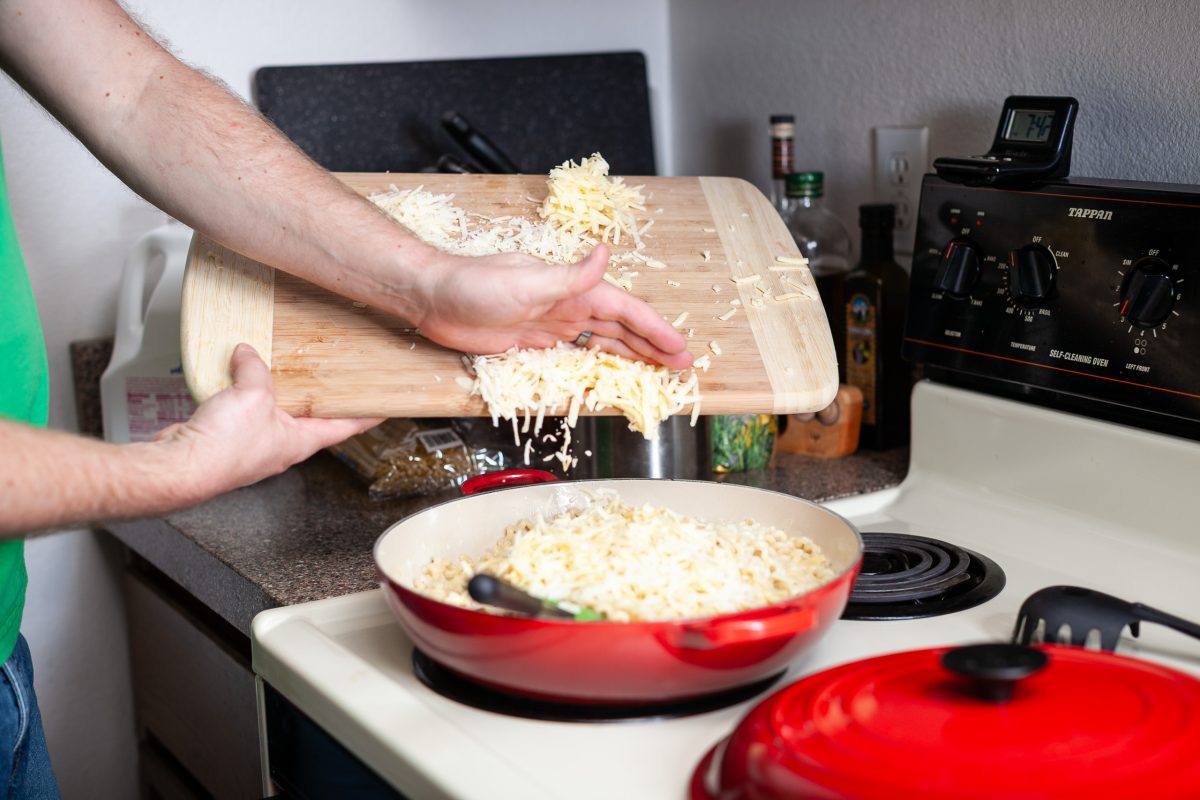
5) For the silky effect with cheese, turn the heat off. Stir in 3 cups (about 12 oz / 340 g) of grated cheese a handful at a time. I usually use a blend of 8 ounces sharp cheddar with 4 ounces Monterey Jack and I sometimes add 1/4 cup of finely grated Parmesan. If the sauce looks greasy or starts to tighten up, add a splash of warm milk or a couple of tablespoons of the pasta water to loosen it up.
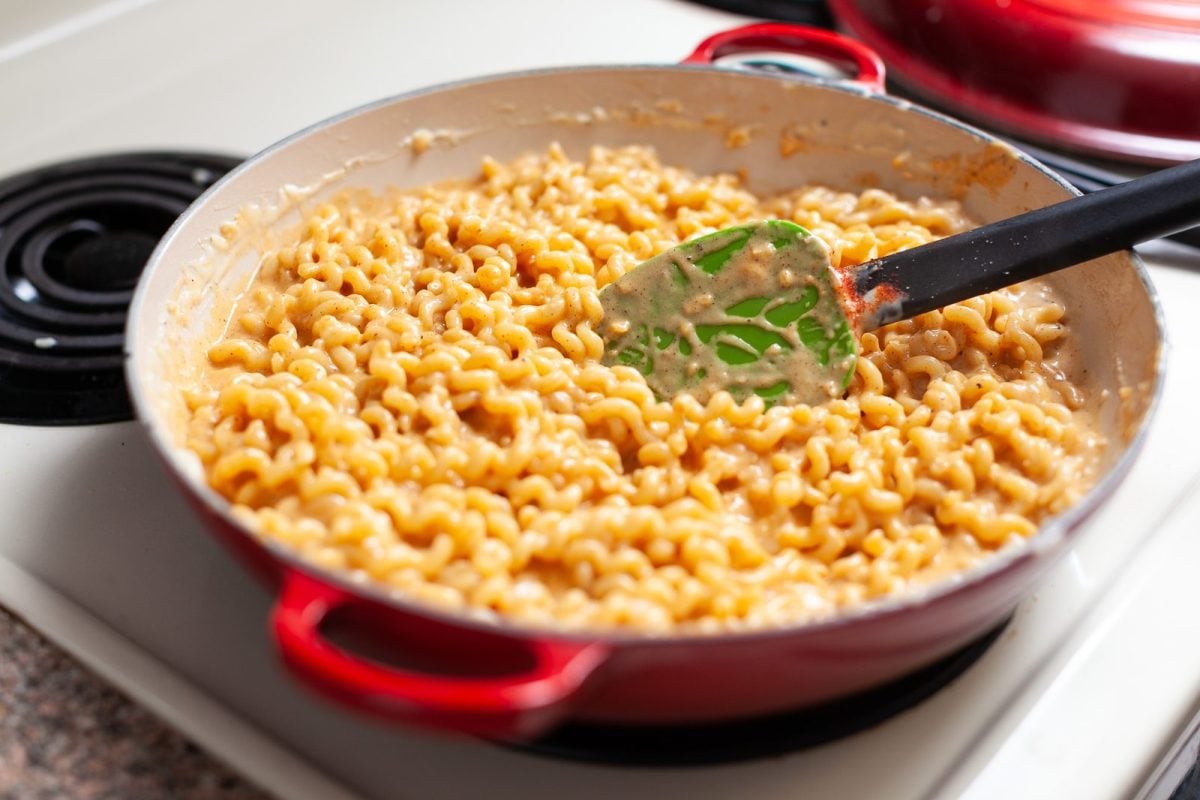
6) Combine and finish. Drain the pasta, then add it to the cheese sauce. Gently fold until each piece is coated. Let it sit for 2 minutes. Taste, and this is where I usually add one last pinch of salt and a few grinds of pepper. If the sauce is too thick after sitting, as it often is, use the reserved pasta cooking water to loosen it. Add one tablespoon at a time until the sauce is glossy.
If you want to keep it for a short time, you can, but mac and cheese is best served while the cheese is still a little saucy and glistening. If you have to keep it around 10 minutes, serve it on very low heat and just before serving, stir in a little milk.
Spins and Swaps
- Broiled top (quick “baked” vibe): Spoon the mixture into a baking dish and sprinkle with buttered panko and Parmesan cheese. Broil for about 2 to 4 minutes until the mixture is crisp.
- Three-cheese sharp: Use sharp cheddar, Gruyère, and Parmesan for an added complexity and nuttiness.
- Spicy jalapeño mac: Mix in the finely chopped pickled jalapenos along with one spoonful of the brine.
- BBQ mac: Top with scallions after adding a drizzle of barbecue sauce and some smoked gouda.
- Stovetop “deluxe”: American cheese slices can be added for more shine and for heat resistance.
- Hidden-veg mac (I said what I said): For a sweet, velvety sauce, blend roasted butternut squash into the milk prior to thickening.
Good Company for This Dish
- Something bitter and crisp: Arugula salad with lemon and olive oil is simple yet delicious.
- Roasted vegetables: Broccoli, Brussels sprouts, or cauliflower with a little char makes sense next to creamy pasta.
- Protein friends: Pulled pork, blackened chicken, or a seared sausage link are available as sides.
- Pickle energy: There is never a shortage of acid in my house. This could be in the form of dill pickles, quick pickled onions, or pepperoncini.
- Soup pairing: Tomato soup is the classic cozy duo, and it’s classic for a reason.
- Grown-up plate: A small serving of macaroni with a large green salad and a glass of something cold and bright.
If Something Looks Off
- My sauce is grainy. The pot may have been too hot when the cheese was added. Next time, try removing the pot from the heat and adding the cheese in smaller portions. To try and fix it, you can add a little warm milk and whisk while stirring. It sometimes comes together.
- My sauce is too thick. Add in reserved pasta water or warm milk until it loosens and turns glossy again. 1 to 2 tbsp at a time.
- My sauce is too thin. Let the milk-and-roux base simmer for a few more minutes before you add the cheese. If the base seems a bit cheesy already, keep the heat on low and stir gently as it will thicken as it cools.
- It tastes flat. You may want to try some salt to start, then a bit more on the Dijon, or a few drops of hot sauce. An extra pinch of smoked paprika may be able to give it some “presence.”
- It got greasy. If there’s a lot of heat or the cheese blend is really fatty, it can cause cheese separation. Remove it from the heat, whisk in a tablespoon of warm milk, and let it sit. Try mixing in a cheese that is better for melting like Jack or a little American next time.
- Grate your own cheese. Pre-shredded cheese is coated with anti-caking agents to reduce melting and create a gooey texture. It’s not illegal. It just isn’t as delicious.
- Undercook the pasta slightly. It will soften a bit while it’s in the hot sauce. There is no satisfying resolution for mushy mac.
Keeping It and Reheating It
Mac and cheese is supposed to be creamy and indulgent. When thinking about how to balance the portion, I consider it a full meal with a contrasting salad, or a smaller side next to something smoky and grilled.
To make it lighter, the easiest thing to adjust is the amount and type of cheese (keep cheddar for flavor, but use more Jack, and overall, go with less cheese). Don’t try to replace all the fat with virtue. And to be clear, this is not mac and cheese, it is quite literally going to be regret with noodles.
You can store it in the refrigerator in an airtight container for up to 3 to 4 days. To reheat, use low heat on the stove with a bit of milk and stir often, or microwave it at short intervals stirring in between. If the sauce thickens don’t worry. All you need is a little patience and some liquid to restore that shine. You definitely don’t want to just reheat it into oily submission!
Real Runs of This Recipe
Weeknight rescue: On Tuesday, I remembered I had promised “something comforting” dinner wise and then completely forgot to plan dinner. I made cavatappi with sharp cheddar and an American cheese slice I found in the deli drawer. My partner was eating the sauce and said they were “just tasting” it. Riiiiight.
I served this with some pulled pork and a vinegar slaw. I made the mac a little sharper than normal with a bit of extra-aged cheddar and a spoon of dijon. It sat like this for about 15 minutes on low heat and when it thickened, I loosened it with pasta water like I planned to all along. Nobody needs to know.
The Prep Checklist
- Shred cheese before you start cooking (it melts more quickly and uniformly).
- Salt pasta water aggressively.
- Before draining the pasta, reserve 1 to 2 cups of the pasta water.
- Heat the milk to help the sauce thicken evenly.
- Cook roux 1 minute (no browning).
- Stir the sauce base until it clings to your spoon, then turn off the heat.
- Remove from heat and add cheese by the handful, whisking until smooth.
- To keep the mixture glossy loosen it with either pasta water or milk.
- Taste for salt at the very end.
Quick Definitions
- Roux: A mixture that is cooked made with butter and flour that is used to thicken sauces.
- Béchamel: A cheese sauce base, consists of a roux and milk.
- Al dente: Pasta cooked until tender yet still pleasantly firm in the center.
- Carryover cooking: Food keeps cooking even after you take it off the heat because of something called residual heat.
- Emulsify: This merges fat and water-based liquids into a smooth mixture, as in mac and cheese, which is why the sauce remains creamy and doesn’t split.
- Split sauce: The sauce may look greasy or curdled and might have a separation of fat due to excessive heat.
Quick Answers
Is it possible for me to prepare this in advance? You can do it, but it would be best done fresh. If preparing in advance, undercook the pasta slightly, keep the sauce a bit thinner, and reheat gently with milk. Plan to stir and modify the texture just before serving.
What happened that made my cheese sauce become gritty? Is it possible that it overheats? That is especially the case for older types of cheddar cheese. Turn the heat off before throwing in the cheese, and do it bit by bit. Also, do not boil the sauce after you have added the cheese.
Is pre-shredded cheese okay to use? Yes, it would be fine to use in this instance. The sauce could be slightly less smooth because of the anti clumping agents. If you choose to go this route, use a meltable cheese like Jack, and consider adding 1 slice of American cheese to improve the texture.
What is another shape (besides elbow) that is the best? I like cavatappi the most for maximum sauce grip. Shells are also good since they catch little puddles of cheese sauce.
How do I keep mac and cheese from drying out when stored in the fridge? Heat up with some milk and on a low setting. Stir it frequently and be patient. If using a microwave, do it in small intervals and stir after each one. You want to do this slowly so you don’t end up with a dairy explosion.
The Last Word
Making mac and cheese is pretty straightforward, but if we were to make a comparison, it would be to a cat that may appear to not need your help, but is actually very needy. When preparing your sauce, give it the gentle touch it deserves, and don’t be afraid to season the sauce, and when it comes to using pasta water, treat it like it’s some sort of handshake special. Taking that first shiny forkful that actually tastes like cheese (and not some sort of meat byproduct) is like magic and, to be honest, that’s a pretty great skill to have during the week.
