
I avoided cheesecake for years because every recipe I found wanted a water bath, a springform wrapped in foil like a leftover, and a small prayer.
This one skips all of that and leans on 2 things most people ignore: a low 325°F (165°C) oven and a mixer that slows down the second the eggs go in, since air whipped into the batter is what cracks the top. You get a dense, creamy pumpkin filling on a spicy gingersnap crust for about 20 minutes of actual work. The fridge does the rest.
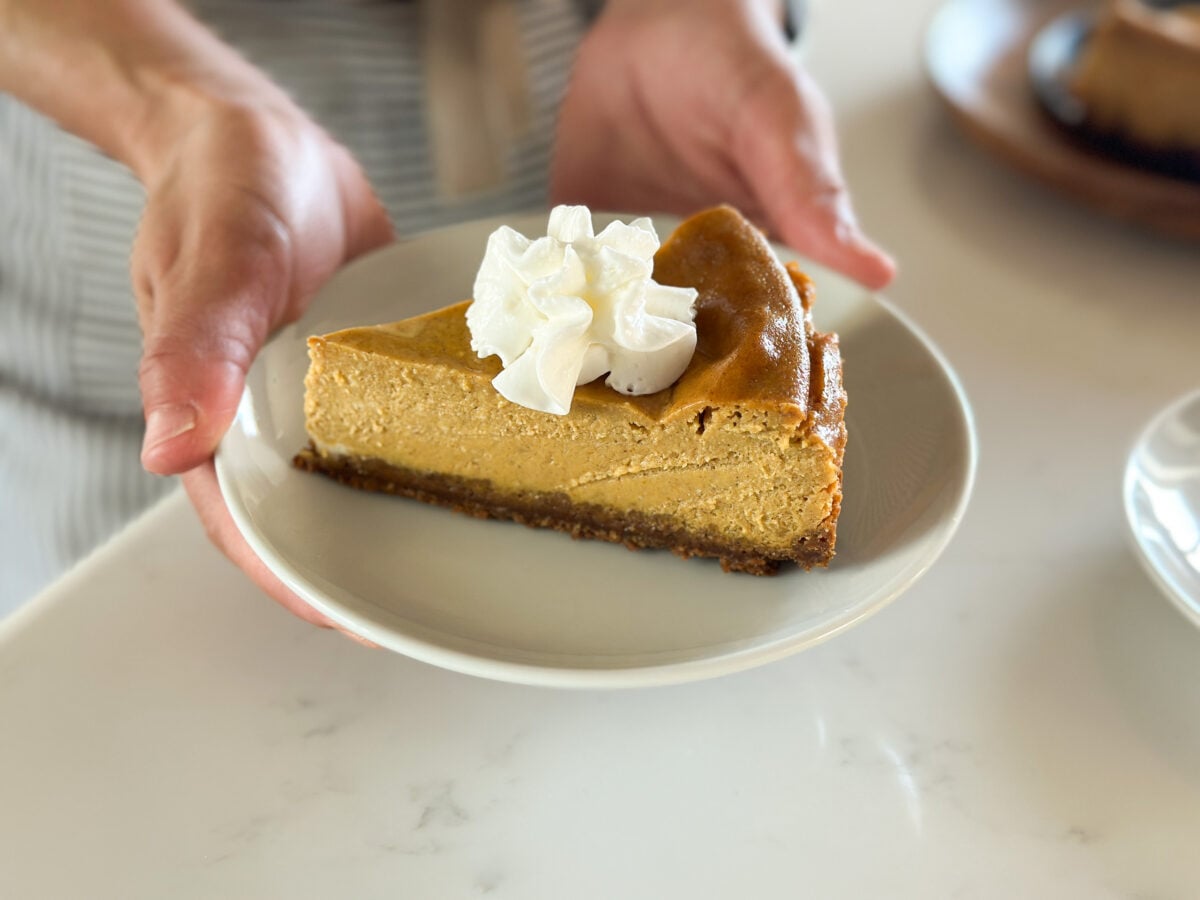
At a Glance
- Pumpkin Cheesecake, the heart of it: A creamy, dense pumpkin cheesecake on a gingersnap crust, baked low and slow in a 9-inch springform and cut into 12 slices.
- Why it works: A low oven sets the eggs gently, and keeping air out of the batter keeps the top smooth instead of split.
- Time: 20 minutes of prep and about 70 minutes in the oven, then 1 hour on the counter and at least 4 hours in the fridge.
- Flavor profile: Rich and tangy, with real pumpkin flavor, warm spice and a crunchy, ginger-forward crust.
- Key tip: Once the eggs go in, mix on low and stop as soon as they disappear.
- The jiggle rule: Pull it when the edges are set and the center still wobbles slightly. It finishes setting in the fridge.
Ingredients
Three things decide how this cheesecake turns out. The cream cheese has to be properly soft, or you end up beating it longer and whipping in air. The pumpkin has to be plain canned pumpkin, not pumpkin pie filling, which comes already sweetened and spiced. And the gingersnaps bring the crunch and heat that keep a rich filling from tasting flat.
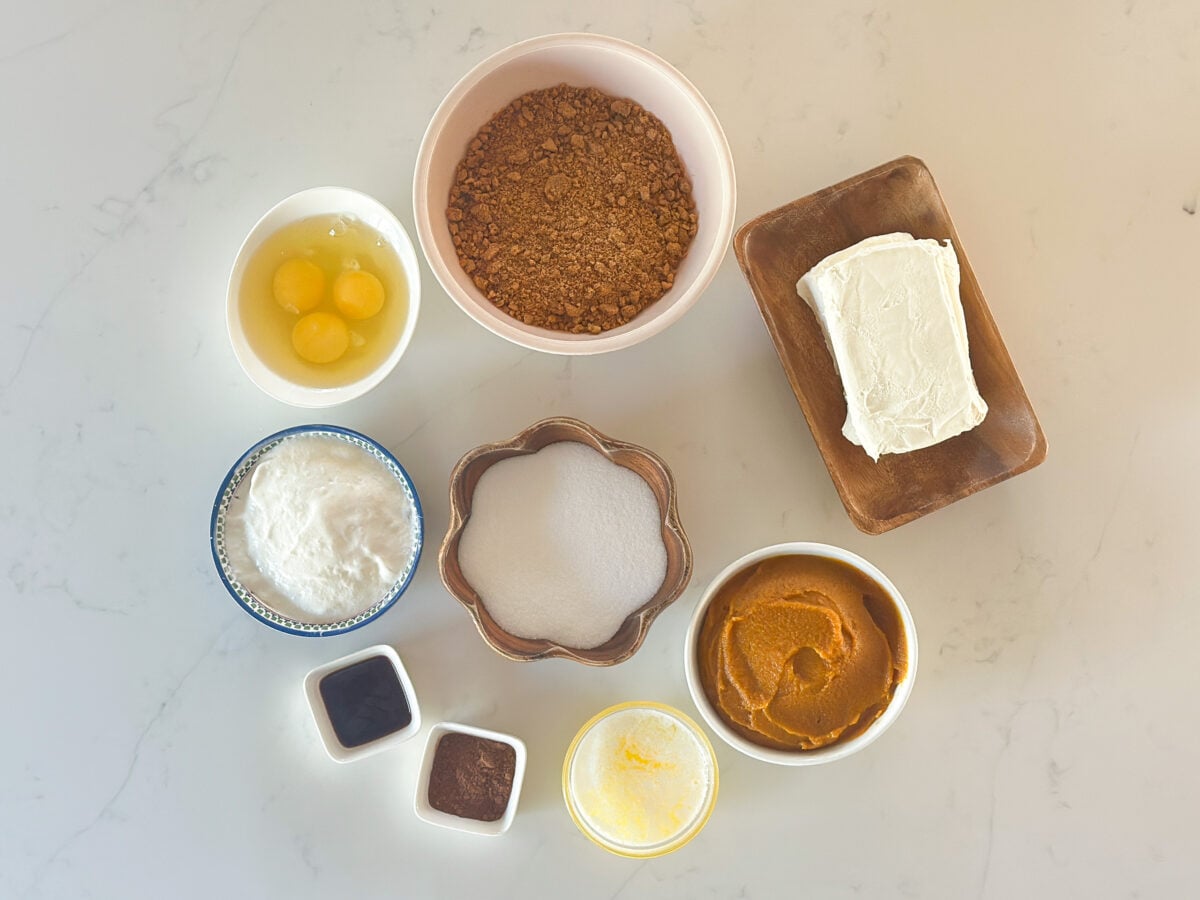
- Cream cheese (3 blocks, 8 oz each, softened): Full-fat bricks, not the spreadable tub. Leave them out for about 1 hour so they beat smooth without a fight.
- Sugar (1 cup): Granulated. It goes into the cream cheese first, before anything wet.
- Canned pumpkin (1 can, 15 oz): Plain pumpkin puree. Pumpkin pie filling is already sweetened and spiced and will throw the whole thing off.
- Eggs (3): Room temperature. Cold eggs make the batter lumpy, and lumpy batter tempts you into overmixing.
- Pumpkin pie spice (2 tsp): Open the jar and smell it. If it smells like nothing, it will taste like nothing.
- Vanilla (1 tsp): Rounds out the spice and the tang.
- Whipped cream (for serving): Lightly sweetened and softly whipped, added right before it goes to the table.
For the Gingersnap Crust
Press it firmly, especially where the bottom meets the side of the pan. A loose crust crumbles the moment you slice.
- Gingersnap crumbs (2 cups): Crush whole cookies in a food processor, or in a zip-top bag with a rolling pin, until fine and even.
- Butter (5 tbsp, melted): Binds the crumbs. The mixture should hold together when you squeeze a handful.
Master Ratio (Easy To Scale)
- Sugar: 1/3 cup per 8 oz block of cream cheese.
- Eggs: 1 egg per 8 oz block of cream cheese.
- Pumpkin: a 15 oz can per 24 oz of cream cheese.
- Spice: 2 tsp pumpkin pie spice per 15 oz can of pumpkin.
- Crust: 2 1/2 tbsp melted butter per cup of gingersnap crumbs.
Halving the recipe fits a 6-inch springform; start checking at about 45 minutes. I would not double it into one taller pan. A deeper cheesecake overbakes at the edges long before the center sets, so bake 2 separately instead.
Ingredient Choices That Change Flavor
| Choice | What you’ll notice | Best for |
|---|---|---|
| Gingersnap crust | Spicy, crunchy, ginger-forward | What this recipe defaults to |
| Graham cracker crust | Milder and sweeter, with a honey note | A more classic cheesecake feel |
| Biscoff cookie crust | Caramelized, heavy on cinnamon | A sweet-tooth crowd |
| Pumpkin pie spice | Balanced and familiar | What this recipe defaults to |
| Homemade spice mix (1 tsp cinnamon, 1/2 tsp ginger, 1/4 tsp nutmeg, pinch of cloves) | You control the balance | No spice blend in the pantry |
| Half brown sugar, half granulated | Deeper caramel notes, slightly darker filling | A cozier, more molasses-forward slice |
| Homemade pumpkin puree | Lighter flavor, wetter batter | Only if well drained; canned is more consistent |
The Springform (Worth Thinking About)
A 9-inch springform is what this recipe is built for, because the side releases and the slices come out clean. Check the seal before you start: if yours leaks melted butter, set it on a sheet pan in the oven. A round of parchment on the base makes it much easier to slide the finished cheesecake onto a plate.
Instructions
Yields: 12 slices. Pan: 9-inch springform. Oven: 325°F (165°C).
1) Make and bake the crust. Preheat the oven to 325°F (165°C). Stir 2 cups gingersnap crumbs with 5 tbsp melted butter until the crumbs look like wet sand, then press the mixture firmly into a 9-inch springform. The flat bottom of a measuring cup packs it down evenly. Bake for 10 minutes, then set it aside while you make the filling. Most people skip this prebake and then wonder why the bottom of their cheesecake is soggy.
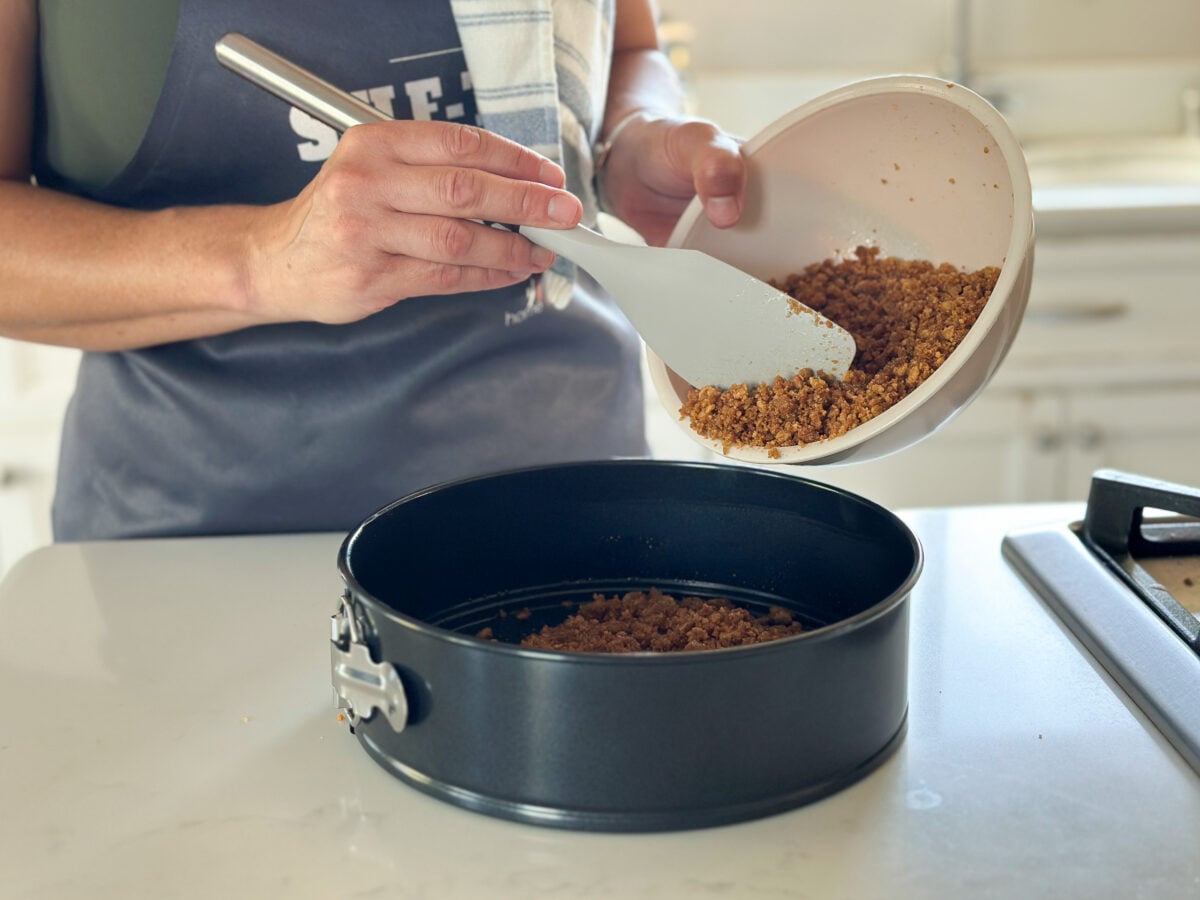
2) Beat the cream cheese and sugar. Beat 3 blocks (8 oz each) softened cream cheese with 1 cup sugar until completely smooth, scraping down the bowl as you go. Lumps that survive this step will not beat out later.
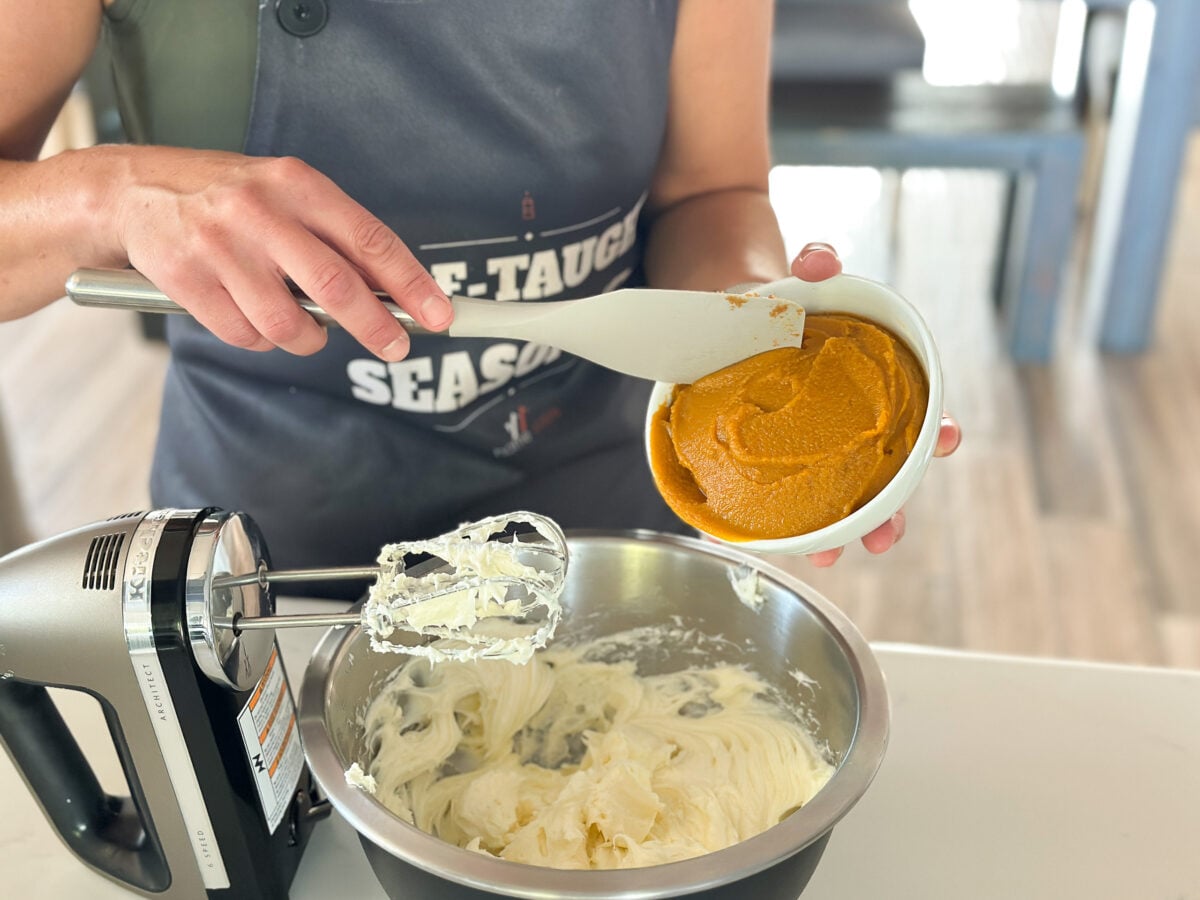
3) Add the pumpkin, spice and vanilla. Beat in 1 can (15 oz) pumpkin, 2 tsp pumpkin pie spice and 1 tsp vanilla until the batter is evenly orange.
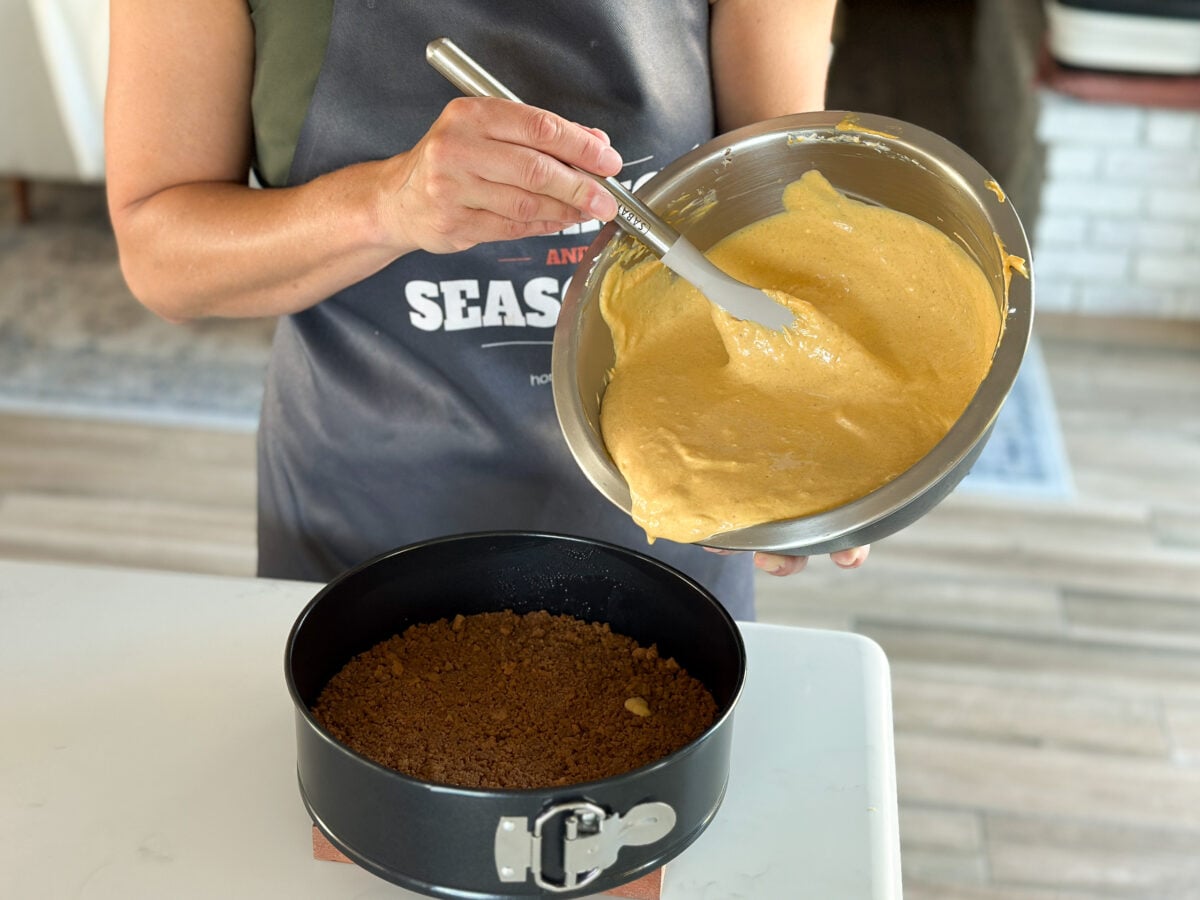
4) Add the eggs on low. Turn the mixer to low and add the 3 eggs one at a time, mixing only until each one disappears. This is the step most people skip, and then they wonder why the top split down the middle: overbeating after the eggs whips in air, the air puffs up in the oven, and the top cracks as it settles.
5) Pour and bake. Pour the filling over the crust and smooth the top. Bake for 60 to 70 minutes, until the edges are set and the center still jiggles slightly when you nudge the pan.
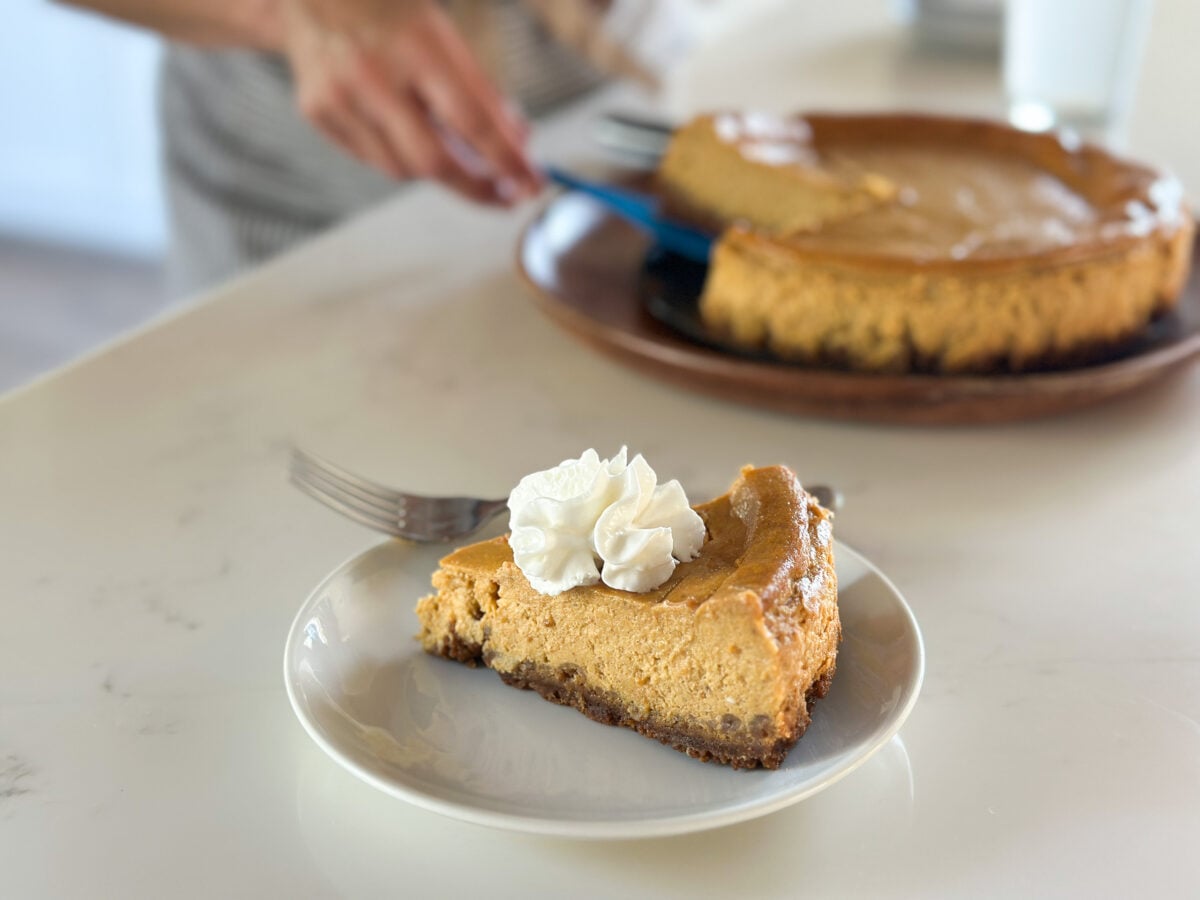
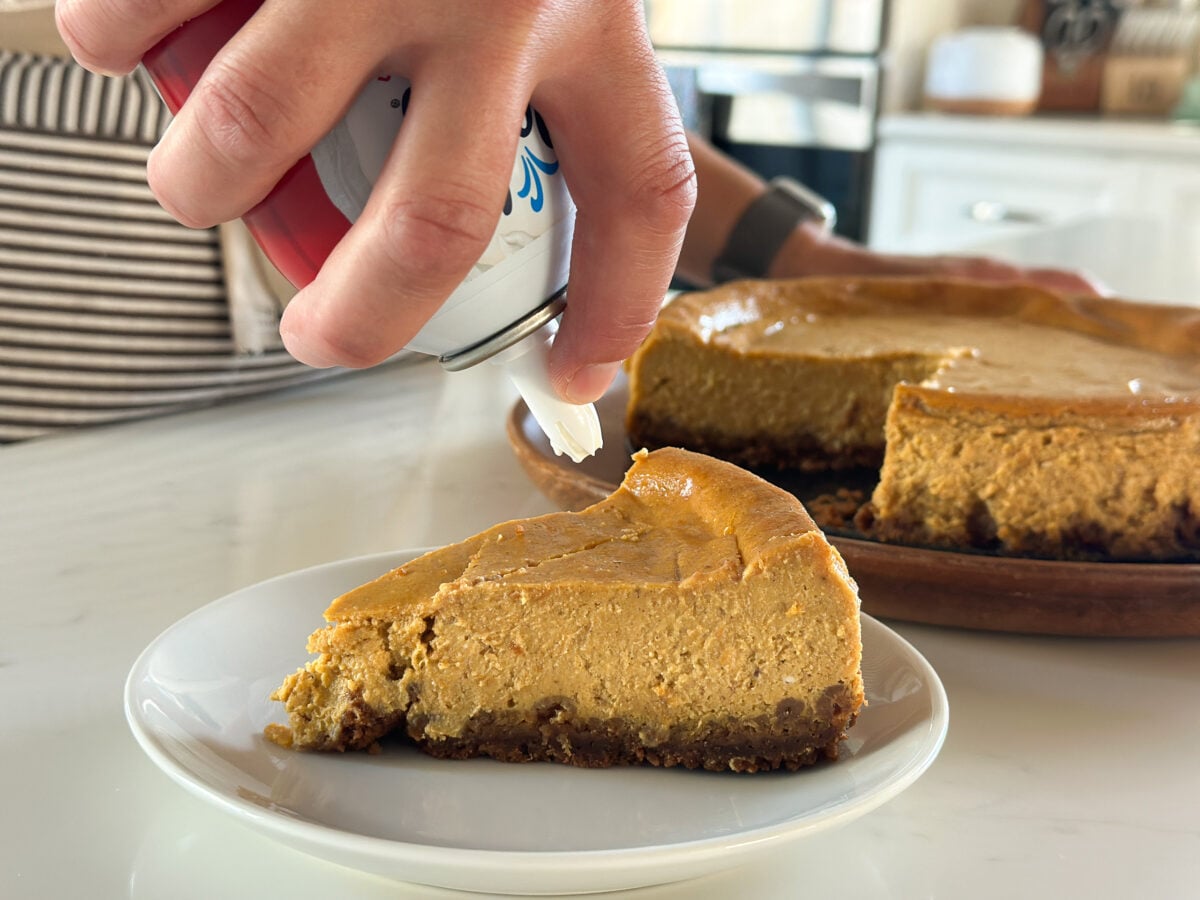
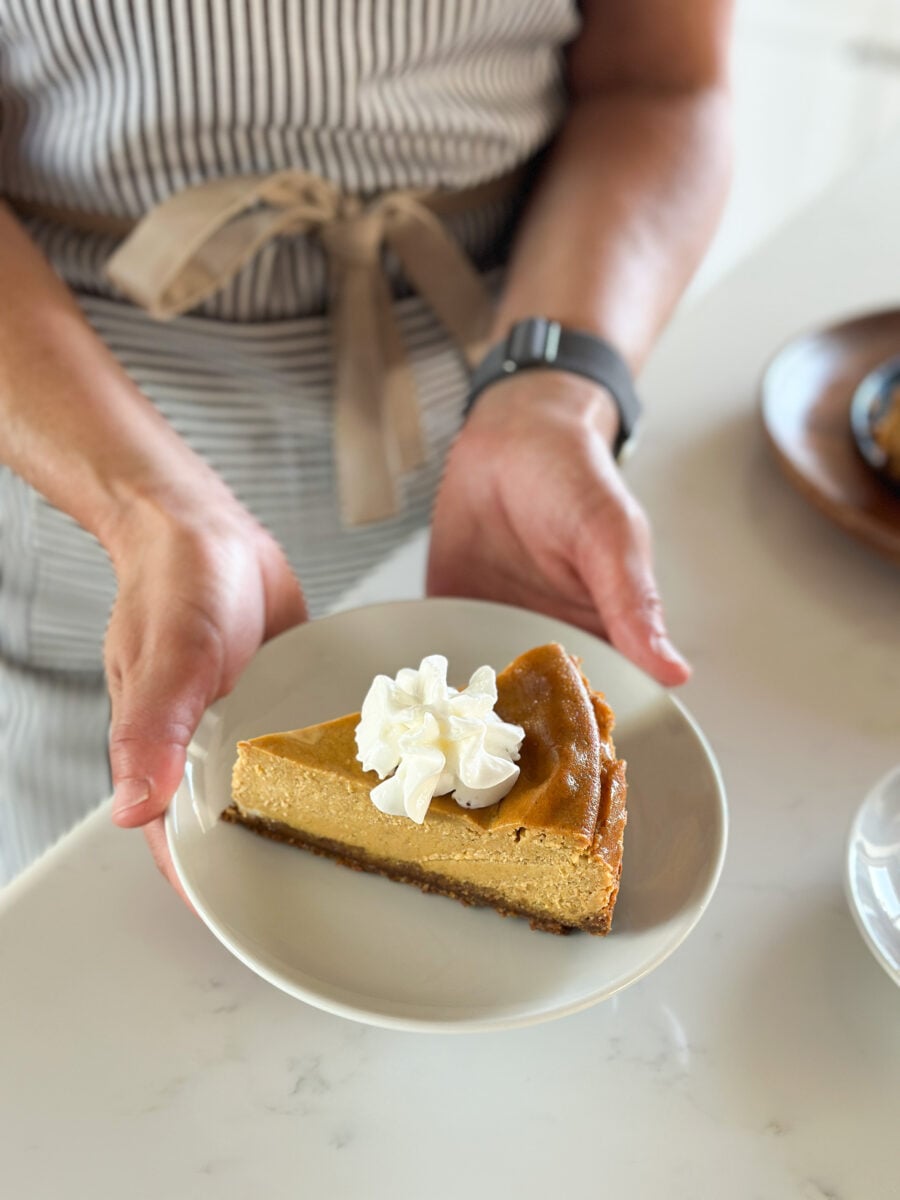
6) Cool, chill and serve. Cool the cheesecake for 1 hour, then refrigerate it for at least 4 hours. This part is non-negotiable; a cheesecake cut early slumps onto the plate. Release the springform, slice, and serve each piece with whipped cream.
Riffs That Work
- Graham cracker crust: Swap the gingersnaps for 2 cups graham cracker crumbs and keep the 5 tbsp butter.
- Bourbon: Add 1 tbsp bourbon along with the vanilla for a warmer, slightly boozy edge.
- Pecan praline topping: Cook 1/2 cup chopped pecans with 2 tbsp butter and 1/4 cup brown sugar until bubbling, cool for 5 minutes, then spoon over the chilled cheesecake.
- Spiced whipped cream: Whip 1 cup heavy cream with 2 tbsp powdered sugar and 1/2 tsp cinnamon.
- Salted caramel: Warm 1/3 cup caramel sauce with a pinch of flaky salt and drizzle it over each slice.
- Extra ginger: Add 1/2 tsp ground ginger to the filling to echo the crust.
On the Table Together
- The holiday table: It fits right in with a Thanksgiving dessert spread that isn’t all pie.
- Strong coffee: Espresso or a dark roast cuts through all that cream cheese.
- Toasted pecans: A handful on top adds crunch the filling does not have.
- Sliced pears or apples: Something fresh and crisp on the side makes a rich slice feel lighter.
- Hot apple cider: Mulled or plain, it matches the spice.
- A second pumpkin dessert: For a crowd, set it next to a pan of pumpkin pie bars and let people pick a side.
If Something Looks Off
- The top cracked: Usually overbeaten after the eggs or overbaked. Mix on low, pull it while the center still jiggles, and run a thin knife around the edge after 10 minutes of cooling so the cake can shrink without tearing. If it cracks anyway, whipped cream covers everything.
- The batter is lumpy: The cream cheese was too cold. Beat the cream cheese and sugar longer before the pumpkin goes in; once the eggs are added, it is too late to fix.
- The center is still soft after chilling: It came out too early. Next time bake until only the middle 2 to 3 inches jiggle, not the whole top.
- The texture is grainy or curdled: The oven ran hot or it baked too long. Check your oven with a thermometer and start testing at 60 minutes.
- The crust is soggy: It skipped the 10-minute prebake, or the pan leaked. Bake the crust first and set the springform on a sheet pan.
- The crust crumbles when sliced: It was not packed firmly enough. Press hard with a measuring cup, especially around the edge.
- The slices look messy: Use a long knife dipped in hot water and wiped dry between every cut.
Nutrition and Storage Notes
As a rough estimate, each slice lands somewhere around 400 to 450 calories before the whipped cream, most of it from cream cheese, sugar and butter. Cutting 16 thinner slices instead of 12 brings that down and still feeds a holiday table.
Keep the cheesecake covered in the fridge for up to 5 days, and add whipped cream only right before serving. To freeze, chill it completely, wrap whole or by the slice in plastic and then foil, and freeze for up to 2 months. Thaw overnight in the fridge. I hated to admit it, but it is better on day 2, when the spice has settled into the filling.
The Jargon, Explained
- Springform pan: A round cake pan with a removable side held by a latch, so delicate cakes come out without flipping.
- Low and slow: Baking at a lower temperature for longer so the eggs set gently and the filling stays creamy.
- The jiggle: The slight wobble in the center of a cheesecake when it is done. Set edges, soft middle.
- Room temperature cream cheese: Cream cheese left out about 1 hour, soft enough to beat smooth without extra mixing.
- Overbeating: Mixing longer than needed after the eggs go in, which whips in air and leads to cracks.
- Pumpkin puree: Plain cooked pumpkin with nothing added. Not the same as pumpkin pie filling, which is sweetened and spiced.
- Pumpkin pie spice: A blend of cinnamon, ginger, nutmeg and cloves or allspice.
Asked and Answered
Can I make pumpkin cheesecake ahead?
Yes, and you should. It needs at least 4 hours in the fridge anyway, and it slices more cleanly and tastes better after a full night. Make it up to 2 days ahead and keep it covered, then add the whipped cream just before serving.
Do I need a water bath?
Not for this one. The low 325°F (165°C) oven and gentle mixing do the job a water bath is meant to do. If your oven runs hot, a pan of hot water on the rack below adds a little insurance without wrapping anything in foil.
Why did my cheesecake crack?
The usual causes are air beaten in after the eggs, baking until the center is fully firm, or cooling too fast. Mix on low, pull it while it still jiggles, and let it cool on the counter for the full hour before the fridge.
Can I freeze pumpkin cheesecake?
Yes. Wrap it well in plastic and foil and freeze for up to 2 months, whole or in slices. Thaw it overnight in the fridge and add whipped cream after it thaws.
Can I use graham crackers instead of gingersnaps?
Yes, swap them 1 for 1 with the same 5 tbsp butter. The crust will be milder and sweeter, which some people prefer with pumpkin.
Can I use pumpkin pie filling instead of pumpkin puree?
I would not. Pie filling already has sugar and spice in it, so the cheesecake ends up too sweet and the spice gets muddy. Use plain canned pumpkin.
How do I know when it is done?
The edges look set and slightly puffed, and the center 2 to 3 inches still jiggle when you gently nudge the pan. If the whole top is firm, it went a little long.
How long does it need to chill?
At least 4 hours after its hour on the counter. Overnight is better, and the slices come out noticeably cleaner.
Closing Thoughts
Pumpkin cheesecake has a reputation for being fussy, mostly because of the water bath and the fear of a crack down the middle. This version asks for a low oven, a gentle mixer and some patience, and in return you get a slice that tastes like pumpkin first and cheesecake second, on a crust with some actual bite. Make it the day before, save the whipped cream for the last minute, and let the fridge take the credit.
If it cracks anyway, that is what the whipped cream is for.
