
I will be honest, the first time I tried making shrimp po’ boys at home, I got a little too confident. I had alright shrimp, but I forgot a few of the “fussy” steps and ended up making a sandwich that just tasted like fried seafood on bread, not the same thing. A real po’ boy is all about the noise. Hot and crunchy shrimp, sharp and cold pickles, crunchy lettuce and cream that ties the whole thing together like a brass band with crowd control.
The classic remoulade-style mayo situation is a hit. If you have something crunchy (chips), hot sauce, and lemons, you’re half way there. This recipe stands on three pillars: season the flour like you mean it, don’t overcook the shrimp (they aren’t chicken nuggets), and toast the bread so it can hold the chaos. This is the most reliable version.
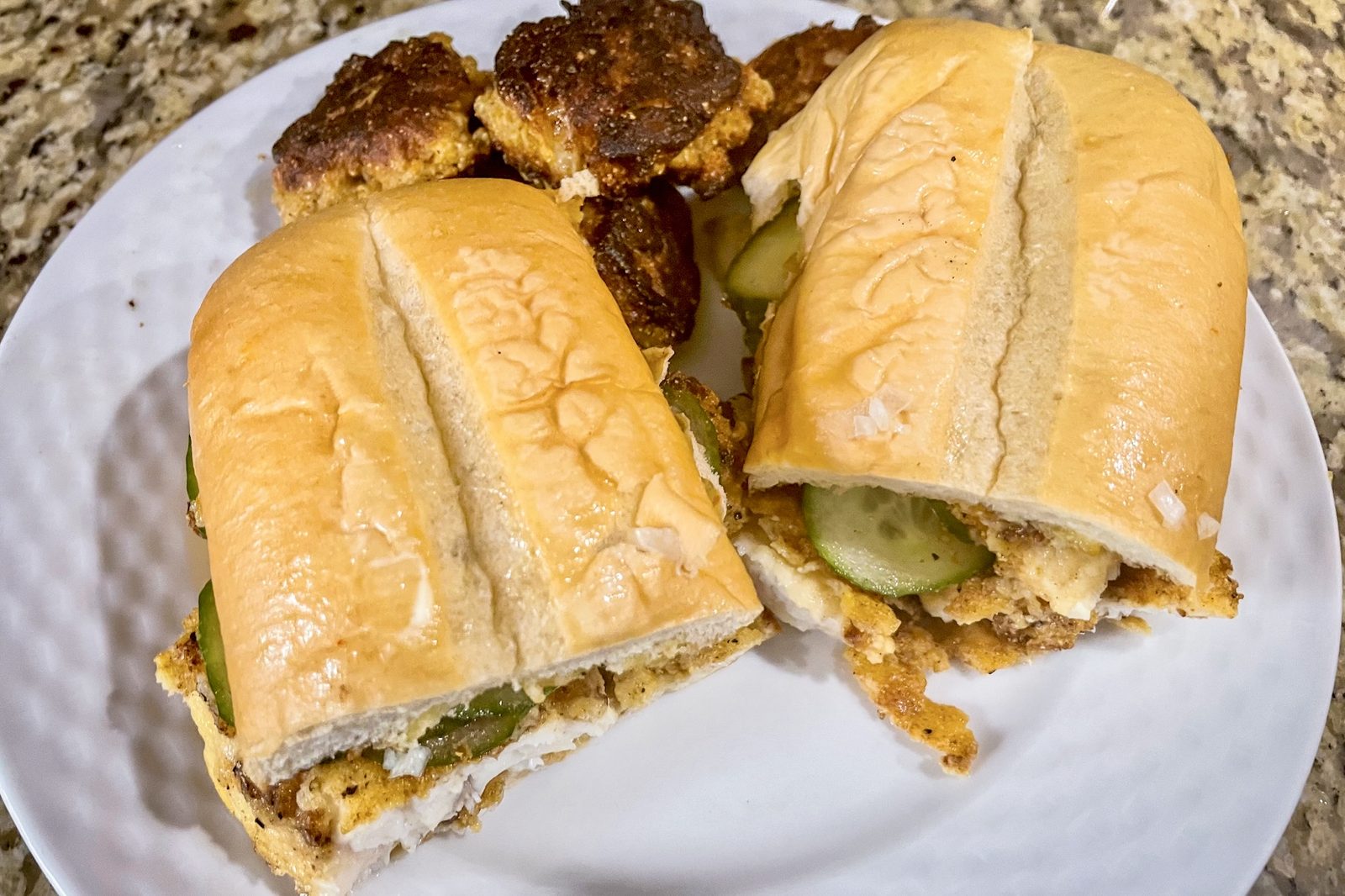
The Cheat Sheet
- What you’re making: A classic shrimp po’ boy features crispy seasoned shrimp served on toasted French bread with shredded lettuce, pickles, and a zesty, creamy sauce.
- Why it works: Soaking in buttermilk (or hot sauce) helps the coating stick, and heavily seasoned flour creates flavor, while a quick fry preserves the shrimp’s juiciness and snap, avoiding a rubbery texture.
- Timing: You should estimate a total time of 35 to 60 minutes to prep, cook, and shrimp soak the dish. Prep time should take about 20 minutes, cooking should take about 10 to 15 minutes, and soaking the shrimp (if you choose to do this step) can take an additional 10 to 30 minutes.
- Flavor profile: It’s crunchy and creamy with a hint of spiciness and tanginess. Plus it has a bright lemon finish.
- Key tips: Make sure to pat the shrimp dry prior to dredging them. Fry them in small batches at a temperature between 350°F and 365°F. Also, toast the bread with butter so it doesn’t get soggy.
Ingredients
This recipe makes 4 big sandwiches. I’m writing for medium shrimp as those are 31 to 40 count and fry up nicely and fit well in a baguette so they don’t become a seafood Jenga tower. Using jumbo shrimp can be silly (fun) but they may burn if you’re not watching closely.
- Shrimp: 1 1/2 pounds of shrimp that have been peeled and deveined (sandwich sanity) and have had their tails removed. Fresh or thawed frozen shrimp are fine; just be sure to dry them before dredging.
- Soak (for cling and flavor): You can use 3/4 cup of buttermilk (or plain yogurt mixed with a bit of water) and add 1 to 2 teaspoons of hot sauce.
- Dredge: All-purpose flour with some cornstarch for extra shattering, Cajun seasoning, garlic powder, paprika, black pepper, and salt.
- Frying oil: Peanut oil is traditional, but canola or vegetable oil is also acceptable. You need an oil that is neutral as well as heat-stable.
- Bread: Four pieces of French bread or baguette that are about 7 to 8 inches long. A loaf with a soft crust, New Orleans-style, is the best option, but you can work with a supermarket baguette if you toast it well.
- Fixings: Shredded iceberg lettuce (or cabbage), sliced dill pickles, optional sliced tomatoes, and optional sliced onions.
- Sauce (quick remoulade vibe): Mayonnaise, Creole mustard (or Dijon), lemon juice, minced pickle or relish, hot sauce, and paprika or Cajun seasoning. Plus, a pinch of sugar (optional but nice).
Master Ratio (Easy To Scale)
- Per 1 pound shrimp: 1/2 cup of buttermilk with 1 tablespoon of hot sauce
- Dredge per 1 pound shrimp: 3/4 cup flour + 1/4 cup cornstarch
- Seasoning per 1 pound shrimp: 1 tablespoon of Cajun seasoning, 1/2 teaspoon of garlic powder, 1/2 teaspoon of paprika, and 1/2 teaspoon of black pepper. (Plus add some salt if your Cajun seasoning is low-salt).
- Sauce per 1 pound shrimp: 1/2 cup mayonnaise + 1 tablespoon of mustard + 1 tablespoon of lemon juice + 1 to 2 tablespoons of minced pickles/relish, + hot sauce to taste.
Example: for a smaller batch of 1/2 pound shrimp (two sandwiches), use 1/4 cup buttermilk, around 1/2 cup total dredge (3/8 cup of flour and 1/8 cup of cornstarch to give it some structure), and about 1/4 cup sauce. The ratios will forgive you, and that is precisely what I want for a sandwich dinner.
Ingredient Choices That Change Flavor
Have you ever eaten two po’ boys from two different shops and wondered how they can be the same sandwich yet feel so different? This is why. Little changes modify the complete environment.
| Choice | Option A | Option B | What It Changes |
|---|---|---|---|
| Sauce base | Mayo + Creole mustard | Mayo + ketchup + horseradish | Creole mustard keeps it sharp and tangy; ketchup-horseradish leans “seafood cocktail” with a sweet heat. |
| Crunch layer | Iceberg lettuce | Shredded cabbage | Iceberg is cold, clean, and classic; cabbage is sturdier and stays crunchy longer (great if you’re feeding a crowd). |
| Coating | Flour + cornstarch | Flour + fine cornmeal | Cornstarch gives delicate, crackly crispness; cornmeal adds gritty crunch and a more rustic bite. |
| Heat | Hot sauce in soak + sauce | Cayenne in dredge + extra pickles | Hot sauce heat feels vinegary and bright; cayenne feels warmer and more direct, and pickles add snap to balance it. |
| Pickles | Dill slices | Pickled jalapeños | Dill keeps it traditional; jalapeños turn the sandwich into a spicier, more modern bar-food situation (in a good way). |
Quick Remoulade-Style Sauce (Make It Yours)
- 1/2 cup mayonnaise
- 1 1/2 tablespoons Creole mustard (or Dijon)
- 1 tablespoon lemon juice
- 1 tablespoon of dill pickle (or 2 teaspoons of relish)
- 1 to 2 teaspoons of hot sauce (more can be added while serving)
- 1/2 teaspoon paprika or Cajun seasoning
- Optional: 1 small clove of garlic (grated), 1 teaspoon of capers, a pinch of sugar
I made this sauce real fast just using some things I could find in the fridge door. These things were mustard, mayonnaise, pickled something, and spicy something. I remember trying some pickled okra once. It was cut into little green coins and it was weirdly good. This sauce has the essence of tang and swag.
Instructions
Yield: 4 shrimp po’ boys
Equipment you will need: Large heavy pot or deep skillet, thermometer (optional), wire rack or paper towels, tongs, baking sheet.
1) Prepare the sauce first. In a small bowl, mix together the mayonnaise, mustard, lemon juice, chopped pickles/relish, a dash of hot sauce, and seasoning (paprika or Cajun). Since this sauce will be tasted while having hot shrimp and bread, you can season the sauce to have a stronger flavor. You can also place the sauce into the refrigerator while you do the frying. Just 15 minutes of refrigeration will help the sauce set.
2) To season and soak the shrimp, first wash the shrimp with water and use paper towels to dry them. Then, mix the shrimp with some buttermilk and hot sauce in a bowl and coat it. Leave it for about 10 to 30 minutes while you do some other cooking tasks. (Soaking helps the coating cling to the shrimp. It’s tempting to skip, but it’s worth doing.)
3) To make the dredge, get yourself a nice flat bowl or a pie pan, and mix together the flour, cornstarch, Cajun seasoning, garlic powder, paprika, and black pepper. Whisk that beautifully together and add a pinch of salt if you would like. You should get a scent that indicates you are about to do something of great value!
4) Heat the oil. Add oil into a heavy pot or deep skillet so that it’s 1 to 1 1/2 inches deep. Preheat it to a temperature of 350 to 365°F. If you don’t have a thermometer, you can put a pinch of flour. If the flour sizzles and floats, it’s ready. If not, just sulk.
5) Dredge the shrimp. In small batches, remove the shrimp from the buttermilk and allow the excess buttermilk to drip off before coating the shrimp in the flour mixture. Really press down. While the next batch is being coated, put the breaded shrimp on a baking sheet. (This is around the time my kitchen looks like a mini snowstorm has occurred.) It’s all good!
6) Fry with confidence, and do it quickly. To avoid drastically decreasing the oil’s temperature, fry the shrimp in multiple steps. Cook for about 1 1/2 to 2 minutes on each side, until they are deeply golden and crispy. When shrimp are done cooking, they should have their color changed from the original color to white and they should be curled like a loose “C” and not a tight “O.” When the shrimp come out of the oil, they should be placed on a rack or some paper towels, and you can season them while they’re still hot with a little bit of salt.
7) Don’t skip this step, toast the bread. Slice some French bread like you would slice a loaf of bread. Spread some butter on each side and toast them on a pan, or put them in the oven, until they are a nice brown. You are looking for it to be warm in the middle and nice and crisp on the edges. This is how you avoid the sad, soggy sandwiches that so many people make at home.
8) Assemble it with purpose. Put sauce on both sides of the bread. Stack on some shredded lettuce. Put on the pickles, and if you want, add some tomato and onion. Next, layer on the hot shrimp. If you like lemon, you can add a squeeze of lemon before closing the sandwich. You can also add some more hot sauce if you want. Close the sandwich and press lightly before serving right away.
Spins and Swaps
- Oyster po’ boy: Use shucked oysters and dredge and fry them the same way, but make sure to keep your batches small so they don’t stew.
- Blackened shrimp po’ boy: Forget the dredging and frying steps. Instead, coat the shrimp in blackening seasoning and put them in a hot skillet with butter to sear them. You still get the flavor but in a lighter way.
- Extra-crunch “double dredge”: To dredge the shrimp, dip it back into the buttermilk, dredge it again, and fry it. This will create a thicker coating for the shrimp which is very satisfying.
- Spicy-sweet: Use pickled jalapeños instead of dill pickles and put a teaspoon of honey into the sauce.
- Gluten-free: You can make the sauce gluten-free by using a 1:1 gluten-free flour for the blend and add cornstarch, and then serve with gluten-free rolls or use lettuce wraps.
- Air fryer shortcut: Coat the dredged shrimp in oil and air fry at 400°F for 6-8 minutes, flipping halfway through. They may not be exactly like deep-fried shrimp, but they are crunchy enough!
On the Table Together
- Classic sides: Extra vinegar coleslaw, fries or kettle chips.
- Something green: The cold snap is a relief. Crunchy cucumbers and celery with lemon and salt is perfect.
- New Orleans-ish: If you’re really hungry, you could have some red beans and rice. Just keep the portions small so the sandwich is the main focus.
- Drinks: Liquid refreshment options include iced beer, a sunny citrus lager, or sweet tea with a hard squeeze of lemon.
- For a party: Shrimp will be kept warm on a rack in the low oven; keep po’ boys assembled & ready to order.
Common Stumbles, Easy Saves
- My coating fell off: The shrimp were usually too wet, or the oil wasn’t hot enough. Pat the shrimp dry before soaking, let the extra buttermilk drip off, and keep the oil between 350 and 365°F.
- The shrimp are tough: Overcooked! Shrimp cook quickly; take them out as soon as they are opaque and curled into a loose “C.”
- It’s greasy: The oil may not have heated up to the right temperature or the temperature may have dropped due to oil crowding. Fry smaller portions and allow the oil to heat back up between frying.
- The bread went soggy: Toast it, and use sauce as a thin layer (not a soup). Also, lettuce under the shrimp can act as a little moisture barrier.
- Not enough flavor: Season the dredge more aggressively and finish with lemon and hot sauce. Fried food loves acid.
- Keep shrimp crispy longer: Let it cool down and do not cover with aluminum foil as you want the steam to escape.
- Don’t skip the pickles: It does taste different without that cold, sharp crunch.
Nutrition and Storage Notes
A shrimp po’ boy is a fried sandwich, no way around it. It’s protein from shrimp, carbs from the bread, and fat from the frying and mayo. To make this dish less sad and keep it feeling lighter, consider blackening the shrimp instead of frying it and keeping the sauce light (more lemon and mustard and less mayo).
It’s hard to keep the crunch and freshness of your meal when you put it away. If you have leftovers, always keep the parts separate: store your fried shrimp in an airtight container (to make it crispy again, put it in an oven/air fryer at 400°F), keep the sauce in the fridge, and keep the bread at room temp. Sandwiches that are made are all sorts of nasty after even the shortest amount of time. Storing one turns it into something else completely.
Stop following recipes. Start understanding them.
20 video cooking lessons from Nathaniel. $27 one-time, lifetime access.
Field Notes
Example 1 (weeknight sprint): I made these on a Tuesday when I wasn’t thinking too deeply about it. The shrimp was previously frozen and then thawed, and I poured some Cajun seasoning on it. The lettuce was one easy step, since it came pre-shredded. The only additional step is toasting the bread. My partner got real quiet after just one bite and said, “Okay, this is real.” That was the entire victory.
The second test: Crowd Scenario For a mini game-night event, I pre-fried shrimp and kept them warm on a rack in a 200°F oven. I made assembly line style service shrimp rolls and sauce and lettuce and pickle toppings. Everyone made their own roll and there were no complaints and the shrimp still stayed crisp since they weren’t enclosed in a roll for 45 minutes. I would recommend this if you like hosting and want something easy.
The Prep Checklist
- Make sauce and refrigerate.
- Pat the shrimp dry. Then, soak them in buttermilk and hot sauce for 10 to 30 minutes.
- Combine the flour, cornstarch, and Cajun seasoning for the dredge.
- Heat oil to 350 to 365°F.
- Dredge shrimp thoroughly; fry in small batches.
- Let them cool on a wire rack and season them with a little salt while they’re still hot.
- Butter and toast bread.
- Get ready to make this delicious creation! You’ll need some sauce, lettuce, pickles, shrimp, and if you feel like it, you can add a tomato or onion. You can also throw in some extra hot sauce and a lemon!
Words You’ll See Above
- Po’ boy: A Louisiana sandwich usually served on French bread, is usually packed with fried seafood or roast beef, and is dressed with lettuce, tomatoes, pickles, and sauce.
- Dredge: A dry coating (usually made out of flour) that assists food in attaining a crispy texture when it’s fried.
- Remoulade: Seafood sauces are often mayo-based and have a tangy flavor due to seasoning. They may vary in taste as they can be spicy or sweet or even mustardy.
- “Dressed”: The classic toppings on a po’ boy include lettuce, tomato, pickles, and mayo or sauce.
- Loose “C” shrimp: An overcooking cue; shrimp that curl tightly into an “O” are usually done too much.
Quick Answers
What type of bread is best for a shrimp po’ boy?
Ideally, you want to get some soft French bread with a nice, thin, and crackly crust. If that isn’t available, grab a baguette and butter toast one side, leaving the inside tender and the crust sturdy enough to hold the filling.
Is it ok to use pre-cooked shrimp?
I wouldn’t say that. Already cooked shrimp will become rubbery and dry to the bite if you attempt to fry them. The best texture is achieved from using raw shrimp.
Do I need a deep fryer?
No, deep skillets or heavy pots with 1 to 1 1/2 inches of oil layers should be used. What is most important is the temperature control of the oil, and frying in batches.
How spicy is this recipe?
Currently, the sauce is mild to medium heat. The main heat sources are the Cajun seasoning and hot sauce and can be adjusted up or down (or fully omitted). For someone sensitive to spice, you might want to make the sauce mild and offer the hot sauce on the side.
Can I prep anything ahead?
Absolutely, you can prepare the sauce three days ahead of time, and the lettuce can be shredded and the pickles and tomatoes can be sliced a day prior. For the best crunch, fry the shrimp just before serving (or oven-re-crisp if needed).
What oil is best for frying shrimp?
The best option is peanut oil, but canola oil and vegetable oil are also okay. Do not use oils like olive oil that have strong flavors.
Closing Thoughts
A shrimp po’ boy is a sandwich that should never be understated, and to be honest, that is part of the charm! Messy, crunchy, and just overall awesome, this sandwich is a sandwich that I would eat at the counter. Some good suggestions are to add more mustard and more pickles, then squeeze a sharper lemon on it.
