
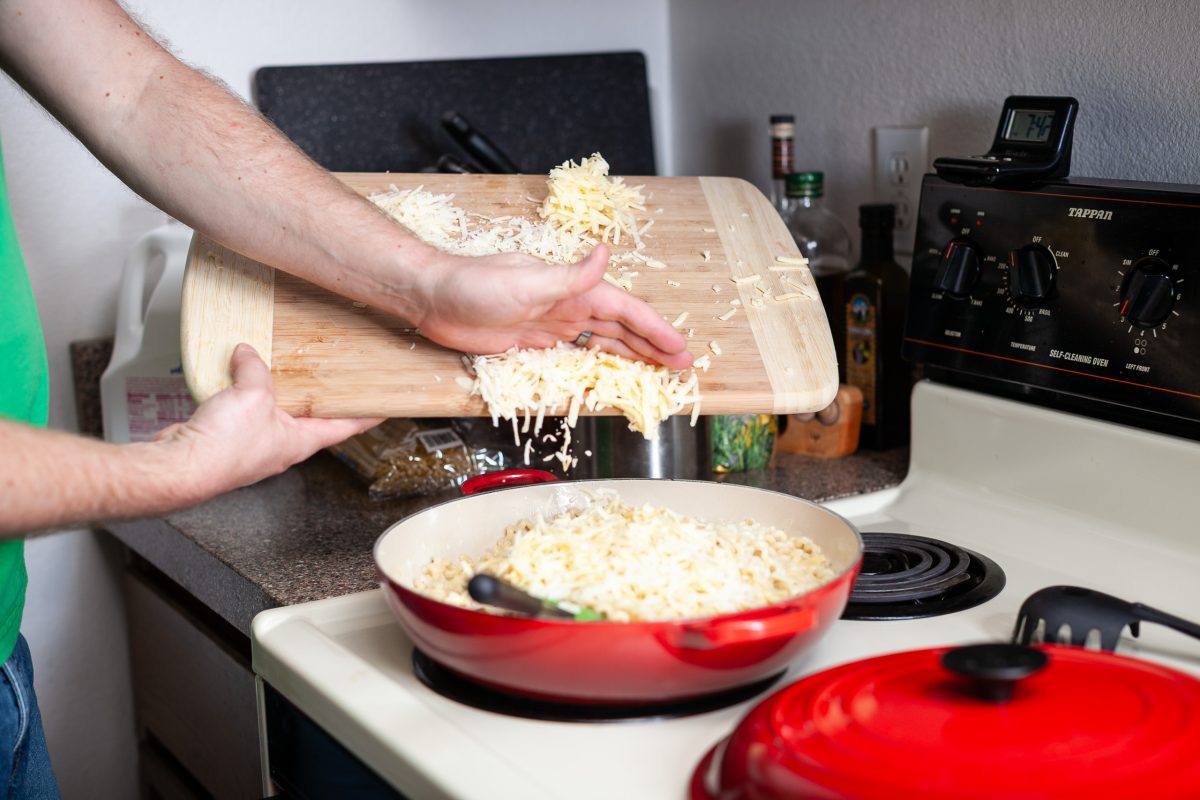
I never had to show restraint when going to Panera because I just looked forward to the mac and cheese. It feels like a warm hug on the inside. The texture is smooth, and the flavor is rich, exciting, and just the right amount of subtlety. That sharpness means you’ll have to take another mouthful, even if you’d told yourself you’d only have a few spoonfuls.
I give off that vibe with stovetop macaroni and cheese made with a roux (don’t worry), a hint of Dijon, and a smart cheese blend that melts like they actually mean it (none of that ‘fussy’ baked casserole nonsense). This is the kind of mac and cheese that, no matter how bad your kitchen is, no matter how many times you stir with the same spoon that you taste it with three times, you still feel it will competent and a bit lucky.

The Cheat Sheet
- What you’re making: A Panera-style stovetop mac and cheese with a velvety, tangy cheddar-forward sauce.
- Why it works: A butter-flour roux thickens gently, milk and cream add plushness, and a blend of white cheddar + mild melting cheese keeps it smooth (not gritty).
- Timing: 25 to 35 minutes total; active time is basically “stir and don’t wander off.”
- Flavor profile: Creamy, dairy-rich, lightly sharp, faintly mustardy, and comfortingly salty.
- Key tips: Warm the dairy, shred your own cheese, keep the sauce below a simmer when adding cheese, and reserve pasta water for emergency silkiness.
Ingredients
What I finally like about Panera’s mac and cheese is its unique personality. Although the dish is cream based and cheesy, the cheddar isn’t overwhelming. Personally, I think the best way to customize it is to pick extras that you believe will pair nicely. When it comes to cheese, I would steer clear of the clumpy types. Most cheese makers coat their shreds with some type of anti-caking agent. I find that this causes the cheese to melt into a bland, uninteresting sauce that becomes chalky and is less enjoyable to eat. If you find yourself even a little pressed for time, do yourself a favor and get the box grater instead.
- Elbow macaroni: The classic. Those little curves catch sauce like they’re designed for it (because they are).
- Butter: The base of the roux. Unsalted lets you control the salt, but salted won’t ruin your life.
- All-purpose flour: Thickens the sauce. You’re cooking it briefly to avoid raw flour taste.
- Whole milk + heavy cream: Milk gives volume; cream gives that spoon-coating finish. You can go all milk, but the result is less plush.
- White cheddar (sharp-ish): The main event. Use a good one that tastes like cheddar, not just “white.”
- Fontina or young Gouda: A melting cheese that makes the sauce satiny. This is the “why is it so smooth?” part.
- Parmesan: Optional but recommended for depth. Not too much, or it can skew salty and grainy.
- Dijon mustard: Not to make it taste like mustard. Just to make it taste more like itself.
- Garlic powder + onion powder: Tiny amounts, background only. Think “warmth,” not “garlic bread.”
- Hot sauce (optional): A few dashes won’t make it spicy, just brighter.
- Salt + black pepper: Season in layers.
Master Ratio (Easy To Scale)
- Pasta: 8 oz (about 2 1/2 cups dry elbows)
- Roux: 2 tbsp butter + 2 tbsp flour
- Dairy: 1 3/4 cups milk + 1/4 cup heavy cream
- Cheese: 2 to 2 1/2 cups total shredded cheese (about 8 to 10 oz)
- Seasoning: 1 tsp Dijon, 1/4 tsp garlic powder, 1/4 tsp onion powder, salt to taste
**Example of Scaling**: Are you serving a larger crowd? Then you need to multiply 1 lb of pasta, 4 tbsp of butter, 4 tbsp of flour, 3 1/2 cups of milk, 1/2 cup of cream, and 4 to 5 cups of shredded cheese. Be sure to use a bigger pot so there is room for the sauce to thicken, and stir it really well when you add the cheese.
Ingredient Choices That Change Flavor
| Ingredient Choice | What It Does | Best If You Want | Notes |
|---|---|---|---|
| Sharp white cheddar | More tang, more “cheddar bite” | A Panera-like zing | Too sharp can get slightly crumbly if overheated; keep sauce gentle. |
| Mild white cheddar | Softer, creamier, less assertive | Kid-friendly mac | Consider adding a bit more Dijon to keep it lively. |
| Fontina | Melts into a glossy, elastic sauce | Ultra-smooth texture | If it tastes too “buttery,” swap half for young Gouda. |
| Young Gouda | Sweet-savory roundness | A slightly richer, cozy vibe | Avoid aged Gouda here; it’s firmer and less melty. |
| All whole milk (no cream) | Lighter mouthfeel | Weeknight mac that isn’t heavy | Still good, just less “velvet blanket.” |
| Evaporated milk (swap for 1 cup milk) | Extra silky, stable sauce | Reheat-friendly mac | Great trick if you hate sauce breaking on day two. |
Optional Finishes (Worth It)
- Buttered breadcrumbs: If you miss that occasional baked-mac crunch, toast breadcrumbs in butter and sprinkle on top right before serving.
- Extra shred of cheddar: A small handful on each bowl melts into little pockets of joy.
- Black pepper shower: I’m heavy-handed here. Panera is mild; my kitchen is not always.
Instructions
**1) Prepare the Pasta** Grab a spacious saucepan and fill it halfway with water. Add a good pinch of salt and wait for it to boil. Once it’s boiling, pour in 8 oz of elbow macaroni. You’ll want to take the macaroni out before it’s al dente, which means still a bit firm, because they’ll continue to cook in the sauce. Before you drain the pasta, keep 1 cup of the pasta water. Once you drain the pasta, place it back into the (off the heat) pot so it doesn’t get cold and sad.
2) Heating dairy (do this step fast and without any care) Pour the milk and cream into a microwaveable measuring cup and place it into the microwave. Heat it for about 60–90 seconds (it doesn’t need to bubble, just needs to be hot). Warmed dairy helps the sauce come together. If you skip this step, that’s fine. Just be ready to do some extra whisking.
3) Make a white roux. In another medium saucepan, melt 2 tablespoons of butter over medium heat. Then, add 2 tablespoons of flour and stir for about 60–90 seconds. You want a nutty paste, but be careful; it should NOT be brown and must be smooth. If it starts turning brown, turn the heat down. The goal is to make it creamy, not toasted.
4) Let’s move on to the béchamel base. While whisking, pour in the warm milk and cream mixture. At first, it may look like an intimidating thick and lumpy monster, but with more whisking, the lumps will go away and it will become smooth. Continue to cook and stir, and in 2 to 4 minutes, it should thicken enough to coat the back of a spoon.
5) Put the seasoning into the sauce. Since the heat is at the lowest setting, add and stir in 1 teaspoon of Dijon mustard, 1/4 teaspoon of garlic powder, 1/4 teaspoon of onion powder, and several cracks of black pepper. Up to half a teaspoon of kosher salt can be added (you may want to adjust this when the cheese is added).
6) Do not add the cheese while the cheese sauce is still being heated. Doing this will cause the sauce to become grainy. Additionally, you will need to fully melt the cheese before you can add more, so whisk the sauce after each handful of cheese that you add.
For this recipe, it is best to use a mix of cheeses. You will need a total of 1 1/2 cups of grated white cheddar, 3/4 cup of fontina cheese (or young gouda), and 1/4 cup of parmesan cheese (this can be optional, so do as you like). If necessary, adjust to taste and add salt. For a kick, add 2 to 4 dashes of hot sauce.
7. Mix with the pasta and loosen if necessary. After draining the macaroni, put in the cheese sauce and mix it in. If the sauce appears too thick, it will firm up more, so add reserved pasta water 2 1 at a time until glossy and scoopable. Stir it again after 2 minutes. Serve warm.
Variations Worth Trying
- Broccoli cheddar mac: Stir in 1 1/2 cups steamed broccoli florets at the end. Add an extra pinch of salt; broccoli drinks seasoning.
- Bacon Panera-ish: Fold in chopped crispy bacon and a little extra black pepper. (This is the version that disappears fastest at my house.)
- “Extra tang” mac: Use sharp white cheddar and add 1/2 teaspoon more Dijon. It’s brighter, more grown-up.
- Spicy comfort mac: Add 1/4 teaspoon cayenne and 1/2 teaspoon smoked paprika, plus hot sauce to taste.
- Stovetop to “baked” hybrid: Pour into a buttered baking dish, top with buttered breadcrumbs, and broil 2 to 3 minutes for a crackly top.
On the Table Together
- Tomato soup: Obviously. A bowl next to this mac feels like a snow day, even if it’s Tuesday.
- Simple green salad: Lemon vinaigrette, bitter greens, and maybe shaved fennel if you’re feeling fancy.
- Roasted chicken: Salt-and-pepper thighs or a rotisserie bird are both welcome here.
- Steamed green beans: Toss with butter and a squeeze of lemon so dinner doesn’t feel monochrome.
- Garlic bread: A little ridiculous with mac, yes. Also very satisfying.
If Something Looks Off
- My sauce is grainy. Most likely the sauce was too hot when the cheese went in. Next time, lower the heat and add cheese gradually. You can sometimes rescue it by whisking in 1 to 2 tablespoons warm milk and keeping the heat very low.
- My sauce is too thick. Add reserved pasta water or warm milk, a splash at a time. Pasta water is magic because its starch helps the sauce stay cohesive.
- My sauce is too thin. Let it simmer gently for another 1 to 2 minutes before adding cheese, or add a little more cheese (the tastier fix). If it’s already mixed with pasta, just cook on low for a minute, stirring, and it will tighten.
- It tastes flat. Add a pinch more salt, a small squeeze of lemon, or a touch more Dijon. “Flat” is often “under-salted,” but sometimes it’s “needs acid.”
- Pre-shredded cheese clumped up. It happens. It’s the starch. Use block cheese when you can, or choose “thinly shredded” varieties and add slower, off the heat.
- Don’t overcook the elbows. Soft pasta plus thick sauce equals cafeteria vibes. Al dente buys you better texture.
- Use a whisk, not a spoon, for the sauce. This is not me being dramatic; it’s the difference between smooth and lumpy in about 30 seconds.
How It Keeps
The main ingredients of this recipe for classic comfort food are butter, dairy, and cheese. Their combined satisfaction is unbeatable especially when paired with something crunchy and acidic such as a salad, pickles, and zesty tomato soup. If you want to make this dish a bit healthier, you can substitute cream for milk, and use a cheese that melts easily, like fontina, to make the texture better.
You can keep it in an airtight container in the fridge for 3 to 4 days. To keep your meal the same, add some milk and stir while you are reheating it. You can cook this on the stove or even in the microwave. Mac and cheese always tightens in the fridge; that’s normal. The goal isn’t to turn it into rubber, but to gradually bring back a bit of moisture.
Times I’ve Made This
I made this because I could not wait any longer and I really needed to eat. I used white cheddar and fontina cheese. I also used hot sauce, but I just splashed in a couple dashes. The macaroni and cheese was extra creamy and had that tange that made it taste like a *real recipe* instead of a meal made from random stuff in the cabinets.
Example 2 (the potluck test): At a community event where people tend to say “I don’t eat much,” I made a double batch of mac and cheese. I brought a slow cooker to keep the mac and cheese warm, and I stirred it and added milk to keep it going. One kid asked if this was the ‘bread bowl mac,’ which was the sort of compliment that made you feel proud like you kind of tricked them.
The Checklist
- Shred cheese before you start cooking (it goes fast once the roux is ready).
- Salt pasta water generously; it’s your first layer of flavor.
- Reserve 1 cup pasta water before draining.
- Cook roux 60 to 90 seconds, whisking, without browning.
- Warm milk and cream, then whisk into roux slowly.
- Simmer sauce until it coats a spoon, then lower heat.
- Add cheese in handfuls, letting each melt fully.
- Stir sauce into pasta; loosen with pasta water if needed.
- Taste and adjust: salt, Dijon, pepper, optional hot sauce.
Kitchen Words, Decoded
- Roux: A cooked mixture of fat (butter) and flour used to thicken sauces. Here, it makes the sauce creamy instead of watery.
- Béchamel: A white sauce made by whisking milk into a roux. This is the base before cheese turns it into cheese sauce.
- Al dente: Pasta cooked until tender but still slightly firm in the center. Crucial for mac that doesn’t turn mushy.
- Off the boil: Not actively bubbling. Cheese melts best in gentle heat; boiling can make it grainy.
- Emulsify: Getting fat and water to stay together in a smooth mixture. Whisking and gentle heat help this sauce stay unified.
Quick Answers
Is this an exact Panera mac and cheese copycat?
It’s a close version at home, attempting to hit the same creamy, tangy profile. Most restaurants use cheese blends and stabilizers, but that’s not how we do things. Without needing any ingredients that a scientist would use, we achieve similar textures through clever use of techniques and cheese.
Do you want to do it more without cream? Yes, you can use all whole milk. The sauce might be less plush, but it would still be quite satisfying. If you want to sub with 1 cup of evaporated milk, it might make it silkier and better for reheating.
Why did my cheese sauce become grainy? Cheese sauce can become grainy if cheese is added too quickly. Heating the sauce to a temperature that is too high can cause cheese proteins to tighten making the sauce gritty. Gradually keep the temperature lower and add the cheese portion by portion. Don’t boil the sauce either after the cheese has been added.
What do you think is the best cheese combination at Panera?
If you want it to taste more like Panera, you can add white cheddar for flavor, while using fontina (or young gouda if that’s not possible) for how it melts. It will be smooth and have a tangy taste to it that is spoon coating.
Can this be prepped for a party in advance?
Definitely! Just know you may need to adjust the consistency. Prepare, chill, and refrigerate, then gently warm it up with milk and stir frequently. If this is for a buffet it can be kept on low to stay warm, and you can adjust the consistency with a few small splashes of milk.
Can I bake it?
Yeah! But the best option is stovetop mac. If you really want to bake it, you should maybe undercook the pasta a bit, add a tad more milk to your sauce, and then top it with some buttered breadcrumbs. You can bake it until it’s hot (or broil it for a couple minutes to get some color).
The Last Word
This is the mac I make when I want to pretend I am going to Panera but would rather eat at home, not put on shoes, and avoid going out for dairy. (I also like keeping the heat down.) Use your favorite cheese, and make sure to save some pasta water. The end result is creamy and tangy, and like all the best mac and cheese recipes, a little extra.
