From the first time I tried to cook a pork roast, I was very intimidated by them, because I thought there was no way I could do it properly. Because many pork roasts have disappointed me by coming out dry.
But then I came across the slow cooker pork roast and gravy recipe.
In addition to being a straightforward recipe, the aroma also evokes memories of home-cooked meals.
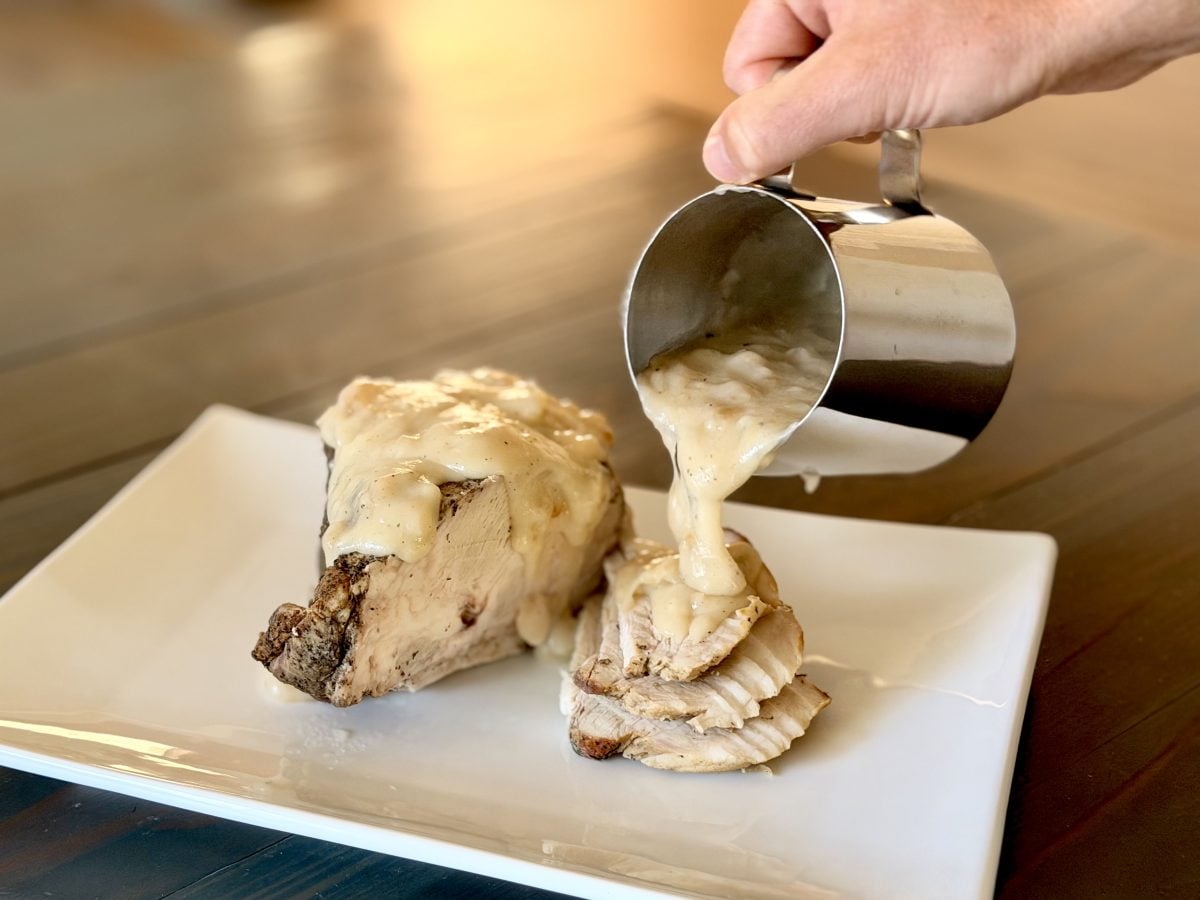
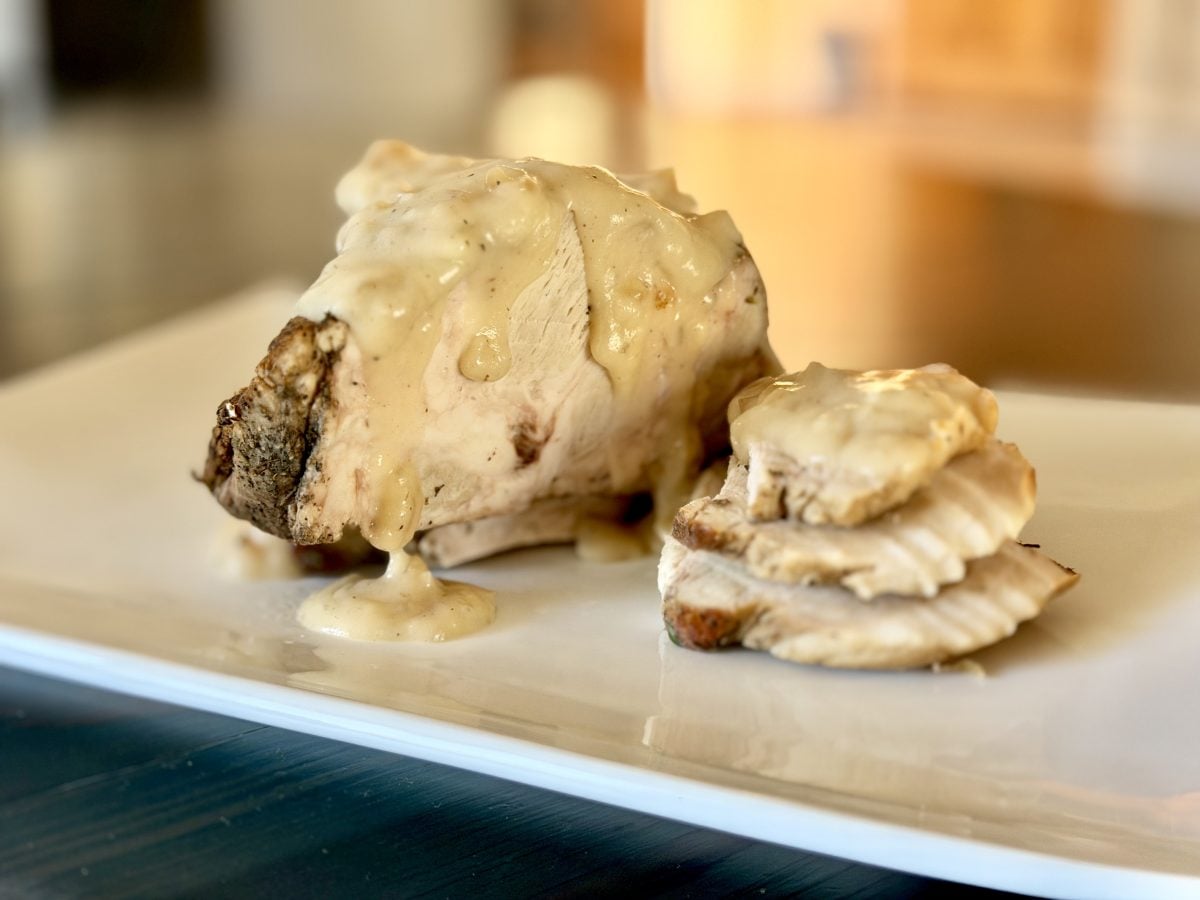
Of course, the gravy is the highlight of the dish. The preparation method for the pork makes it so tender that it literally falls apart, and the drippings from the pork transform into a creamy white gravy with bits of pepper. This is the type of gravy you’ll want to take a spoon to and slather over everything, especially the potatoes and noodles, as well as the last remaining corner of the bread loaf.
I’ve prepared this when the Sundays were gloomy and the weekdays were chaotic, and even when my in-laws were “just passing through.” Each time, this recipe has saved me.
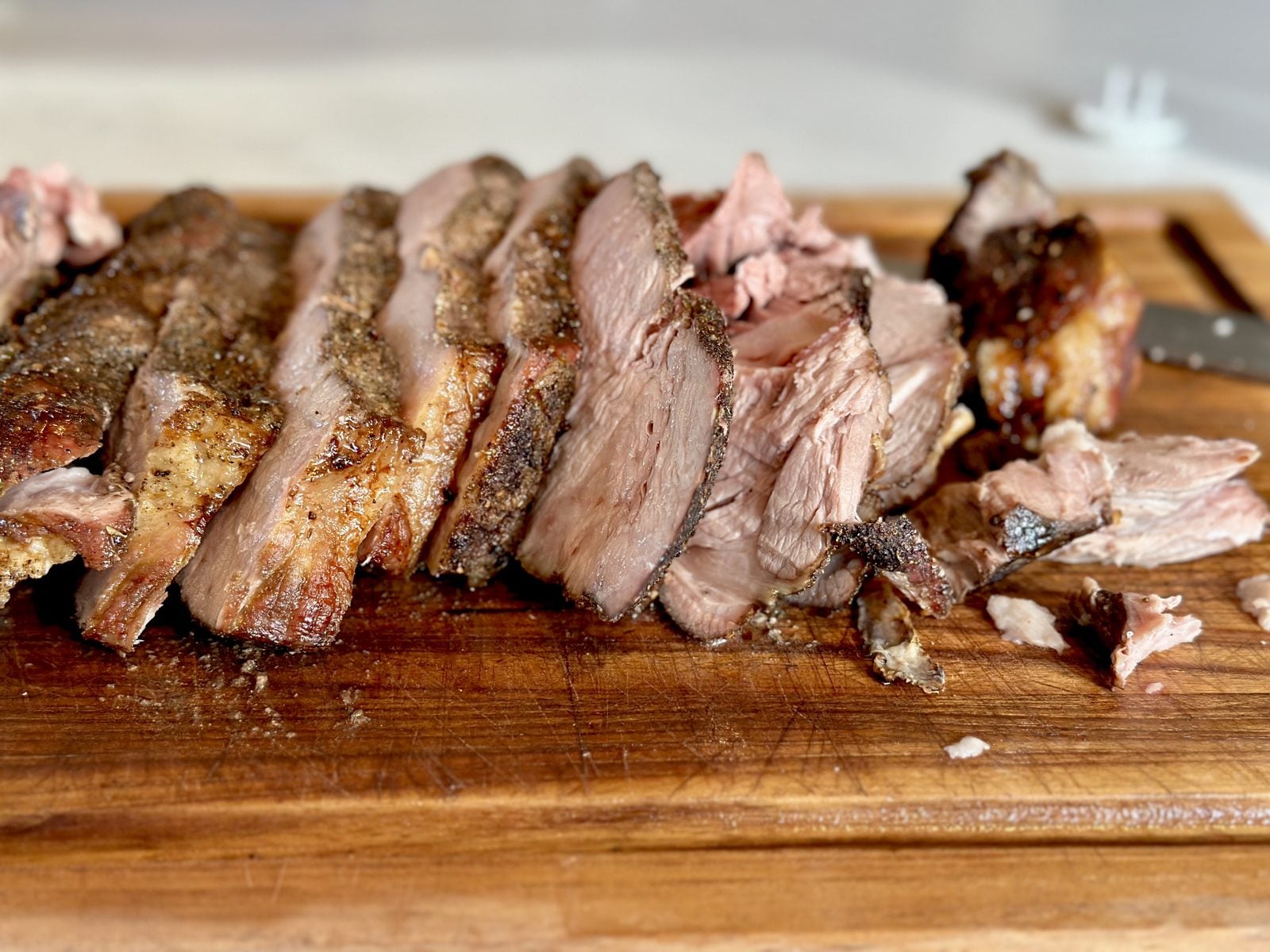

At a Glance
- Crock Pot Pork Roast, the essentials: Pork roast served with a slow-cooked onion gravy from the crockpot.
- Why it works: The combination of low-and-slow heat melts collagen, helps retain moisture in the pork, and creates a profoundly flavored cooking liquid that makes gravy.
- Timing: Set to LOW for 8-9 hours (for the best texture) or HIGH for 4-5 hours (still good). Plus 10 minutes for gravy to thicken.
- Flavor profile: Comforting roast and gravy with a cozy, warm, garlic-onion and pepper seasoning with some depth from Worcestershire.
- Key tips: Select a cut that has good marbling, preferably from the shoulder/butt area, do not oversaturate it with liquid, and use a cold slurry to thicken the gravy to maintain a smooth consistency and avoid lumps.
Ingredients
This is a flexible recipe, though there are some key details to keep in mind. The main detail regards the options that can be omitted.
Pork should also refers to as a “pork butt” or a “Boston butt”, comprises a lot of fat and connective tissue which break down during a longer breakdown. While one can also do a pork loin, this is a cut that is leaner and requires a bit more work.
There is no need to add a lot of broth so it doesn’t dry out because there is enough liquid provided by the meat for the slow cooker. Also, too much liquid will make the gravy taste flat and watered-down.
- Pork roast (3-4 lb): Pork shoulders and pork butts are preferred. Boneless cuts are easiest, but you can also use bone-in cuts which are flavorful.
- Onion (1 large): When sliced, it integrates into the gravy and does quiet, essential work.
- Garlic (4 cloves): Smashed or minced, feel free to go for broke and add more (I usually do).
- Low-sodium broth (1 cup): Chicken or beef; controlling the gravy is possible with low-sodium.
- Worcestershire sauce (1-2 tbsp): Adds a “roasty” bass note without the steakhouse flavor.
- Soy sauce (1 tbsp, optional but smart): If your broth isn’t low-sodium, you might want to use less.
- Dijon mustard (1 tbsp): Not mustardy, just more complex and interesting.
- Dried thyme (1 tsp) or rosemary (1/2 tsp): Select one; it can start to taste like potpourri when there are too many herbs.
- Black pepper (1 1/2 tsp): Pork loves pepper. Don’t be shy.
- Kosher salt (1-1/2 tsp): Adjust based on broth and soy.
- Oil (1 tbsp): For searing (optional but recommended).
- Cornstarch (2-3 tbsp) + cold water (2-3 tbsp): Flour also works (see table) for a glossy gravy.
- Butter (1-2 tbsp, optional): Stir into finished gravy for an added velvety touch like you’d find at a restaurant.
Ingredient Choices That Change Flavor
| Ingredient | Best For | Flavor/Texture Effect | Notes and Substitutions |
| Pork shoulder/butt | Shreddable, ultra-tender roast | Rich, juicy; gravy gets body | My top pick; trim only excess hard fat |
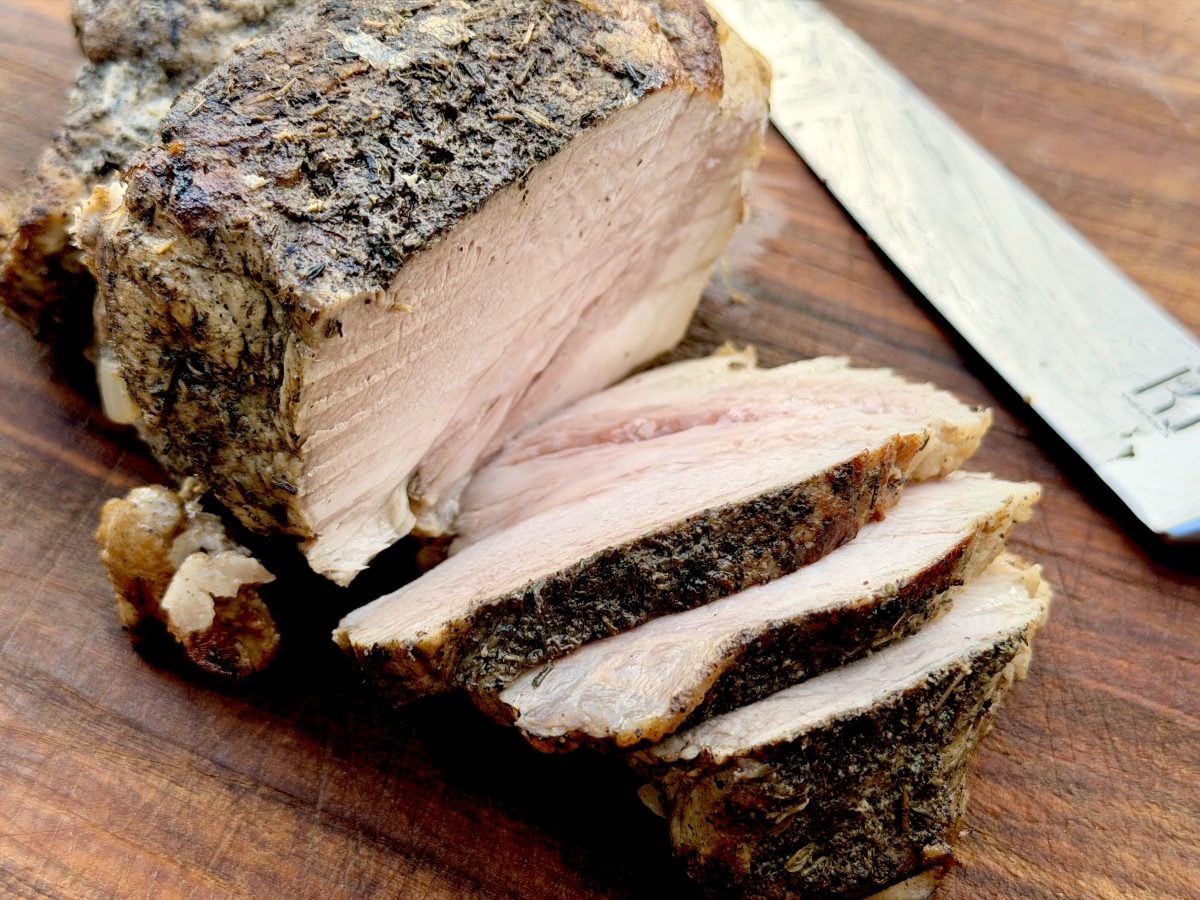
| Pork loin | Sliced roast (less fatty) | Cleaner flavor; can dry if overcooked | Cook on LOW and start checking earlier; add butter to gravy |
| Chicken broth | Classic, mellow gravy | Light, familiar savoriness | Use low-sodium; season at the end |
| Beef broth | Dark, “Sunday dinner” vibe | Deeper, roastier gravy | Great with rosemary instead of thyme |
| Cornstarch slurry | Glossy, quick gravy | Silky, translucent sheen | Mix with cold water first or you’ll get little jellyfish lumps |
| Flour slurry | More traditional gravy | Opaque, slightly hearty | Whisk flour into cold water well; simmer longer to cook off raw taste |
Optional Add-Ins (If You Want a One-Pot Meal)
- Baby potatoes (1-1 1/2 lb): Add them in for the last 3-4 hours on LOW so they don’t turn to mush.
- Carrots (3-4, chunked): When combined with potatoes, they slightly sweeten the gravy.
- Mushrooms (8 oz): Include during the last 2 hours for a meaty, woodsy note.
Instructions
1) Prepare the pork.
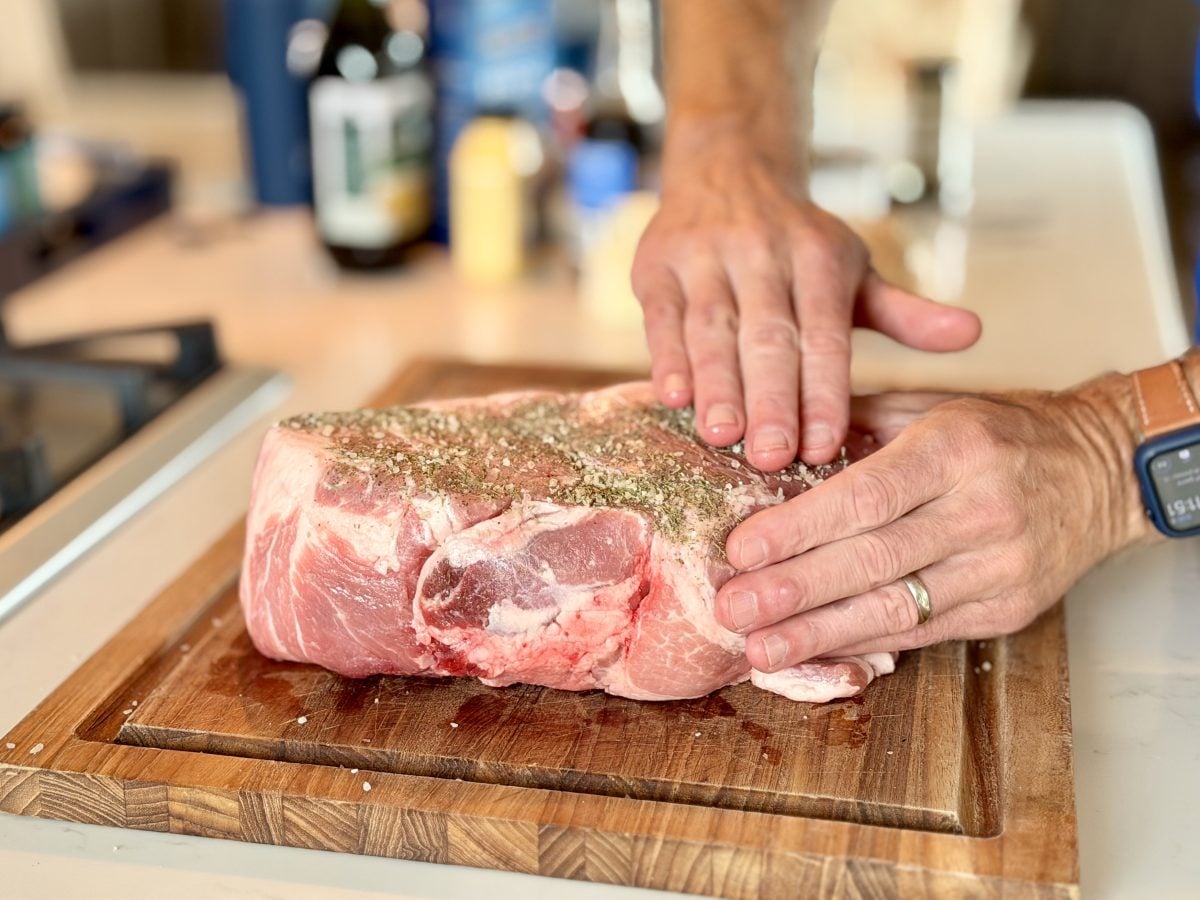
Make sure the roast is totally dry so the seasoning sticks. Mix together the garlic, salt, pepper and thyme. Apply this mixture onto the top surface of the roast. You can leave it on the counter for 20 minutes while you chop up the onion.
2) Searing (optional).
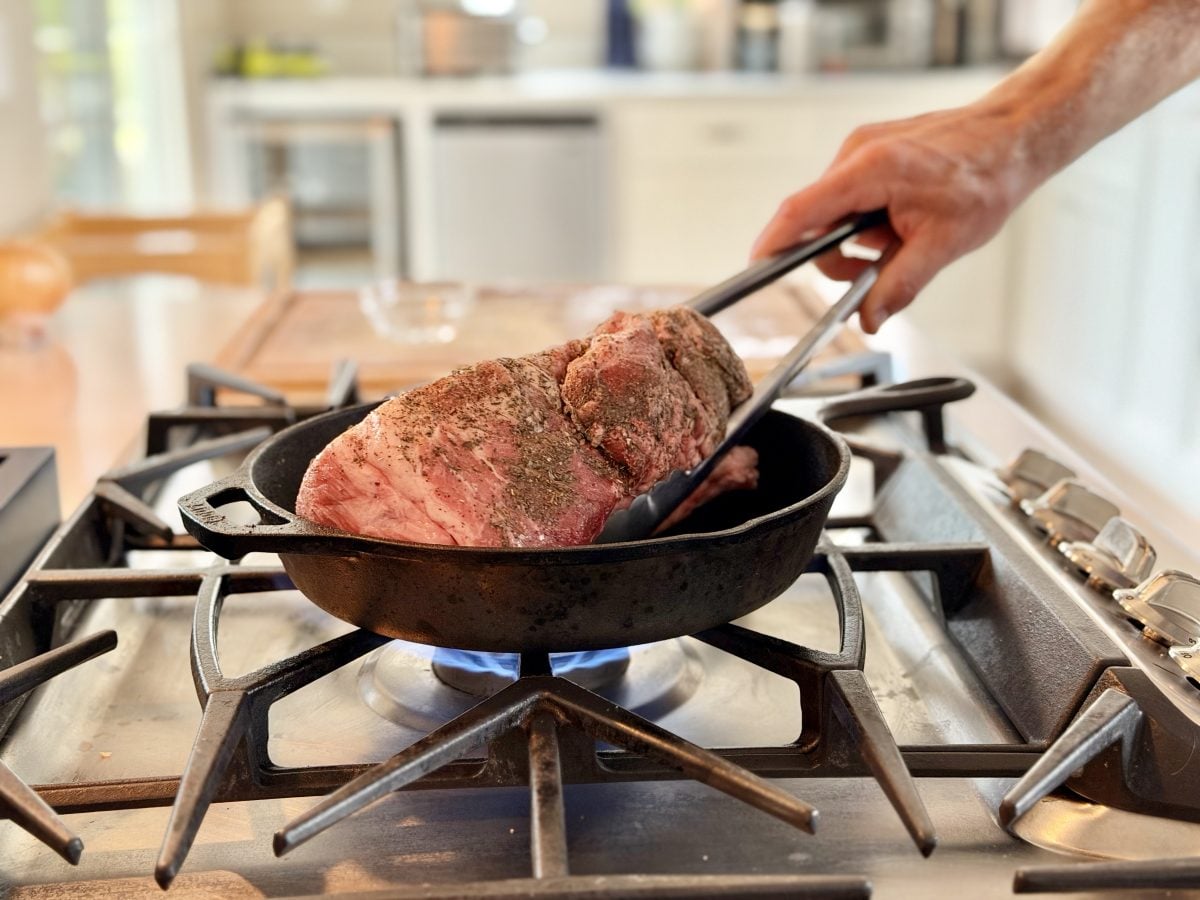
At this stage, add some oil to a pan and heat it to a medium or high temperature. Sear the roast on each side for about 2-3 minutes, until each side is browned. This process creates a multitude of flavors. In the case of the gravy I made earlier, I actually skipped this step and it still turned out great. I know searing can feel like one more hassle on a busy night, so don’t stress if you leave it out.
3) Prepare the onions.
Chop the onion and put it in the bottom of the crock pot.
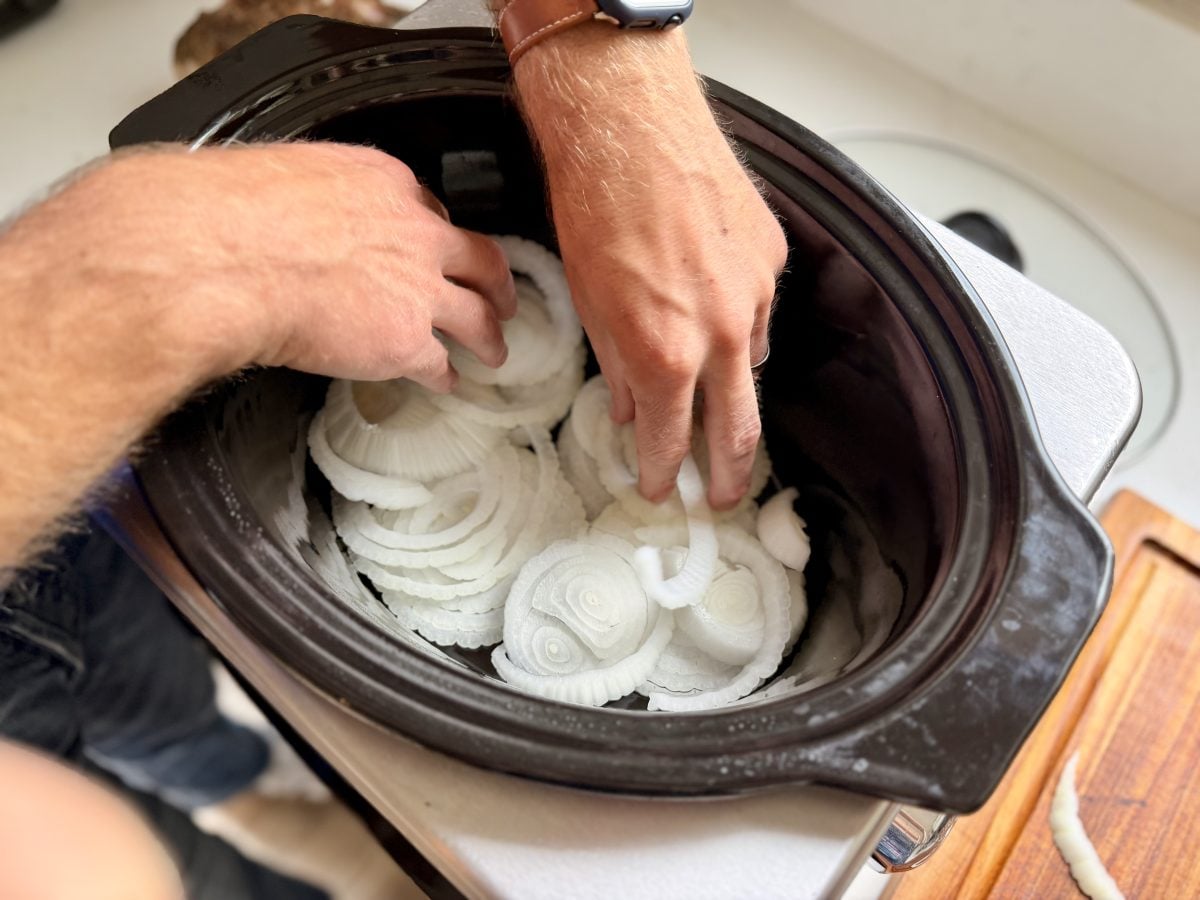
4) Make the base for your slow cooker meal.
At the base of the slow cooker, add the chopped onion and garlic. In a different container, combine the broth, Worcestershire sauce, soy sauce (if using it), and Dijon mustard, and pour it over the onion.
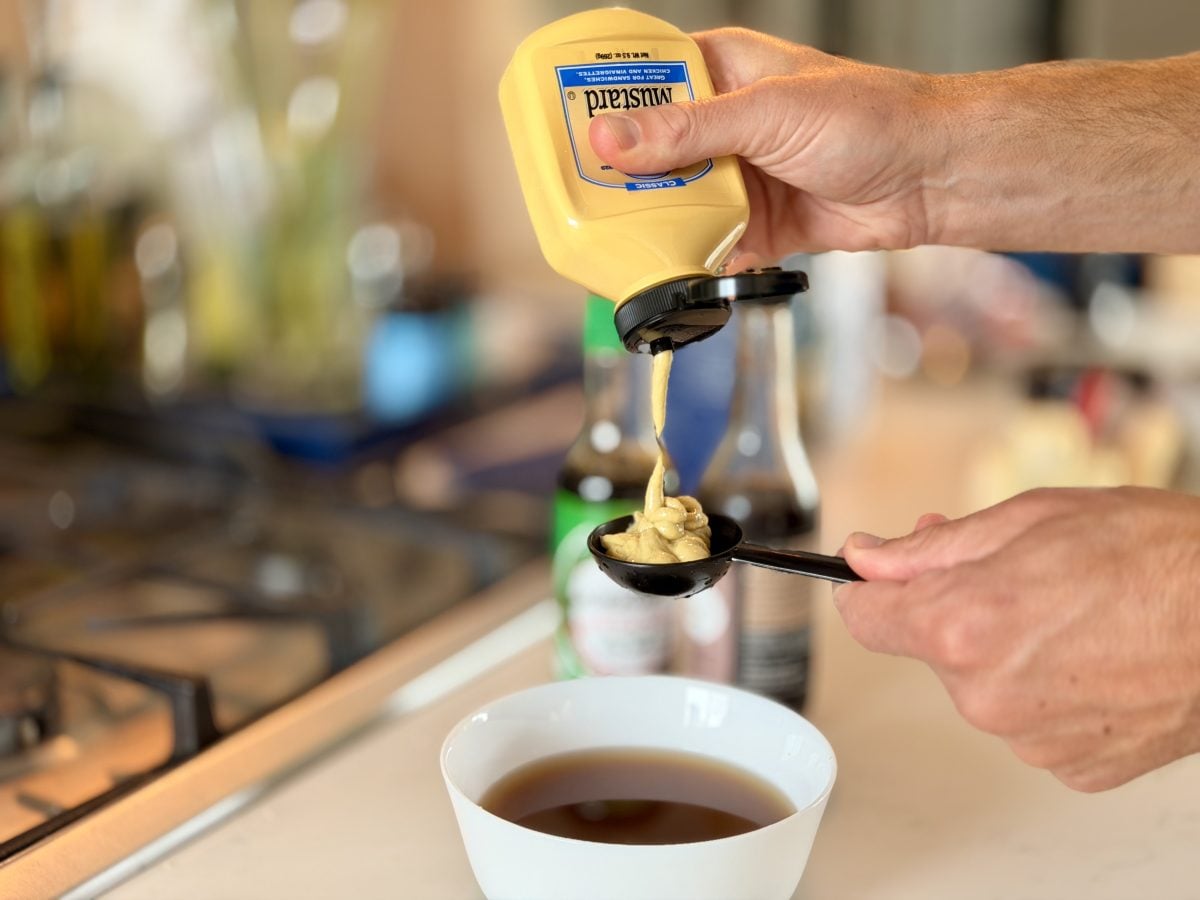
5) Begin the slow cooking process.
Position the pork roast over the onions. Cover and set the timer to cook the roast for a long duration: LOW for 8-9 hours (best) or HIGH for 4-5 hours. You will need to make an estimation as to how long to let it cook all the way until you can insert a fork in it and it separates with minimal effort.
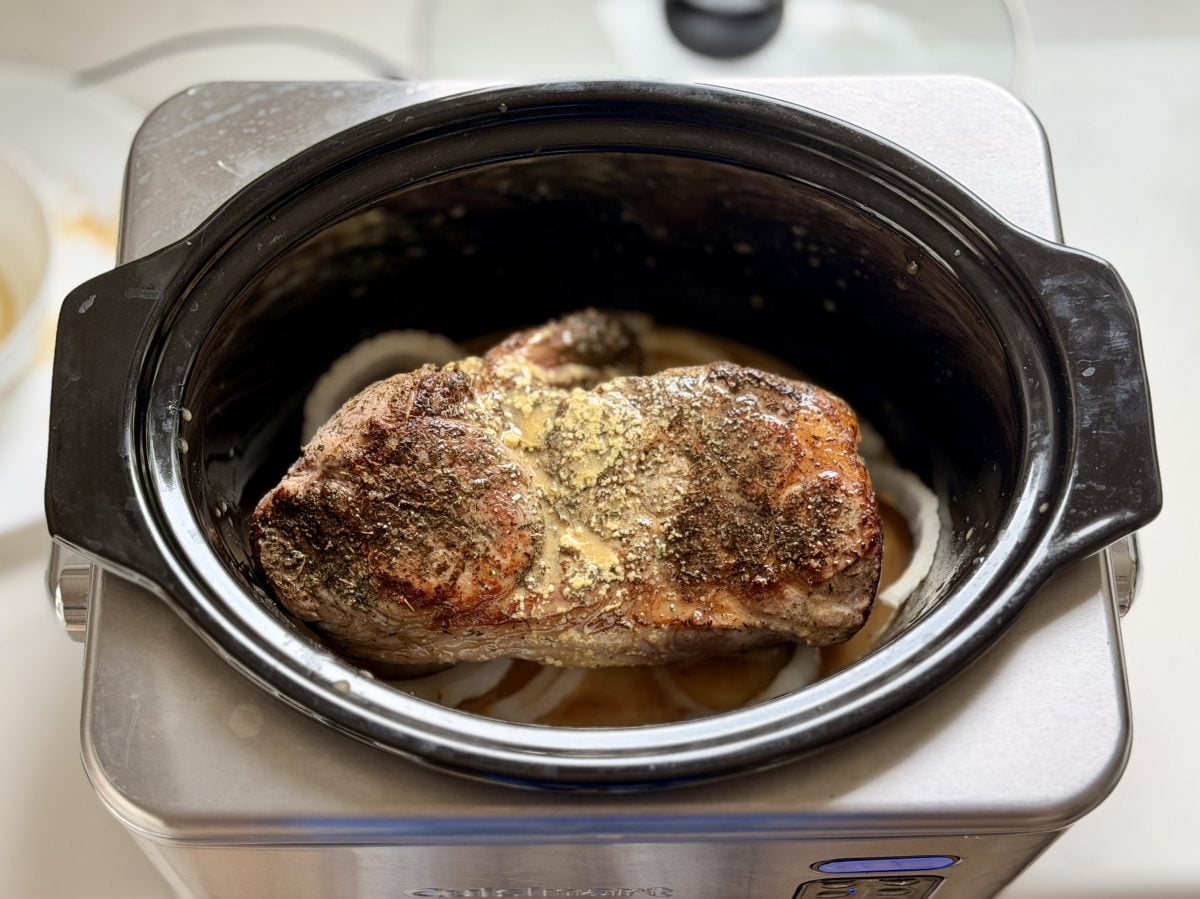
6) Allow the pork to rest, then pull/take out some slices of it.
Transfer the pork to a serving dish and cover it loosely with some foil for about 10 to 15 minutes. Shred the pork shoulder or pork butt using two forks. For the loin, cut it into some thick slices.
7) Get the gravy ready.
If you see some congealed fat floating on the liquid from the crock pot, it can help to skim some of it off. You can do this with a spoon, but for a method that is more efficient, use a fat separator.
If you want smooth gravy, strain the gravy to remove the pieces of onion. On the other hand, if you want a more textured gravy, you can leave the pieces of onion in. Set your slow cooker to HIGH.
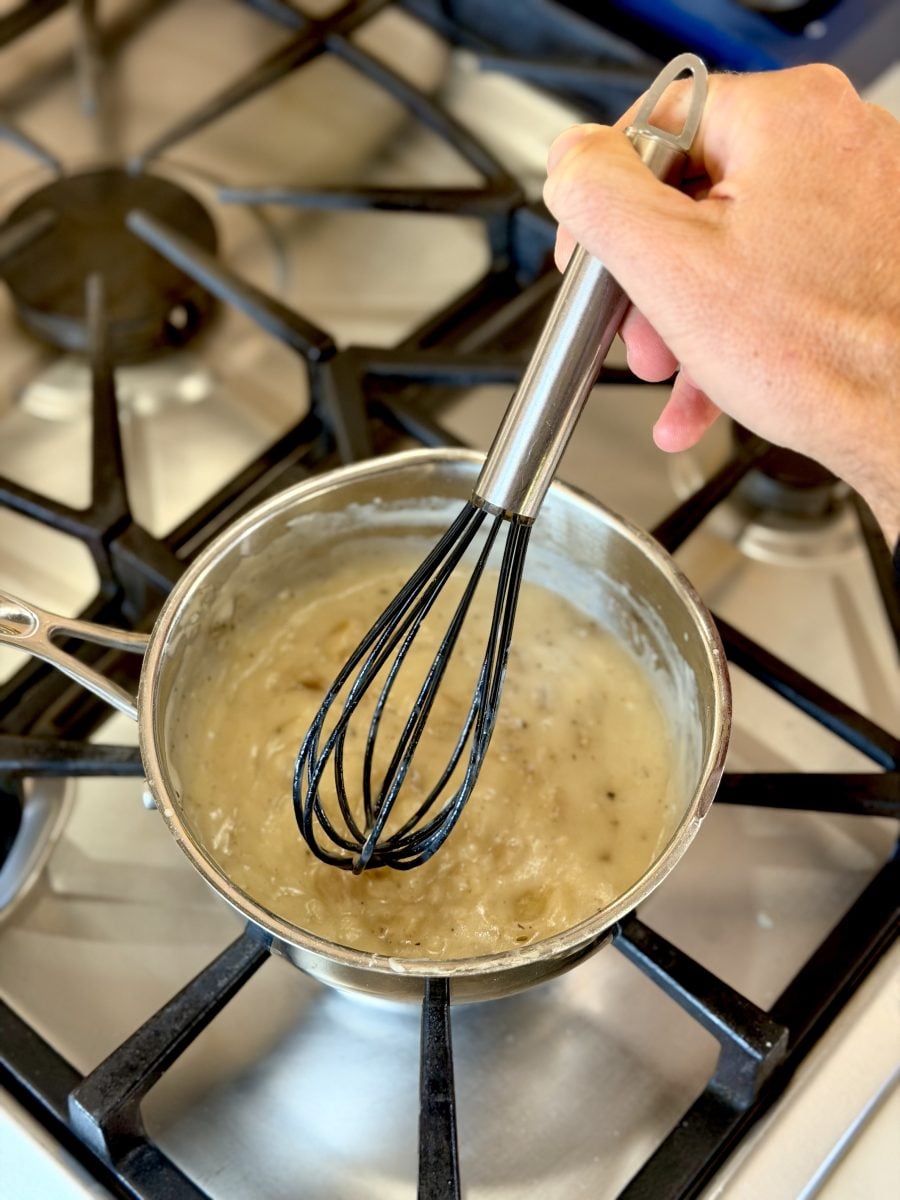
8) To thicken, you want to mix cornstarch with cold water in a small cup
Make sure that the mixture is smooth and has no lumps. While stirring, add the cornstarch mixture to the gravy, replace the lid, and let it cook for another 5 to 10 minutes, stirring once or twice.
If it is still too runny, you can add more of the slurry (1 tbsp of cornstarch mixed with 1 tbsp of water). If using butter, make that the last addition. Your gravy is done. Adjust salt and pepper to your liking.
9) Serve. Ladle the gravy over the pork and one of the starches mentioned above. I add one more grind of the black pepper mill.
Variations Worth Trying
- Ranch-style: Include an additional clove of garlic, 1-2 tsp of dried dill and dried parsley, and add a squeeze of lemon to finish so that it doesn’t taste flat.
- Onion-soup shortcut: Substitute broth and Worcestershire sauce with one can of condensed French onion soup and 1/2 cup of water (be mindful of salt; it’s very concentrated).
- Apple-onion pork: You could also try adding one sliced apple and replacing half a cup of your broth with some apple cider. Use thyme and a touch of allspice.
- Smoky gravy: Add 1/2 tsp of smoked paprika as well as a drop or two of liquid smoke (a drop or two is all you need).
- Mushroom gravy: Incorporate 8 to 12 ounces of sliced mushrooms with the onions. They will deepen the color of the gravy and give it the flavor of having been simmered for days.
What to Serve With It
- Mashed potatoes: The most apparent option is sometimes the correct one.
- Buttered egg noodles: The gravy adheres to the food in a particularly pleasing manner.
- Rice or cheesy grits: Using beef broth for a richer and darker gravy will work to your advantage.
- Roasted green beans or broccolini: Something zesty and crisp to balance out the heaviness.
- Vinegar slaw: A tart slaw makes this a pulled pork and gravy situation, which is oddly wonderful.
- Open-faced sandwiches: With your order, you will receive a piece of toast, a slice of pork, some gravy, and if you want to feel a bit more modern, a pile of peppery arugula.
Fixes and Pro Moves
- My pork is tough: It probably needs more time, not less. Tenderness of the shoulder occurs when collagen is breaking down. Please add another 30-60 minutes on LOW.
- My pork is dry: Using pork loin means you risk overcooking it. Go ahead and cut it and drown it in gravy (there’s no shame in that). Next time, you may want to check it earlier and think about using pork shoulder.
- Gravy is too thin: Add the slurry in smaller increments. If you add it all at once you’ll get pudding.
- Gravy tastes bland: Add salt a little bit at a time and then add pepper. To wake it up quickly, add a splash of Worcestershire sauce or soy sauce.
- Gravy tastes too salty: In order to achieve balance, you can add a little water or unsalted broth, and a squeeze of lemon or a dash of cider vinegar.
- Too much fat on top: You can skim off the fat or chill the liquid for a few moments; this causes the fat to solidify and lift off easily.
Would you like to deepen the flavor of the dish but don’t want to sear? Try adding 1 tablespoon of tomato paste to the broth mixture. It’s a very effective method to use.
Please do not lift the lid. Each time you look inside, heat escapes. I know this is difficult; I’m guilty as well. Try to do this only once, and only do so towards the end.
Keeping It and Reheating It
Choosing a specific cut and the degree of fat trimming are the main contributors to the meal’s nutritional value.
While the pork loin cut is more challenging to cook and contains less fat than the pork shoulder, the cut from the shoulder will yield more fat and gravy than the loin. If you are trying to reduce your sodium intake, you can use a low-sodium broth and leave out the soy sauce.
It may be a little surprising, but slow cookers have the ability to develop deeper and more concentrated flavors. Additionally, you may choose to season near the end of the cooking time.
Store gravy and pork separately but may be kept together in the fridge for four days. To thin gravy, add broth (or water) and reheat on the stove. To keep for more than four days, may be frozen for 3 months.
For defrosting, please transfer it from the freezer to the fridge one night before you plan to use it. If it separates after freezing, it will recombine when you reheat and stir.
Step-by-Step Recap
- A boneless variety is considered simplest to work with, so purchase a 3-4 lb pork shoulder/butt (boneless is easiest).
- Chop 1 large onion and smash 4 cloves of garlic.
- Add an abundant amount of seasoning including salt, pepper, and thyme to the pork.
- If you want to make the dish even better, you can sear the pork for 2-3 minutes on each side.
- Put the onions/garlic into the pot then add the broth, Worcestershire sauce, and Dijon mustard.
- Cook on HIGH for 4 to 5 hours or on LOW for 8 to 9 hours (preferred).
- Rest pork 10-15 minutes; shred or slice.
- To remove fat, and for thickening the cooking liquid, use a cold cornstarch mixture.
- Sample gravy and adjust seasoning with salt and/or pepper. If you wish finish with butter.
- Serve with potatoes/noodles/rice and something green.
The Jargon, Explained
- Slurry: A combination of a starch (such as cornstarch or flour) and cold water used to create a smooth thickening agent for hot liquids.
- Sear: High heat is applied to the surface of meat to brown it which builds flavor by way of caramelization and the Maillard effect.
- Skim: Skimming involves removing rendered fat from the top of cooking liquid using either a spoon or a fat separator.
- Low and slow: Cooking at low temperatures for long periods of time to break down tough cuts of meat that are rich in collagen.
- Carryover heat: Continued cooking occurs after you take the meat off the heat; resting allows the juices to redistribute.
Questions I Get
Would it be better to sear the pork first?
No, it is not necessary to sear the pork first. It is accurate that searing the pork adds richly roasted flavors that are positive from a culinary perspective. In this situation, I would recommend searing the pork in order to make it easier to get through the madness that the work week will bring.
Can I use pork tenderloin?
I would recommend against that. Tenderloin, like other types of meat, cooks relatively quickly. As such, it’s likely to become dry and stringy in a crockpot. Better preparation methods would be roasting or a quick pan sear.
How do I know when it’s done?
Easily shreddable meat, like pork shoulder is a good sign. If you have particular temperature targets for shreddable shoulder meat, they should be in the range of 195°F and 205°F; for loin, it should be between 145°F and 160°F. However, it is possible for the slow-cooker time to increase temp past that.
Why is my gravy cloudy or lumpy?
If you leave the onion pieces in the gravy (like I usually do), it can get cloudy. Starchy lumps in gravy tell me that the thickener (cornstarch or flour) either hadn’t been pre-mixed with cold water (as it should be), or it cleaned the bottom of the pan too quickly after being added. The lumps can also be smoothed out by whisking, or blending the gravy after it has been strained.
Can I prep this the night before?
Absolutely! For make-ahead recipes, you can prep the slow cooker insert and put it in the fridge. You can also cut the onion, prepare the liquid seasonings, and marinate the pork, but do not combine everything until the morning!
Can I make the gravy on the stovetop instead?
Certainly! Take your cooking liquid, put it in another saucepan and bring it to a simmer. Once it simmers, add your slurry and cook until thick. This method gives you more control over your gravy and is quicker than waiting for the slow cooker.
Before You Go
If you want something that will make you look forward to the weekday meals, the Crock Pot pork roast and gravy recipe will change how you think about weekday meals.
You’ll invest slightly more time in the morning only to end up with a meal that tastes as if you put in a full day’s work to make it.