
I can admit that I used to see meatloaf as a form of punishment. Gray, dry, and reminiscent of a cafeteria. After that, I tried The Pioneer Woman’s recipe (the one with the glaze that has tang and sweetness) and meatloaf stopped being a joke and became a dinner I looked forward to. It’s timeless comfort food with a twist. It’s soft on the inside and shiny on top, perfect for leftovers that you won’t consider a loss.
Hitting that rare sweet spot, the technique is forgiving but the results feel remarkably refined. I’ve survived the chaos of shark circling Tuesdays, and I’ve survived the peaceful, breathe-at-home-please Sundays when I wanted the house to smell like someone responsible lives here. Both times: success. The secret is the moisture (milk+bread) and that sticky glaze that caramelizes in the oven like it has a personal vendetta against bland.
Contents
At a Glance
- Pioneer Woman Meatloaf, Revisited, the quick sketch: The Pioneer Woman-style meatloaf: beefy, tender, and topped with a sweet-tangy ketchup-based glaze.
- Why it works: A panade (bread + milk) keeps the interior soft; eggs bind without turning it rubbery; glaze adds moisture and a lacquered finish.
- Timing: ~15 minutes prep, 50–70 minutes bake (depending on loaf thickness), 10 minutes rest.
- Flavor profile: Savory beef and onion with a sweet, vinegary tomato glaze; classic Americana, slightly sticky, faintly smoky if you add a dash of Worcestershire.
- Key tips: Don’t overmix; shape on a sheet pan for better browning; glaze in two layers; pull at 155–160°F and rest to 165°F.
Ingredients
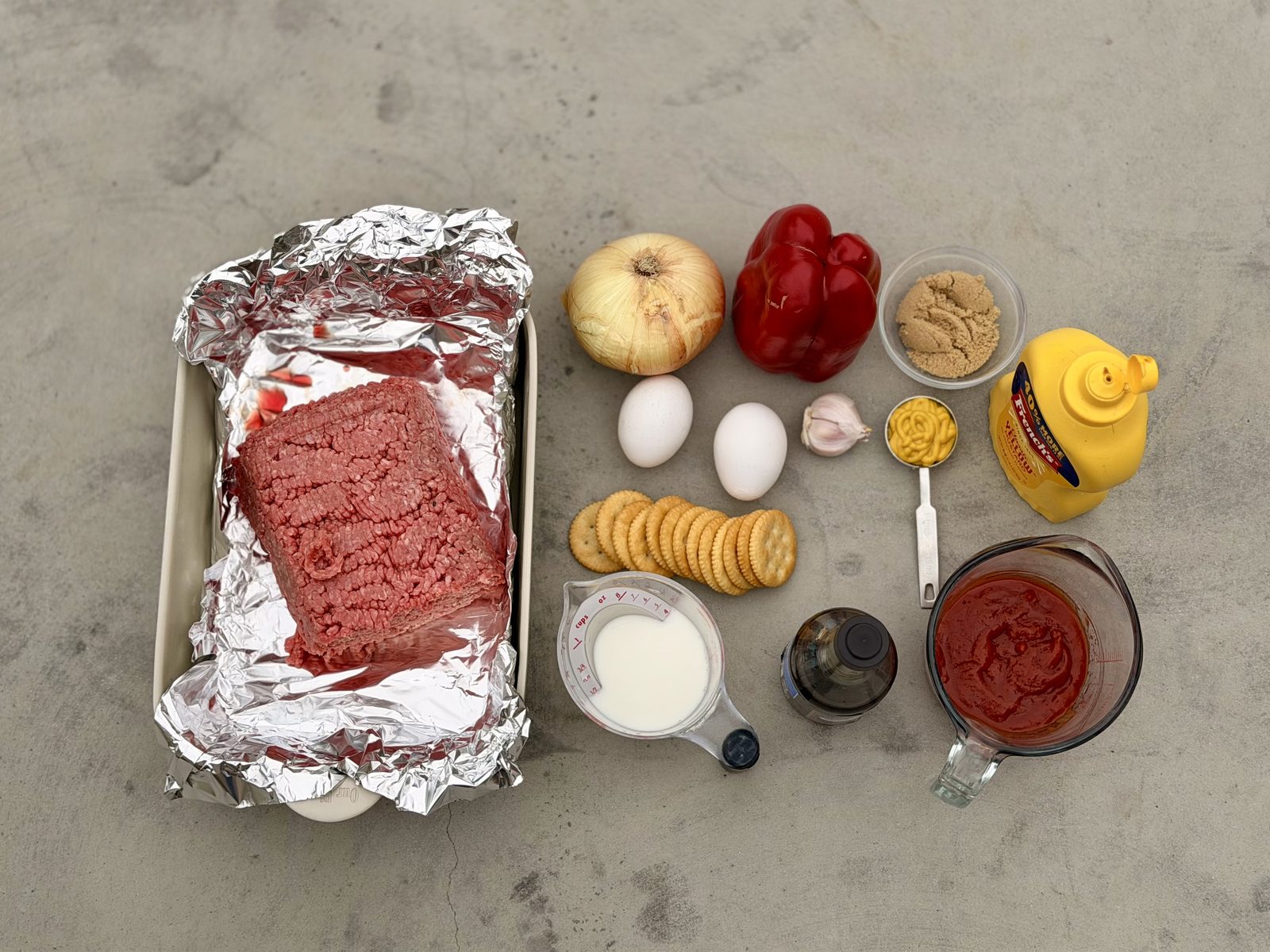
This is a simple meatloaf from the grocery store, but it actually matters more than it seems. Use ground beef with a bit more fat (90/10 can taste a little too earnest and dry), mince the onion so that it disappears in the loaf, and be generous with the milk-and-bread situation, that is the tenderness insurance policy.
- Ground beef (2 lb / 907 g): 80/20 is the friendly choice. 85/15 works too. Very lean beef can bake up tight and sad.
- Onion (1 cup finely chopped): The finer the chop, the more it disappears. Big chunks tend to steam into little onion marbles.
- Milk (1 cup): Hydrates the bread and keeps the loaf juicy.
- Sliced bread (6 slices): Regular sandwich bread is perfect: soft, plain, unshowy. Tear it up so it drinks the milk quickly.
- Eggs (2): Bind the mixture so you can slice cleanly without turning it into a meat crumble situation.
- Salt and pepper: Meatloaf needs real seasoning. Be decisive.
For the glaze
- Ketchup (1 cup): The base: sweet, tangy, and familiar.
- Brown sugar (2 tbsp): Adds molasses depth and helps it caramelize.
- Dry mustard (1 tsp): Not optional in spirit; it keeps the sweetness from going cloying.
- Hot sauce (a few dashes): Not “spicy,” just awake.
Master Ratio (Easy To Scale)
- 1 lb ground meat
- 3 slices bread (torn)
- 1/2 cup milk
- 1 egg
- 1/2 cup finely chopped onion
- ~1 tsp kosher salt + pepper (to taste)
- Glaze: ~1/2 cup ketchup + 1 tbsp brown sugar + 1/2 tsp dry mustard + hot sauce
Example: With only 1.5 lb of beef, use 4-5 slices of bread, 3/4 cup milk, 1-2 eggs (do 1 whole egg + 1 yolk if you’re fussy), and for the glaze, use about 3/4 cup ketchup. Meatloaf appreciates proportionality but is forgiving.
Ingredient Choices That Change Flavor
| Ingredient Switch | What Changes | Best When You Want… | Notes |
|---|---|---|---|
| 80/20 beef → 85/15 beef | Leaner, slightly firmer texture | Cleaner slices, less grease | Add 1–2 tbsp extra milk if it seems stiff. |
| All beef → half beef, half pork | More tenderness, richer flavor | Juicy, “old-school diner” vibes | Pork brings fat and sweetness; watch salt. |
| Sliced bread → panko (about 1 cup per lb) | Looser, lighter crumb | A less “bready” meatloaf | Panko absorbs differently; mix with milk first. |
| Ketchup glaze → chili sauce + ketchup (50/50) | More tang and spice complexity | A bolder glaze that’s less sweet | Great if you find ketchup too candy-ish. |
| Dry mustard → Dijon (1 tbsp) | Smoother, more rounded heat | A slightly more grown-up glaze | Reduce brown sugar a touch if you like it sharper. |
Optional Flavor Boosters (Still Very “Pioneer Woman”)
- Worcestershire sauce (1–2 tbsp): Makes it taste more “meaty” without announcing itself.
- Garlic (1–2 cloves, minced): I add it when I’m feeling nosy.
- Smoked paprika (1/2 tsp): A subtle, backyard-burger whisper.
Instructions
1) Choose your pan and heat your oven. Preheat to 350°F (175°C). I most often choose to shape the loaf on a rimmed sheet pan that has been lined with foil or parchment. Using a loaf pan will result in less browning, and more steaming. (Also: grease pooling. Not my favorite.)
2) Prepare the panade (the magic of tenderness). In a large bowl, rip 6 slices of bread into rough pieces. Pour in 1 cup milk. Allow it to sit for 2 to 3 minutes, then, using a fork, mash it until it appears to be a shaggy paste consistency. It may not be glamorous, but neither is dry meatloaf
3) Mix the meatloaf base: gently. Mix in 2 lb ground beef, 1 cup of onions (finely chopped), 2 eggs, 1 tsp of kosher salt (3/4 tsp fine salt is fine), and a lot of black pepper. Add Worcestershire if using. Mix until it is evenly combined, but stop as soon as it appears cohesive. The loaf is tight and springy as though it is trying to bounce back at you because it has been overmixed.
4) Shape. Transfer the mixture to the lined sheet pan and shape it into a loaf that is roughly 9-10 inches in length, 4-5 inches in width, and uniformly thick. Please smooth out the top a little so the glaze can run nicely. Wash your hands now. Future you will be grateful.
5) Stir the glaze. Combine 1 cup ketchup, 2 tablespoons of brown sugar, 1 teaspoon of dry mustard, and several dashes of hot sauce in a small bowl. Taste it. You’re searching for something with a sweet-tangy flavor and a bit of kick. If it tastes flat, try adding another dash of hot sauce or maybe a little extra mustard.
Cover in two stages.
Before baking, spread about half of the glaze over the loaf. Keep the rest for later; this is how you achieve that sticky, layered finish instead of a one-note ketchup blanket.
7) Bake. Bake for 40 minutes, then drizzle the rest of the glaze on top. Depending on how thick the item is, you may need to bake for an additional 10 to 25 minutes is the center needs to reach 155-160 degrees F (68-71 degrees C). As it rests, it will carry over to 165°F. If you don’t possess a thermometer, look for loaves that feel firm (but not hard) and have a bubbling glaze with juices (that aren’t rosy).
Rest for 10 minutes, then slice the meatloaf. This part always tests my patience as I can smell the dinner cooking. However, resting keeps the slices organized, instead of slipping into a saucy landslide.
Spins and Swaps
- BBQ Glaze Swap: Replace half the ketchup with BBQ sauce; reduce brown sugar to 1 tbsp.
- “Diner” Meatloaf: Add 1 tbsp Worcestershire and 1/2 tsp garlic powder; serve with extra glaze on the side.
- Cheddar-Stuffed: Make two thinner loaves, add a line of cheddar in the center, seal, then glaze.
- Turkey Blend: Use 1 lb beef + 1 lb ground turkey; add 2 tbsp extra milk and a splash more Worcestershire.
- Mini Loaves: Divide into 4 smaller loaves for faster cooking (start checking at 25–30 minutes).
What to Serve With It
- Mashed potatoes: The obvious partner, and yes, make a little crater for glaze runoff.
- Buttered green beans: Something snappy and green to cut the sweetness.
- Mac and cheese: For nights when you’ve accepted you’re leaning into comfort food with both hands.
- Cold meatloaf sandwich: White bread, mayo, pickle chips. Eat standing at the counter if you must.
- Roasted broccoli or Brussels sprouts: The caramelized edges play nice with the tangy glaze.
- Simple salad: Crisp lettuce, sharp vinaigrette: your palate will thank you.
When Things Go Sideways
- Meatloaf is dry: Next time, use 80/20 beef and don’t overbake. Also make sure your bread fully soaks up the milk before mixing.
- It falls apart when slicing: It likely needed more rest time, or it was underbaked. Eggs help binding, but temperature is the real structure.
- Too greasy: Shape on a sheet pan so fat can run off; consider 85/15 beef. You can blot the pan gently with paper towels halfway through (carefully).
- Glaze burned on edges: Move the loaf to the middle rack and avoid letting glaze puddle on the pan. If your oven runs hot, glaze later (after 45–50 minutes).
- Onion chunks feel harsh: Chop finer, or sauté the onion in a teaspoon of butter until translucent before adding.
- Want better browning: Sheet pan method, and don’t make the loaf too tall. Surface area is flavor.
- Thermometer tip: Insert into the center from the side so you don’t leave a big hole on top for glaze to slide into.
Nutrition and Storage Notes
The nutritional value largely depends on the beef blend and how much glaze you end up “testing” with a spoon. The 80/20 ground beef makes it nice and hearty: high protein, moderate-to-high fat, and a glaze that adds sugar but also adds that classic meatloaf satisfaction. If you want a lighter option, try the 85/15, and pair it with something bright and acidic like salad, pickles, or lemony vegetables so it doesn’t feel like you’ve eaten a soft blanket.
Keep leftovers stored in the fridge for 4 days maximum. If you want to reheat meatloaf, it’s better to do it in slices. Cover with a damp paper towel and microwave, or put in the oven at 325°F until hot. It also freezes nicely: wrap individual slices and freeze for up to 2-3 months. If the dish seems dry, brush on a little extra ketchup (no shame) before warming. Then, thaw overnight in the fridge and reheat.
From My Kitchen
The pilot batch: The “I forgot dinner existed” Tuesday. I remember starting this at 6:12 PM. having an onion rolling around in the drawer and a child incessantly asking what a meatloaf is. I formed it on the sheet pan and added half of the glaze. While it was baking, I made mashed potatoes without even thinking about it. The clock struck 7:15, and everyone became quiet as they saw the glossy and elaborate thing hit the table. In my house, that is the biggest compliment we can give.
A second run: The next-day sandwich that ruins other lunches. The next day I found myself standing at the fridge like a racoon and eating a cold slice of lettuce in the squishy bread with the mayo and pickles. The glaze had formed a sweet-savory jelly coating while the loaf remained soft. It was different pleasure entirely, arguably better, and I’m only a little embarrassed to admit that.
Step-by-Step Recap
- Buy 2 lb ground beef (80/20 preferred), bread, milk, eggs, onion, ketchup, brown sugar, dry mustard.
- Preheat oven to 350°F and line a rimmed sheet pan.
- Soak torn bread in milk; mash into a paste.
- Add beef, onion, eggs, salt, pepper (and Worcestershire if using); mix gently.
- Shape an even loaf on the pan.
- Mix glaze; spread on half before baking, half halfway through.
- Bake to 155–160°F, rest 10 minutes, slice.
- Save slices for sandwiches; freeze extras in single portions.
Kitchen Words, Decoded
- Panade: A mixture of bread and milk (or cream) used to keep ground meat tender and moist.
- Carryover cooking: The temperature rise that happens after you remove food from the oven; why resting matters.
- Binders: Ingredients (like eggs and soaked bread) that help ground meat hold together and slice cleanly.
- Glaze: A sweet-savory coating added before/during baking that sets into a shiny, flavorful layer.
- Rimmed sheet pan: A baking sheet with edges that catch drips: very useful for meatloaf fat and glaze runoff.
Common Questions
Do I have to use a loaf pan for The Pioneer Woman meatloaf?
No. I actually like sheet pans more. You’ll achieve improved browning and a better ratio of glaze to meat. Using a loaf pan is perfectly acceptable; just anticipate a softer crust and a bit more greasiness around the edges.
What internal temperature should meatloaf be?
It is best to remove it from the oven at a temperature of 155–160°F, and after resting for 10 minutes, it will reach the safe to eat temperature of 165°F. Baking all the way to 165 °F in the oven can dry it out.
Can I prepare it in advance? Yes. You can combine the ingredients and form the loaf up to 24 hours in advance. Cover it tightly and place it in the refrigerator. For the freshest finish, add glaze just before baking, or at the latest, during the second layer of the bake.
Why does my meatloaf crack on top?
It’s usually a sign the outside set before the inside finished expanding: often from higher heat, a taller loaf, or a lean mix. A quality glaze layer does an excellent job of covering up minor imperfections (and let’s be honest, it’s meatloaf; it can be a little rough around the edges).
**Are oats able to be used in place of bread?**
Yes, they can. Instead of using 6 bread slices, you can use about 1 cup of quick oats, and don’t forget the milk. The texture is still good, but it tends to become a bit more “homey” and less custardy-tender.
How can an onion be made to not taste raw? It can be chopped very finely or cooked for about 5 minutes in a small amount of butter until it is translucent. Raw onion can work here, but larger pieces can remain quite pungent.
Wrapping Up
Sure there are meatloaves that are fancy (ones that are stuffed, baconwrapped, have three meats and a manifesto) but The Pioneer Woman meatloaf earns its place because it’s reliable in a deeply unsexy way. It tastes like the kind of dinner that even if the day was cold, would fill the house with warmth. And that glossy, tangy glaze? The small detail that transforms an ordinary loaf into something you will gladly re-create.
