
I prepare this meal when I have no specific plans for lunch, yet I have limited time to invest in a more elaborate preparation. It consists of a single can of quality tuna, a can of white beans, a lemon, parsley, and a generous amount of olive oil. Total preparation time is five minutes and no cooking is required. The taste on the other end of the bowl is one that a sandwich made with the same ingredients can never replicate.
That’s the entire sales pitch. Your future hungry self will thank you for having a meal like this stashed away. This pantry lunch could be mistaken for a real meal. It also happens to be how most of coastal Italy deals with a hot afternoon which is distracting if you are eating from a can and want to be able to look classy about it.
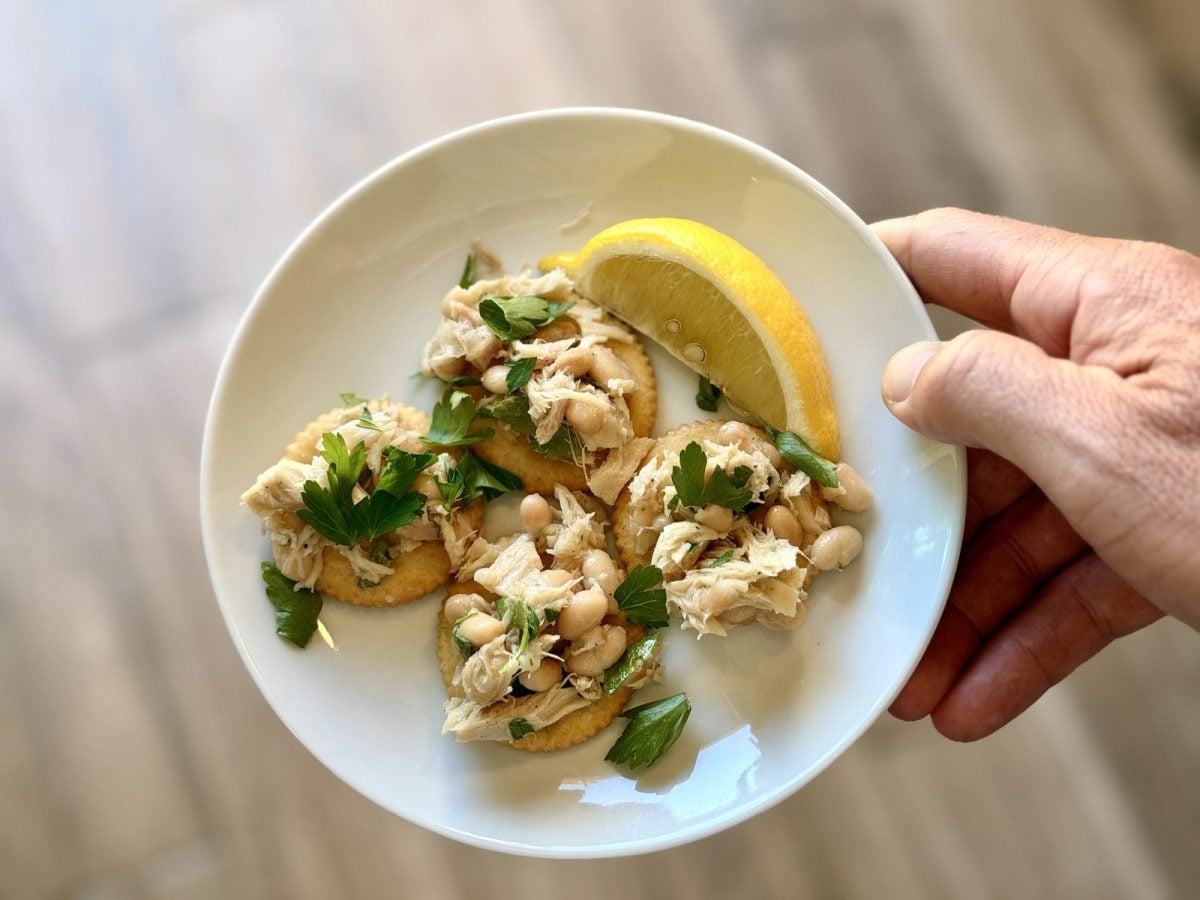

The Short Version
- Quick Tuna and White, stripped to basics: No-cook Mediterranean tuna and white bean salad with lemon, olive oil, parsley, (and optional crunch) – lunch in five minutes, mainly from the pantry.
- What They Taste Like: The oil-packed tuna and white beans have richness to them on their own. The parsley adds freshness, and the lemon and olive oil add brightness. There’s no mayo or anything heavy.
- Have your leftovers heated up by the time you start your first turn.
- Flavor profile: Briny tuna, creamy beans, sharp lemon, peppery olive oil, herbal parsley. It’s light while still being substantial.
- Important things to note are to purchase oil-packed tuna instead of the dry chunk-light variety, rinse the beans, and definitely do not hold back on the lemon. The acid is what helps keep this dish from feeling flat.
Ingredients
Due to the simplicity of the recipe, each ingredient serves multiple purposes. The only two ingredients that may alter the bowl the most due to quality are the tuna and the olive oil. You’ll taste every penny in the price difference between budget oil-packed tuna and the good stuff, and budget oil-packed tuna is only a few dollars cheaper. A good olive oil will spread its flavor across the whole bowl, so choose one that you would be happy to drizzle over bread.
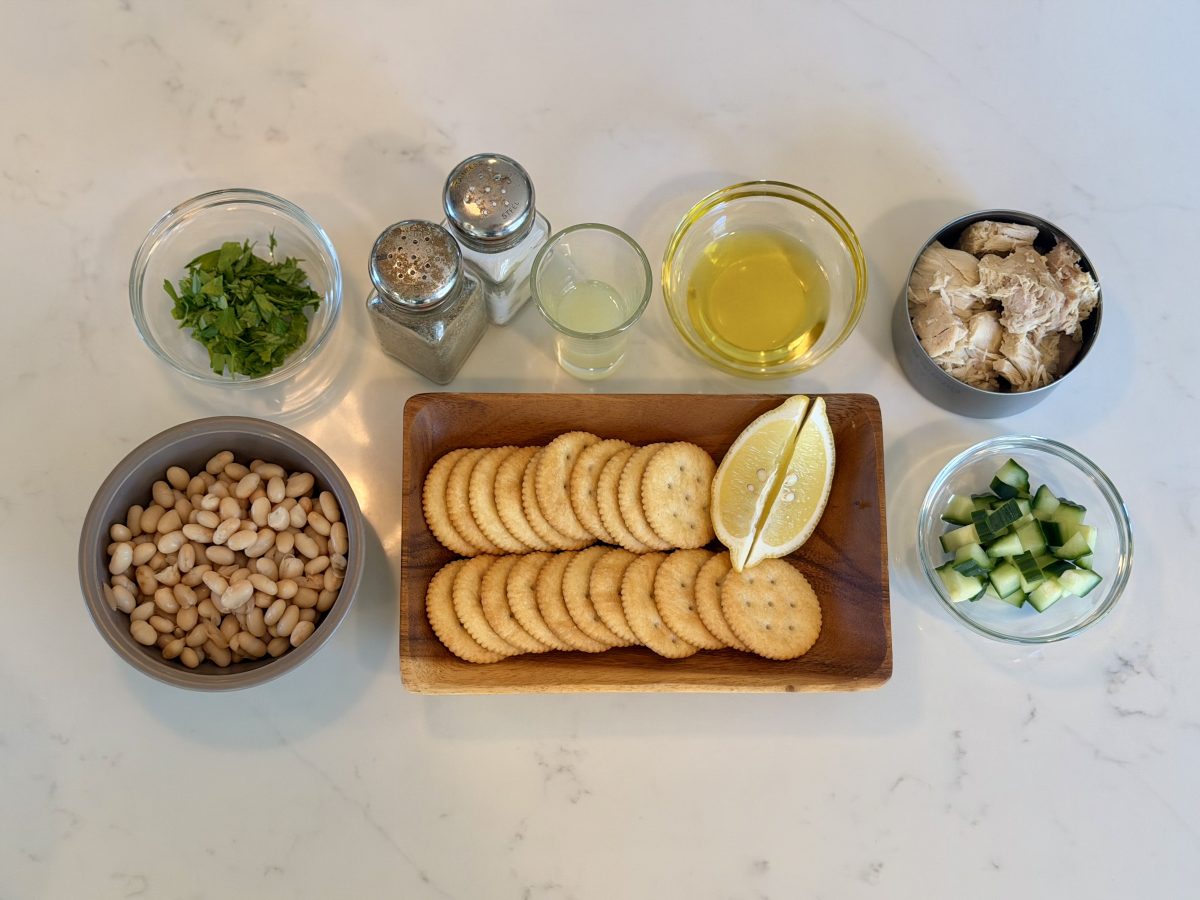
- Tuna (1 can, drained): Mediterranean-style canned tuna is far superior to American chunk-light tuna versions. For this reason, select canned Italian, Spanish, or Portuguese tunas. Moreover, select olive oil packed varieties (not water packed). Be sure to drain the packing oil off as you’ll be adding your own olive oil later.
- White beans (1/2 cup, rinsed and drained): For cannellini, Great Northern, navy, and butter beans all work. Be sure to rinse the beans thoroughly to remove the starchy liquid from the can, which may make the salad taste bland.
- Lemon juice (1-2 teaspoons): Fresh, not bottled. Start with 1 teaspoon, taste, then add more if it needs brightening. There are different types of lemons, so use your judgement instead of the measuring tools.
- Olive oil (1 tablespoon): Real extra-virgin. This is the only fat in the bowl, so it carries the whole personality of the dressing.
- Salt and black pepper: Use salt sparingly at the beginning; the tuna has some sodium in it. Cracked black pepper lifts everything up.
- Parsley (2 tablespoons, chopped) – Among the varieties of parsley, the flat-leaf and Italian kind tends to have a stronger flavor than the curly kind. Therefore, chop them just prior to serving to keep them bright and green.
- Celery or cucumber (2-3 tablespoons, chopped, optional): For crunch, use celery for a clean, slightly bitter snap, or cucumber for a refreshing, watery juiciness. Choose based on what you have in the fridge.
- Lemon wedges for serving: Another squeeze at the table.
- (Optional) Serving Crackers or Pita: Pita that has been toasted is the traditional option. A decent cracker should suffice.
Master Ratio (Easy To Scale)
- For one serving, you will need: one can of tuna, half a cup of white beans, 1-2 teaspoons of lemon juice, 1 tablespoon of olive oil, 2 tablespoons of chopped parsley, and 2-3 tablespoons of chopped celery or cucumber.
What about a lunch for two people? Mix together:
- 2 cans of tuna
- 1 cup beans
- juice of 1 small lemon
- 2 tablespoons olive oil
- Small handful parsley
The proportions stay the same. Are you preparing a giant picnic bowl?
- 4 cans of tuna
- 2 cups of beans
- juice of 1/2 small lemon
- 4 tablespoons olive oil
- Pick a nice big handful of herbs
A good tip is to taste it before you serve it. In general you will need more salt for larger portions than smaller ones.
Ingredient Choices That Change Flavor
| Choice | What you’ll notice | Best for |
|---|---|---|
| Oil-packed tuna (Italian or Spanish) | Rich, tender, almost meaty | Best version of this salad |
| Oil-packed tuna (American brands) | Decent, slightly leaner | A reasonable middle ground |
| Water-packed tuna | Drier, less flavorful, needs more olive oil | Use if it’s what you have; bump the olive oil to 2 tbsp |
| Cannellini beans | Large, creamy, classic | The default |
| Great Northern beans | Slightly firmer, smaller | A leaner version |
| Butter beans (lima) | Larger, even creamier | A more luxurious texture |
| Chickpeas | Nuttier, firmer bite | If you don’t have white beans on hand |
| Flat-leaf parsley | Bold, herby, slightly peppery | The right choice |
| Curly parsley | Milder, more decorative | If it’s what’s available |
| Fresh dill | Brighter, slightly grassy | A more Greek profile |
| Fresh basil | Sweet, anise-y | A more Italian-summer take |
| Celery | Clean, dry crunch | When you want a snappier salad |
| Cucumber | Wet, cool, fresh | When you want a juicier salad |
| Red onion (1 tbsp, finely diced) | Sharp, allium-forward | A more aggressive bowl |
Optional Add-Ins
- Capers (1 teaspoon, drained): Add a salty pop. Especially good if you are omitting the celery or cucumber.
- Chopped Kalamata olives (1 tablespoon): This leans it further into the Mediterranean.
- Cherry tomatoes (a small handful, halved): Provide sweetness and moisture; add color.
- Lemon zest (use a small amount): no cost flavor enhancement. Zest the lemon prior to juicing.
- Crushed red pepper flakes (pinch): Create a minor heat source for the lemon and oil mixture.
- A halved hard-boiled egg contributes additional protein and offers a creamy texture.
- Anchovy paste (1/4 teaspoon mixed in the dressing): A slight hint of umami. There will be no fishy flavor, just added complexity.
Instructions
Bowl: one medium mixing bowl; it should be deep enough to stir without spilling. You will also need a fork (for breaking up the tuna), a small spoon (for the beans), and a measuring spoon (for the dressing).
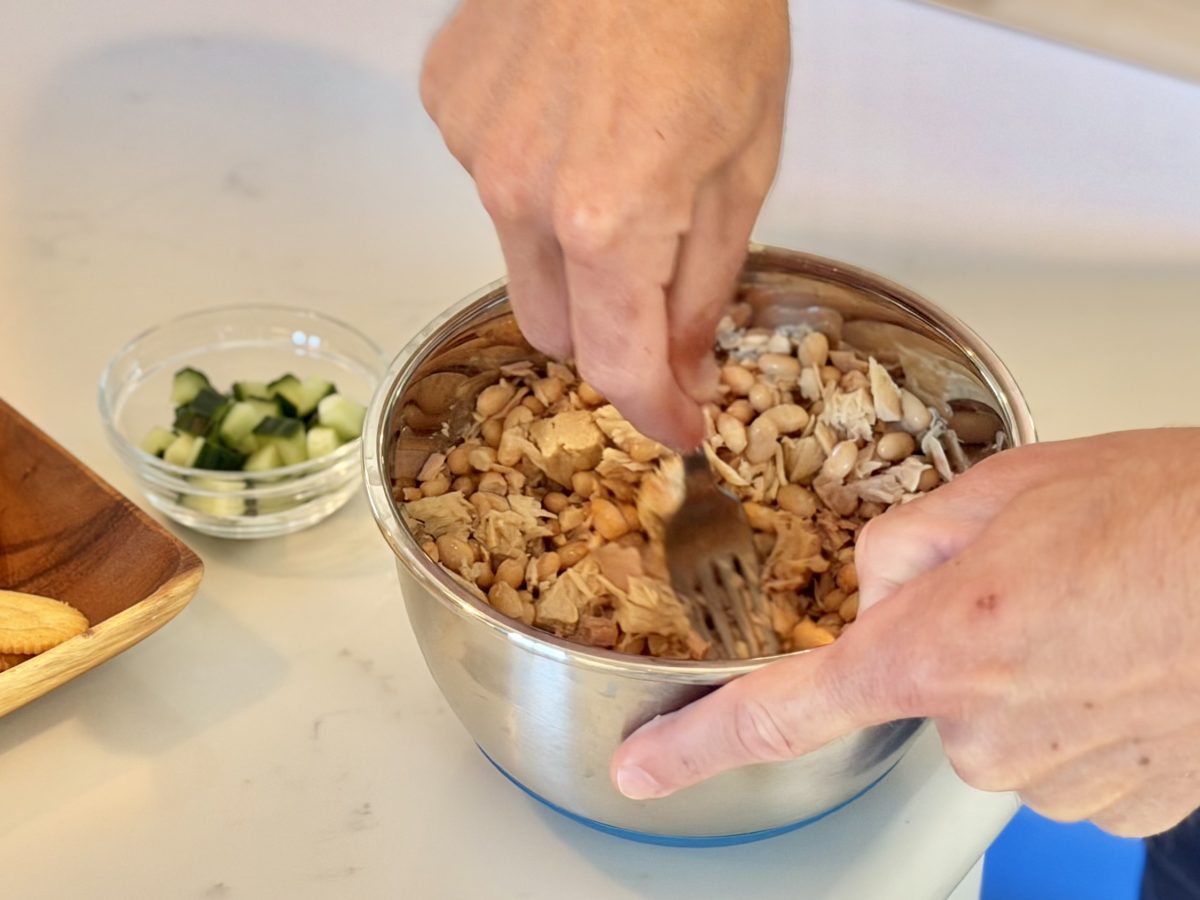
1) In a bowl, combine the tuna and beans and break the tuna into pieces using a fork. Drain the can before adding the tuna. The oil in the can is also flavored (usually a lesser quality olive oil) and you’ll be adding fresh oil at the end. Do not finely shred the tuna; break it into medium-sized pieces. In the completed bowl, you will want to see the tuna and beans as two separate entities.
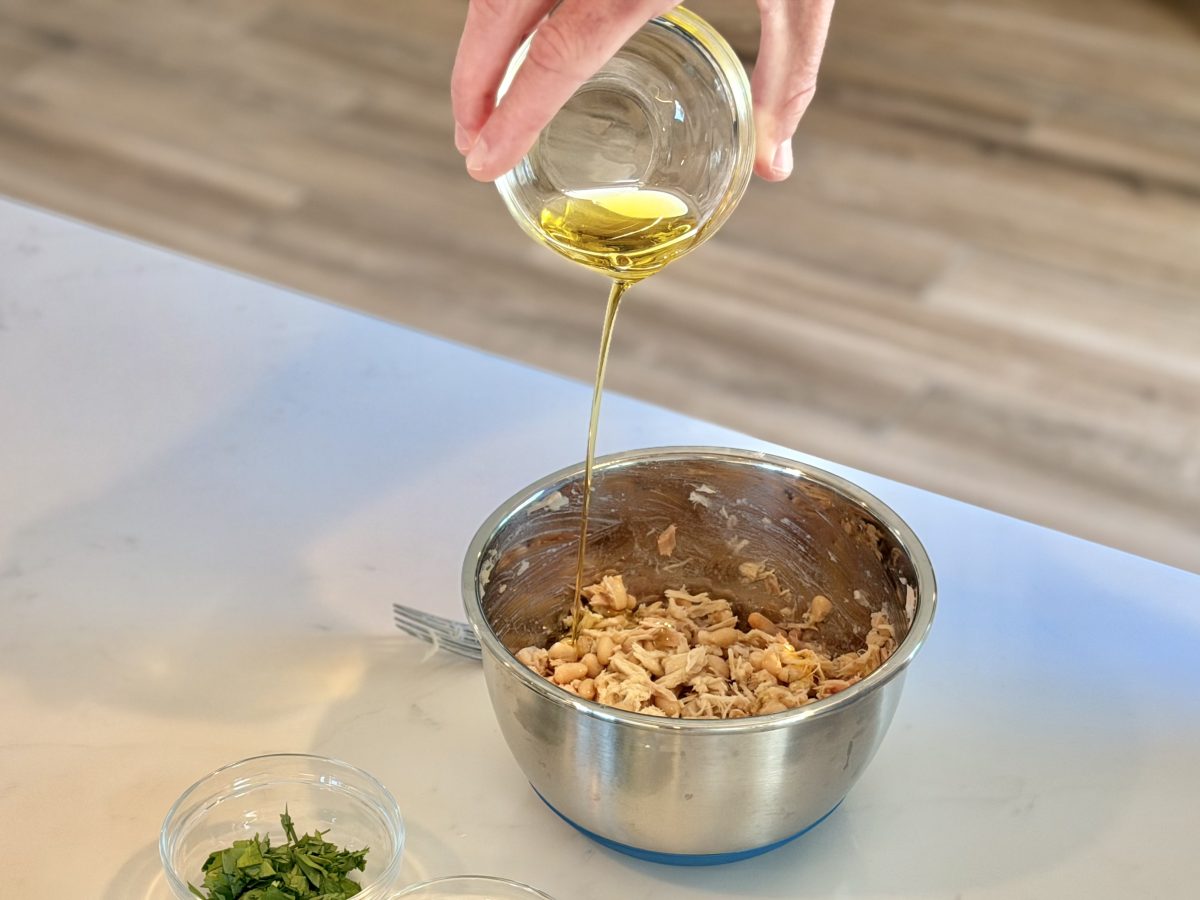
2) In a small bowl, combine lemon juice, olive oil, salt, and pepper to make the dressing. Start with 1 teaspoon of lemon juice, 1 tablespoon of olive oil, a small pinch of salt, and a good twist of the pepper mill. Use a fork to gently stir until all the beans and tuna are covered. Note that the dressing, may seem to coat the ingredients and pool instead.
3) Add the parsley and, if applicable, the chopped celery or cucumber. Add these last to prevent wilting of the parsley and to avoid bruising the crunchy veggies. Do two or three light stirs to mix them in; if you stir too much, the beans will turn into a paste.
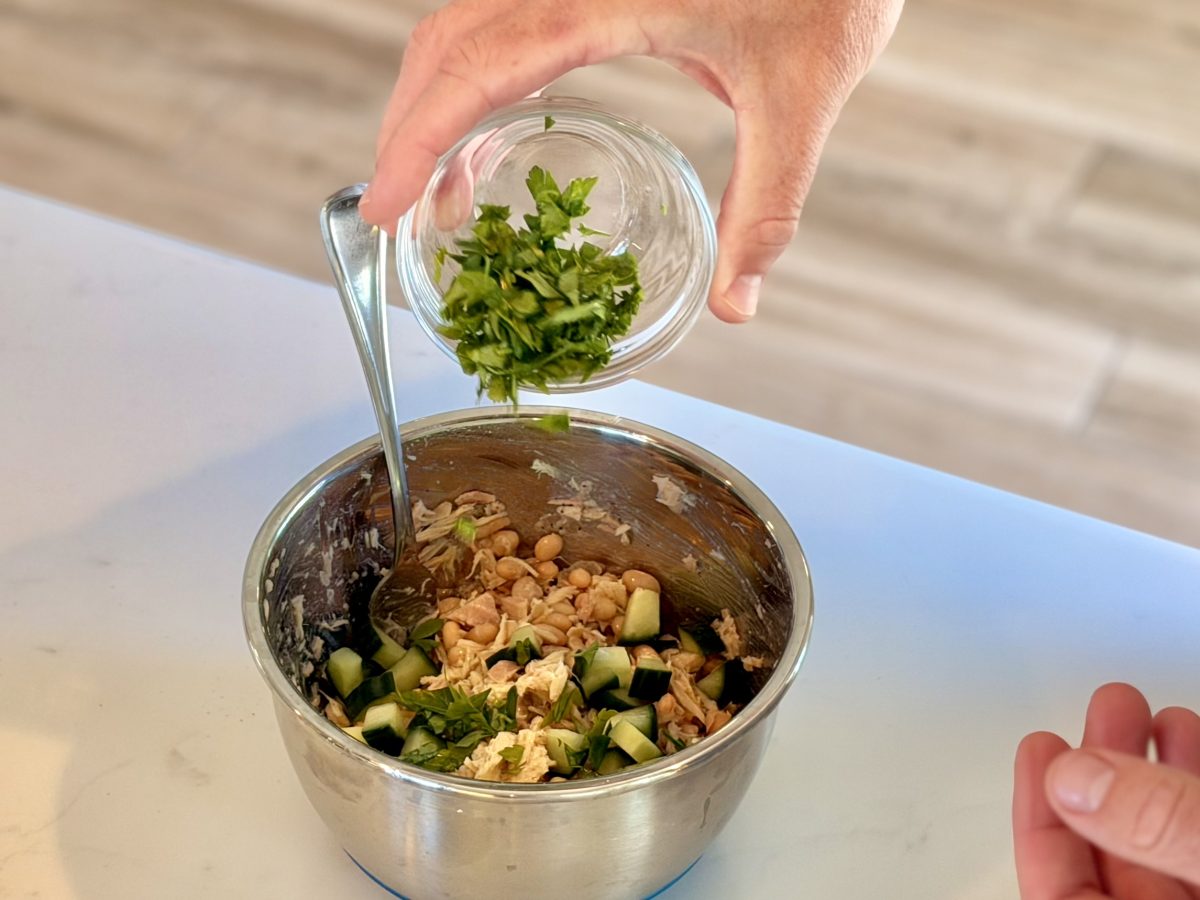
4) Taste and adjust. This is the most important step and the step that is most frequently skipped. Take a bite. If it tastes flat, add more salt. If it tastes really flat, add some more lemon drops. If it feels dry, add another half a teaspoon of olive oil. This last adjustment is what makes five ingredient recipes successful or not.
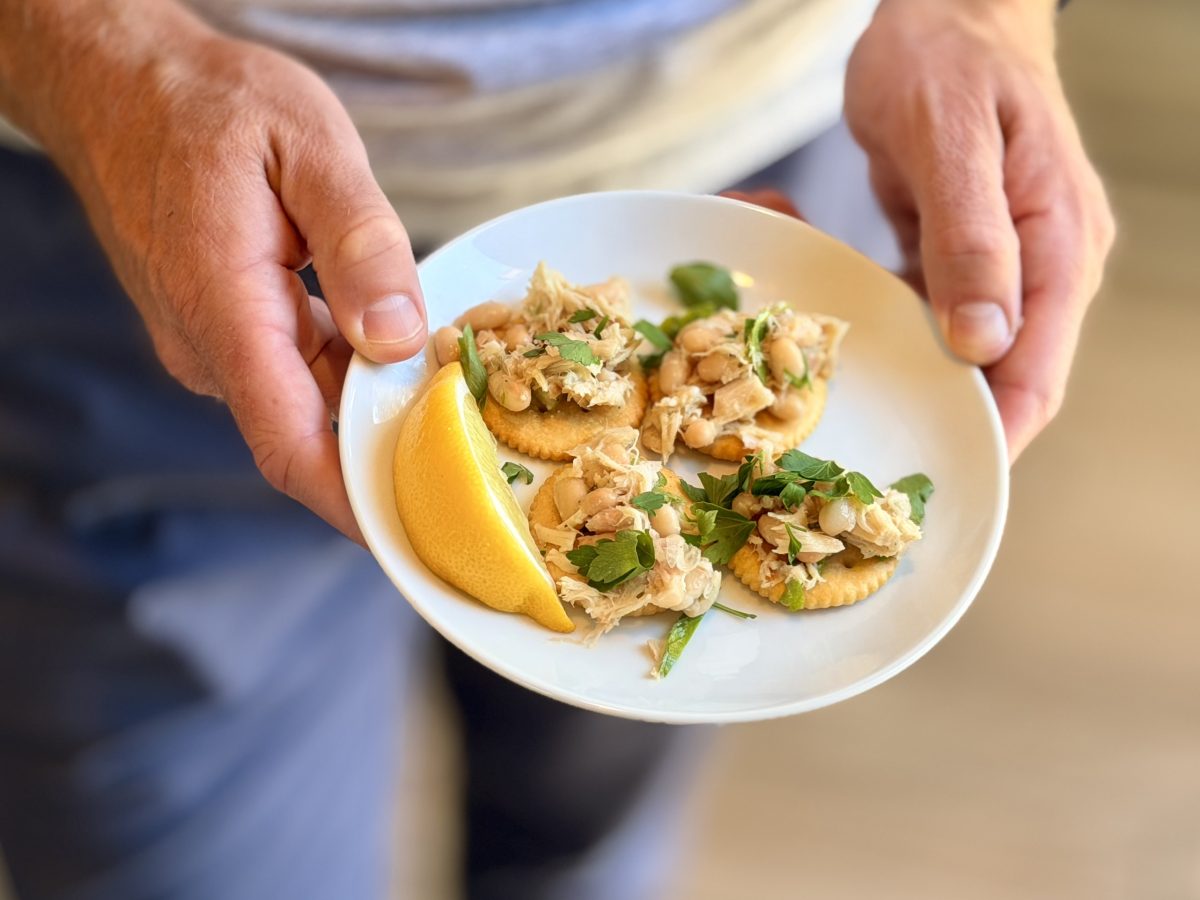
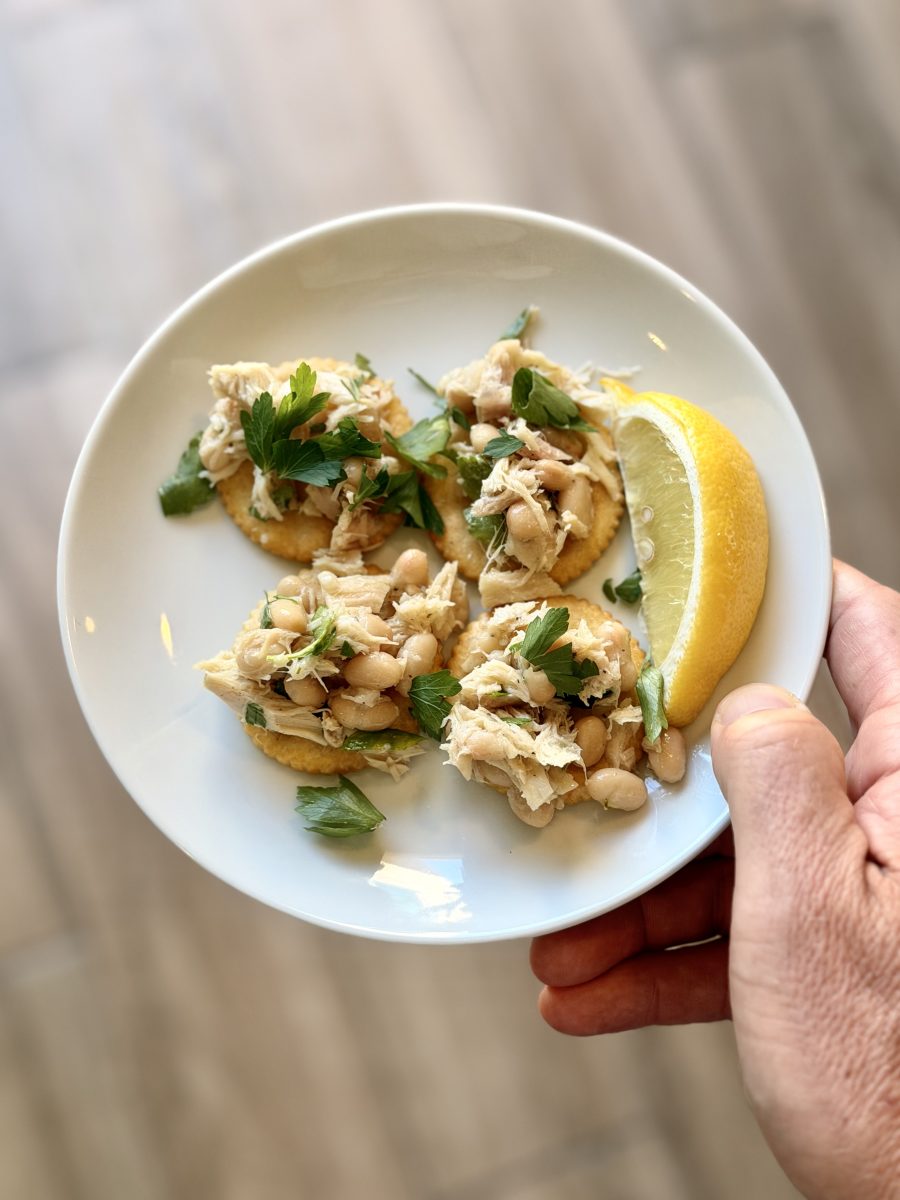
5) Ensure that it is served right away with lemon wedges and crackers or pita on the side. Transfer the salad into a wide shallow bowl and top it with another pinch of pepper and a light drizzle of olive oil. It is best served with extra lemon wedges to squeeze and some crunchy accompaniment. This is great cold, even straight from the fridge if you make it ahead, but I actually prefer it just mixed and a little bit room temperature.
Riffs That Work
- Mediterranean-loaded: You can add halved cherry tomatoes, chopped Kalamata olives, as well as a tablespoon of capers. This makes it more of a composed bowl versus a quick mix.
- Tuna and white bean toast: Pile the salad onto thick-toasted sourdough that’s been rubbed with garlic and drizzled with olive oil. Open-faced lunch at its best.
- French-style (salade Niçoise inspired): place on butter lettuce with a sliced hard-boiled egg, some Niçoise olives, and a portion of green beans. This is a more structured presentation.
- For a lemon-dill version, simply replace the parsley with fresh dill and add a tablespoon of finely chopped red onion. Quite bright, and almost Scandinavian.
- Spicy: Include a pinch of crushed red pepper flakes and half a teaspoon of Calabrian chili paste in the dressing.
Rounding Out the Plate
- Toasted pita or sourdough: For scooping. The traditional move.
- Crisp white wine including Pinot Grigio, Vermentino, and dry rosé, is a perfect choice for a 4 p.m. patio lunch.
- A small bowl of olives is either Castelvetrano or Kalamata. The conjunction of the Mediterranean trio (tuna, beans, olives) is unbeatable.
- Especially delicious in the summer. Flaky salt on sliced tomatoes.
- Lemon vinaigrette dressing: Same as on the tuna salad.
- Hummus or whole-milk yogurt with olive oil: A small dollop alongside makes this feel like a full mezze plate.
Rescue Notes
- Salads often taste bland and are usually undersalted and lack lemon. When you add a small pinch of salt and a couple more drops of lemon, and then stir and taste it again, it usually tastes better. Five-element meals require their seasoning to be more precise.
- The tuna fell apart into mush. This is either because you used the cheaper chunk-light tuna, or you stirred too aggressively. In the future, look for “solid” or “ventresca” tuna, and fold gently. The chunks should stay visible.
- Beans taste bland because they were not rinsed well or maybe they are the wrong type of bean. Rinse beneath cool water for about 15 seconds and drain. If your cannellini beans are tasteless, the quality of the can is poor, so try another brand next time.
- The dressing has pooled at the bottom of the bowl. Either you added the oil too quickly, or you didn’t stir enough. Try mixing the lemon juice with the olive oil using a fork and then pouring it into the bowl. The lemon aids in emulsifying the oil.
- It “tastes fishy” because it is either a low-quality brand of tuna or is past its prime. Quality tuna should have a rich, slightly meaty taste that is not offensively “fishy.” Try spending a couple more dollars for a better quality can next time.
- If you want it creamier, mash some of the beans with a fork against the side of the bowl. This helps break down the beans, and they will combine the dressing into something almost saucy.
- I don’t have parsley. Use any soft herb you have, such as dill, basil, mint, or chives. Each of these alters the character of the salad, but all of them work.
- This can be made ahead of time. The salad will last in the fridge for up to 24 hours. The flavors will get stronger, but the parsley may lose some vibrance. Right before serving, you can add some new herbs and squeeze a little more lemon to freshen it up.
Keeping It and Reheating It
The salad contains 30 to 35 grams of protein thanks to the tuna and beans, which also means it is high in healthy fats due to the inclusion of olive oil and high in fiber. Furthermore, it is gluten and dairy-free and can be modified to be low-sodium if you choose low-sodium tuna and beans and modify the seasoning at the end. In our informal rotation, this is one of the more genuinely Mediterranean-diet-aligned recipes because almost all the ingredients in the bowl are staples of that way of eating.
For your safety, store any leftover food in the refrigerator for no more than 24 hours. Please note that leftover salads will not look or taste as good the next day. The beans will soak up more of the dressing which will cause the salad to become drier. The parsley will also be limp and the salad will be noticeably less colorful. To improve the appearance and taste of the salad add fresh herbs, a drizzle of olive oil, and a squeeze of lemon. Freezing is also not recommended because the beans will become unpleasantly gritty after being thawed. This is a make-and-eat dish.
Field Notes
I make this on weekdays when I forget to pack a lunch, which is most weekdays. All it takes is around five minutes from when I open the cupboard to when I sit down with the bowl. Most of the time is just waiting for the parsley to rinse. This dish is the one that, for some reason, keeps my pantry from falling apart. This is also the reason why I tend to keep a can of good tuna in my pantry, even when the rest of the fridge is bare.
Try number two: I served this at an informal outdoor lunch in late August, placed it in a wide shallow bowl, added some extra olive oil, and put a basket of toasted pita and a plate of sliced tomatoes next to it. A friend asked what restaurant the recipe was from. I could have honestly said, “a can opener and a fork.” But instead, I gave her the recipe.
The Checklist
- Drain the oil from one can of oil-packed tuna, and set aside the can (you may discard the oil).
- Rinse 1/2 cup white beans well; drain.
- In a bowl, combine the tuna and beans and use a fork to chunk the tuna.
- In a separate container, combine 1 teaspoon of lemon juice, 1 tablespoon of olive oil, and a dash of salt and pepper, then stir to mix.
- Mix in 2 tablespoons of chopped parsley and, if you like, 2 to 3 tablespoons of chopped celery or cucumber.
- Taste, and if needed adjust the lemon, oil, salt, and pepper.
- Offer with lemon wedges and crackers or pita on the side in a shallow bowl.
- To finish, add another light drizzle of extra virgin olive oil and a few cracks of black pepper.
Terms Worth Knowing
- Oil-packed tuna refers to tuna that is canned with the essence of an oil such as olive oil or even a vegetable blend. Hence, they are typically richer and more succulent and the flavor is more pronounced as compared to their counterparts packaged with water.
- Ventresca refers to the belly cut of the tuna, considered the most sought after. It can be found in premium and specialty grade tins of Italian or Spanish tuna, and is worth looking for on occasion.
- Cannellini beans are large, white, Italian kidney beans that are creamy in texture. They are the traditional white bean used in Mediterranean cuisine.
- Mezze refers to a style of service in the Mediterranean where multiple small plates are brought to the table. Tuna and white bean salad pairs beautifully as one component of a mezze spread.
- Flat-leaf parsley is sometimes referred to as Italian parsley. It has larger leaves and a stronger flavor than curly parsley. Additionally, it is easier to chop.
Your Questions, Answered
Does it have to be oil-packed tuna?
It is certain to be impacted negatively. The salad is negatively impacted as tuna that is packed in water is less flavorful and more dry. If your only option is water-packed, increase the olive oil to 2 tablespoons and add a little more lemon to balance it out.
Can I make this with fresh tuna?
Absolutely, and it is fantastic. Sear a tuna steak (leave the middle rare), rest it then flake into the bowl with the beans. More pricy and more complicated, but for an upscaled lunch it’s a definite step up.
Can I use dried beans I cooked myself?
The salad is definitely upgraded here. Prepare the beans so they are tender, but not mushy; then allow the beans to cool. You can use 1/2 cup of cooked beans for every can of tuna. When compared to canned beans, beans prepared at home are creamier and less starchy.
What’s the best canned tuna brand?
On the whole, brands from Spain, Italy, and Portugal outperform American brands. Look for tuna (preferably yellowfin or albacore) packed in olive oil and sold in glass jars or more premium/boutique style cans. Tonnino, Ortiz, Wild Planet, and Genova are options that are readily available and perform above their price point.
Can I make this dairy-free / gluten-free / Whole30?
As is, it is also dairy-free, gluten-free, and if you remove the beans (the only non-compliant ingredient) and add diced avocado or cucumber instead of body, it is Whole30 compliant. Feel free to adjust the seasoning.
Should I rinse the beans?
Indeed, the starchy liquid in the can does have a metallic and dull taste that spoils the entire bowl. However, it can be removed with a 15 second rinse under cool water.
How long does this keep in the fridge?
Your best option is to eat the parsley within 24 hours. After that time, the texture will be firm and the color will fade. If you want to make it further ahead of time, mix the tuna and beans with the dressing the night before. Then, right before serving stir in fresh parsley and some crunchy vegetables.
Can I serve this warm?
The tuna and beans are best at cool to room temperature. Heating the salad gives the tuna a weird taste like it’s been cooked twice and also changes the texture in a really unappetizing way.
Before You Go
This recipe is easy to make and will transform your tuna and white bean salad. Buying high quality canned tuna and white beans is worth it as you will end up using this recipe often. With only a can or two, a lemon, and some herbs, you can create a quick five minute meal solution for lunch. Even though it may seem boring, you will be surprised by how it can inspire you to grab it for lunch more often.
