I do enjoy the look of frying meatballs, but I definitely don’t look forward to cleaning up after frying meatballs. The oily mist, the spots on the stove, and the smell in my hair for the next few hours. Ugh. The brown, crunchy edges and juicy interior of baked meatballs provide what most people want from meatballs. The aroma of meatballs is warm and inviting and gathers people in the kitchen to see what’s cooking.
This is my go-to baked meatballs recipe when I want dinner to feel a little heroic without doing anything particularly heroic. These meatballs come from Italian-American cuisine. They are mostly beef, with parmesan, garlic, and parsley, but you can add pork if you like.
You can also adjust the ratio to make it more or less crazy, depending on how wild you want the party to be. I made these for my relatives that I didn’t know too well, nervous teenagers, and even for myself. They never last long.
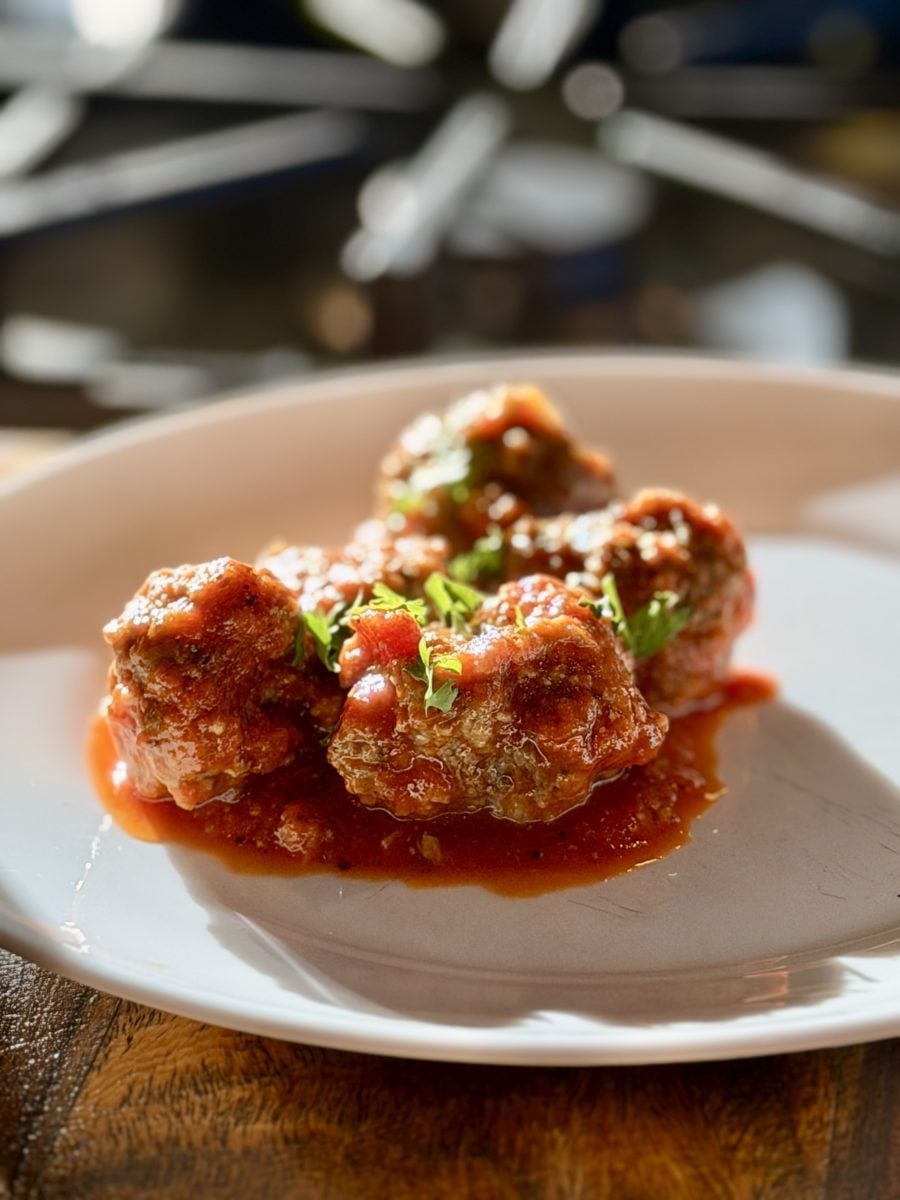

The Cheat Sheet
- What you’re making: Tender, oven-baked meatballs with browned tops and a juicy interior, no frying required.
- Why it works: A panade (which is breadcrumbs and milk) keeps the meatballs moist. They are also kept lighter because the mixture is mixed gently. The hot oven also browns the outside.
- Timing: Preparation time is 15 minutes, baking time is 18-22 minutes, and there is an optional 10 minute sauce simmering time.
- Flavor profile: Garlicky, parmesan-salty, herb-bright, with roasted, savory edges.
- Key tips: When mixing, use a light hand. Portion evenly. For better browning, bake on a rack (or a very hot sheet).
- Best uses: Meatball spaghetti, meatball sub sandwiches, rice bowls, soup, or meals you can make and freeze.
Ingredients
It’s true that the ingredients listed are quite basic, but there is still much to consider. For meatballs, there’s really no way for me to say if they will turn out good or bad. Success (or lack thereof) is down to how much control you have on moisture, and how much will you put in.
There needs to be enough binder added to help the meatballs stick together, but if too much is added, then they can become bready. The seasoning should be present, but should never be excessive to the point of screaming. If you have experienced the bounciness that comes with a bite into a meatball, this is the reason.
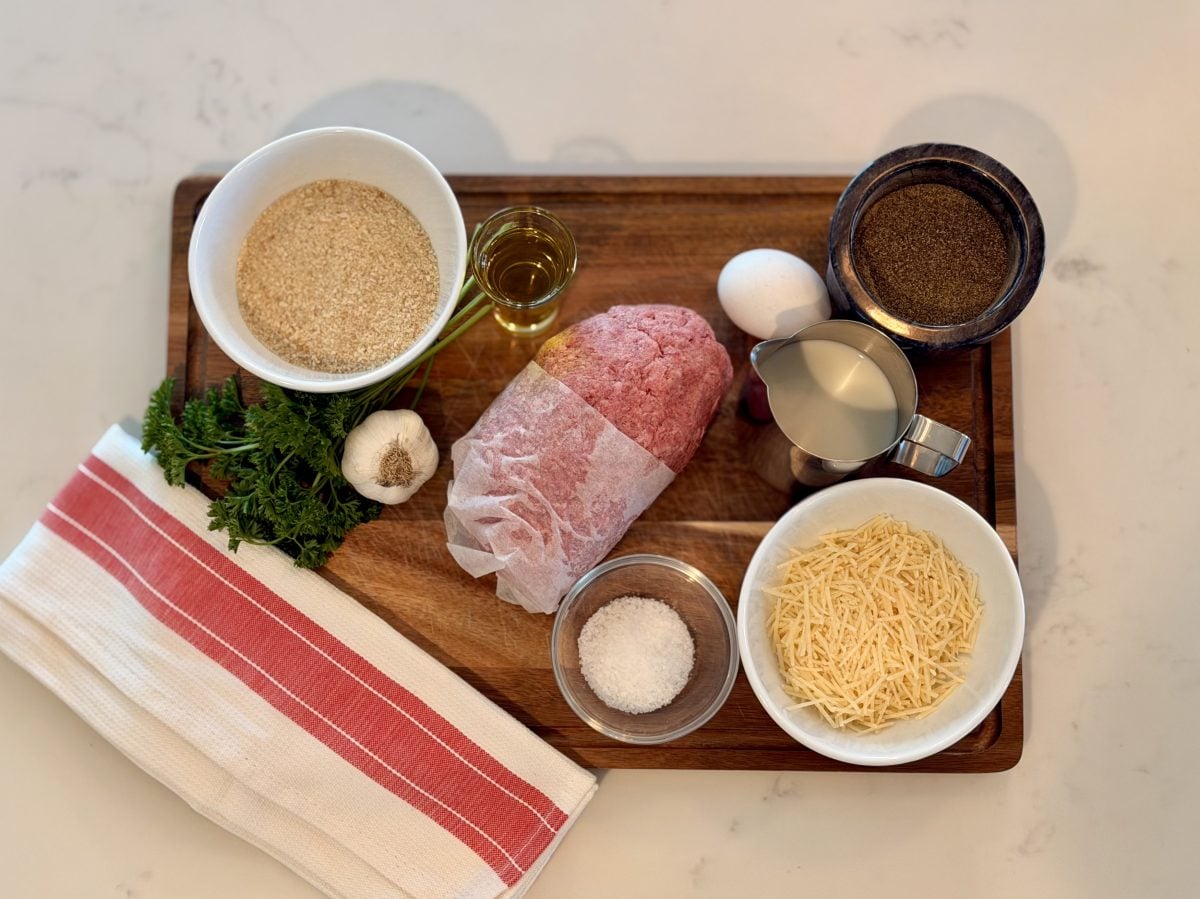
- Ground meat (1 1/2 lb / 680 g total): I like 80/20 beef for flavor plus pork for tenderness, but all-beef works. Lean meat can be a little drier compared to regular meat. But since you are baking it, be careful with the bake time.
- Breadcrumbs (1/2 cup / 50 g): For a softer texture, use fresh breadcrumbs in your meatballs. Panko will give your meatballs a slightly bouncier texture.
- Milk (1/3 cup / 80 ml): To keep meatballs juicy, it is important to hydrate the crumbs (panade). While water may do the trick, using milk is more pleasant.
- Egg (1 large): If you use too many binders, the meatballs get too tight, so use one.
- Parmesan (1/2 cup finely grated / 45-50 g): If you can, use the real thing. It melts into the mix and seasons everything all at once.
- Garlic (2-4 cloves, minced): I cook raw garlic in the oven for 3 minutes.
- Parsley (2 tbsp chopped): dried is fine around 2 tsp, fresh is optimal.
- Salt (1 1/2 tsp kosher): Adjust if your parmesan is very salty.
- Black pepper (1/2 tsp): More if you want to show some more attitude.
- Optional seasoning: 1 tsp dried oregano or Italian seasoning; add a pinch of red pepper flakes for heat.
- Olive oil: A light brush or spray helps browning.
Master Ratio (Easy To Scale)
- 1 lb (450 g) ground meat
- 1/3 cup breadcrumbs
- 1/4 cup milk
- 1/3 cup grated parmesan
- 1 egg
- 1 tsp kosher salt
- Aromatics: garlic + herbs to taste
Want to know how to make a large batch of meatballs? Here are the ingredients you will need: 8 lbs of ground beef, 2 2/3 cups of bread crumbs, 2 cups of milk, 2 2/3 cups of parmesan cheese, 8 eggs, and 8 tsp of salt. One time, I remember making a triple batch during a snowstorm and I was listening to music. I had flour everywhere, and it was so nice as it smelt like a bakery. I really enjoyed the atmosphere of my kitchen and it felt like a Sunday, even though it was Saturday.
Ingredient Choices That Change Flavor
| Choice | What it does | Best for | Notes |
|---|---|---|---|
| All beef (80/20) | Beefy, classic, sturdy | Spaghetti & meatballs, subs | Watch bake time; overbaked beef tightens faster than blends. |
| Beef + pork (50/50) | More tender, a little richer | “Restaurant-style” texture | Pork adds fat and softness; my default. |
| Add 1/4 lb veal (or turkey) | Veal = delicate; turkey = lighter | Gentler flavor, softer bite | Veal can be pricey; turkey can dry if too lean. |
| Fresh breadcrumbs | Softer, more tender crumb | Juicy meatballs for sauce | Pulse soft bread; avoid crust-heavy pieces. |
| Panko | Slightly springier texture, more structure | Meatballs that hold for subs | Add a splash more milk if your mix looks dry. |
| Parmesan vs. Pecorino | Parmesan = nutty; Pecorino = sharper, saltier | Tuning salt + bite | If using pecorino, reduce salt a touch. |
For Serving (Optional, but Highly Encouraged)
- Marinara sauce: store-bought or homemade
- Cooked pasta: spaghetti, rigatoni, or anything hiding at the back of the cupboard
- More parmesan + basil: because you’re not a minimalist tonight
Instructions
Yield: Approximately 18 meatballs (1 1/2 inch)
Oven: 425°F (220°C)
Pan setup: Rimmed baking sheet lined with parchment paper (and ideally a wire rack on top)
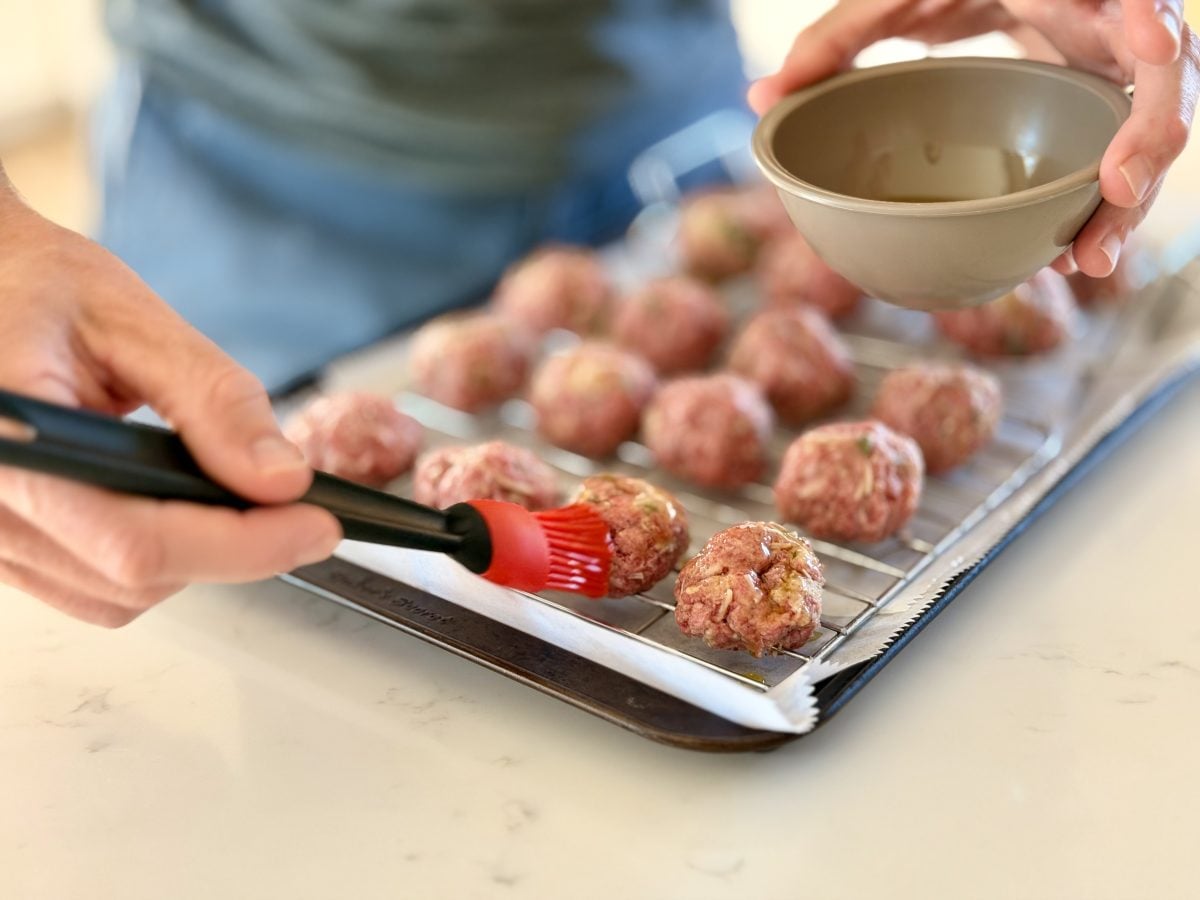
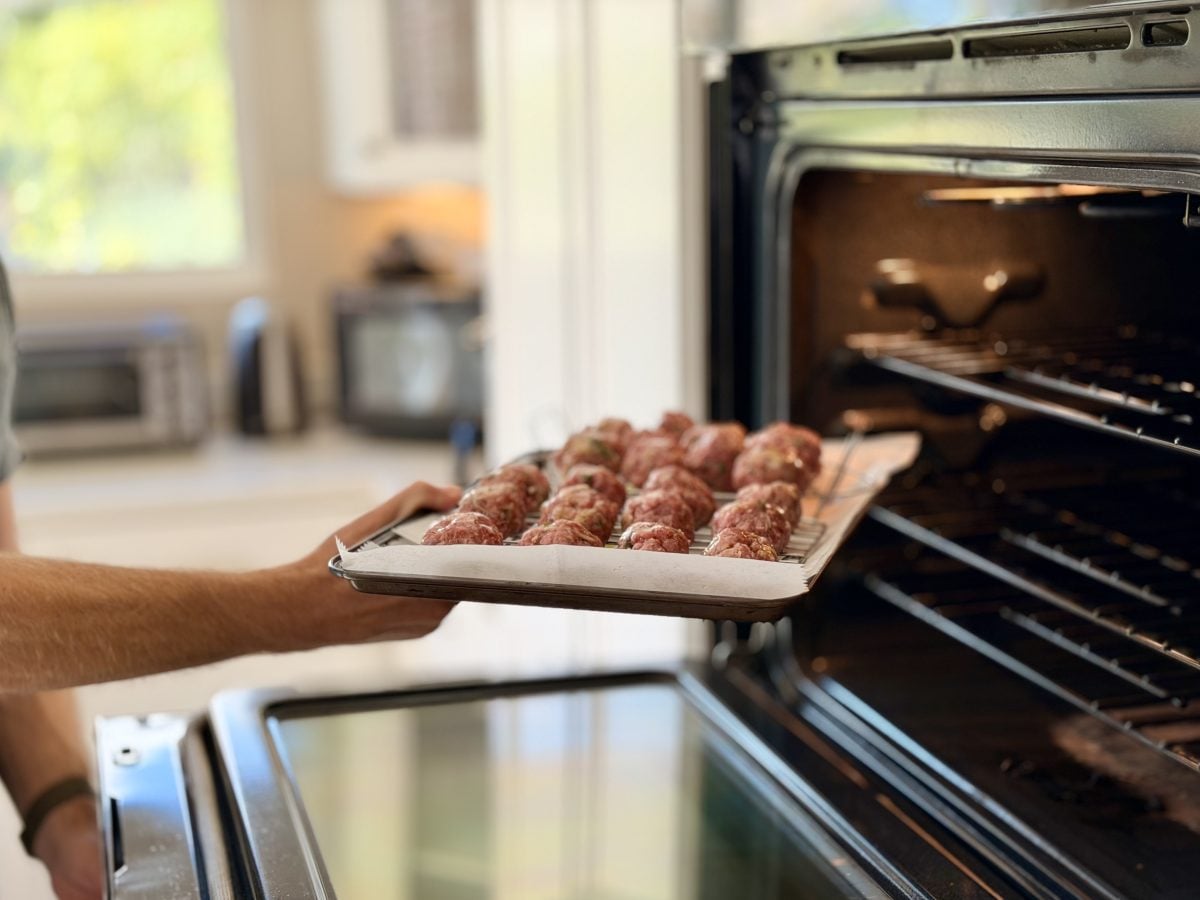
1) First, prepare the baking sheet and the oven. Set the oven to 425°F (220°C) to start heating for later use. For easy cleaning, place some parchment paper on the sheet pan. If you have a wire rack, you can place it on the baking sheet and spray some oil on it. Having racks can prevent food from steaming and help them get nice and brown. I remember the first time a rack was used and I was super proud.
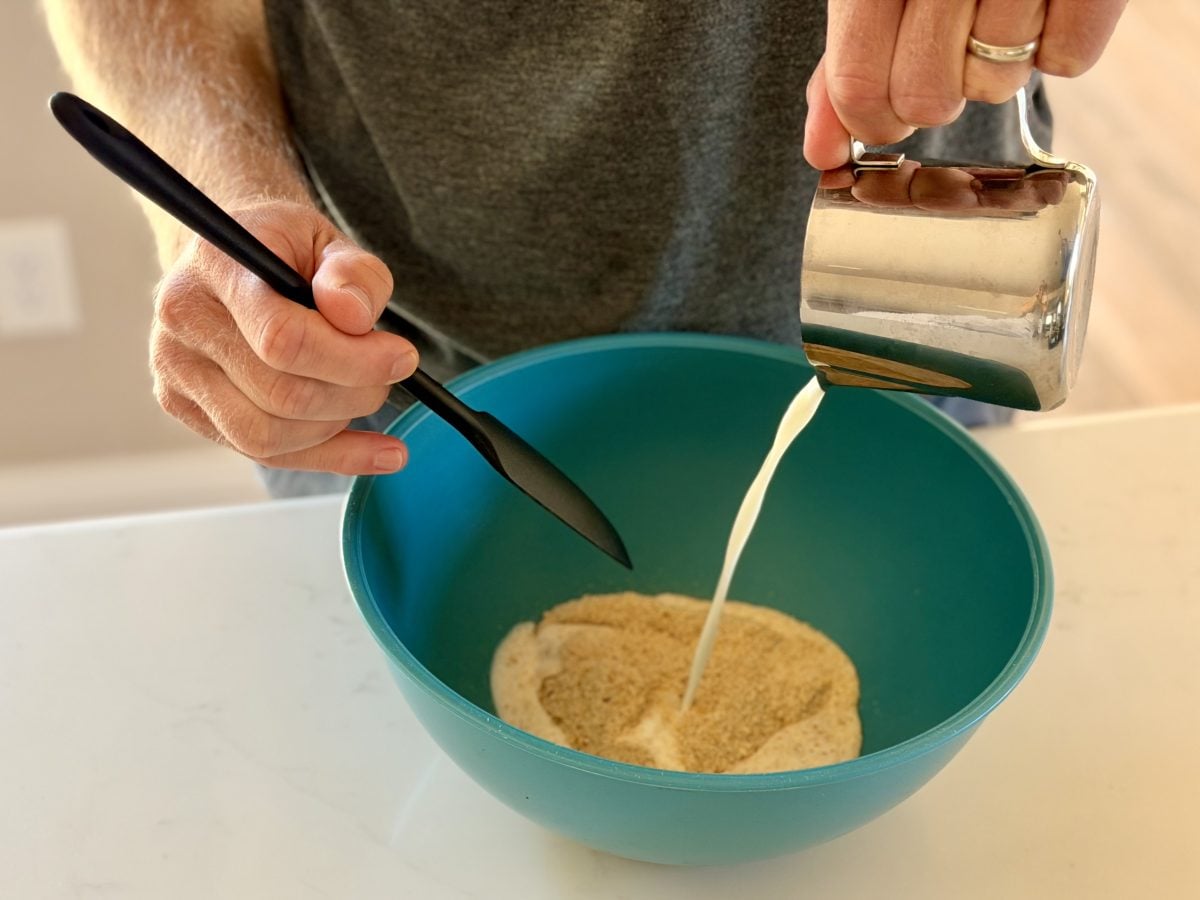
2) For the panade, take a large bowl and combine the bread crumbs with milk. Allow the bowl to sit for 2 to 3 minutes so that the crumbs can soak up the liquid and swell like porridge. This little trick helps keep your meatballs from becoming tough.
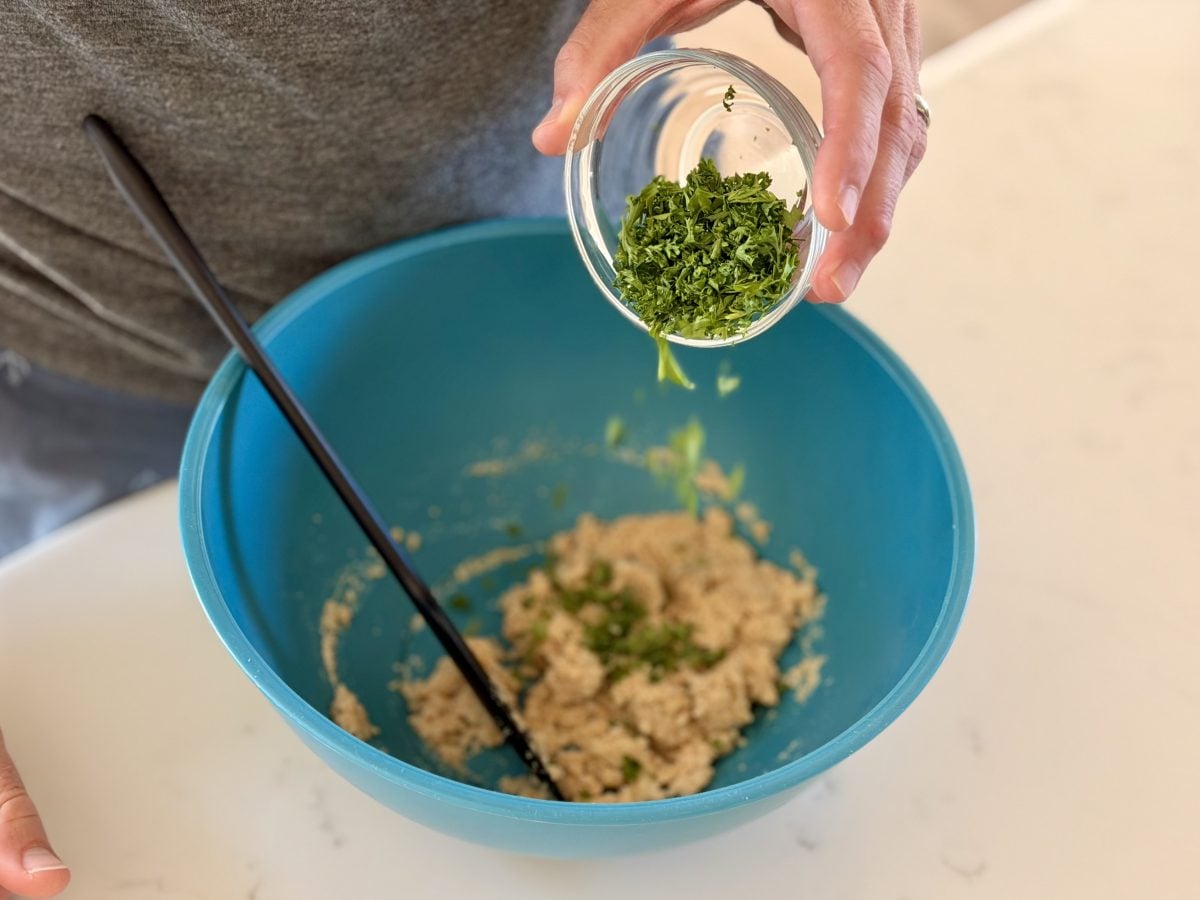
3) In the breadcrumb mixture, add the egg, parmesan, garlic, parsley, salt, pepper, and possibly oregano or chili flakes, and combine until uniform.
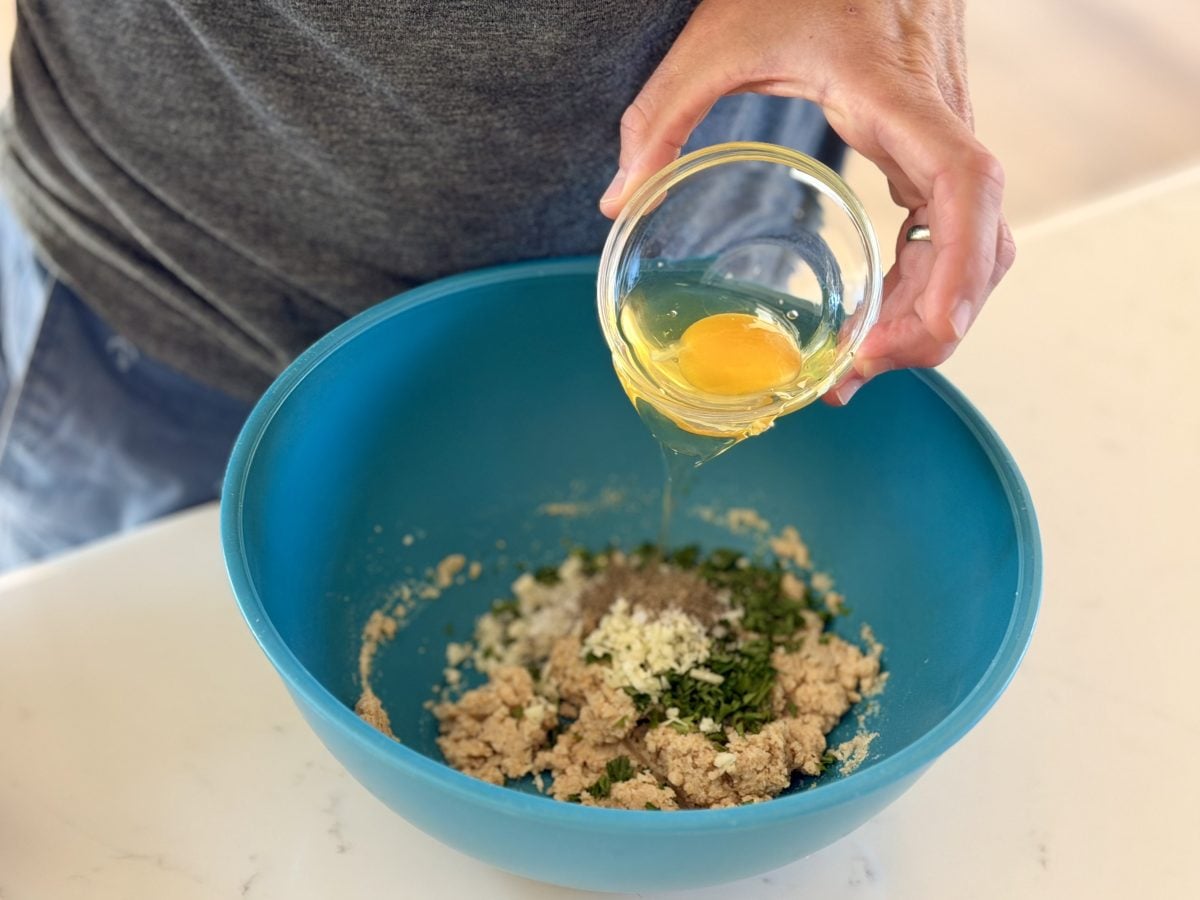
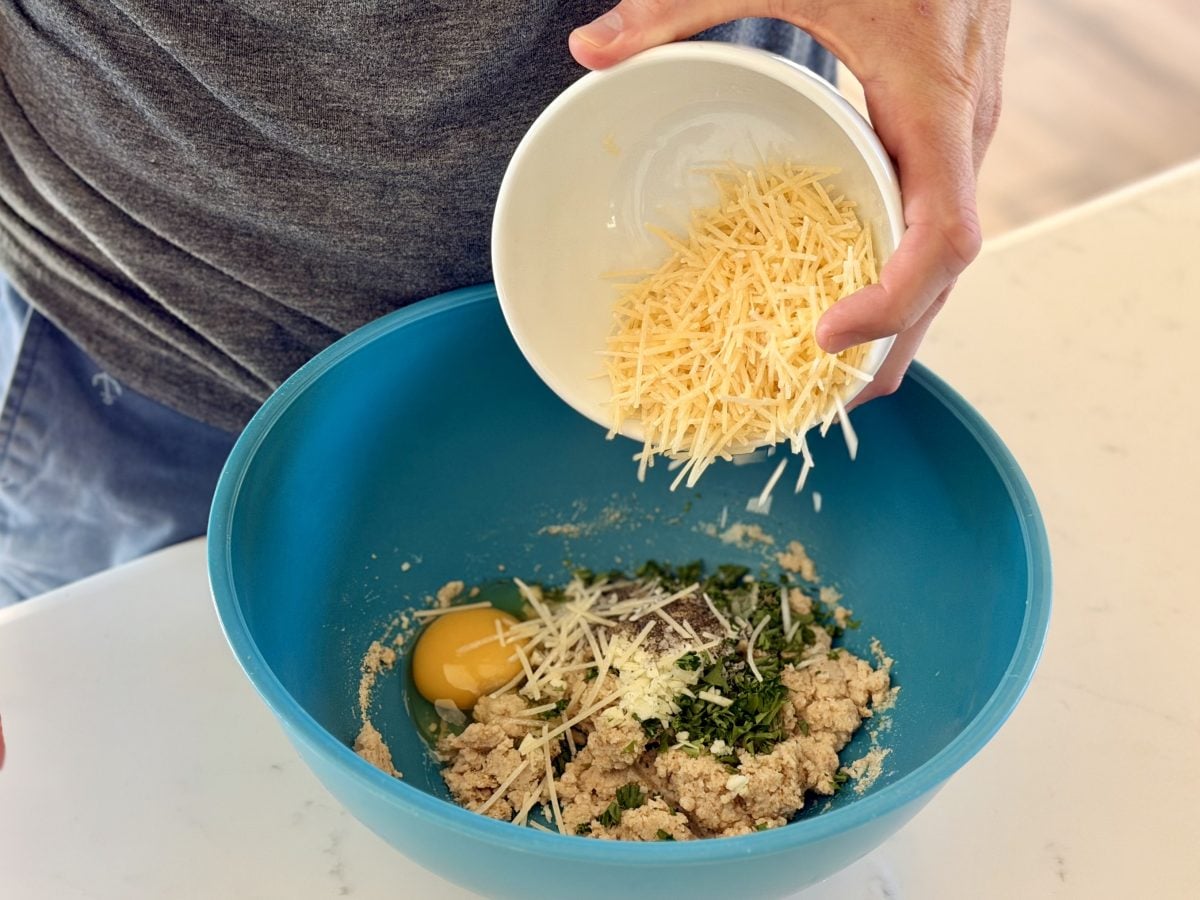
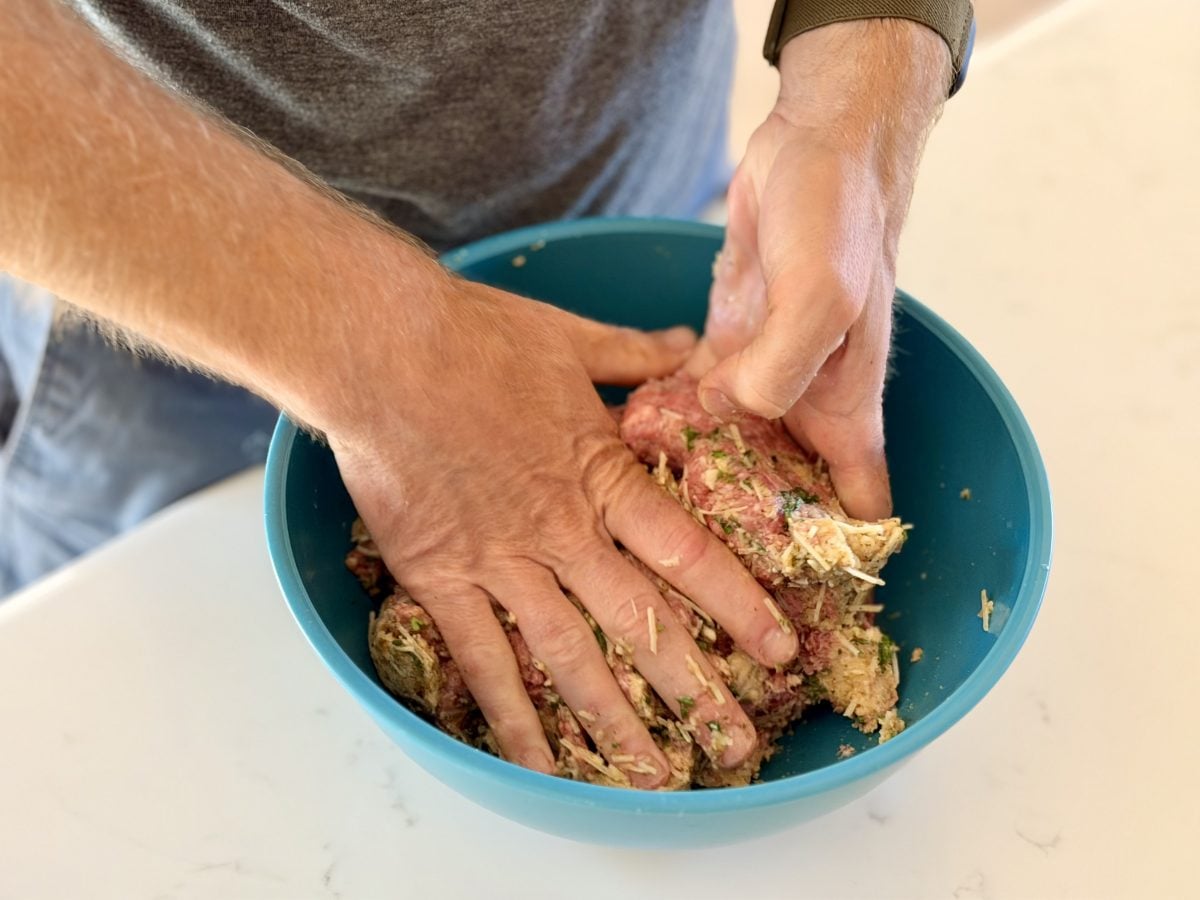
4) Add the ground meat. Then, using your hands, or a fork if you prefer, mix everything until the dry ingredients are no longer visible. Don’t go too far with the mixing. The mixture should stick together, but it shouldn’t be mushy. You will notice the mixture will become firmer the more you knead; chemistry is at play. This matters because over-kneading makes the meatballs bake up rubbery.
5) Dividing and Shaping. Using a cookie scoop, measure out about 2 tablespoons per ball. You should aim to make roughly 18 dough balls. When you think of rolling, think of more of “tucking into shape”. When placing the dough balls on the rack or pan, make sure to space the dough balls out enough. For more even browning, you can assist with a light brush or spray of olive oil.
6) Bake for 18 to 22 minutes then check to see if they are starting to brown and are cooked through. For beef and pork blends, an instant thermometer should register 160°F (71°C) (They will carry over a degree or two). If they are smaller, check them starting at 16 minutes.
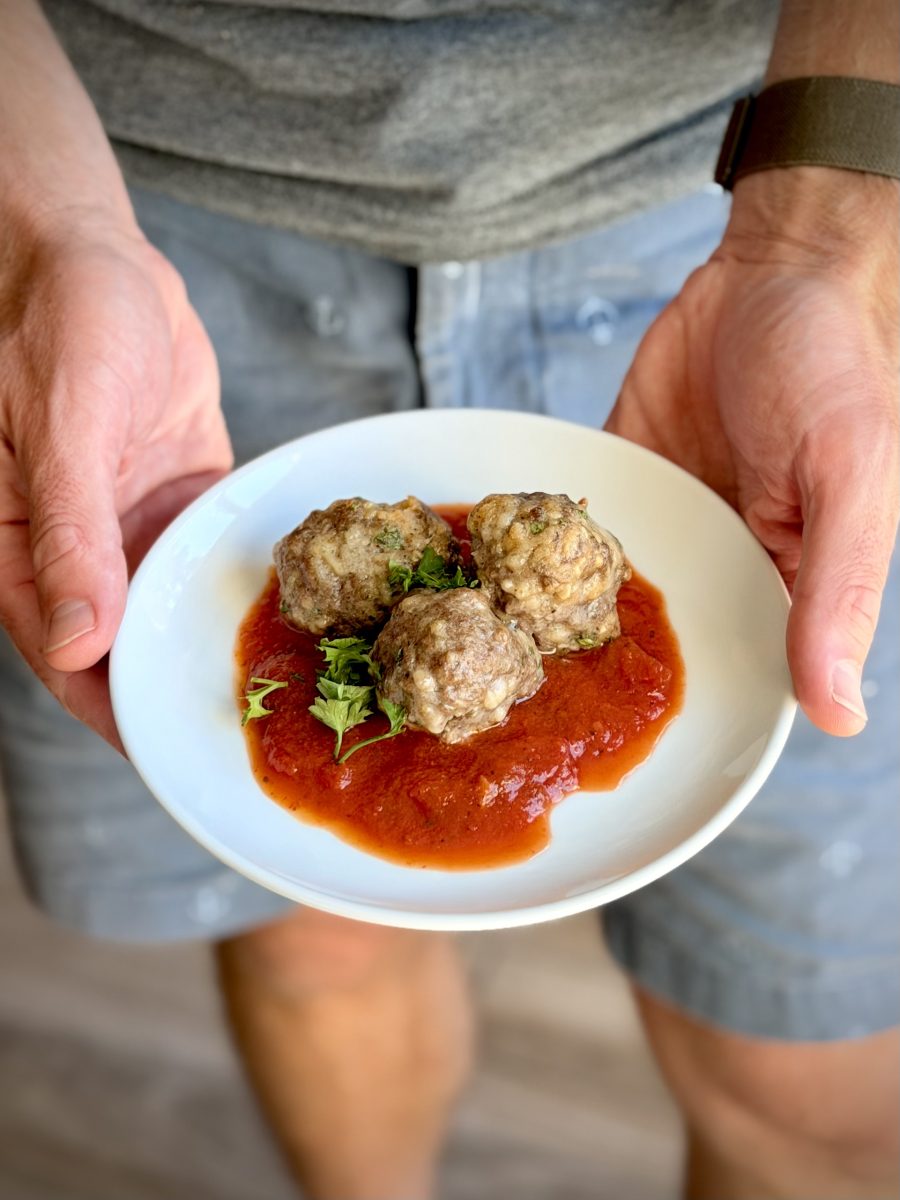
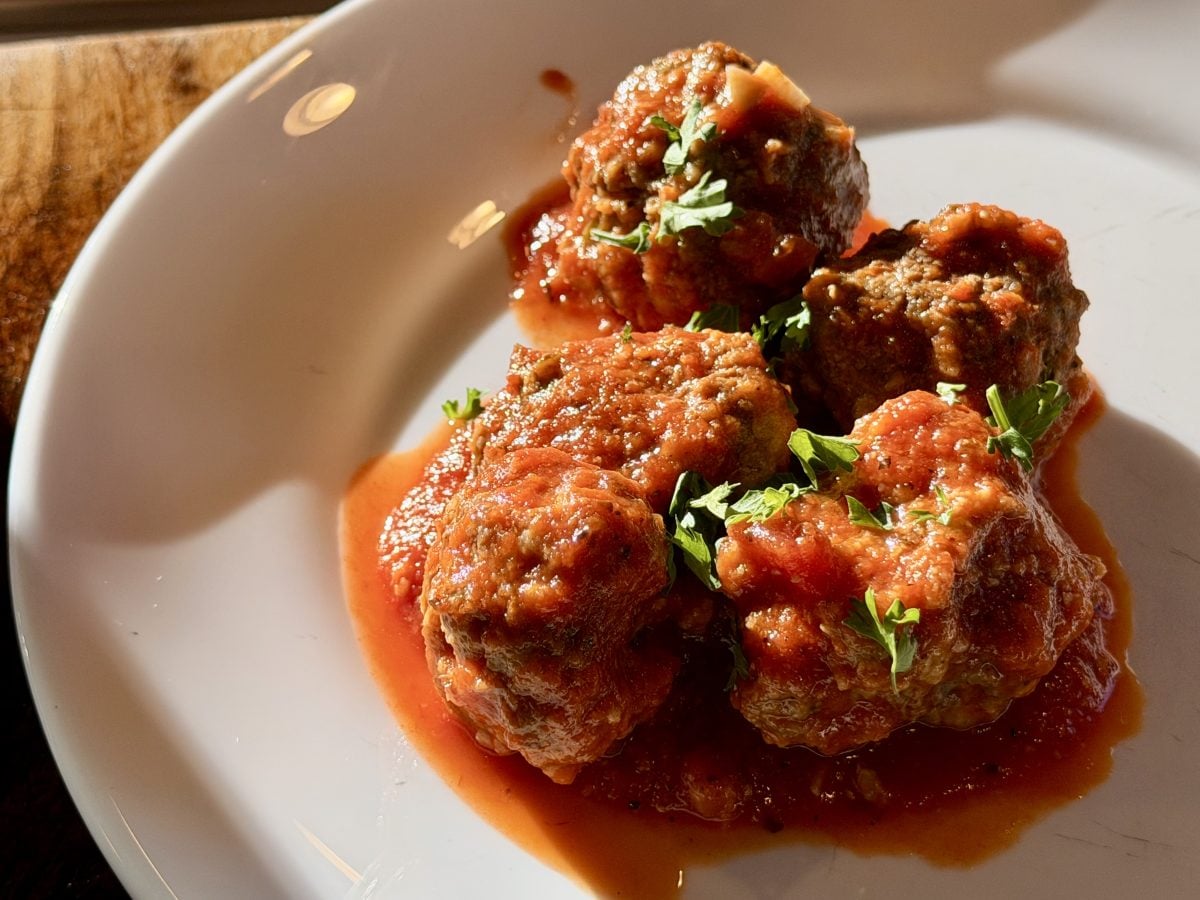
7) Optional Step: Finish in Sauce. For the finish, grab a large pan and add some marinara sauce. Once the sauce is heated, add the baked meatballs to the pan and let them cook for 5-10 minutes. This method keeps the meatballs tender because of the sauce and lets them achieve a nice brown from the oven. I like to make this whenever I want that Sunday vibe during the week.
From here you can pile them over pasta, tuck them into rolls, or eat one for quality control while no one’s watching.
Variations Worth Trying
- Swedish-ish baked meatballs: Swap parmesan for a pinch of allspice and nutmeg; serve with gravy instead of marinara.
- Spicy meatballs: Incorporate 1 to 2 teaspoons of Calabrian chili paste (or additional flakes) along with a pinch of fennel seed.
- Herby lemon meatballs: Try using all beef or all turkey, add lemon zest, parsley and dill, and for serving use the yogurt sauce.
- Cheese-stuffed: Press a mini mozzarella cube into the center of each ball (be sure to seal it well).
- Gluten-free: You can use gluten-free breadcrumbs or crushed rice crackers for the panade step.
- Dairy-free: You can use water or unsweetened oat milk as a substitute in the panade and forgo the parmesan (add extra salt and herbs to make up for it).
Good Company for This Dish
- Classic: Marinara spaghetti with extra parmesan and a green salad with a sharp vinaigrette.
- Meatball subs: We take toasted hoagie rolls and then cover them with marinara and provolone, then broil ’til blistered.
- Weeknight bowl: Meatballs over rice with sautéed greens and a spoon of pesto.
- Party move: toothpicks, and disposable napkins.
- Soup upgrade: Drop a few into brothy tomato soup or Italian wedding soup-style greens and tiny pasta.
- Vegetable sidekicks: Broccoli that is roasted, green beans that are blistered, or zucchini that gets a little dark around the edges (the best kind).
Common Stumbles, Easy Saves
- Meatballs came out tough: You probably overmixed the dough or baked it too long. Mix until just combined, and take them out of the oven as soon as they are cooked through.
- They’re falling apart: You may have added too little binder or too much liquid. Ensure that you have used the egg and allowed the panade to absorb the milk before mixing in the meat.
- Not browning: Your oven may be running cool. Meatballs may be too close together or your pan may be too crowded. Try using 425°F and spacing the meatballs apart. Also, consider a light spray of oil.
- Dry meatballs: Use 80/20 beef or add pork. Consider finishing in sauce. It may also be that the meat was too lean or the bake time took too long.
- Greasy puddles: Meat that is too fatty and large meatballs. If they are large use a rack so the fat can drip away, or gently blot using a paper towel after cooking.
- Flavor feels flat: When serving, you can enhance the flavor by adding a little more salt (varying for the parmesan), more garlic, and brightening it with chopped parsley and a squeeze of lemon.
- Uniform size matters more than you think: A cheap scoop solves an astonishing amount of problems when it comes to “some are dry, some are undercooked.”

How It Keeps
Considering nutrition facts will be different due to the meat blend and finished sauce, these meals will be protein forward, and ground meat and parmesan will add the most fat and sodium. If you’re tracking calories, a beef/turkey blend should be ok, but you’ll have to really watch the baking time to keep them nice and juicy.
Cooked meatballs can be stored in an airtight container and refrigerated for 4 days. For the best texture, try to reheat them in the sauce. If that’s not possible you can reheat the meatballs in the oven at 350°F until warmed. To freeze meatballs, first freeze the baked meatballs individually. After the meatballs are frozen, you can bag them. They will stay good for less than 3 months.
Times I’ve Made This
While my friend’s statement, “I hate meatballs,” seems to be an extreme overreaction, there is a reasonable explanation behind it. When she was a child, she experienced some really dense and overcooked meatballs, and it would make sense that that would prejudice her opinion of them. I’d baked the meatballs, finished them in marinara, and served them over spaghetti.
However, she did not apologize for her extremist behavior and came back for seconds, and she even asked what type of sauce I used. It was one of those backhanded compliments, but I’ll take it.
I had to make another batch for another weeknight. While I was helping with some homework, I mindlessly burned some garlic bread. At least the meatballs saved the day. When I added the meatballs to the jarred marinara with some pasta water, it looked like I did it on purpose! That’s how meatballs can be. They never judge you for the burned garlic bread.
Step-by-Step Recap
- Preheat oven to 425°F (220°C); prep sheet pan (rack if possible).
- Stir breadcrumbs + milk; rest 2-3 minutes.
- Mix in egg, parmesan, garlic, herbs, salt, pepper.
- Add the ground meat and mix gently until everything is just combined.
- Lightly oil the scoop and roll mixture and form into even balls.
- Bake 18-22 minutes (target 160°F/71°C).
- Optional: simmer in warm marinara 5-10 minutes.
- Chill and keep the rest (refrigerated for 4 days, or frozen for 3 months).
Cook’s Vocabulary
- Panade: A mixture of starch (breadcrumbs) and a liquid (milk) helps to keep the ground meat tender and moist.
- Carryover cooking: Food continues to cook for a bit after being taken out of the oven because heat is still being transferred to the food.
- 80/20: Ground meat with around 80% lean meat and 20% fat is usually the sweet spot for flavor and juiciness.
- Overmixing: When ground meat is overworked, the tight proteins are created which leads to tough textures.
- Rimmed baking sheet: A sheet pan with edges that have been raised to catch drips (and save your oven floor).
Questions I Get
Can I pre-make the mixture? Absolutely, the blend can be created and molded into any shape you desire. Please cover the blend, and store it in the refrigerator for no more than one day. When you go to heat the meatballs, you may have to add an extra minute or two as they will be cold.
Why do my meatballs shrink? With meatballs, some change in size during cooking is to be expected. When fat is rendered and proteins constrict, some size reduction will naturally occur. If size reduction on your meatballs is excessive, it could be due to too much meat in the mixture, the oven being too hot and the meatballs being in there for too long, or perhaps the meatballs were too tightly packed during molding.
Can I bake meatballs in sauce? Sure, you could simmer the meatballs in sauce and have your sauce and meatball mixture hot quicker. But, then you would miss the nice toasted flavor in the meatballs. A nice way to do it is to bake the meatballs and then add the sauce to finish them off, and then you get the best of both worlds!
Can I use turkey or chicken instead? Yes, turkey or chicken can also be used. If using chicken, we recommend dark meat or adding a tablespoon of olive oil. Chicken tends to dry out much quicker, so check it earlier. Depending on the size of your meat, you should start checking after 15 to 18 minutes.
Wrapping Up
Making meatballs is a great dinner idea. The smell will fill your house and make everything comfy. You’ll remember the ratio like second nature! Don’t be shy to add your twist! Maybe even add a sauce and turn it from just dinner to dinner!