The first time I made garlic bread for a date, I decided to go overboard and grated an entire head of garlic. I figured that the more garlic that was in it, the more flavorful it would be. What I made was not really garlic bread, but more of a dare. She was very kind about it, but I was up all night. I learned from that dinner that garlic really does have a volume knob, and that your knife is the control.
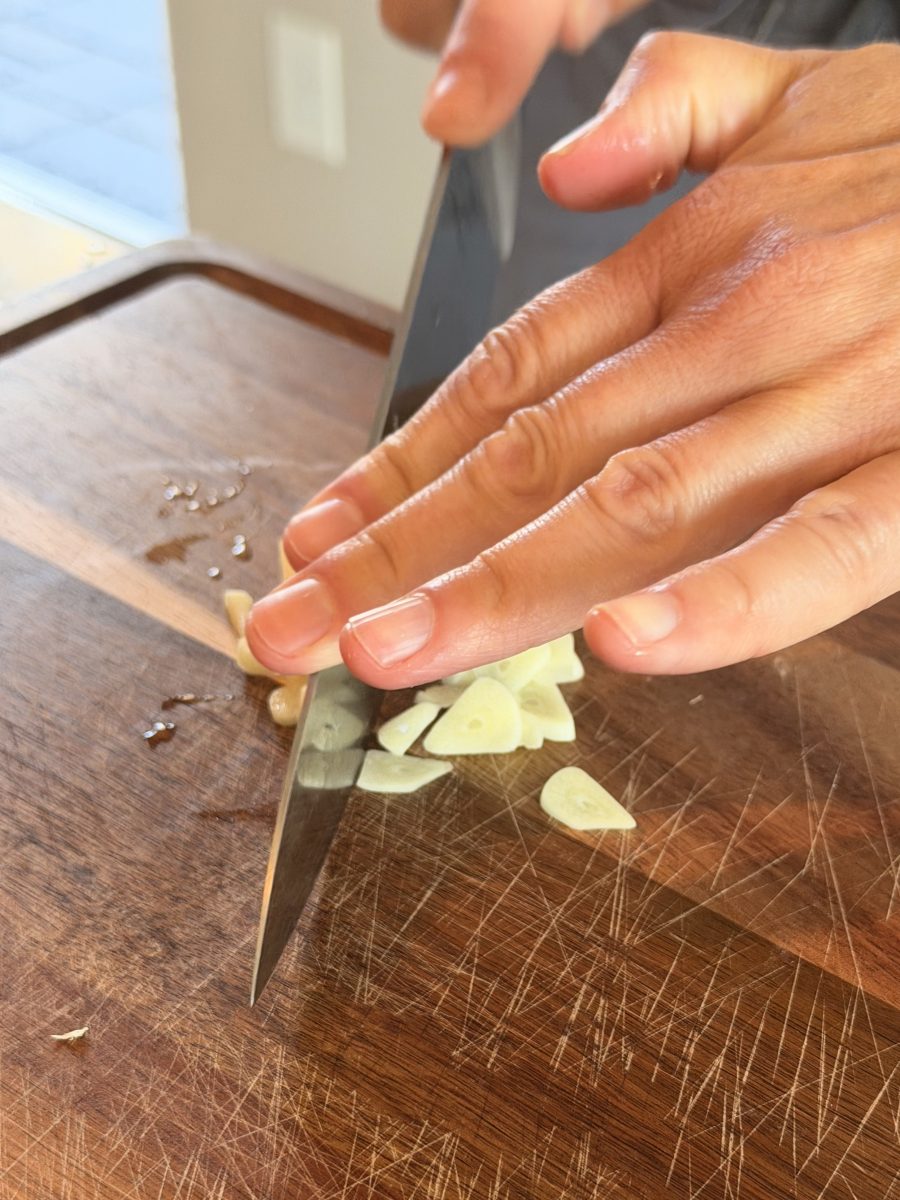
Here is the rule that applies to any clove: the more you break down garlic, the stronger it gets. This is due to the surface area. The “punch” of garlic is contained in its cells, and chopping it breaks open those walls, exposing those cells to air and releasing the volatile compounds that cause the strong odor.
A whole clove will cook and taste mildly sweet because it will remain intact. However, if you finely grate it, you will have torn open almost all the cells, and it will be very strong.
| Preparation | How to make it | Intensity | Best for |
|---|---|---|---|
| Whole clove | Peel, leave intact | Mildest, turns sweet | Stews, braises, slow-roasting until spreadable |
| Crushed | Smash with the flat of a knife | Mild bite | When you want to know garlic is there, not sharp |
| Sliced | Thin, even slices | Medium | Garlic chips, garlic oil, pasta |
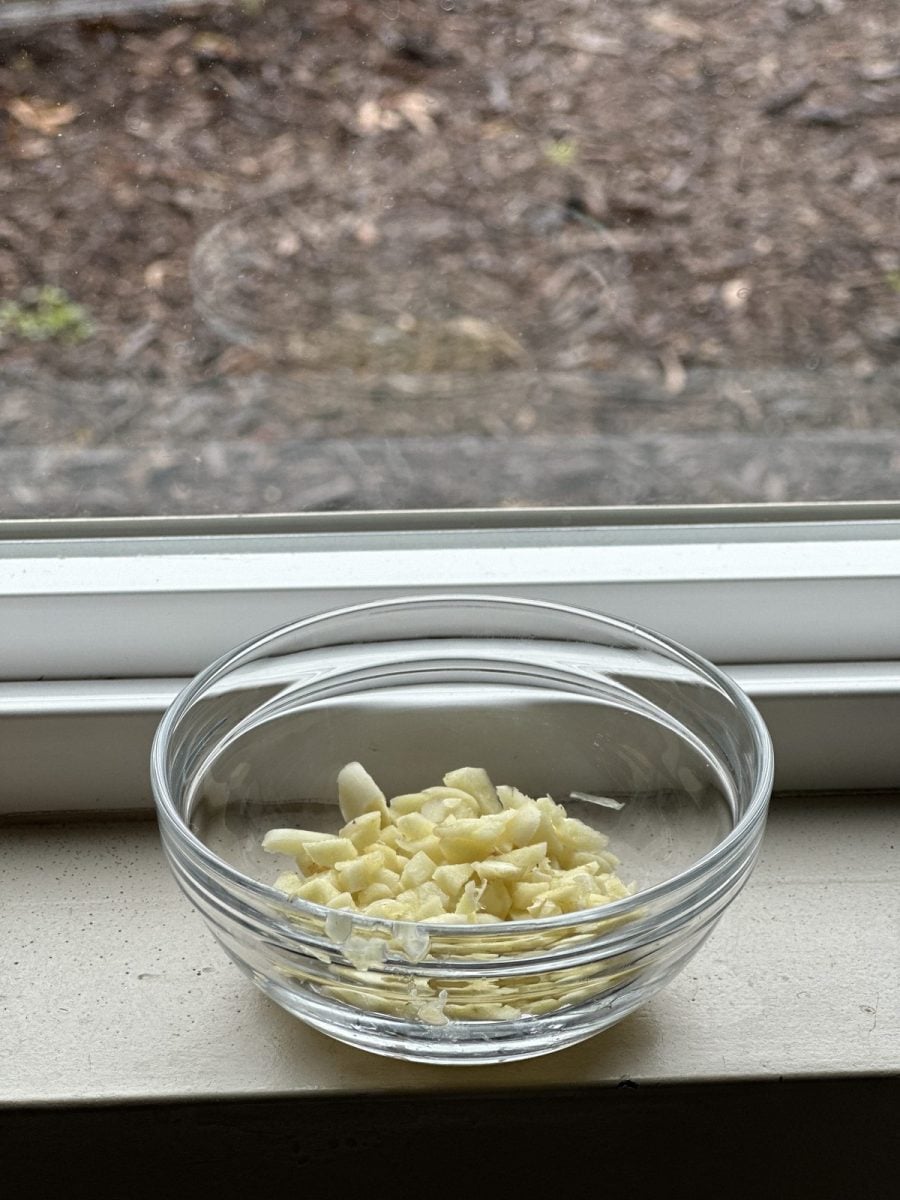
| Minced | Smash, then rock-chop small | Strong | Marinades, finishing a stir-fry |
| Grated / microplaned | Grate to a paste | Strongest | Garlicky dressings, sauces, marinades |

Give the flavor a vehicle
Garlic has two types of flavor: fat soluble and water soluble. This, in part, explains why one clove will taste completely different when fried in oil and when simmered in a stew. To maximize the infusion of garlic flavor into a dish, provide it with a ‘vehicle’.
Oil is the classic option. Warm sliced or minced garlic in olive oil and the flavor incorporates into the fat and moves along with the oil, which is precisely why garlic appears in so many dressings and pasta sauces. Whole cloves placed in a braise soften and sweeten from the cooking liquid.
The 30-second Rule
Garlic contains a lot of sugar, so when it is cooked for a long time, it becomes sweet. However, when garlic is burned, it turns bitter and acrid. Again, once this happens, there is no way to fix it.
How to fry garlic and not burn it
- Cook over medium to medium-low heat, never high.
- Pull the pan the moment it turns golden, not after. The oil’s leftover heat keeps cooking it as it cools.
- Watch the bubbles. As they shrink and slow, the water has cooked off and browning is seconds away.
- From fragrant to burnt can be 30 seconds. Do not walk away.
Clear your mind of that impending knife grab. Think instead of how hard you want the garlic to attack your taste buds. A single clove will provide a gentle sweetness, but using a microplane will provide an unforgiving roar and everything in between will depend on how far you break it down.
You can see this in my recipes. In the pot roast, I include whole smashed cloves, as they have hours to mellow into sweetness. In the weeknight pasta, I include thin slivers that will toast in the oil. Standard mince goes into marinades. For the vinaigrette and, let’s say, the garlic-infused butter, the microplaned garlic goes in as raw and unforgiving, which is the whole point there. Same ingredient, four different volumes; all this is decided before the knife moves.