
I’ll confess something slightly embarrassing: I considered fried chicken a sport for several years. There was too much mess, too much mystery and too much “why is the coating falling off like a sad sweater?” Then the other day I saw a friend and somehow she managed to take a batch out of the oil that was crackling like dry leave leaves under your feet. The secret wasn’t fancy. It was a few determined little rules, and a layer constructed to stick.
Here’s my extra-crispy, super-simple fried chicken recipe: buttermilk (or the cheater’s milk-and-vinegar version), a flour-starch dredge that’s been seasoned thoroughly, and a quick fry in two stages that makes the crust shatter but keeps the meat juicy. This meal makes people silent for the first minute, as everyone is eager to dig in but also trying to avoid looking greedy.

Before You Start: The Gist
- What you’re making: Classic bone-in fried chicken with an extra-crisp, craggy crust and juicy interior.
- Why it works: Buttermilk tenderizes + flour/cornstarch builds a light, brittle shell + a rest before frying helps the coating “set.”
- Timing: 15 minutes active prep; 30 minutes (or up to overnight) marinate; 10 minutes rest after dredging; 20–25 minutes frying; 10 minutes cooling.
- Flavor profile: Salty, peppery, slightly smoky (paprika), with a little garlic/onion warmth and a clean, savory crunch.
- Key tips: Keep oil at 325–350°F; don’t overcrowd; press the dredge on; rest the dredged chicken; finish with a hotter oil “crisp-up.”
Ingredients
The recipe uses bone-in, skin-on chicken because the skin acts as a non-stick wrapper. Certainly, you can use thighs without bones, though having bone-in pieces offers you some leeway: the meat remains juicy while the skin gets brown and crispy. The other “must” is a starch in the dredge (easiest is cornstarch) because it makes the crust lighter and snappier than just using flour.
- Chicken: 3 to 3 1/2 lb mixed pieces (thighs, drumsticks, wings, breasts), skin-on, bone-in preferred
- Buttermilk: 2 cups (or see substitution table below)
- Hot sauce (optional but recommended): 1–2 tbsp (it won’t make it “hot,” it makes it seasoned)
- Fine salt: 2 tsp total, split between marinade and dredge
- All-purpose flour: 2 cups
- Cornstarch: 1/2 cup
- Baking powder: 2 tsp (helps micro-bubbles and crunch; not the same as baking soda)
- Black pepper: 2 tsp (I like it assertive)
- Paprika: 2 tsp (smoked paprika if you want a faint campfire note)
- Garlic powder: 1 1/2 tsp
- Onion powder: 1 tsp
- Cayenne (optional): 1/4–1/2 tsp
- Neutral frying oil: 6–8 cups (peanut, canola, or vegetable), enough for 1 1/2 to 2 inches in a heavy pot
Master Ratio (Easy To Scale)
- Per 1 pound chicken: 2/3 cup buttermilk + 1/2 cup flour + 2 tbsp cornstarch + 1/2 tsp salt + spices to taste
- Oil depth: 1 1/2–2 inches (don’t fry in a shallow slick unless you enjoy flipping drama)
For frying 2 pounds of thighs, use approximately 1 1/3 cups of buttermilk and for the dredge, use 1 cup of flour + 1/4 cup of cornstarch. In regards to spices, salt is the only one I’d keep in proportion so that the chicken doesn’t taste like it wasn’t invited to the party.
Ingredient Choices That Change Flavor
Here is where you get to shape the personality of the chicken, but remember not to alter the technique. I used smoked paprika in this, and it tastes like a grill was invited to the party. I made it using plenty of black pepper and it has that old-school diner type of bite. Maintain a steady technique and play with the spices like you’re dimming the lights in a room.
| Ingredient / Choice | Best Use | Flavor + Texture Effect | Notes / Substitution |
|---|---|---|---|
| Buttermilk | Classic, most forgiving | Tenderizes, adds tang, helps dredge cling | If unavailable, use “soured milk” (see below) |
| Milk + vinegar/lemon | Weeknight emergency version | Slight tang, less richness than buttermilk | 2 cups milk + 2 tbsp vinegar/lemon; rest 5–10 min |
| Cornstarch (in dredge) | Extra-crispy crust | Light, brittle crunch; less bready | Potato starch works similarly; rice flour is also great |
| All flour (no starch) | Old-school, thicker crust | More bread-like, slightly less shattery | Still good, just not “extra crispy” |
| Smoked paprika | BBQ-adjacent vibe | Smoky, deeper color | Can turn bitter if heavy-handed; keep it balanced |
| White pepper (swap for some black) | Subtle heat, less “pepper speck” | Gentler aroma, classic southern-ish profile | Use half white, half black for a nice middle ground |
Oil + Equipment Notes (Yes, It Matters)
A deep fryer isn’t necessary, but you will want a heavy bottomed pot (I recommend a Dutch oven) and a thermometer. The thermometer seems annoying until you cook without one and see that you have been estimating your entire life. For draining, use a wire rack placed over a sheet pan. Paper towels can trap steam, causing the crust to soften.
Instructions
1) Start by marinating the chicken. In a big bowl, combine the buttermilk, and hot sauce (if using) and whisk. Add 1 tsp of salt. Add the chicken and turn to cover. Cover and refrigerate for at least 30 minutes (1-4 hours works best for me; overnight is also fine). When using breasts, avoid marinating for more than one night unless you enjoy a somewhat “cured” texture.
2) Combine the dredge ingredients. In a large shallow dish (or a clean paper grocery bag if you’re feeling adventurous), place the flour, cornstarch, baking powder, black pepper, paprika, garlic powder, onion powder, cayenne (if you’re using it) and the other 1 tsp salt. Whisk well to avoid little pockets of baking powder.
3) Dredge: then press for crags. Take one chicken piece out of the marinade, let the excess marinade drip off (still moist, don’t let it stream), and then drop it in the dredge. Use your hands to pack the flour mixture on the chicken. I’m serious: press and squeeze a little to ensure adherence. Place on a wire rack and repeat.
4) Rest the dredged chicken. Allow the coated chicken pieces to rest on the rack for 10 minutes. It’s not glamorous, but it helps prevent bald spots. The flour hydrates a little and forms a sticky paste that causes the layer to fry up crunchy rather than slide off into the oil.
5) Heating the oil. In a thick-bottomed pot, add oil to a depth of about 1 1/2 to 2 inches. Preheat your oven to 325 degrees Fahrenheit. (If your stove runs hot like mine, keep an eye on it: the oil can heat up quickly.) Place another wire rack on a sheet pan for the cooked chicken.
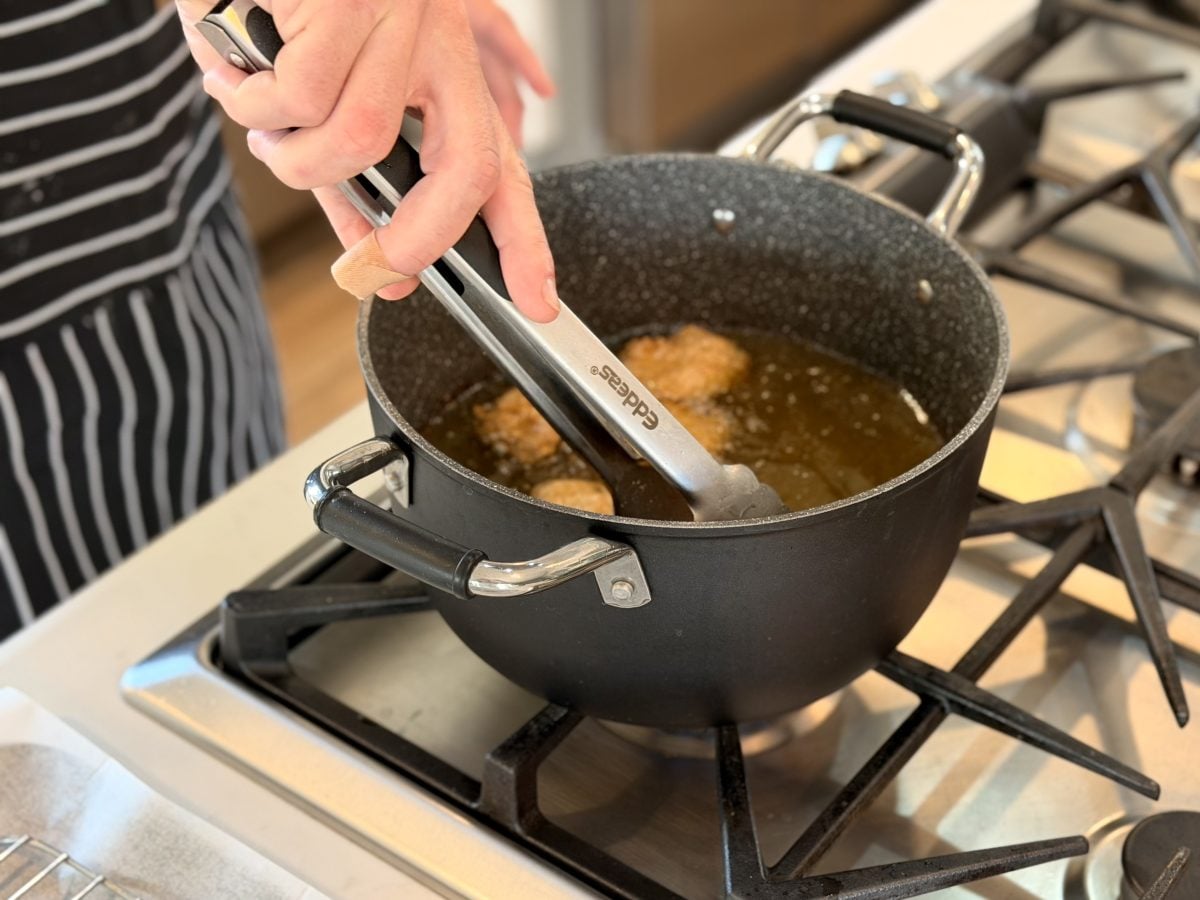
6) Fry low-and-steady first. Fry in small batches, lowering the pieces into the oil, skin side down, as much as possible. Don’t overcrowd the pot; you want room for bubbles, not a chicken traffic jam. Keep oil between 315–335°F and fry until deeply golden and the thickest pieces are 160–165°F at the bone (approximately 12–16 minutes for thighs/drumsticks, a shorter time for wings). Adjust time for size. Transfer to the rack.
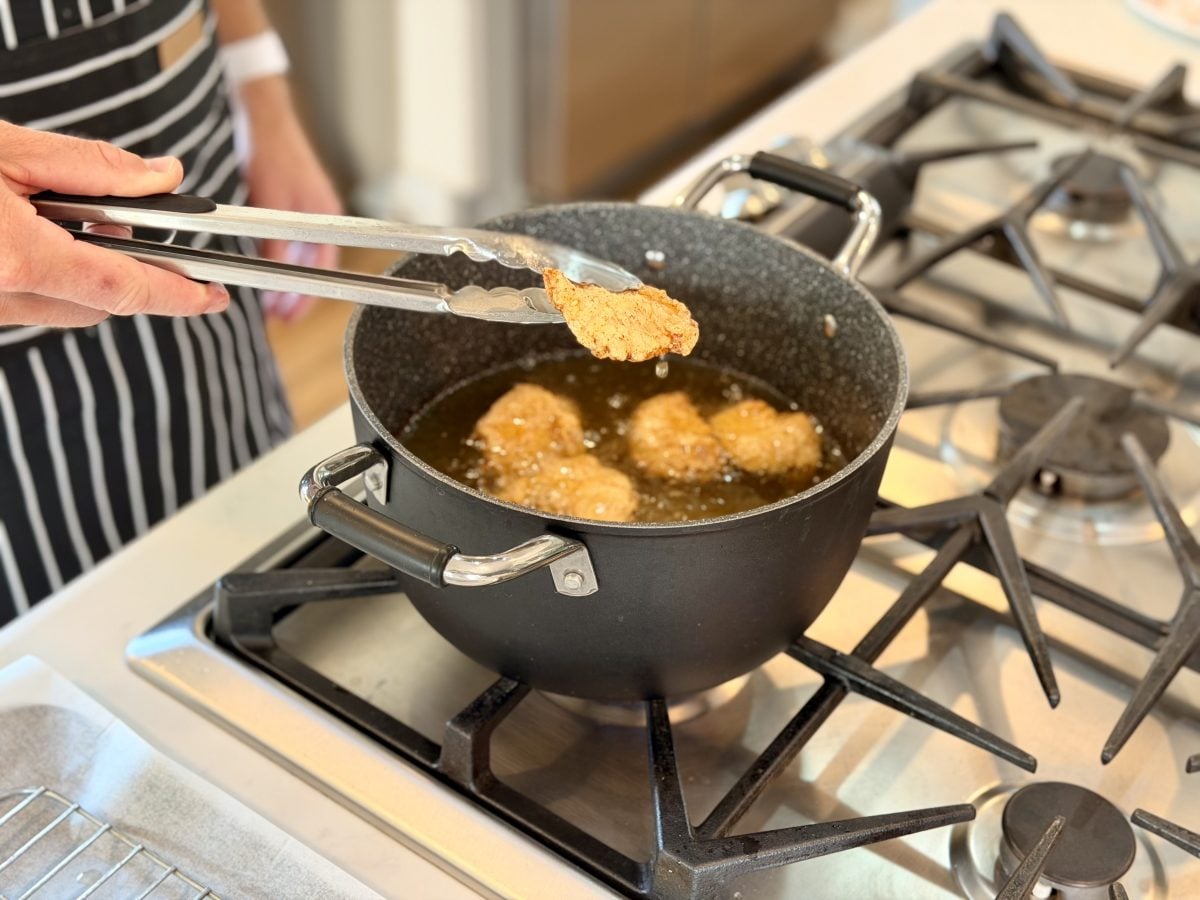
7) Crisp-up finish (the extra-crispy move). Increase oil temperature to 350°F. Return the chicken in batches for 1–3 minutes to recommence the re-crackling of the crust. This step is small but loud. Please return to the rack and let rest for at least 10 minutes before eating. The crust cools down, the filling settles, and you don’t have to burn your mouth in a sad way.
Ways to Riff on Extra-Crispy Fried Chicken
- Boneless thigh “sandwich” cut: Use boneless skinless thighs; reduce fry time (usually 6–9 minutes at 325°F, then 1 minute at 350°F). Check for 170°F if you like thighs at their best.
- Extra-spicy: Double the cayenne, add 1 tsp chili powder, and finish with a dusting of cayenne-salt right after frying.
- Lemon-pepper crunch: Swap paprika for lemon zest (in the dredge) and add 1–2 tsp cracked black pepper; finish with a squeeze of lemon.
- Herby version: Add 1 tbsp dried herbs (thyme/oregano mix) to the dredge; it smells like roast chicken decided to go clubbing.
- Gluten-free-ish: Replace flour with a 1:1 gluten-free blend and keep the cornstarch; fry carefully and avoid overcrowding (GF coatings brown fast).
What to Serve With Extra-Crispy Fried Chicken
- Classic: Buttermilk biscuits, dill pickles, and a bowl of slaw that’s aggressively cold.
- Comfort plate: Mashed potatoes with gravy (yes, even with fried chicken), plus a sharp vinegar greens situation.
- Summer: Corn on the cob, watermelon slices, and iced tea strong enough to argue back.
- Make it a sandwich: Toasted bun, mayo, shredded lettuce, pickles, and a drizzle of hot honey.
- Late-night: Reheated piece over waffles with maple syrup and a pinch of flaky salt.
Trouble Spots and Tips
- Coating falling off: Usually skipped rest time, or the chicken went from marinade to flour while still dripping wildly. Let it drip, press the dredge on, and rest 10 minutes.
- Crust browning too fast: Oil is too hot or your pot is too shallow. Drop to 315–325°F and use deeper oil so heat stays steadier.
- Chicken cooked outside, raw inside: Oil too hot and pieces too big. Start at 325°F, don’t exceed it in the first fry, and use a thermometer for doneness.
- Crust not crispy enough: Not enough starch, oil too cool, or you drained on paper towels. Use the 350°F crisp-up and drain on a rack.
- Greasy chicken: Oil was too cool (it soaks instead of fries) or you overcrowded the pot. Fry in smaller batches and let oil recover between them.
- Seasoning feels flat: Salt is low or spices are old. (Old paprika tastes like colored dust. Fresh paprika tastes like paprika.) Also: finish with a tiny pinch of salt right after frying.
- Thermometer tip: If you hit bone, reposition: bones conduct heat and can give a false reading.
- Mess-management: Keep one hand “dry” for dredging and one hand “wet” for moving chicken. Otherwise you end up wearing a glove made of batter.

Storage and Leftovers
Nutrition: It is what it is. Fried chicken is fried chicken. Nutrition may vary but generally speaking, bone-in, skin-on pieces are more fatty and calorically dense than boneless pieces. However, when kept at the appropriate temperature, oil actually results in less greasy food: food which is fried properly doesn’t absorb oil like a sponge, as it seals and crisps up.
Storage: After cooling, refrigerate in an airtight container for up to 3–4 days. For best texture, store in a container with a rack so the crust doesn’t steam itself into softness, or store loosely wrapped. Reheat on a rack in a 425°F oven for 12–18 minutes (depending on piece size) until hot and re-crisped. Microwaves may be easy to use, but they will cause the crust to become a soft jacket. Your call.
From My Kitchen
Example 1 (the “I didn’t plan ahead” dinner): I have done the 30-minute marinate when I remembered at 5:30 p.m. That everyone had become personally and individually invested in their hunger. I used milk and lemon because I didn’t have much in my fridge other than condiments and regrets. It still had that crunchy texture that was perhaps slightly less tangy than real buttermilk but still deserving of a second piece “for testing.”
Example 2 (the “group hangs in the kitchen” batch): When I last made this for friends, there was someone who stood near the stove pretending to help, but was really just watching the bubbles. As soon as the chicken was placed on the rack, the room filled with the aroma of pepper, toasted flour, and childhood (even for those who never had fried chicken as a kid). Cracking the crust when tapped with tongs sounded like knocking on a door. The difference maker was the crisp-up fry at 350°F.
The Checklist
- Marinate chicken in buttermilk + salt (30 minutes to overnight).
- Mix dredge: flour + cornstarch + baking powder + spices.
- Press dredge onto chicken; set on rack.
- Rest coated chicken 10 minutes (don’t skip).
- Heat oil to 325°F; fry in batches to 160–165°F.
- Raise oil to 350°F; crisp-up fry 1–3 minutes.
- Drain on rack; rest 10 minutes; serve.
Quick Definitions
- Dredge: Dry coating (usually seasoned flour/starch) used to cover food before frying.
- Buttermilk: Tangy cultured dairy that tenderizes and helps coating adhere; not the same as plain milk.
- Carryover cooking: Food continues to cook after leaving the heat; resting helps juices redistribute.
- Wire rack draining: Cooling on a rack lets steam escape so the crust stays crisp (paper towels trap steam).
- Oil recovery: The temperature rebound after adding food; overcrowding prevents recovery and causes greasy results.
- Two-stage fry: A lower-temperature cook followed by a brief hotter fry to crisp and set the crust.
Asked and Answered
Is a thermometer really necessary?
I’ll say yes, because being able to say “I know it’s done” instead of “I guess it’s done” means you get overly confident with taking out juicy chicken every time. An ideal situation would have both an instant-read thermometer for the meat and a clip-on or candy thermometer for the oil, but even a single thermometer is better than none.
Can I use boneless, skinless chicken breasts?
You can, but they are easy to overcook. Pound them to an even thickness, marinate for 30 minutes, and fry them at 325°F until they reach 155–160°F, then let them rest to reach 165°F. The crust will be great; the meat only needs to be handled with care.
What oil is best for frying chicken?
My favorite is peanut oil because it has a great taste and is good for frying due to the high smoke point. Canola oil and vegetable oil are good alternatives as well. Stay away from extra-virgin olive oil (wrong flavor and has a lower smoke point) and any strongly flavored oils unless you want that flavor on everything.
Why include baking powder in the dredge?
It promotes tiny bubbles for a surface that is lighter and crispier. Not a large amount, only enough to add some airiness. (Tasting soapy differs with baking soda.)
How can I make sure fried chicken stays crispy at my party? After frying, keep it on a rack in the oven set to 200-225 degrees. Don’t cover it tightly. Three to five minutes at 425°F should revive the crackle if it needs refreshing.
Can I reuse the frying oil?
Yes. Cool completely and strain through a fine mesh sieve (or coffee filter if you’re patient) and store sealed. Use within a few weeks. Oil holds grudges so if it smells like fish, bitter, or off, throw it away.
One Last Thing
The process of making extra-crispy fried chicken isn’t exactly hard, but rather it is picky about a few details like, the way the dredge is pressed, how long it’ll rest on the rack, and how well the oil temperature is maintained. Get those correct, and everything feels oddly simple, as if you’ve been given access to some kind of insider info. And then you take a bite: the crust crackles, the meat steams, and the pepper hits your lips. That’s dinner. That’s also bragging rights.
