I’ll admit something mildly embarrassing: for years I purchased chai concentrate because I didn’t want to deal with a pot of floating spices that looked like some kind of swamp debris. Then one rainy afternoon, I ran outside, got a little bit stubborn, and made my own. It was much more than “fine.” It made you feel both skilled and fortunate. With an inky quality and a sharp edge, it’s like you were walking by a tea stall where someone had just cracked a cardamom pod.
This chai concentrate is made for real life: it’s strong enough to stand up to milk (dairy or non-dairy), balanced enough to drink iced with no complaints, and flexible enough to adjust your sweetness level without compromising the spice structure. By preparing a batch of chai latte on Sunday, you can transform your weekday mornings from a lengthy project to a quick 90 second ritual.
The 30-Second Summary
- Homemade Chai Concentrate, the essentials: A bold, spiced tea syrup base you mix with milk (or water) for chai lattes, hot or iced.
- Why it works: Simmering whole spices extracts warm, rounded flavor; steeping black tea off the heat keeps bitterness in check.
- Timing: ~10 minutes active, ~25–35 minutes total (including steeping and straining).
- Flavor profile: Ginger-forward, cardamom-bright, cinnamon-warm, with a clean black-tea backbone.
- Key tips: Crack cardamom pods; don’t boil tea bags; sweeten while warm so sugar dissolves; strain twice if you hate grit.
Ingredients
Chai is one of those drinks people tend to get unusually dogmatic over. I am not here to verify your claims, I am here to assist you in creating something you will desire. That said, some ingredients are of greater importance. Using whole spices is ideal; pre-ground spice blends can dull and blunt concentrates (plus they tend to stick to your teeth). For the tea, choose something strong like, English breakfast, Assam, or any robust black tea that won’t collapse when you add milk.
Sweetener is optional, but I would recommend adding some. It does not just make it “sweet”; it smooths the rough edges and provides a kind of glossy cohesion to the spices. If you don’t want sugar, go ahead and skip it and add sweetener to your cup. Just be aware that it will likely be drier and have a more peppery aftertaste.
Master Ratio (Easy To Scale)
- Water: 4 parts
- Black tea: 1 part (tea bags or loose leaf by weight/strength)
- Sweetener: 0 to 1 part (to taste)
- Whole spices: “A small handful” per 4 parts water (details below)
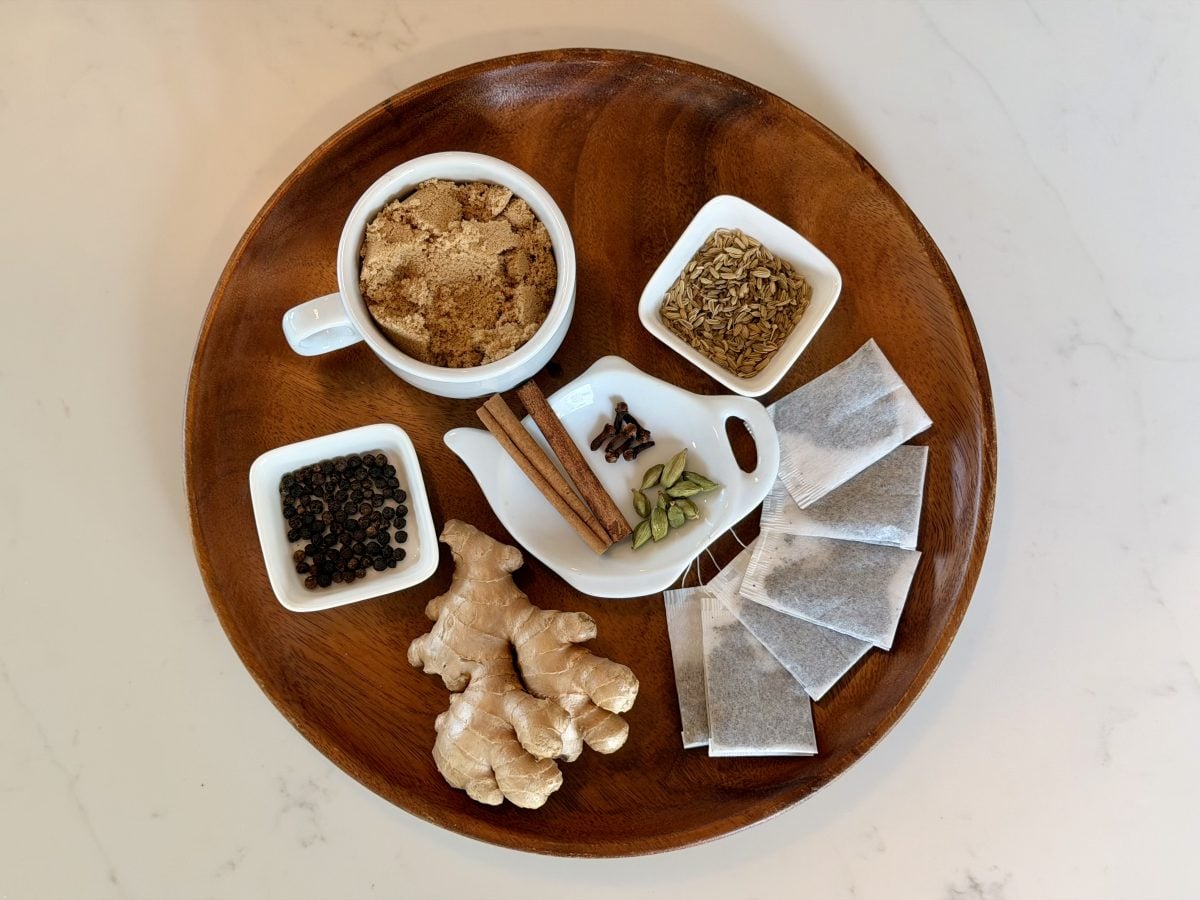
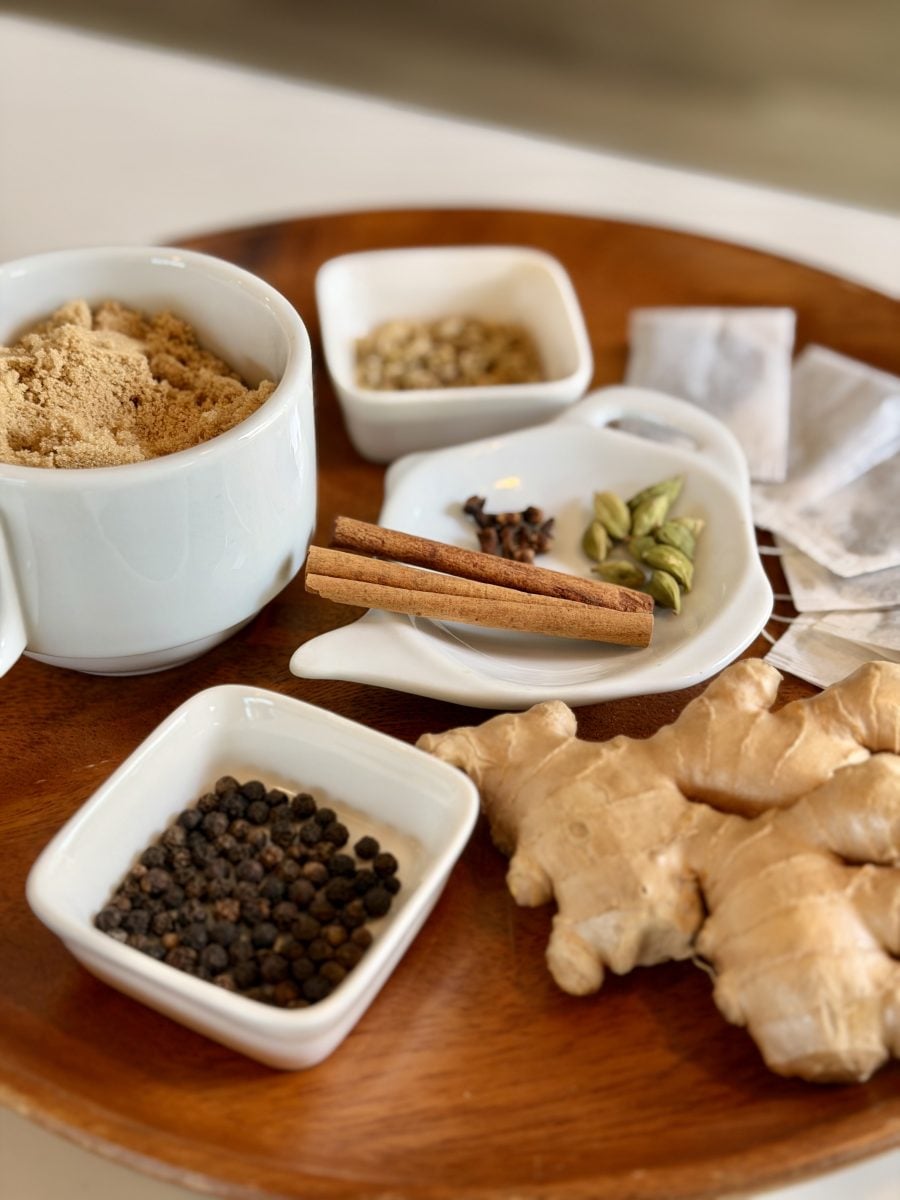
Example: For a standard batch, I use 4 cups of water, 6 black tea bags (about 18-20 grams of loose leaf), and 1/2 to 3/4 of a cup of sugar or maple syrup. I also add a spice mix that may look intimidating to a timid pot of water: cinnamon sticks, cardamom, ginger, peppercorns, cloves, and fennel.
Ingredient Choices: What You’ll Need for This Batch (Makes About 5 Cups Concentrate)
- Water: 6 cups
- Fresh ginger: 3-inch knob, thinly sliced (no need to peel unless it’s gnarly)
- Cinnamon sticks: 2
- Green cardamom pods: 10, lightly crushed
- Whole cloves: 6
- Black peppercorns: 1 teaspoon
- Fennel seeds: 1 teaspoon (optional but lovely)
- Star anise: 1 (optional; use with restraint)
- Black tea: 6 bags or ~18–20 g loose leaf
- Sweetener: 1/2 to 3/4 cup sugar, brown sugar, honey, or maple syrup (optional, to taste)
- Pinch of salt: optional, but it makes the spices pop
Instructions
1) Break, cut, and arrange everything.
Lightly crush the cardamom pods (the flat side of a knife works; so does a mug if you’re improvising). Cut the ginger into thin slices so the flavor releases quickly. I keep the pile of spices in a small bowl so I don’t forget the cloves, and end up wondering why the chai tastes weirdly polite.
2) Simmer the spices. In a medium-sized pot, add the water along with the ginger, cinnamon sticks, cardamom, cloves, and peppercorns. If you’re using fennel and star anise, add those too. After reaching a boil, lower the heat to maintain a gentle simmer. Simmer uncovered for 12–15 minutes, or until your kitchen smells like you did this on purpose.
3) Optional: add sweetener while hot. Reduce heat to low. Mix in your preferred sweetener and a small pinch of salt. Carefully taste the liquid (it’s like lava). You don’t want it to be final sweetness here because you’ll be diluting it with milk later; you want it slightly sweeter and stronger than you would drink it straight.
4) Remove the tea from the heat. Shut off the burner. Put in the black tea bags or the loose tea in an infuser. For a clean, bold base, cover the pot and steep it for 5 minutes; if you prefer it more tannic and assertive, go for 7 minutes. I wouldn’t go beyond that unless you want to be resentful while doing jazz hands in the background.
**5) Strain, or strain twice if you’re picky.** Take out tea bags/infuser. Using a fine-mesh sieve, strain the concentrate into a bowl or a large measuring cup. If you used any ground spices or if your mesh is a little too wide, strain again through a coffee filter or a layer of cheesecloth. This is what distinguishes silky from “why is my chai crunchy?”.
6) Cool and bottle. Allow them to cool to room temperature. Then, transfer them to a clean bottle or jar. Chill. The flavor seems to get its act together after a night in the fridge and tightens up and improves.
To serve: Mix 1 part chai concentrate with 1 part milk (hot or cold). For a drink that is lighter, use a 1:2 ratio of concentrate to milk. If it’s on ice, I enjoy it 1:1 with a reasonable amount of ice and a little splash of extra milk on top.
Spins and Swaps
- Extra-gingery “wake up” chai: Double the ginger and add a strip of orange peel during the simmer.
- Vanilla chai concentrate: Stir in 1–2 teaspoons vanilla extract after straining (off heat so it stays fragrant).
- Masala chai vibes (creamier): Replace 1 cup of water with 1 cup milk during the last 5 minutes of simmering, then strain well (shorter storage life).
- Decaf chai concentrate: Use decaf black tea bags; keep the spice simmer exactly the same.
- Smoky chai: Add a tiny pinch of lapsang souchong to your black tea (tiny; it can take over).
- No-sugar concentrate: Skip sweetener entirely; sweeten per cup with honey or simple syrup as needed.
What to Serve With It
- Hot chai latte + buttered toast: Plain, grounding, weirdly satisfying on chaotic mornings.
- Iced chai + salty snack: Pretzels, roasted nuts, or even popcorn, salt makes spice taste louder.
- Chai + oatmeal: Stir a few tablespoons into cooked oats with raisins and toasted almonds.
- Chai affogato-ish: Pour a few tablespoons of concentrate over vanilla ice cream, then add a splash of milk.
- Weekend brunch: Chai with cardamom buns, cinnamon rolls, or anything yeasted and sweet.
- Nightcap chai: Decaf concentrate + warm oat milk + a dot of whipped cream (optional, but charming).
When Things Go Sideways
- It’s bitter: You likely boiled or over-steeped the tea. Next time, steep off heat for 5 minutes. You can also dilute with more milk and add a touch more sweetener.
- It tastes weak: Simmer spices longer (up to 20 minutes) or use more tea/stronger tea (Assam). Also check your spice freshness, old cardamom is heartbreakingly dull.
- It’s too peppery or clove-heavy: Halve peppercorns or cloves next batch. Clove especially can bulldoze everything.
- Cloudy concentrate: Usually from fine spice particles or hard water. Strain through a coffee filter for a cleaner look and smoother sip.
- Film on top after chilling: That’s normal spice oil. Stir or shake before using. (It looks suspicious; it tastes great.)
- Don’t crush cinnamon into dust: A broken stick is good; powder is a sediment factory.
- Make it predictable: Write your spice tweaks on tape and stick it to the bottle. Future-you will not remember whether you “added more fennel” or just thought about it.
Leftovers, Storage, and Reheating
Nutrition: The concentrate is essentially spiced tea. The calories are from the sweetener you choose. Using 3/4 cup sugar for the batch means that the concentrate will be mildly syrupy and will be in the range of 25-45 calories per 1/4 cup serving (very rough estimate based on your final yield). The type of milk you select determines the nutrition of the latte.
Storage: Store in refrigerator in a clean, sealed container/bottle. Without any dairy, it can last for 7–10 days. If you simmered the milk into the concentrate (for the creamier variation), I’d use it in less than 3–4 days. Chai should smell spicy and tea-like, never like a “mystery fridge,” so always give it a sniff. You can freeze concentrates in ice cube trays for easy, quick single-serving portions.
Stop following recipes. Start understanding them.
20 video cooking lessons from Nathaniel. $27 one-time, lifetime access.
From My Kitchen
The shakedown run: The weekday latte person. My friend Lena wants coffee shop chai, but she doesn’t want to pay coffee shop prices or wait in line. She combines 1/3 cup of concentrate and 1/3 cup of whole milk, steams them together, and finishes with a bit of foam. Her comment after week one: “More ginger, less clove.” That adjustment made everything feel more vibrant and less like a holiday candle.
Take two: The iced-chai all-summer situation. For a while, I was in a phase of iced chai. I wanted it to taste crisp, not muddy. The solution is easy: Just use white sugar (or no sugar), omit the star anise, and strain with a coffee filter. Over ice with oat milk, it tasted clean and spicy, like a chai that had been showered.
The Before-You-Cook Rundown
- Crack 10 cardamom pods; slice a 3-inch knob of ginger.
- Simmer spices in 6 cups water for 12–15 minutes.
- Sweeten while hot (optional) and add a pinch of salt.
- Turn off heat; steep black tea 5 minutes, covered.
- Strain well (twice if needed).
- Chill and label the bottle with date + your spice tweaks.
- Serve 1:1 with milk (hot or iced). Adjust to taste.
Terms Worth Knowing
- Concentrate: A strong base meant to be diluted (here, with milk or water) before drinking.
- Steep: Letting tea sit in hot liquid to extract flavor; time and temperature control bitterness.
- Simmer: Gentle bubbling below a boil; ideal for extracting spice without scorching.
- Tannins: Compounds in tea that create dryness/bitterness; too much steeping makes them loud.
- Whole spices: Seeds/pods/sticks used intact or lightly crushed; cleaner flavor and less grit than ground.
- Double strain: Straining through fine mesh, then again through a finer filter to remove sediment.
Common Questions
How strong should chai concentrate be?
Stronger than you’d want to drink straight. If it tastes perfect without milk, then it will taste weak with milk. Try to make it ‘intense’ but not ‘harsh.’
What if I want to do it without sweetener?
Yes. The spices will taste more pronounced and the finish will be drier. If you want to have more control, you can sweeten it yourself in the cup (honey, simple syrup, or maple syrup all work).
Does it matter if tea is in bags or loose leaf? Not really. Loose leaf tea may taste a little more robust and complex, but tea bags are a lot easier to use and offer more consistency. If bitterness is a concern, steep off heat.
Why does my chai taste flat after chilling?
Cold temperatures dull sweetness and spices. Try adding a bit more salt to the batch, a little more sweetener, or increasing the ginger/cardamom a bit more. Serve over lots of ice with a concentrated base as well.
Are ground spices acceptable?
Yes, but it will be grainier and more difficult to get the flavor balanced. If you have to use them, try to keep them to a minimum, especially clove and cardamom, and plan to strain it with a coffee filter.
How do I prepare an iced chai like they do in cafés? Take a glass, fill it with ice, pour in 1/2 cup of concentrate, then 1/2 cup of milk. Stir it and then add a small splash of milk on top for that nice layered appearance.
One Last Thing
Making your own chai concentrate is not about getting tradition or purity points, it is about creating something that tastes like you put in the effort. After making one batch, you will begin to modify it the same way you would modify a playlist: add more ginger on a Monday, a splash of vanilla when you’re feeling soft, decrease clove because you aren’t trying to drink potpourri. Keep it in the fridge, shake the life out of it, and let your kitchen smell like a brilliant idea.