
I recently invited my neighbors over for dinner and mentioned that I would be preparing a salmon dish. I got a few sideways looks and one comment saying, “all salmon recipes taste pretty much the same.” Challenge accepted. I admit that they are not off-base for the majority of salmon recipes, but this one is different.
Mediterranean-baked salmon is complemented perfectly by zesty lemons, salty capers, and briny Kalamata olives. Pouring good olive oil over the fillets creates a warm savory sauce while the fish bakes.
Salmon has a wonderful texture when cooked correctly. It gets a nice tenderness with a slight crisp on the edges, and the topping does all the work when it comes to flavor. Your actual work seems more like putting a snack plate together.
My neighbors were happy to see it.
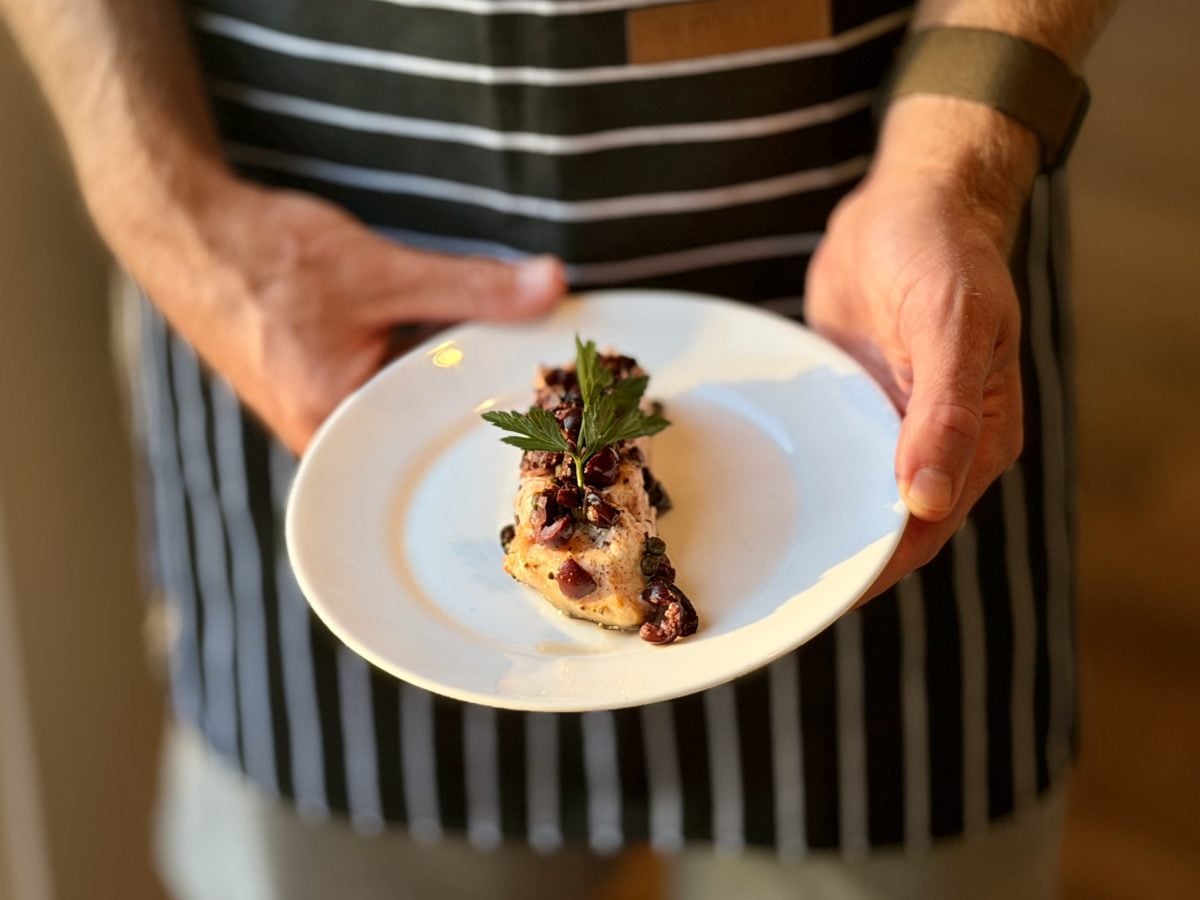

At a Glance
- Mediterranean Baked Salmon, the short story: Salmon fillets baked in the oven and topped with Kalamata olives, capers, lemon zest, garlic, and olive oil. They are bright, briny, and take only a few minutes to prepare.
- Reason why it is effective: The combination of a high oven temperature and a thin layer of oil-based topping applies gentle heat to the salmon while the olives and capers turn into a rich glaze. No sauce to babysit and no pans to clean.
- Prep time is around ten minutes, baking time is between twelve to fifteen minutes, and resting time is between two to three minutes. You can be out of the kitchen in under thirty minutes.
- Flavor profile: salty and briny capers and olives, lemon, garlic, and smooth olive oil with buttery salmon. Mediterranean-inspired, sheet pan executed.
- Important tips include using fillets of the same thickness, not oversalting (olives and capers provide plenty of salt), and removing the salmon from the heat when it is still slightly rosy in the center. The carryover heat will finish cooking it.
Ingredients
Think of this recipe as a combination of three different jobs working at the same time. Salmon brings richness. A mixture of olives, capers, and lemons adds brightness and salt. The olive oil also binds all the elements together and enhances the flavor of the fish as it bakes. If any of these are poorly adjusted, the whole plate feels muted.
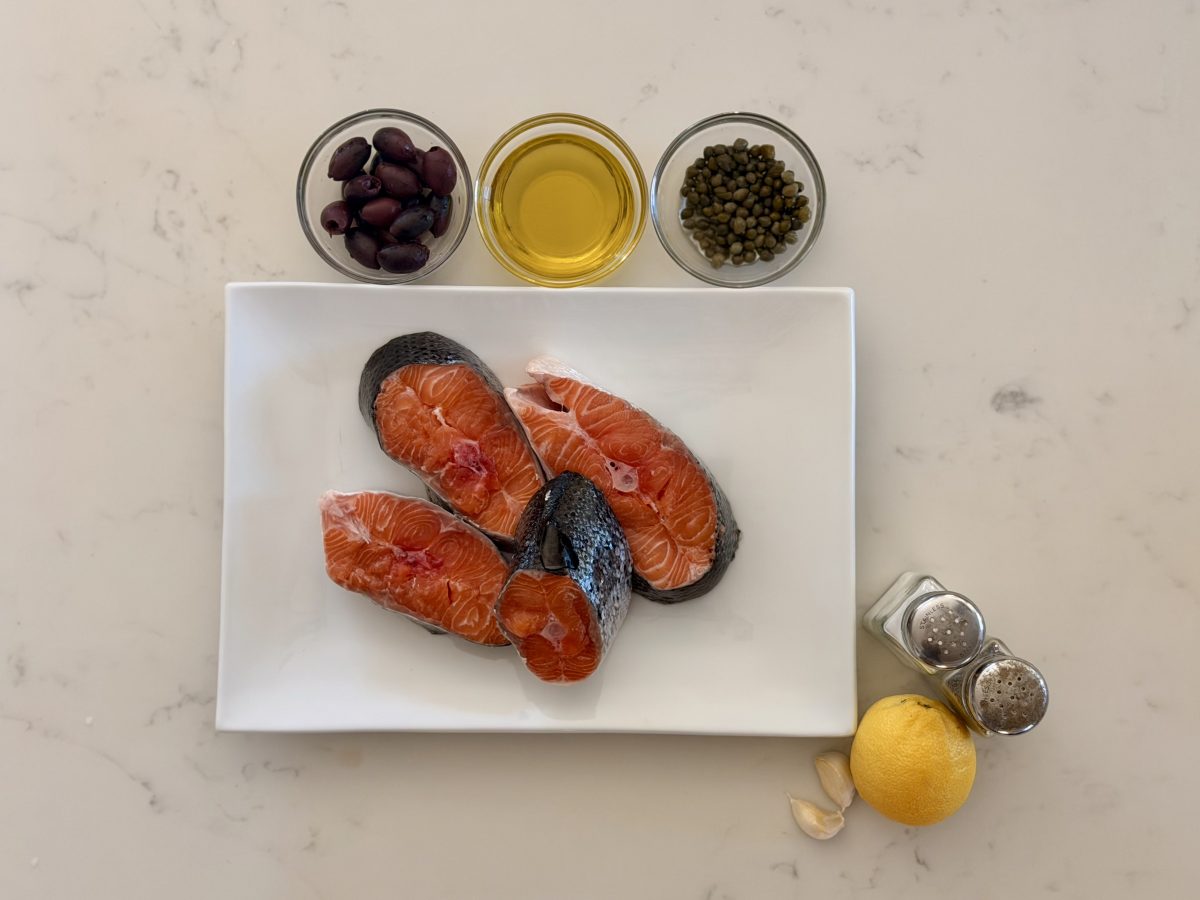
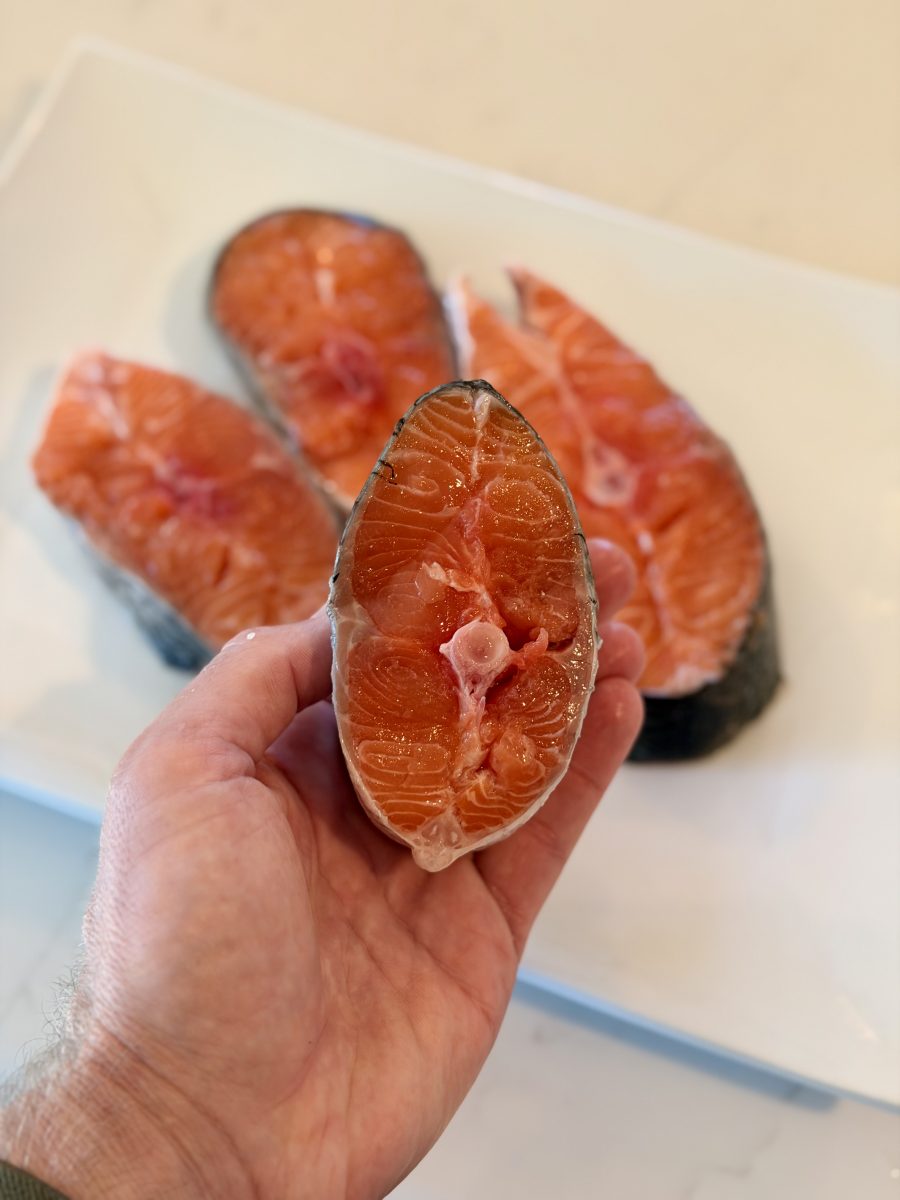
- Salmon fillets (8 fillets, about 5-6 oz each): Whether skin-on or skin-off, either works. Try to select fillets of approximately the same thickness so they cook evenly. Center-cut fillets are the best. Tail pieces will cook faster and may dry out if you are not watching.
- Kalamata olives (1 cup, chopped): Please pit and chop the olives so that there are multiple little pieces per fillet instead of one giant olive boulder.
- Capers (2-3 tablespoons, drained): Please avoid using salt-packed capers (unless you rinse them really well) and use brined ones instead. Also, do not use crushed capers. They should burst in your mouth.
- Lemon Zest (zest of two lemons): This is the secret weapon. Zest provides the aroma of a lemon without making the fish taste overly lemony. Set the zested lemons aside to serve with the fish.
- Garlic (4 cloves, minced): Please use fresh and not jarred. If you use jarred, it will be obvious.
- Olive oil (4 tablespoons): A high-quality olive oil is necessary here. This is one of the most dominant flavors in the dish, as a cheap grocery store olive oil will taste stale by the time it comes out of a 400°F oven.
- Salt and pepper: Use a little salt because olives and capers will have the salt covered. As for pepper, feel free to use a large amount.
- Optional: Lemon wedges can be used to serve. A small squeeze prior to eating wakes everything up.
Master Ratio (Easy To Scale)
For each salmon fillet (5-6 oz), use: 2 tbsp of chopped Kalamata olives, 1 tsp of capers, the zest of 1/4 of a lemon, 1/2 a clove of minced garlic, and 1/2 a tbsp of olive oil.
If the recipe is for four but you are cooking for eight, simply double everything. If you are cooking for two, then you will need to halve the recipe, but for the lemon zest, keep it at half of a lemon. If you add less than that, the topping will start to taste flat. While the olive-caper mix capacity increases linearly, for the seasoning it does not.
Ingredient Choices That Change Flavor
| Choice | What you’ll notice | Best for |
|---|---|---|
| Kalamata olives | Fruity, wine-like, deep purple | Most Mediterranean-tasting result |
| Castelvetrano olives | Buttery, mild, bright green | A softer, less aggressive topping |
| Black canned olives | Mild, almost neutral | Skip these, they’re a different food |
| Wild salmon (sockeye, coho) | Leaner, deeper red, more fish-forward | Quick cook; check at 10 minutes |
| Farmed salmon (Atlantic) | Fattier, milder, more forgiving | Easier weeknight pick; harder to overcook |
| Steelhead trout | Similar texture, slightly sweeter | A solid sub if salmon is pricey or unavailable |
| Lemon zest only | Bright but restrained | The version in this recipe |
| Lemon zest + juice (on top before baking) | More tart, can muddy the olive oil | Add juice after baking instead |
| Fresh oregano (1 tbsp) | Adds herby, slightly peppery edge | When you want it to taste extra Greek |
| Red pepper flakes (1/4 tsp) | A low, warm heat under the brine | If your family likes a little kick |
Optional Add-Ins (If You Want a One-Pan Meal)
- Cherry tomatoes (1 pint, halved): Drizzle with some olive oil and sprinkle with salt, then position them around the fillets. They will pop and pool sweet, jammy juice that enhances the olive topping perfectly.
- Thinly slice and use half a small red onion. Scatter the onion pieces on the pan with the tomatoes as an addition for a sharper and more savory base.
- Crumbled feta (1/2 cup): Add during the last 3-4 minutes of baking so that it can soften but it doesn’t melt into puddles.
- Capers brine (1 tsp, drizzled on after baking): It may sound strange, but it adds an extra touch that you would pay more for.
Instructions
Oven: 400°F. Pan: 1-2 rimmed baking sheets lined with parchment paper. Parchment paper will make clean-up easier and it will also act as a barrier between the fish and the aluminum foil which may cause a metallic taste due to the very acidic sauces used.
1) Set your oven to 400°F. While the oven is heating, remove the salmon from the refrigerator. Letting the fillets rest at room temperature for 10 to 15 minutes will help them to cook more evenly and will reduce the chances of having an overcooked outside and an undercooked inside.
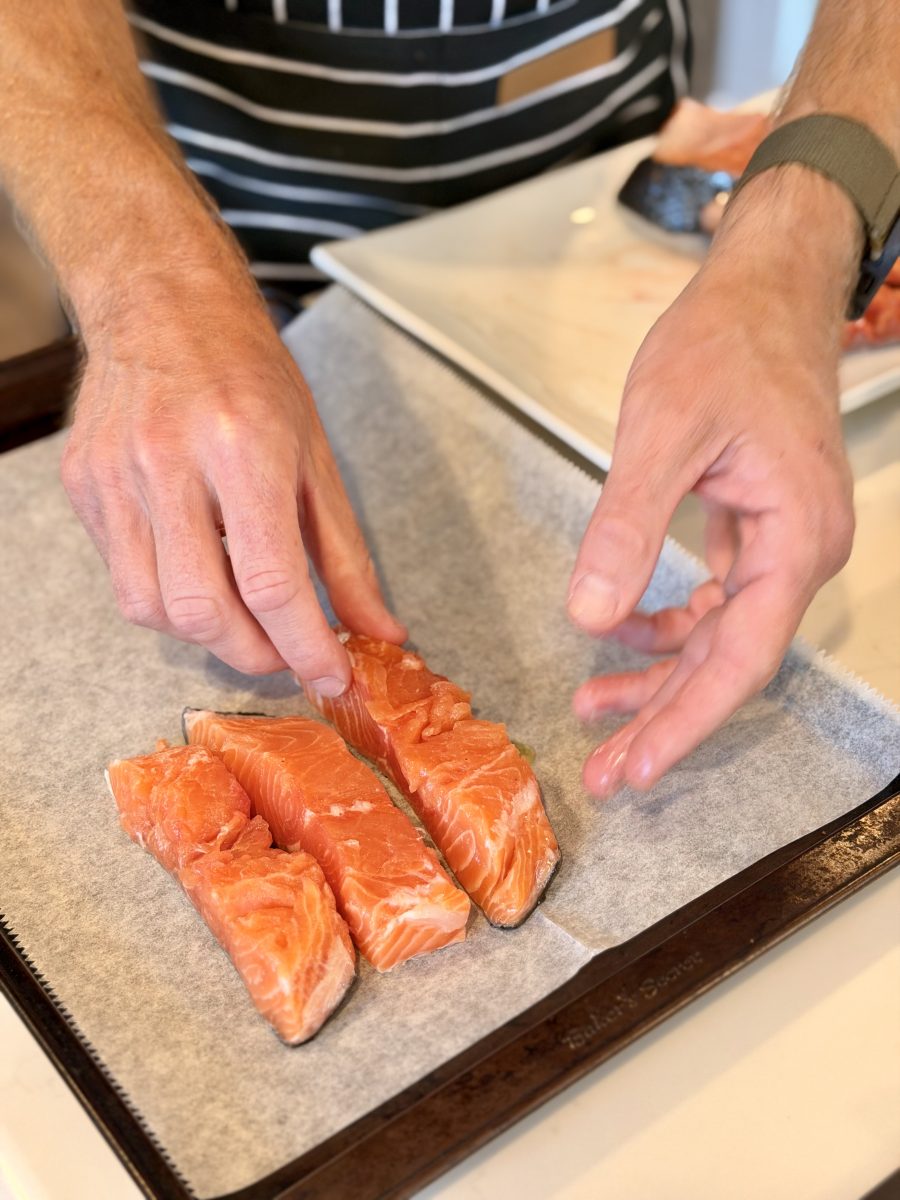
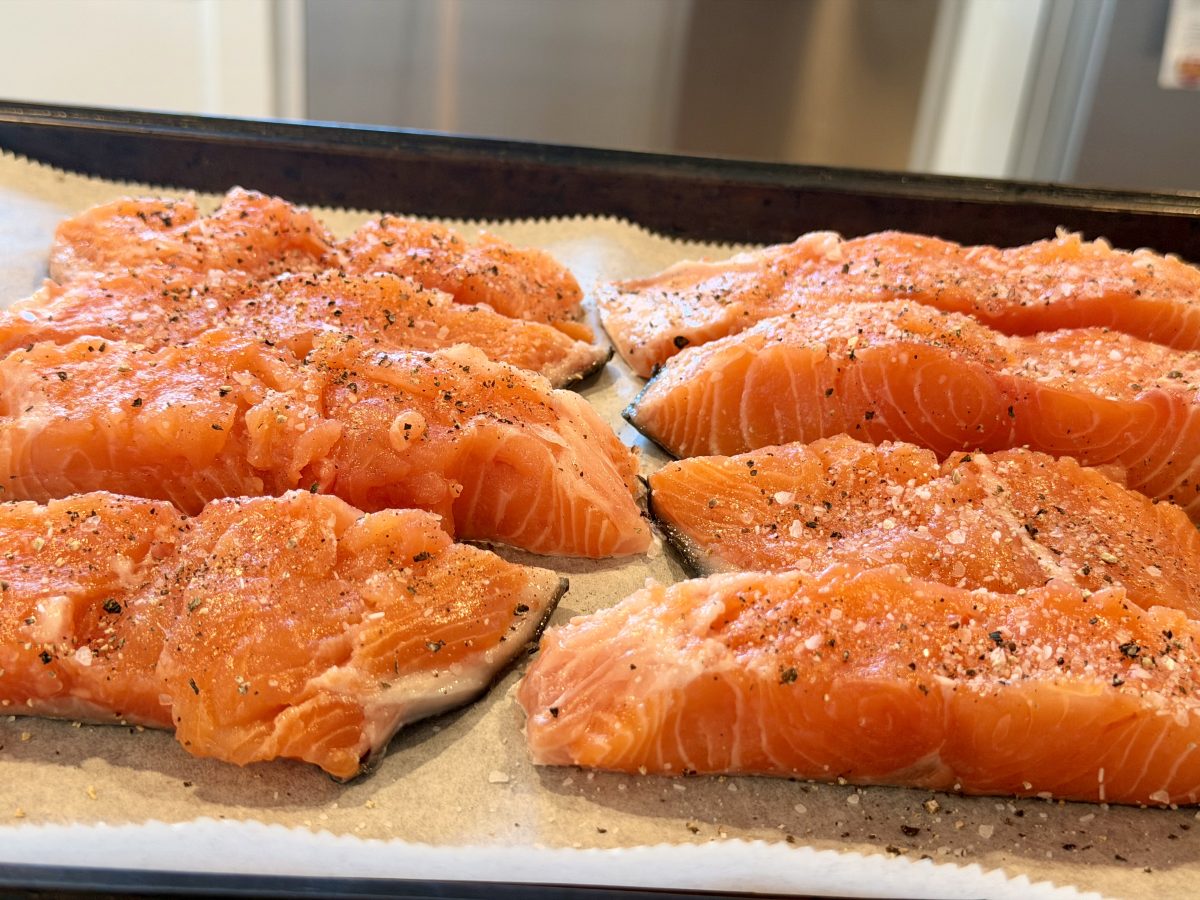
2) Prepare your baking sheets. If all 8 fillets fit without touching, use a large sheet pan. If the fillets have to line up, use two pans. When fish is overcrowded, they will cook under steam instead of baking, which makes the topping less concentrated.
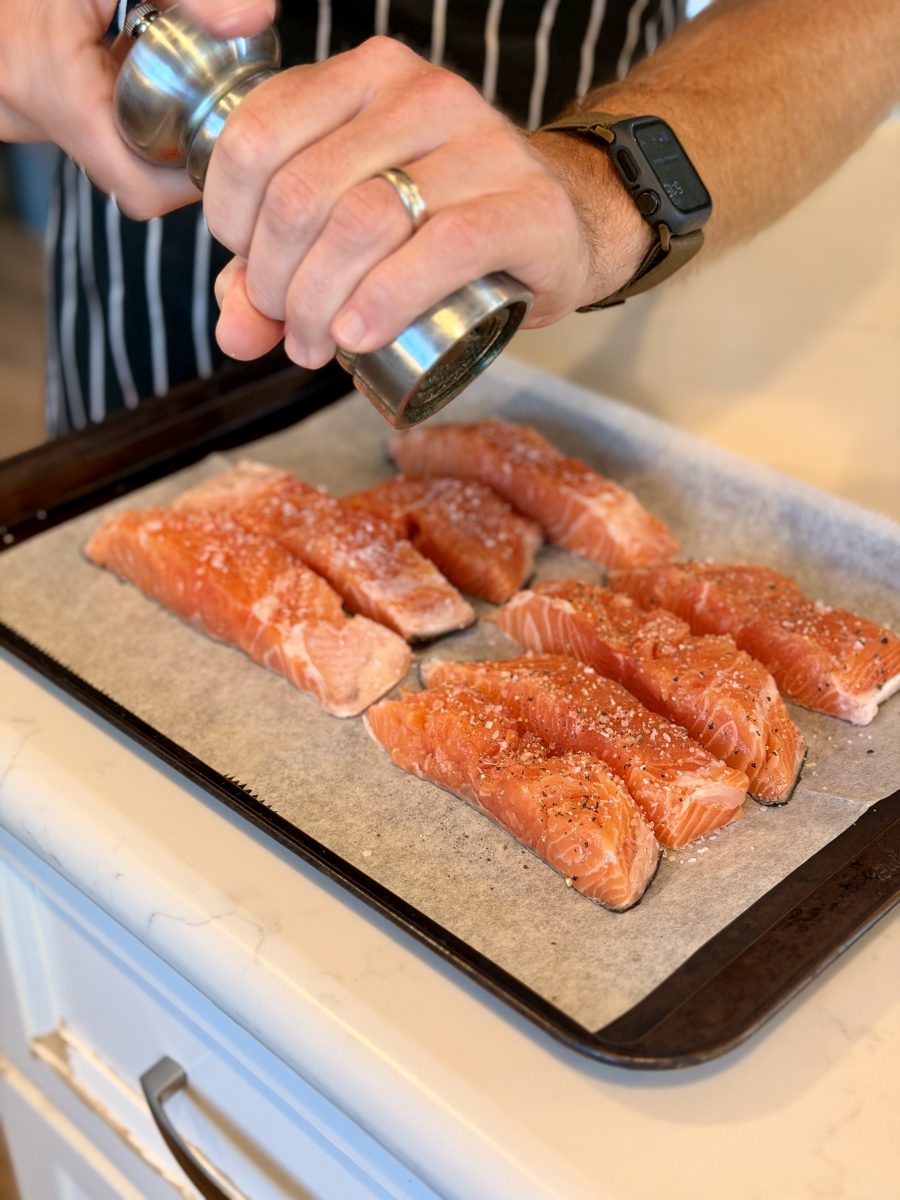
3) Make sure the salmon is gently dried and use minimal seasoning. Use paper towels to blot the tops of the fillets. A dry surface will keep the topping(s) better, and will also help with slight crisping around the edges. Top with salt and pepper, but remember to go light on the salt. The olive-caper mixture is already pretty salty.
4) Get the topping ready that includes olives, capers, and lemon. In a bowl, combine the chopped olives, capers, lemon zest, minced garlic, and olive oil. Mix well so the oil blends everything together. This is your last chance to alter the taste, so give it a try. If it is bland, add a touch of pepper. If the flavor is overpowering, add one more tablespoon of olive oil.
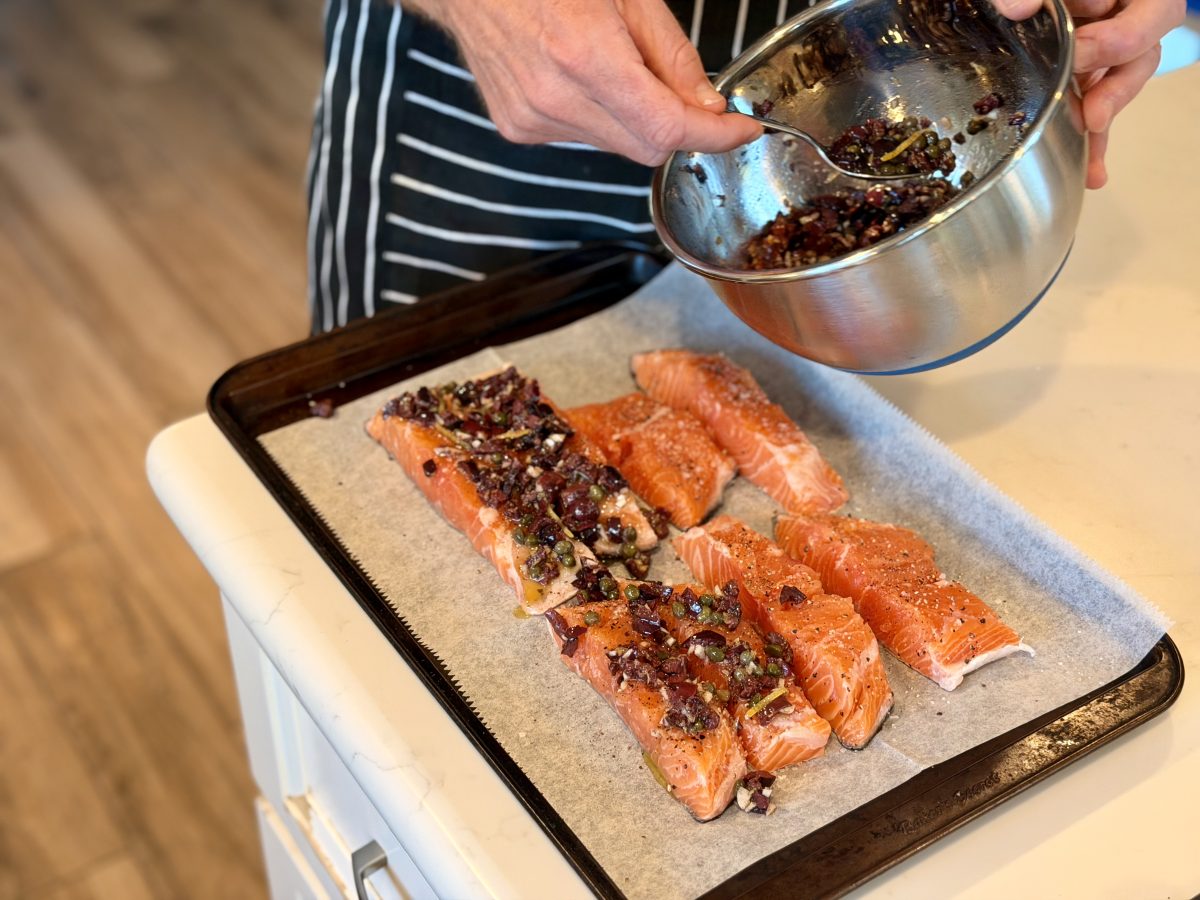
5) Pour the topping mixture over the salmon. Use around two heaping tablespoons for each fillet and try to spread the mixture around evenly. You don’t have to be neat as the tops will be covered and it’s better if some oil drips onto the pan as it will be flavor and can be spooned back over the fish at the end.
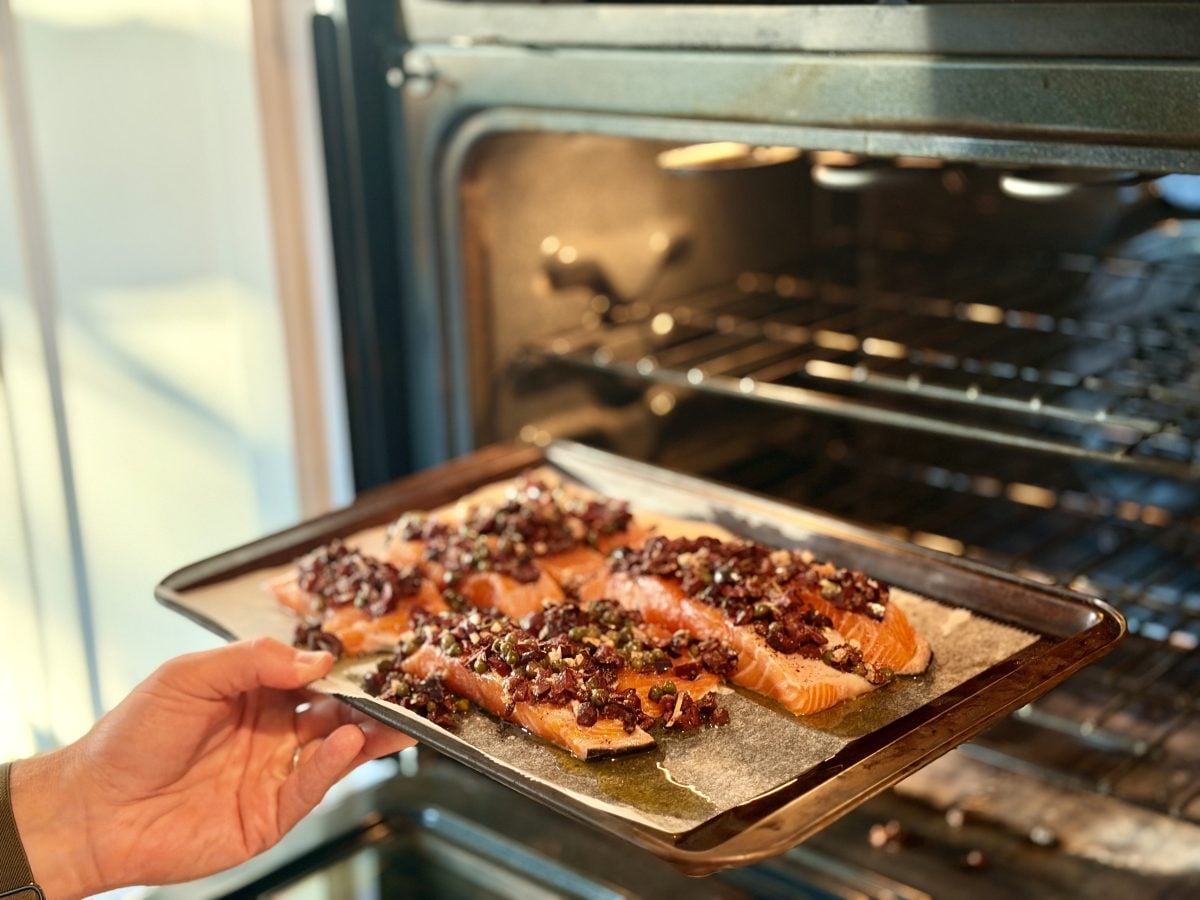
6) Bake for 12 to 15 minutes. If the fillets are thinner than 3/4 of an inch, they will be done in about 10 to 12 minutes. However, thicker, center-cut fillets may need the full 15 minutes. Begin checking at the 10 minute mark. The salmon is done cooking when the meat separates with slight pressure from a fork, and the center is slightly rosy and translucent. It will finish cooking from the residual heat.
7)Take a 2-3 minute break. This will determine whether your salmon holds together or whether it becomes a sad pile of fish when you try to serve it. During the break, the proteins will relax while the inside of the fish continues to cook from residual heat.
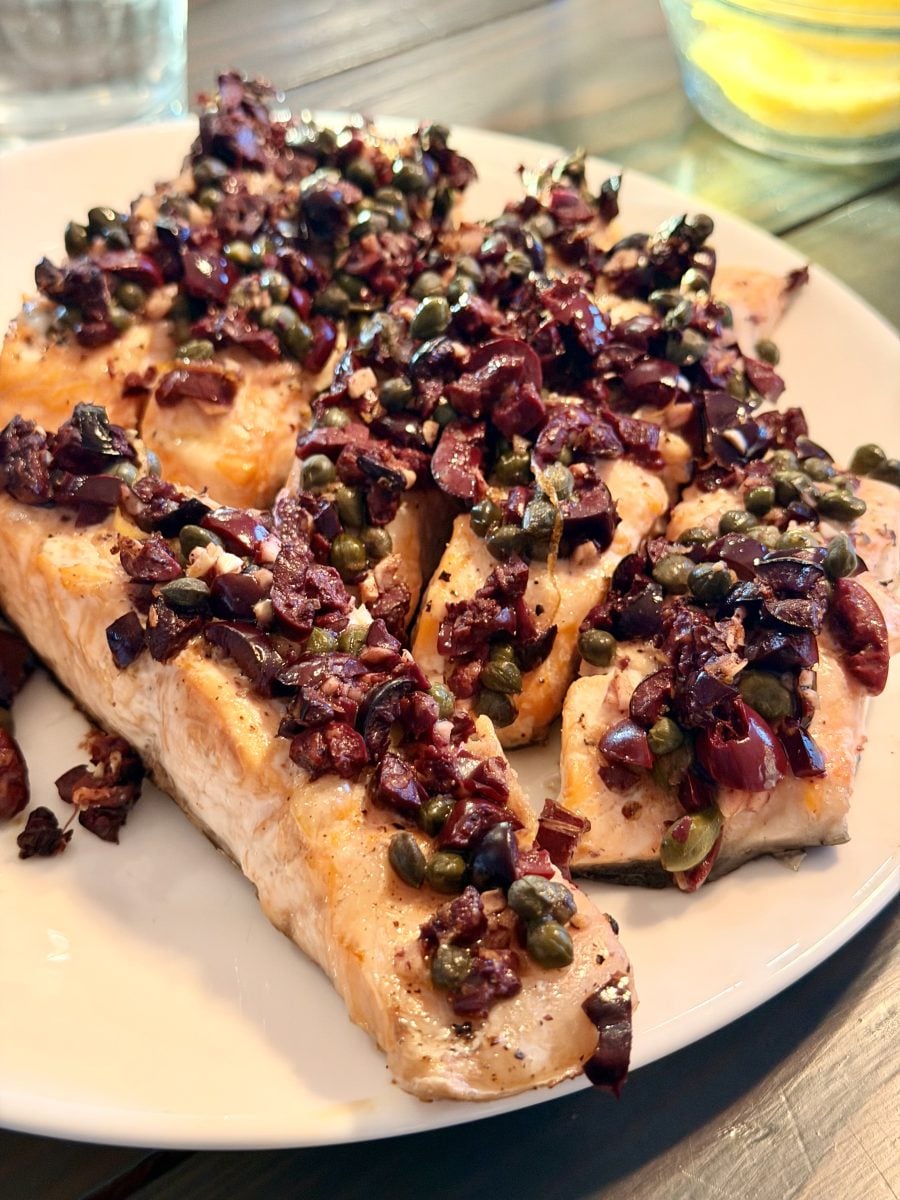
8) Serve. Drizzle some oil from the pan over the dish and spice it up with a squeeze from the fresh lemon wedges plus one more twist of black pepper. And that’s it.
Spins and Swaps
- Greek-leaning: Incorporate 1 teaspoon of dried oregano into the topping mixture, and top with crumbled feta and several fresh mint leaves that have been torn.
- For a dish with an Italian leaning flavor profile, substitute half of the Kalamata olives with Castelvetrano olives, and after baking the dish, add 1 Tbsp of fresh basil (chopped) and omit the capers for a milder flavor.
- Provençal: Incorporate 1 teaspoon of herbes de Provence into the topping, and scatter some blistered cherry tomatoes around the pan.
- Spicy: Mix in 1/4-1/2 tsp of red pepper flakes into the olive-caper mixture, then top with some chili oil.
- Version with garlic confit: Use 1/4 cup garlic confit cloves (smashed) in place of the fresh minced garlic. The flavor will be richer, sweeter, and less sharp than with fresh garlic. If you have confit on hand, we recommend this small upgrade.

What Goes Alongside
- Lemony orzo or couscous: The starch soaks up the briny oil from the pan. Practically required.
- Crusty bread: For the people at the table who will absolutely want to mop up the pan.
- Greek salad: Cucumber, tomato, red onion, feta, oregano, more olives because why not.
- Roasted potatoes: Combine with olive oil, salt, and oregano. Place on a second sheet pan and bake alongside the fish.
- Garlicky greens consists of sautéed spinach, kale, or Swiss chard. A squeeze of lemon is added to match the topping.
- Tzatziki on the side: cool, creamy, and herby which balances the salt and brine.
Common Stumbles, Easy Saves
- Salmon can turn out dry if it was baked for too long, or if the fillets are too thin. Start checking your fillets earlier, around the 10 minute mark. A good rule of thumb would be to use a digital thermometer. When the thickest part of the fillet goes to 125°F (medium), take the fillet out. The carryover heat will finish it up.
- The topping fell off. Either the salmon was too wet or the topping was too oily. Remember to pat the fillets dry and ensure the chopped olives and capers have a good enough texture for binding.
- The dish had too much salt. Please do not add salt to the salmon in the future. Also, check if your capers are brined or salt packed. If they are salt packed, they need a good rinse before using.
- Garlic may have burned and become bitter. The garlic may have been chopped too thickly or your oven may run a bit hot. Finely mince and more the garlic under the toppings instead of leaving it on top. If your oven runs hot, reduce the temperature to 375°F and add 2-3 minutes to the cooking time.
- Fish begins to smell bad when overcooked or when the fish is not fresh to begin with. Salmon that is fresh shouldnt smell like it is coming from a fishmongers parking lot but should smell like the ocean. When at the store, trust your nose.
- Skin is rubbery. If you’re looking for a recipe to achieve crispy skin, this one is not for you as the wet topping will steam the top. For skin that is actually crispy, you will need to either sear it in a pan first or roast it skin-side-down on a wire rack without any topping on the skin.
- Olives can have a very bitter taste and cheap kalamata olives tend to have a very single-tone, harsh bitter taste. However, spending a little bit more on a better quality brand of olives can help, especially if they’re in olive oil and not in brine.
- Want a one-pan dinner? Add halved cherry tomatoes and sliced red onion around the fish fillets from the beginning. They will roast together with the fish in 12 to 15 minutes.
Keeping It and Reheating It
This Mediterranean diet friendly recipe features capers and olives dressed in olive oil, and is paired with salmon, which is high in protein as well as heart healthy omega 3 fats. The sodium content may be a little higher because of the olives and capers, so if you are sodium sensitive, feel free to reduce the capers to 1 tablespoon and don’t add extra salt. As it is, this recipe is gluten free and dairy free.
You can keep the leftover salmon and toppings for two days in the fridge in an airtight container. To enjoy your meal again, you can heat it in the microwave on half-power in 30 second intervals, or you can cover it with foil and put it in the oven set to 300°F for 8 to 10 minutes. To be honest, this salmon is really good cold and flaked into a grain bowl or salad with a little extra lemon. The cooked salmon shouldn’t be frozen because it’s not worth the texture loss.

Field Notes
I first made this on a Tuesday when I had no plans for dinner and a 90 minute gap before swim lessons. I had some thawed salmon and a jar of Kalamata olives and capers that I had purchased for a recipe I never made.
After twenty-five minutes, the kitchen filled with the aromas of olive oil and warmed lemons and the kids even ate the fish, a minor household miracle you never take for granted. My wife questioned if this was a “recipe” or “something I made up.” It was a bit of both.
I made this for a Saturday dinner with friends who go to restaurants that are posher than the ones I cook in. I was anxious. For months I’ve been saying that I could ‘do a proper dinner’ and then I served them eight fillets on a sheet pan and a brown spoon. One person in fact requested the recipe before dessert was served. Another one cleaned the oil and some olives off the parchment paper with bread. That took less effort than the cheese plate I put out as an appetizer.
The Checklist
- Purchase 8 salmon fillets that are about the same thickness and preferably center-cut.
- Parchment paper should be placed on two sheet pans as the oven preheats to 400°F.
- Pat the fillets dry and season them lightly with salt and pepper.
- Chop the olives, drain the capers, zest the lemons, and mince the garlic.
- In a small bowl, combine the stir olive tapenade and topping.
- Spoon about 2 tablespoons of topping onto each fillet.
- Bake 12-15 minutes; start checking at 10.
- Remove the fish from the heat when it flakes easily but the center is still a little pink.
- Rest for an additional 2-3 minutes, and spoon some oil from the pan over the top.
- Serve the dish with lemon wedges, bread, and a starch to absorb the juices.
Cook’s Vocabulary
- Zest refers to the top layer of citrus peel containing essential oils that give them fragrance. Because the white pith beneath that layer is bitter, you should use a microplane and stop once you begin to see white.
- Brine is the salty liquid (sometimes with vinegar) that olives and capers are stored in. Along with preserving the olives and capers, it also seasons them.
- Carryover cooking refers to the temperature increase that occurs after taking an item out of the oven. The temperature of the salmon will continue to rise another 5-10°F after we take it out. This is why pulling the fish out a little on the underdone side achieves the ideal final texture.
- Center-cut Fillet: A cut that comes from the center (thickest) portion of the salmon side. This cut has a more consistent thickness making it easier to cook evenly and generally easier to hit.
- Confit refers to the method of slow cooking in oil and at low temperatures. Garlic confit is a small luxury to add to a recipe variation. Cloves become mellow, sweet, and spreadable.
Common Questions
Can I use frozen salmon?
Yes, but you should thaw it completely and then pat it very dry. When cooking frozen salmon, more water will be released from the fish which can cause the topping to become watery. Ideally, you should thaw the salmon in the fridge overnight. If you’re short on time, you can run cold water over the packaging to thaw it.
Skin on or skin off?
Both approaches are fine. The layer of skin on the bottom of the fillet protects it from drying out and also aids in easier release from the pan. If you would rather not eat the skin, you can use a thin spatula and separate the skin from the flesh and it will stay on the parchment paper.
Can I make this on the grill?
Yes, but you will have to adjust a little. Place your toppings on a piece of foil or on a pan that is grill-safe so they don’t fall through the grate. Close the lid, and set the timer for 10-12 minutes on medium-high. Be careful; grills can get hotter than ovens.
What if I don’t like olives?
Even if this isn’t the exact recipe for you, you can still make it as a lemon-caper-garlic topping by mixing in another tablespoon of olive oil along with a tablespoon of chopped fresh parsley. A different vibe, even more delicious.
Can I prep the topping ahead?
Yes, you can prepare the olive-caper mixture up to 24 hours in advance and store it in the refrigerator. The flavors will blend and become more cohesive. Just be sure to take it out 15 minutes prior to baking the oil so it isn’t fridge-cold when it comes into contact with the salmon.
How do I know when salmon is done without a thermometer?
Using a fork, gently press down on the thickest part of the item. If it begins to flake and the interior shows a thin line with a darker pink center, remove it. The carryover cooking will finish the item. If it still looks gel-like and raw, check again in 2 minutes.
Can I double this for a crowd?
Yes, however, place the two sheet pans on two different oven racks and switch them halfway. The greatest cause of salmon being cooked unevenly in this recipe is the overcrowding of fillets on one pan.
Closing Thoughts
I love making this Mediterranean baked salmon recipe. I enjoy it because it is so rewarding for the amount of time and effort it takes to prepare. I think it is delicious, and it could be mistaken for a meal made by a professional chef that prepared it over the course of multiple days and gave it a lot of thought. This salmon recipe is going to change the way you prepare salmon.
I understand that it can be hard to break out of the routine of preparing salmon the same way for a long time. I’ve been in that situation, and I understand where you’re coming from. I take pride in my baking salmon dish. It prepares itself with very little effort, and as a bonus, it provides greater enjoyment the second time in the form of leftovers.
