
Pasta with peas and asparagus is one of my favorite meals to make when I want to pretend that I have my life together. Even while avoiding the large pile of soaking pans in the sink and trying to survive the week, I still love making this.
It combines sweet peas, grassy asparagus, and a squeeze of lemon with a drizzle of olive oil and butter for a shiny finish. I think the best part of this dish is the ingenious starchy water, cheese, and veggie sauce that clings to every twist and curl of the pasta.
This is a bit embarrassing, but the first time I attempted to ‘keep it light’ I ended up with sad noodles in a flimsy sweater and no cheese and butter. Don’t do that. The comfort of the dish and the richness that make it taste like a true bowl of pasta (and not just some benevolent vegetable toss) comes from the starchy water with the cheese (Parmesan or Pecorino). The lift of the dish comes from lemon and the herbs.

The Quick Rundown
- Spring-in-a-Bowl Pea and Asparagus, the nutshell: A fast pasta dish featuring a lemony, cheesy, pasta-water emulsion combined with peas and asparagus.
- Why it works: You can cook the pasta and vegetables together, and then create a glossy “sauce” using starchy water and cheese, and no cream (unless desired).
- Timing: 25 to 30 minutes, start to finish; one pot plus a skillet (or just one pot if you’re stubborn like me).
- Flavor profile: Savory parmesan and a hint of pepper enhance the sweetness of peas, the green, slightly nutty flavor of asparagus, and the brightness of lemon.
- Key tips: Make sure to salt the water you cook the pasta in, cook the asparagus for a little less time than you think is necessary, save more than the usual amount of water from the pasta, and finally to prevent the cheese from clumping, add it while the heat is off.
Ingredients
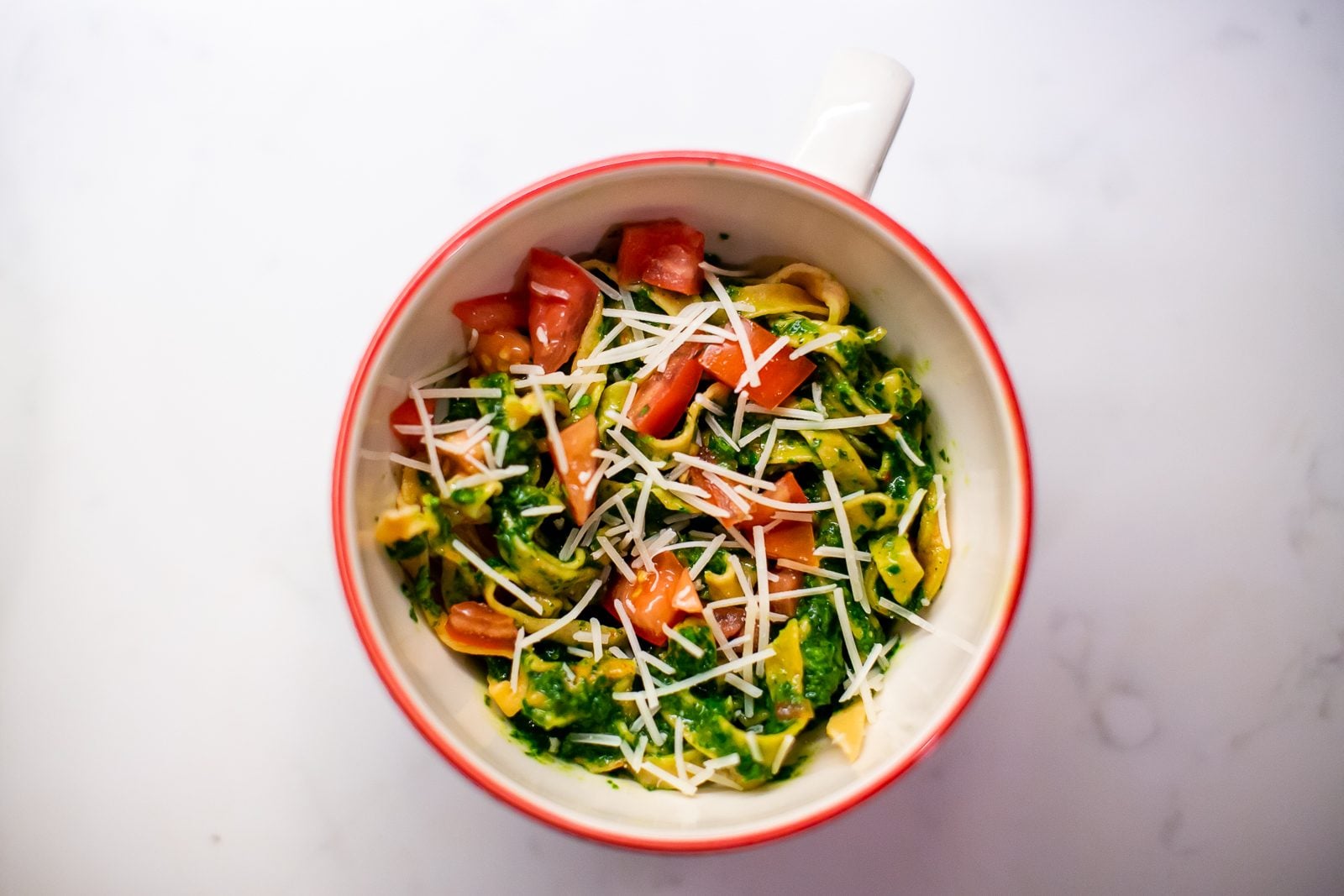
This recipe is relatively easy to customize, but changes can be made that can affect the outcome. For example, select a pasta shape such as shells, orecchiette, or fusilli that will help catch the peas. Use asparagus that is firm with a snappy tip, not limp. Believe it or not, frozen peas may taste better than fresh ones (the latter taste like a shoebox). Think of the cheeses as your spine: parmesan adds a mellow nuttiness; pecorino gives a saltier, sheepish punch.
- Pasta (12 oz / 340 g): If you have spaghetti, that’s a great alternative.
- Asparagus (1 lb / 450 g): Cut woody ends and slice into 1 inch pieces, leaving the tips larger to keep them looking nice.
- Peas (1 to 1 1/2 cups): You may be living a more charmed life than I am and have fresh food, but I have frozen foods to which I take out and run under tap water to thaw.
- Olive oil (2 tbsp) + butter (2 tbsp): Olive oil gives a fruity flavor while butter adds gloss and roundness.
- Garlic (2 to 4 cloves): Sliced or finely grated; just be careful not to burn it or else everyone will be disappointed.
- Lemon (1 large): Zest and juice serve different purposes; zest will provide the perfume while the juice provides the bright pop.
- Parmesan or pecorino (3/4 to 1 cup finely grated): Unlike finely grated ingredients, the powder-like substance in a can will not emulsify in the same manner.
- Fresh herbs (optional but recommended): Mint may sound a little strange initially, but you won’t understand how good it is until you try it, and then you can feel a little smug.
- Black pepper and chili flakes: Add pepper for warmth and chili for a friendly touch.
- Salt: Be bold when it comes to the finishing touches and the pasta water.
Master Ratio (Easy To Scale)
- Per 4 oz (115 g) pasta: 1 to 1 1/2 cups of mixed peas and asparagus
- Fat: 1 tablespoon of butter plus 1 tablespoon of olive oil
- Cheese: 1/4 cup finely grated parmesan or pecorino
- Acid: 1/4 of a lemon (zest and 1 to 2 tsp of juice)
- Pasta water: 1/4 to 1/2 cup reserved, as needed
For 8 oz of pasta, you would generally serve 2 to 3 cups of peas and asparagus, 2 tablespoons of fat (1 oil + 1 butter doubled), 1/2 cup of cheese, and about 1/2 of a lemon, plus 1/2 to 1 cup of reserved pasta water to combine all ingredients.
Ingredient Choices That Change Flavor
| Choice | Option | What It Tastes Like | Best When… |
|---|---|---|---|
| Cheese | Parmesan | Nuttier, round, less salty | You want a mellow, classic bowl |
| Cheese | Pecorino Romano | Sharper, saltier, a little funky | You like punchy flavors and black pepper |
| Herb | Mint | Cool, bright, almost floral | You want it to feel extra springy |
| Herb | Basil | Sweet and familiar | You want comfort and crowd-pleasing vibes |
| Finish | Lemon zest-heavy | Perfumed, aromatic, less sour | You’re sensitive to acidity |
| Finish | Lemon juice-heavy | Sharper, brighter, snappier | The dish tastes flat and needs lift |
Optional Add-Ins (If You Want It Heartier)
- Pancetta or bacon: Crisp it first, then substitute some of the butter with the fat.
- Chicken or shrimp: Quickly sear and add them at the end.
- Soft cheese: A spoonful of ricotta or goat cheese adds creaminess (and yes, makes it less “light,” but who’s counting).
Instructions
1) Organize your ingredients. As you prepare a large pot of water to boil, cut and trim asparagus stalks into one-inch pieces (leave the tips longer). Zest and juice the lemon, and grate the cheese.
2) Pour salt into the water and cook the pasta. Once the water is steadily boiling, season with a good amount of salt (the water shouldn’t be ‘regretting’ its existence, but it should be reasonably salty). When the water is boiling again, add the pasta and set a timer for one minute less than the time stated for ‘al dente’ on the packet.
3) Add the asparagus at the right time. Three minutes before the pasta finishes cooking, add the asparagus. You want the asparagus to be a bright green and tender-crisp as opposed to floppy and army drab.
4) Add peas last. If you are using frozen peas, they only need to be warmed. Therefore, add them in the last thirty seconds of cooking. Prior to draining the pasta, take out 1.5 cups of pasta water and set it aside in a cup/mug or measuring cup.
5) Construct the base. Add a mixture of olive oil and butter to a pan and set the heat to medium. As the oil heats up, add the minced garlic and sauté for 30 to 60 seconds, or until it begins to smell strong. Be careful; if the garlic starts to brown a lot, turning the heat down a bit is a good idea. Garlic has the potential to change from a pleasant smell to a horrible taste very quickly.
6) Combine and Emulsify. In the skillet, combine the pasta (drained), peas, and asparagus. Add some lemon zest, black pepper, and a pinch of chili flakes. Add and mix the 1/2 cup pasta water, and while tossing, add the cheese and turn off the heat. Add pasta water up until a glossy look is achieved and the mixture is gently coated with sauce. Ensure that the mixture does not appear dry and tacky.
Typically placing cheese on a hot pan causes it to clump together. Most mistakes can be fixed by removing the cheese from the heat.
7) Taste and finish. Begin with half, then slowly add lemon juice (sample and adjust). Modify the salt. If you’re using, shower with the herbs. Add extra cheese and pepper, and serve while hot. I like a little olive oil drizzled on top, but I also like extra throw pillows. You do you.
Riffs That Work
- Creamy (but still bright): Remove from heat and mix in 2 to 4 tablespoons of crème fraîche or a bit of heavy cream.
- Spicy green pasta: Include additional chili flakes and a spoonful of Calabrian chili paste.
- Lemony pesto-ish: Toss peas with olive oil, lemon zest, and parmesan and blend; combine with pasta and asparagus.
- Anchovy depth: The recipe will not have a fishy flavor from the anchovy fillets. Melt 1 to 2 anchovy fillets along with the garlic and oil.
- Spring carbonara adjacent: Pecorino cheese should be used along with generous amounts of pepper, and then egg yolks (off the heat) should be added. Do this gently and use more pasta water.
Rounding Out the Plate
- Salad: Fennel can also be used for a crunchy layer as well as a little bit of vinegar. Otherwise you can do arugula with lemon and olive oil.
- Bread: Crusty bread for swiping the last glossy bits from the bowl (highly recommended).
- Wine: Opt for Sauvignon Blanc if you want the zesty snap of citrus, choose Pinot Grigio for an easy-going option, and go for dry rosé when the weather warms up.
- Protein on the side: Crispy chicken cutlets, seared salmon, or a simple fried egg if you want cozy.
- Serving flourish: Additional lemon zest and a snowfall of parmesan at the table. Patrons take note.
Fixes and Pro Moves
- My pasta looks dry: Starch is your friend here. Toss harder to incorporate more starchy pasta water.
- My cheese clumped: The pan was overheated. Remove it from the heat, add a small amount of warm pasta water, and stir until the sauce is incorporated.
- Asparagus turned mushy: If you prefer, you can add it next time, or you may blanch it separately for 2 minutes and then shock it in cold water.
- It tastes flat: More salt first followed by lemon juice. (Most instances of “needs something” are salt.)
- Garlic tastes bitter: It browned excessively. I’ll keep it brief and not overly cooked.
- Peas look dull: They enjoy quick hellos, not extended conversations. Try to add them at the end to avoid drawn out hellos.
- Want restaurant sheen: Remove from the heat and toss in 1 tablespoon of butter. Toss as if you are trying to impress someone.
Nutrition and Storage Notes
While the dish does contain a fair amount of cheese and fat, there are also a good variety of vegetables included. This is a dish that is filling but will not leave you feeling like you need to lay down and stare at the ceiling. As for the peas, they offer a gentle sweetness along with some protein and fiber, and the asparagus adds a light fresh crunchy spring crispness.
When a little extra cheese and butter is added, it does become more rich and decadent, but the richness can be kept bright and even when added in a measured amount.
For optimal taste, consume while the sauce is still smooth and the asparagus is still crisp, ideally within 3 days. It may be acceptable for refrigerator storage for up to three days. You may also add a bit of lemon zest at the end for flavor, but for optimum taste, reheat in a skillet with a bit of water (or broth). Microwaving it is an option as well, but be aware that the texture will be different, as it will be softer.
Stop following recipes. Start understanding them.
20 video cooking lessons from Nathaniel. $27 one-time, lifetime access.
How It’s Gone for Me
Example 1 (“I arrived home late” iteration): I created this in a tiny rented kitchen with just one reasonable pot and a knife that was incapable of slicing through a tomato without some kind of negotiation. Peas from the freezer. Asparagus that was cut with a pair of kitchen scissors.
Pecorino was employed because that’s what the little store had available. The method did all the work that’s how it’s still so glistening and bright. The whole place smelled like something I had planned out to the last detail, but, of course, I had done nothing of the sort.
I remember an incident where I witnessed a friend’s son state that he did not like ‘green things’ and eat two bowls of peas because I told him he could put cheese on them, and then I described the peas as ‘sweet little pasta beads.’ I also put more butter and cut the asparagus smaller. There are occasions when the use of winning language is justified. There are times when the victory may be a bit bittersweet. Both would be ideal.
Your Game Plan
- Bring a large pot of water to a boil and add salt.
- Prepare the asparagus, garlic, lemon (both zest and juice), and grated cheese prior to adding the pasta.
- Cook the pasta for one minute less than the recommended time for al dente pasta.
- With three minutes left on the timer add the asparagus. With thirty seconds left on the timer add the peas.
- After draining the pasta, reserve 1 1/2 cups of the pasta water.
- Sauté the garlic in oil and butter for a short time; do not allow it to brown.
- Combine the pasta and vegetables together with lemon zest, pepper, and cheese (while the mixture is off the heat) and add enough reserved pasta water to create a glossy finish.
- Finish with lemon juice (to taste), herbs, and additional cheese.
The Jargon, Explained
- Al dente: Cook pasta so that it yields slightly when you bite into it. This is important in this case as the pasta will further cook in the pan with the peas.
- Reserved pasta water: Starchy pasta water is used to loosen and emulsify sauces so that they adhere to the pasta.
- Emulsify: To emulsify a fat (oil/butter) and water mixture by creating a homogeneous and shiny product through mechanical agitation and the addition of starch.
- Zest: The outer colored skin of citrus fruits contributes fragrance without additional acidity.
- Off heat: The pan should be removed from the burner to add the cheese without it clumping.
Your Questions, Answered
Can I use frozen asparagus?
Yes, keep in mind that the texture could be a bit softer and the asparagus might be a tad wetter than you’d like. If you have frozen asparagus, you can roast it separately to remove some of the moisture and add it at the end so it doesn’t get mushy.
Can I skip on having a skillet and do all of this in my pasta pot instead?
Yes, one-pots are perfectly acceptable. Just no heat and mix the rest of the ingredients in the pot with the drained pasta, veggies, oil, butter, cheese, (garlic, sauté for one minute) and the reserved pasta water. A version in the pot is acceptable, but a skillet will provide better control over the garlic.
How do I make it vegan?
Instead of using butter, you can use olive oil. Additionally, high-quality vegan Parmesan-style cheese can be used. For added layers of savory complexity, consider starting with a spoonful of white miso. Other good choices include lemon zest, pepper, and various herbs.
Which shapes of pasta are best?
Shells, orecchiette, fusilli, and penne pasta trap peas and hold onto the sauce. While long pasta is fine, you would more likely be chasing peas all around your plate.
Why is my sauce not creamy if there’s no cream?
To obtain a creamy texture, it is advisable to incorporate starch with the cheese and agitate the mixture vigorously. Should the sauce appear too thin, increment the cheese quantity and continue tossing. Conversely, if the mixture appears too tightly bound, additional pasta water may be used. In the case of a lumped mixture, it is recommended to lower the heat on the burner and add water.
Closing Thoughts
Cooking Pasta with peas and asparagus is a kind of flex because the dish is a bright green color and has a refreshing lemony flavor. Aside from being bright and lemony, the flavor is also comforting. While cooking, the impulse you will probably have is to scoop in the ‘goodness’ and then when done, experience the deep sense of satisfaction as the bowl glistens with what you envisioned. That is the idea.
