All recipes which state to caramelize the onions for about 5 minutes are false. I ended trusting one of the recipes which caused me to turn up the heat to try to complete the 5 minutes which created a mixture of burnt and raw onion mush. True caramelized onions take time, and when I learned the reason why, all my drawers full of onions started to make sense. Sweating, sauteing and caramelizing are not three different processes, they are all steps along the same road.
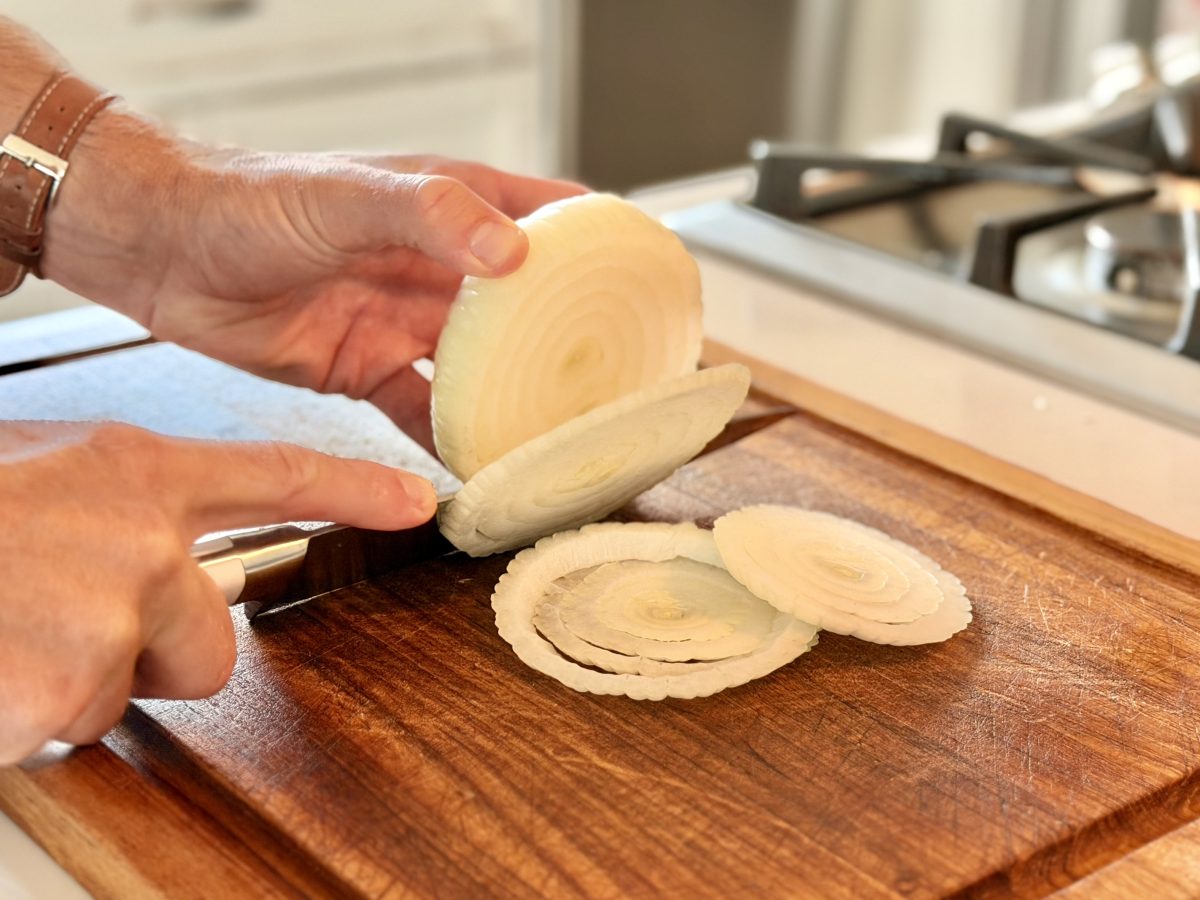
That roadway in question is truly about water. An onion has water as its main component, here’s the important part: as long as there is water in the pan, the temp can’t go beyond the boiling point, around 200 degrees, which is too cool to brown anything.
So every technique begins the same way, moisture off using heat and with a bit of salt which draws out water from the onion and expedites the process. The further down the roadway you go, the more water is removed and the sweeter, nuttier, and more concentrated the onions become. This applies to any onion, sweet, yellow, white, or red. Just cut them to the same size so they’ll cook evenly.
| Method | Heat | You’re going for | Tastes like | Best for |
|---|---|---|---|---|
| Sweat | Medium-low | Soft and translucent, no color | Clean onion, the sharp bite cooked off | Soups, sauces, background flavor |
| Saute | Medium-high | Golden-brown edges | Nutty and complex, not yet sweet | Fajitas, burgers, stir-fries |
| Caramelize | Medium-high, then drop to medium-low | Deep brown, jammy, collapsed | Very sweet, rich, concentrated | Onion jam, French onion soup, toppings |
Stop following recipes. Start understanding them.
20 video cooking lessons from Nathaniel. $27 one-time, lifetime access.

Why crowding the pan matters
Clutter refers to the water rule. Elevate the onions and let the steam from the bottom layer rise, condense, and drip back down so the pan never dries and never browns. For sauteing and caramelizing, spread the onions out to about a single layer so the steam can escape. Sweating is the one exception. In this case, you do want it to be a bit more crowded, since the goal is to keep the pan cool and damp.
Reading the pan
- Visible steam and a loud sizzle indicate active water boiling off. Browning is not possible yet.
- Once the steam begins to slow and the sizzling noise starts to quiet, the water is almost fully evaporated and the browning process is about to start quickly.
- Salting causes the onions to release water and bring with them the components that aid in browning the onions.
- Due to the high sugar content of onions, they burn easily. Therefore, the closer you get to the caramelized stage, the more you will need to reduce the heat.
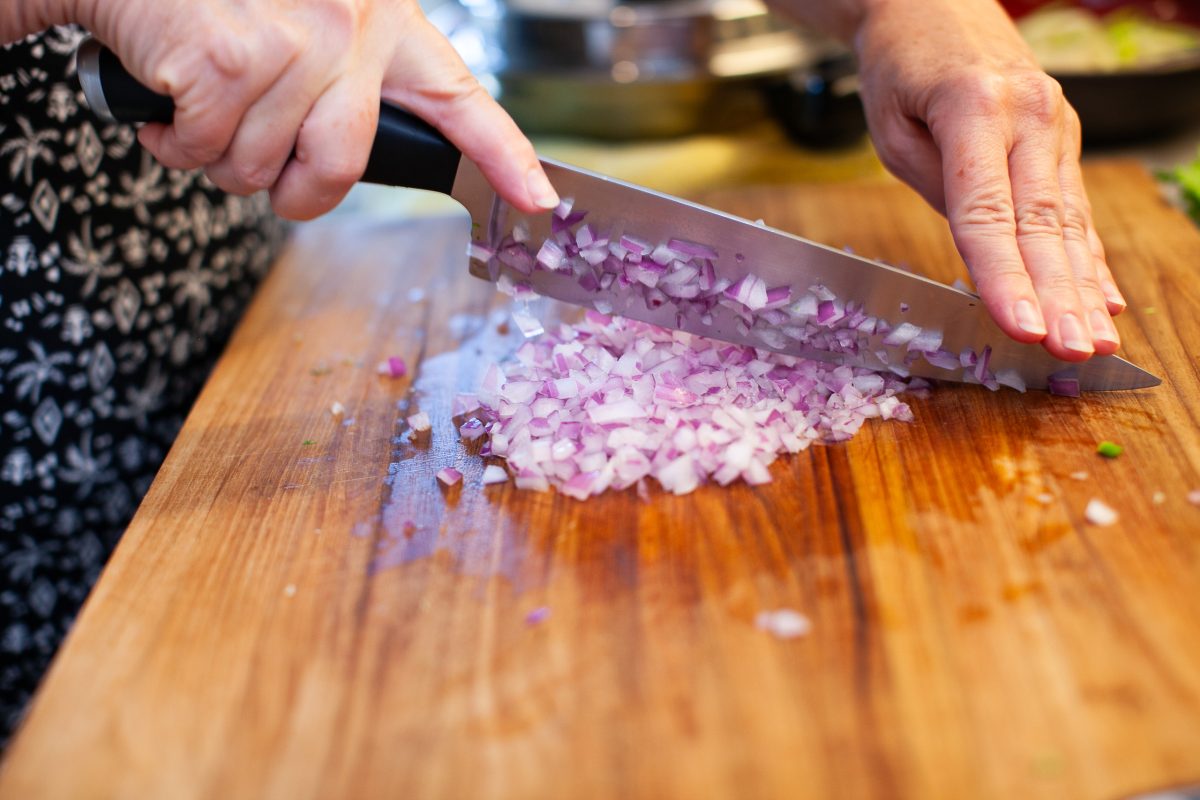
Evenly slicing the onion and adding the appropriate amount of salt and fat is critical before deciding how far down the road you want to take the process. In the case of a clean background note, it’s best to stop early; however, for nutty complexity, pull off at golden. If you want sweet, jammy and brown, then you should ride the process all the way there. Can you believe that from the same onion, you can do three completely different jobs?
Another reason to keep this technique in your regular repertoire: caramelized onions store well. Make a double batch on a slow Sunday, park them in the fridge for the week, and suddenly a Tuesday burger, a pan of scrambled eggs, or a plain grilled cheese has a secret weapon. They also freeze flat in a zip bag, which means that the forty-minute version of the onion is accessible during a four-minute weeknight.