
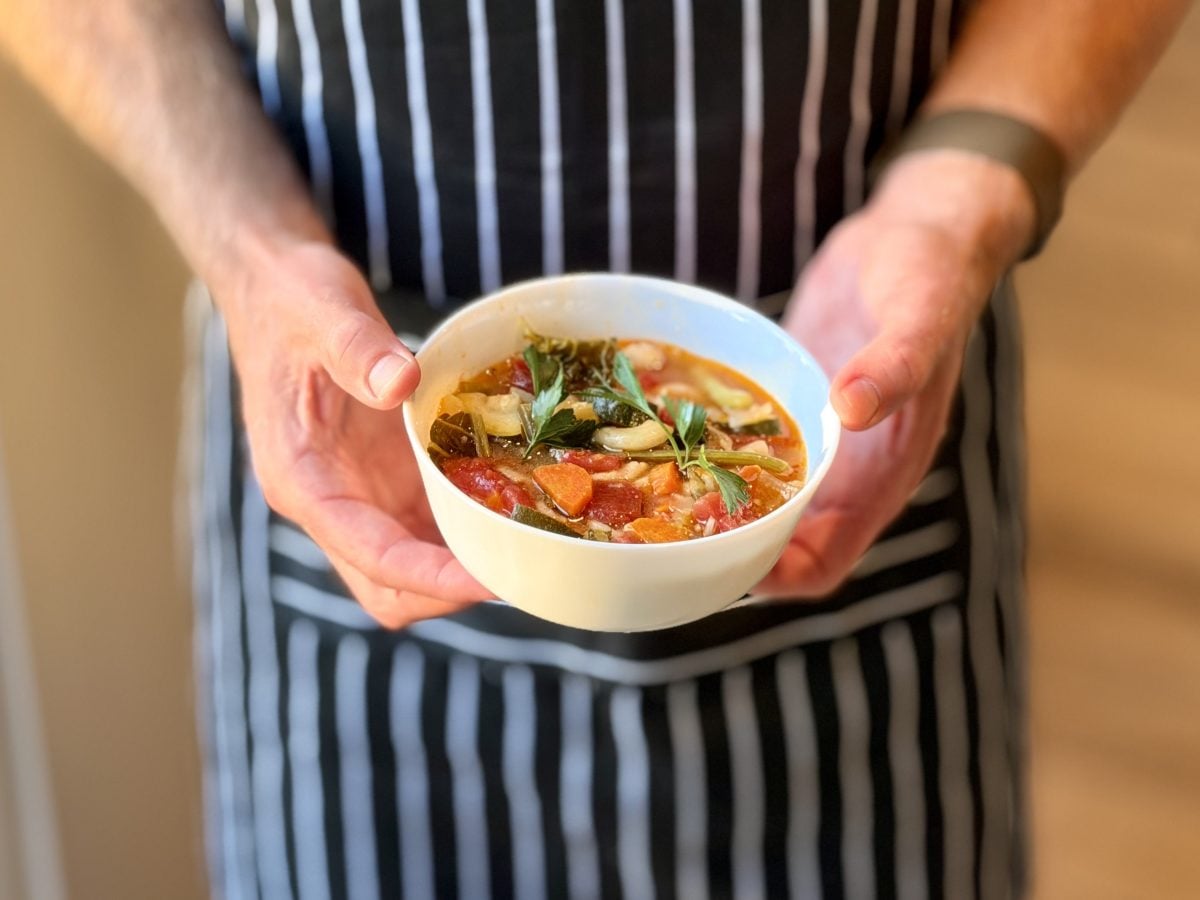
For the longest time, I held the belief that minestrone was the type of soup that you ordered when everything else on the menu was unappealing. A sort of dietary holding pattern. The soup is brothy and full of vegetables. It’s fine. But then I realized that the version I had been eating was an extreme parody of the actual soup. So, I decided to make true minestrone from scratch one cold Sunday.
Authentic minestrone soup is so rich and thick with flavor you might even describe it as meaty. The abundance of beans and vegetables is so great that you have to consume it like a stew.
Vegetable and white bean minestrone hits all those notes. The base is a slowly made soffritto with onion, carrot, and celery cooked until sweet, garlic added last so it doesn’t burn, then tomatoes, broth, and a Parmesan rind (the secret weapon) that does all the heavy lifting on flavor as the soup simmers. Beans and small pasta go in the last ten minutes so they don’t turn mushy.
This dish tastes like it has been simmered/prepared for hours. It is garnished with high-end olive oil and parmesan cheese. The overall active cooking time is about 25 minutes.

Before You Start: The Gist
- Vegetable and White Bean Minestrone, in brief: An Italian vegetable and white bean soup featuring tomatoes, a soffritto base, small pasta, and a luxurious Parmesan-rind broth that is more decadent than the ingredient list implies.
- Reason for effectiveness: A delicate preparation of the aromatic ingredients provides a sweet and savory stock foundation. Rather than adding a dairy heaviness, the rind from the Parmesan provides additional umami. The broth is thickened naturally from the beans and pasta as they continue to simmer.
- It takes about 15 minutes of prep time and about 45 minutes of simmering time. Most of the time it is hands off and it takes about 1 hour total.
- Cozy, yet not overly heavy, inviting flavor profile with tomatoes, and savory, herbal notes, creamy beans, and a salty finish from Parmesan.
- Key tips: Take your time on the soffritto, keep your Parmesan rinds in the freezer for things like this, and add the pasta last so it doesn’t bloat.
Ingredients
Minestrone is a flexible soup, but some elements matter more than others. The foundational flavor comes from a soffritto (onion, carrot, celery, and oil) and is non-negotiable. If you have one saved in the freezer, the next best thing is a Parmesan rind. Since the quality of the broth is more pronounced in the final bowl compared to thicker soups, use a broth you would even drink from a mug.
- Olive oil (4 tablespoons): Use real extra-virgin. Half of the olive oil and the soup’s personality goes into the pot. You’ll want more for finishing the soup.
- Onions (2, diced): When it comes to onions, yellow onions are the standard. Two onions may sound like a lot. It’s not. They will cook down to almost nothing, and will sweeten the whole pot.
- Carrots (4, diced): Carrots are sweet and have a slow cook time compared to other vegetables. They add a nice color and gentle backbone of flavor to the dish. Roughly dice the carrots to the same size as the onion and celery so they cook evenly.
- Celery (4 ribs, diced): While it may go unappreciated, celery is a classic soup ingredient. The soup is bland without it, but with it, the soup has flavor!
- Garlic (6 cloves, minced): Don’t hold back when using garlic, especially when it is 6 cloves. Garlic simmers down, especially with longer simmer times, so feel free to add more.
- Crushed tomatoes (2 cans, 28 oz each): If you have them, whole peeled tomatoes which you crush by hand are even better. They offer a good balance of acidity and sweetness.
- Broth (12 cups): For a completely plant-based option, use vegetable broth. For a slightly richer and meatier option, use chicken broth. Use low-sodium broth to control the final salt addition.
- Parmesan rinds (1-2, optional but transformative): This is the insider tip. Save your Parmesan rinds in a freezer bag. When thrown into a simmering pot, they will slowly exude some umami, salt, and mild creaminess that elevate the soup from “good” to “I’d serve this to people I’m trying to impress.”
- Chopped vegetables (6 cups, like zucchini, green beans, or kale): Minestrone literally means “big soup” in Italian, and that’s what makes this dish so authentic. It uses whatever vegetables are around! Use two or three different types for visual and textural interest.
- White beans (4 cans, drained and rinsed): Cannellini beans are standard, but Great Northern or navy beans work too. Drained and rinsed makes sure we get rid of the starchy can liquid that can make the soup taste flat.
- Small pasta (2 cups): Ditalini, small shells, elbow macaroni, or orzo. Any pasta that can easily fit on a spoon.
- Salt and pepper should be added at the end, after the Parmesan rind has released its flavor. Salty broths, salty Parmesan, and salty pasta water (if you add any) can accumulate quickly.
- Parmesan for serving: Please do not use the shelf-stable canister variety. Use the real stuff (Parmigiano-Reggiano).
- Extra olive oil: Drizzle some in every bowl just before serving. This is what elevates your homemade soup to the restaurant level!
Master Ratio (Easy To Scale)
For each cup of broth used, add: 1/6 of an onion, 1/3 of a carrot, 1/3 of a rib of celery, 1/2 a clove of garlic, ~1/6 of a 28-oz can of tomatoes, 1/2 cup of chopped vegetables, 1/3 of a can of beans, and ~3 tbsp of small pasta.
Example: If you are halving the recipe, use 1 onion, 2 carrots, 2 ribs of celery, 3 cloves of garlic, 1 can of tomatoes, 6 cups of broth, 3 cups of chopped veggies, 2 cans of beans, and 1 cup of pasta. Keep 1 Parmesan rind. Try not to reduce the finishing olive oil – drizzle to taste.
Ingredient Choices That Change Flavor
| Choice | What you’ll notice | Best for |
|---|---|---|
| Vegetable broth | Clean, vegetable-forward, lighter body | Vegetarian and vegan diets |
| Chicken broth | Deeper, more savory backbone | A heartier bowl on a cold night |
| Beef broth | Bold, slightly aggressive | When you want soup that eats like dinner |
| Cannellini beans | Creamy, mild, classic | Most authentic minestrone |
| Great Northern beans | Slightly firmer, milder | Holding their shape after long simmering |
| Navy beans | Smaller, denser | When you want more beans per bite |
| Kidney beans | Bold color, firmer skin | If you like a more Tuscan look |
| Ditalini pasta | Tiny tubes, perfect spoon size | The classic shape |
| Small shells | Trap broth in their curves | Great for a brothier bowl |
| Orzo | Rice-like, tender, fills the spoon | Kid-friendly version |
| Whole peeled tomatoes (crushed) | Sweeter, more rustic texture | When you want a slightly chunkier base |
| Diced tomatoes (canned) | Even cubes, faster to use | Weeknight default |
| Fresh tomatoes | Brighter, lighter, less acidic | Late summer when tomatoes are good |
Optional Add-Ins (If You Want a Heartier Bowl)
- Pesto (1-2 tbsp per bowl to be swirled in at serving): Offers a fresh herby finish that will make minestrone taste like it’s from Liguria.
- Cooked Italian sausage (1/2 lb, crumbled): Brown it first, then add to the pot with the tomatoes. Reclassifying the soup from vegetarian to ‘Sunday supper hearty.’
- Fresh herbs (basil, parsley, or thyme, 2-3 tbsp at the end): Added at the end so the flavors stay bright.
- Lemon Zest (Zest from 1 lemon, to be added at serving time): A small twist that wakes up the whole pot, especially if you used a richer broth.
- Crusty Bread or Focaccia: They may not be “technically” in the soup, but you know they really are.
Instructions
Pot: a sizable Dutch oven or stock pot (minimum size 6 quarts). Use medium heat for the soffritto and medium-low heat for the simmer.
1) Add olive oil to the large pot. Turn on the burner to medium heat. Wait for it to shine but do not let it smoke. A pot with a thicker bottom will distribute heat more evenly and not burn the aromatics as they cook down. There will be more burning with thin stockpots. Cast iron Dutch ovens are ideal.
2) For 8-10 minutes, stir occasionally while cooking the carrots, onions, and celery until just tender and beginning to brown on the edges. This is the soffritto, the culinary foundation of nearly all great Italian soups. You don’t have to rush this. The onions should be translucent, the carrots should be tender, and the whole mixture should smell more sweet than stinging. And if you step away while cooking, a little bit of browning is fine. The scorched soffritto will taint the entire pot, and once you burn it, you’ll never want to start again.
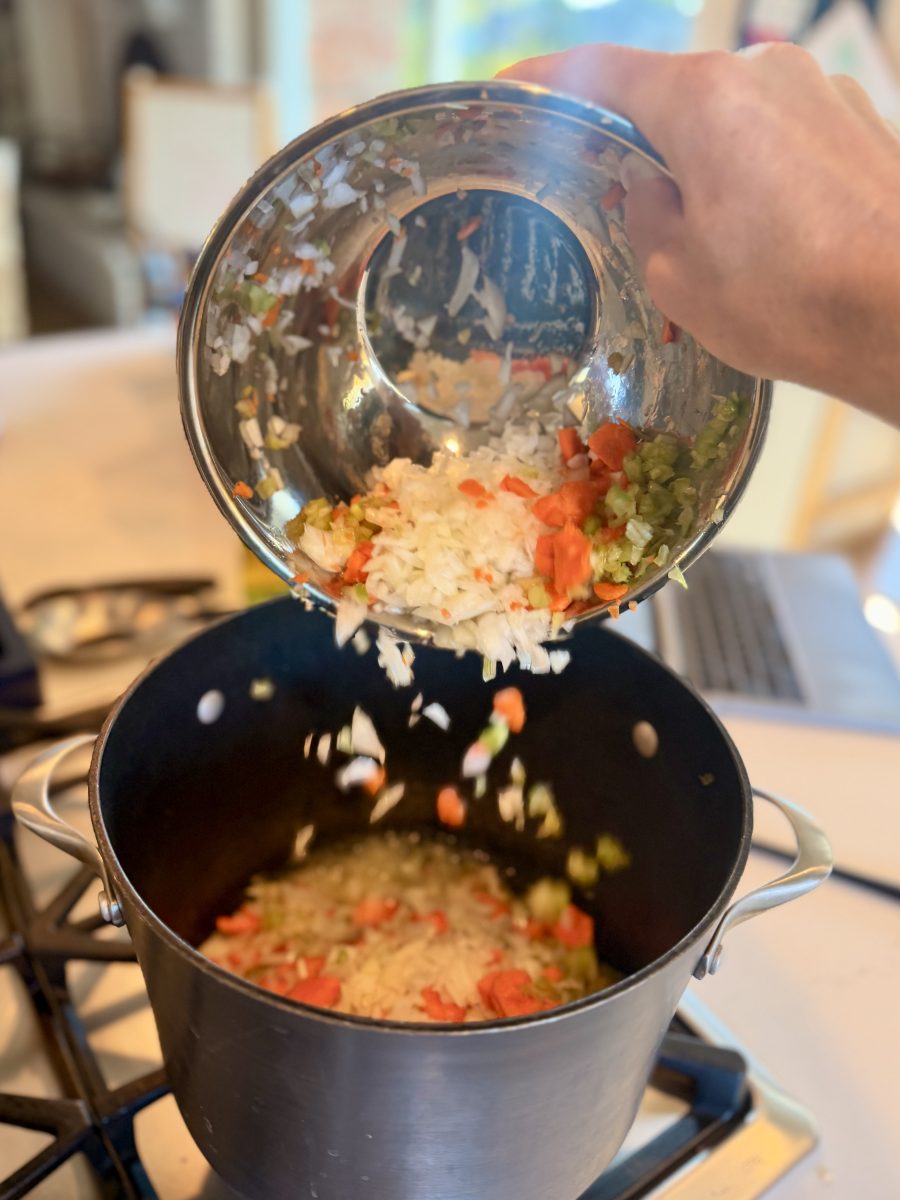
3) Add the garlic and continue to stir for 30 seconds. Soffritto will have other ingredients that will soften or burn at different rates but garlic will always burn the fastest so it is added last. You are cooking the raw bite, but not browning it. Once the garlic has a slight golden brown color to the edges and the aroma of the garlic is released, move on.
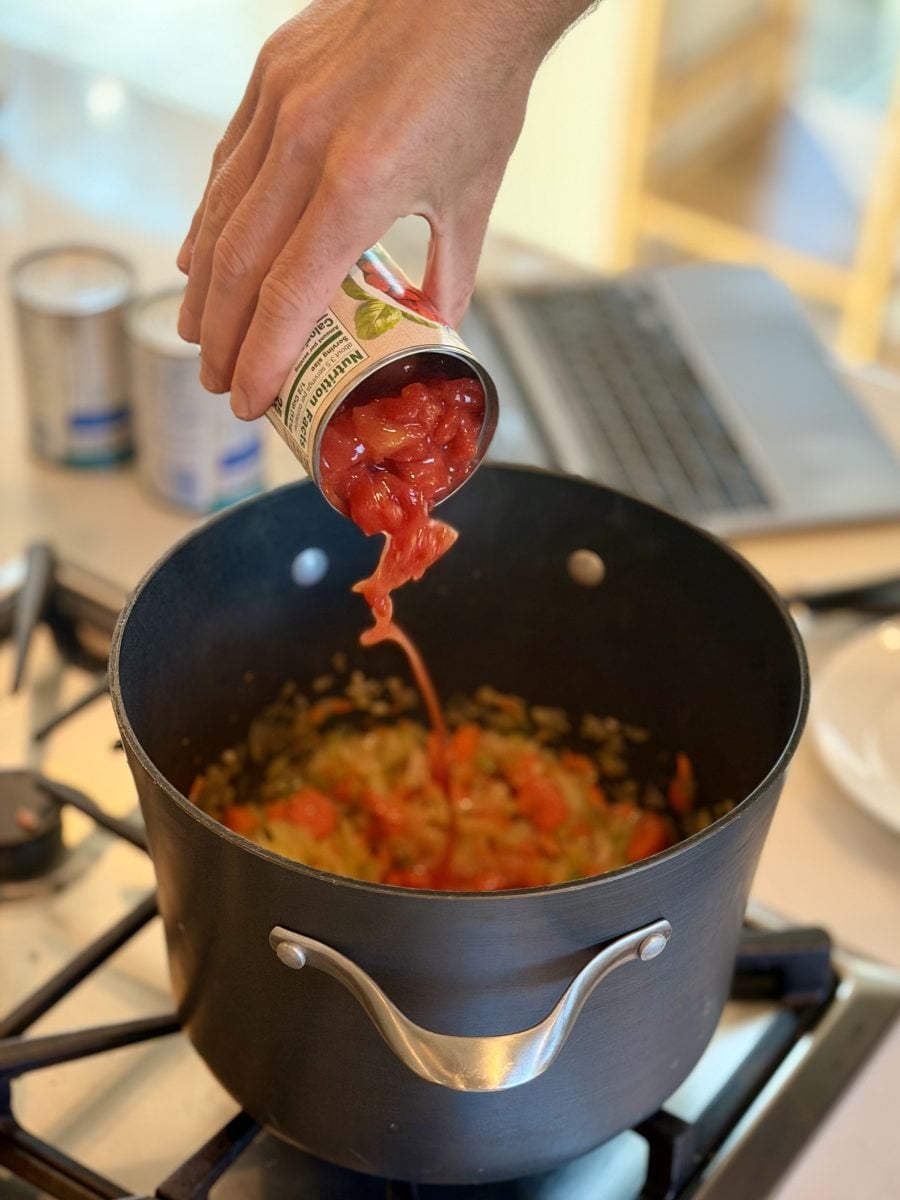
4) Then add the chopped vegetables, diced tomatoes, broth, and Parmesan rind (if applicable) directly to the pot. Mix everything together and bring it to a boil. If there are any stuck food particles at the bottom of the pot, scrape them up. Those are blasted with flavor. If chopped kale is part of your vegetable mix, add the stems now and set the leaves aside to keep them from getting sad and gray.
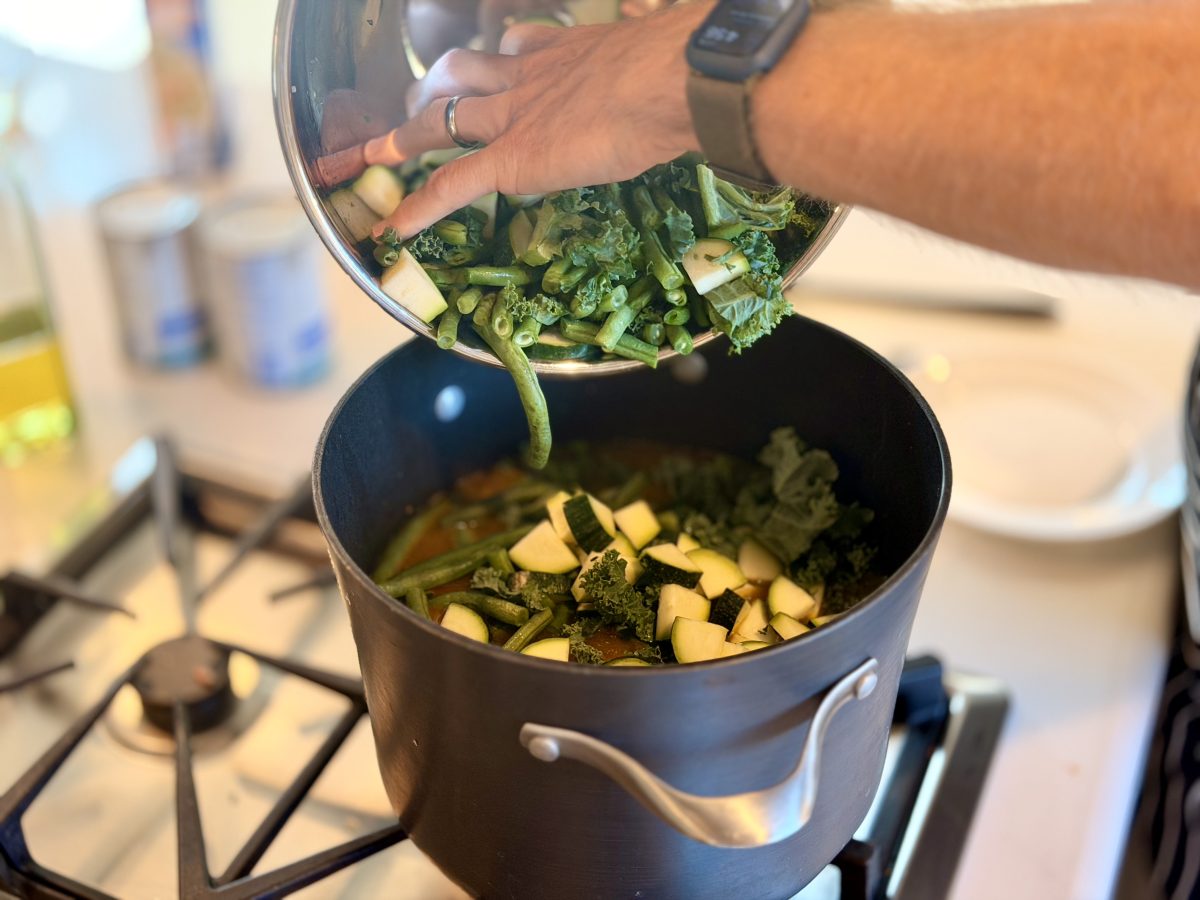
5) For 25 minutes, simmer covered and stir periodically. The broth should bubble, not boil. If the vegetables boil too quickly, the broth will become cloudy. The carrots will finish softening, the tomatoes will mellow out, and the Parmesan rind will slowly work its magic!
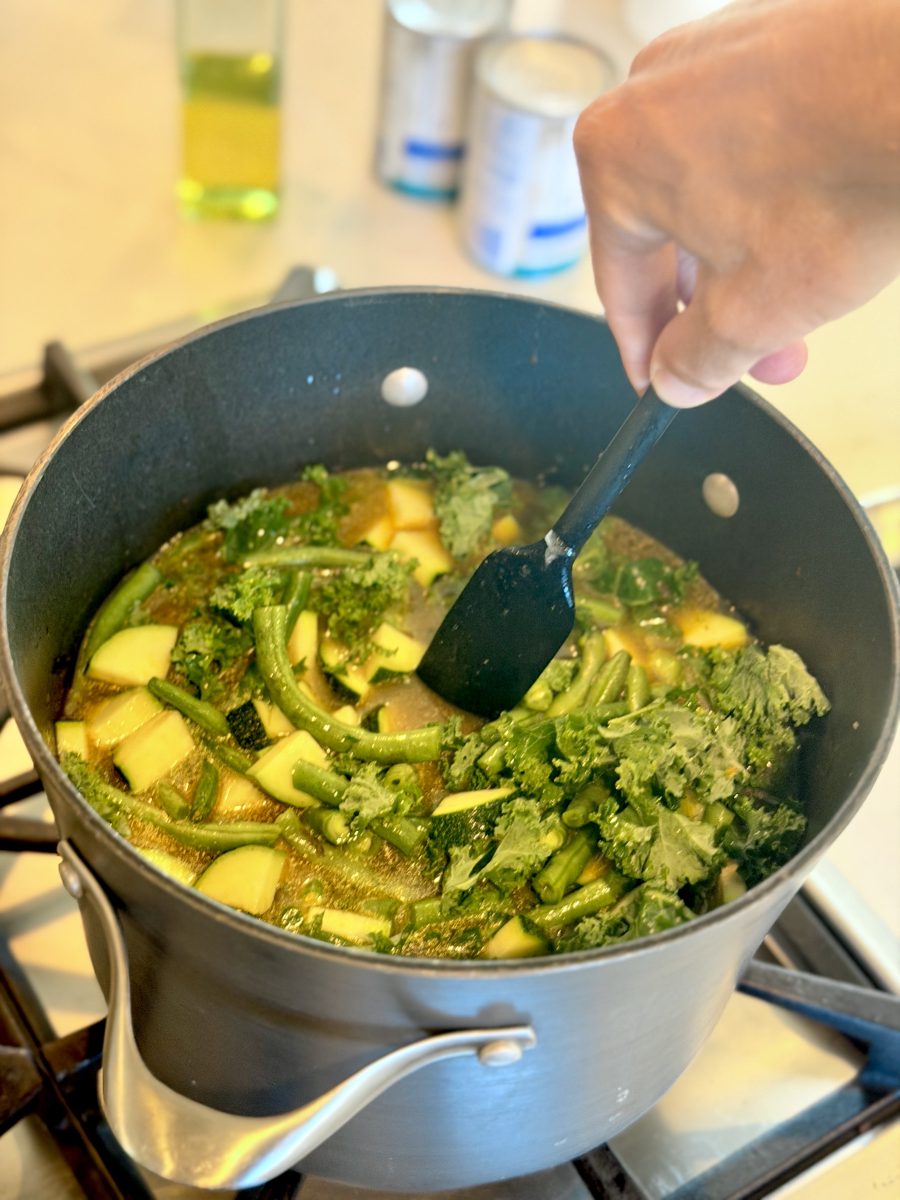
6) Combine the white beans and small pasta. Note that if you add the beans and pasta at a later stage, you will leave the beans whole and creamy, and the pasta won’t get bloated and chewy. If you plan on having leftovers (and you should) take a look at the Pro Tips section for an important note on how to handle the pasta.
7) Keep simmering for another 10 minutes or until the pasta is done to your liking. Please stir more often during this time because the pasta tends to stick to the bottom. Take a piece to taste at the 8-minute mark. Different pastas have different cooking times. You want al dente, not soft.
8) You should add salt and pepper to your taste. Do not season noticeably up until this point. The broth, canned tomatoes, and the Parmesan rind contribute their own sodium. For salt, I advise you to add it in small quantities, taste it, and do it again. For pepper, you can add quite a bit.
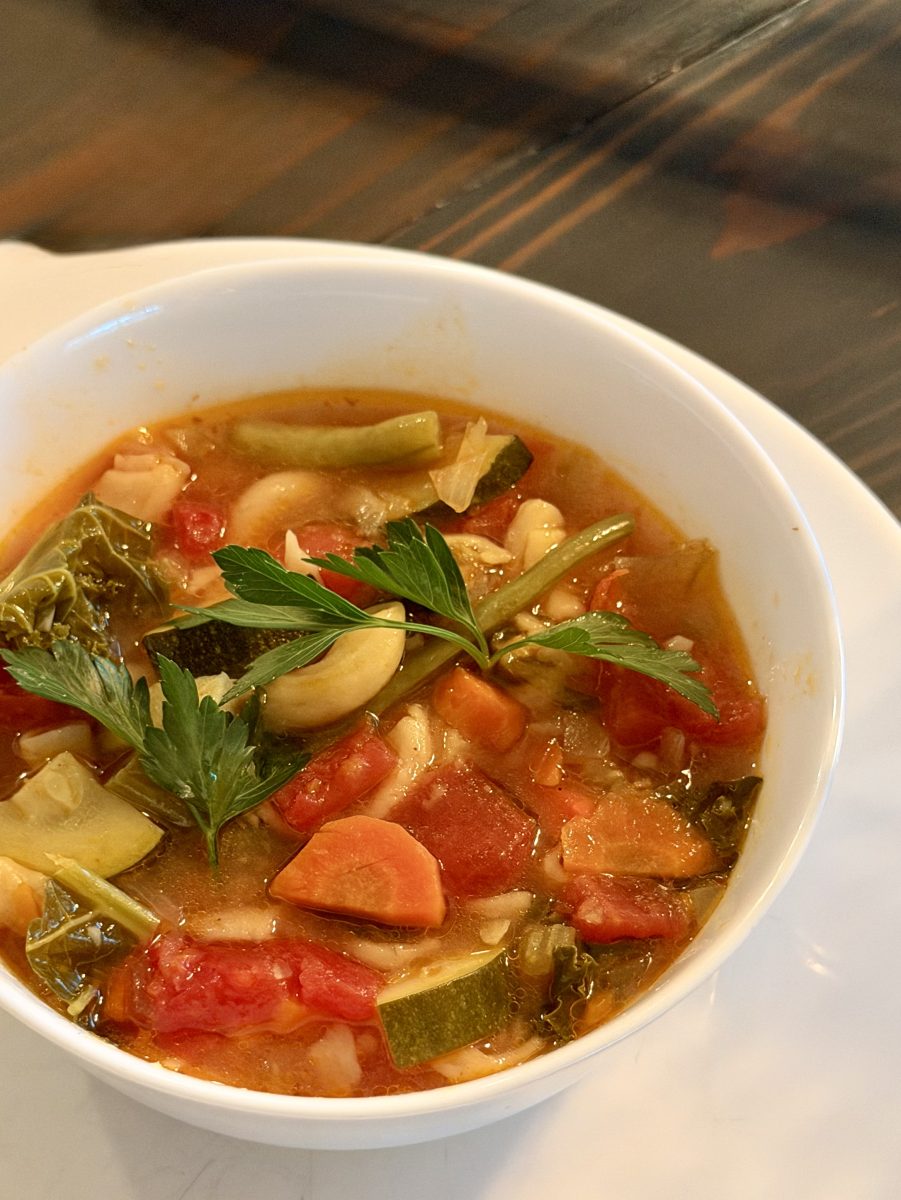
9) The soup comes with grated Parmesan and olive oil as accompaniments. You may remove the cheese rind first. It will have softened into chewy, deeply savory goodness and some may even see it as a reward for the cook. Portion the soup into large flat bowls and top with grated cheese and a gentle drizzle of good olive oil. The soup is best enjoyed while it is still hot.
Ways to Riff on Vegetable and White Bean Minestrone
- Tuscan ribollita: Omit the pasta and instead add small cubes of stale, crusty bread during the last ten minutes of cooking. The bread will absorb the broth and thicken the soup to a stew-like consistency, which is even better the next day.
- Pesto minestrone (minestrone alla Genovese): Stir 1-2 tablespoons of basil pesto into each bowl at serving. Bright, herby, completely different feel.
- Beans-and-greens: Omit the pasta entirely and increase the amount of white beans to 3 cups. In the last 10 minutes of cooking, add 4 cups of chopped kale, chard, or escarole. This alteration provides fewer carbs, more fiber, and is equally as satisfying.
- Spicy minestrone: Incorporate 1/2 teaspoon of red pepper flakes along with the garlic. This will add a slight warmth that is comforting, but not overpowering.
- Sausage and kale: Brown 1/2 pound of crumbled Italian sausage before the soffritto step, set it aside, and stir it back in at the end. Add a few large handfuls of kale during the last five minutes.
Good Company for This Dish
- Crusty bread or focaccia: For dunking. Required.
- Caprese salad: Fresh tomatoes, mozzarella, basil, olive oil, a summery counterpoint to the steaming-hot soup.
- Fresh Green Salad with Lemon Dressing: Balances the richness of the broth finished with Parmesan.
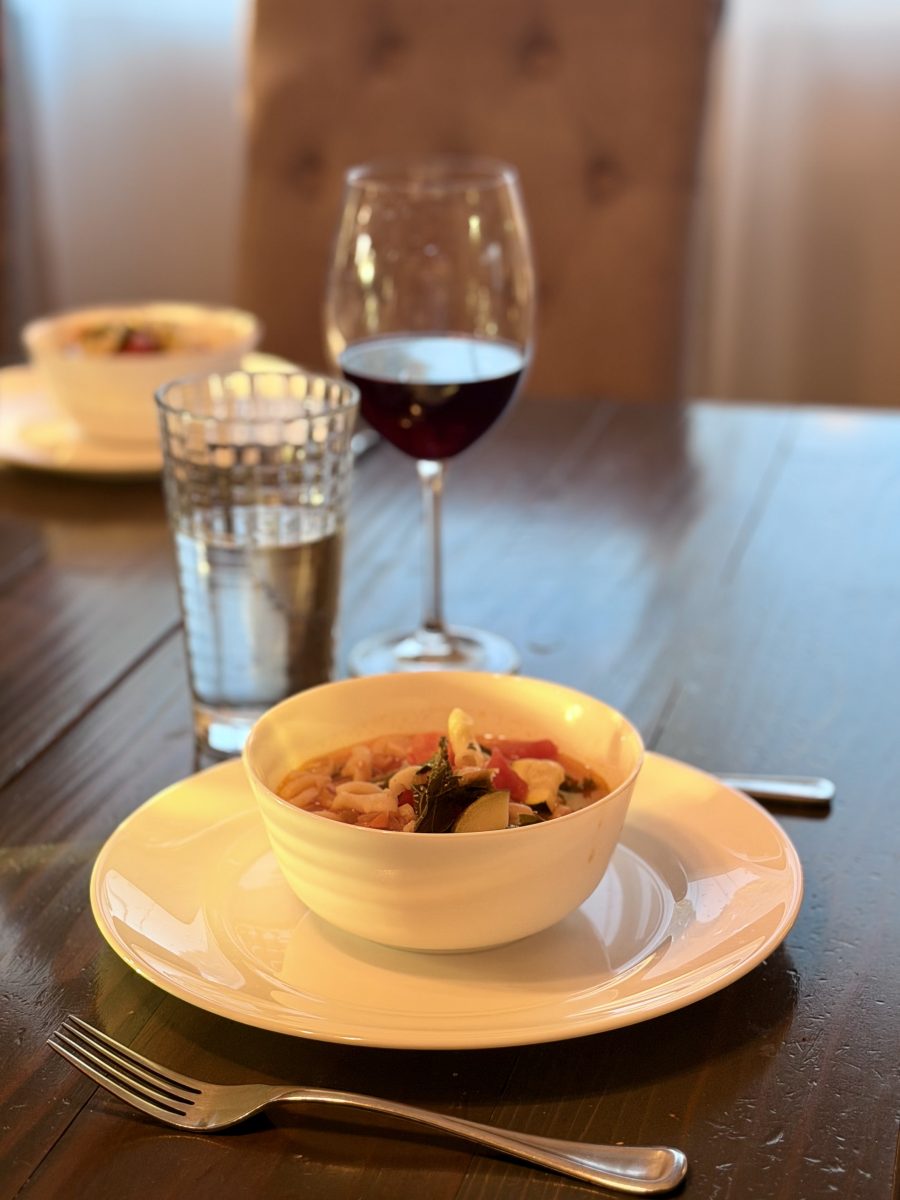
- A glass of Chianti or another dry, medium-bodied red wine will pair as well as it does in restaurants.
- Garlic toast is made by mixing olive oil with garlic and brushing it onto sourdough. Place the slice in the oven for about 5 minutes. This is almost a necessity.
- Antipasto board includes cured meats, olives, marinated peppers, and several cheeses. Transform the soup into a real dinner.

Trouble Spots and Tips
- Soup typically tastes bland and is often under-seasoned. To adjust, add salt incrementally (1/4 teaspoon) and taste after each addition. Note that if the soup still tastes flat after adding salt, try a small squeeze of lemon juice or a splash of red wine vinegar to brighten everything up.
- The pasta became bloated and mushy because it sat in the broth for too long. This could have happened because it was over simmered, or because the rest was stored with the pasta in the pot. When storing leftovers, cook the pasta separately and add it to each bowl. Alternatively, just know that day-two minestrone will have pasta that is softer than day one (which some people love).
- The beans were overcooked. Please add the beans no earlier than the last 10-12 minutes of simmering and avoid stirring them too much afterwards.
- Soup is possibly too thick because you may have reduced more liquid than intended. To remedy, add a small amount of broth or hot water to thin it out, and re-taste after you thin to check for salt.
- If the soup is too thin, simmer the pot uncovered for 10 to 15 minutes. Alternatively, to thicken the soup, you can mash half a cup of beans against the side of the pot.
- I don’t have a Parmesan rind, but you will still have a great soup. To mimic some of that umami flavor, stir in 1 tablespoon of white miso paste or 2 teaspoons of soy sauce right before serving. Not authentic, but effective.
- The vegetables became overcooked. The pot was too hot. Instead of medium, use medium-low for the simmer. A lazy bubble is the goal.
- To improve the taste, try letting it sit overnight which can allow the flavors to deepen your minestrone. If possible, store it without pasta, and reheat it gently.
Nutrition and Storage Notes
This minestrone is focused on plants, high in fiber, and naturally vegetarian (it’s vegan if you don’t use the Parmesan rind and finishing cheese). The beans add protein and help thicken the soup, and the olive oil and Parmesan provide enough richness that no one will miss meat unless they are specifically looking for it.
How much sodium is present will vary based on your brand of broth and tomatoes and how you season it during cooking. If you need to watch your sodium, use low-sodium broth and check how much salt you add.
Any covered leftovers should be stored in the refrigerator and eaten within four days. Many find leftovers taste better the next day, and day two minestrone is typically considered the best. Just keep in mind the pasta will continue to soften. If this bothers you, you might want to try cooking the pasta separately next time and adding it to individual bowls.
Minestrone can be frozen for three months, but for the best texture and to prevent mushy pasta, do not freeze with the noodles. Once you defrost it, you’ll need to cook the pasta fresh when you reheat it. To defrost, move the container to the refrigerator the night before. Once thawed, you can warm it on the stove with a little broth to loosen things up.
Field Notes
First attempt: My house smelled like a little trattoria, my children who usually don’t like vegetable soup had two bowls, I reckon it was the pasta and the parmesan that sold them, and needless to say, I’ll take the win. I did this on a Sunday when we have had rainy weather for a couple of days. It was that type of week where you want to eat soup but also want to feel good about yourself.
I had friends over for dinner and had planned a more elaborate menu, but time slipped away from me. I did a minestrone, a Caesar salad, and bought a loaf of focaccia from the bakery. Maybe 35 minutes of total active time. Our friend asked me three times what I did to the broth to make it taste “like that.” The answer was a Parmesan rind I had taken out of the freezer. I did not tell her this. I simply smiled and replied, “low and slow.”
Step-by-Step Recap
- After finishing a wedge of Parmesan cheese, save the rinds in the freezer.
- Chop the onions, carrots, and celery so that they are approximately the same size.
- Soffritto should be cooked for 8-10 minutes. Remember to heat olive oil and set it to medium.
- Add garlic for 30 seconds.
- Put in the tomatoes, broth, the rind of the Parmesan cheese, and chopped vegetables.
- Simmer 25 minutes, partially covered.
- Include beans and pasta, then allow to simmer for an additional 10 minutes.
- Season with salt and pepper to taste.
- To finish, drizzle with olive oil and top with grated Parmesan.
- If possible, for optimal texture the following day, store leftovers without the pasta.
Kitchen Words, Decoded
- Soffritto refers to the slowly cooked mixture of onion, carrot, and celery in olive oil. It is the foundation for Italian soups, stews, and sauces. In Spanish cooking, this is sometimes spelled “sofrito” and although it is related, the proportions of the ingredients are different.
- Parmesan rind is the outer layer of a wedge of Parmesan cheese. While the rind itself is inedible, when it is simmered it provides a salty, umami flavor. Because of this, they are worth saving.
- Cannellini beans are large, creamy white beans that are categorized as kidney beans. They are the traditional choice for the Italian soups minestrone and ribollita.
- Ditalini refers to small and tubular pasta that is the thimble size. Designed for soups.
- Ribollita: A Tuscan soup that is essentially leftover minestrone reconstructed with stale bread and re-boiled into a thick, savory porridge. The name translates to ‘reboiled.’
- Umami is the fifth basic taste that is described as savory and meaty. Foods that are rich in umami include parmesan rinds, tomato paste, soy sauce and mushrooms.
FAQ
Can I make this in a slow cooker?
Yes, Soffritto the onion, carrot, celery, and garlic. (This step is really hard to skip without losing flavor). Then, combine them in the slow cooker with the tomatoes, broth, Parmesan rind, and chopped veggies. Cook for 6-7 hours on low and 3-4 hours on high. In the last 30 minutes, add the beans and remember to cook the pasta separately for when you add it while serving.
Can I make this in an Instant Pot?
Certainly! While using the sauté function, prepare the soffritto and then add in the diced vegetables, tomatoes, broth, and Parmesan rind. Set it to HIGH for 8 minutes and do a quick release after. After that, switch back to sauté and add the beans and pasta and stir until the pasta is cooked and tender, which should take about 8-10 minutes.
What if I don’t have a Parmesan rind?
The soup will still taste good. To attempt to mimic the umami flavor, stir in 1 tablespoon of white miso paste, 2 teaspoons of soy sauce, or a very small splash of fish sauce (if you have any) at the end. They are not original, but all of them will work.
Can I make this vegan?
Correct. You can use vegetable broth and exclude both the Parmesan rind and finishing cheese. In order to substitute the umami flavor that the rind would have contributed, stir in 1 tablespoon of white miso paste or 2 teaspoons of soy sauce. Olive oil and a couple cracks of black pepper should complete each bowl.
What’s the best pasta shape?
Ditalini is a classic choice. While all types of pasta are good, I would suggest against ordering long pasta dishes like spaghetti or linguine. They don’t fit on the spoon, and you could end up with unexpected bloating.
Should I cook the pasta separately?
No, prepare day-one minestrone by cooking it in the pot. For the leftovers, prepare the pasta separately and put it in personal serving bowls. The pasta will absorb the broth and become mushy if it is left sitting in the broth overnight.
How do I keep my vegetables from getting mushy?
While simmering, keep the heat at medium-low and avoid stirring frequently. You want to achieve slow bubbling, not a full rolling boil. Also, be sure to chop your vegetables finely so they cook at the same rate.
Can I add meat?
Yes. Before moving on to the soffritto step, brown 1/2 pound of Italian sausage and drain the fat (most of it). You can also add cooked pancetta, pieces of prosciutto, or shredded chicken at the end.
One Last Thing
This white bean and vegetable minestrone soup will change the way you think about soup. It’s great for your wallet and made almost entirely out of pantry staples. This recipe is perfect for large groups with plenty of leftovers.
This soup is easy to prepare and even easier to impress your guests. When you wait, stir, and serve, the olive oil and Parmesan rind will do the rest of the work for you. If you have been making minestrone the same unexciting way for years, this recipe will put the ‘big soup’ back in big soup.
