
I’ll admit that I was a little suspicious when I was first told about ‘fruit with chicken.’ It sounded like a themed restaurant concept complete with a bird-shaped garnish.
However, I later made an honest attempt at peach chicken, with seared thighs, a pan sauce with shallots, and peaches that slump and caramelize around the edges, and just the right amount of vinegar to keep it from becoming a dessert. I was elbow deep in rice as I dug in and smeared sauce all over, like some kind of gremlin.
When I want a dinner that’s a little more magical (without having to plan a miracle), this is the version I make. It’s a one-pan meal, it’s forgiving with imperfect peaches, and it practically smells like you did great things. The only scary part is when the peaches hit the hot pan and you picture and think “Oh no, I’m making jam with chicken!” but trust me, the savory stuff comes up real soon.

The Quick Rundown
- Skillet Peach Chicken, the short story: Searing chicken thighs or breasts, then finishing them in a sticky peach pan sauce made with shallots, garlic, vinegar, and herbs.
- Why it works: Browning adds savory depth; peaches contribute a floral sweetness; and the vinegar and mustard keep the sauce bright rather than cloying.
- Timing: About 35 to 45 minutes total (10 minutes prep, 25 to 35 minutes cook time).
- Flavor profile: Sweet and savory, with light notes of tanginess, and combined with buttery and herbal elements – essentially encapsulating ‘late summer’ in a skillet.
- Key tips: Pat chicken dry for better sear; don’t over-stir the peaches; deglaze hard to lift the fond; add vinegar in small doses and taste.
- Best pan: For deeper flavors in sauces, use either stainless steel or cast iron; non-stick is ok but the flavors will be less pronounced.
Ingredients
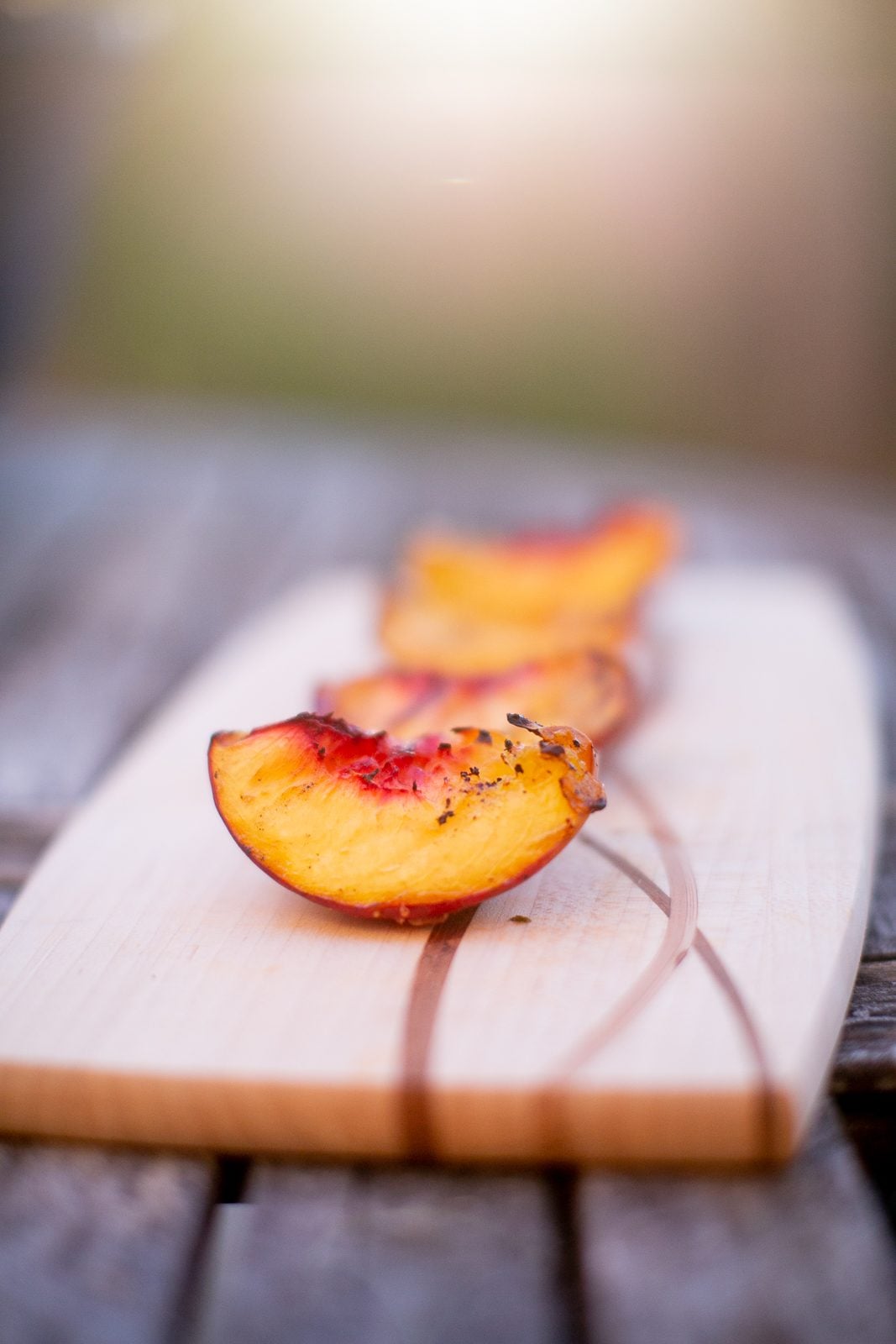
The only factors that contribute to how well peach chicken turns out are: the chicken cooking technique (i.e., was the chicken seared properly) and the quality and management of the peaches. If the peaches are underripe, let them cook longer to get more of a caramelized effect and add some extra honey for sweetness. If the peaches are overripe, try to keep the peaches from becoming a puree before the chicken is done.
- Chicken: My preference is for 1 1/2 to 2 pounds of skin-on, bone-in thighs, or you may use boneless thighs or breasts (refer to table below for timing notes).
- Peaches: Three medium ripe peaches. They’re easier to deal with when they are freestone, but frozen peaches are fine too (thaw and drain).
- Aromatics: 3 minced cloves of garlic; 1 large shallot, sliced thinly.
- Acid: 1 to 1 1/2 tablespoons apple cider vinegar (or sherry vinegar). This is the seatbelt.
- Body and balance: 1 tablespoon of dijon mustard; 1 to 2 teaspoons of honey or brown sugar (based on the sweetness of the peaches).
- Liquid: 1/2 cup chicken stock (low sodium stock helps you manage the sodium content).
- Fat: 1 to 2 tablespoons of olive oil (as needed) and 1 tablespoon butter to finish the sauce (optional, but it gives the sauce that glossy restaurant look).
- Herbs: Fresh thyme (6 to 8 sprigs) and/or rosemary (1 small sprig). If you’re feeling generous you can add sprigs of parsley or basil at the end.
- Seasoning: Kosher salt and black pepper, and possibly an optional pinch of red pepper flakes.
Master Ratio (Easy To Scale)
- Per 1 pound chicken: 1 to 2 peaches, 1/4 cup of stock, 1/2 tablespoon of vinegar, 1/2 tablespoon of dijon mustard, 1/2 to 1 teaspoon of honey, and 1/2 shallot.
Example: cooking for two with 1 pound boneless thighs? Use 2 peaches, 1/4 cup of stock, 1/2 tablespoon of vinegar, 1/2 tablespoon of Dijon, and 1 teaspoon of honey. It is recommended to use the same method but to simmer for a little shorter time at the end.
Ingredient Choices That Change Flavor
Some recipes are very particular, and every little adjustment is likely to be very noticeable. Once I experimented with sherry vinegar and tarragon since that was what I had hiding in the fridge door, and it tasted like a bistro special, which I sure didn’t deserve on a Tuesday.
| Component | Option | What it does | Best for |
|---|---|---|---|
| Chicken cut | Bone-in, skin-on thighs | Crispy skin, juicy meat, richer drippings; hardest to overcook | Maximum flavor and texture |
| Chicken cut | Boneless thighs | Fast, forgiving, still flavorful | Weeknights, meal prep |
| Chicken cut | Breasts (cutlets or halved) | Lean; can dry out if you blink | When you want lighter, quicker |
| Peaches | Fresh ripe | Floral, bright, holds shape if handled gently | Peak season |
| Peaches | Frozen (thawed, drained) | Softer texture, more “saucy” outcome | Off-season, convenience |
| Acid | Apple cider vinegar | Cozy tang that reads a little “country” | Classic comfort vibe |
| Acid | Sherry vinegar | Nuttier, more elegant edge | When you want it to feel restaurant-y |
| Herbs | Thyme | Soft, woodsy, goes with peaches naturally | Default, crowd-pleasing |
| Herbs | Rosemary | Piney and louder; can dominate if heavy-handed | When your peaches are very sweet |
Optional Add-Ins (If Your Kitchen Mood Swings)
- Bourbon: Add 1 to 2 tablespoons during the deglazing step for a warm, caramel hint.
- Ginger: 1 teaspoon of freshly grated ginger can be combined with the garlic to achieve a more radiant and almost effervescent result.
- Heat: Add red pepper flakes, or if you prefer a combination of sweet and spicy, you can use a minced jalapeño along with the shallot.
- Fruit friends: A few raspberries were added at the end for a tart pop (surprisingly good, a bit chaotic).
Instructions
Servings: 4
Equipment: Large saucepan (12-inch), tongs, spoon
1) Prepare the chicken and dry it off. Be sure to dry the chicken thoroughly; this will ensure that you have a bronzed chicken as opposed to a pale chicken. Generously add kosher salt and black pepper to both sides. If you are using skin-on thighs, sprinkle some salt on the skin then set it aside, and move on to slice the peaches and the shallots.
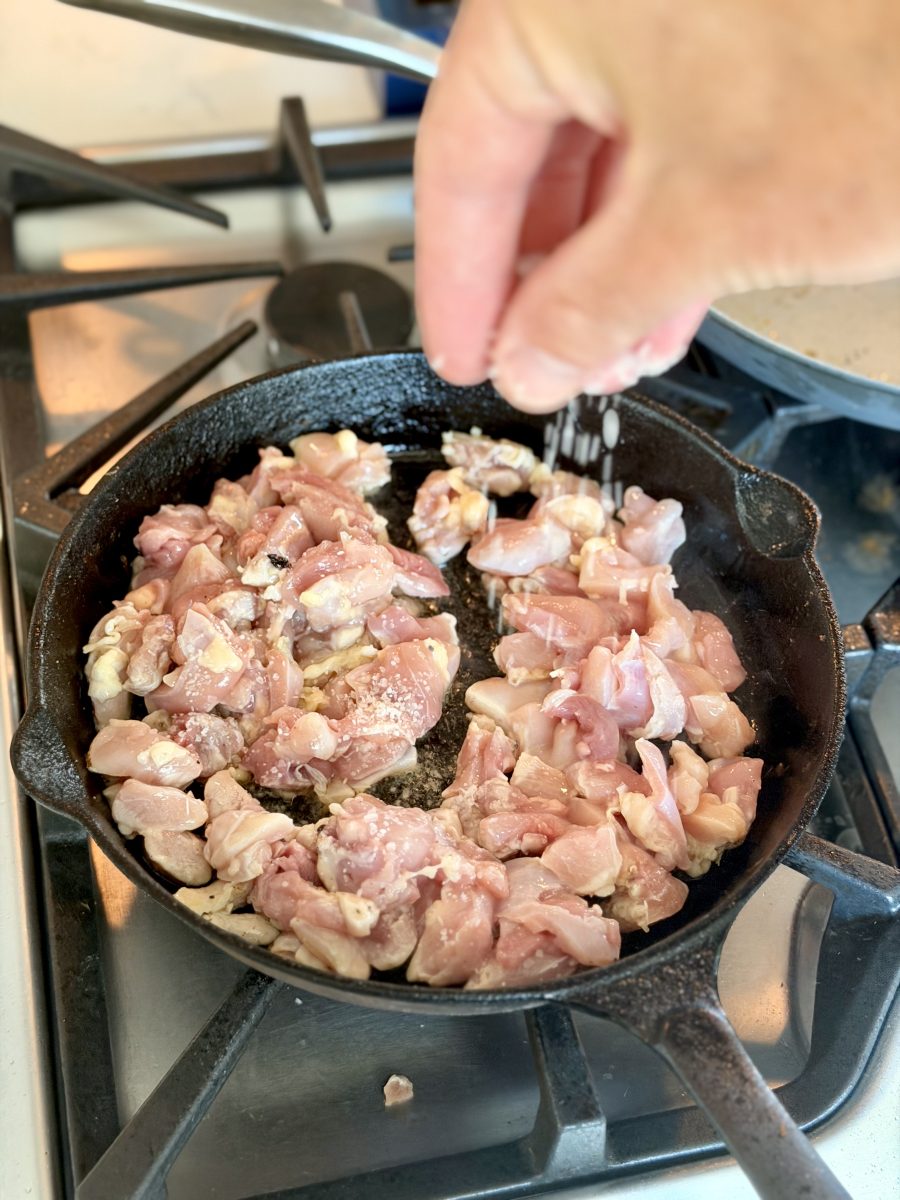
2) Sear until real color develops. Put a large skillet on the stove over medium-high heat. Once it’s pre-heated, add 1 tablespoon of olive oil and, if applicable, add skin-on chicken pieces with the skin-side facing down. Let them cook without touching them for 6 to 8 minutes. You’ll know they’re ready to be flipped when they become a deep golden brown color and release from the pan easily.
Once they do, flip the chicken and let them cook for another 3 minutes. Once that’s done, transfer the chicken to a plate. If you have boneless thighs or breasts, do the same, but sear for only 3 to 4 minutes on each side, and take them off a bit earlier than 3 minutes, as they will finish cooking in the sauce.
3) Pour excess fat off, but keep the good stuff. If there is a significant amount of rendered fat, pour off all but approximately 1 tablespoon. Leave the crusty bits that are stuck to the pan. That is the character you will have down the road.
4) Turn the heat down to medium. Sauté the shallots and awaken the garlic. Put in the cut shallots with a pinch of salt. Cook them until tender so they start to change color. This should take around 2-3 minutes. Add the garlic, as well as red pepper flakes if you are using them. Stir for around 30 seconds, or until the scent of garlic rises.
5) Gently caramelize the peaches. Put the peach wedges in the skillet and let them sit for a minute before stirring. Cook for 3 to 5 minutes, turning once or twice, until the edges are brown and the pan smells like savory, caramelized peaches. If your peaches are really ripe, be gentle and try to stir less and keep the heat lower.
6) Make the sauce and deglaze the pan enthusiastically. Add some Dijon mustard and honey (start with a small amount). Pour in some vinegar and use a spoon to lift the fond from the bottom of the pan. Add the chicken stock and thyme sprigs (and rosemary if using, but shoot for light). Bring to a simmer.
7) Return chicken and simmer until done. Return the chicken with its juices to the skillet. Reduce heat to maintain a steady simmer. Cover (or leave it uncovered for a thicker sauce) and cook until the chicken is safe to eat: bone-in thighs usually take 15 to 20 minutes; boneless thighs take 8 to 12 minutes; breasts take 6 to 10 minutes depending on how thick they are. Using a thermometer, you will want to achieve 165°F (I prefer thighs a little higher around 175°F for tenderness).
8) Finish with gloss and balance. Remove the herb sprigs. Now taste the sauce. If it tastes flat, add a few more drops of vinegar. If it’s too sharp, try putting in a bit more honey. Add the butter off the heat for gloss. Spoon the peaches and the sauce over the chicken and let it rest for 5 minutes before serving. This gives the sauce time to settle and cling to the chicken.
Ways to Change It Up
- Grilled peach chicken: You should grill the chicken separately and the peaches as well – grill the peach halves with the cut sides down. For the sauce, combine stock, vinegar, mustard, and any drippings you may have.
- Spicy-sweet version: Incorporate 1 tablespoon of gochujang along with the Dijon, and include an additional dash of vinegar for balance.
- Creekside-herb vibe: Replace thyme with tarragon, use sherry vinegar, and finish with chives.
- Sheet pan peach chicken: Roast chicken and peaches at 425°F, then make a quick stovetop sauce with stock and vinegar, scraping the roasting pan for fond.
- Creamy peach chicken: Add 2 to 3 tablespoons of heavy cream to the mixture at the end (keep the vinegar to a minimum and taste as you go).

Rounding Out the Plate
- Rice or orzo: I enjoy how jasmine rice pairs with peaches when they are particularly floral. I also enjoy jasmine rice with a sauce that has a fruity flavor.
- Mashed potatoes: As a classic comfort food pairing, the taste of this peach sauce may lead to reassessments on initial appearances.
- Polenta: This is especially nice with some rosemary and a splash of bourbon.
- Greens: Consider an arugula salad with lemon for a peppery crunch or sautéed garlic kale for that virtuous feeling.
- Roasted green beans: With almonds, you will get some contrast in texture to the soft peaches.
- Bread: Crusty bread for the last swipe of sauce. Non-negotiable in my house.
Rescue Notes
- My chicken didn’t brown. Either the pan wasn’t hot enough, the chicken was too wet, or you moved it too soon. Make sure to dry the pan, heat it for a longer period, and allow the chicken to stick to the pan until it releases.
- The peaches turned to mush. They may be overly ripe, or you may have stirred too much. Next time, try adding them a little later (after deglazing) or use peaches that are a bit firmer.
- The sauce tastes too sweet. Add vinegar a teaspoon at a time, along with a little more salt. Pulling the sweetness back in line can also be achieved by using Dijon.
- The sauce tastes too sharp. Stir in a little more honey or a pat of butter and let it simmer for 2 minutes so the flavors can meld.
- The sauce is thin. Simmer uncovered for a few additional minutes, or remove the chicken to rest, and quickly reduce the sauce and spoon it over.
- The garlic burned. It will happen quickly after the shallots. Limit it to 30 seconds and add a splash of stock if the pan appears to be getting too hot.
- Don’t skip resting. Five minutes makes the chicken juicier and the sauce thicker. That’s a small toll on your patience that pays off nicely.
Leftovers, Storage, and Reheating
The cut of chicken, and the amount of fat you leave in the pan, determine the nutritional value of the dish. It is obvious that thighs with bone and skin will be richer with butter added. Breasts, however, have less fat, and are therefore less forgiving. Peaches will contribute some natural sugars, but surprisingly the dish will become more savory with the addition of vinegar and salt to keep the edges crisp.
Keep leftovers sealed in an airtight container and refrigerate for 3 to 4 days. To reheat on the stove, add a little stock or water to loosen your sauce, and do this gently! I do it in short increments and pause it before it reaches that angry boiling stage to avoid the chicken tightening and the peaches getting jammy. It also freezes well (up to two months), but thawed peaches will be softer.

Times I’ve Made This
Example 1 (weeknight save): I crafted this meal after a long day and the only produce I had in the kitchen were three peaches that were about to go into compost. I used boneless thighs and didn’t add butter, plus I just threw in a pinch of red pepper flakes.
It still tasted quite intentional. I think it was a bit more “peachy” than I expected and maybe slightly less defined, but it was most definitely the type of meal to have over rice with a handful of basil that makes you not want to order takeout.
Example 2 (hosting without admitting): Skin on thighs plus sherry vinegar and bourbon (1 tbsp) plus parsley and toasted almonds. I was clearing plates when people started asking for the recipe. It was very flattering but also very annoying because I had nothing written down. The technique for the day was to reduce the sauce uncovered for a gloss, spoonable finish.
Step-by-Step Recap
- Purchase peaches that have a fragrance characteristic of a peach, as scent is of greater importance than appearance.
- Pat chicken dry and salt it well.
- Sear until truly golden; don’t rush this.
- Cook shallot, then garlic briefly.
- Caramelize peaches with minimal stirring.
- Deglaze using stock and vinegar and then scrape the fond.
- Simmer chicken in sauce until done.
- Taste and adjust the seasoning: add more vinegar for brightness, more honey for roundness, and add butter for gloss.
Quick Definitions
- Fond: The sauce picks up the deep flavor provided by the browned bits that become stuck to the pan after the searing.
- Deglaze: Pouring liquid (stock, vinegar) into a hot pan and scraping to loosen the fond.
- Sear: High-temperature browning creates flavor and enhances texture.
- Simmer: Softly bubbling; hot enough to cook the meat all the way through without toughening it too quickly.
- Freestone peach: A peach with a pit that separates easily, resulting in less wrestling at the cutting board.
Asked and Answered
Are canned peaches suitable for this recipe? Yes, although your best option would be peaches in juice (not in heavy syrup). Drain them and add them late to avoid disintegration. You may need to use less honey.
What is the best chicken cut for peach chicken? Bone-in, skin-on thigh cutlets would be best for juicy meat and crispy skin on top. Of all the options, boneless thighs are by far the easiest. Breasts work, provided you slice them thin and watch the timing.
What are ways to tell that your chicken meat is fully cooked and to avoid overcooking? The simplest way is to use a meat thermometer to see if it has reached 165°F in the thickest part. In the absence of a meat thermometer, in order to ensure that the chicken is done, make a cut through the thickest part of the meat; the juices should run clear and there shouldn’t be any translucent pink.
Why include mustard? Dijon helps with emulsification and adds a little heat to the sauce so that it doesn’t feel oily-sweet, but instead cohesive.
Can I prepare this in advance? Absolutely. Prepare it in advance, let it cool, and then place it in the fridge. When ready to eat, add a splash of stock and reheat it gently. To add an invigorating flavor profile and finishing touch, stir in some fresh herbs just before serving.
My peaches do not have any sweetness. What’s next? You might try cooking them a tad longer to coax out some caramelized notes, add another teaspoon of honey, and maybe a splash of bourbon or balsamic to add some depth.
The Last Word
Until you try how the rich flavor of the chicken and the jam-like consistency of the fruit are bound together by vinegar and a touch of mustard, peach chicken may appear to be a gimmick. Once you experience the combination of well-cooked peaches and a sizzling hot pan, you will understand why I am so drawn to this recipe every summer, even when I tell myself I’ll make something “normal” that week.
