
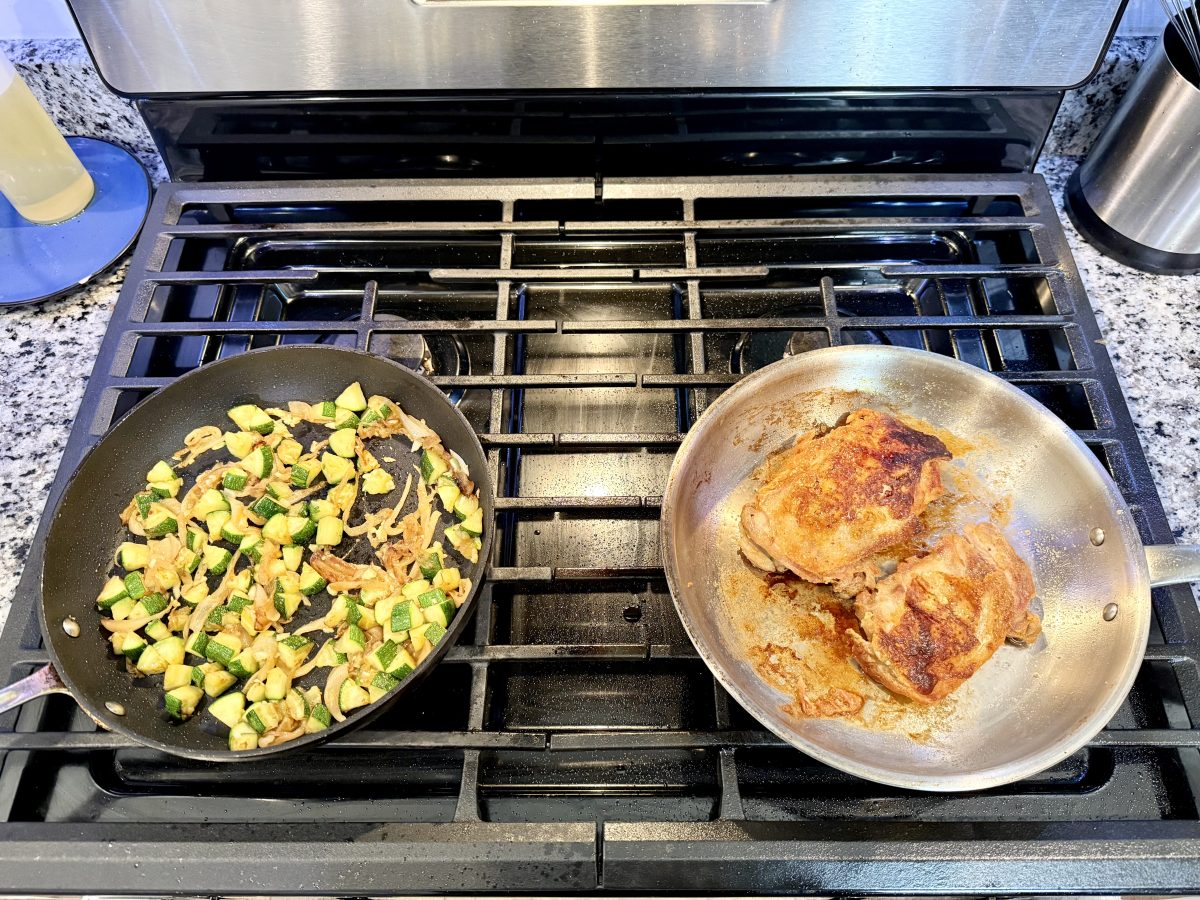
You have six chicken thighs and one skillet, and every instinct says they will all fit. Technically they do. Then they come out pale and soft, with skin like wet paper, and the recipe was never the problem. A crowded pan steams food instead of browning it, and no amount of extra time will turn steam into a sear.

The steam problem
Every piece of food releases moisture as it heats. In a roomy pan, that moisture escapes as steam and drifts off, leaving the surface dry enough to brown. In a packed pan, it has nowhere to go. Steam rises, hits the food stacked around it, condenses back into water, and drips right back down. Each piece ends up sitting in its own damp cloud, and pieces that touch or overlap block the escape routes entirely.
A wet surface cannot brown. The skin will not crisp, the crust never builds, and the whole batch cooks through without picking up color. You end up with food that is fully cooked and completely beige.

The temperature crash
Here is the number that explains it. Trapped steam can only reach the boiling point of water, about 212°F. Browning does not start until the surface climbs near 300°F, when the Maillard reaction kicks in and starts building crust and flavor. As long as steam keeps the surface wet, your food is locked out of that range entirely.
Crowding also drains the pan itself. A load of cold food dropped in at once knocks the metal’s temperature down hard, so even the pieces with breathing room stop searing while the pan recovers. Your ears catch it before your eyes do: a steady sizzle means browning, while a quiet pan with liquid pooling means steam.
| Crowded pan | Roomy pan | |
|---|---|---|
| Steam | Trapped between the pieces | Escapes freely from all sides |
| Surface heat | Stuck near 212°F | Climbs into browning range |
| Sound | Quiet, with liquid pooling | A steady sizzle |
| Result | Pale, soft, steamed | Crisp, browned, seared |
How much room is enough
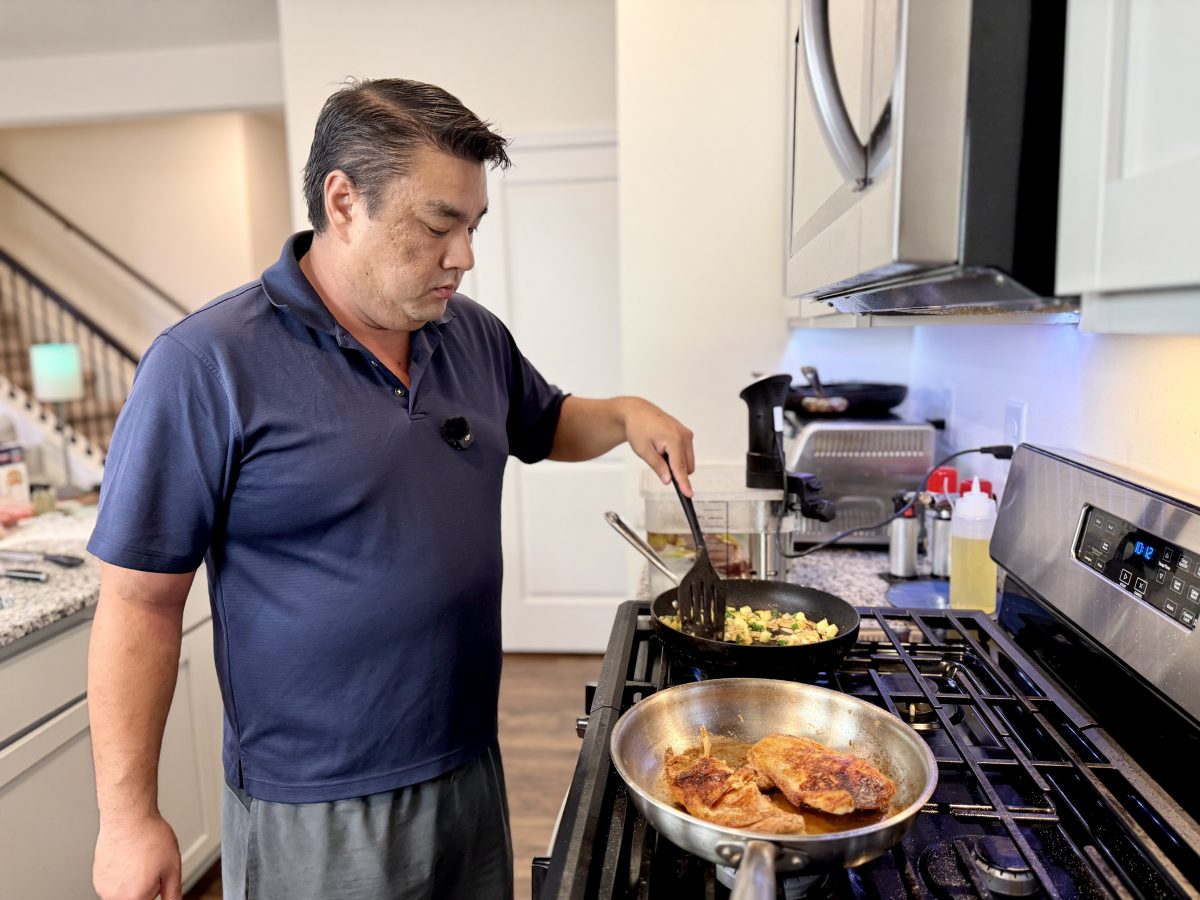
Enough that nothing touches. Leave visible pan between the pieces, and if a batch will not fit in a single layer with gaps, split it. Two quick rounds beat one soggy one, and the first round holds its crust on a rack in a warm oven while the second cooks. If batches feel tedious, go wider: a bigger skillet or a second pan, never a fuller one.
The rule covers more than meat. Onions piled three deep sweat into softness instead of taking on color, which is useful only when sweating is what the recipe wants. Mushrooms, zucchini, and anything spread on a sheet pan follow the same physics. The one real exception is skin-on cuts where the fat should render slowly before the surface crisps; that is a job for a cold start, not a hotter crowd.
The same thinking applies in the oven. A sheet pan of roasted vegetables browns beautifully when the pieces sit in one layer with space around them, and turns to mush when they pile up, because the pile traps steam exactly the way a crowded skillet does. If one tray will not hold everything comfortably, use two trays on two racks and swap them halfway through.
If you want proof, run the test tonight. Split one pack of chicken thighs in half. Sear the first half packed edge to edge, then the second half with room around every piece, same pan, same heat, same timer. Taste them side by side. Once you hear the difference between a sizzle and a simmer, you will never trust a full skillet again.
