About four minutes into making this chickpea curry, there is a moment when the spices meet the hot oil, and suddenly the kitchen is filled with the smell of a restaurant I’d happily spend money to eat at. Each time, I say, “Oh right, this is why,” and remember why I keep three cans of chickpeas in the pantry as a principle. It is always there for this reason. Over the past year, this has been the most used recipe in my collection.
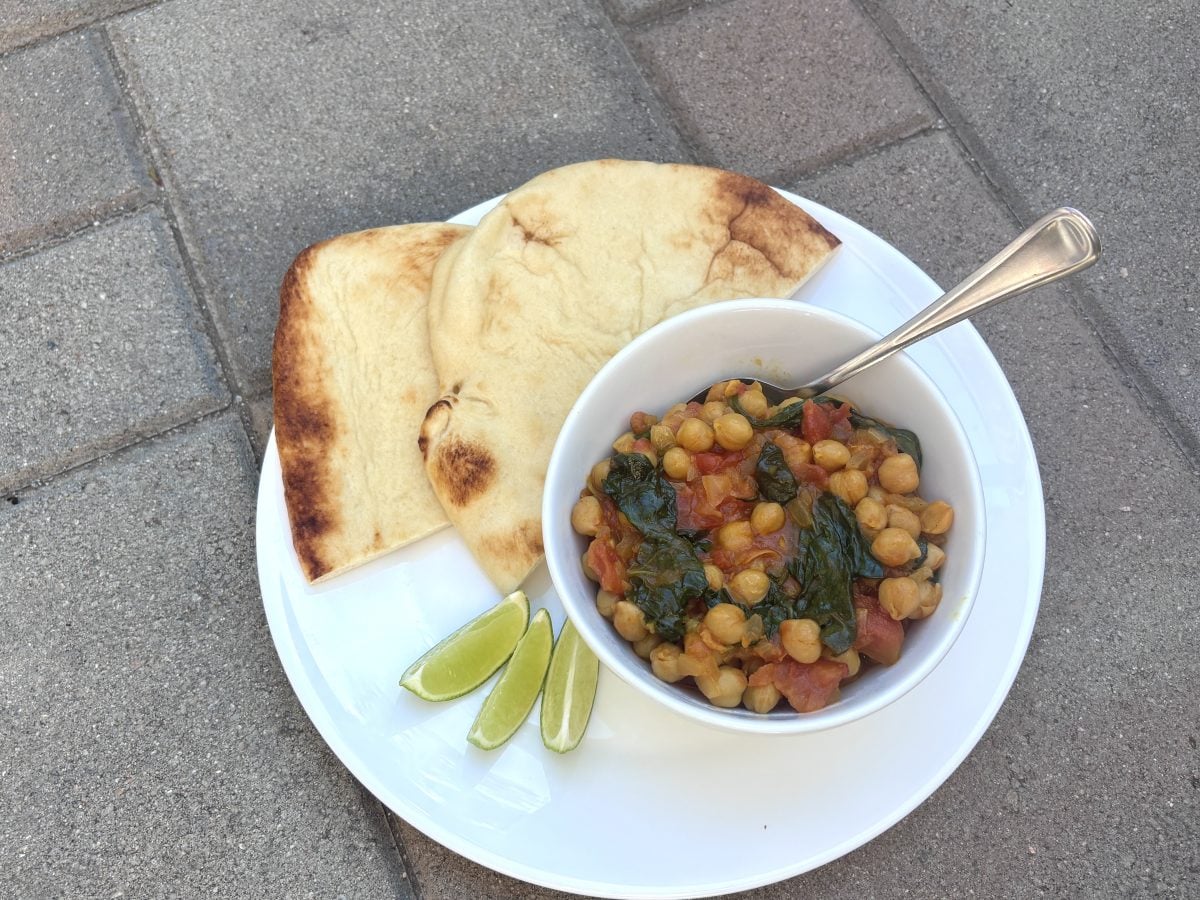
Of the five steps, two carry more weight than the other three. Step two is blooming the spices in the oil until you can smell each one distinctly. Step five is finishing the curry with a generous squeeze of lime. With those two steps, your curry will transform from an item being quickly thrown together from your pantry to an item that will make you feel like your Wednesday night is planned out. The rest is just a matter of stirring.

The Short Version
- Chickpea Curry that makes a solid meal: A pantry chickpea curry made with onion, ginger, garlic, and some warming spices, along with tomato and coconut milk (or cream/butter), wilted spinach, and topped off with a squeeze of lime, takes 25 minutes to prepare.
- Why it works: Blooming spices in oil gives them that restaurant flavor. And the lime at the end to elevate this.
- Timing: Prep time takes 5 minutes. Cooking takes about 20 minutes. You will serve this over rice for a total time of 25 minutes.
- Flavor profile: Warm, fragrant, and slightly sweet from the cooked onion and tomato, gently spicy, and lime brightens it at the end.
- Key tips: Please do not skip the 30-second spice bloom. Please do not skip the lime. Use canned chickpeas (drained, but not rinsed too thoroughly as the starchy coat helps the sauce).
Ingredients
The primary aim of this recipe is that it is made from canned ingredients, onion, and some fresh vegetables. Out of everything, the spices (only use ones you’ve opened in the last year, not a jar from 2019) and limes (please use a real lime, the plastic squeeze bottle won’t hit the same) are the only things that really matter.
From a technical standpoint, the coconut milk, cream, or butter are optional at the end. If you omit it, the end result will be a leaner curry with a stronger tomato flavor. Even a small splash of any of those ingredients will change the texture from “a sauce” to “the kind of sauce you want to sop up with bread.” I would consider coconut milk the default, while the other two are just as good of an option.
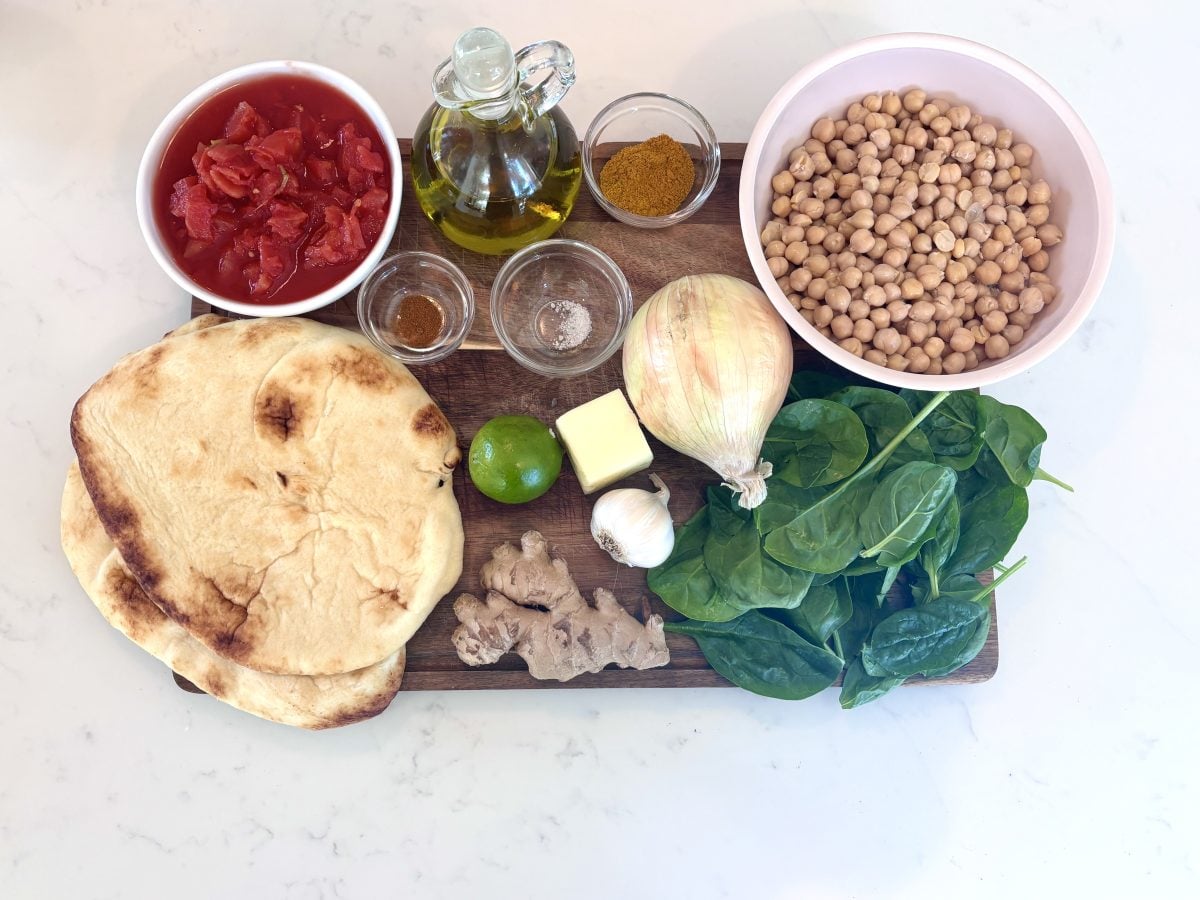
- Oil (2 tbsp): Use neutral oil, olive oil, or ghee if you have it.
- Yellow or white onion (1 large, chopped): Sweat it gently; don’t brown.
- Kosher salt (a pinch + more to taste): Pinching the onion allows it to sweat instead of burning.
- Garlic (2 cloves, minced): Add the spices but not the onion (it will burn during the longer cook).
- Fresh ginger (a thumb-sized piece, grated): A microplane is the way to go; the fibers vanish into the sauce.
- Curry powder OR garam masala (2 tsp): While the two blends are different, either one works in this recipe. Curry powder is more yellow and has more turmeric than garam masala, which has a warmer, toastier profile.
- Cayenne (a pinch, more if you like heat): Adjustable; start small.
- Canned diced tomatoes (1 x 14 oz can, with juice): Having fire-roasted is a slight flex.
- Water (about 1/4 cup): Simply add a splash to deglaze the pan and loosen the tomatoes.
- Canned chickpeas (2 x 15 oz cans, drained): Don’t wash away all the starch a little cling will help the sauce.
- Coconut milk, cream, or butter (1/2 cup coconut milk OR splash of cream OR 1–2 tbsp butter): Pick one; any of them works.
- Baby spinach (2 generous handfuls): Additions at the end; wilts in half a minute.
- Lime (1 whole, cut into wedges): The single most important finisher. Don’t skip.
- Rice or naan, to serve: If you’re feeling fancy, you could have warm naan.
Master Ratio (Easy To Scale)
- Per 2 cans chickpeas (serves 4): 1 onion, 2 cloves of garlic, 1 thumb of ginger, 2 teaspoons of spice mix, 1 can of diced tomatoes, 1/2 cup of coconut milk, 2 handfuls of spinach, and 1 lime.
- For a smaller batch (1 can chickpeas, serves 2): You should halve the onion, garlic, ginger, tomato (use half a can and freeze the rest), and coconut milk; maintain the same spice level.
An example: feeding two people who want to eat the rest of the leftovers? Finish the whole recipe and set aside half for lunch tomorrow. This curry is one of the rare ones that actually improves after a night in the fridge. With the continual development of the spices and sauce absorption by the chickpeas, you may find yourself changing your schedule to eat those leftovers.
Ingredient Choices That Change Flavor
| Ingredient/Choice | Best For | Flavor/Texture Effect | Notes & Substitutions |
|---|---|---|---|
| Curry powder | A milder, more familiar curry | Yellower, turmeric-forward, gently warming | Madras curry powder if you want more heat |
| Garam masala | Warmer, toastier version | Cinnamon and clove notes, less turmeric | Add a pinch of turmeric alongside if you want the yellow color |
| Coconut milk (1/2 cup) | The default richness | Creamy, slightly sweet, mellows the heat | Full-fat from a can; light coconut milk feels watered down |
| Heavy cream (a splash) | Dairy lovers | Plush, French-leaning texture | Add at the end; don’t boil it hard |
| Butter (1–2 tbsp finished in) | Lazy weeknight luxury | Glossy, restaurant-y finish | Cold butter, stirred in off heat |
| Canned chickpeas | The whole premise of the dish | Soft, tender, fast | Drain but don’t over-rinse |
| Dried chickpeas (soaked + cooked) | Slightly better texture | Firmer, more flavorful | Adds 60–90 minutes; only worth it if you already have them cooked |
| White beans or lentils | Pantry substitute | Different shape, same idea | Cannellini or red lentils both work; lentils thicken the sauce |
| Spinach | Quick green, mild | Wilts in 30 seconds, mild flavor | Kale takes longer; frozen peas swap in if no leaf greens |
| Lime (fresh) | Non-negotiable | Brightens everything; turns “fine” into “again” | Real lime; bottled lime juice is not the same |
Instructions
Pan: a large deep skillet or saucepan. You need a large surface area to soften the onion without it mounding, but plenty of wall space to contain a saucy simmer. The last step is done in under a minute, so have your spinach and lime ready.
1) Sauté the onion. To a deep skillet or saucepan, add 2 tablespoons of oil and heat on medium. Add one diced onion and a pinch of salt and cook for about 5 minutes, stirring occasionally, until the onion is soft and translucent. You don’t want it to brown; you want it to become sweet and floppy. The salt draws out moisture and prevents the onion from burning.
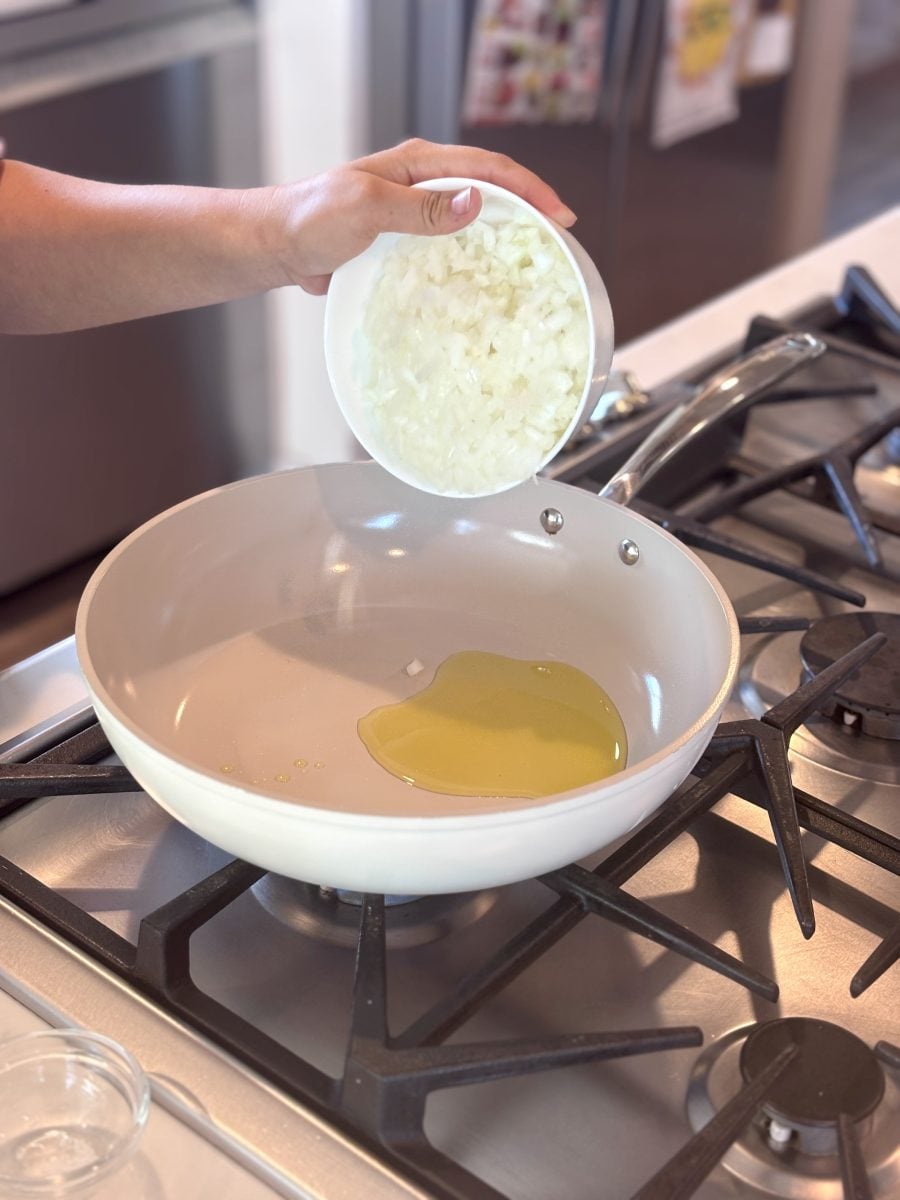
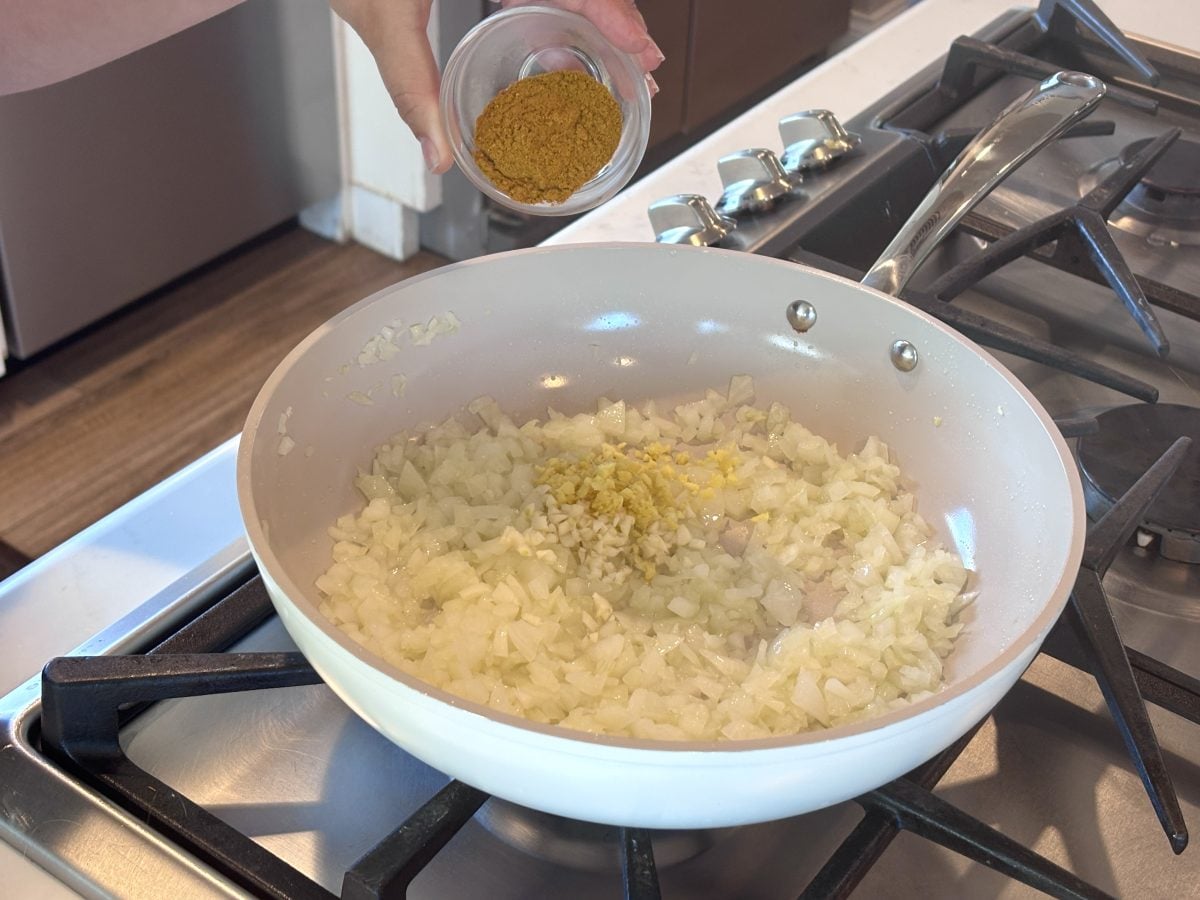
2) Bloom the spice. Also, add in 2 minced garlic cloves, a thumb-sized piece of grated ginger, 2 tsp of curry powder (or garam masala; they aren’t the same but both work here), and a small dash of cayenne. While stirring, take note of the rising smell of the spices as you do so for 30 seconds.
What you are experiencing is the difference between a lifeless, flat curry and a blooming, fragrant one. Even though the spices are starting to smell better, you shouldn’t rush to leave because in another 15 seconds, the spices will go from “bloomed” to “burned.” Once the cumin in the curry is burned, you’ll be left with an flavor that is simply irredeemable.
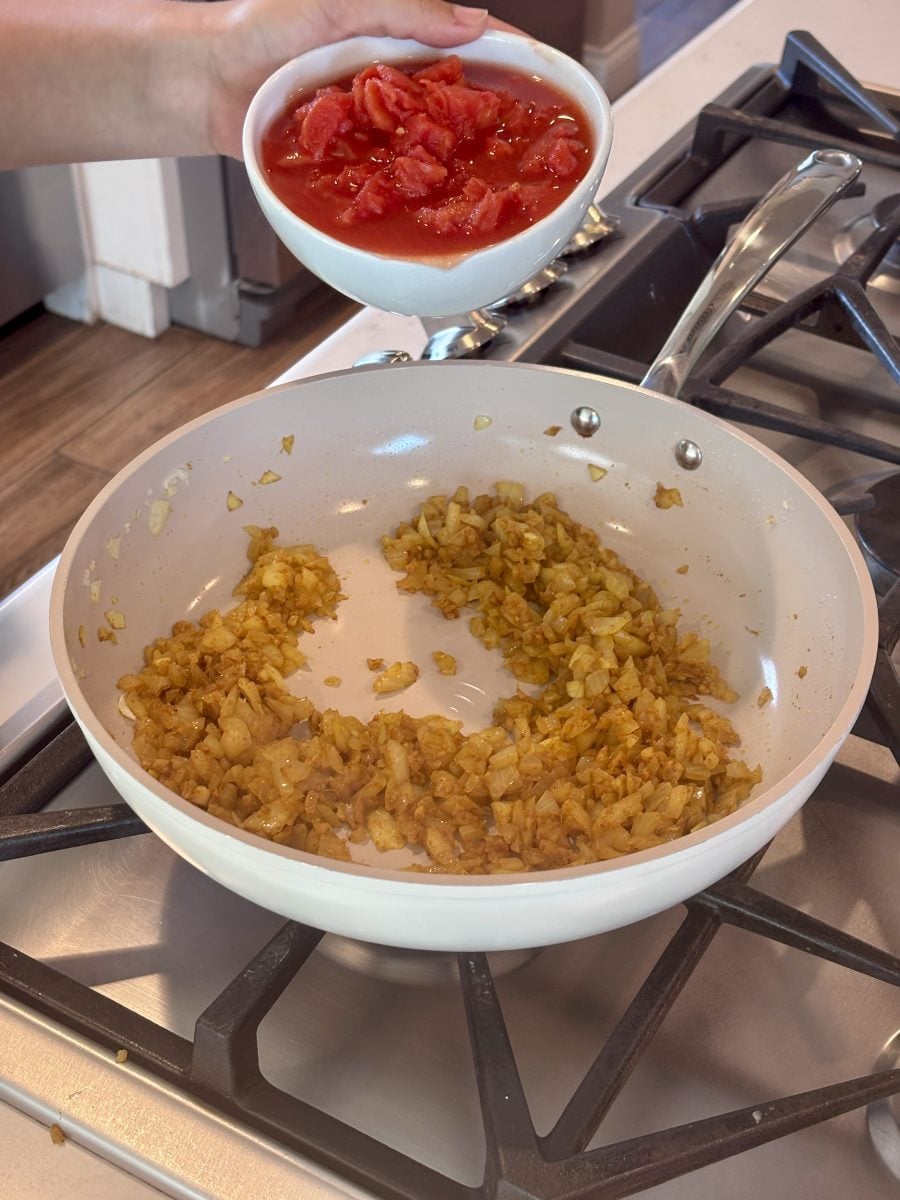
3) Add the tomatoes, and let them break down. Pour in one 14-ounce can of diced tomatoes with the juice and add a little water (about ¼ cup) to help them break down. Stir and scrape the bottom of the pan to release the stuck bits and bring to a simmer. Cook for 5 minutes, and use a spoon to break apart the tomatoes as they soften. You would prefer most of them to be broken down into sauce and not just distinct cubes.
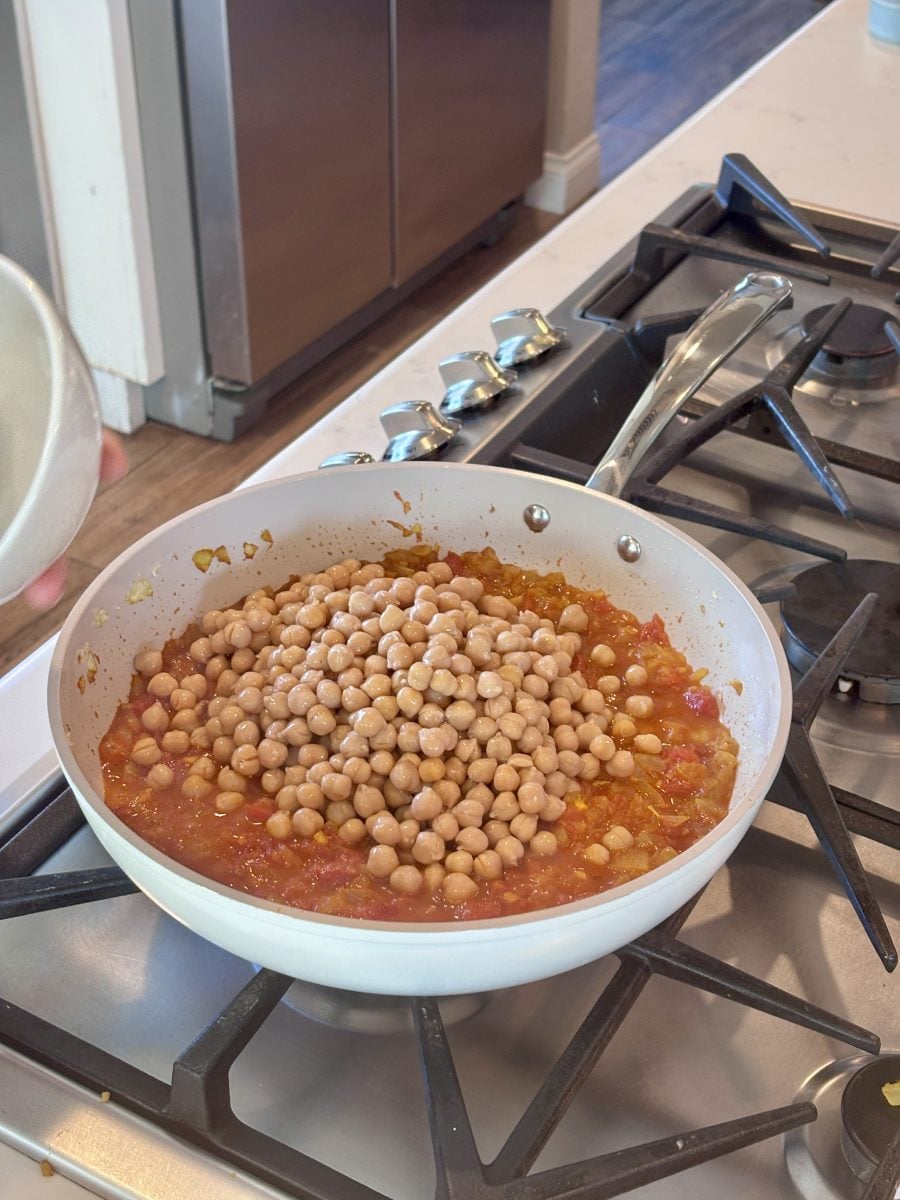
4) Stir in the chickpeas and let it thicken. Add two drained cans of chickpeas and approximately half a cup of coconut milk, if you have it. Stir it every now and then while it simmers to thicken the sauce and let the chickpeas soak up the flavors for about 10 minutes. If you don’t have coconut milk, try a splash of cream or stir in a knob of butter at the end, If you have, beans or lentils, they will work in place of chickpeas and peas. You can use frozen peas if you don’t have any greens.
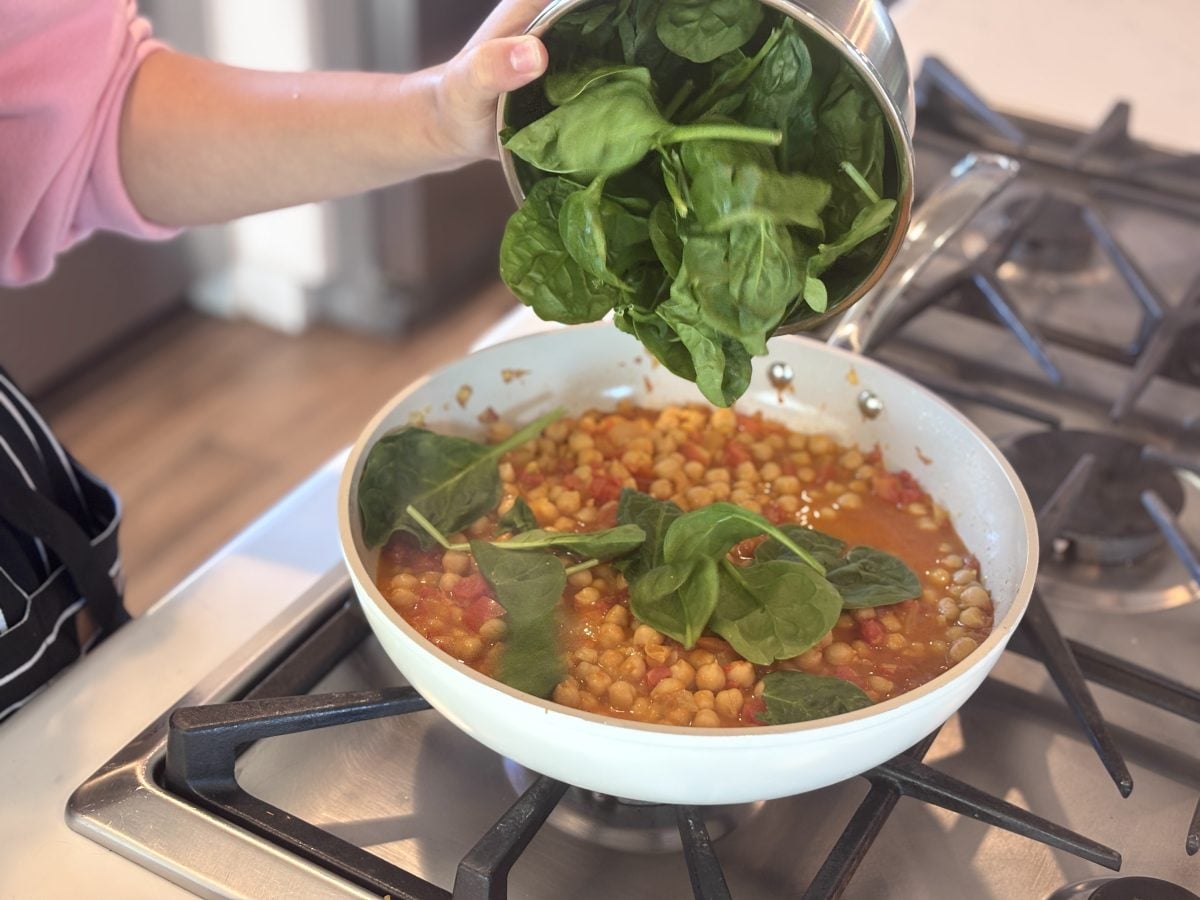
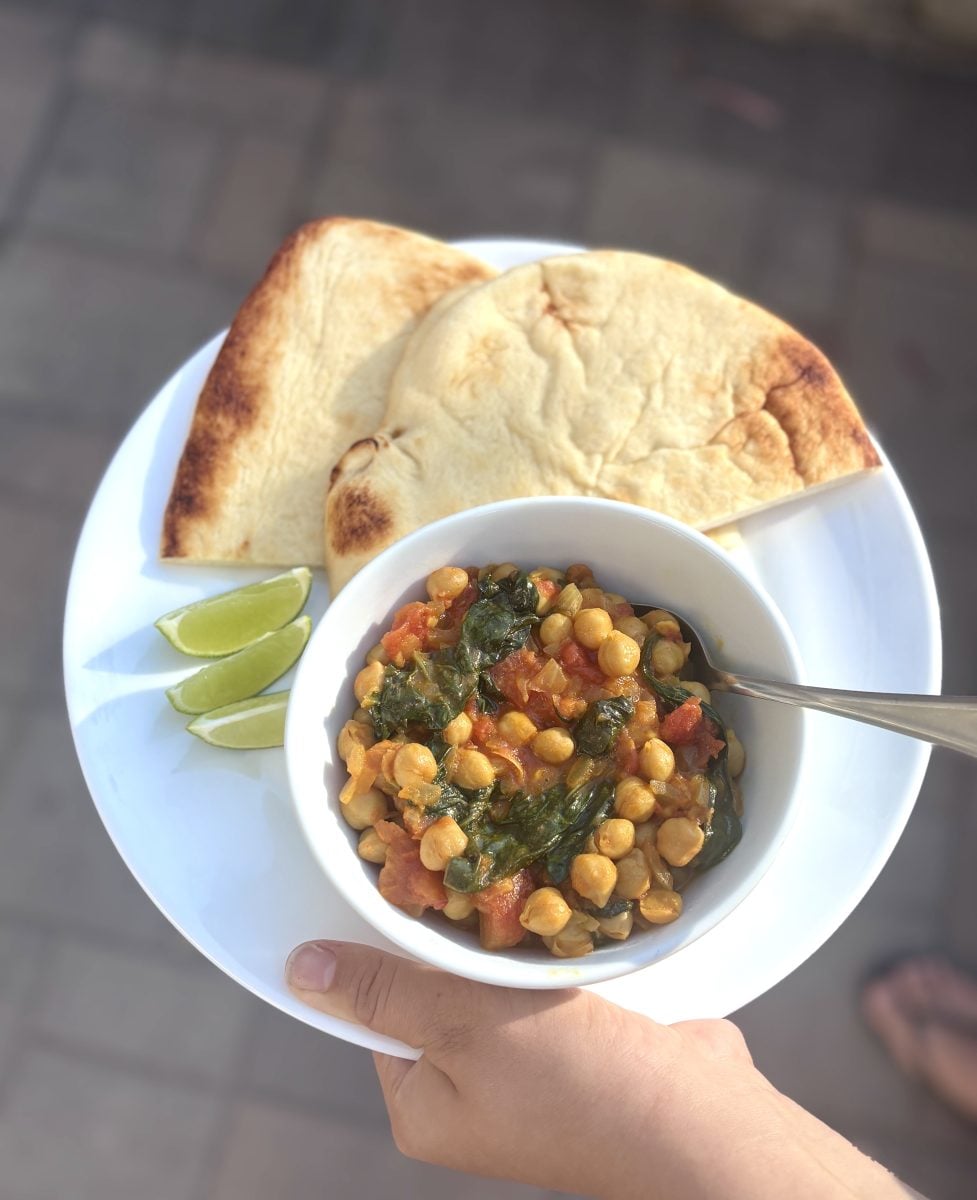
5) Wilt the spinach and serve. During the last moments of cooking, add a couple of large handfuls of spinach, cover, and let it wilt for about 30 seconds. Spinach wilts from crisp to limp in almost no time. Adjust the salt if needed and serve with rice and a squeeze of lime juice over each bowl. The thing that takes this dish from “warm and pleasant” to “I should make this again next week” is the lime.
Variations Worth Trying
- Add paneer: Cube 6–8 oz of paneer and sear it in a separate pan; add at the end with the spinach. The dish becomes a near cousin of palak paneer.
- Add chicken: Brown bite-sized chunks of chicken thigh first, set aside, build the curry, return the chicken with the tomatoes to finish cooking through.
- Sweet potato curry: Add a peeled, diced sweet potato along with the tomatoes, and simmer until all ingredients are tender (approximately 15 minutes), then add the chickpeas.
- Spicier version: Incorporate 1 finely chopped fresh chile with the onion, or use 1/2 teaspoon of cayenne in place of a pinch. Additionally, a spoonful of harissa stirred in at the end works as well.
- Coconut-forward: For a thicker and sweeter sauce that resembles what you may get from a curry house, use the full can of coconut milk and leave out the water.
- Lentil swap: Replace one can of chickpeas with 1 cup of red lentils and 2 cups of water. They will break down and thicken the sauce into a dal-esque sauce.
- Cilantro finish: Chopped fresh cilantro is on the table. Love it or hate it, it’s best to put in a bowl on the side for people to decide for themselves.
What Goes Alongside
- Basmati or jasmine rice: The default option offers little. A slight improvement would be to add a spoon of ghee into the cooked rice.
- Warm naan or roti: Especially if you went the coconut-forward route, you will want bread for the sauce.
- Quick cucumber raita: Plain yogurt, grated cucumber, a little salt and a splash of lime juice combines to cool and refresh.
- Fried egg on top: Sounds odd; functions perfectly. A runny egg on top of chickpea curry is a proper upgrade for a ravenous weeknight bowl.
- Crispy fried onions: Homemade or store-bought, add them on top at the tables for some extra crunch.
- A glass of crisp white or a lager: Riesling or Gewürztraminer, or any light lager. Please avoid the heavier reds as they clash with the spices.
Rescue Notes
- The spices taste raw or harsh. You likely didn’t bloom them enough time, or the pan wasn’t hot enough. It takes around 30 seconds in hot oil to release their flavor. Next time, make sure to get the oil shimmering before the spices go in.
- You smell something acrid; the spices burned. Remove the pan from the heat, add the tomatoes (the moisture and acidity should mostly fix it), and taste. If the bitterness is faint, keep going. If it’s strong, consider it done and start over; burned spice flavor doesn’t come out.
- The sauce is too thin. Simmer for an additional 5 to 10 minutes without a lid. The chickpeas will continue to release starch and thicken the sauce naturally. Please do not add cornstarch; it muddies the flavor.
- The sauce is too thick. As a sauce sits, its consistency will change and can be more like a paste than a sauce. If this is the case, at the start, you may want to begin with a splash of a tablespoon at a time with water or coconut milk.
- It tastes flat. Typically it’s necessary to add salt or some form of acid. Try adding a little more salt and squeezing the lime again and taste it. If it still lacks something, a half-teaspoon of brown sugar can help balance the tomato.
- The onion went brown before you wanted it to. The issue may have stemmed from the heat being too high, or the pan being too small for the amount of onions. Brown onions are not the end of the world (they add depth), however for this particular dish, we want to try and achieve sweat-and-soft. Next time, try to lower the heat, and add the pinch of salt to the onions immediately.
- The leftovers taste better than the original. That’s normal. Plan around it.

Nutrition and Storage Notes
This curry is the perfect option for weeknight dinners because it is healthy. Not only do chickpeas add plant-based protein and fiber, but they also have a low-calorie nutrient-packed base. Additionally, spinach is a great free veggie option. The only variable here is the fat content.
Finishing the dish with full-fat coconut milk and butter will make the dish richer and more indulgent. For a lighter option, just use light coconut milk or none at all. Keep in mind that canned chickpeas and tomatoes may carry more sodium than you expect.
Store leftovers in an airtight container and refrigerate for up to 4 days.
To thin the sauce, gently reheat it on the stovetop and stir in a little water or coconut milk.
Can be frozen for 3 months and will need to be thawed overnight in the refrigerator. The cooking method seems to have made differences to the texture of the spinach. If the changing texture bothers you, instead of using what’s already in there, add some fresh spinach when you reheat it.
Times I’ve Made This
Example 1 (the rotation realization): For reasons that are unrelated, I have been trying to record what I had done in the preceding month and saw that this curry was there six times. I didn’t plan to make it so often. I kept returning to it because it required so little thought. I think that is the real test. The recipes that stand the test of time are recipes that you can make on autopilot and that happens when the mental load is low and the result is reliable. This one passes both.
Example 2 (the “but it’s just chickpeas” dinner): While I was preparing this a houseguest watched and while I mentioned some ingredients he politely seemed uninterested. But then he took a bite, paused, said “wait,” and like people do for cake asked me for the recipe. That’s the spice bloom at work. An onion and three cans should taste like garbage, but here we are.
The Short List
- Check the pantry for the following items: oil, onion, garlic, ginger, curry powder or garam masala, cayenne pepper, canned tomatoes, two cans of chickpeas, coconut milk (or can use cream/butter), spinach, lime, and rice.
- Finely chop the onion, garlic, and ginger, and cut the lime into wedges.
- Heat oil, sweat the onion 5 minutes with a pinch of salt.
- Add the garlic and ginger along with the spices and cayenne, and stir for 30 seconds (set a timer).
- Add the tomatoes and a splash of water; allow to simmer for 5 minutes, then break the tomatoes apart.
- Incorporate chickpeas and coconut milk (or cream/butter). Let it simmer for 10 minutes.
- Stir in spinach; wilt 30 seconds.
- Add salt to taste. Serve on rice with a good squeeze of lime per bowl.
The Jargon, Explained
- Blooming spices: The largest single flavor improvement in cooking with spices is the short-term (around 30 seconds) cooking of dry spices in hot fat to release their flavor components that are soluble in fat.
- Curry powder: An amalgamated cuisine of British and Indian cooking styles that tends to be rich in the spices turmeric, cumin, coriander and fenugreek. Yellow, soft, and known.
- Garam masala: A mixture of warming Indian spices (cinnamon, cloves, cardamom, cumin, coriander, and peppercorn). Usually added towards the end of cooking and are toastier and warmer than curry powder.
- Aquafaba: The foamy liquid in a can of chickpeas. It is not necessary for this recipe (and you will be draining it), but it is the same liquid that people whip to make vegan meringues.
- Sweating (vs. browning): Gently cook the aromatics over medium-low heat until they soften, but don’t allow to take on color. This is different from either sautéing or caramelizing.
- Deglaze: Use of liquid (in this case, tomato juice) draws the cooked-on bits from the pan, adding flavor while preventing burning.
Questions I Get
Curry powder or garam masala? Does it matter?
They both work and will provide you with distinctly different curries. Curry powder is milder and yellower with turmeric being the most predominant flavor. Garam masala has a warmer, toastier taste with more pronounced cinnamon and clove. On your first attempt, feel free to go with what you have. Out of the available spices, get garam masala; it seems less “1990s spice rack” to me. Either works.
Can I use dried chickpeas instead of canned?
Of course, but you are changing the whole chronology of the recipe. Allow them to soak overnight. After that, you will need to simmer them for about 60 to 90 minutes until they are tender, and then go on to use them in step 4. The texture has definitely improved some, and the chickpeas do seem to hold their shape a little more distinctly. For Sundays, dried beans are fine, but for the weekdays, canned ones are best.
How spicy is this?
The dish is suitable for children because of the cayenne pepper. I would say it warms the dish up noticeably if you add half a teaspoon. A full teaspoon plus a fresh chopped chile would probably be in the “sweating at the table” category! But please adjust according to your household preferences.
Can I make it ahead?
Yes. It actually gets even better. Complete the curry to step 4 (no spinach added), chill the pot, and it can be stored in the refrigerator for 4 days. To serve, add a splash of water, reheat, stir in fresh spinach and finish with lime. It can be frozen for 3 months.
Can I add protein?
You can also add chicken thigh. Just brown some bite-sized pieces in the oil before the onion, set them aside, build your curry, and then add the chicken when you add the tomatoes. Add the paneer with the spinach at the end. Pressed and cubed tofu works as paneer.
I don’t have a fresh lime. Can I skip it?
For this recipe, adding lime is the best option. You can also use lemon if that is what you have. Bottled lime juice is also acceptable, even if it is a bit muted. If you really don’t have anything, you can also add a little bit of vinegar at the end, it can be white wine vinegar or rice vinegar. The acid makes the dish come alive, so you need to have some form of it.
Closing Thoughts
Most weeknight recipes I’ve tried only once or twice. Every year I cook for an entire group of people without putting much thought into it. These recipes are simple, and the ingredients are usually found at home.
Plus, the finished dish is sure to please no matter what the mood or the weather is or how much energy you have at 6:47 PM on a Tuesday. This curry fall into that category. I keep coming back because of the lime at the end.