
Preparing a dinner for more than one person tends to be more enjoyable than cooking a dinner for one. In contrast, breakfasts are best enjoyed when prepared to serve only one person. This Tuesday morning I will be celebrating and treating myself.
I imagine this celebration as a mini ceremony: a small plate, a small skillet, and no toppings to negotiate over. The omelet will be ideal for this celebration. In an honest five minutes, anything in the fridge will be an omelet.
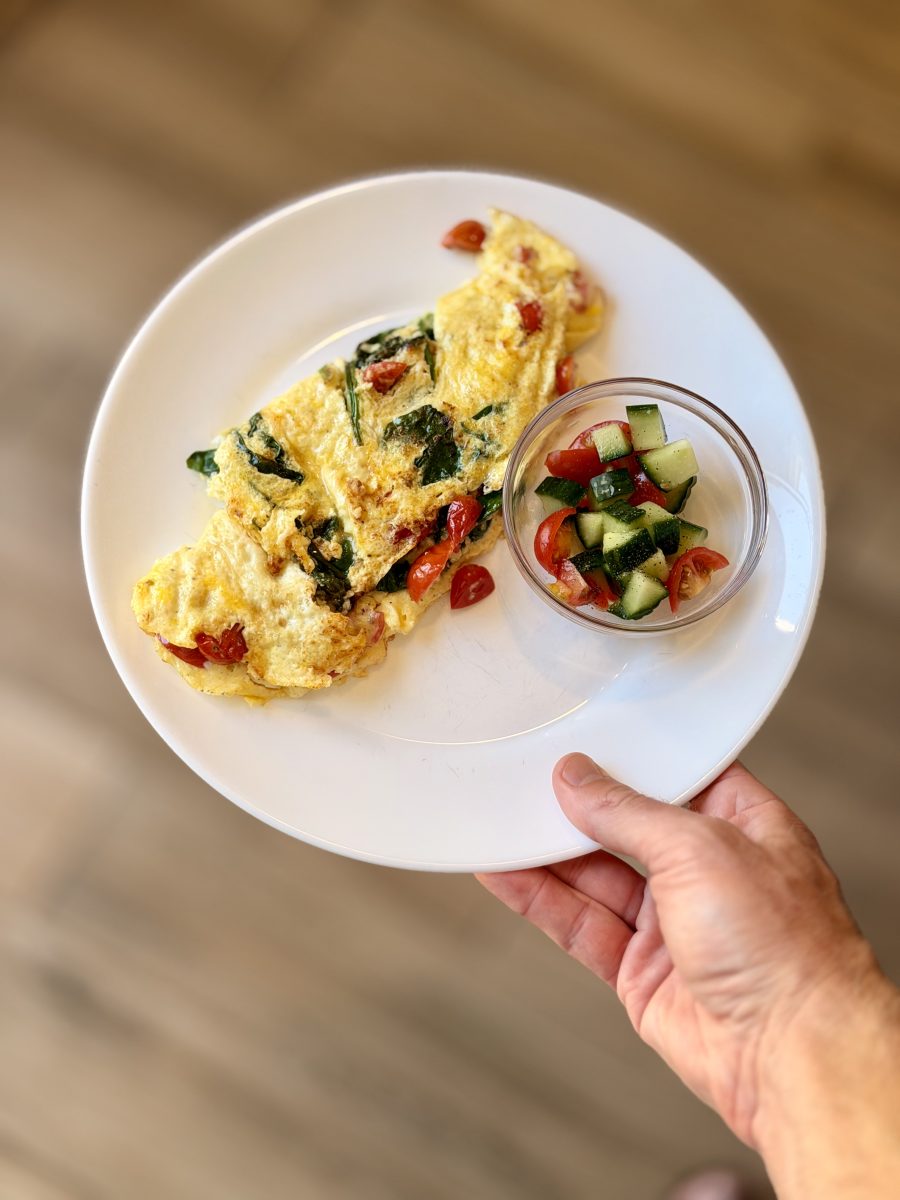
I usually prefer this variation from the Mediterranean. In the same pan, sauté spinach, tomatoes and feta for about 90 seconds. Then add the eggs, do a quick fold, and slide onto a plate. A simple cucumber and tomato salad uses the same ingredients in a different way and is more structured than just thrown together. Total cook time is under seven minutes. Solo breakfasts are hardly ever appreciated, and they truly deserve more.

The Quick Rundown
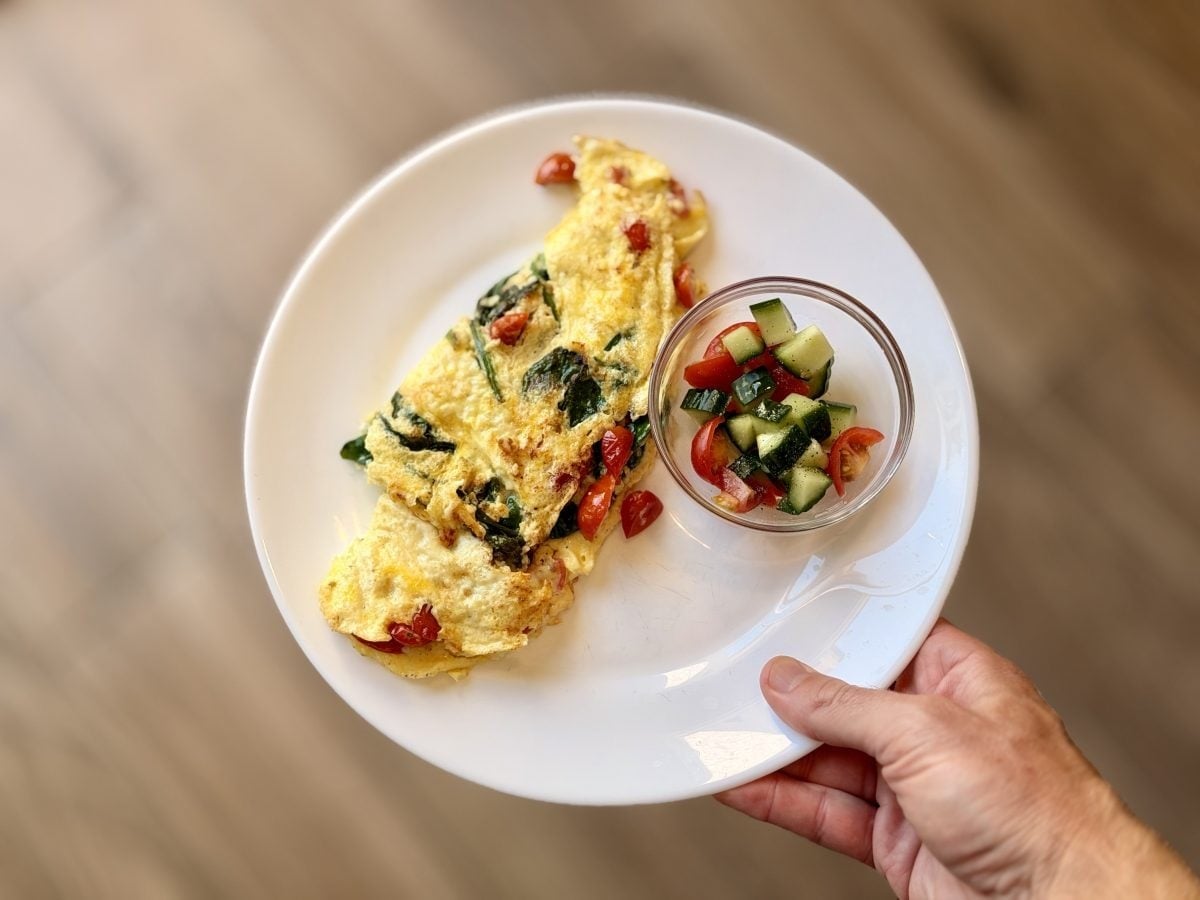
- Mediterranean Omelet, what you’re making: Three egg Mediterranean omelet with spinach, tomatoes, and feta cheese, and a side salad of cucumbers and tomatoes.
- Reasoning: The omelet’s moisture is first released by the fillings that are cooked before the egg, which are then sealed in place by the quick-cooking eggs. Removing the pan from the heat while the top is still a little glossy keeps the omelet tender and not rubbery.
- The time from prep to plating should take under 7 minutes. Prep should take 2 minutes and cooking 5 minutes.
- Taste description: The dish has a savory egg, sharp feta, sweet tomato, and earthy spinach flavor with a bright and fresh finish from the salad and drizzle of quality olive oil.
- Important tips include the use of a nonstick 8-inch frying pan, do not overbeat the eggs, and remove the pan from the hot stove while the eggs appear a little runny on the top. The heat remaining in the pan will cause the eggs to continue cooking.
Ingredients
This recipe is more about technique than the actual ingredients as the ingredients are probably things you already have at home. The secret is in using them with the correct time, in the correct pan, and at the correct temperature. That said, some option do affect the final outcome.
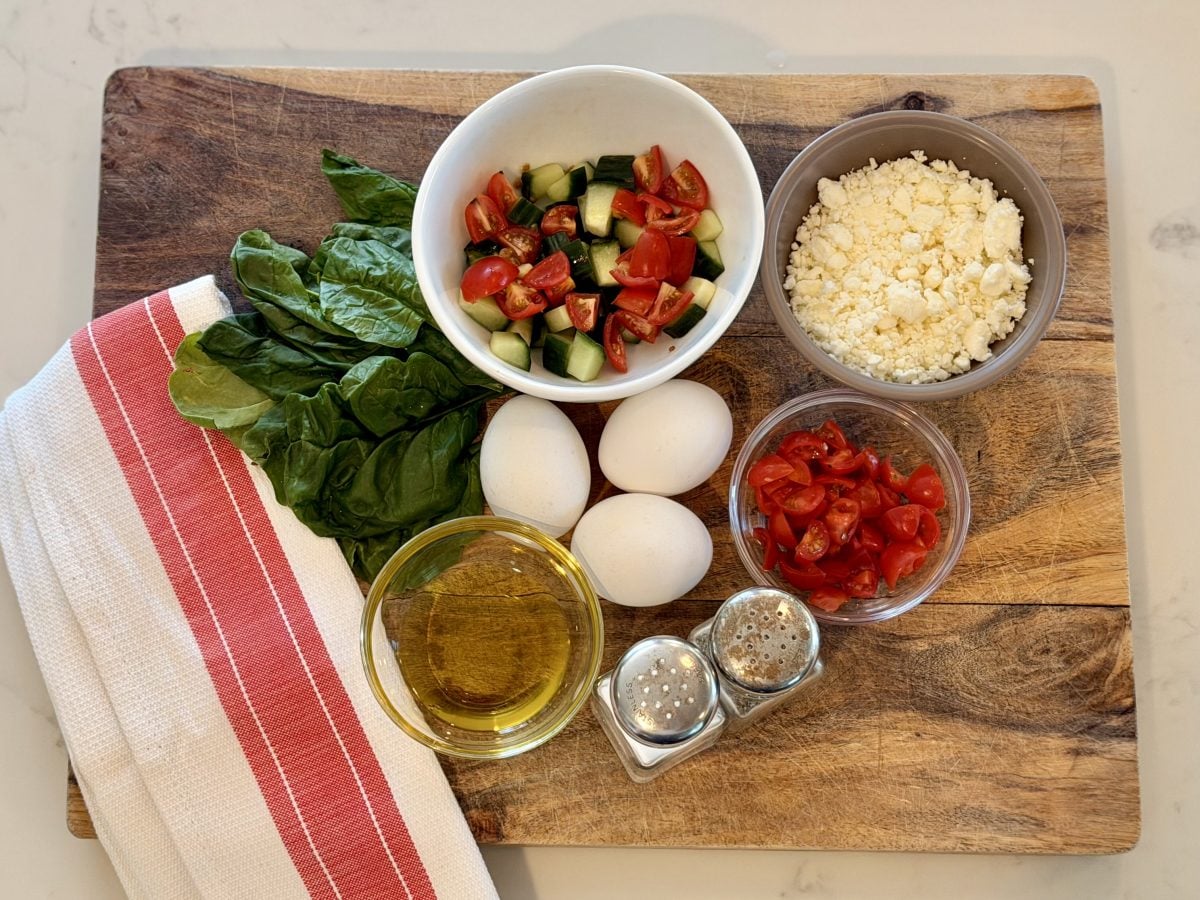
- Eggs (3): For an 8-inch pan, three is just right to be able to spread thin and cook quickly, and not so much that it gets piled up and becomes dense. Two eggs is ideal for a smaller breakfast, and four really pushes the limits of the pan.
- When seasoning the eggs, remember to do so lightly. Feta cheese is salty on its own. So, when combining other salts in the beginning, such as with the pepper, be cautious. You can adjust the flavor later.
- Water (1 teaspoon): While it may seem like an insignificant amount, it helps create some steam in the pan and keeps the omelet tender. Milk can also be used, but it makes the omelet a bit creamier. Water is the cleaner option for a Mediterranean profile.
- Olive oil (1 teaspoon): Use a real extra-virgin olive oil. It conveys flavor in a manner that neutral oils do not, and with this being a dish that the olive oil reads on the plate.
- Diced tomatoes (2-3 tablespoons): The best option are Roma tomatoes, but you can also use cherry tomatoes, but be sure to halve them. Make sure you dice them small so they soften during the short cooking time.
- Spinach (1 handful): Baby spinach is best, but larger leaves can be used too if you chop them up a bit. Most of the leaves you add will wilt down quickly, so don’t be intimidated by the large quantity going in.
- Feta Cheese (2 T): Please purchase block feta in brine; do not buy pre-crumbled tubs. Real Greek or Bulgarian feta is creamier, tangier, and saltier than the supermarket bags. The difference in flavor is substantial.
- Cucumber-tomato salad (1/2 cup): A small side. Diced cucumber, diced tomato, a bit of olive oil, salt, pepper, and optional red onion or fresh herbs. While the pan heats, prepare this dish.
- Extra olive oil for dressing: a drizzle on the finished plate, on the omelet and on the salad. It’s what makes the breakfast feel completed.
Master Ratio (Easy To Scale)
For each omelet (1 serving): use 3 eggs, 1 tsp of water, 1 tsp of olive oil, 2-3 tbsp of diced tomato, 1 handful of spinach, 2 tbsp of feta cheese, and a 1/2 cup of side salad.
Example: Making food for two? Make two individual omelets. If you increase the number of eggs in a single pan, the omelette will get too thick to cook evenly and will also lose its fluffiness. Keeping the pan hot, the second omelet will take around two minutes start to finish. Batch cooking is definitely the way to go.
Ingredient Choices That Change Flavor
| Choice | What you’ll notice | Best for |
|---|---|---|
| Block feta in brine | Creamy, tangy, properly salty | Best Mediterranean profile |
| Pre-crumbled feta | Drier, less flavorful, lower salt | Pinch only; flavor takes a real hit |
| Roma tomatoes | Meaty, low water, hold their shape | Classic choice for this omelet |
| Cherry tomatoes (halved) | Sweeter, juicier, looser | Add at the very end so they don’t water out the eggs |
| Baby spinach | Tender, wilts fast, mild | The default |
| Mature spinach (chopped) | Earthier, sturdier bite | Works if you chop fine |
| Arugula | Peppery, bolder | A more assertive omelet |
| Whole eggs only | Richer, classic texture | Most flavorful version |
| Egg whites (5) | Lighter, leaner | A protein-forward version; texture is firmer |
| Water in eggs | Slightly steamy, clean | The traditional French omelet trick |
| Milk in eggs | Slightly richer, creamier | If you want a softer set |
Optional Add-Ins
- Add Kalamata olives (1 tablespoon, chopped) to the salad with the spinach if you’d like a stronger Mediterranean flavor.
- Fresh herbs (1 teaspoon chopped dill, parsley, or basil): add to the top of your plated omelet instead of the cooking pan. This will keep the flavors brighter.
- Lemon zest (a small pinch): Adds a bright, fresh flavor and is applied right across the top of the omelet just prior to plating.
- Red onion (1 tablespoon, finely diced): Stir into the side salad. Feta contrasts beautifully with the sharp, small bite of the onion.
- Sundried tomatoes (1 teaspoon, chopped): Add together with the diced tomato for a more profound, sweet, and concentrated tomato taste.
- Hot sauce or crushed red pepper: For those who believe every breakfast should have a kick.
Instructions
Use a 20 cm non-stick pan, and set the heat to medium. The tools required to complete this task include a small container, a small plate, a fork, and a flexible spatula made out of either silicone or rubber.
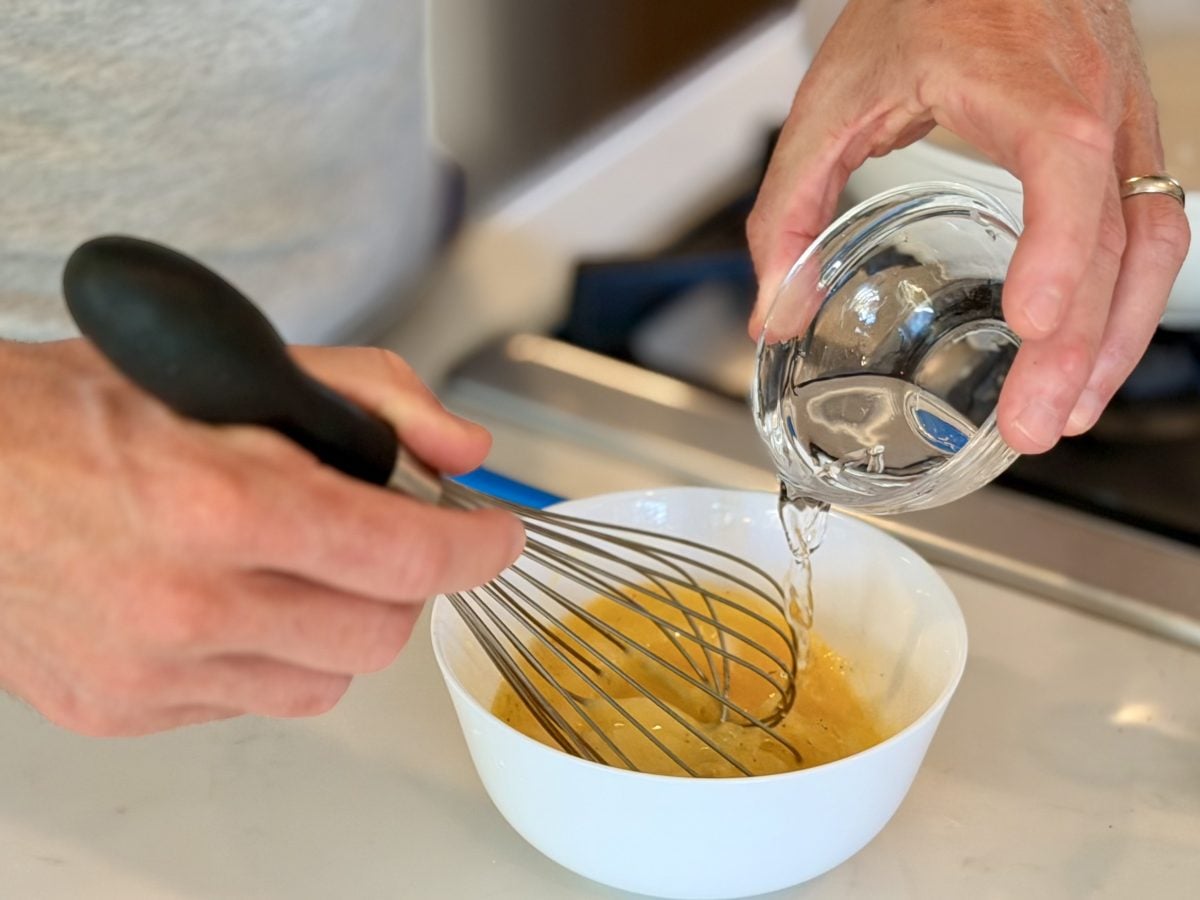
1) Combine the eggs with a little salt, pepper, and 1 teaspoon of water. With a fork or a small whisk, mix the yolks and whites together until completely blended. Do not create a foam. The reason is, if eggs are over-beaten the eggs become tough and the smooth texture that an omelet should have, is lost. A classic French technique for achieving tender eggs is to create some steam in the pan with water.
2) Prepare the filling mixture. Pour the olive oil into an 8-inch pan and heat over medium heat. After about 30 seconds and when the oil is shimmering, add the diced tomato, spinach, and feta. Cook for about 90 seconds and gently stir until the spinach wilts and the tomato softens. You want the feta edges to partially melt and warm. You’re not browning anything; you’re just waking up the fillings.
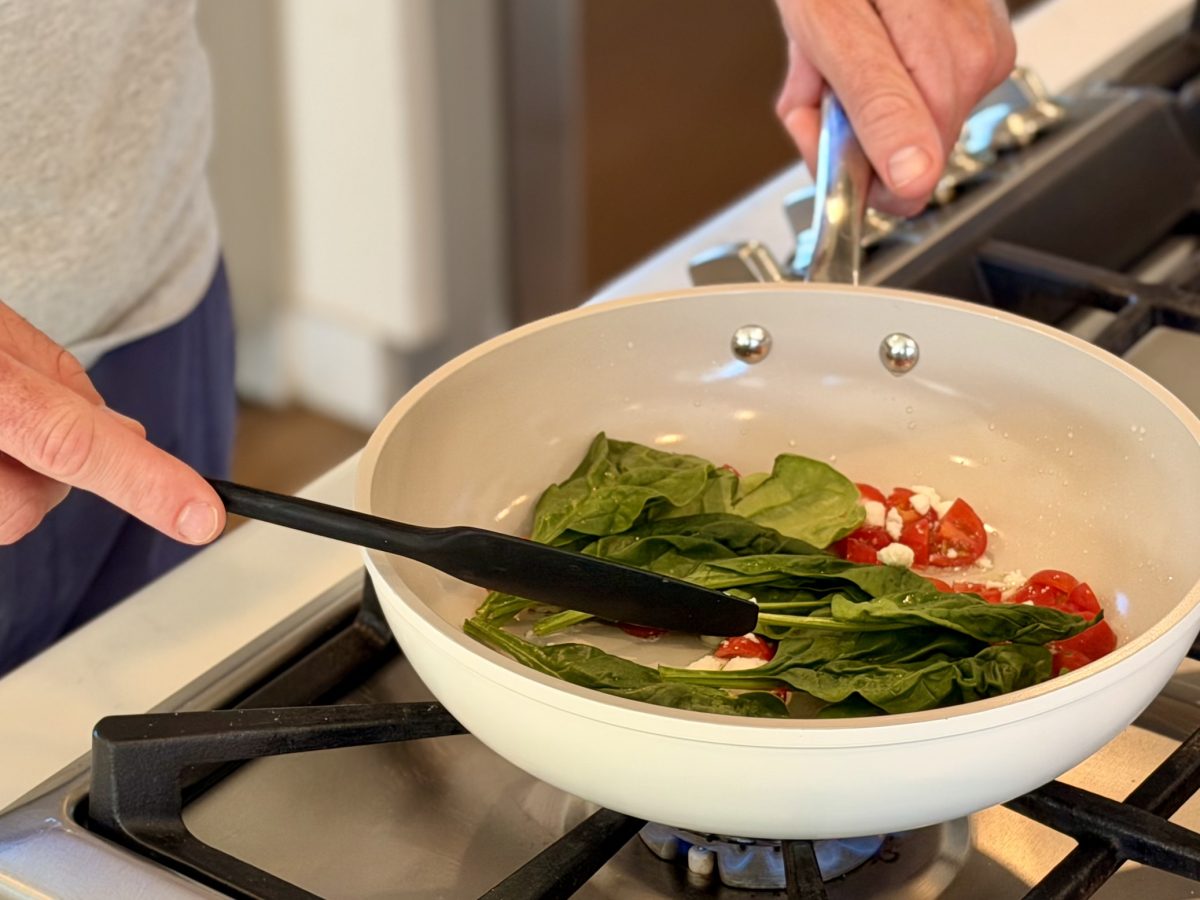
3) Add the eggs and let sit for thirty seconds. Pour the scrambled eggs right into the pan on top of the fillings. Do not stir. To allow the bottom layer to remain undisturbed for about 30 seconds before continuing to the next step. This is the main step that is skipped, and it is the main reason why many people get tough home omelets. Don’t start shifting the eggs yet; they need time to establish a bottom layer.
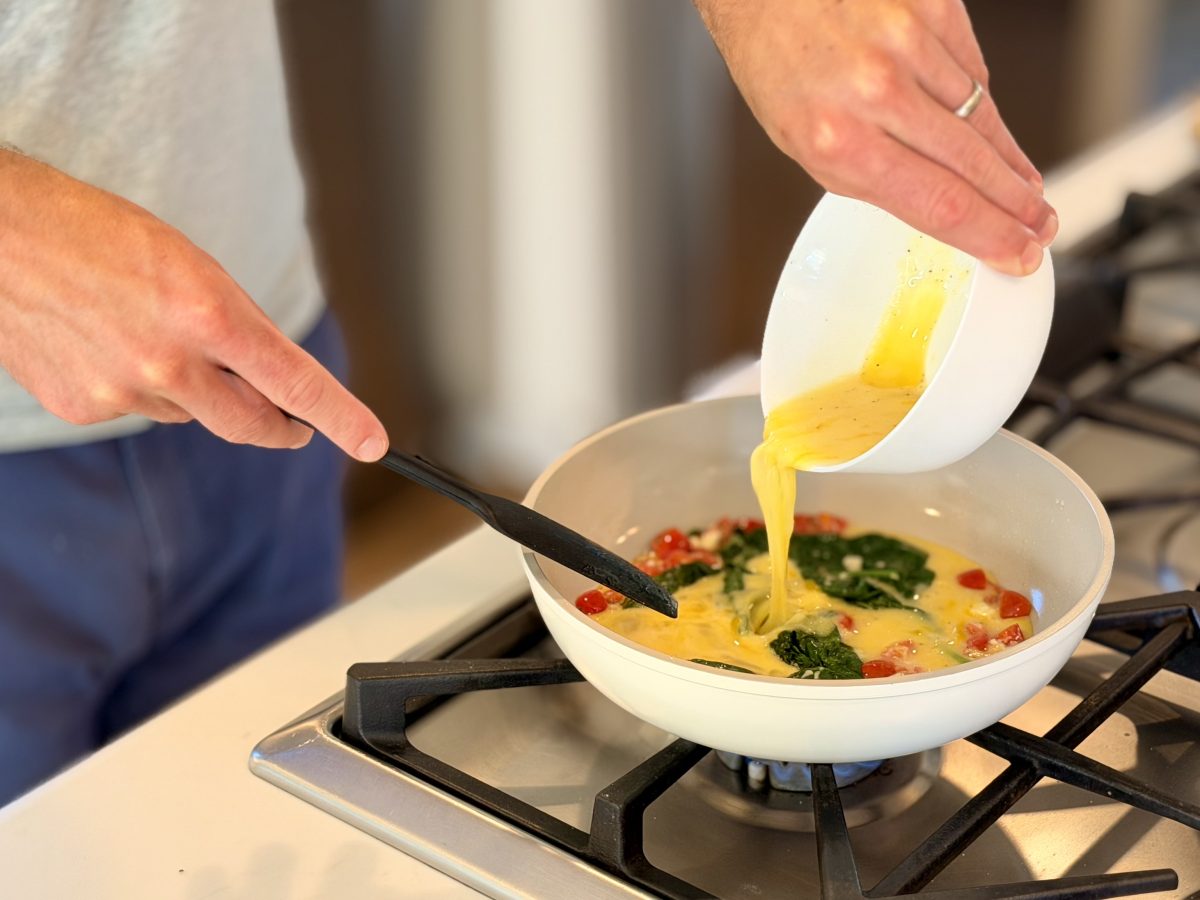
4) Gently nudge the cooked edges to the center. Then, tilt the pan to allow the uncooked eggs to fill the newly created space. A flexible spatula is recommended. Take it slow; slide the loose eggs under each edge as you lift it. Aim to go around the pan 2 to 3 times. This builds the soft, layered texture that distinguishes a real omelet from scrambled eggs that have been forced into a flat shape.
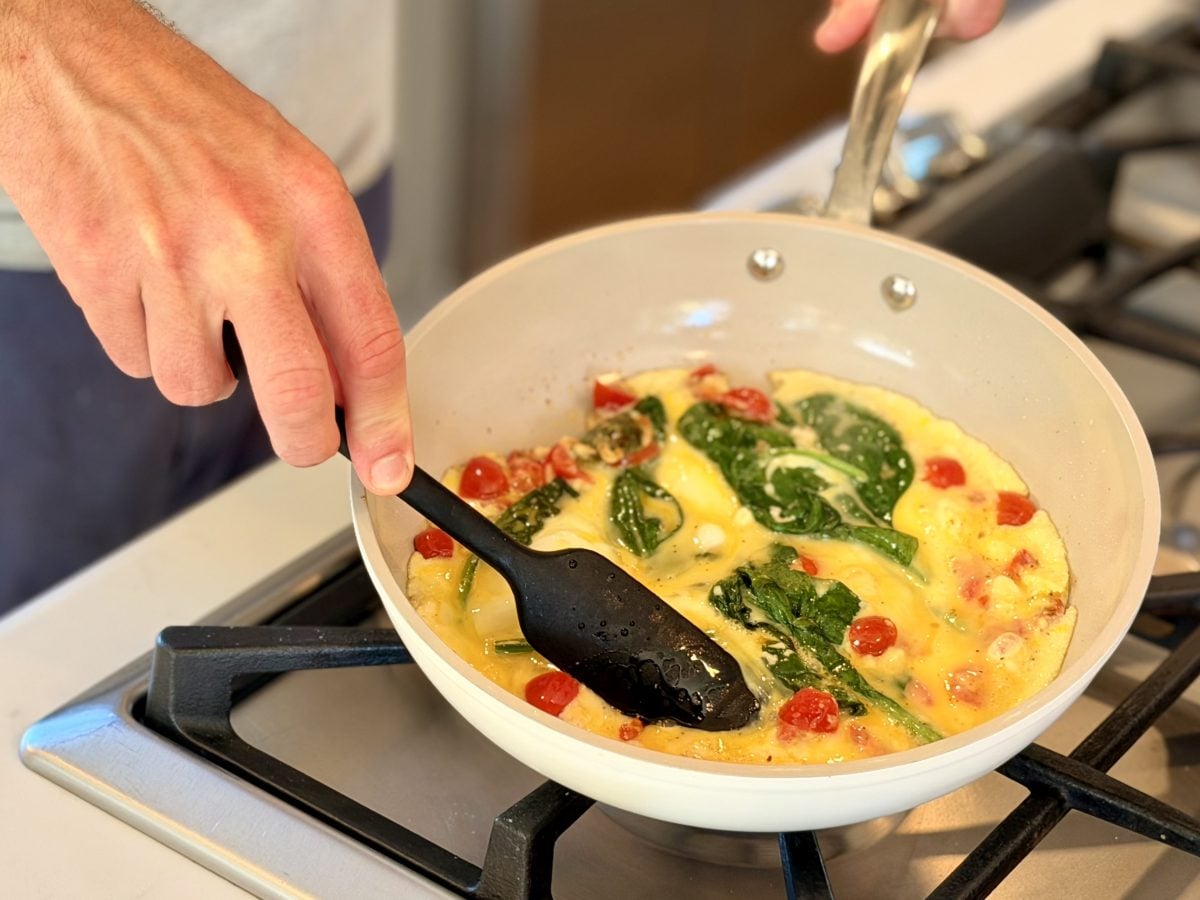
5) Cook the omelet for about two minutes more until the top is barely set and it looks a bit glossy. The right time to pull it is when the top looks set, but a bit wet, as though it was just buttered. The surface moisture that is still there will provide enough heat to finish cooking the omelet once folded. In one smooth motion, slide your spatula under one side and fold it over to the other side.
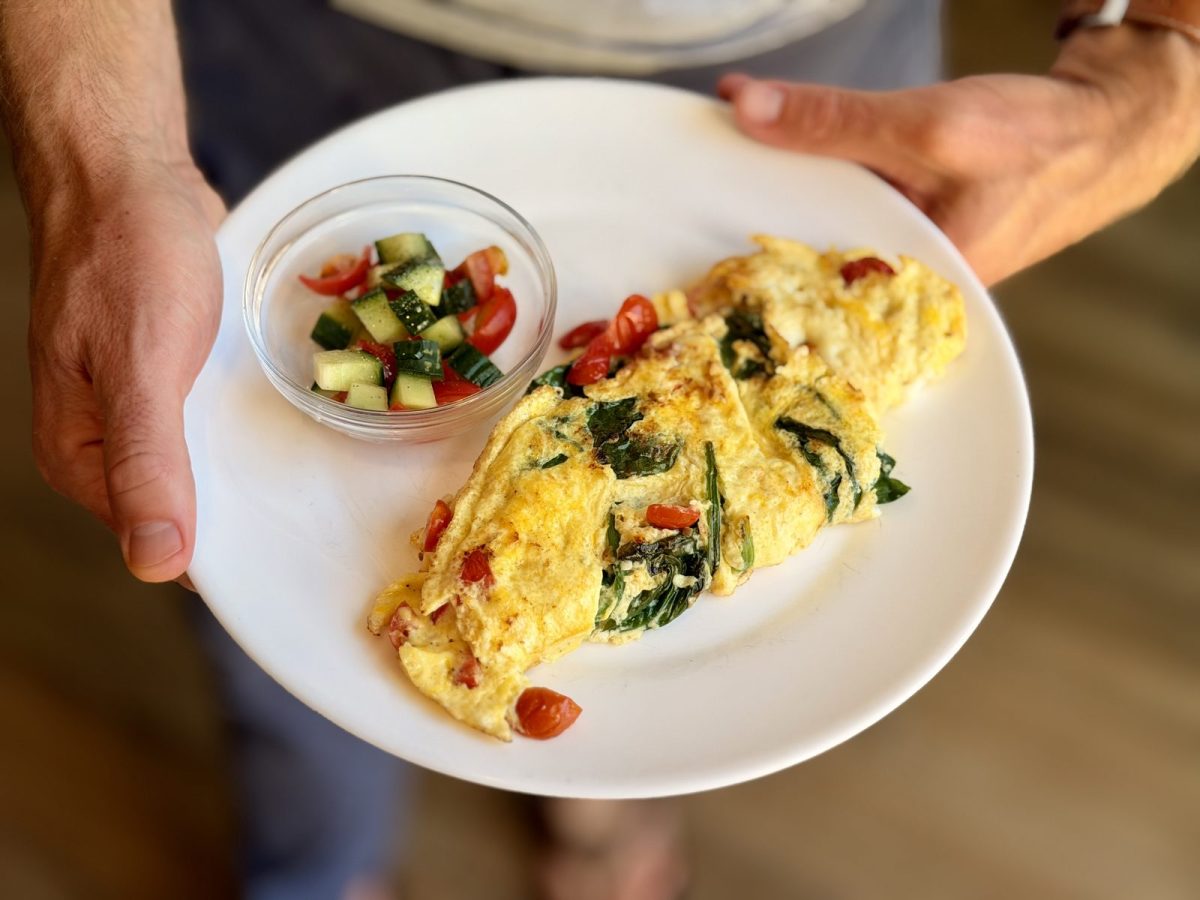
6) To accompany the meal, serve with a side salad made of cucumbers and tomatoes. Tilt the pan and slide the omelet onto a plate so that the seam is facing down. Place the salad on the side of the plate, drizzle olive oil on the omelet and salad, and add a sprinkle of black pepper to finish. Omelets should be eaten straight off the stove.
Ways to Riff on the Mediterranean Omelet
- For the Greek omelet, include the chopped Kalamata olives and a touch of dried oregano with the spinach. Finish with fresh dill and a small squeeze of lemon.
- Spanish leaning: Substitute the feta with goat cheese crumble, add in roasted red peppers (diced), and finish with smoked paprika.
- Cooked spinach, tomato, and loaded vegetables: Preheat bell peppers, shallots, and mushrooms (Cook for 2 minutes before adding).
- Herby: Before pouring, mix 1 tsp of assorted chopped fresh herbs (parsley, chives, dill) into the eggs.
- Protein-up: To the fillings, you can add 1 tablespoon of crumbled cooked sausage or chopped prosciutto. This will elevate the omelet from a light breakfast to a more substantial brunch.
Rounding Out the Plate
- A slice of toasted sourdough or pita: For the people who can’t picture a breakfast without bread.
- Greek yogurt with honey and walnuts: A small bowl alongside makes this feel like a hotel breakfast.
- Espresso or strong coffee: Ideal caffeine match. If you want this to feel intentional, avoid the giant mug of drip.
- Fresh Fruit: Sliced melon, halved figs, and a small bowl of berries. Provides a nice contrast to the salty feta.
- Hummus on the side: A tablespoon of good hummus and a few pita points turns this into a small mezze plate.
- Sparkling water with lemon: This is the breakfast version of “I’m being civilized about this.”
When Things Go Sideways
- The omelet came out rubbery: The pan was too hot, or the eggs were cooked for too long, or maybe it was a combination of those factors. For future reference, you should try medium-low heat, and remove the pan when the top is still a little glossy. The heat will finish the eggs during the fold.
- The fillings created a watery consistency with the eggs. Spinach and tomatoes release moisture when cooked. Prior to combining with the eggs, cook the fillings until the spinach has wilted sufficiently and a majority of the moisture from the tomatoes has evaporated.
- If an omelet sticks to the pan, it might be caused by the nonstick coating having seen better days, or you didn’t let the pan get hot enough before adding the eggs. It’s always best for the pan to be hot enough for the oil to shimmer before you add fillings. Also, if your nonstick pan is getting older, try increasing the temperature and give the pan a good shake to help the omelet come loose.
- You tore the omelet while folding it. This could either mean the eggs were undercooked, or you tried to fold it too aggressively. Make sure the bottom sets completely (no wobbling in the center when you shake the pan), then fold it in a single motion.
- Feta was melted, which means you either added it too early, or you used pre-crumbled feta. Genuine block feta that you crumble yourself maintains its shape better. If you add it with the spinach and tomato (not earlier), it will stay intact.
- Eggs can taste one dimensional due to insufficient salting or the usage of a minimal amount of fat while cooking. They can be adequately seasoned if salt is added prior to cooking, and an olive oil drizzle at the end will help as well. A finishing pinch of flaky salt on top makes a real difference.
- If you’d prefer a French rolled omelet instead of a folded one, you’ll want to cook the eggs the same but at the end, tilt the pan and roll the omelet towards the handle in two folds, then flip it onto a plate seam-side down. It’s a little more technique and a little more elegant.
- If you do not have spinach, feel free to substitute with any tender green such as arugula, baby kale or watercress or even a handful of fresh herbs. Be sure to adjust step cooking time so that the greens wilt, but do not fully lose their form.

Keeping It and Reheating It
A Mediterranean omelet with feta and a side salad provides roughly 25 to 30 grams of protein, plus healthy fats from olive oil and feta, and a small amount of carbs. Omelets and salads are naturally low-carb and gluten-free, and for a higher-protein option, egg whites or diced grilled chicken can be added easily. Feta cheese contains a moderate amount of sodium, so if that is a concern you can rinse the feta and let it drain to remove some of the surface salt.
Omelets do not keep well in the fridge because the texture of the eggs actually becomes firmer. Also, reheating them will result in a rubbery texture. If you want to make one in advance, you can mix the eggs with the fillings (don’t do it like an omelet) and then store it in an airtight container for 2 days.
As for the side salad, it should last a bit longer, although the cucumber may become a little soft, but waiting will improve the flavor. When meal prepping for breakfast, I recommend making the salad the day before, then omelets can be made fresh each morning. Even on a weekday, it is easy to spend 5 minutes.
From My Kitchen
I make this during the week when I have a specific time limit of seven minutes to make breakfast. Everything comes together while my coffee brews and in the time it takes to scroll on my phone, I can go fork to plate and then to mouth. Having breakfast shows that I put at least a little effort into starting my day.
Another attempt: I did this for a friend who had recently moved into her first apartment by herself and was trying to get the strange rhythm of odd cooking meals just for herself. She had been eating a lot of cereal and boring toast. I helped her make an omelet on a video call and fifteen minutes later, she sent me a picture of her plate. She had been wanting to feel like that for weeks.
The Checklist
- In a small bowl, crack three eggs and add some salt and pepper to taste along with one teaspoon of water.
- Whisk just until combined; do not overbeat.
- Chop 2-3 tablespoons of tomato; crumble 2 tablespoons of feta cheese; and take a handful of spinach.
- Make a simple cucumber and tomato salad with olive oil, salt, and pepper.
- Warm 1 teaspoon of olive oil in an 8-inch nonstick skillet over medium heat.
- Cook fillings 90 seconds, until spinach wilts.
- Pour in eggs; let sit 30 seconds.
- Tilt the pan slightly so that the cooked edges are toward the center and the uncooked egg can run to the edges.
- Cook for an additional 2 minutes and fold while the top is a bit glossy.
- Place on the plate and top with olive oil and serve with a side salad.
Terms Worth Knowing
- Carryover cooking: The residual heat will continue cooking the omelet once removed from the pan. The correct final texture is achieved by removing the omelet from the pan slightly underdone.
- Set: An egg is considered “set” when it has transitioned from being liquid to solid. A completely set omelet will be firm to the touch, while a “barely set” omelet will still have a glossy appearance.
- Spinach wilts instantly. When leafy greens collapse and soften due to heat, we say they have wilted.
- Block feta in brine: Feta packaged in a block form with a little tub of salty liquid. Offers superior taste and consistency compared to pre-crumbled feta.
- Mezze refers to the Mediterranean practice of serving small dishes together. With a few mezze items in addition to an omelet, you can make it a complete breakfast.
Common Questions
Can I make this with just egg whites?
Yes. Use 5 egg whites in place of 3 whole eggs. The result will be a firmer and less rich texture. Prior to whisking, add a teaspoon of olive oil to the eggs to compensate for the yolk fat.
What if I don’t have an 8-inch pan?
While a 10-inch nonstick pan will work, omelets will spread thinner which means they will be cooked faster, around 3-4 minutes in total. A 6-inch pan is good for 2 eggs instead of 3. Cast iron is an option if well-seasoned, but for easier release, nonstick is better.
Can I make this dairy-free?
Yes. You can leave off the feta and add 1 tablespoon of dairy-free crumbled “feta” cheese or a couple of pitted Kalamata olives for a bit of a salty kick. The omelet still invokes Mediterranean flavors without it.
Should I add the eggs hot or let them come to room temp?
Chilled from the fridge is perfectly fine. The pan can handle this temperature shift and the cook time is short enough that it doesn’t significantly affect the final texture.
Why water instead of milk?
The steam produced by the water in the pan helps to tenderize the omelet and gives it a slightly puffy texture. While milk adds richness to the omelet, it can also add weight and cause the eggs to become dense. For a Mediterranean profile, water is the best choice. Additionally, water is almost always utilized by French chefs.
How do I know when to fold?
Gently shake the pan. If the center appears to be moving like a miniature wave, the eggs aren’t set yet. If it moves slightly but doesn’t slosh, that’s perfect. The top should appear relatively even but also a little wet. The heat will complete the cooking on that moist top.
Can I scale this up to feed two or three?
Yes, but rather than making a big omelette, make individual ones. An oversized omelet will cook unevenly in a bigger frying pan, and the delicate nature is compromised. Once the pan is hot, plan for approximately 2 minutes per omelette.
What’s a good cucumber-tomato salad ratio?
First, take a cucumber and a tomato and chop them into pieces about a quarter of an inch thick. Then, get some olive oil, salt, and pepper, and a splash of red wine vinegar or lemon juice. Finely diced red onion or fresh herbs can also be added. Combine all of the ingredients together and let them rest for two minutes before serving so the flavors blend.
One Last Thing
I have managed to make this Mediterranean omelet in around five minutes every time, and it’s a recipe I make frequently. It is small and almost embarrassingly easy after you do it a couple of times. Breakfast is often the most uncreative meal and can be the most skipped. It shouldn’t be the case. All it takes is a hot pan, three eggs, some veggies and about seven minutes of your time to set the day off right.
