I still remember the first time I made pesto pasta correctly. I was so excited that I called my friend and told her I finally figured out how to make pesto. In reality, I hadn’t figured out pesto. What I actually figured out was a few tricks to elevate a pantry meal so that you could serve it to company.
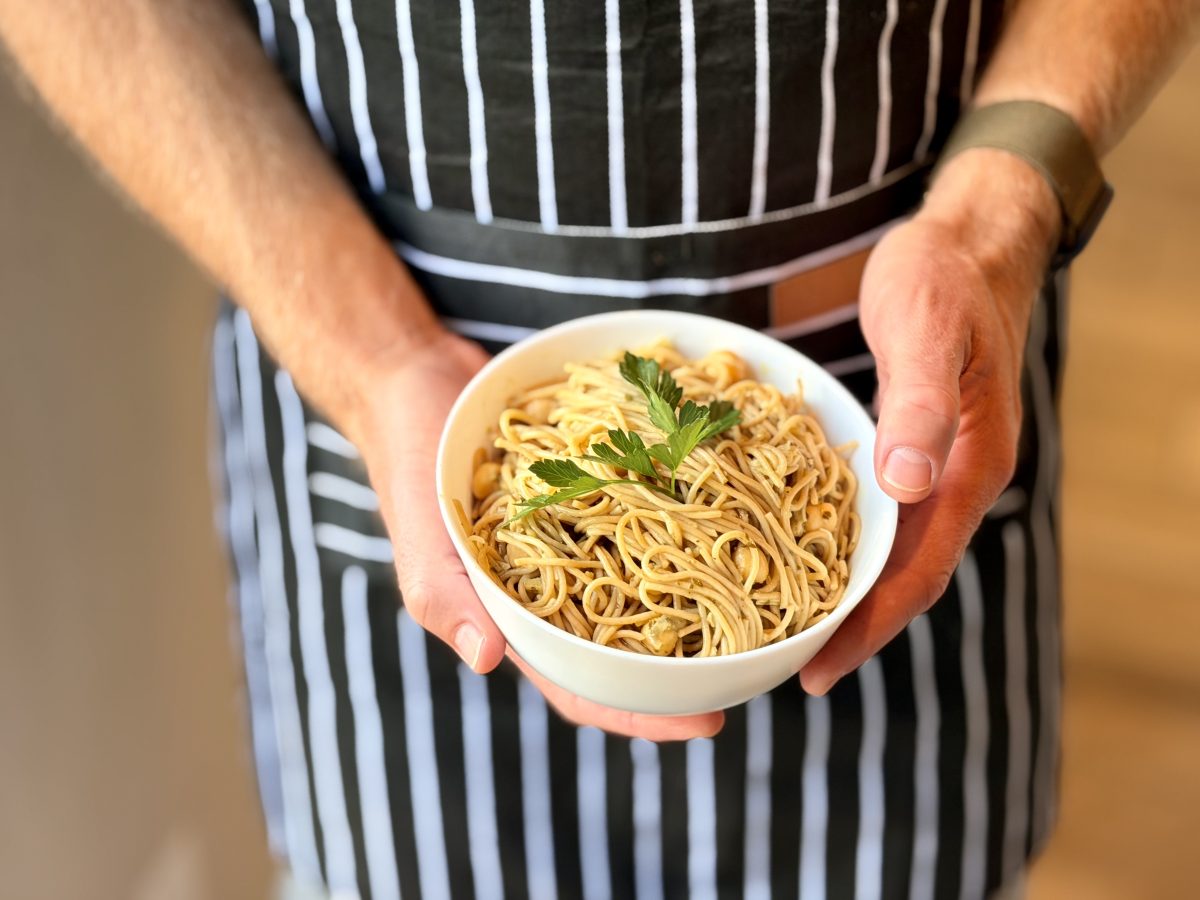
While preparing pasta with pesto, I always salt the pasta water profusely, save a nice cup of pasta water, take the pot off the heat before adding the pesto, finish with fresh lemon juice, and use real parmesan. If you want to make it a full dinner instead of a side, add a couple of cans of chickpeas. That’s the entire recipe. Active time for the recipe is about 15 minutes, and for the taste of the end product, I would have guessed it took 30 minutes.

The Cheat Sheet
- Quick Pesto Chickpea Pasta, what you’re making: A quick and easy pasta dish made with jarred or fresh pesto, canned chickpeas, lemon juice, and parmesan cheese. You can have a real dinner ready in 15 minutes!
- Emulsification of pesto occurs due to the starchy water from the pasta, creating a sauce that coats and clings to every noodle. With the addition of Chickpeas, the dish becomes more filling and adds protein and fiber. The addition of Lemon and Parmesan complete the dish with brightness.
- It takes about 5 minutes to boil the water and another 8 to 10 minutes to cook the pasta. There will be an additional 2 minutes needed to mix everything together. So, it takes about 15 minutes from start to plate.
- Taste description: Bright and herby pesto, paired with nutty parmesan and creamy chickpeas, finishes with a sharp lemon flavor. It’s light, yet still substantial.
- Key tips: Generously salt the pasta water, reserve more pasta water than needed, and toss everything off the heat so the pesto remains bright and fresh.
Ingredients
Each ingredient has its unique role to play, and the better quality ingredients you use, the better the dish will be compared to using cheaper options in more complex recipes. Good pesto, real Parmesan, and an actual lemon will produce a better bowl than the cheap alternatives. With that said, this is not a recipe to be super precise with. Use what you have. Just resist the urge to grab the green can.
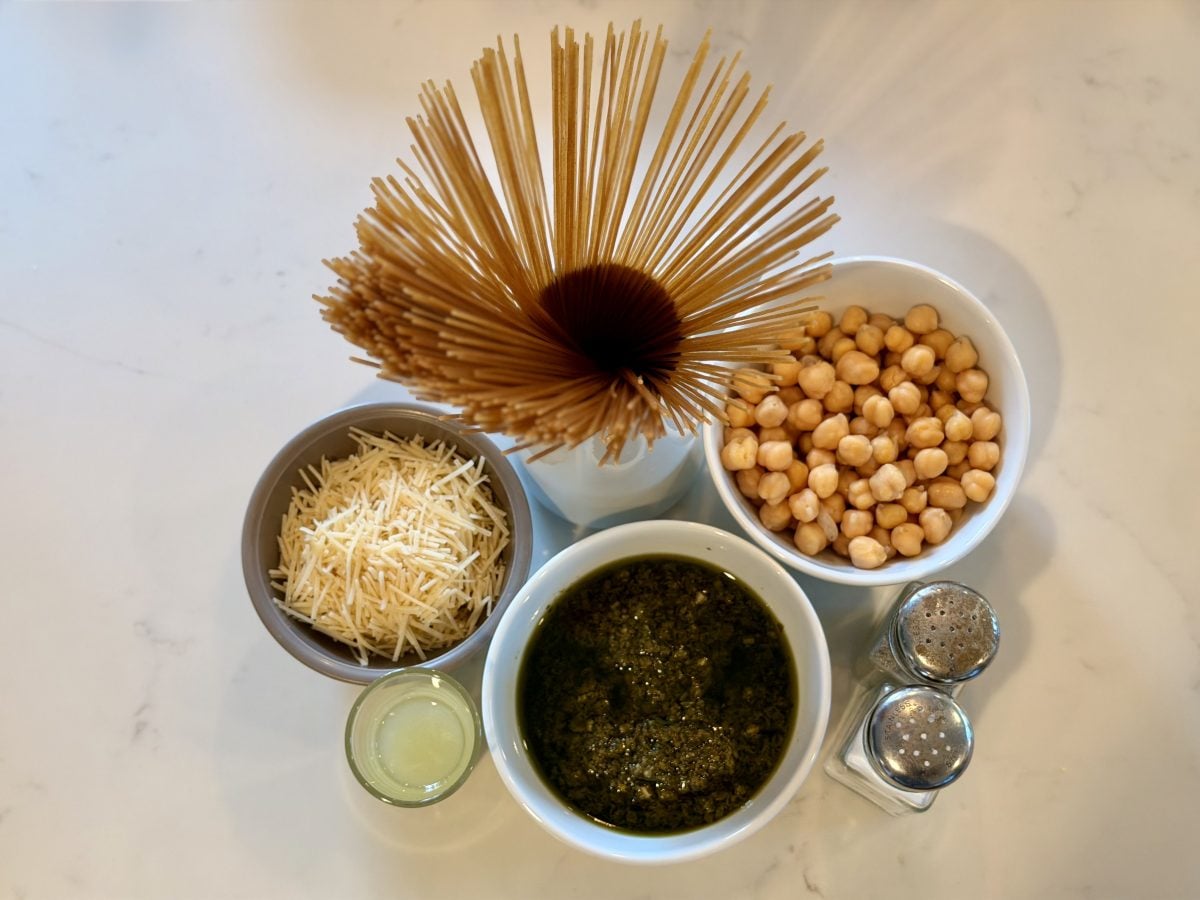
- Pasta (24 ounces): For this recipe, a short pasta shape like fusilli, rotini, penne, or orecchiette, or short paccheri would be ideal. These shapes trap the pesto and chickpeas in their crevices. Spaghetti is not ideal as the chickpeas roll off like marbles.
- Chickpeas (4 cans, drained and rinsed): They have to be drained very well since you don’t want to dilute the pesto. Rinsing them takes off the slightly tinny, starchy can liquid that can ruin the taste of the dish. If you’re ambitious, you can cook them from scratch, but canned is perfectly acceptable.
- Olive oil-based pesto (1 1/3 cups): Pesto made with olive oil, basil, garlic, pine nuts, and parmesan cheese. For this dish, you can use store-bought pesto, which can often be found in the refrigerated section of the grocery store, and is usually better than the pesto in the dry shelf-stable jars. If you are using a reputable company, the difference between their product and a homemade one is less than what purists would claim.
- Reserved pasta water (1 to 2 cups): Do not skip this ingredient. The starchy water helps transform pesto from a paste into a smooth sauce. It is better to reserve more than you think is necessary since you can always dump the excess.
- Juice from 2 lemons needs to be added at the end. The lemon juice brightens the pesto and cuts the heaviness. Use fresh lemons, as bottled juice tastes muddy here.
- Grated Parmesan: Pre-grated cheese in a green can is not even in the same category as real Parmigiano-Reggiano.
- Salt and pepper: Make sure to heavily salt the pasta water. Finish with a generous amount of black pepper, it elevates the whole bowl.
Master Ratio (Easy To Scale)
For every one pound of pasta, you will need the following ingredients: one can of chickpeas (15 ounces), half a cup of pesto, half a cup of the reserved pasta cooking water, the juice of half a lemon, and a quarter cup of grated parmesan.
Cooking for 4 people instead of 8 people? Make sure to set aside all of the pasta water, but do cut everything in half. Water is free and having more allows you to adjust how saucy you want the pasta to be. Cooking for 2? Then you will need to do a quarter of the recipe, but be sure to keep at least 1 full lemon’s worth of lemon zest and juice to add at the end. Otherwise, the dish will lose its brightness very quickly.
Ingredient Choices That Change Flavor
| Choice | What you’ll notice | Best for |
|---|---|---|
| Fresh refrigerated pesto | Bright, herby, almost like homemade | Best store-bought result |
| Shelf-stable jarred pesto | Duller, more olive-oil-forward | Pantry pinch; freshen with extra basil and lemon |
| Homemade pesto | Fragrant, sharper garlic, vivid green | When you have 10 extra minutes |
| Vegan pesto (no Parmesan) | Slightly milder, oilier | Dairy-free version; add nutritional yeast to bring back depth |
| Cannellini beans (in place of chickpeas) | Creamier, milder, less chew | A softer, more luxurious texture |
| White beans + chickpeas (half and half) | More dimension, more interesting | Best of both worlds |
| Short pasta (fusilli, rotini, paccheri) | Pesto and chickpeas catch in the curves | The classic choice |
| Long pasta (spaghetti, linguine) | Pesto coats well; chickpeas roll off | Only if it’s what you have |
| Whole-wheat pasta | Nuttier, denser, heartier | A more rustic, fiber-rich bowl |
| Gluten-free pasta | Slightly softer texture | Watch the cook time; GF pasta turns mushy fast |
Optional Add-Ins (If You Want a Heartier Bowl)
- Cherry tomatoes (one pint, halved): Add them at the end with the pesto for a burst of fresh sweetness. If you have 15 more minutes to spare, roast them first, and they will turn jammy.
- Baby spinach or arugula (3-4 cups): As you remove the pasta from the heat, toss this in. It will wilt almost instantly, effectively turning the bowl into a sneaky salad.
- Sun-dried tomatoes (1/2 cup, chopped): Contributes a rich, deep, sweet-savory flavor that complements the pesto beautifully.
- Chopped walnuts or toasted pine nuts (1/4 cup): A crunchy ending that reflects the nuts in the pesto.
- Zest two lemons and add this at the end for a free flavor upgrade. Zest the lemons before you juice them.
- Burrata (1 ball, torn over the top): The extravagant touch. Transforms a Tuesday into a Saturday.
Instructions
Pot: A large pasta pot (around 6 quarts). Bring to a boil, then lower the heat for a hard simmer to cook the pasta. Salt: The pesto and parmesan will add some saltiness, but it’s on you to season the pasta with pasta water.
1) To fill a large cooking pot with water and add some salt to it, then place it on the stove to begin heating. Plan on using 4 to 6 quarts of water, and do not hold back on the salt. An old saying goes to “salt it like the sea.” In comparison to bath water, the water should taste like a seasoned broth. The cooking water is the only chance you have to salt the pasta. It will absorb virtually no salt from any other source.
2) Cook the pasta until it reaches al dente. This is when the pasta has a slight bite to it. Follow the instructions on the package, but remove the pasta one minute early. You don’t want to have soft, overcooked pasta in the sauce, and it will continue to cook when you add it to the hot pesto.
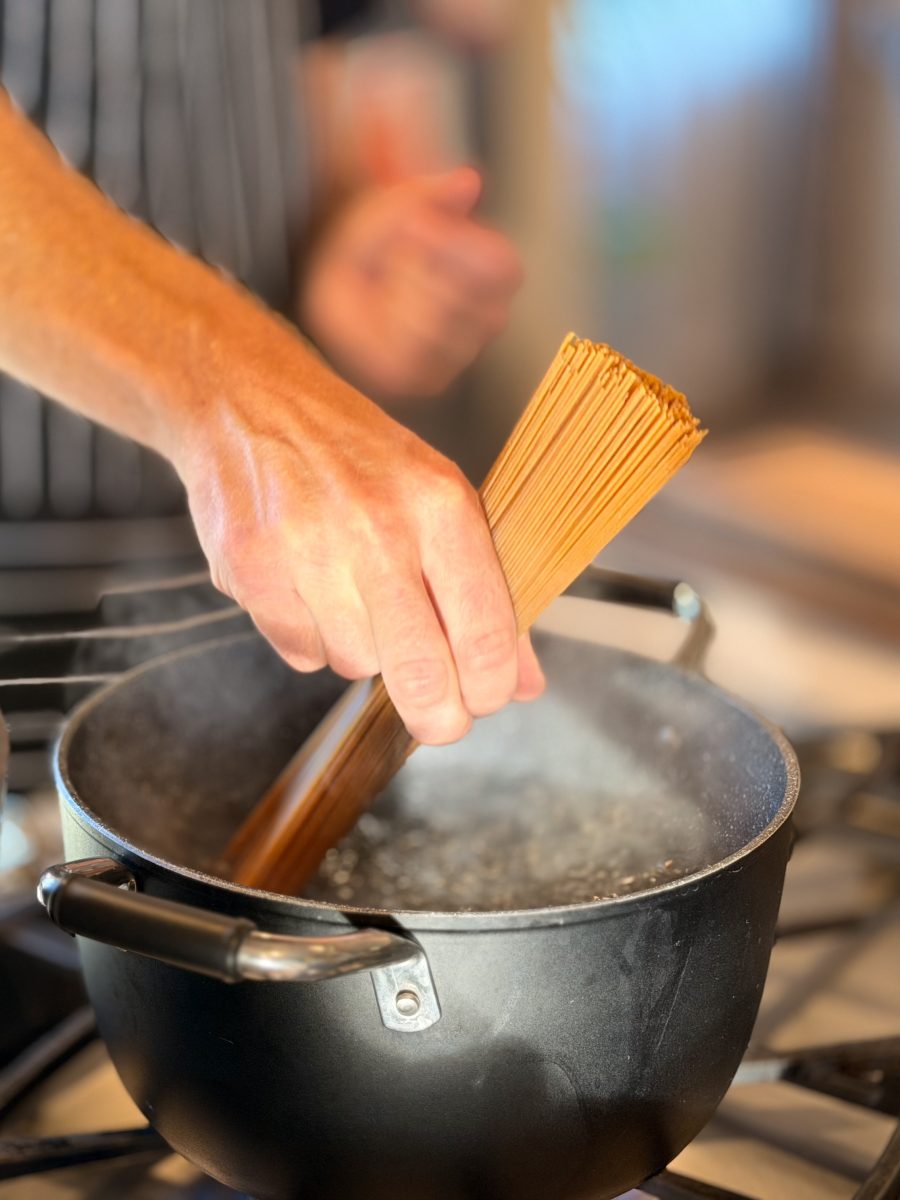
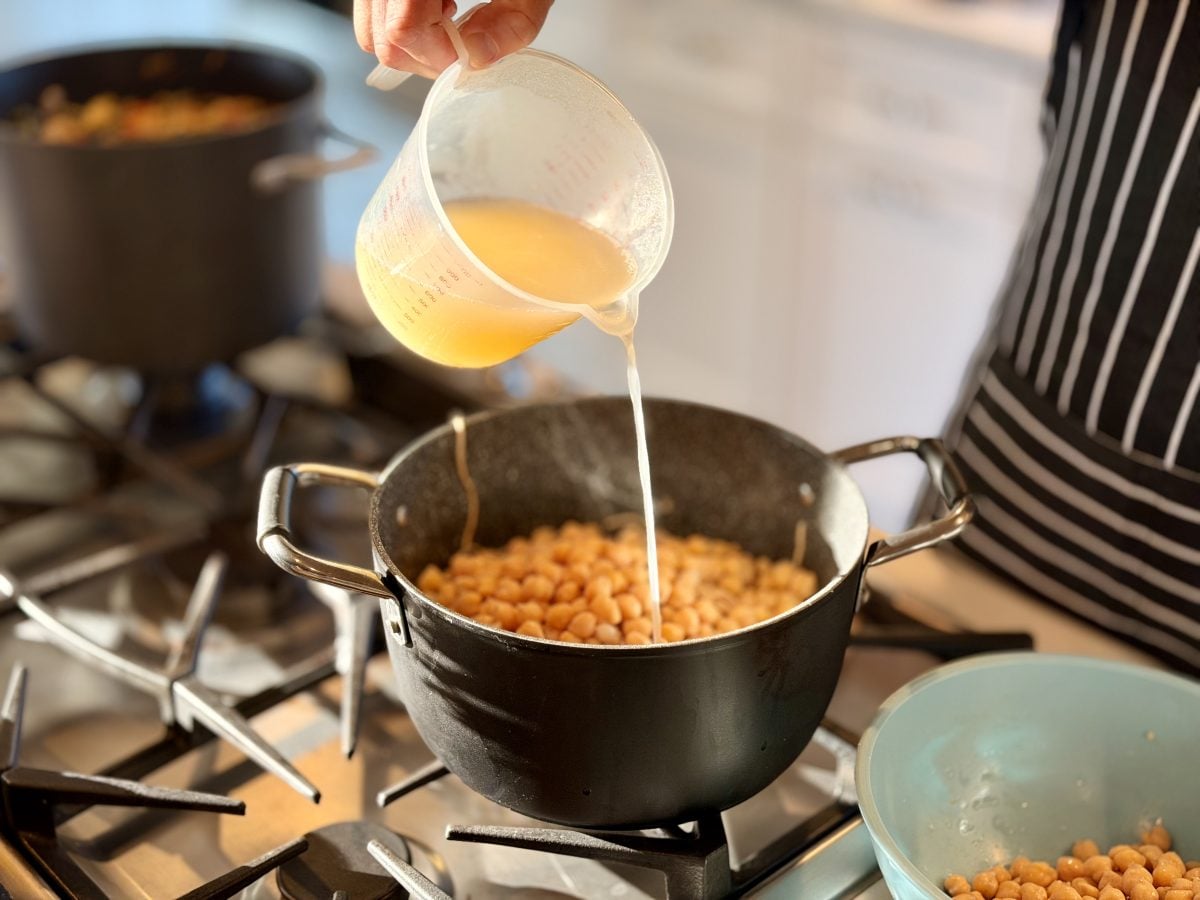
3) Before you drain the pasta, reserve two cups of the water. Place a heatproof measuring cup or mug next to the pot. Just before draining, scoop out some of the water. This is the most neglected step in cooking pasta and makes the difference between shiny and dry. Reserve more than you think you’ll need.
4) Return the drained pasta to the pot. Be sure not to rinse the pasta because the starch on the surface is what helps the pesto stick to the pasta. Quickly return the pot to the warm pasta to avoid cooling it before adding the sauce.
5) Add the chickpeas, pesto, and pasta water off the heat. Take the pot off the burner first, since the pesto’s bright green color and fresh basil flavor break down under direct heat. Stir in the chickpeas, pesto, and one cup of pasta water. The residual heat from the pasta and water is enough to warm the chickpeas and bloom the pesto.
6) Continue tossing until the mixture is glossy and totally coated. Add more pasta water if needed. Use tongs or two large spoons, and toss vigorously. An emulsion made from the pesto, water, and starch will form, creating a silky sauce. If your sauce looks clumpy or dry, add a splash (1 tablespoon) of pasta water. The sauce should look glossy with all of the noodles coated. Resist the urge to add more pesto; more water fixes this nearly every time.
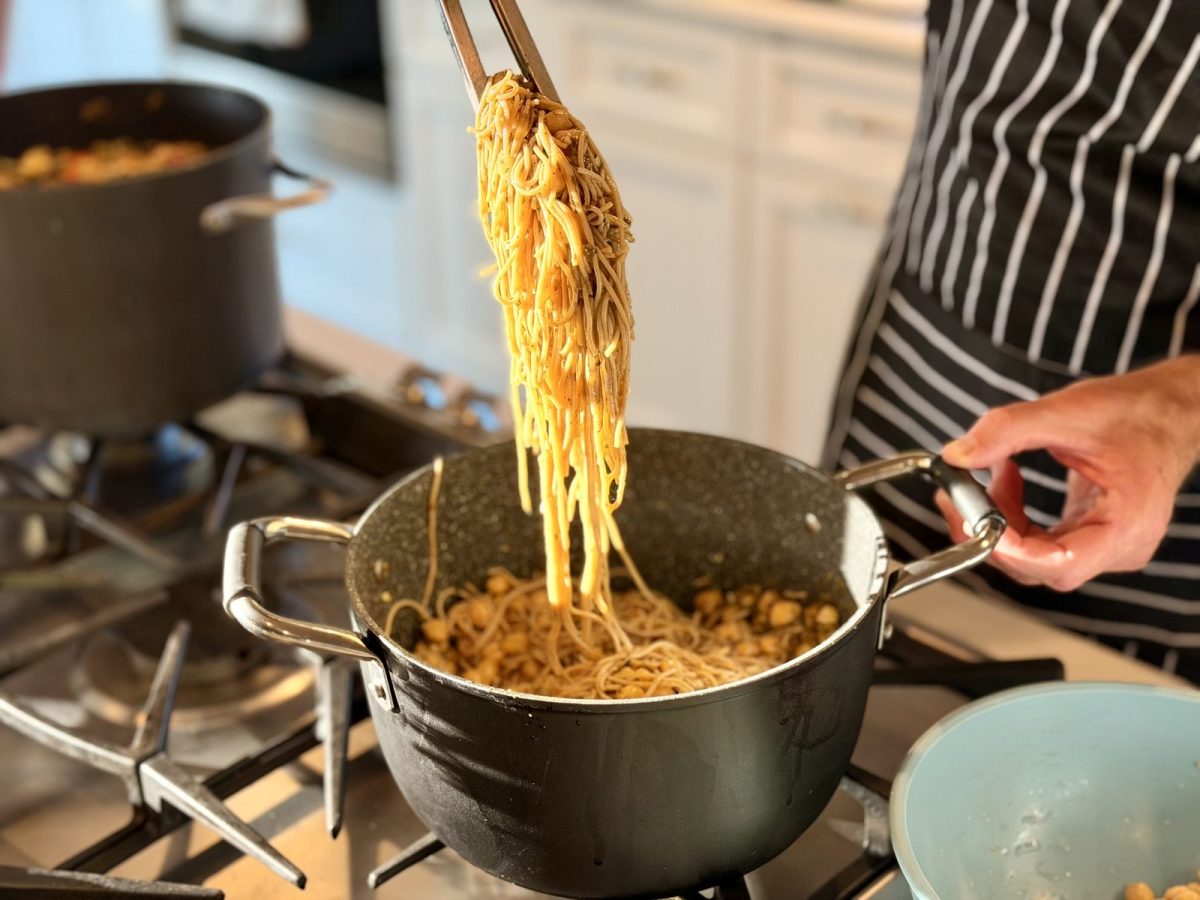
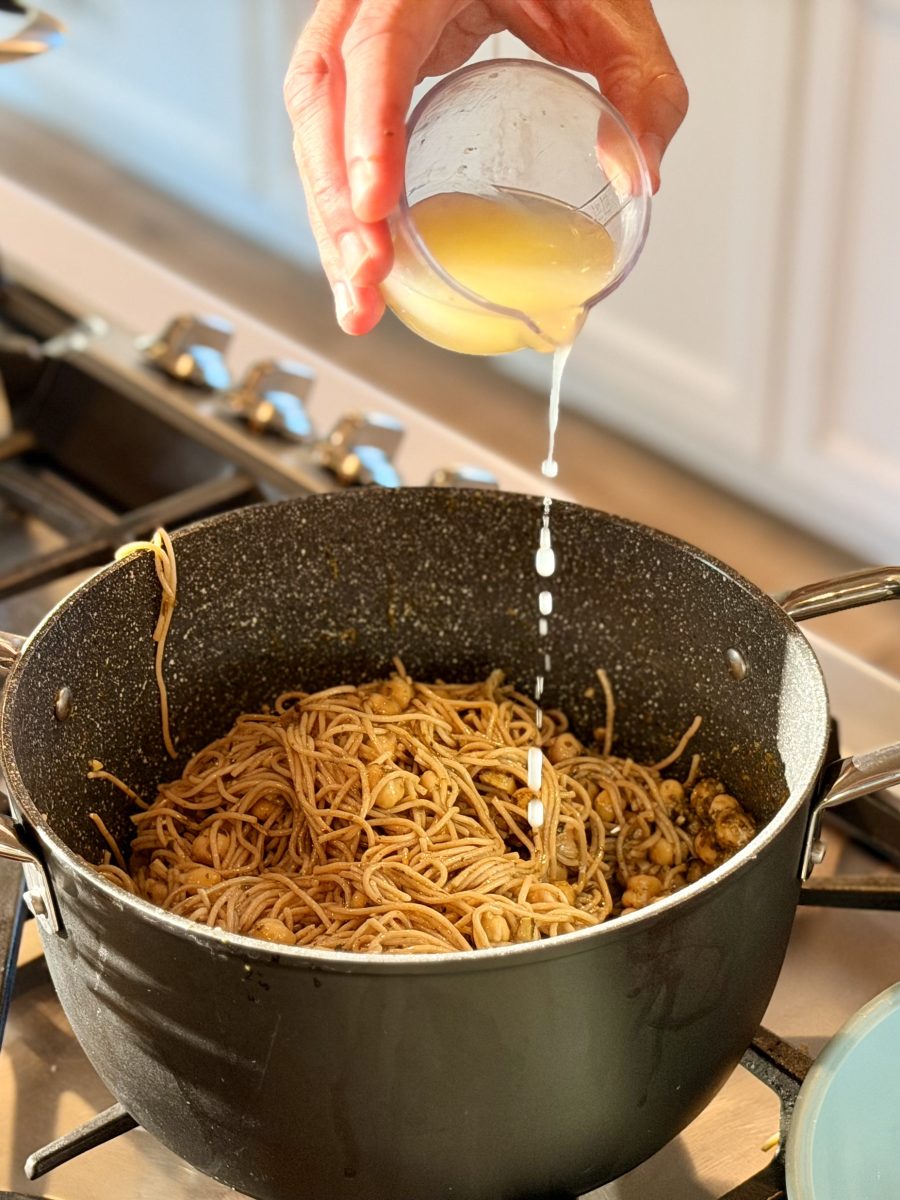
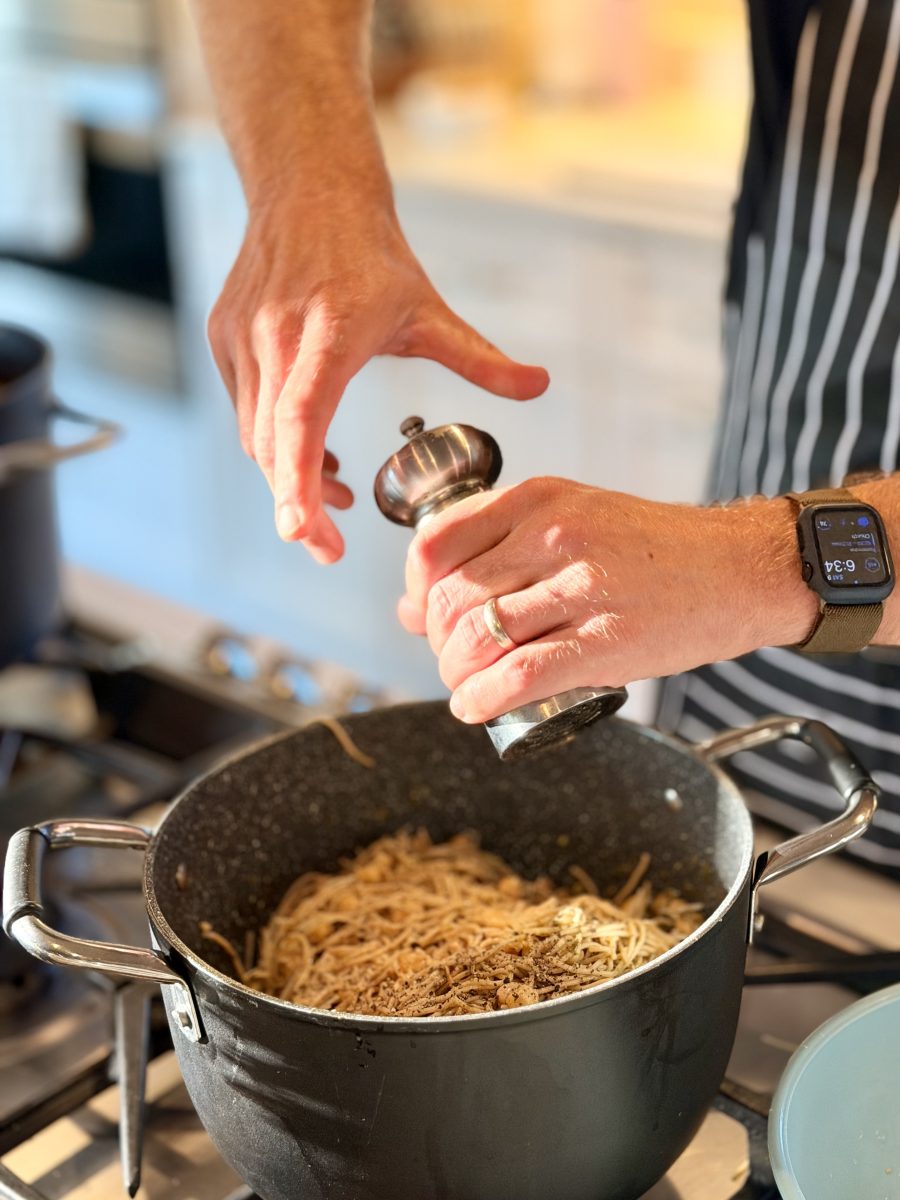
7) To finish the dish, add lemon juice, parmesan, and black pepper. Squeeze the lemons directly into the pot. Then, add a decent amount of grated parmesan and a good amount of black pepper. Toss everything together and taste. If it seems flat, add more salt. If it’s too rich for your taste, add lemon juice. If you are happy with the balance but find the dish a little boring, add more pepper. Make those adjustments and finish the dish.
8) Serve immediately. The best time for pesto pasta is right when it leaves the pot. Serve it in shallow bowls, add more Parmesan on top, drizzle with olive oil again, and enjoy. Waiting won’t improve the situation.
Ways to Change It Up
- Pesto pasta with roasted vegetables: Roast a sheet pan of zucchini, broccoli, or cherry tomatoes while the water boils. In that case, it’s suddenly a one-pan, veggie-loaded dinner.
- Pesto chicken pasta: Add 2 cups of shredded rotisserie chicken with the chickpeas (or in place of them). Hearty and protein-heavy.
- Lemon-arugula pesto pasta: As soon as the pasta is ready, stir in the pesto and add 3 cups of arugula. The heat will cause the arugula to wilt and it’ll add a nice peppery flavor that compliments the lemon well.
- Burrata pesto pasta: For each individual serving, add torn burrata on top. The cream combines with the sauce to elevate the dish to a romantic dinner level.
- Sun-dried tomatoes and pesto: For a richer, deeper, and sweeter flavor, combine the pesto with 1/2 cup chopped and drained sun-dried tomatoes (oil packed).
Rounding Out the Plate
- A simple green salad includes as ingredients: Arugula, lemon vinaigrette, and shaved parmesan. This salad reflects the pasta and lightens the plate.
- Garlic bread or focaccia: For mopping up any pesto left on the bowl. Always a good idea.
- Caprese salad: Tomatoes, mozzarella, basil, olive oil. Reinforces the Italian summer feeling.
- Roasted broccoli or broccolini: when it’s done and cool enough to eat, bite into its crispy, flake-salted edges and tangy lemon juice. The crunch balances out the tenderness of the pasta.
- A glass of dry white wine such as Pinot Grigio, Vermentino, or a crisp Sauvignon Blanc is ideal for Pesto as it loves a bright, herby white.
- Bread and a bowl of olives: these make for a great antipasto and take basically no effort to prepare for the meal.
If Something Looks Off
- The pasta is dry and clumpy, you needed more pasta water. Add it splash by splash while tossing. The sauce should not be dry, it should look glossy. You can use hot tap water if you’ve used all your reserved water. (It will be less starchy but should loosen it up).
- Pesto may have darkened or muddied due to the pot still being on the heat when you added the pesto, or if you over-tossed it. Remember to add pesto off heat, and the lemon at the end also helps revive the color.
- The sauce has a flat taste. It often needs more salt or more lemon. Try adding a pinch of salt and a squeeze of lemon, and taste it again. Finally, pesto needs an acid to come alive.
- Chickpeas can taste bland if you forgot to rinse them, or if you didn’t add any spices. However, if you rinse the chickpeas and briefly toast them in a dry skillet for 3 to 4 minutes with a sprinkle of salt, they will taste richer and nuttier. This is optional, but if you want to give this a try, you can do it on a slow evening.
- Pasta is mushy because it was cooked for too long. Always pull it one minute before the package time, especially with gluten-free pasta because the carryover heat from tossing it will finish cooking the pasta.
- Pesto can have too much oil and some jarred pestos separate. You can stir the jar well and add a little bit of pasta water to the pesto to help it emulsify again.
- I don’t have lemons. You can substitute 1 tablespoon of red wine vinegar or white wine vinegar. It won’t be exactly the same, but it will add the acidity that the recipe calls for.
- Looking for a way to make it creamier without using cream? Stir in a 1/4 cup of ricotta or 2 tablespoons of mascarpone cheese with the pesto. It gives a nice touch and feels great.

Storage, Reheating, and Nutrition
A lot of vegetarians select this dish as it is naturally vegetarian. It provides fiber and a decent amount of protein from the chickpeas and parmesan. Although it is not low fat because of the richness of the pesto and olive oil, the fat is from olive oil which is healthier. The sodium level is moderate because of the pesto and Parmesan. If this is a concern, use less Parmesan and do not salt at the end.
Store leftovers in the fridge for no more than 2 days, and make sure they are covered. For the best experience, try to eat pesto pasta no more than an hour after it is made. After a day, the pasta might be firm, and the basil will be dull.
Additionally, the pesto will taste slightly bitter after the second day. To loosen the sauce, use a splash of either pasta water or olive oil, and gently reheat the leftovers in a skillet over medium-low heat. If you put it in the microwave and turn it on to full power, the pesto will lose its color and the pasta will dry out. Cold pesto pasta is also a decent lunch the next day. It is a bit more “pasta salad” than “dinner”, but it is still decent.
From My Kitchen
My first experience goes back to a Tuesday. I got home late and had not planned dinner. I had thirty minutes before my family got home, and water began to boil for a sleek four minutes. Pasta went into the pot at a perfectly timed thirteen minutes and my family was served at sixteen.
My daughter, who had not been eating pasta for the last month at all, surprisingly devoured two servings and even asked what type of pasta it was. I told her it was fusilli, and she nodded like she had just solved all the world’s problems.
Second pass: During lunch with some friends, I served the dish in shallow bowls with extra parmesan and a good hard grind of pepper, plus a side salad and a baguette, and one of them, who cooks considerably better than I do, asked me what brand of pesto I used. That was the entire inquiry. Not “what’s in it” or “what did you do.” Just “what brand.” She even wrote it down. I felt ridiculously capable.
The Prep Checklist
- Bring a large pot of water with a lot of salt to a boil.
- Boil pasta for 1 minute less than the instructed time on the package.
- Before draining, be sure to reserve at least 2 cups of the pasta water.
- Drain (do not rinse) and put the pasta back into the warm pot.
- Remove from heat and mix in the chickpeas, pesto, and 1 cup of the reserved pasta water.
- Mix until the desired gloss is achieved, adding pasta water as necessary.
- Add freshly squeezed lemon juice, black pepper, and Parmesan cheese.
- Plate immediately into wide, shallow bowls.
- Add additional Parmesan and drizzle some olive oil.
Terms Worth Knowing
- Al dente is an Italian term meaning “to the tooth.” Refers to pasta that is cooked to the point that it has a slight bite. When you cut a piece there is a thin pale ring in the center. This is the correct texture for tossing with sauce.
- Pasta water is the starchy liquid that remains after cooking pasta. It is used to help sauces thin out and helps the sauces emulsify and cling to the noodles.
- Emulsify means to blend both fat and water to create a stable and shiny mixture. When combined, the pasta water and starch emulsify with the pesto. This is why the sauce covers every single noodle.
- Pesto is an Italian sauce made from a blend of basil, garlic, pine nuts, Parmesan cheese, and olive oil. The word ‘pesto’ is derived from the Italian word ‘pestare’ which means to pound or crush, which is what the sauce was traditionally made using.
- Carryover cooking: Drained pasta continues cooking for an additional moment after draining. This is accounted for by removing it from heat one minute prior.
Common Questions
Can I use a different bean instead of chickpeas?
Yes, Cannellini beans and Great Northern beans work and give a creamier consistency. I like to use equal parts white beans and chickpeas; it adds more dimension and gives it a more interesting texture.
Can I make this gluten-free?
Yes, use a gluten-free pasta that you trust and keep an eye on the cooking time as the brown rice or chickpea pastas tend to cook differently and gluten-free pasta can go from al dente to mushy quickly. Pull it 1-2 minutes early.
What’s the best store-bought pesto?
Refrigerated pestos are almost always better than shelf stable pestos. Look for ones that have basil and pine nuts as the first two ingredients, and olive oil, not vegetable oil. If you have a specialty grocery store near you, check out the cheese counter. Their freshly made tubs are usually the best.
Can I make this vegan?
Yes. You can use a vegan pesto (without parmesan), and you can either skip the finishing parmesan or use nutritional yeast for a similar nutty and cheesy flavor. A lot of the personality comes from the lemon and the chickpeas.
Can I make the pesto from scratch?
Combine your ingredients (2 cups fresh basil, 1/3 cup olive oil, 1/4 cup pine nuts, 2 cloves of garlic, 1/2 cup grated Parmesan, and a pinch of salt) in the blender and take some time to adjust the oil texture to your liking. Pesto takes about 5 minutes to blend, so make sure to stop the blender frequently. The pesto should be mostly smooth with a little bit of texture.
Why off the heat for the pesto?
Pesto loses its freshness quickly when heated. The color and flavor of basil come from specific phytochemicals that decompose when exposed to heat. The heat from the pasta and the water will be sufficient to activate the pesto without cooking it. This is the most common mistake people make.
Can I prep this ahead?
Not really. This dish needs to be eaten straight away. Although you can prepare the chickpeas, juice the lemons and grate the parmesan in advance, hold off on cooking the pasta until you’re ready to eat.
How much pasta water do I actually need?
For a full batch, set aside a minimum of 2 cups. Although you will probably use about 1 to 1 1/4 cups, having extra available will lessen the need to adjust the texture as the pot gets lower.
The Last Word
This pesto chickpea pasta is a dish I always turn to when I want to feel a little win for the day. It looks fancier than it really is, it’s quick, mostly made from pantry ingredients, and is filling without being too heavy. After you learn the trick with the pasta water you’ll never ever make pesto pasta with the dry spoon on top again. It’s the type of dish that’ll make people invite you to dinner over and over again, especially those who on paper go to much fancier restaurants than you do.