
For most of its history, the best Italian dishes have been created by the impoverished. The materials to create the food were basic – beans, bread, an onion, a can of tomatoes, possible herbs grown in the backyard, some kind of large cooking pot and a low flame to do the cooking.
The food that was cooked in those homes (cucina povera, “the cooking of the poor”) was eaten in silence and around small wooden tables in a place where no one took photos of the meal because there was nothing special to capture. Today, plenty of high-end Italian restaurants offer a kind of compensated version of the same idea but designed more beautifully and in smaller portions. The price: $26. The original is still better.
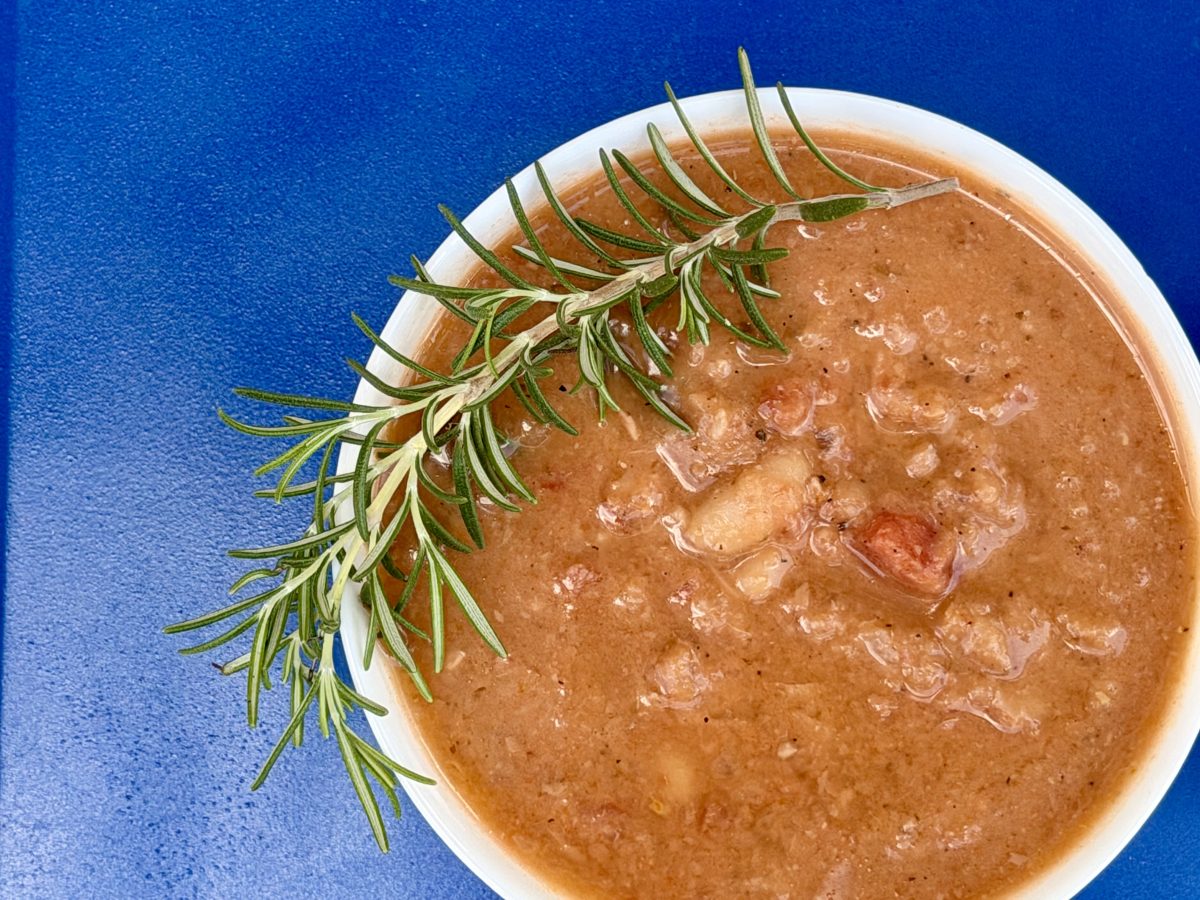
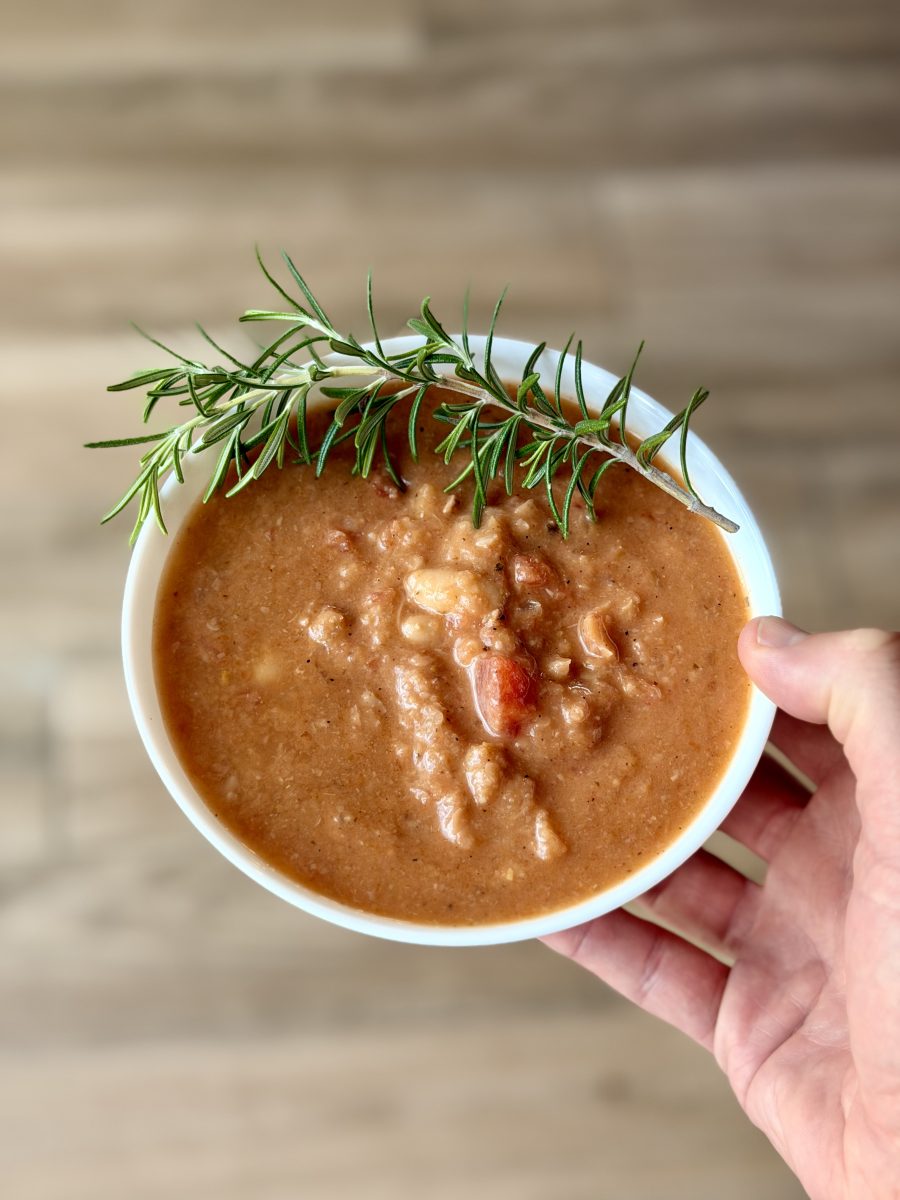
This is the classic slow cooker stew featuring white beans, tomatoes, and rosemary. The Cannellini beans and canned tomatoes, a small onion, three garlic cloves, two rosemary sprigs and a couple of cups of broth, all go into the slow cooker. Then you walk away. After 4-6 hours, it will smell like you have a mini trattoria! To finish the stew, mash some of the beans against the pot to thicken it. Add a splash of balsamic and a good drizzle of olive oil to finish.
Serve with some crusty bread and a simple green salad. You will have spent approximately $8 to feed the family for dinner, and all the cooking will have taken you less than 10 minutes. What would have taken someone the better part of the day to prepare, you will have accomplished in just a few minutes of work.
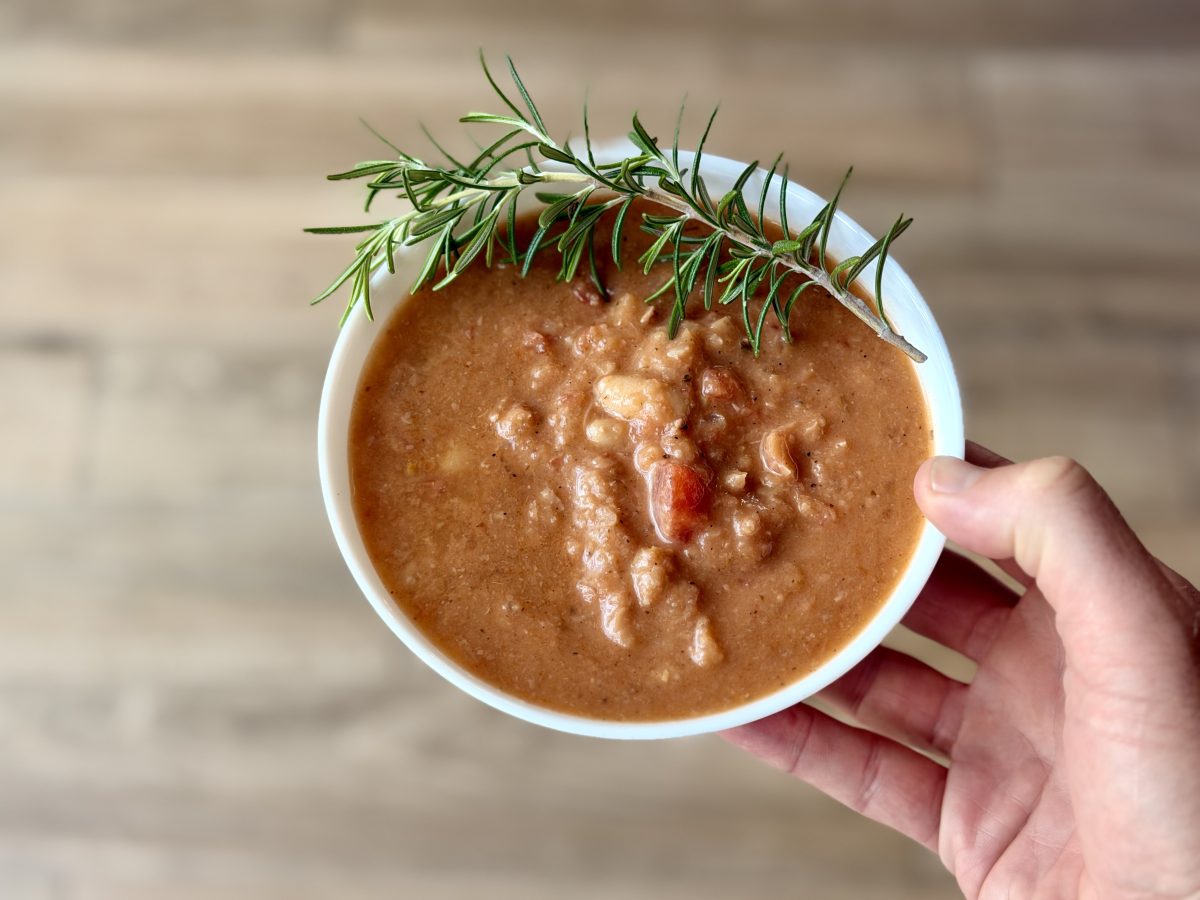

The Quick Rundown
- Slow-Cooker White Bean Stew, condensed: A white bean and tomato stew that has been slow cooked and flavored with rosemary, garlic, and olive oil. Subtly Tuscan and nearly entirely made with pantry ingredients.
- The beans take on the flavor of the tomatoes and the rosemary as the broth reduces and concentrates during the long, gentle cooking process. Additionally, mashing some of the beans thickens the soup naturally without using flour or cream.
- Prepare for 10 minutes. Then set the timer to LOW for 4 to 6 hours or set to HIGH for 2 to 3 hours. The active work time is less than 15 minutes total.
- Flavor profile: Creamy and bean body with a rich tomato and balsamic finish. Together with good bread and olive oil, the herbs and spices are also savory.
- Key tips: Use whole sprigs of rosemary (not loose leaves), don’t add the balsamic until the end, and finish each bowl with real olive oil and cracked pepper.
Ingredients
While the brevity of the recipe may seem daunting, much of the cooking will be taken care of for you by the two cans of diced tomatoes and the two cans of cannellini beans. The only thing that requires effort on your part to make this dish taste Italian is the addition of rosemary. To complete the bowl, add some olive oil. Really, this is not fancy and you should leave nothing out.
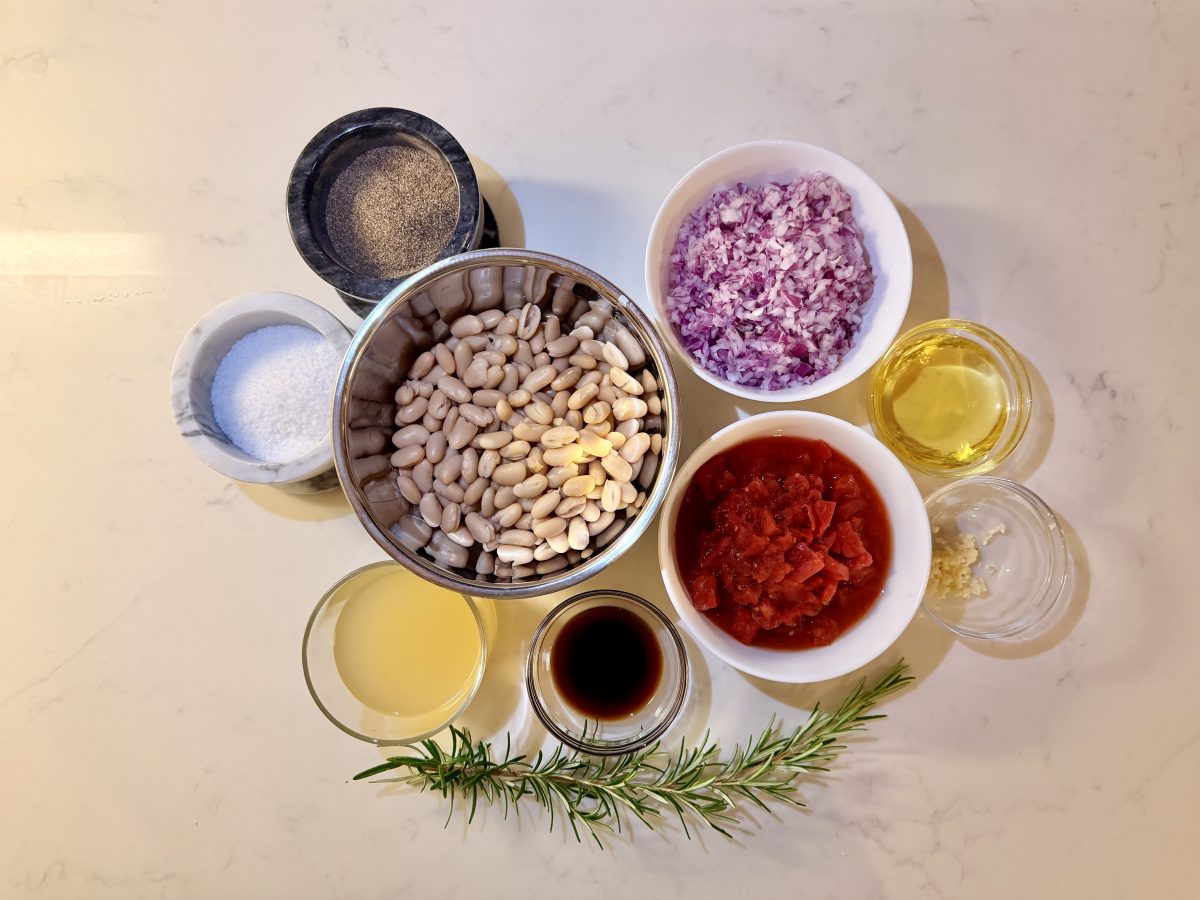
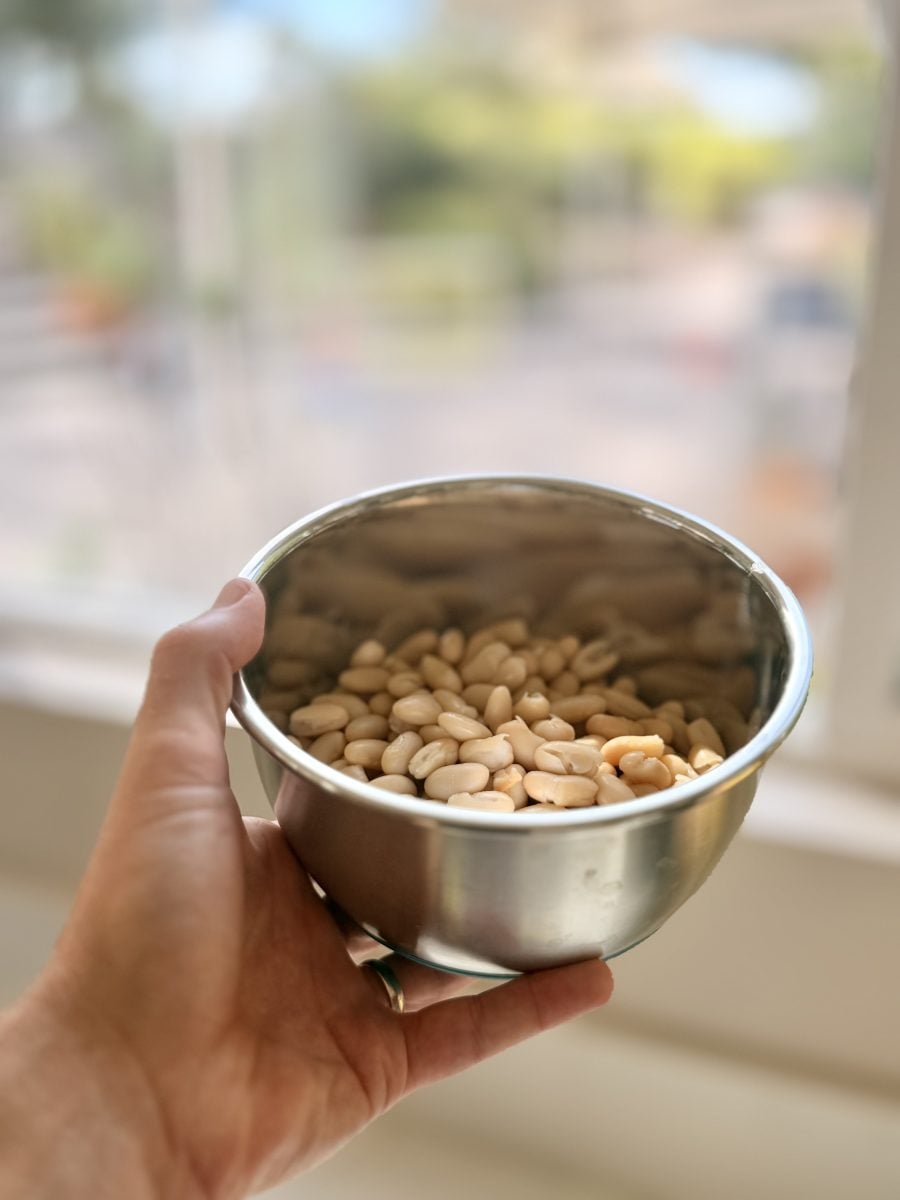
- Cannellini beans (2 cans, drained and rinsed): these are the traditional white beans used in Italian cooking. They are creamy and mild and are good for long cooking because they hold their shape. You can substitute Great Northern or navy beans in a pinch. Be sure to rinse the beans well, as the starchy packing liquid can give the broth a dull flavor.
- Canned Diced Tomatoes (1 can, 14.5 oz): Choose a good brand. Inexpensive canned tomatoes tend to be watery and give off a tinny taste. San Marzano or Cento brands are good options. Even better are whole peeled tomatoes (which you’ll have to crush)
- Onion (1 small, diced): Use yellow onion as a standard. Be sure to dice it small enough to melt into the broth during the long cooking period.
- Garlic (3 cloves, minced): Use fresh garlic cloves, do not use jarred. Three cloves sounds modest but works perfectly here, the slow cook mellows raw garlic into something quiet and sweet.
- Rosemary (1-2 sprigs): Use whole sprigs and take them out before you serve. The cook will result in the leaves falling off (and they will), and will release a piney, slightly resinous flavor into the broth. Dried rosemary is a substitute but loses a lot.
- Vegetable or Chicken Broth (2 cups): If you want to keep the stew vegetarian, use vegetable broth. If you want the stew to be more rich and savory, use chicken broth. You want to control the amount of salt at the end, so low-sodium versions of either are best.
- Olive Oil (Real Extra-Virgin Olive Oil): You’ll need two tablespoons for the cooker, and then you’ll want to have plenty to finish drizzle on each serving. The finishing drizzle makes the dish taste like a restaurant.
- Salt and black pepper: Initially, season the cooker lightly as you will be able to adjust it later. The balsamic and the broth add salt as well.
- Balsamic vinegar (1-2 teaspoons): Added at the very end. The vinegar’s acidity brings everything to life and combines all of the flavors. Only a small amount should be added; you’re not making a vinegar bomb.
- The crusty bread and side salad? Both are essentially required. The bread soaks up the broth and the salad adds contrast.
Master Ratio (Easy To Scale)
For each 1 can of cannellini beans, use: 1/2 can diced tomatoes, 1/2 small onion, 1.5 cloves, 1/2 – 1 sprig rosemary, 1 cup of broth, 1 tbsp of olive oil.
Since this recipe serves four, do we need to double the recipe? You would use 4 cans of cannellini beans, 2 cans of tomatoes, 1 large onion, 6 cloves of garlic, 3 sprigs of rosemary, 4 cups of broth, and 4 tablespoons of olive oil.
If you are using a slow cooker, the cook time might be slightly different. In terms of slow cookers, they are more affected by volume capacity than by the number of ingredients. If your slow cooker is over two-thirds full, you should set it to LOW and extend the cooking time.
Ingredient Choices That Change Flavor
| Choice | What you’ll notice | Best for |
|---|---|---|
| Cannellini beans | Creamy, classic, holds shape | The default; most Tuscan |
| Great Northern beans | Slightly firmer, smaller | A leaner version |
| Navy beans | Smaller, denser | More beans per bite |
| Butter (lima) beans | Larger, more luxurious | A softer texture |
| Chickpeas | Nuttier, firmer | A different stew entirely, but works |
| Diced tomatoes | Even cubes, quick to use | Weeknight default |
| Whole peeled tomatoes (crushed) | Sweeter, more rustic | A chunkier, more textured broth |
| Fire-roasted diced tomatoes | Smoky, deeper | A bolder version |
| Fresh rosemary sprigs | Piney, vivid | The right choice |
| Dried rosemary (1 tsp) | Less aromatic, slightly grassy | In a pinch only |
| Sage (3-4 leaves) | Earthy, slightly nutty | A different but classic Tuscan note |
| Thyme (3 sprigs) | Lighter, more floral | A milder herb profile |
| Vegetable broth | Cleaner, lighter | Vegetarian / vegan |
| Chicken broth | Richer, more savory | Heartier version |
| Beef broth | Bolder, darker | When you want it to eat like a meat stew |
Optional Add-Ins
- Parmesan rind (1, added at the start): Adds subtle creaminess and a touch of umami. Please remove before serving. You can save your rinds in the freezer for something like this!
- Crushed red pepper flakes (1/4 teaspoon): Gives off a nice warmth that blends well with the rosemary.
- Tomato paste (1 tablespoon, added at the beginning): Enriches the broth with a deeper tomato flavor and adds more viscosity.
- Kale or escarole (2 cups, chopped, added in the final 30 minutes): Transforms the stew into a one-pot meal, sort of like a deconstructed ribollita.
- Italian sausage (1/2 lb, browned and added at the start): Pushes the stew into hearty cold-weather territory.
- Lemon zest (from half a lemon, added just before serving): This creates a nice touch, as well as pairing nicely with the rosemary.
- Parsley or basil (1 tablespoon chopped, added just before serving): A complimentary flavor enhancement.
Instructions
You may use any slow cooker within the 4 to 6 quart range. If you are short on time, you can use the HIGH setting for 2-3 hours, however, the LOW setting for 4-6 hours is recommended. You will need a wooden spoon (for the final mash) and a ladle for serving.
1) Add the ingredients for the stew to the slow cooker. This would include beans, diced tomatoes with juice, a diced onion, minced garlic, whole rosemary sprigs, broth, olive oil, a small pinch of salt, and a crank of pepper to taste. Stir gently to combine and distribute evenly. The best part of this recipe is that you don’t have to do any browning steps. The long cook will develop the flavors that browning typically provides.
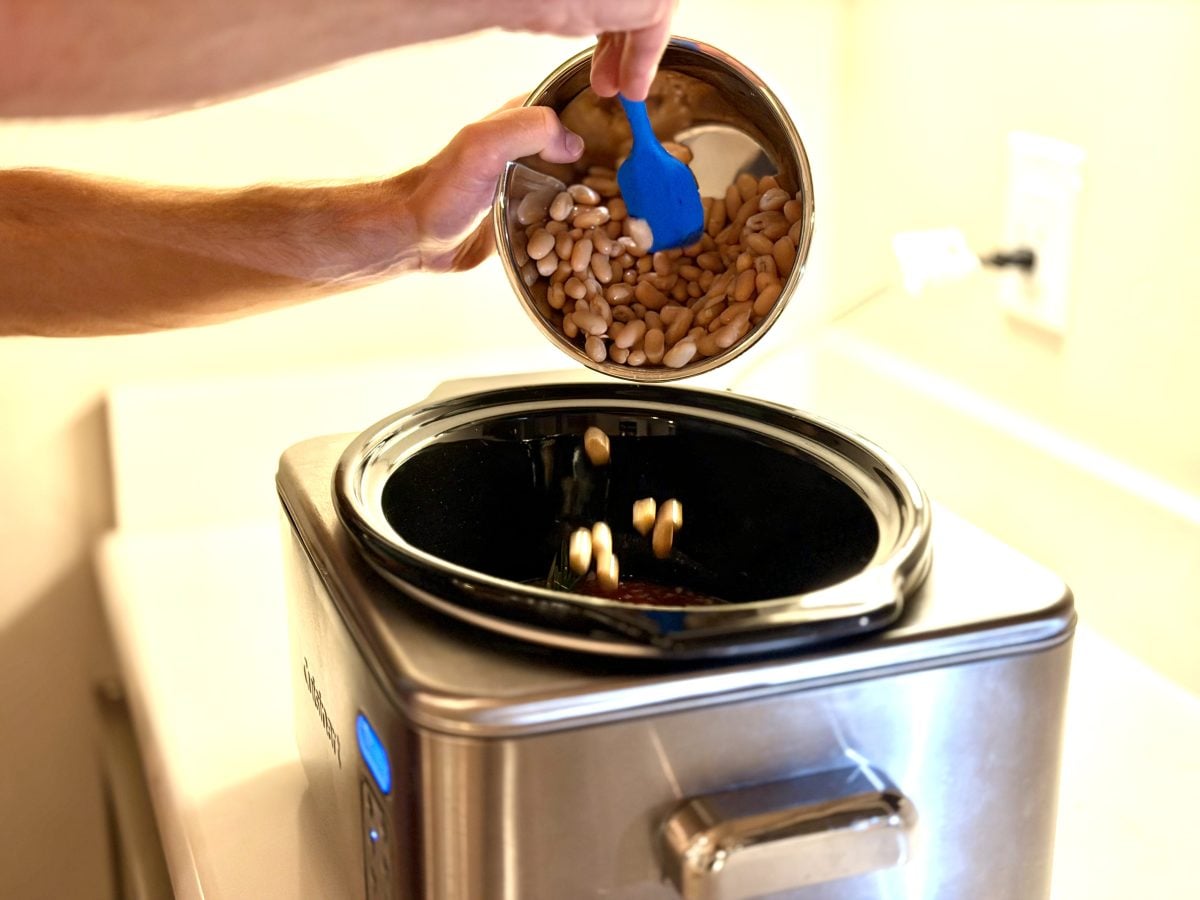
2) Cook until it has flavor. Keeping it on LOW for 4-6 hours is best because it helps the beans really soak in the tomato and rosemary, lets the broth reduce properly, and really concentrates everything without overcooking anything. If you are starting later in the day HIGH for about 2-3 hours should do it, but the stew might not develop as much texture. You will know it’s ready because the broth will have reduced and the smell of rosemary, garlic, and tomato should fill the house. Try to avoid lifting the lid because every time you do, you are losing heat and increasing the time it has to cook.
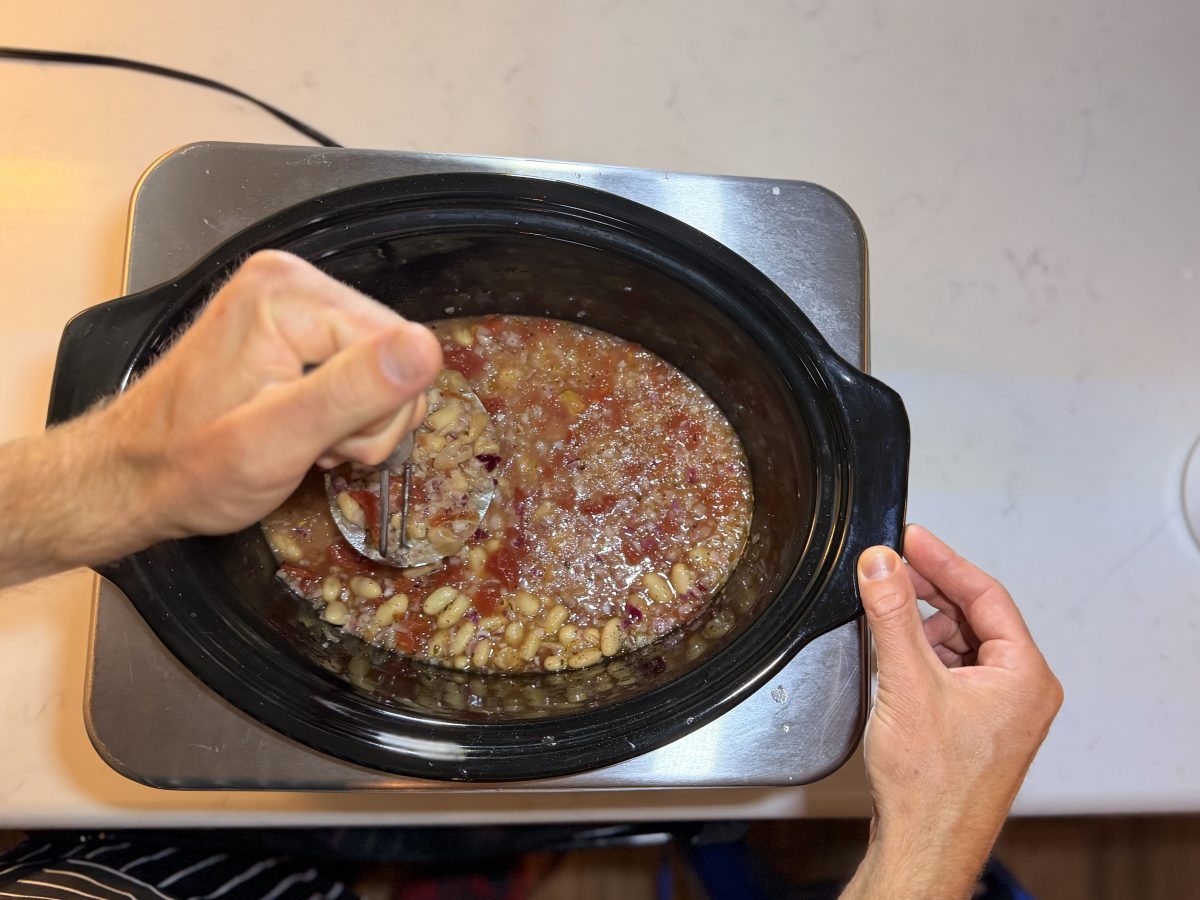
3) To give the dish a little more thickness, mash some beans against the slow cooker. Use a wooden spoon or a potato masher to smash approximately a half of a cup of beans against the wall of the slow cooker so they break apart. Put the mashed beans back into the pot. This changes the broth from being thin and watery to a silky, stew-like consistency. The beans do not need any flour or cornstarch to thicken the dish, as they provide their own natural thickening agent.
4) Finish the dish with balsamic vinegar and check for salt, pepper, and olive oil. Remove the rosemary sprigs (most of the leaves will have fallen off but do not eat the woody stems) and throw them away. Add 1 teaspoon of balsamic vinegar. Taste. If the stew tastes flat, try adding one more small splash of balsamic and a little pinch of salt. If it tastes good, but dull, then put in another small drizzle of olive oil. This last tweak is crucial for five ingredient broths.
5) Best served with a drizzle of olive oil, crusty bread, and a side salad. Ladle the stew into wide, shallow bowls. For each bowl, drizzle olive oil, add a crack of black pepper and, if you like, a sprinkle of fresh parsley or grated Parmesan. Accompany with slices of crusty bread (warm in the oven if you prefer) and a side green salad with lemon dressing. Take your time to enjoy.
Variations Worth Trying
- Tuscan ribollita: In the last 30 minutes of cooking, add 2 cups of chopped kale and some stale crusty bread cubes. The bread will dissolve and thicken the stew to almost porridge consistency, in a good way.
- Sausage and white bean: Brown 1/2 pound of Italian sausage in a skillet, add to the cooker at the start. Hearty cold-weather version.
- Spicy: Add 1/4 to 1/2 teaspoon of crushed red pepper flakes with the garlic and a dash of hot sauce at the end.
- Tomato-light: Leave out the diced tomatoes, and add 1 tablespoon tomato paste along with an additional cup of broth. The flavor will be lighter and more focused on the beans.
- Mushrooms and rosemary: For a more savory version, add 8 oz sliced mushrooms with the beans. It is especially good with chicken broth.
What to Serve With It
- Crusty bread or focaccia: Essentially required. Olive-oil-based focaccia is especially good.
- A basic green salad paired with a lemon vinaigrette provides a vibrant contrast that prevents the meal from becoming too dense.
- A quintessentially Italian glass of Chianti, Sangiovese, or any medium-bodied option: the original combination.
- Roasted vegetables on the side: Brussels sprouts, broccoli, or cauliflower with olive oil and garlic.
- A small antipasto plate: Cured meats, olives, marinated vegetables. Turns this into a dinner-party meal.
- Parmesan cheese and fresh herbs are on the table. Guests can finish their own bowls.
Rescue Notes
- Most stews usually taste flat, as they tend to lack sufficient amounts of seasoning or the balsamic vinegar that is needed. A small pinch of salt along with another splash of balsamic vinegar should be added, and then taste it again. Adding some acid to the pot is usually what brings everything to life.
- The broth is too thin. To thicken it, mash more beans against the wall of the pot. Generally, half a cup of mashed beans will thicken a four-quart pot noticeably. Also, you can let it simmer uncovered and on HIGH for an additional 15 minutes.
- The broth is too thick. You can add a little broth or hot water, then stir. Once you have thinned it, you can readjust the seasoning.
- Rosemary can be quite overpowering in flavour, you may have used too many sprigs, or left them in for too long. For this recipe, one or two whole sprigs is the right amount. If it tastes too ‘piney’ before then, be sure to pull them out after about 4 hours.
- The beans broke down a little too much. Perhaps the cooker was too hot or the beans were on the cooker for too long. When you have the time, stick to the LOW setting. The HIGH setting is much faster but more of a harsh treatment on the beans.
- Onions still taste raw. Next time try dicing them smaller. A small slow cooker on LOW for 4 hours should fully soften any reasonably small dice. If onions still taste raw after 4 hours, then try finer dice or sauté before adding next time.
- If you don’t have rosemary, sage and thyme are both classic substitutes from Tuscany. A combination of dried Italian herbs (1 tsp) will also work in a pinch.
- To enhance the smoky flavor, you may add 1/2 teaspoon of smoked paprika at the beginning of the cooking process or you may substitute regular tomatoes with fire-roasted diced tomatoes.

Keeping It and Reheating It
This stew is naturally vegetarian (and vegan if you leave off the Parmesan), and it is a good source of fiber, plant protein, and healthy fat from olive oil. It’s also Mediterranean diet friendly. This dish takes some pantry staples and turns them into something filling and deceptively healthy.
Depending on the broth and canned tomato brand you choose, the sodium content may vary. If you’re watching your sodium intake, choose low-sodium versions of both, and season to taste at the end.
Leftovers can be stored in the fridge for 4 days. They should be covered. As with all dishes with tomatoes that improve with time, this will be better after an overnight stay as the flavors meld. The stew will get thicker in the fridge because the beans are going to keep absorbing some of the liquid.
When you reheat it, add a small splash of broth or water to loosen it. The stew can also be frozen for three months. To thaw it, place it in the refrigerator overnight, and then reheat it carefully. To revive the flavor, add some olive oil and a little balsamic while you reheat it.
Stop following recipes. Start understanding them.
20 video cooking lessons from Nathaniel. $27 one-time, lifetime access.
How It’s Gone for Me
The shakedown run: I started this at 9 a.m. Sunday, just before I went out with a friend to do a long hike. After five hours, we arrived back and took off our hiking boots. We walked into a kitchen that smelled like an Italian restaurant, and I realized I had some bread to go with the arugula I had brought, plus the two bowls, and the salad we made was a fantastic way to finish that day.
He asked me what I had done to the broth to make it so good. I answered his question on a paper napkin. It said “the rosemary and 4 hours.”
Take two: On Tuesday, I had three evening commitments back to back, so I set my slow cooker for 11 am and set it to LOW for 6 hours, so I wouldn’t have to think about dinner while I was out. When I got home around 6:30, dinner was going to be so easy. All I had to do was a little prep on a salad and a loaf of bread. The stew made it feel like I’d been home cooking all day, even though I definitely wasn’t.
The Short List
- Rinse and drain two cans of cannellini beans.
- Chop 1 small onion and finely chop 3 cloves of garlic.
- Place the beans, tomatoes (including juice), onion, garlic, and rosemary sprigs, along with the broth, olive oil, salt, and pepper in the slow cooker
- Stir gently to combine.
- You may cook on HIGH for 2-3 hours but it is preferred you cook on LOW for 4-6 hours.
- Remove rosemary sprigs and discard.
- Mash about half a cup of beans against the side of the pot, and stir them back in.
- Incorporate 1 to 2 teaspoons of balsamic vinegar, then sample and recalibrate to your preference.
- Distribute into bowls and complete with olive oil and cracked pepper.
- Accompany with some crusty bread and a side salad.
Quick Definitions
- Cucina povera translates to ‘the cooking of the poor.’ This is a tradition that is characterized by its use of inexpensive, yet foundational, cooking ingredients, such as beans and bread, vegetables, and herbs from the pantry. These traditions form the basis of what we now consider to be the ‘Tuscan’ culinary tradition.
- Cannellini beans are big creamy white Italian kidney beans. They are the typical bean found in Tuscan stews as well as in ribollita and pasta e fagioli.
- Slurry is a method of thickening hot liquids by combining a starch with cold water. Not necessary here, the mashed beans will do the thickening.
- Reduction: When the liquid in a pot evaporates, the flavors in the pot become more concentrated. The slow cooker does a gentle reduction during the long cooking process.
- Balsamic vinegar: Aged Italian vinegar that has a sweet and slightly syrupy taste. Typically used in small amounts to enhance the flavor and add complexity to richly flavored savory dishes.
Your Questions, Answered
Can I make this on the stovetop instead?
Indeed. Place a heavy Dutch oven on the heat at medium-low and let it heat up covered for around 45 minutes to an hour. Stir it from time to time. It might not be quite as developed as the slow cooker version, but is still comparable.
Can I make this in an Instant Pot?
As directed, set the slow cooker to LOW for 4 to 6 hours. If you prefer, you can use the pressure cooking function set to HIGH for 6 minutes and do a quick release. You can then leave it on KEEP WARM for 15 minutes so the flavors develop.
Can I use dried beans?
Yes the flavor is better. Please soak one cup of dried cannellini beans overnight. Then, drain the beans and add them to the slow cooker with the other ingredients. Cook on LOW for 7-8 hours (not 4-6) until the beans can be cut through easily with a knife. Since the beans absorb liquid, you may have to add another cup of broth.
Can I make this vegan?
If you use vegetable broth and leave off the optional grated Parmesan, it is already vegan as stated.
What’s the best canned tomato brand?
You can trust San Marzano or Cento. Look for D.O.P. For the closest-to-authentic flavor, use the DOP (Denominazione di Origine Protetta) San Marzano’s. Great quality products are produced by Muir Glen and Bianco DiNapoli.
Why mash the beans at the end?
Mashing helps to breakdown the starches and creaminess of the beans and thickens the broth into a silky stew-like texture. This is a typical Tuscan technique that is far better than just adding some flour or cornstarch.
Can I freeze this?
Yes, you can freeze them for three months maximum. I suggest packing them into airtight containers. To defrost, place in the fridge for one night, and then reheat on the stove at a low temperature. You can add some olive oil and balsamic vinegar before serving to refresh the taste.
My slow cooker runs hot. Will it overcook?
That is possible. If your slow cooker tends to boil on the LOW setting, set a timer for 4 hours and check. The stew is done when the beans are soft and the broth has reduced a bit. Most likely, you have a newer model of the slow cooker which run hotter than older models.
Before You Go
Stews that are more mass-produced than others in the slow cooker category combine white beans, tomatoes, and rosemary. This combo elevates your expectations in regards to this quiet recipe. All the other competition stumbles as this recipe is simplistic in preparation and is, as a result, considerably more impressive than the effort put in to prepare the meal. This really changes how you think about style dinners.
With cannellini beans and canned tomatoes, and a rosemary plant, you have the base for one of the most rewarding dishes in every Italian household. This meal is also quite the paradox as it is hands off, costs very little, and is completely forgiving.
