
If you don’t hear anything, that’s because you’re not getting a sear, you’re steaming. This is probably what’s going on if your chicken thighs are always coming out looking (and tasting) like this: But pale. And why is the skin soft like wet paper instead of crisp? When cooking protein, you want to be sure you’re not overcrowding your pan, which prevents searing.
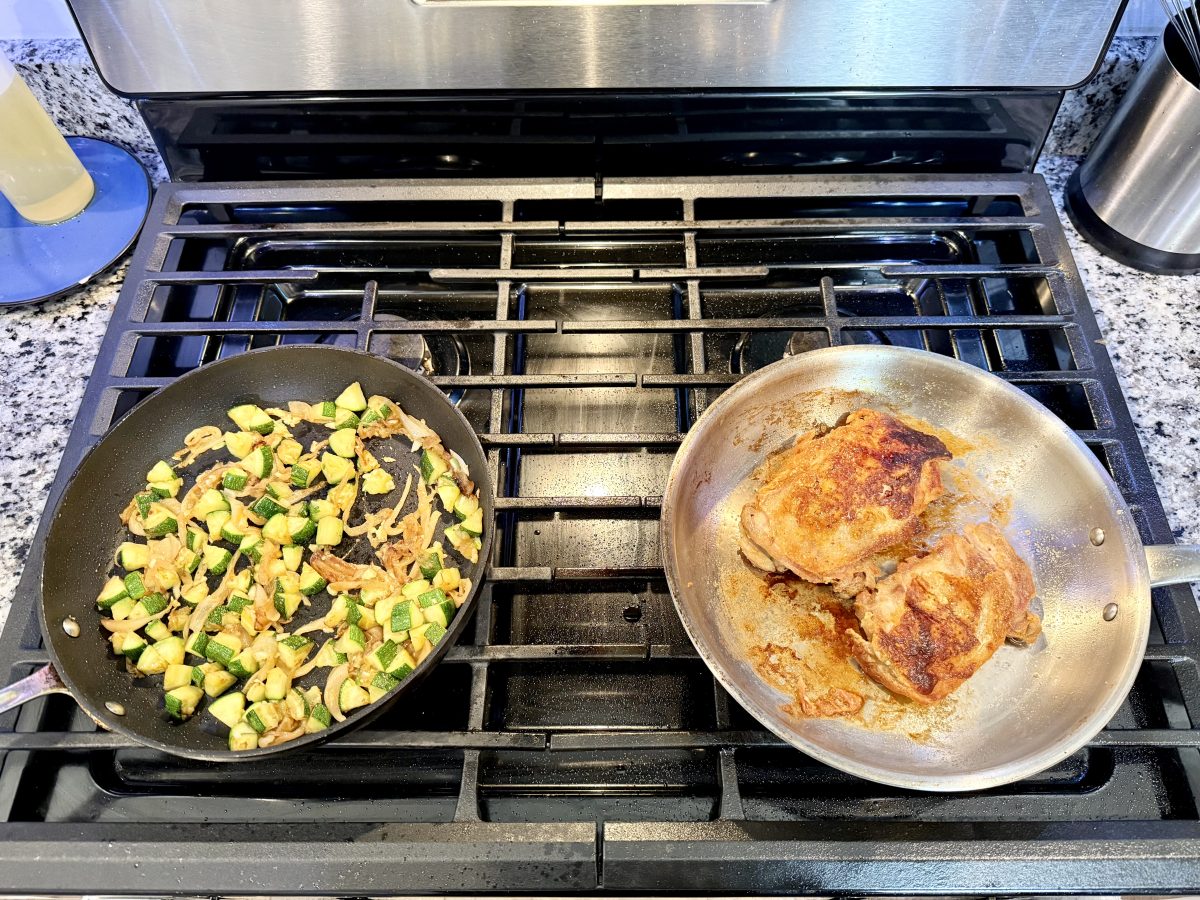

The steam problem
When you heat up a skillet and add protein to sear, it starts to release moisture. If there’s enough room in the pan, that moisture evaporates into steam and rises away. But if the pan is too full, the steam is trapped in the pan, rises up and comes into contact with more protein, condenses, and then falls back down on the protein. Now the protein is cooking in a cloud of its own moisture. (The same thing happens if pieces of protein are touching or overlapping.)
Cooked. And sad. Protein can’t brown when it’s wet, so now you’ve got yourself some fully-cooked beige chicken thighs.
Enter your email and we will send you the link to this article.
Free. Unsubscribe any time.

The temperature crash
Here’s why: Here’s a helpful fact to remember when it comes to searing: The highest temperature steam can get to is 212°F (aka the boiling point of water). Flavor and crust formation (known as the Maillard reaction the Maillard reaction) doesn’t occur until temperatures get close to 300°F at the surface of the bread.
You can tell when food is browning in a skillet by listening for a sizzling sound. It’s probably because you’re trying to sear too many pieces of chicken at once. Another reason overcrowding your pan works against you when searing is that it lowers the temperature of the pan, meaning even the pieces of protein that have space around them aren’t searing because the pan needs time to get back up to temperature.
| Crowded pan | Roomy pan | |
|---|---|---|
| Steam | Trapped between the pieces | Escapes freely from all sides |
| Surface heat | Stuck near 212°F | Climbs into browning range |
| Sound | Quiet, with liquid pooling | A steady sizzle |
| Result | Pale, soft, steamed | Crisp, browned, seared |
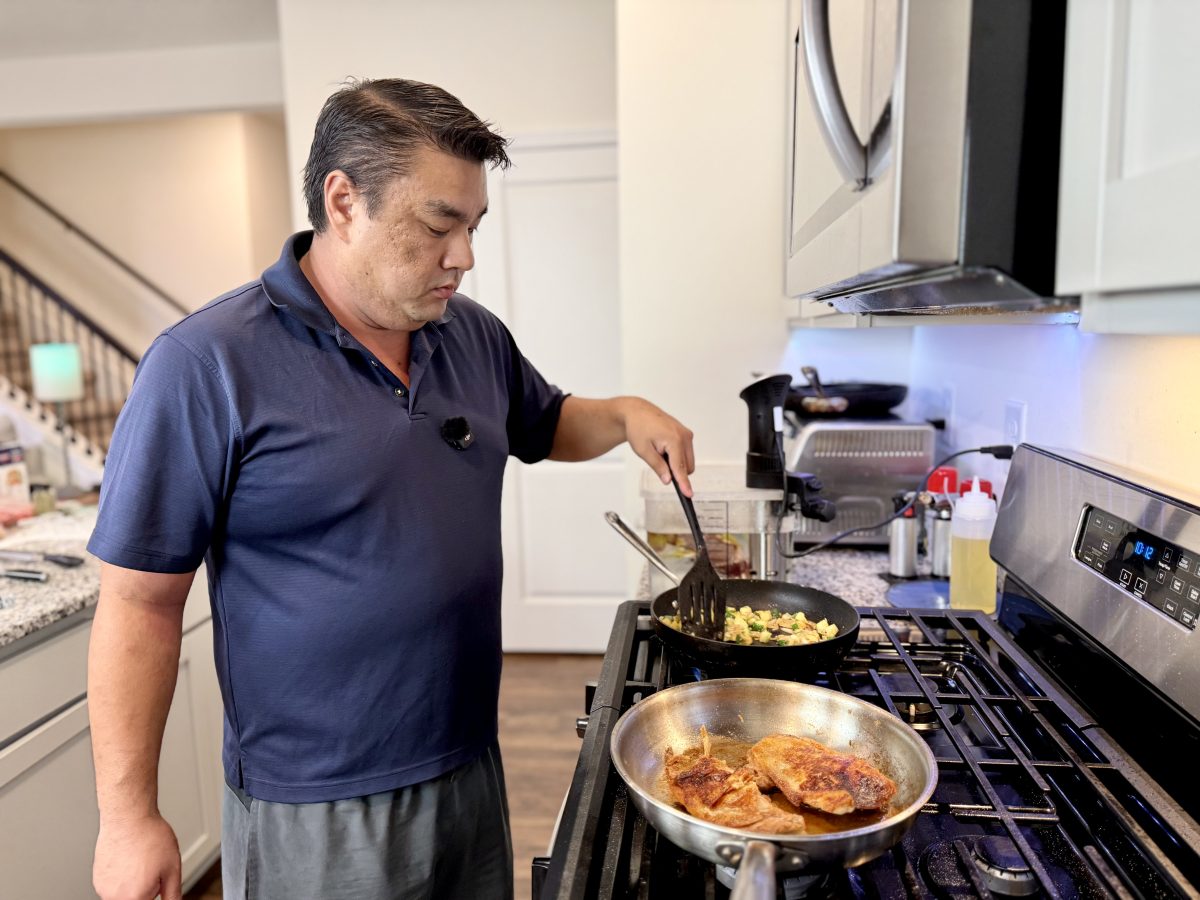
How much room is enough
It’s okay to sear in batches and keep the first batch warm on a wire rack in a low-temperature oven while you cook the second. It’s better to get nice searing in two batches than to get sad beige protein in one.
Sweating Onions Piled three deep sweat into softness will not take on much color. This isn’t always a bad thing, as sweating is fine when that’s all the recipe calls for. So if you’re searing anything, whether chicken thighs, mushrooms, zucchini, anything, don’t overcrowd your pan. All exceptions involve skin-on pieces of meat, and only when you want the fat to render down slowly and not just crisp up the skin, then a cold start, is a better bet.
The same principle holds true when you’re roasting vegetables on a sheet pan. You want the veggies spaced out on a single layer so they roast and caramelize instead of getting steamy and sad. If necessary, use two pans on two different oven racks and swap them halfway through cooking. Not convinced?
Here’s a fun experiment to try tonight: Take one package of bone-in chicken thighs and sear half of them in a crowded pan. Then, sear the other half in the same pan with plenty of room to spare. Use the same heat setting and amount of time for both experiments. Compare and contrast!
