
An unspoken part of being diagnosed with gluten intolerance is that about 70% of my food choices are already gluten-free. Take Mediterranean cuisine, for example. The Mediterranean diet, also known as Greek, Italian, Lebanese, Spanish, Moroccan, and Turkish cuisine, includes fish, lamb, and eggs. As well as rice, lentils, beans, and chickpeas, with plenty of olive oil and vegetables.
The only common exception to these cuisines is wheat, which is used for making pasta and bread. Out of the 28 dishes I’ve selected, all of them are gluten-free and are ones that I would cook regardless.
Contents
- 1) Greek Salad
- 2) Tzatziki Sauce
- 3) Stuffed Grape Leaves
- 4) Shakshuka
- 5) Mujaddara
- 6) Lablabi Chickpea Soup
- 7) Zaalouk
- 8) Caponata
- 9) Grilled Halloumi
- 10) Turkish Shepherd Salad
- 11) Spanish Tortilla
- 12) Classic Ratatouille
- 13) Salad Niçoise
- 14) Garlic Shrimp
- 15) Lemon Oregano Chicken
- 16) Baked Cod
- 17) Vegetable Minestrone Soup
- 18) Fasolada Soup
- 19) Red Pepper Walnut Dip
- 20) Quinoa Tabbouleh
- 21) Chickpea Salad
- 22) Baked Falafel
- 23) Tahini Lemon Sauce
- 24) Roasted Cauliflower
- 25) Stuffed Peppers
- 26) Harissa Roasted Carrots
- 27) Olive Oil Cake
- 28) Gluten-free Mediterranean Sweet Potato Brownies with Walnuts
1) Greek Salad
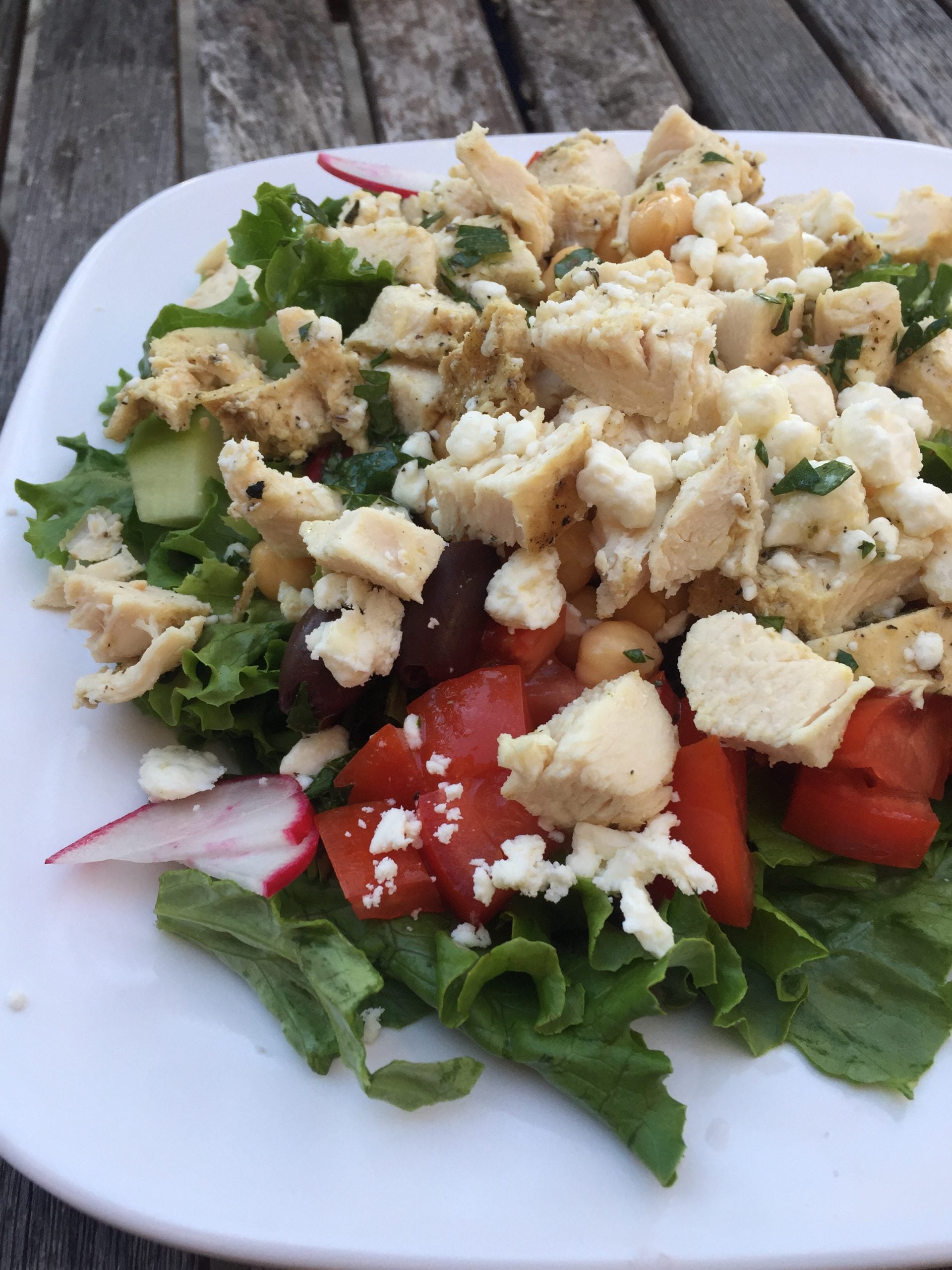
Greek Salad: Greek Salad can earn its spot as a versatile and very authentic salad as it is made with neither a thousand Island dressing or iceberg lettuce and it has not been Americanized. Additionally, it also made me realize for the first time that Mediterranean cuisine is mostly gluten free.
Take three large tomatoes and chop them into wedges, slice a cucumber and make half-moon thick slices, and quarter a red onion into rings. Add a generous handful of Kalamata olives with thick slabs of Feta (4 ounces, block form, not crumbled).
To dress the salad, use quality olive oil and red wine vinegar and add a good pinch of dried Greek oregano (especially the kind sold on the stem, if you can find it), salt and pepper. The salad tastes the best when the feta is in the vinaigrette that collects at the bottom of the bowl.
If you can’t find a block, use crumbled feta; though you will lose some texture. For a brighter taste, use white wine vinegar to make the dressing less aggressive.
2) Tzatziki Sauce
What makes Tzatziki Sauce work: Tzatziki is versatile and great to have as a last minute gluten free dinner option in the fridge as it turns plain grilled chicken into a Greek feast. Tzatziki also adds flavor to roasted veggies and makes rice taste exciting! Since yogurt and cucumber are gluten free, it’s a win! Just remember to grate your cucumber and make sure to squeeze out the liquid, otherwise the sauce will be too watery.
Grate half of an English cucumber using the large holes of a box grater. Use a clean kitchen towel to cover the cucumber and squeeze it over the sink (you will get about 1/4 cup of water). Combine 2 cups of full-fat Greek yogurt, 2 cloves of garlic (grated), 1 tablespoon olive oil, 1 tablespoon white wine vinegar or 1 tablespoon lemon juice, 2 tablespoons dill (chopped), and salt & pepper to taste.
For optimal results, it’s best to store in the fridge for 30 minutes or more. The sauce will be done when it’s thick enough to keep its form on a spoon, and the flavors have melded together.
Substituting dill for mint will give the sauce a brighter flavor. Using Skyr or labneh instead of Greek yogurt will result in a thicker and more tangy sauce.
3) Stuffed Grape Leaves
Why Stuffed Grape Leaves belongs here: Dolmades are gluten-free if the filling is rice-based and the broth is gluten-free. They can be made ahead of time and stay fresh in the fridge for a few days. They are great for snacking, for lunches, or as an appetizer.
Soak 50 jarred grape leaves in cold water for 10 minutes. Once done, drain and dry the leaves. Take some onions and sauté them in olive oil for 5 minutes. Mix that with 1 cup of short-grain rice, ¼ cup of pine nuts, some chopped parsley and mint, 1 tsp of cinnamon, lemon zest, and some salt and pepper. Take a tablespoon of this mixture and place it in the center of the leaf.
Fold the leaf to the sides over the filling and roll it tightly like a burrito. Place some leaves in the bottom of a pot, lay the dolmades seam side down in tight rows, add 2 cups of water or broth mixed with the juice of 2 lemons, and place a plate on top to weigh it down. Cook covered on low for 45-50 minutes. They are done when the rice is tender and the leaves are soft.
Instead of lamb, ground beef can be used to make the dish more substantial. For a more cost-effective version, the dish can be made without using the pine nuts, and it will not affect the final product significantly.
4) Shakshuka
Typically, this is gluten free, one pan, 20 minutes to make, and there is a showy presentation. It doesn’t feel like a last minute meal, and is a breakfast for dinner that I love. In olive oil, sauté (heat with oil) diced onion and bell pepper for 8 minutes until softened. Add 4 minced garlic cloves, 1 tsp cumin, 1 tsp paprika, and a little cayenne. Stir for 30 seconds.
Add 28 ounce can of crushed tomatoes, salt, and pepper, and simmer for 10 minutes until thick. Make 4-6 indentations in the sauce and crack an egg into each one. Cover and cook for 5-7 minutes. The egg whites should become firm and the yolks should stay runny. Finish with chopped parsley and feta.
Swap: For a meaty version, add a chopped chorizo or merguez sausage at the start (check label for GF). If you substitute jarred roasted red peppers for fresh ones, you will cut prep time by 8 minutes.
5) Mujaddara
What are its merits: Lentils and rice combined with richly caramelized onions.
Here is the entire dish. Since the only basis for the depth is the onions, you cannot rush them. Take the two large onions and chop them into small thin pieces. As this is happening, take a large frying pan and put in four tablespoons of any olive oil. After that, put the onions in and cook for 25 to 30 minutes. During this time, make sure to stir constantly.
Upon completion, the onions should have shrunk to an extremely small size and should have an extremely dark shade of mahogany (in comparison, golden should be regarded as child’s play). Set aside about 1/3 of the very small portion for garnish. For the rest of the onions, put in 1 cup for previously cleaned green lentils, 1 cup of dry basmati rice, 4 cups of either water or stock, 1 teaspoon of cumin, along with some salt and pepper to taste. Let this simmer for another 25 to 30 minutes, or until the lentils and rice are tender and all of the water has been absorbed.
You can also use brown rice, but you will have to increase the cooking time by 15 minutes. For the full restaurant-style version, finish with a dollop of yogurt on top and a pinch of sumac.
6) Lablabi Chickpea Soup
Lablabi Chickpea Soup: Chickpeas, garlic, and warm broth with generous seasoning and a base of fully cumin. Gluten-free. Secret’s in the broth. Be generous on cumin and garlic. Finish with juicy lemon, and you can make it dinner by adding a poached egg.
In a pan, put some olive oil and let the chopped onion cook for 5 minutes. In a bowl, mix 6 chopped garlic cloves, 2 tablespoons of cumin, 1 tablespoon of harissa or chili paste, and season with salt and pepper. Stir for 30 seconds, then add 3 cans of drained chickpeas, and 6 cups of water or vegetable stock. For more body, you can add a piece of stale gluten-free bread or a handful of crackers (optional). Let it simmer for 25 minutes. Once the chickpeas start to soften, the broth would have thickened and is ready. To top it off, add lemon juice, olive oil, and chopped parsley to each bowl, and a poached egg.
Swap: If you can’t find harissa, you can use a teaspoon of smoked paprika instead. For cleaner soup, skip the bread and let it simmer for another 5 minutes.
7) Zaalouk
Why we love Zaalouk: It has a wonderful silky texture from the eggplant, blended with garlic, cumin and paprika, cooked into a stew/dip consistency. It is gluten-free, good for a week in the refrigerator, and elevates a weeknight grilled chicken dinner.
Prep time: 5 minutes, Cook time: 40 minutes, Total time: 45 minutes Serves: 6
The first step is roasting two eggplants. Place 2 whole eggplants on a baking sheet. Preheat the oven to 425F. Then place on the middle rack for 35-40 mins until completely deflated and the skin has blisters all over it. Allow the eggplants to cool and then scoop out the insides from the skin. Next, prepare the dip. In a pan, heat olive oil and add 4 minced garlic cloves and cook for 30 seconds.
Add the flesh from both eggplants to the pan, along with a 14oz can of diced tomatoes, 1 tsp of cumin and 1 tsp of paprika. Add salt and pepper to your liking. Now, allow it to simmer uncovered for 15-20 minutes. It should be done when most of the liquid has evaporated and the mixture is really thick. Finish with chopped cilantro and a squeeze of lemon.
You can first char the eggplant directly on the gas burner for about eight minutes, turning several times, then finish it in the oven for 15 minutes if you want a smokier flavor. To achieve a more authentic North African taste, add a tsp of preserved lemon paste.
 Nathaniel’s Pantry Notes: What Mediterranean Cooking Already Got Right About Gluten-Free
- Stews made of beans and lentils, which include fasolada, lablabi, mujaddara, and lentil soup, can be considered as the center-of-the-plate proteins for over half of the region. They are naturally gluten free and inexpensive.
- Meats that are grilled or roasted include lemon-oregano chicken, souvlaki, kebabs, and slow roasted lamb. These are purely proteins with a marinade on them and there is nothing to substitute.
- Dishes that feature fish. Baked cod with tomatoes, garlic shrimp. Most Mediterranean seafood is gluten-free as is fish that is grilled whole with lemon.
- Sides and mains that are vegetable forward include ratatouille, caponata, zaalouk, stuffed peppers, and roasted cauliflower. Vegetables are doing the heavy lifting here.
- Egg dishes also include shakshuka, Spanish tortilla, and frittata. These are all naturally gluten free, cheap, and Mediterranean.
8) Caponata
Why Pick This: This Sicilian sweet and sour eggplant relish is vegan, gluten-free, and ready to eat. It’s fantastic the day of, and after a night in the fridge, it’s even better. It can be eaten straight from the jar, and can be enjoyed with grilled fish, or cheese.
Cube the 2 eggplants and add salt. Let it sit for 15 minutes to draw moisture, then pat dry. Fry in olive oil over high heat for 8 minutes. The eggplant should be golden and soft. Set aside. Cook the chopped onions and celery for 5 minutes. Add the 14 oz can of diced tomatoes, 3 tbsp of capers, 1/2 cup of chopped green olives, 2 tbsp of red wine vinegar, 2 tbsp of sugar, and a handful of pine nuts, if you have them.
Add salt and pepper to taste. Simmer for 10 to 12 minutes. Then add the eggplant and cook for another 5 minutes. The dish is done when the sauce has thickened and the vegetables have melded together so the sauce clings to everything.
Suggestion: Add a few golden raisins. You can use red bell pepper in place of celery.
9) Grilled Halloumi
What Grilled Halloumi gets you: Halloumi resembles cheese, but it can be grilled (as opposed to melted), meaning it can be enjoyed in slice form! Start by slicing an 8-oz block of halloumi into 1/2″ slabs. For the best results, use a cast iron skillete, so preheat it for 3 minutes at medium-high heat. Once it’s preheated, lay your slabs into the pan (there’s no need for oil) and sear for 2-3 minutes. It’s done when the bottom side is deep golden brown (plus a few specks of brown) and piping hot throughout. For the best experience, enjoy it with a salad and honey, plus watermelon and fresh mint.
Drizzling hot honey gives a nice sweet + heat addition. For a crispier crust, brush the crust with olive oil before baking.
10) Turkish Shepherd Salad
Consider Turkish Shepherd Salad, or Çoban Salatası, which is a fresh, crunchy dish that pairs perfectly with kebabs or grilled fish. If Greek Salad tried to impress you, this would be it. Chop 3 ripe tomatoes, 1 cucumber, 1 green bell pepper, 1/4 of a red onion, and add a large handful of flat-leaf parsley.
For the dressing, mix 3 tablespoons of olive oil, the juice of 1 lemon, 1 teaspoon of sumac, and add salt and pepper to taste. Dress the salad and wait 10 minutes to allow the flavors to combine. The tomatoes should be juicy, and the dressing will sink to the bottom of the bowl.
To make it shepherd style, add crumbled feta cheese. For a true depth of flavor, add some pomegranate molasses to your dressing!
11) Spanish Tortilla
The Spanish Tortilla is a dinner for 6 people and costs $3 to make. The best part? It is gluten free! It is so good I would even fight someone for a piece of cold tortilla on day 2.
Slice four medium potatoes and one onion. In a nonstick skillet, heat a half-cup of olive oil over medium-low heat. Add potatoes and onions, cover the skillet, and cook for 15 to 18 minutes, stirring occasionally. The potatoes should soften but not brown and should be cooked all the way through. Beat six eggs in a bowl. After the potatoes and onions have cooked, dump the mixture into your egg bowl.
Add salt and pepper to taste. Wipe the pan, then add a tablespoon of the oil and your egg and potato mixture. Let it cook on low heat for 6 to 8 minutes until the bottom is solid. Then, using a plate, flip the tortilla over, slide it back into the pan, and cook for 4 more minutes. The tortilla is done when the center is firm but still a little wet. It will also continue to cook while it cools.
Swap: For a heartier meal, feel free to put in a handful of chopped chorizo (make sure it is GF). If you don’t want to flip it, you can instead finish it under the broiler for 3 minutes.
12) Classic Ratatouille
What to look forward to: veggies braised in the summer heat and sunshine! Naturally GF. Day two is better than day one, which is exactly what you want from a make ahead dinner.
Cut 1 eggplant, 2 zucchini, and 2 bell pepper, into 1-inch cubes. Do the same for 1 onion. Cook the eggplant in olive oil for 8 minutes until browned and tender. Set aside. For the zucchini and peppers, sauté each for about 6 minutes and set aside. In the same pan, add more oil, and cook the chopped onion and 4 minced garlic cloves for 5 minutes.
Add 1 can (28 oz) crushed tomatoes, 1 tsp dried herbs de Provence (or other dried herbs), and salt & pepper to taste. Simmer for 10 minutes, then add all your veggies. Let the stew simmer for another 10 minutes. The mixture should have thickened and the veggies should have been puréed to your preferred consistency.
You can skip the individual veggie searing step if you want (it just takes fewer minutes) and prepare all the veggies at once by roasting them at 425°F for 35 minutes (it’ll have a little less depth). Also, chop some basil and add that in.
13) Salad Niçoise
Salad Niçoise: This dish is a full meal disguised as a salad. It’s naturally gluten-free (just don’t add the croutons!). Salt-cured anchovies, capers, olives, and high-quality tuna will take you to the South of France and away from your sad desk lunch.
First, boil baby potatoes (1 lb) for about 12-14 mins. After this time check to see if potatoes are tender drain them and slice each potato in half. After you start boiling the potatoes, steam green beans (1 lb) for 4-5 mins. You want these to be bright green and a little tender. Also, boil 4 eggs (these will take a little longer than potatoes, so start boiling now if you haven’t already). Once you take out the eggs to cool your potatoes should be ready. Once cooled cut into quarters.
When all the potatoes, green beans and eggs are cooled you can start assembling the platter. Place some butter lettuce down as a base then add the potatoes and green beans sliced cherry tomatoes a jar of tuna (make sure the jar is drained) the eggs some kalamata olives, add capers and anchovies to the jar as well and then dress everything with a mix of olive oil garlic red wine vinegar and dijon mustard.
Swap: Anchovies are optional and traditional. You can skip them. An excellent alternative variation is to use canned salmon instead of tuna.
14) Garlic Shrimp
You serve the shrimp cooked in garlic-infused olive oil with bread to soak up the sauce. If you want to avoid gluten, you can skip the bread; the shrimp are the stars of the show.
In a large skillet, warm half a cup of olive oil over medium heat along with 6 cloves of garlic sliced thinly and a pinch of red pepper flakes. Allow the garlic to infuse for 3 to 4 minutes until it turns just golden (be careful not to let it brown because it will become bitter). In addition, add 1 pound of peeled raw shrimp along with a teaspoon of paprika.
Cook for 2-3 minutes total, flipping once. They finish when they curl up into a loose C-shape and become an opaque pink. End with a good amount of finely chopped parsley and a drizzle of sherry vinegar or lemon juice.
Swap: Substituting sweet with a teaspoon of smoked paprika adds more depth. If you want a more filling dinner, you can serve it with GF rice or polenta.
Nathaniel’s Pantry Notes: Where Gluten Actually Hides (And Where It Doesn’t)
- Soy sauce. Soy sauce made from soybeans and wheat is standard, though Tamari, which is soy sauce that is gluten-free, is very similar in taste. Coconut aminos is sweeter and can be used in stir-fries as a substitute.
- Modified food starch. Wheat is the most common source, and in the absence of any specified source, it is safe to presume that it is wheat. Modified food starch is common in sauces, dressings, deli meats, and freezer meals, but safe substitutes include cornstarch and tapioca starch.
- Broths and stocks. These often have things like modified food starch, autolyzed yeast extract, or hydrolyzed wheat protein added for thickness. Either read the label, or make your own broth/stock (which is cheaper in the long run).
- Oats. Even though oats are gluten-free, most oats are processed in a facility where they also process wheat which can result in cross-contamination. If you want to be safe, skip oats altogether or buy oats that are certified gluten-free.
- At-home cross-contamination. A cutting board you used for bread yesterday, the toaster, the wooden spoon you used to stir pasta, etc. If you have celiac in the household, it is worth having a set of utensils that are designated gluten-free.
15) Lemon Oregano Chicken
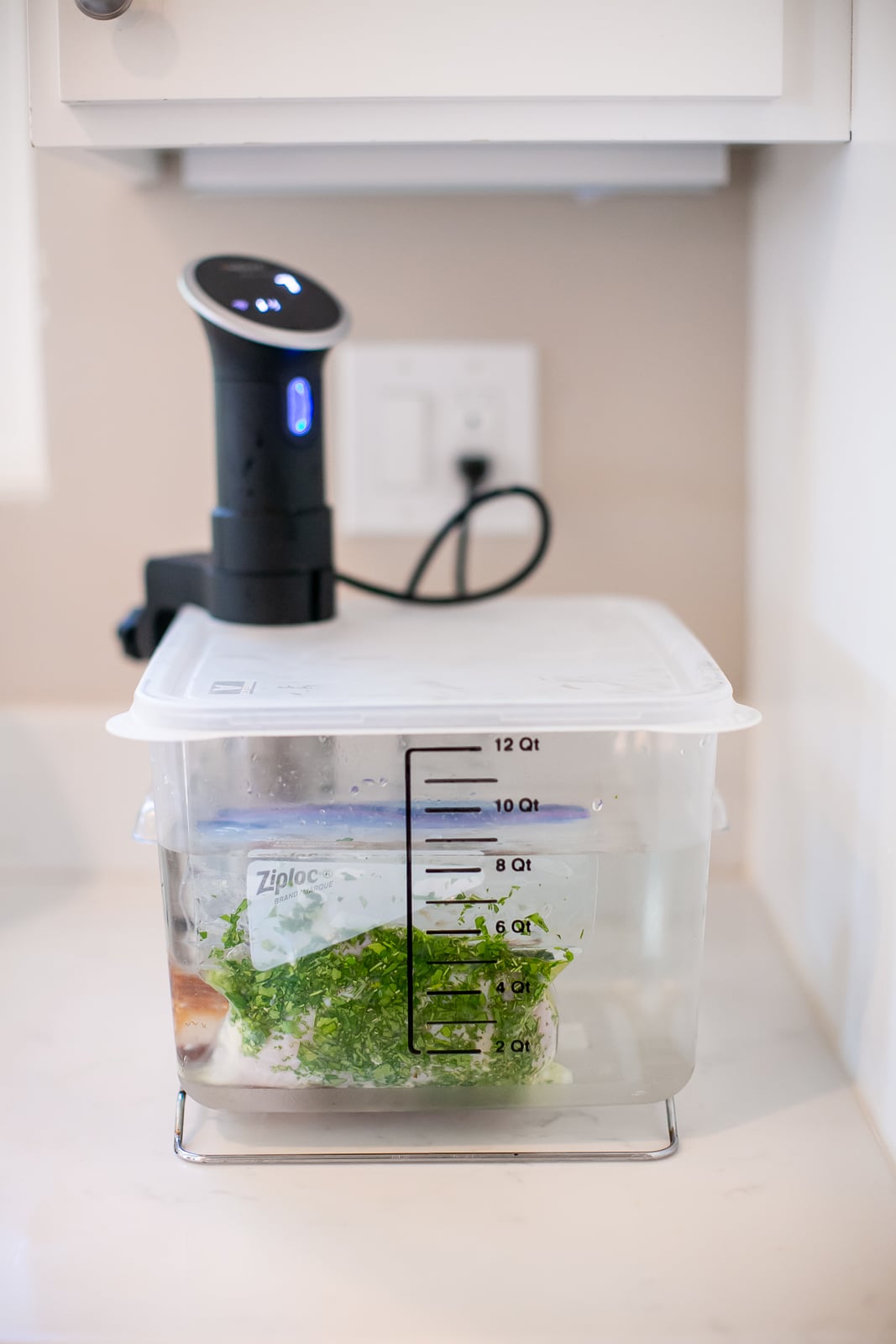
What makes Lemon Oregano Chicken work: the type of roast chicken that is packed with flavor. Thighs with bones are cheap, forgiving, and naturally gluten-free. The marinade does all the work.
What you need is olive oil, the juice of two lemons (and lemon zest), garlic (4 cloves), 2 tablespoons Greek oregano (dried), and salt and pepper to taste. With this, you should marinate 8 chicken thighs (skin on and bone in) for a minimum of 30 minutes.
The longer, the better. Overnight is perfect. Once done, dump the thighs onto a sheet pan and put the rest of the marinade on top. Bake in an oven for 35-40 minutes at 425 degrees F. The thighs are done once the skin looks dark brown and the internal temp of the thighs is 175 degrees F. This should be served with rice or roasted potatoes and a Greek salad.
For boneless thighs, the cook time is 22-25 minutes. If you want something more visually appealing, you can also use a whole spatchcocked chicken. This chicken will take 45-50 minutes to cook.
16) Baked Cod
Why Baked Cod Mild cod is served with sides that can be gluten free. Mediterranean flavors are combined with some effort to create this fish dinner. The natural sauce is created by cherry tomatoes and olives.
Set the oven at 400 degrees. Mix a pint of cherry tomatoes, 1 cup of sliced kalamata olives and garlic, and 1/4 cup of capers with olive oil, salt, and oregano, and combine in a baking dish to bake for 12 minutes. Then, add 4 fillets of cod to the dish, along with some more olive oil and a little lemon juice, and put them back in the oven for another 12 to 15 minutes. Once the fish looks opaque and breaks apart easily with a fork, it is done.
Halibut, haddock, or other firm white fish can be substituted with a similar cooking time. To create more of a pan-sauce, add a glass of white wine to the tomatoes.
17) Vegetable Minestrone Soup
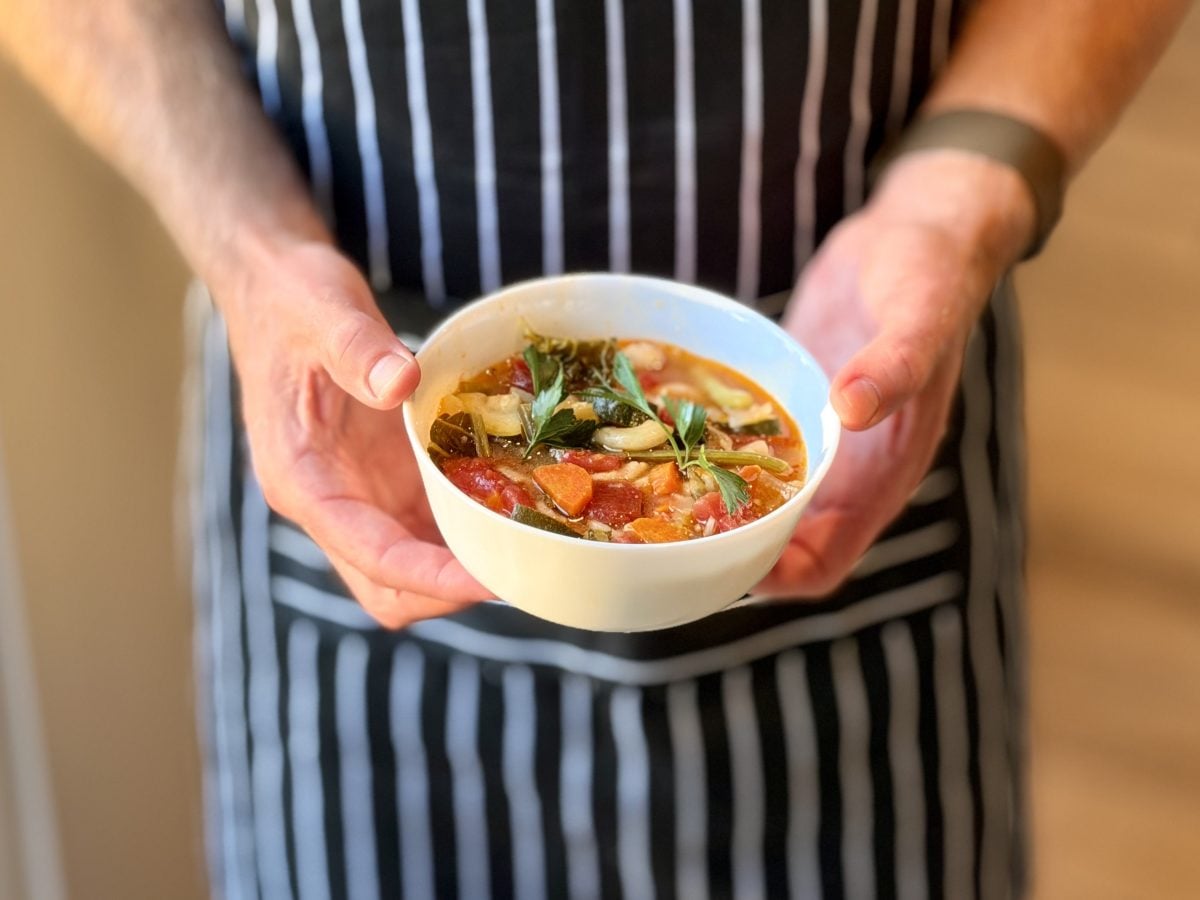
Without the pasta, minestrone is still a hearty dish.
Add extra beans or diced potatoes for body and finish with a little olive oil for richness. Use gluten-free broth and season using only basil and rosemary. The flavors meld, and taste even better the next day.
18) Fasolada Soup
The Fasolada Soup Pitch: Greece’s unofficial national soup and of course GF, is made with 1 bag of dried white beans, and feeds a family for less than $4 with leftovers.
If you need to soak your beans overnight, put 1 pound of dried navy or great northern beans. Alternatively, you can do a 1-hour quick soak by covering the beans with boiling water and letting them sit for an hour before draining. Prepare the veggies by cooking the chopped onion, carrot and celery in olive oil for 8 minutes. Add 4 cloves of garlic and stir them together for 30 seconds.
Then, mix in the rest of the ingredients which include the drained beans, a 14 ounce can of crushed tomatoes, 8 cups of water or stock, 2 bay leaves and season it with salt and pepper. Allow it to simmer covered for 60 to 90 minutes. The soup is done when the beans soften enough to begin breaking down and thickening the broth. Add some lemon juice and olive oil and finish with minced parsley.
If you want a speedier alternative, use 2 cans of cannellini beans (reduce cook time to 30 minutes). To add extra umami, drop in a Parmesan rind while it cooks.
19) Red Pepper Walnut Dip
Why Red Pepper Walnut Dip earns its keep: Most Muhammara uses breadcrumbs, which means using ground walnuts is a GF (gluten free) option. This spread’s smokey flavor combination with sweetness and tang goes great with cucumber slices, gluten free crackers, or grilled chicken.
In a food processor, combine 2 lightly toasted (5 minute dry pan) walnuts, 2 (jarred) roasted red peppers (drained), 2 cloves garlic, 1 tablespoon pomegranate molasses, 1 tablespoon olive oil, 1 teaspoon Aleppo pepper (or paprika plus pinch of cayenne) and 1 teaspoon cumin, salt, and pepper. Pulse until a coarse paste is created with some walnut texture. The mixture is done when it clumps on the spoon, and pieces of walnut and red pepper are visible.
If you want some umami and darker color, feel free to add 1 tablespoon GF tomato paste. If there’s a nut allergy at home, use almonds instead of walnuts.
20) Quinoa Tabbouleh
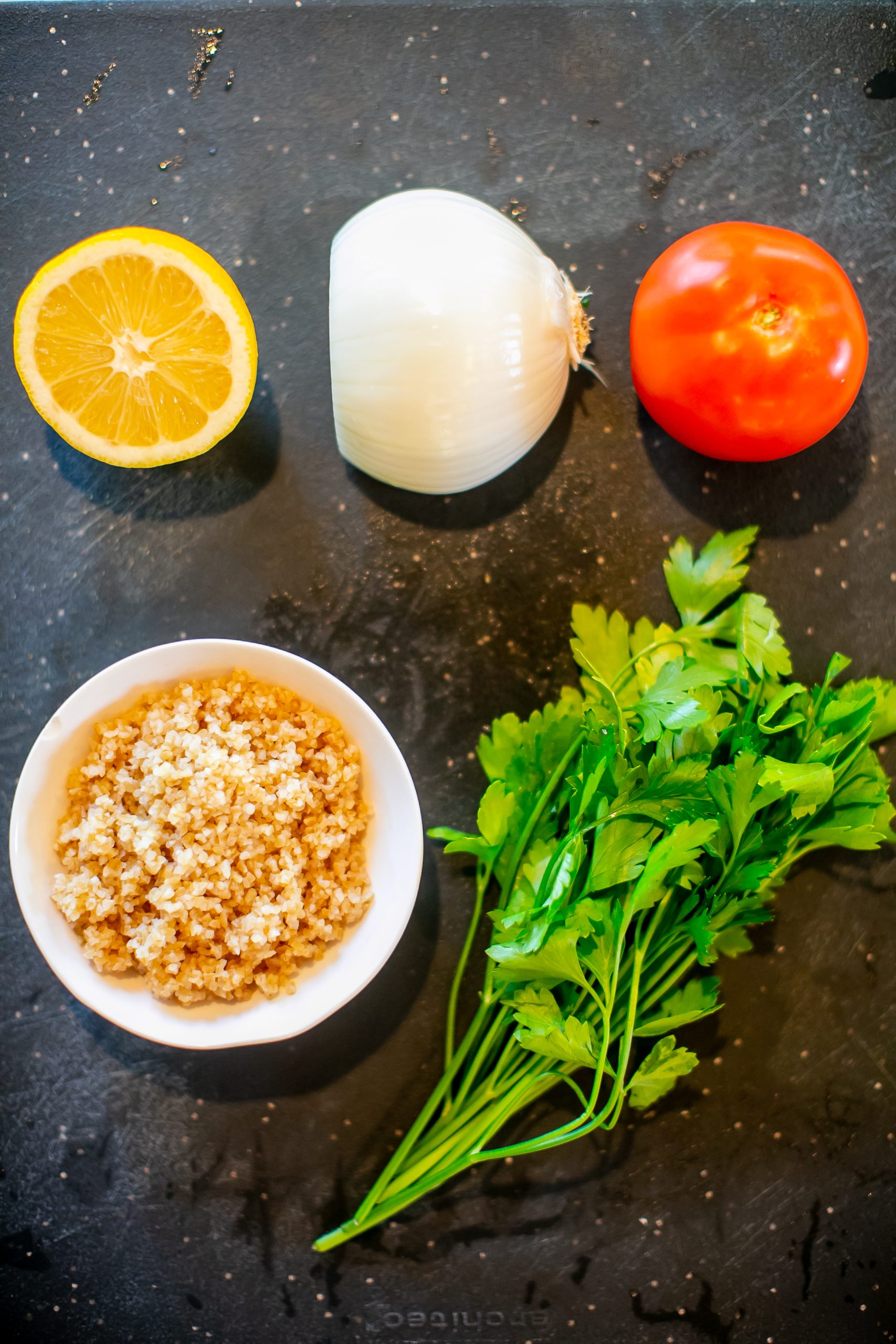
What you get from Quinoa Tabbouleh: Unlike most traditional tabbouleh that incorporates bulgur wheat which isn’t gluten free, quinoa is also a complete protein. It can substitute for bulgur wheat since it also absorbs the dressing. It’s perfect for meal prep since the salad gets better over time!
To make it, start with 2 cups of water. Bring it to a boil, and then add 1 cup of quinoa. Once added, turn the heat to a simmer and put the lid on. Quinoa is done cooking once everything is soft and all the water has drained. Let the quinoa cool while you chop a large handful of parsley, half a handful of mint, 4 tomatoes, half a cucumber, and 3 spring onions.
Toss the veggies with the quinoa and add 1/2 cup of olive oil, the juice of 2 lemons, and salt and pepper to taste. Let it sit in the fridge for 30 minutes before serving.
To add some color and extra crunch, throw in some pomegranate seeds, and for a more classic tabbouleh ratio, decrease the amount of quinoa used and increase the amount of herbs. Real tabbouleh has mostly parsley.
Nathaniel’s Pantry Notes: The Five GF Grains That Replace Bulgur, Couscous, and Pasta
- Quinoa. Cooks in 15 minutes. Substitutes for bulgur in tabbouleh, couscous in grain bowls, and rice in pilafs. Slightly higher protein, slightly nuttier. Rinse it first to remove the bitter saponin coating.
- Polenta. 5-10 minutes for instant or 30-40 minutes for traditional. Replaces pasta as a base for any saucy Italian dish (Bolognese, mushroom ragù, braised short ribs). Better with butter and parmesan than you remember.
- Millet. Cooks in 20 minutes. Fluffier than rice, slightly sweet, plays well in pilafs and grain bowls. Toasting it dry in the pan for 2 minutes before adding water unlocks the flavor.
- Buckwheat (kasha). 15 minutes. Earthier than rice, almost meaty. Hearty enough to be a main with roasted vegetables. Especially good with mushrooms and dill.
- Rice. Yes, still in the rotation. Basmati for fragrant pilafs, short-grain for stuffed grape leaves, arborio for risotto. The point is using it as one of five, not the only.
21) Chickpea Salad
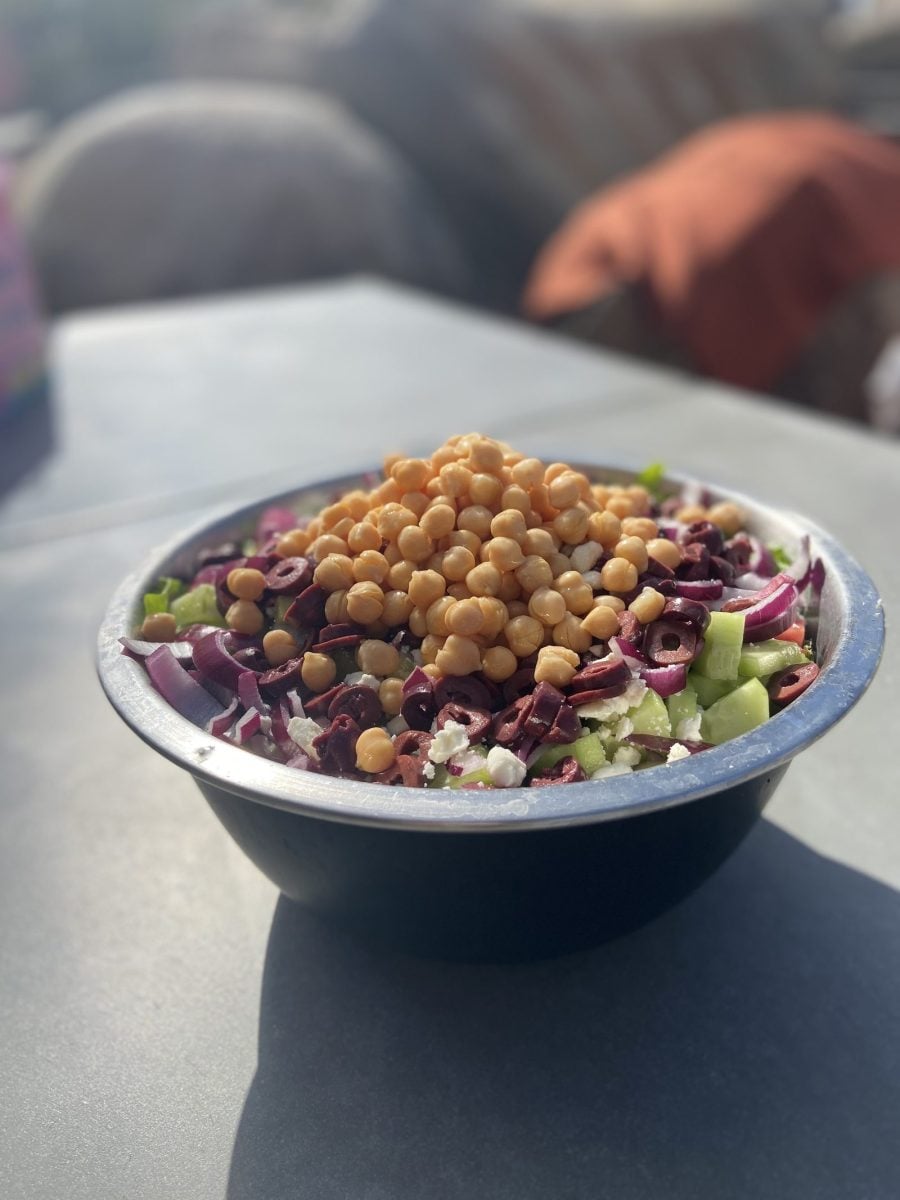
Why Chickpea Salad makes the cut: A plant-based lunch that provides a little bit of everything. Hits the briny and savory notes with the addition of olives and mustard. Naturally Gluten Free. We mash up a third of the chickpeas to make the salad stick together.
Start by draining and rinsing 2 cans of chickpeas. Use a fork to mash roughly a third of them (the rest will be whole), then add them to the bowl. Next, add diced cucumber, halved cherry tomatoes, and some sliced red onion (rinse under cold water for 30 seconds so the flavor is less harsh) then add crumbled feta and chopped parsley and mix them with the juice of 1 lemon and about 1/4 cup of olive oil. Add salt and pepper to season. The salad is ready when the mashed chickpeas help the dressing stick to the other ingredients and provide a creamy texture and consistency.
For a more hearty option, you can add a drained can of tuna or 2 tablespoons of tahini. If you would like a more briny and less sweet salad, you can swap out the cherry tomatoes for kalamata olives.
22) Baked Falafel
Why Baked Falafel is Better: Classic falafel recipes use flour as a binding agent. This baked alternative removes it and uses chickpeas, herbs, and gluten-free chickpea flour as the binder. There is also less mess than frying.
Using a food processor, blend the following ingredients: 2 cans of chickpeas (drained), 1/2 cup of parsley, 1/2 cup of cilantro, 1 onion, 4 garlic cloves, 2 teaspoons of cumin, 1 teaspoon of coriander, 1 teaspoon of baking powder, and 2 tablespoons of chickpea flour. Add salt and pepper to taste. The consistency should be a rough paste that clumps when pinched.
Divide the mixture into 12 equal portions and form patties of about 1/4 cup each. Place them on a sheet pan with parchment paper and brush with olive oil. Cook for 22-25 minutes at 400° F, flipping them halfway through. When finished, the outside of the patties should be browned and the insides should be soft.
Swap: To substitute chickpea flour, use GF oat flour or rice flour. For crispier exteriors, pan-fry them in olive oil for 3-4 minutes on each side.
23) Tahini Lemon Sauce
Selecting this option provides you a fast and easy method to elevate basic ingredients to a gourmet meal. Gluten-free by nature. When paired with grilled chicken, rice, and roasted vegetables, it transforms an average dinner into something extraordinary.
Combine a half cup of tahini, the juice of two lemons, two minced garlic cloves, half a teaspoon of cumin, and a pinch of salt and pepper. It will look broken at the beginning. Gradually whisk in 4-6 tablespoons of cold water, adding one at a time. It will become smooth and light in color. The sauce will is finished when it has the consistency of thin yogurt and can coat the back of a spoon.
Substitution: For a sweeter and tarter flavor, you can add a tablespoon of pomegranate molasses. If you want a variation of green tahini, you can add a handful of chopped herbs (such as parsley, dill, or cilantro).
24) Roasted Cauliflower
Where Roasted Cauliflower earns its spot: When cauliflower is roasted at high heat, its flavor becomes even more pronounced. The nutty, buttery, and slightly popcorn-like flavor of cauliflower is especially delicious while naturally gluten free. Roasted cauliflower is the perfect complement to Mediterranean cuisine.
Cut a whole cauliflower into smaller pieces and mix with 3 tablespoons olive oil, 1 teaspoon cumin, 1 teaspoon paprika, salt, and pepper to taste, and then mix them until everything is evenly coated. Spread them out on a sheet pan in a single layer (if the pan is full don’t be afraid to use another one).
They should roast for 25-30 minutes at 425°F but make sure to turn them 1 time about halfway. Once the cooking time is done the edges should be pretty burnt and the insides should be tender enough to easily pierce with a fork. Top them off with a squeeze of lemon, a drizzle of tahini sauce, and enjoy!
Swap: Substitute the broccoli for romanesco and use the same time and temperature for cooking. For extra protein and no additional effort, add a drained can of chickpeas to the same pan.
25) Stuffed Peppers
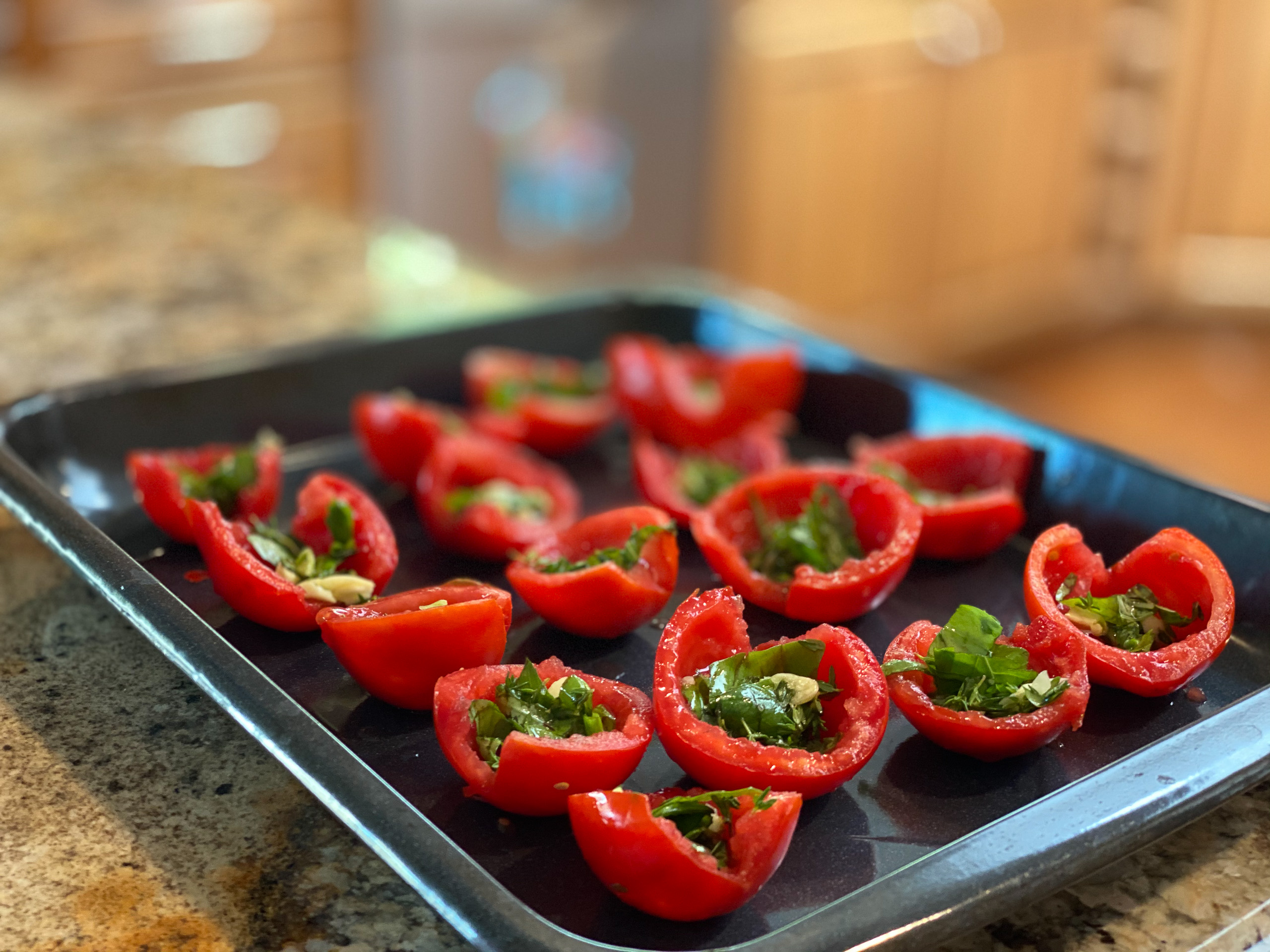
What makes this swap worthwhile? Rather than using traditional phyllo pastry, they use a spinach and feta filling, which will give you the taste experience of a classic Greek spanakopita. This option is also gluten-free and contains filling.
Grab 4 to 6 bell peppers and chop the tops off, removing the seeds. Sauté onions in olive oil for 5 minutes then add a 10 oz pack of thawed frozen spinach (make sure to squeeze water out of the spinach), 4 cloves of minced garlic, salt, and pepper, and cook for 3 minutes.
Off the heat, mix with 1 cup of crumbled feta, 1/2 cup of cooked rice or quinoa, 1 egg, 2 tablespoons of dill, and lemon zest. Arrange the peppers upright in a baking dish and cover with foil. Bake for 35-40 minutes at 375°F. The filling should have a light golden brown color and the peppers should be soft enough that a knife slides in directly.
Swap: For the filling, add a quarter pound of cooked ground lamb. If you want extra protein, use quinoa in place of rice.
Nathaniel’s Pantry Notes: Almond Flour Is the GF Workhorse
- Cakes. Substitute in most of the flour in olive oil cake, almond cake, and torta caprese. Naturally moist, with a tender crumb, and no need for a flour blend.
- Breading for cutlets. Sub for breadcrumbs on chicken and fish cutlets, and eggplant rounds. Browns nicely and provides a more interesting coating than panko.
- Sauce thickening. For Mediterranean dishes, much better than using cornstarch. For body (without being sticky), add a tablespoon to simmering tomato or yogurt sauce.
- Dip structure. In muhammara, romesco, or any nut-based dip, ground walnuts or almond flour acts as the structural ingredient. It’s not optional or a substitute.
- Storage: Almond flour goes rancid quicker than wheat flour. For that reason, and to maintain freshness, it should be kept sealed in the refrigerator or freezer. If it has a sharp, paint-like smell, it is rancid and should be discarded.
26) Harissa Roasted Carrots
Reason for selection: Sweet carrots have some smoky heat. GF. The Harissa sauce makes the carrots sweet and sticky, so they become a crowd favorite.
Start by peeling, washing and cutting 2 pounds of carrots in half lengthwise (quarter them if they’re really thick). Then, pour them into a bowl with 3 tablespoons of olive oil, 2 tablespoons of harissa paste, 1 teaspoon of cumin, and 1 tablespoon of honey. Add salt and pepper to taste, then mix everything together before spreading it evenly across a sheet pan.
They should be roasted for 22-25 minutes, and be sure to toss them once at the halfway point for even cooking. When the edges of the harissa start to darken and become sticky, the carrots are tender and done. Before finishing, toss in some chopped cilantro and a squeeze of lime. Enjoy!
Swap: In the absence of harissa, 1 tsp smoked paprika and a little cayenne will do. Carrots can also be exchanged with sweet potatoes (add 10 minutes).
Olive oil, and the zest of one lemon. Mix the dry ingredients into the wet and fold in 1.5 teaspoons of vanilla extract. Grease a 9-inch round pan and pour the mixture in. Bake in the oven at 350°F for about 30 minutes.
When the cake cools down, you can make a glaze with the juice of a lemon mixed with 1/4 cup of powdered sugar. Brush the glaze on top and put the cake in the fridge. Once it sets, sprinkle powdered sugar for decoration before serving.
27) Olive Oil Cake
Why Olive Oil Cake belongs here: This cake uses almond flour which gives it a naturally gluten-free and tender crumb. It answers the question of what to serve for dessert at a Mediterranean dinner without it tasting like a replacement.
Whisk 1.5 cups of almond flour, 1/2 cup of rice flour (or another GF flour), 1 teaspoon of baking powder, and 1/2 teaspoon of salt. In a separate bowl, combine 3 eggs, 1 cup of sugar, 3/4 cup of quality olive oil, the zest from 2 oranges, the juice of 1 orange, and 1 teaspoon of vanilla, and whisk together. Fold the wet into the dry. Pour mixture into a round 9-inch greased pan.
The cake is done when the top is a dark, golden brown and a toothpick comes out clean with a few moist crumbs from the center (no wet batter).
Swap: Use lemon zest and juice instead of orange. Before baking, adding a little pine nuts or rosemary adds a savory complexity.
28) Gluten-free Mediterranean Sweet Potato Brownies with Walnuts
Reasoning behind Gluten-free Mediterranean Sweet Potato Brownies with Walnuts: The brownies are made with sweet potatoes, which makes them healthier and more nutritious than traditional brownies. They are also gluten-free brownies.
Combine with the dry ingredients: 2 oranges’ zest, juice from 1 orange, and 1 tsp of vanilla. Mix the dry ingredients and the wet ingredients. Pour into a greased 9-inch round pan. Bake for 35 to 40 minutes at 350°F. The cake is done when the top is a dark golden brown and a toothpick inserted comes out clean with a few moist crumbs (no wet batter) from the center. For a variation, lemon zest and juice could be used instead of the orange. Also, prior to baking, adding a few pine nuts or some rosemary would provide a savory complexity.
