
Your experience at dinner will change with this homemade roast chicken recipe. You will be amazed by the results of the oven-roasted chicken recipe. The chicken is so juicy and the skin is extra crispy. This recipe will be great for helping you prepare a juicy chicken recipe for family get-togethers.
Key Takeaways
- Achieve perfectly crispy skin and juicy, flavorful meat with this classic roast chicken recipe.
- Simple ingredients and easy-to-follow steps make this a go-to dish for any occasion.
- Versatile recipe allows for various stuffing and flavor variations to suit your taste preferences.
- Detailed temperature guidelines and cooking time instructions ensure foolproof results every time.
- Pair with delicious side dishes for a complete and satisfying meal.

Why This Classic Roast Chicken Recipe Never Fails
Crafting a delicious roast chicken recipe isn’t straightforward, and most likely, it takes a considerable amount of time and energy. This is exactly why this recipe is loved by home cooks, and in fact, they revisit it year after year. Thanks to the specific preparation techniques, home cooks can rely on consistency, and the techniques are easy and guarantee excellent outcomes every time!
This best roast chicken recipe’s strength lies in its understanding of what makes a perfectly crispy, juicy, and flavorful roast chicken. Every element of our foolproof chicken recipe is made to the highest quality standards from the selection of ingredients to the precise times given for cooking and resting.
The most important part of this recipe is proper seasoning and moisture control. Make sure you season all sides of the chicken before you begin cooking. It’s a great chance to let the chicken absorb the delicious flavors that your customers are gonna love! Moisture control (in addition to basting) will ensure the chicken stays tender and juicy, and will help achieve that golden brown and crispy perfection that everyone wants.
Chef Julia Stephens states, “This recipe captures the beauty of simplicity. If you follow the fundamentals and complete each step with intention, your guests will sing your praises, and you will achieve consistent results.”
Whether you’re a seasoned home chef or a novice in the kitchen, this classic roast chicken recipe is a game-changer. You can trust the system and the outcomes so there’s every reason to expect that your next roast chicken dinner will go smoothly.
Essential Ingredients for the Perfect Roast Chicken
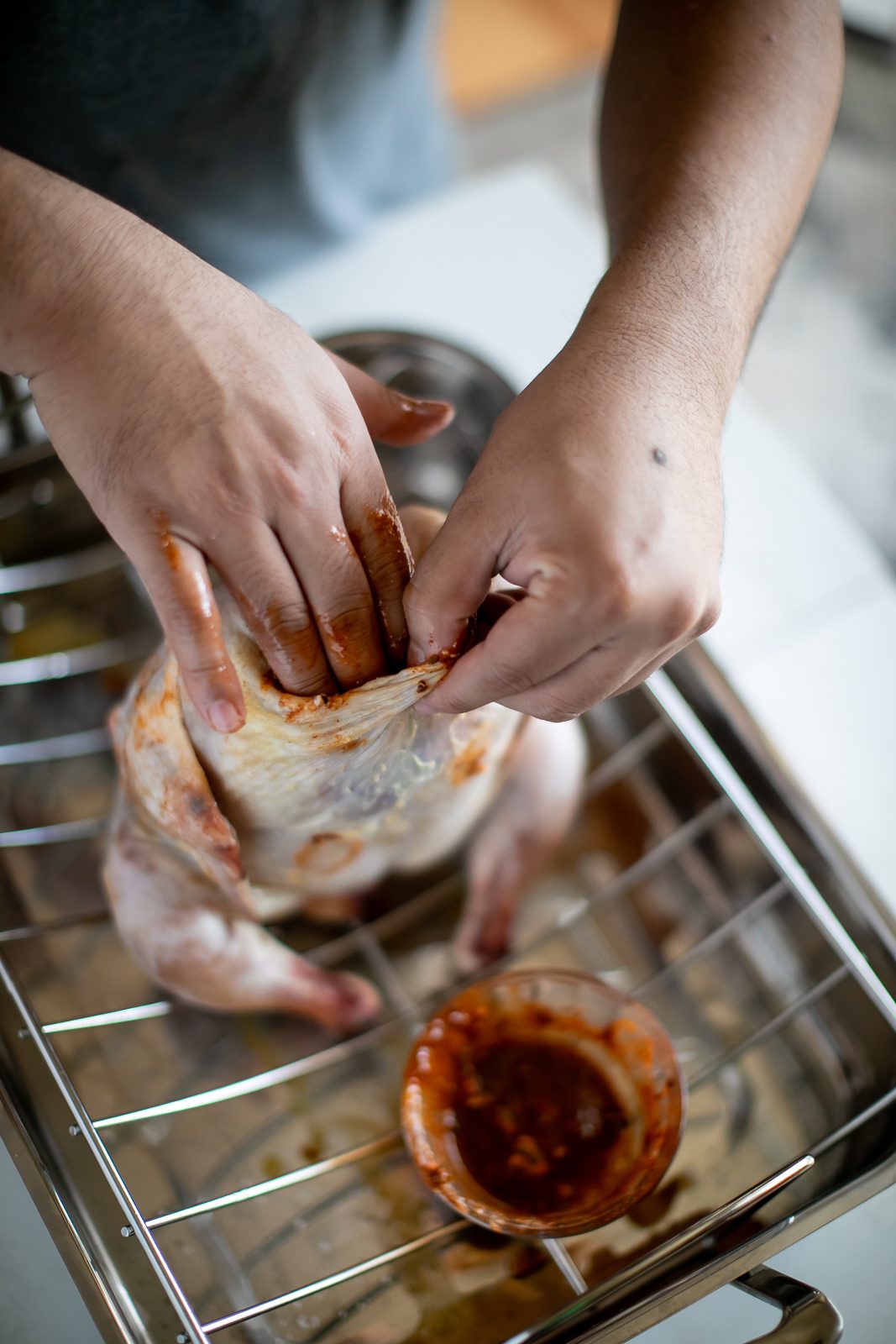
Selecting your ingredients is the first step to developing a delectable roast chicken recipe. All aspects affect the flavor and texture from kitchen utensils, the chicken, and the fragrant herbs.
Selecting the Right Size Chicken
Choose chickens that weigh 3 to 5 pounds, as they offer a good cooking size and give decent servings per person. An 8-pound bird? Don’t even think about trying to squeeze that into your oven.
Fresh Herbs and Aromatics
Roast chicken has a very distinct and herby flavor because of the use of fresh aromatics and other herbs. The lemon, together with the onion and garlic, adds a deep and bright touch to the dish and the combination of rosemary, thyme, and sage creates an herbal brightness.
Kitchen Tools You’ll Need
In addition to the ingredients, the right kitchen equipment can ease the work of roasting. Ideally, a roasting pan with a rack, a good meat thermometer, and a decent carving knife will give you the best results when roasting.
With an appropriately sized chicken, some fresh herbs and basic kitchen tools, you can start the incredible journey of roasting a gorgeous chicken that will impress your guests and satisfy your family’s cravings.
Preparing Your Chicken for Roasting
Cooking and crisp roasting both require a little prep. First, wash the chicken and take out the giblets and extra fat. Then, for the required crispness, the skin of the chicken should be patted dry with paper towels.
Next up is trussing the chicken. When roasting, trussing is a great way to maintain the chicken’s shape and make sure it cooks evenly. All you have to do is grab some kitchen twine and tie up the legs and tuck the wing tips under the body of the chicken. This is a small step that can greatly improve how your finished roast chicken will look.
Now we can \em{season} the chicken. For this, rub mixed herbs and spices with salt and pepper on the insides and outsides of the chicken. This will enhance the flavors of the chicken while roasting.
- Clean the chicken thoroughly, removing any giblets or excess fat.
- Pat the chicken dry with paper towels to ensure the skin dries out.
- Truss the chicken using kitchen string to help it hold its shape during roasting.
- Generously season the chicken, both inside and out, with a blend of salt, pepper, and your favorite herbs and spices.
Now we can roast the chicken! Your next mission is to achieve that the chicken skin is bublly, crispy, and a golden brown color.

The Secret to Crispy Golden-Brown Skin
While skill is required to roast a chicken, ‘court’ is the showcase example of how a bit of technique can elevate a basic bird to a show stopping level.
Butter vs Oil: Making the Right Choice
What you decide to cook your chicken in will change how your finished chicken looks. For instance, if you use oil, it will give your chicken crunchy brown skin. If you decide to use butter instead, it will give your chicken a rich golden color, but you won’t get a crunchy brown skin like you would using oil. The choice of using oil or butter is really up to you based on how you want your finished chicken to look like.
Seasoning Techniques for Maximum Flavor
- Rub the chicken liberally with a flavorful seasoning method, ensuring every nook and cranny is coated.
- Experiment with a mix of fresh herbs, spices, and citrus zest to create a tantalizing blend that complements the natural richness of the meat.
- Don’t be afraid to get creative – the possibilities are endless when it comes to elevating your crispy chicken skin.
Temperature Tips for Perfect Crispiness
- Start with a hot oven, around 425°F (218°C), to kickstart the crisping process.
- Baste the chicken with melted butter or oil every 15 minutes to ensure even browning.
- If the skin starts to darken too quickly, reduce the temperature to 400°F (204°C) and continue roasting until the internal temperature reaches the desired doneness.
Now that you know these methods, you will get that crispy golden-brown skin that will have people raving about your roast chicken.
Step-by-Step Roast Chicken Recipe
All home cooks should know how to roast a chicken. It is really easy to get roast chicken with juicy meat and skin that is crispy and golden brown. We will show you how to do this step by step.
- Preheat your oven to 425°F (220°C). This high oven temperature is crucial for achieving that coveted crispy skin.
- Pat the roasting chicken dry with paper towels, ensuring it’s completely free of excess moisture. This will help the skin brown beautifully.
- Generously season the chicken inside and out with a combination of kosher salt and freshly ground black pepper. Don’t be shy with the seasoning – it’s the key to maximizing flavor.
- Truss the chicken by tying the legs together with kitchen string. This helps the chicken cook evenly and maintain its shape.
- Place the seasoned and trussed chicken in a roasting pan or oven-safe skillet. Arrange any desired aromatics, such as lemon slices, garlic cloves, or fresh herbs, around the chicken.
- Roast the chicken in the preheated oven for 60-75 minutes, basting the bird with the pan juices every 15 minutes. This will ensure a consistently crisp and golden-brown skin.
- Use a digital meat thermometer to check the internal temperature of the chicken. The thickest part of the thigh should reach 165°F (75°C) for perfectly cooked, juicy meat.
- Once the chicken is fully cooked, remove it from the oven and let it rest for 10-15 minutes before carving. This resting period allows the juices to redistribute throughout the meat.
Follow this guide and your friends and family will love the roast chicken. Enjoy the wonderful taste and smell of your delicious, roasted chicken.
Temperature Guide and Cooking Times
The easiest way to see if your roast chicken is done is to check that you have hit the correct cooking temperature for chicken. Reliable meat thermometers will show you the internal temperature of chicken while it’s roasting.
Internal Temperature Guidelines
According to food safety guidelines, chicken should be cooked to a minimum internal temperature of 165° F (74° C) in the thickest portion of the breast or thigh. The heat in the chicken will eliminate all harmful bacteria, making it safe to eat.
- Breast: 165°F (74°C)
- Thighs and Legs: 165°F (74°C)
- Stuffing (if present): 165°F (74°C)
Resting Time Importance
Once you reach thechicken cooking temperature, allow it to rest for 10 to 15 minutes. This will enable the juices to redistribute throughout the chicken. Once the timer dings, feel free to carve it and serve. Resting gives the chicken more juiciness and more flavor.
That does take some time, but resting does allow the core body temperature to increase to a safe and comfortable level.
| Cut | Internal Temperature | Resting Time |
|---|---|---|
| Whole Chicken | 165°F (74°C) | 10-15 minutes |
| Chicken Breasts | 165°F (74°C) | 5-10 minutes |
| Chicken Thighs | 165°F (74°C) | 5-10 minutes |
Free lesson · 3 min
Watch The Hot Pan Rule, free from the Technique Library

Stuffing and Flavoring Variations
There are also many other ways to add flavor besides the recipe for roast chicken. If you want chicken stuffing, herb roasted chicken, or roast chicken with other great flavors, the possibilities are endless. Elevating your roast chicken also has great options.
Savory Stuffing Sensations
When roasting chicken, there are many potential options for stuffing it. A creative alternative to the classic stuffing with bread, herbs, and sautéed mushrooms and onions, may be to use some crumbled cornbread and bacon plus some melted shredded cheddar cheese.
Herb-Infused Delights
You can improve your roast chicken by using fresh herbs! The star of the show is Herb-Roasted Chicken and can be done using some combination of rosemary, thyme and sage. If you want to change it up and try a Mediterranean version, use oregano, basil and lemon zest. For flavored roast chicken like no other, feel free to experiment.
Spice Up Your Life
Looking for some extra flavor? Give spice-rubbed chicken stuffing a shot! You can season roast chicken with chili powder, cumin, and smoked paprika to amp up the flavor! And if you want to satisfy your sweet-tooth, a Moroccan-style blend with warm cinnamon, ginger and coriander will send you to the vibrant spice markets of Marrakech!
To get the \flavored roast chicken\ right, the main thing is to find the right balance between the dominant seasonings and the natural flavor of the chicken. Experiment with different seasonings to find the combination that fits your palate.
Side Dishes That Complement Roast Chicken
Selecting the right side dishes can improve the experience of enjoying a lovely roasted chicken dinner. Whether you enjoy traditional side dishes or those that include seasonal vegetables, you can make a more complete roast chicken dinner.
Classic Pairings
Let’s take a look at some dishes that pair well with roast chicken.
- Fluffy mashed potatoes
- Buttery roasted vegetables like carrots, Brussels sprouts, and potatoes
- Fragrant herbed stuffing or dressing
- Tangy cranberry sauce or chutney
- Fresh green salads with a simple vinaigrette
Seasonal Vegetable Options
Here are some ideas to enhance your chicken roast dinner. You could add seasonal vegetables that are available as sides, which will enhance your chicken dinner even more.
- Roasted asparagus with lemon and Parmesan
- Sautéed mushrooms with garlic and herbs
- Braised kale or collard greens with a touch of vinegar
- Grilled or roasted sweet potatoes with a maple glaze
- Honey-glazed carrots or parsnips
Your roast chicken dinner will impress your guests with a traditional and creative touch using seasonal and tradition-centered side dishes. Guests love the taste of the vegetables with roast chicken, and they will enjoy these.
Troubleshooting Common Roasting Problems
There isn’t an exact science when it comes to roasting a chicken, and some problems can arise during this process. Below are some common problems and solutions to those problems.
Dealing with Undercooked Chicken
If you see pink in the center of the chicken or the juices are still red or pink, then the chicken is probably undercooked. This is usually the result of the oven temperature being set too low or the chicken simply not being left in the oven for long enough. The solution is to put the chicken back in the oven and keep roasting it until the chicken reaches an internal temperature of 165 °F (75 °C).
Preventing Dry, Tough Chicken
Overcooked chicken can be tough and dry, making it hard to eat. To help with concerns about undercooked chicken, you could use a meat thermometer. Once chicken reaches an internal temperature of 165°F (75°C), you can take it out of the oven. Also, remember to cut the chicken after 10 to 15 minutes to allow the juices to redistribute.
Achieving Evenly Browned Skin
Chicken that has burned spots on the skin while other are still raw is probably not cooked evenly. An even brown color on chicken can be achieved by basting it in its juices and flipping the pan halfway. Even better, you can try trussing the chicken.
| Common Issue | Possible Cause | Solution |
|---|---|---|
| Undercooked Chicken | Oven temperature too low, insufficient cooking time | Return to oven and continue roasting until internal temperature reaches 165°F (75°C) |
| Dry, Tough Chicken | Overcooked, internal temperature too high | Use a meat thermometer, remove from oven at 165°F (75°C), and let rest for 10-15 minutes |
| Uneven Browning | Inconsistent heat distribution, lack of basting | Rotate pan halfway through cooking, baste chicken with pan juices, consider trussing |
Here are some tips to help make sure you’re checking chicken perfectly every time. You’ll never have to worry about undercooked, overcooked, or unevenly cooked chicken!
Storing and Reheating Leftover Roast Chicken
To enjoy your roasted chicken at its best, you have to think about storage and reheating. First, put what you want to save in an airtight container. The chicken will stay in the fridge for four days and stay fresh. The meat will stay moist and should not dry out, since it’ll be sealed in the container.
A dried out overcooked chicken is something to look forward to and is common for people cooking chicken and reheating it. Steam will prevent the chicken from drying out and using an oven-safe dish for reheating is a great way to slowly reheat chicken. You should set the oven to 325 degrees Fahrenheit or 165 degrees Celsius. Pour moisture, broth, or water into the oven-safe dish. The dish will warm for 10 to 15 minutes and chicken should be heated all the way through and the oven should be covered. Dishes and skillets can also be used to heat chicken; just set the heat to medium.
Reheated chicken must be heated to 165°F (74°C) to be considered safe to eat, just like any other food. If you reheat chicken properly, the chicken will taste just as amazing as the first time it was cooked, and the reheating process will keep the chicken moist and tender. By following these basic food reheating and food storage methods, you can continue enjoying leftover roast chicken for many days.
FAQ
What makes this roast chicken recipe so reliable?
Several things contribute to the success of this classic roast chicken recipe. The size of the chicken, the use of fresh herbs, and how closely you follow the instructions regarding cooking time and temperature all impact the end result.
What are the essential ingredients for the perfect roast chicken?
To create the ideal roast chicken dinner, these are the necessary ingredients you will need: an entire chicken, as well as fresh thyme, rosemary, and parsley, and onions and garlic as the aromatic vegetables. A meat thermometer and roasting pan will also be needed.
How do I prepare the chicken for roasting?
Before seasoning the chicken, wash it and carefully remove any moisture with a paper towel. To ensure moisture is removed from the entire chicken, and to ensure that all flavors soak in, truss the chicken. For optimal outcome, and the most even cooking, season the chicken with just salt and pepper.
What’s the secret to getting crispy, golden-brown skin on the roast chicken?
There are several factors that come into play when trying to get that nice crisp, golden-brown skin on your chicken. These include your choice of fat, seasoning method, and intervals of cooking temperature. If you want to achieve that super crisp skin on your roast chicken, you also need to do the following: while it is cooking, baste the chicken with your fat of choice (which could be butter or oil) and most importantly, make sure you adjust the cooking temperature frequently!
What internal temperature should the roast chicken reach?
You can eat the roast chicken once it gets to 165 degrees Fahrenheit (74 degrees Celsius). If you let the chicken rest before you cut it, the juices will settle within the meat.
Can I stuff or flavor the roast chicken in different ways?
Certainly! You can add different flavors to the roasted chicken by putting various herbs, spices, or even some fragrant vegetables in the cavity of the chicken. This will enhance the flavors and increase your enjoyment. You can also create your own recipe for roasted chicken by adjusting the spices in any way you want.
What are some side dishes that pair well with roast chicken?
With the roasted chicken, you will also receive freshly made salads, steamed veggies, and roasted potatoes. Seasonal options like roasted Brussels sprouts, mashed sweet potatoes, or a hearty grain salad can also complement the dish beautifully.
How do I troubleshoot common issues with roasting the chicken?
Some issues when roasting a chicken are finding it undercooked, overcooked, too dry, not cooked evenly, or the skin has burned. If you’re having such issues, here are a few tips. First, try changing the temperature on your oven. Second, try to use a baster that allows you to baste the chicken more frequently. Last, you may want to consider checking the chicken’s temperature.
How should I store and reheat leftover roast chicken?
After the roast chicken has cooled down, put it in an airtight container (or resealable plastic bag) and put it in the fridge. It will stay good for four days. The chicken will dry out eventually, but you can still reheat it in the microwave, oven, or stovetop. Just make sure to check food safety guidelines to make sure the chicken have been reheated correctly.
