
Eating healthily goes beyond preparing a single meal or taking 90 minutes to organize items into various food categories. There is no need to go through this process for lunch, snacks, breakfast, and dinner. Additionally, during the weekends, you can afford to be a little more relaxed.
The most important ’healthy’ meal is the one you actually opt for. It is true that healthy eating can be about meal planning, but it can also be about a choice you made that day at 7 am while looking for your other shoe.
I’ve come up with 40 ideas for breakfast, lunch, dinner, and snack meals. Each has a hook to entice you to scan it and an actual prep tip along with a time cue for cooked items, a texture cue for assembled items, and a swap suggestion if you don’t have the headlining ingredient.
Contents
- 1) Overnight Oats
- 2) Yogurt Parfait
- 3) Veggie Omelet
- 4) Avocado Toast
- 5) Cottage Cheese Bowl
- 6) Green Smoothie
- 7) Chia Pudding
- 8) Apple Cinnamon Oatmeal
- 9) Salmon Toast
- 10) Lentil Soup
- 11) Mixed Greens Salad
- 12) Grain Bowl
- 13) Quinoa Salad
- 14) Turkey Hummus Wrap
- 15) Chickpea Salad Sandwich
- 16) Tomato Bean Soup
- 17) Loaded Sweet Potato
- 18) Tofu Stir-Fry
- 19) Salmon Dinner
- 20) Sheet Pan Chicken
- 21) Turkey Chili
- 22) Zucchini Noodles
- 23) Whole Wheat Pasta
- 24) Shrimp Tacos
- 25) Baked Cod
- 26) Burrito Bowl
- 27) Hummus Plate
- 28) Cauliflower Fried Rice
- 29) Stuffed Peppers
- 30) Spinach Salad
- 31) Tuna Salad
- 32) Sardines On Toast
- 33) Snack Plate
- 34) Carrots And Hummus
- 35) Hard Boiled Eggs
- 36) Edamame Snack
- 37) Roasted Chickpeas
- 38) Dark Chocolate And Almonds
- 39) Fresh Fruit Salad
- 40) Trail Mix
1) Overnight Oats
Why do I make this decision for today? I like to prepare my breakfast the night before, which is an example of me trying to reduce the number of choices I have to make the following morning. Also, regardless of whether I’m taking food out of the fridge or the stove, food that has been in the fridge will heat up in the microwave just as fast as food that has been on the stove for 15 minutes.
You should not be using instant or steel cut oats. Use 1/2 cup rolled oats. Then, pour in 3/4 cup of your choice milk, or almond milk (unsweetened), then add 1T of chia seeds, a dash of salt, and 1T of maple syrup. Combine these ingredients and feel free to add extra toppings, such as fresh berries, sliced banana, peanut butter, and a sprinkle of cinnamon (optional).
Combine and chill for 4 hours or overnight, to allow the oats to absorb the milk. If you want a pudding-like mixture to be thinner, adjust (lower) the amount of chia seeds. If it is too thick in the morning, add a splash of milk to loosen it up.
To make the consistency thicker and to add to the tanginess (bringing it closer to a dessert), you can use Greek yogurt instead of half the milk. If you don’t have chia seeds, it’s not a problem. Just add another tablespoon of oats to help with the thickening.
2) Yogurt Parfait
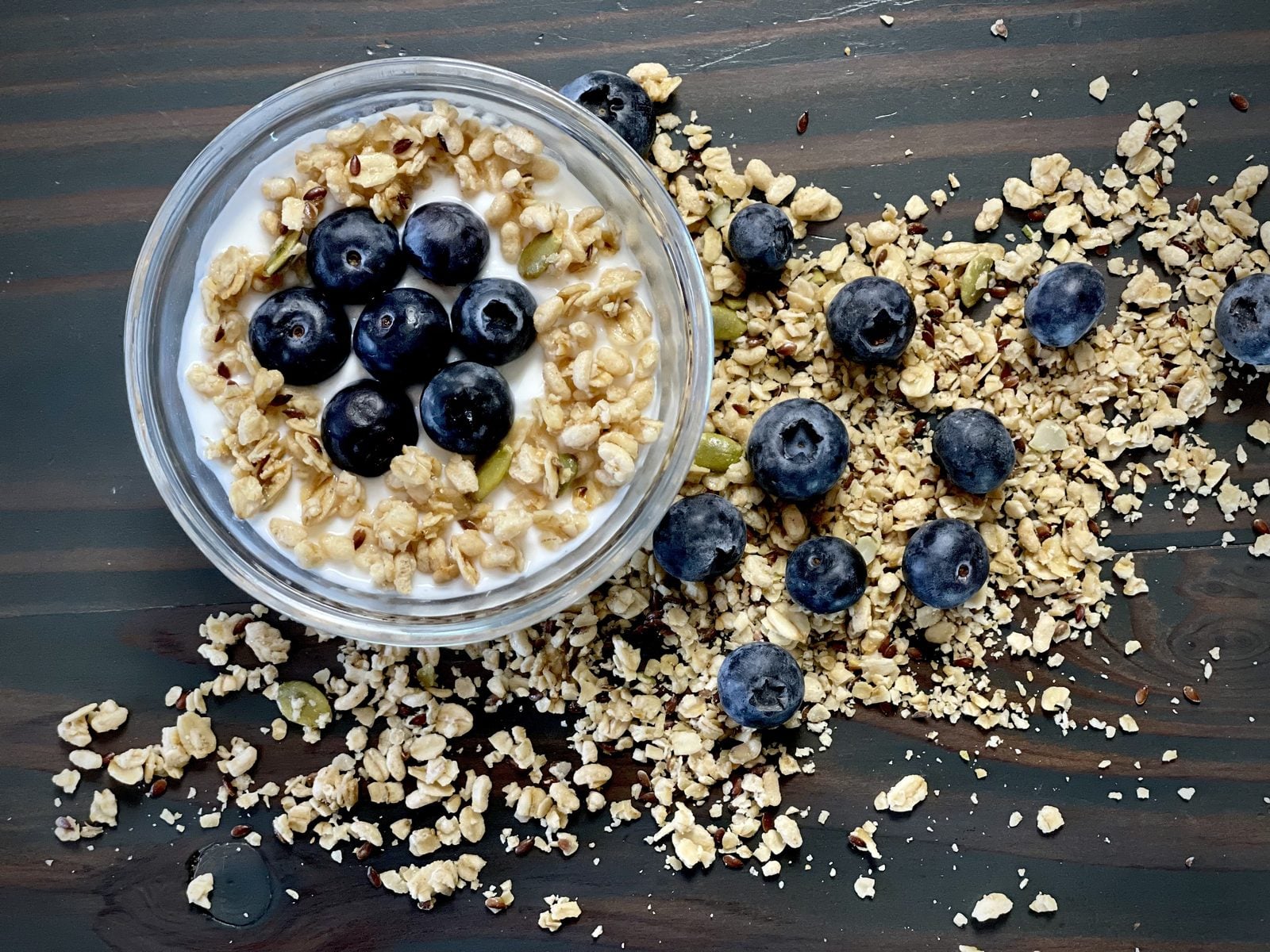
Because this looks a bit more refined than the average meal I make, I was able to put this together in 1.5 minutes, and I’m also having fruit before noon. Pro tip, the Greek yogurt has to be the authentic (aka not the sweetened kind) so the berries are able to do their job as sweeteners.
Spoon some Greek yogurt of your choice into a tall glass (for this, full fat or 2% yogurt is better because 0% yogurt can become chalky). Next, add your second layer of berries (these can be fresh or thawed from frozen). After that, add a layer of granola.
Just a single tablespoon of granola is needed here, so don’t take a fistful. Do this again. One last thing, in order for the yogurt to keep the layers, a scoop of yogurt should be taken out, there should be some whole berries, and the granola should not be clumped. If you put this together last night, I’m sorry to say your granola is stale. That’s the price you pay.
Cottage cheese is also suitable for this as it has a different (more salty, more textured) base. In winter, you can use stewed apples and cinnamon instead of the berries. To make it lower sugar, it is possible to remove the granola and use chopped nuts instead.
3) Veggie Omelet
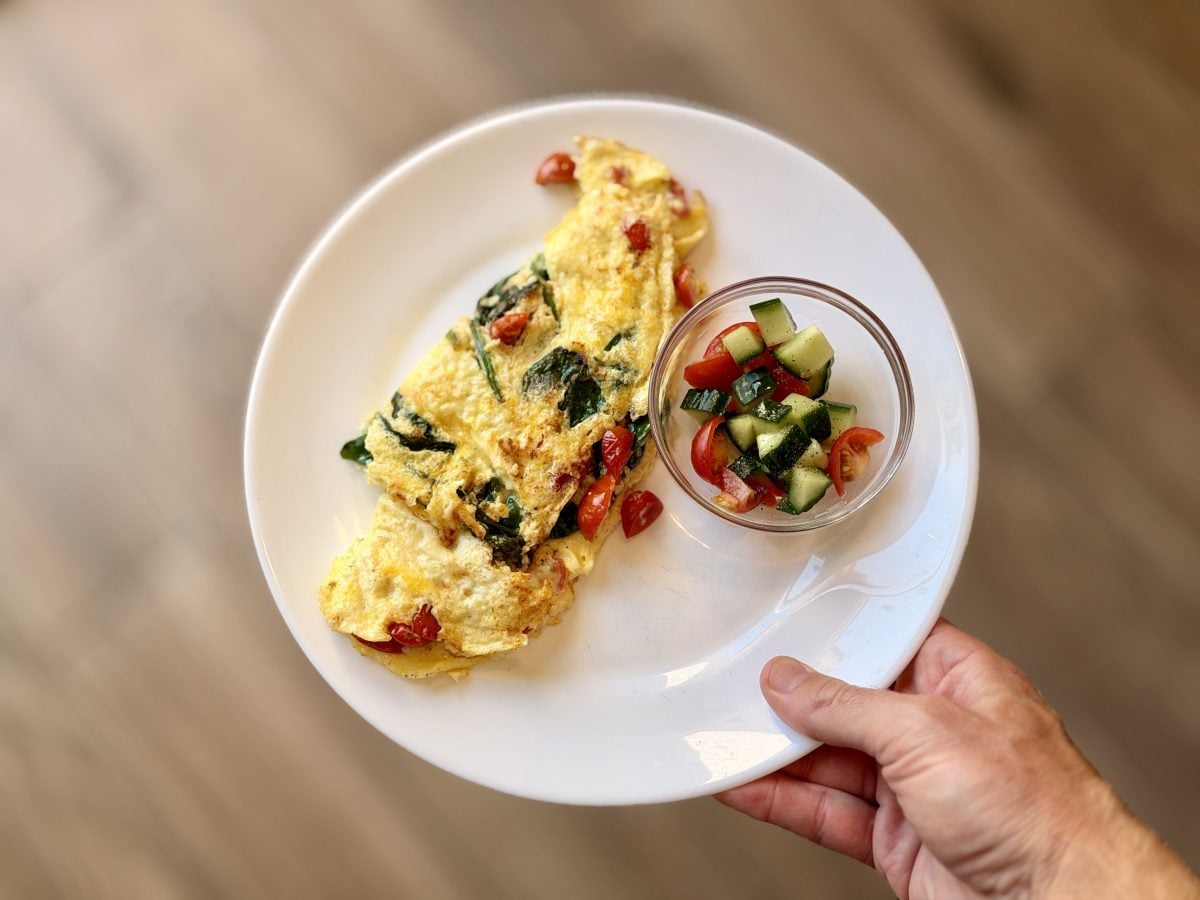
What Veggie Omelet gets you: From cracking the eggs to sitting down, it takes me five minutes max. Here’s where you can let those veggies that would otherwise start rotting in the produce drawer get a new purpose.
In a bowl, combine three eggs, a pinch of salt, and a splash of water, as opposed to milk, because the water creates steam which fluffs the eggs. In an 8’’ nonstick skillet, at medium-low heat, add 1 tablespoon of butter or olive oil. Add and cook, for 2 minutes, chopped onions, bell peppers and spinach (or other soft vegetables) so they can soften. Add in the egg mixture. Do not stir for 45 seconds.
With a spatula, push the eggs that have set up to the center. Tilt the pan so the liquid egg moves to the edge. When you fold and serve it, the top should still look glossy/ wet and slide from the pan. Eggs should not be brown/ overcooked, and the bottom should not be sliding either. It should be tender.
Any cheese will work. A tablespoon of crumbled feta, goat cheese, or cheddar will work great. Use frozen spinach (squeeze any excess water from spinach) and the frozen onion and pepper mix will save you time in the morning from having to chop these ingredients.
4) Avocado Toast
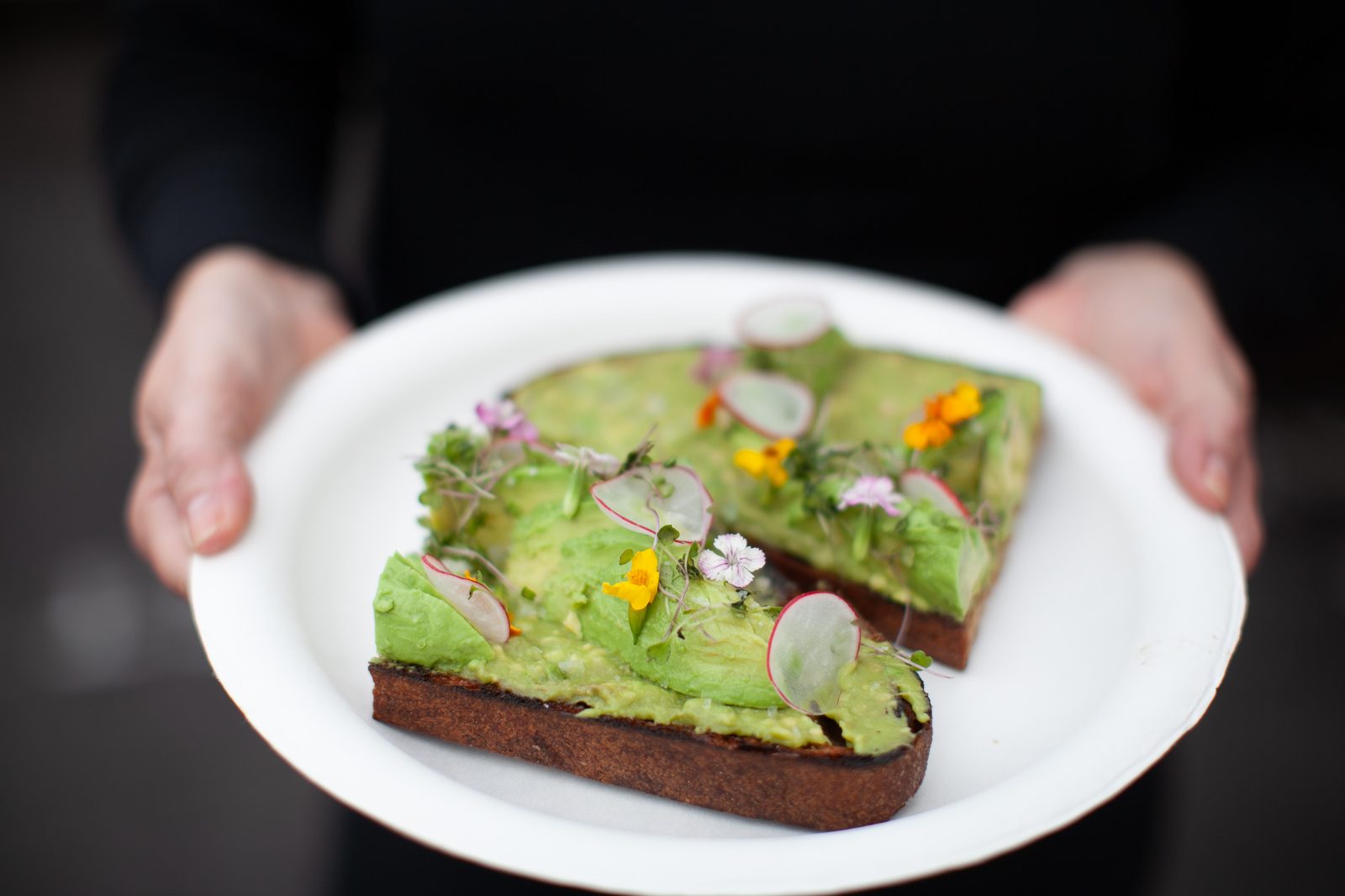
Why Avocado Toast makes the cut: Cliche for a reason.
Unlike a bowl of cereal, avocado toast keeps you feeling full for longer due to the healthy fats in avocado. Plus, the toast provides the crunching satisfaction that the avocado lacks.
Take a thick piece of whole grain or sourdough bread and put it in your toaster. Toast it to a deep brown color and make sure it has a crunchy texture. Select a ripe avocado and scoop the flesh into a bowl. Mash it with a fork until it is a chunky consistency (do not make puree).
Add a squeeze of lemon juice (it prevents browning), a pinch of flake salt, and a few chili flakes.
For a heartier option, add a poached or fried egg on top and turn this into a lunch option.
An excellent option that does not include avocado is to mash Cannellini white beans and prepare them the same way (i.e. lemon, salt, and chili). The cottage cheese on toast with everything bagel seasoning is the laziest cousin 30 second meal.
5) Cottage Cheese Bowl
You can choose a bowl with twenty grams of protein that is ready in 90 seconds this morning (or maybe lunch). There is definitely a renaissance for cottage cheese and the main reason is that savory cottage cheese is one of the best snacks you can whip up.
Take a cup of full-fat cottage cheese and place it in a bowl. To add some sweetness, smash some berries and honey and add a touch of flaky sea salt (this is what makes it work).
For added flavor, incorporate some chopped tomatoes, diced cucumber, a drizzle of olive oil, your favored seasonings (such as salt and pepper), and some herbs (dill is the best but basil is also great). When it comes to textures, the curds of the cottage cheese should remain visible and whole. For toppings, they should be on top and not mixed in.
Both Good Culture and Daisy 4% small-curd cottage cheese are good alternatives to cottage cheese, while both offer slightly different textures with Good Culture being creamy and more forgiving. Good Culture is even comparable to ricotta which is even more preferred by most. Greek yogurt is even excellent for both savory and sweet dishes. Cottage cheese has a little more chew but also Greek yogurt will become thinner over time.
6) Green Smoothie
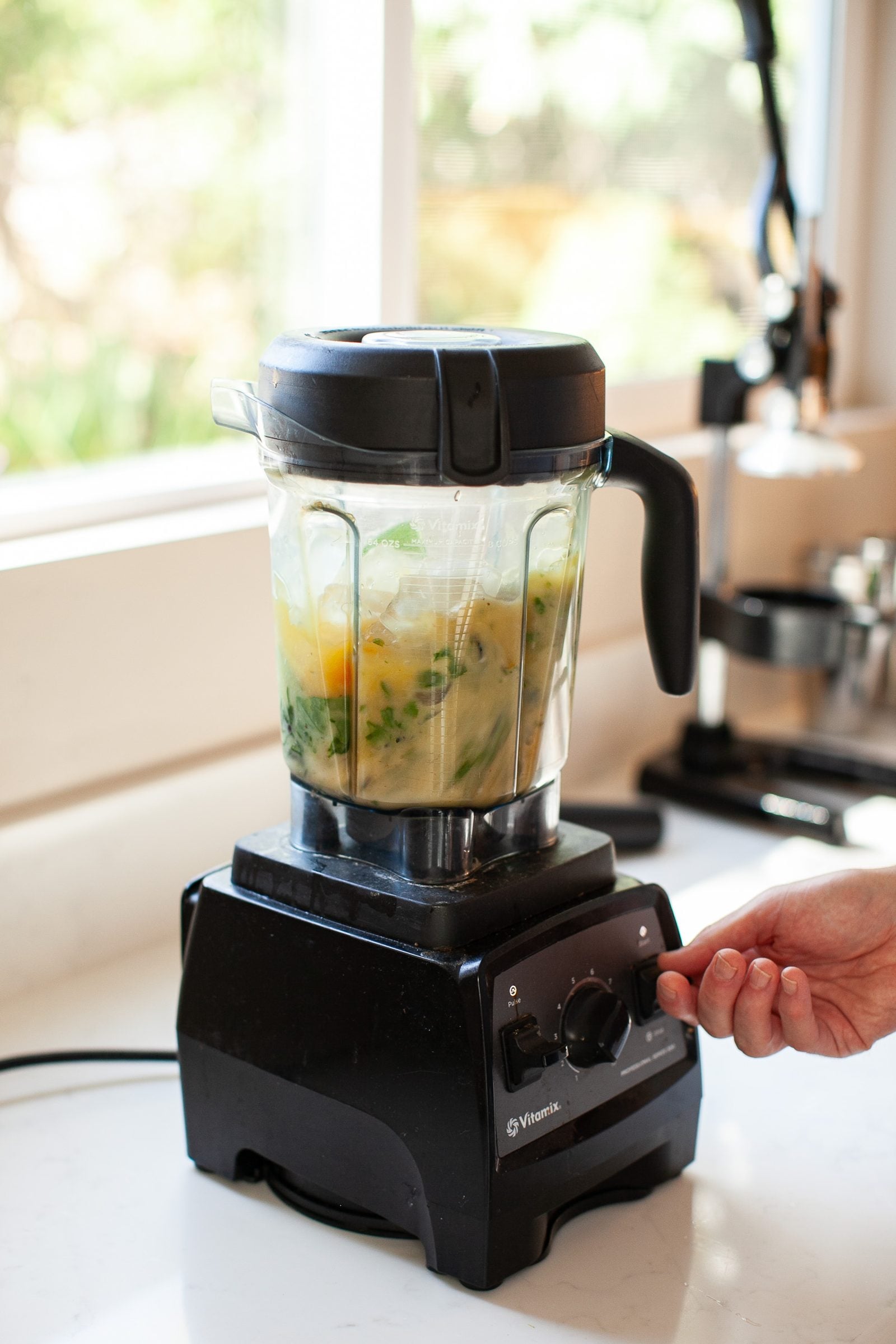
Regarding Green Smoothies, you have the option to make it filling or un-filling. Obviously, it is more work to make it filling, and most people do not put in the extra work. Also, keep in mind that it is not just fruit and ice. There are also protein and fats.
For this recipe, any blender will work to combine 1 cup of one of these choices: oat milk or unsweetened almond milk, a handful of spinach (which you won’t taste, don’t be scared) , half a frozen banana, half a cup of frozen mango or pineapple, a scoop of protein powder (or 1 tbsp of chia seeds), 1 tbsp of nut butter (your choice), and some ice.
Blend it on high for 1 minute (it may take longer). If it’s too thick to drink you will know because you will have to work a little to sip it through the straw. If it’s too runny add 1/4 of a banana (or 1 tbsp of oats) and blend again.
Greek yogurt provides a smoother and creamier texture without having the chalky mouthfeel that some people do not like with protein powder. Also adding frozen cauliflower will not make your smoothie taste better. If you want to add to the creaminess without the sweetness, use a frozen avocado instead of banana.
7) Chia Pudding
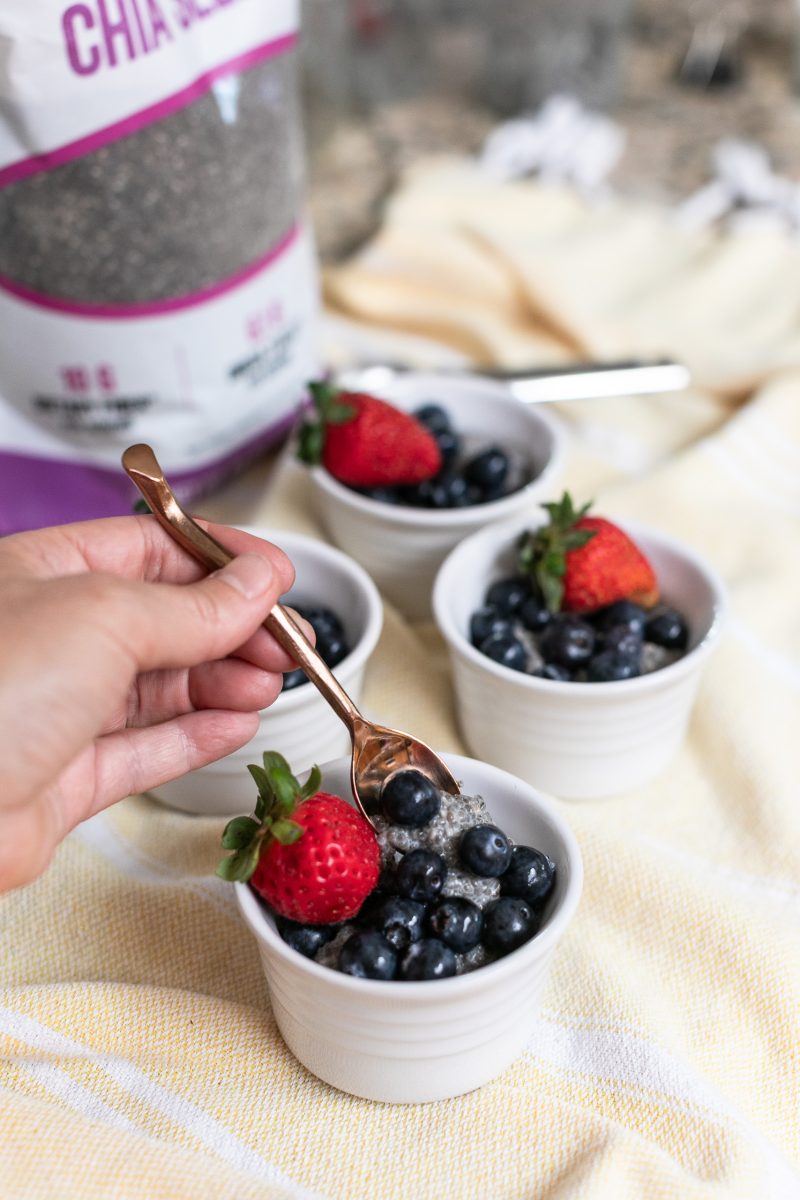
Reason for choosing this morning: The breakfast desserts. If you stir it for three minutes it will become pudding without the need for cooking by morning.
Combine 3 tablespoons chia seeds with 1 cup almond milk (or any milk you prefer), 1 tablespoon maple syrup, 1 teaspoon vanilla, and a small pinch of salt. Wait 5 minutes and stir again. It should have a gel-like consistency. Prepare it by sealing it, and placing it in the fridge for a minimum of 4 hours; over night is best.
The best consistency is like a thick pudding that will stay up when you stick a spoon in it, and has a lot of seeds suspended in the gel. If you see a lot of liquid on top and seeds settled at the bottom you probably didn’t stir it enough in the beginning.
You can substitute up to 50% of the almond milk with coconut milk. Making the mixture thicker will help it resemble more like a dessert. Adding more maple syrup and a little cocoa powder will turn it into chocolate pudding. Feel free to add any combination of fruits and nuts that you have in your kitchen.
8) Apple Cinnamon Oatmeal
Why not give this a go this morning: [Skip to the next line for the answer]. Breakfast that doesn’t taste like breakfast! With a blend of cooked apples and oats, you get the experience of having a dessert without the overpowering sweetness. No 10 a.m. sugar crash for you!
For an even tastier alternative, try using a mix of water and milk (50/50). In a separate bowl, mix 1/2 cup rolled oats with 1 chopped apple (skin on and cored), 1 tsp cinnamon, a pinch of salt, and a handful of raisins or chopped dates. Let it simmer for 5 minutes.
There’s no need to stir it. Your goal here is to have the oats soft enough to avoid a chewy or mushy texture, and apple chunks should break apart with a spoon but still have a bit of structure. Lastly, spoon some nut butter and maple syrup on top.
Pears are a little softer and sweet and will take two minutes less to cook than apples. Steel cut oats will take about twenty to twenty five minutes to cook, but if you let them soak over the weekend, it will improve the texture.
9) Salmon Toast
Salmon Toast: It’s deserving of mention here. Breakfasts like this make me want to skip the rest of the week, and fast forward to Saturday again. If you have smoked salmon, nice bread and something creamy, you have beaten the cafe down the road.
Toast a slice of sourdough or pumpernickel until golden brown on all sides. Spread with cream cheese, labneh, or Greek yogurt (add some lemon juice for a zesty touch). Top with 2 ounces of thinly sliced smoked salmon. Add capers, dill, red onion slices, and lots of black pepper. The toast should crackle when you bite into it, the salmon should be silky and moist, the cream cheese should not only be obstructive but should additionally feel cool and thick.
Sardines or canned trout on toast is another meal option but is half the price. Substituting the spread for cottage cheese will also lower the calories and increase the protein. If you don’t have capers, you can leave them out, but make sure to do an extra squeeze of lemon.
10) Lentil Soup
This option was chosen for lunch because it is reasonably priced, and can easily be stored in the freezer. Lentils do not cause any bloating which is perfect for those afternoons when you need to keep pushing through. They also help keep energy and focus up during that afternoon slump and are very filling.
Dice the onion, carrot, and celery and add to the pan with some olive oil. Let them cook for 5 to 7 minutes until softened. Then add a teaspoon of tomato paste and cook for a minute until it becomes fragrant.
Next, add 1 cup of brown or green lentils, 4 cups of vegetable or chicken broth, 1 can of chopped tomatoes, and some salt and pepper. Let this mixture simmer for 25 to 30 minutes. The lentils should be spoon-breakable but not mushy. Finally, add the juice of one lemon along with some spinach or kale.
To achieve a thicker, more dal-like consistency in your soup, red lentils are the best option as they are only 15 minutes to cook and will completely break down. For a better recipe, use coconut milk instead of half the broth. This will give you a Thai-inspired soup with coconut milk and lentils.
 Nathaniel’s Pantry Notes: The Boring Pantry That Makes Healthy Eating Doable
- Eggs. A dozen at all times. Cheaper than almost any other protein and impossible to ruin past edible. Scrambled, hard-boiled, fried on toast, in a frittata with whatever vegetables are dying.
- Canned beans. Black, chickpea, white, kidney. Rinse them well and they go into anything (soup, salad, bowl, mashed onto toast). Cheaper than meat, more filling than rice.
- Frozen vegetables. Spinach, peas, broccoli, edamame, mixed bag. The freezer aisle is your time machine for the days you didn’t make it to the produce section.
- Olive oil, lemons, and kosher salt. The three-piece kit that makes a sad bowl of anything taste like it had a plan. If you only buy one thing on the list, buy decent olive oil.
- Oats. Steel cut on Sunday, rolled the rest of the week. Cheaper than cereal, more filling, and you can stir literally anything into them.
11) Mixed Greens Salad
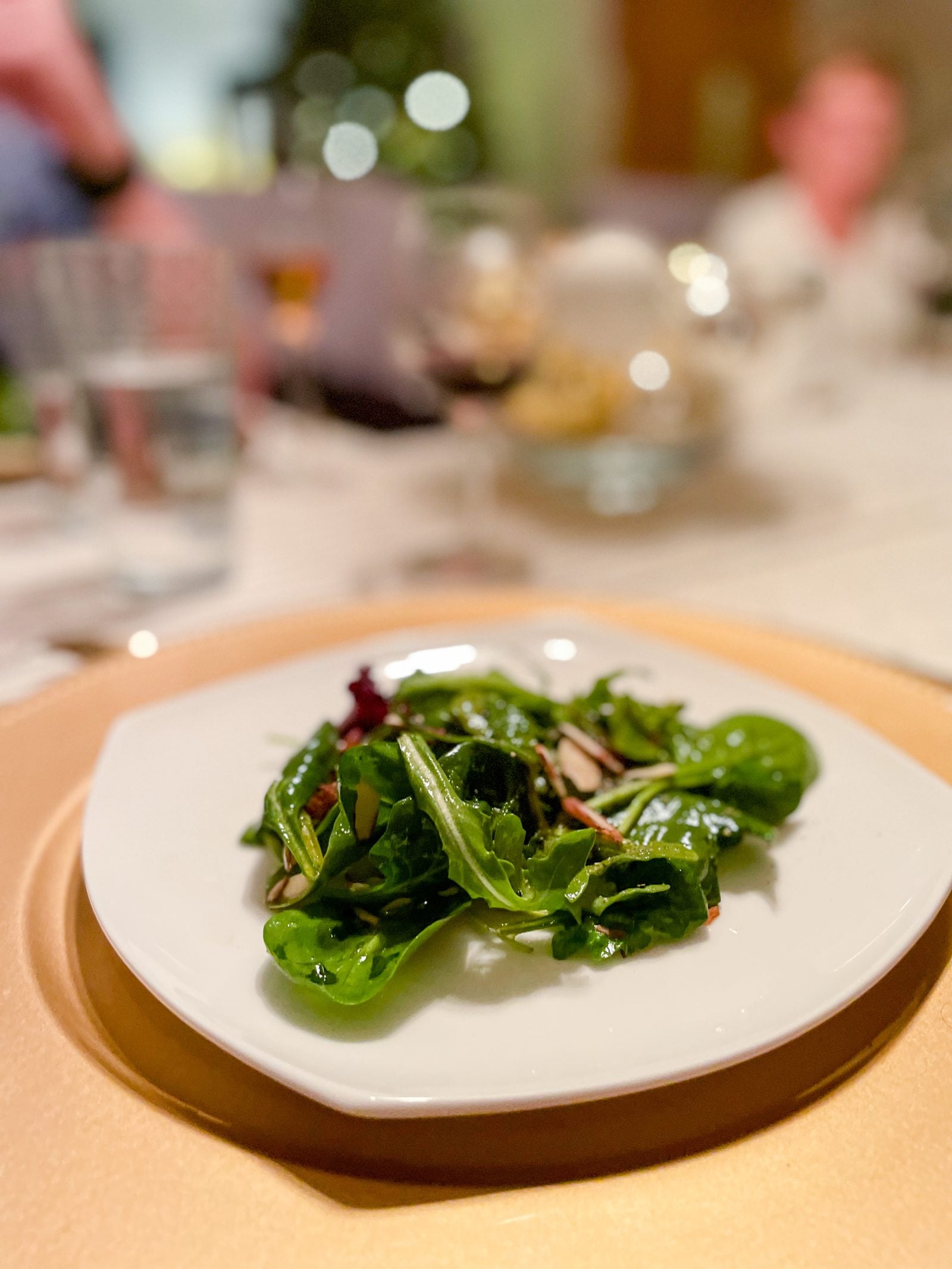
Why Mixed Greens Salad belongs here: A really filling salad. The trick is to use the salad greens as the base instead of the main part. Then, add all the really filling components.
In a large bowl, add 3 to 4 cups of mixed greens (arugula, spinach or baby kale) and layer on top a protein source (options are rotisserie chicken, hard boiled eggs, tuna, chickpeas, leftover salmon, halloumi), a cheese layer (feta, parmesan, goat), a healthy fat layer (avocado, olives, nuts), and a crunch layer (cucumber, peppers, radishes, jicama).
Drizzle with a true vinaigrette (dressings note below) and toss until all the leaves are fully coated, not just the top layer. The leaves should wilt from the dressing and not remain dry with a pool of vinegar at the bottom.
Incorporating canned beans as a source of protein allows you to enjoy this vegetarian lunch without feeling any loss. Including pre-cooked grains like farro, quinoa, or brown rice in the bowl transforms it into a stealthy grain bowl.
12) Grain Bowl
Reasons to choose this for lunch: It’s a fridge-clearing lunch with a structure: rice + protein + roasted veg + something spicy. A structure means you’ll have a lunch that is guaranteed to be good even if it’s different every time.
Begin by choosing one of the suggested cooked grains to fill the base of your bowl. (farro, brown rice, quinoa, or barley) Next, select a protein. You may choose between chicken, fish, or tofu. Other protein options include beans or a soft boiled egg.
Choose as many vegetables as you would like. You may consider roasted sweet potatoes, raw shredded carrots, blistered cherry tomatoes or sliced cucumbers. For flavor, you can add pickled onions, hot sauce, kimchi, fresh herbs, cheese, or capers.
Finally, for sauce, choose one from tahini, yogurt herb sauce, or peanut dressing. Enjoy each ingredient separately as your bowl should not look like some big mushy mix at the bottom. Make sure your bowl is full of distinct ingredients!
You can choose to eliminate the grain and instead use a bed of greens for the base of the bowl, which will give you a lower carb option. If you prepare all your grain on Sunday, assembly during the week will only take you 4 minutes.
13) Quinoa Salad
Lunch option: It’s similar to Tabbouleh, I’ve made quinoa and have it pre-bowled for the week. The magic is in the lemon and herb ratio.
Cook the quinoa as directed on the package (approx. 15 minutes). Once finished, drain the quinoa, and use a fork to separate the grains to allow for cooling. In a separate bowl, combine chopped cucumbers, halved cherry tomatoes, some chopped mint, diced red onion, feta, and toasted pine nuts (or almonds).
In a separate bowl, combine olive oil, the juice of two lemons, minced garlic, salt, and pepper. In relation to texture, the quinoa should be identifiable enough to not be gummy, the herbs should not be present as a dusting, and there should be more vegetable than grain.
Bulgar wheat provides the more authentic taste of tabbouleh. This dish can be made vegan by removing the cheese and adding chickpeas. If you want additional protein, you could add diced grilled chicken or chickpeas.
14) Turkey Hummus Wrap
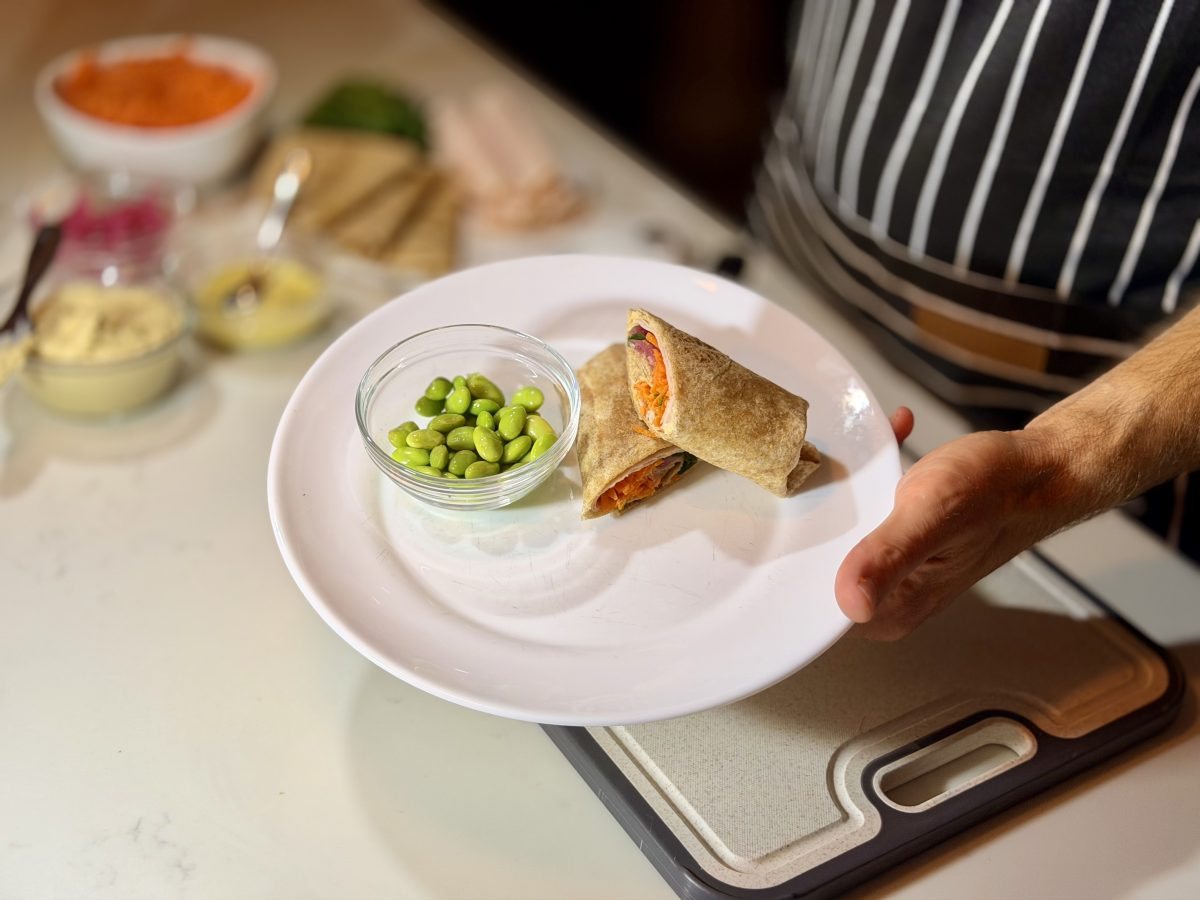
What is great about this choice for lunch is that it is a lunchbox classic with all the essential elements for a good sandwich. The star of the show is the hummus. It acts as the spread, and also sneaks in some extra protein.
Take your tortilla and place it on your prep surface. Spread a sufficient amount of hummus on the bottom two-thirds of of your tortilla. If you have any, slices of avocado, greens, shredded carrots, and turkey (12 ingredients or less) would be good additions.
Starting from the bottom, roll the tortilla up tightly and fold the sides in as you roll. Then, cut the wrap diagonally. When you take a bite of the wrap, it should hold together. Also, it should not be dry like a sandwich. There should be enough hummus and veggies in the wrap to keep it from being dry.
Using lavash or a large lettuce leaf instead of a tortilla will decrease the carbs in the meal significantly. A surprising alternative to turkey in the dish that could be used is smashed white beans mixed with lemon and some herbs.
15) Chickpea Salad Sandwich
Reason for inclusion of Chickpea Salad Sandwich: This is a vegetarian version of a tuna salad that is even better than tuna salads. The main ingredient is chickpeas. Also, unlike tuna, it won’t stink up your office at 2 p.m.
Drain and rinse the chickpeas. For the texture leave the mixture chunky and mash some whole chickpeas with a fork. Combine 2 tbsp. of olive oil mayo (or Greek yogurt), 1 tsp. of Dijon, and chop celery, red onion, diced pickles, a splash of lemon juice, salt, and pepper.
Assemble a sandwich with 2 slices of whole grain bread and a leaf of romaine or butter lettuce. The goal for the texture is to have the chickpeas broken enough to hold together when pressed, but still have some for chew.
For a stronger flavor, add capers and 1 tsp of dill. If you want the filling to have a texture more similar to real tuna salad, substitute the chickpeas for mashed white beans (cannellini).
16) Tomato Bean Soup
Tomato Bean Soup is exceptional because it elevates a typical pantry ingredient meal into a gourmet experience. It makes grilled cheese sandwiches feel optional (but also irresistible!). Best of all, it comes together in just 15 minutes with two canned ingredients.
For 4 minutes, heat olive oil with minced garlic and chopped onion, stirring until the onion is translucent. Then, add 1 can of crushed tomatoes, 1 can of drained and rinsed cannellini beans, 1 cup of broth, dried oregano, smoked paprika, salt, and red pepper flakes.
Partially cover the pot and simmer for 12 to 15 minutes While the soup simmers, wait for it to thicken (the soup should leave a trail when you drag a spoon across the bottom of the pot), and heat up the beans. The tomatoes should reduce their pungency. Finish with a drizzle of olive oil, fresh basil, and some grated parmesan.
Chickpeas or great northern beans can substitute for cannellini beans. If you have a parmesan rind in the freezer, toss it into the pot while it’s simmering. It’ll surprise you how much depth it adds to the soup.
17) Loaded Sweet Potato
What sets this apart as a good option for lunch (or dinner) is The Vegetable That is a Meal. Whenever I want to feel more than just sustained and instead truly nourished, I like to have a baked sweet potato for lunch, and it is topped with a lot of things.
If you will be waiting a little while, you could microwave it for 6-8 minutes. To make a roasted potato, wash it and stab it with a fork then roast it for 45-55 minutes at 425 degrees. You let the meat roast until it is tender enough to be cut with a knife.
You also wait long enough for some of the sugars to bubble out. Once the time is done you will want to be sure to take it out when the sugars are at the right stage. You can then open the potato, and fluff the insides with a fork and some seasoning. For toppings, you can add black beans, salsa, yogurt, and chopped scallions. If you want to go sweet, use some peanut butter, a banana and some cinnamon.
Baked potatoes are fine, but you will need to do more seasoning (sweet potatoes have an inbuilt sweetness). Sunday is the day to do two roasts to microwave for 90 seconds for your lunches throughout the week.
18) Tofu Stir-Fry
Tofu Stir-Fry Pitch: A stir fry packed with filling vegetables. The trick is to press the tofu (which is not what people do) and to get the pan super hot (also not what people do).
Place two paper towels under and over the extra-firm tofu. Press it with a heavy pan for 20 minutes to get the excess moisture out of the tofu. Chop your other ingredients and mix with 1 tbsp of the cornstarch. Add 1 tbsp of a neutral oil to a large frying pan or a wok and wait for the oil to shimmer. Let the tofu cook undisturbed for 3 to 4 minutes to get a deep golden brown crust on the bottom. After 2 minutes, flip once more and continue cooking.
On one side, add chopped garlic, ginger, scallion, and assorted vegetables (broccoli, bell peppers, snap peas, mushrooms).
Stir-fry for approximately 3 to 5 minutes on high heat. It is preferable to have a texture that is crisp-tender, meaning the veggies will have a slight crunch and will be vibrant in color, but not mushy. Combine a sauce of soy sauce, rice vinegar, sesame oil, and 1 tsp honey, or hoisin sauce. Drizzle and toss to coat. Serve over rice.
You can use strips of chicken thighs as well. Also, the stir fry vegetable mixes are frozen, so you don’t need to chop any vegetables. And to limit the water in the pans while cooking, thaw and drain the vegetables beforehand.
19) Salmon Dinner
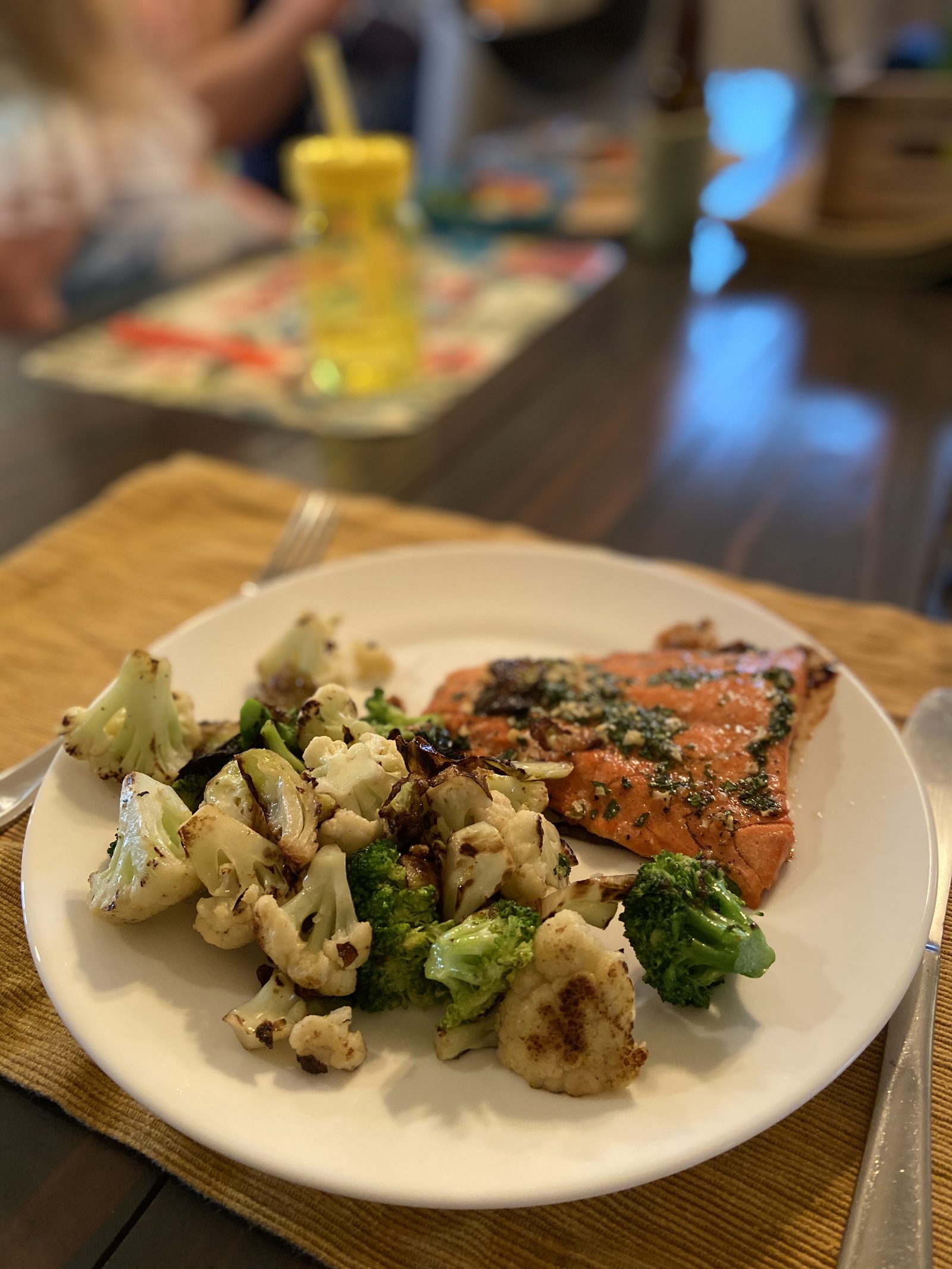
What makes this option for dinner stand out? This dinner is straightforward and quick to make, only 18 minutes! It is also pretty fancy as you get salmon, veggies, and a starch, which are also able to cook together in one sheet pan!
Next, put the salmon fillets skin side down on the parchment paper and pat them dry. Also, we will be adding baby potatoes and can also add asparagus or green beans. Baby potatoes should be added first since they need a 15 minute head-start at 425 degrees.
Salmon and asparagus/green beans need to go in the oven at the same time. Set 12 to 16 minutes right after dropping the salmon and change the oven to 425 degrees. You want the salmon to be fork tender and the young potatoes to be tender and brown, along with the young asparagus to be bright green and crisp. Finish off with some lemon wedges and a sprinkling of flaky salt.
Feeling free to thaw and pat dry frozen salmon is fine, as it may cook a bit faster than non-frozen fillets and may require checking around the 10 minute mark. Trout, arctic char, and steelhead are often interchangeable and generally cheaper than salmon.
20) Sheet Pan Chicken
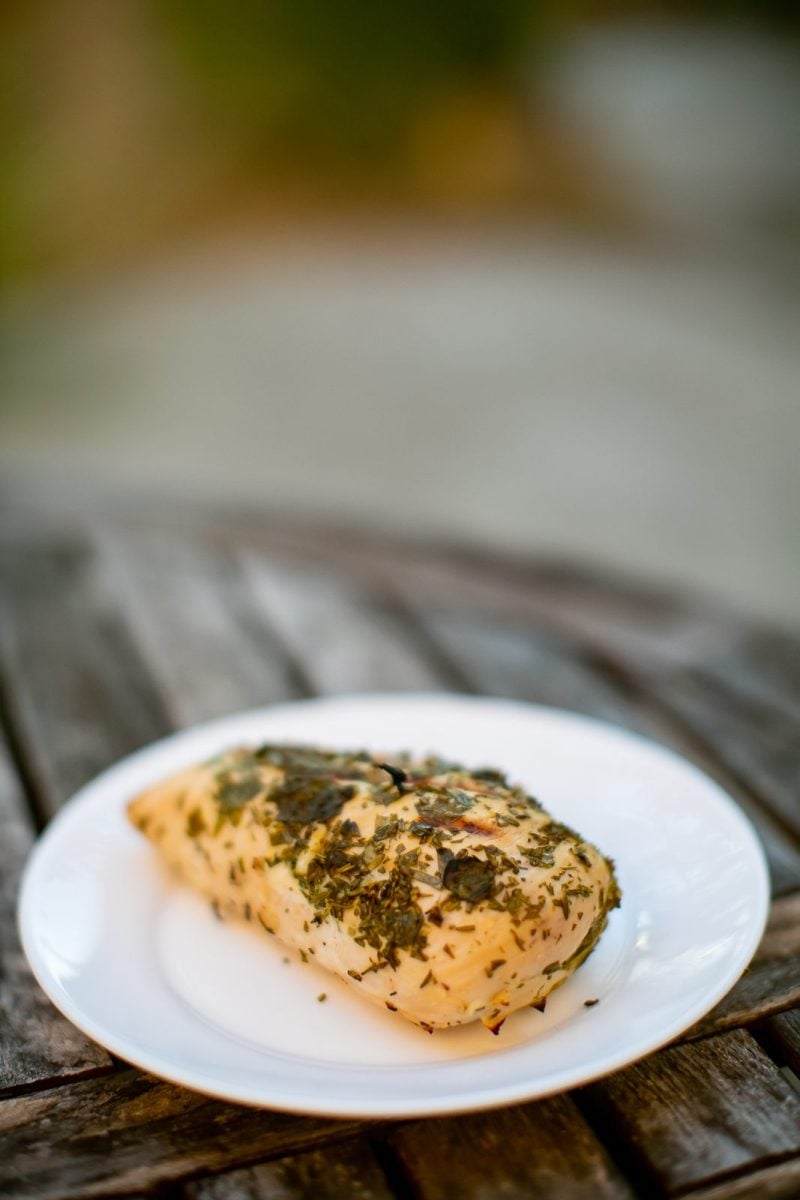
What makes Sheet Pan Chicken work is simplicity. Toss some olive oil, salt, and spices with the chicken in a hot oven and you have dinner on one sheet pan. Sometimes, this is dinner, and that is completely okay.
Begin by patting the chicken thighs (with skin and bones) dry. Apply salt to the chicken thighs and mix them with olive oil and minced garlic along with a blend of your choice of dried herbs (for example, oregano, thyme, and rosemary). Next, on a sheet pan, place baby potatoes cut in half, onions cut into quarters, and zucchini or bell pepper cut into pieces. Then roast in an oven preheated to 425°F for 35 to 40 minutes.
You will know it is cooked when the chicken skin is deeply golden brown and crispy, the insides of the potatoes are tender and the bottoms are deeply golden brown, and the veggies have a nice char with brown edges. When the pan is taken out of the oven, squeeze some fresh lemon juice on the hot chicken skin immediately.
Using bone-in breasts will require a bit less time than stated (28 to 32 minutes). If you would like to make it a heavier-veg version, double the amount of veggies and use boneless thighs (cook for 22 to 25 min).
21) Turkey Chili
What Turkey Chili gets you: One pot, freezes great, and the leftovers somehow get better.
This version exists because ground turkey absorbs the spices more than ground beef.
In a big pot, Pour a little bit of olive oil and add the ground turkey. Using the spatula, break the meat into smaller pieces. Cook for about 6 minutes until all the turkey has been fully cooked.
Chop the onion and bell pepper and cook for another 5 minutes (stir every minute). Add 1 clove of garlic, 1 tablespoon of chili powder, 1 tablespoon of cumin, 1 tablespoon of smoked paprika, 1 tablespoon of oregano, and 1 tablespoon of tomato paste.
Then add 1 can of diced tomatoes, 1 can of kidney beans, 1 can of black beans (rinsed), and 1 cup of broth. Leave it for 25 to 30 minutes. When the chili is ready, you should be able to see a clear path when you drag a spoon through it, and the beans should be cooked. Add some dice avocados, sliced scallions, and a spoon of yogurt or sour cream. Enjoy!
You can substitute with ground chicken, but it tends to be a little drier. You can also add an additional tablespoon of olive oil to the mixture if using ground chicken. If you’re going for the vegetarian option, omit the meat and add 3 cans of beans. (Kidney, Black, and Pinto) The chili is adaptable!
22) Zucchini Noodles
What makes this worthy of dinner? Low carb pasta is only good if made the right way. Zoodles can easily become too watery. The solution is salt and a quick heat.
Purchase pre spiralized zucchini or spiralize two to three medium sized zucchini. Place in a bowl and add a teaspoon of salt. Let sit and drain in a colander for ten minutes and then use a clean kitchen towel (or paper towels) to soak up the remaining water (this step is non negotiable). Heat some olive oil in a large skillet over medium high heat. Add some minced garlic and red pepper flakes and cook for thirty seconds. Then add the zoodles and stir fry for two to three minutes.
You want them to be tender (some bite, not raw) and still a bit bright green. You should be able to see if you overcooked them by looking to see if they are gray and limp. You can also mix these with pesto or a simple sauce made with tomatoes also mixed with anchovies or olive oil and parmesan.
For the enjoyment of eating pasta, you can ease some of the carb intake by getting half zoodles and half regular pasta. For a spaghetti squash, it takes about 40 minutes to have it roasted.
 Nathaniel’s Pantry Notes: What Most “Healthy” Labels Actually Mean (and Don’t)
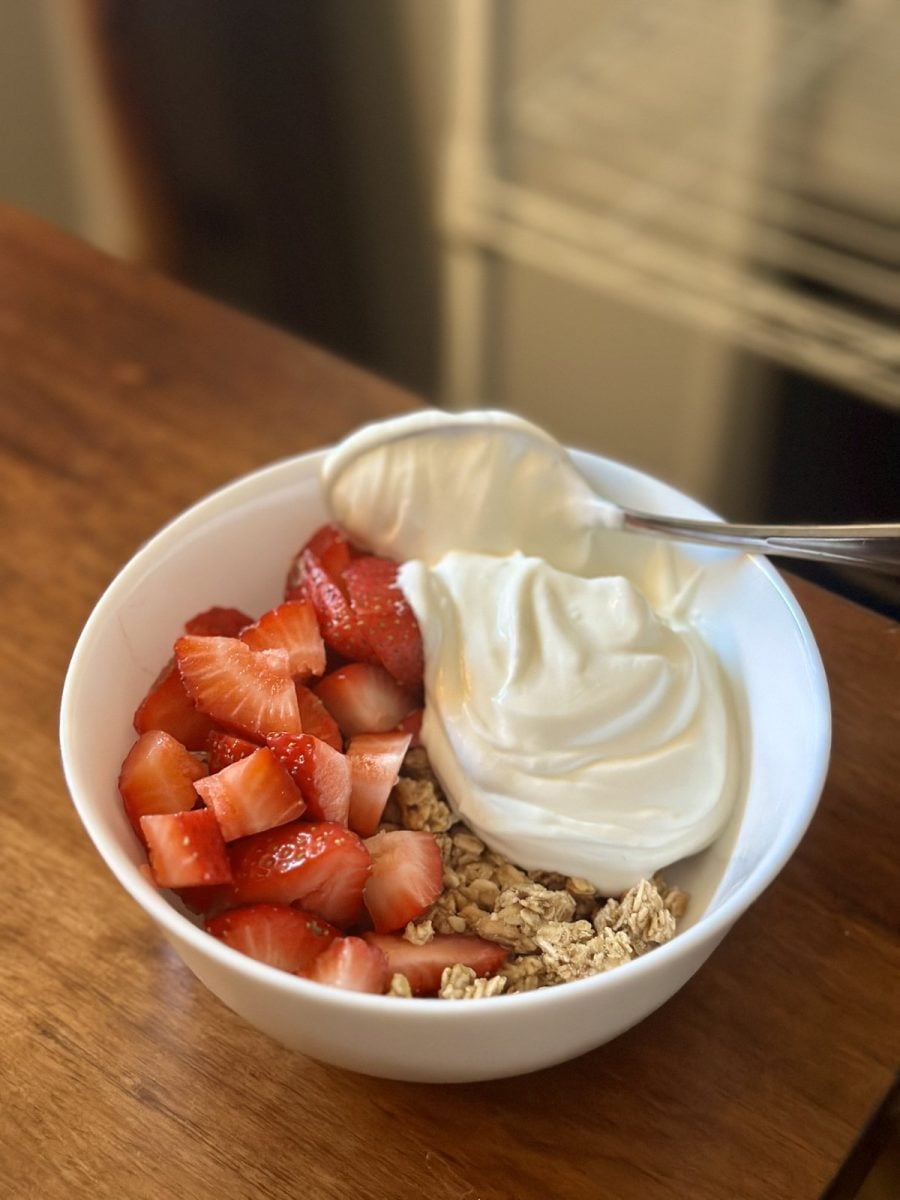
- Sugar grams per serving. Anything over 8g of added sugar in something you’d call a meal is a dessert. A ‘healthy’ yogurt with 14g of sugar is closer to ice cream than to actual yogurt. The 0g and 5g versions exist and taste fine after a week of adjustment.
- Fiber grams per serving. Real whole-grain bread has 3 to 5g of fiber per slice. ‘Whole grain’ bread with 1g of fiber is white bread with the first ingredient changed. Read the actual fiber number, not the front of the bag.
- Protein-to-calorie ratio. For a snack to be filling, it wants roughly 10g of protein for 100 to 200 calories. Greek yogurt clears this. Most granola bars don’t. Most cheese-and-crackers don’t either.
ingredient lists that are short and simple.
23) Whole Wheat Pasta
Why Whole Wheat Pasta belongs here: Whole wheat offers added fiber and gives extra nuttiness to our authentic pasta, made the Italian grandmother way (vegetable-forward and sauce-light) so it is hearty not heavy.
Pour water into a pot and add enough salt to make it taste like seawater. This is the only chance to make the pasta taste good! While the water boils, prepare some whole wheat penne or spaghetti. Set a timer for 1 minute less than the box instructions. While you wait, get a big skillet and pour in some olive oil to sauté minced garlic. Be careful not to let the garlic brown.
Add some halved cherry tomatoes and a splash of white wine or pasta water. Cook for 4 minutes or until the tomatoes burst. When the timer goes off, add the pasta to the skillet and toss for 90 seconds. The sauce should cling to the pasta (not watery), so if you need extra, add it to the bottom of the bowl. Finish with torn basil, more olive oil, and parmesan.
An example of chickpea pasta is Banza, which is a very good protein source. It should be boiled for one minute less than what the package says so that it does not get too soft. It tastes just like regular pasta, but with significantly less carbs.
24) Shrimp Tacos
The sales presentation for Shrimp Tacos may be described as providing the experience of going out for dinner on a Friday night, but taking a mere twenty minutes to do so. There is no need to cook the shrimp, and the real effort is in all the other preparation work.
Coat the shrimp with a mixture of olive oil, chili powder, cumin, garlic, salt, and lime juice. Heat the pan until it starts to smoke. Add the shrimp to the pan in a single layer and cook for 90 seconds on each side. You want them to turn a nice pink, get some light charring, and be in a tight C shape. (They are still undercooked if they are in a loose C and if they are in a tight O shape they are overcooked).
At the same time, heat small corn tortillas over a gas flame (or in a hot, dry skillet) for 30 seconds on each side. Prepare the tacos with the shrimp, cabbage (mixed with lime and salt), avocado (sliced), yogurt (or sour cream), and pickled red onions (or salsa).
If you are cubing white fish, like cod or mahi-mahi, they will cook in approximately the same amount of time, which should be about 2-3 minutes per side. For vegetarians, black beans or grilled mushrooms would be a great option to keep that taco experience.
25) Baked Cod
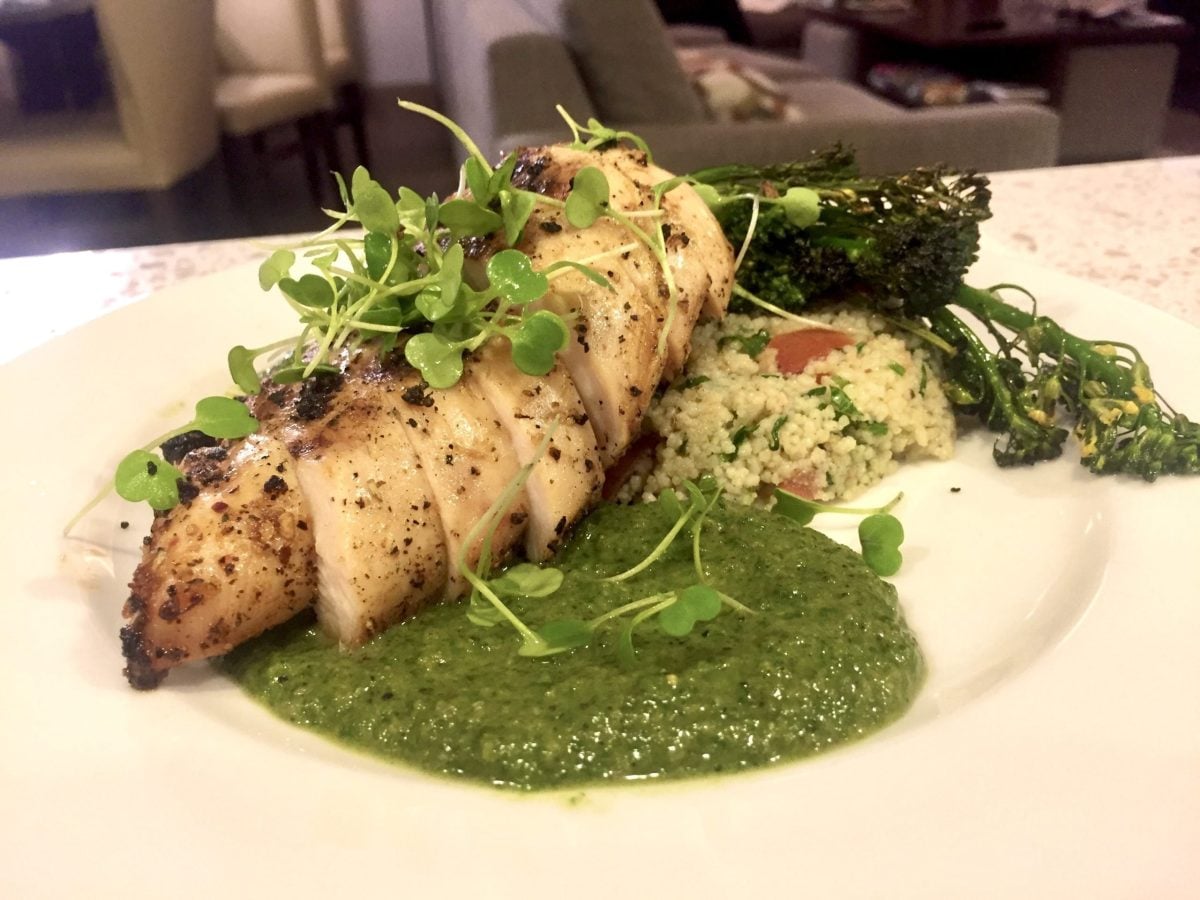
Why Baked Cod pulls its weight: Prepared in 15 minutes with delicate flavor and flaky white fish.
On Wednesdays, I want to have dinner at some place which will not put excessive strain on me for the subsequent four hours.
Start by patting the cod fillets dry. Then add seasoning to the fish like salt, pepper, lemon zest, and garlic powder. Next, grab a baking sheet that has been lined with parchment paper and place the fish in the center. Halve the cherry tomatoes and position them with sliced zucchini and lemon slices around the fish. Drizzle all of the fish and vegetables with olive oil.
Depending on how thick the cod is, bake for 12 to 16 minutes at 400 degrees. The fish should look pearly and opaque in the center, and it should be flaky. The zucchini and tomatoes should be in a jam-like state from the baking. Finish with parsley and another drizzle of olive oil on the pan.
Halibut and haddock can be substituted for one another. It’s good here (in the preparation method discussed) and cheaper! You should thaw, and dry it completely, and then do your seasoning. If you do not do that, it will steam instead of bake.
26) Burrito Bowl
Case for Burrito Bowl: Custom Chipotle bowls cost approx. $13 at the restaurant. Custom bowls cost about $6 at home. You can also put double the amount of veggies and take your time cooking everything. Brown the meat, season the rice, and top it off with lettuce.
Take a bowl and put in one cup of brown rice or fancy cilantro-lime rice. After that, put in some seasoned protein (ground turkey or chicken with cumin, chili powder, garlic, and lime). After that, put in black beans (that are warmed, with salt, and had lime juice added).
After that, add sliced romaine, chopped halved cherry tomatoes and red onion, corn (thawed if it was frozen), diced avocado, and one tablespoon of salsa. The structural cue you’re describing has distinct and separable elements that are both visible and edible. If you combine the ingredients, you did not prepare a burrito bowl; you created a burrito mush.
Swapping out half the amount of rice for cauliflower rice decreases the carbohydrate count and increases the vegetable servings of the meal while still retaining the overall experience. Also, using pulled rotisserie chicken offers protein faster than the time it would take to brown ground beef.
27) Hummus Plate
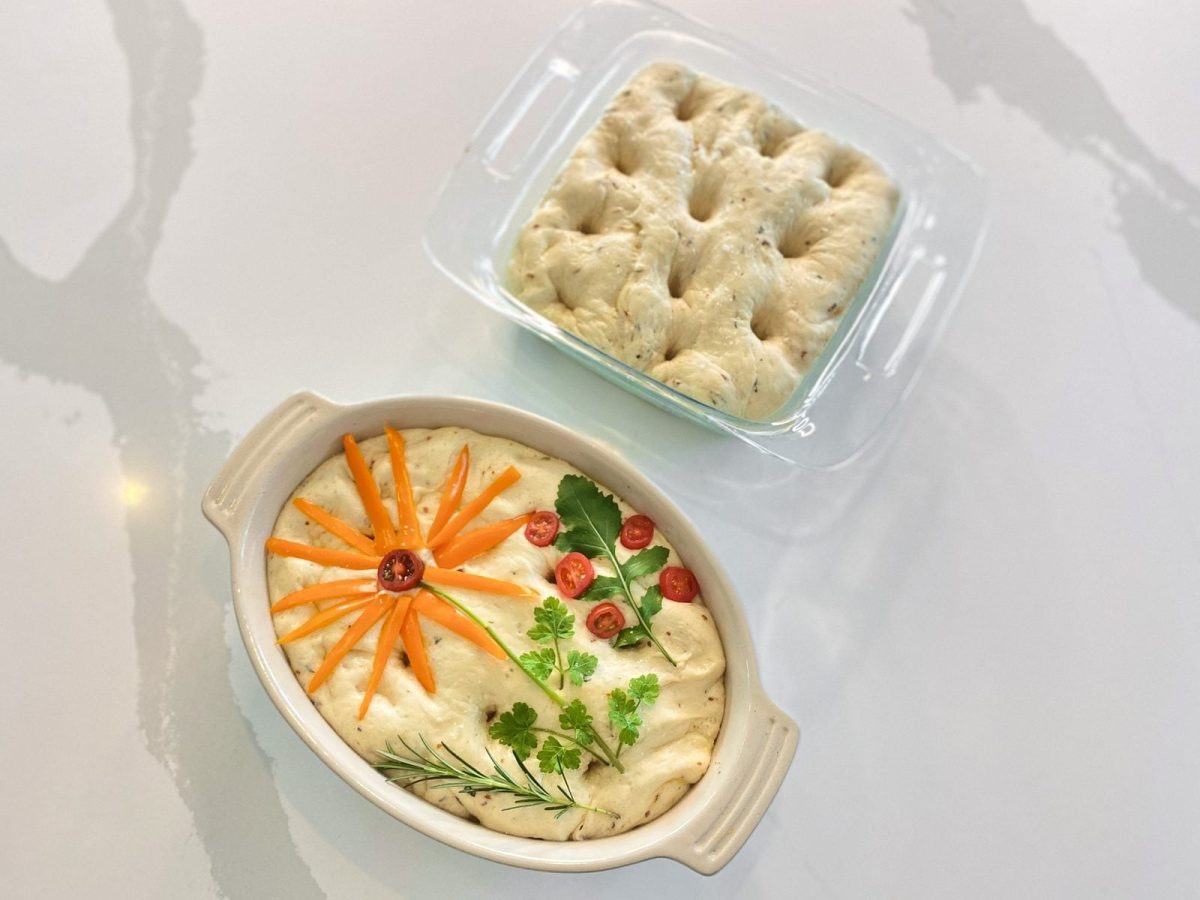
What makes Hummus Plate unique? The mezze style. It is far more enjoyable to interact with a platter of different small elements than eat a sandwich that has the same number of calories. It seems like more effort was put into it, even if that is not true.
To begin, spread the hummus evenly across a plate or shallow bowl and use the back of a spoon to make some valleys on the top layer of the humus. Once you have your valleys, drizzle some olive oil into the cracks, sprinkle with paprika, and add whole chickpeas on top.
For the side, put in some wedges of warm pita or a handful of pita chips, kalamata olives, feta cheese, sliced radishes, halved cherry tomatoes, cucumbers, and sliced cucumbers. The thick centerpiece being dippable hummus instead of a thin smear and the fresh, cold, crunchy contrast from the veggies are what really stand out in terms of texture.
Making your own hummus is an easy and quick task. All that is needed is a can of chickpeas, tahini, a lemon, garlic, and ice water. (Ice water is the only ingredient that makes your hummus creamy). You can also sub hummus for baba ganoush, white bean dip, or labneh.
28) Cauliflower Fried Rice
Why pick this for dinner: The other choice is also pretty low carb and honestly is going to take work to taste good. The thing is, treat the cauliflower like rice and not cauliflower. Use high heat, a dry pan, and don’t stir.
A food processor can be used to break apart a head of cauliflower into pieces about the size of rice, however, you can also use riced cauliflower available for purchase in the freezer section (if you do use riced cauliflower, you will need to thaw and drain it first). Place 1 tablespoon of oil in a large skillet or wok and increase the heat to high. First, combine two eggs and set them aside.
For two minutes, sauté the chopped onion, garlic, and ginger, after that add the diced carrots and peas, and cook for 2 more minutes.
After everything is placed, make a single layer using the cauliflower rice and let it sit for three to four minutes so the bottom can develop a nice color. Then toss it, and let it cook for 3 more minutes. You should aim for the cauliflower to be tender but still grainy and not mushy at all, but lightly browned.
Stir in soy sauce, sesame oil, the scrambled eggs, and sliced scallion.
You can substitute cubed chicken, shrimp, or tofu for the protein option. If you do not have a food processor, bagged frozen riced cauliflower should work (it is what I usually use for a lot of weeks).
29) Stuffed Peppers
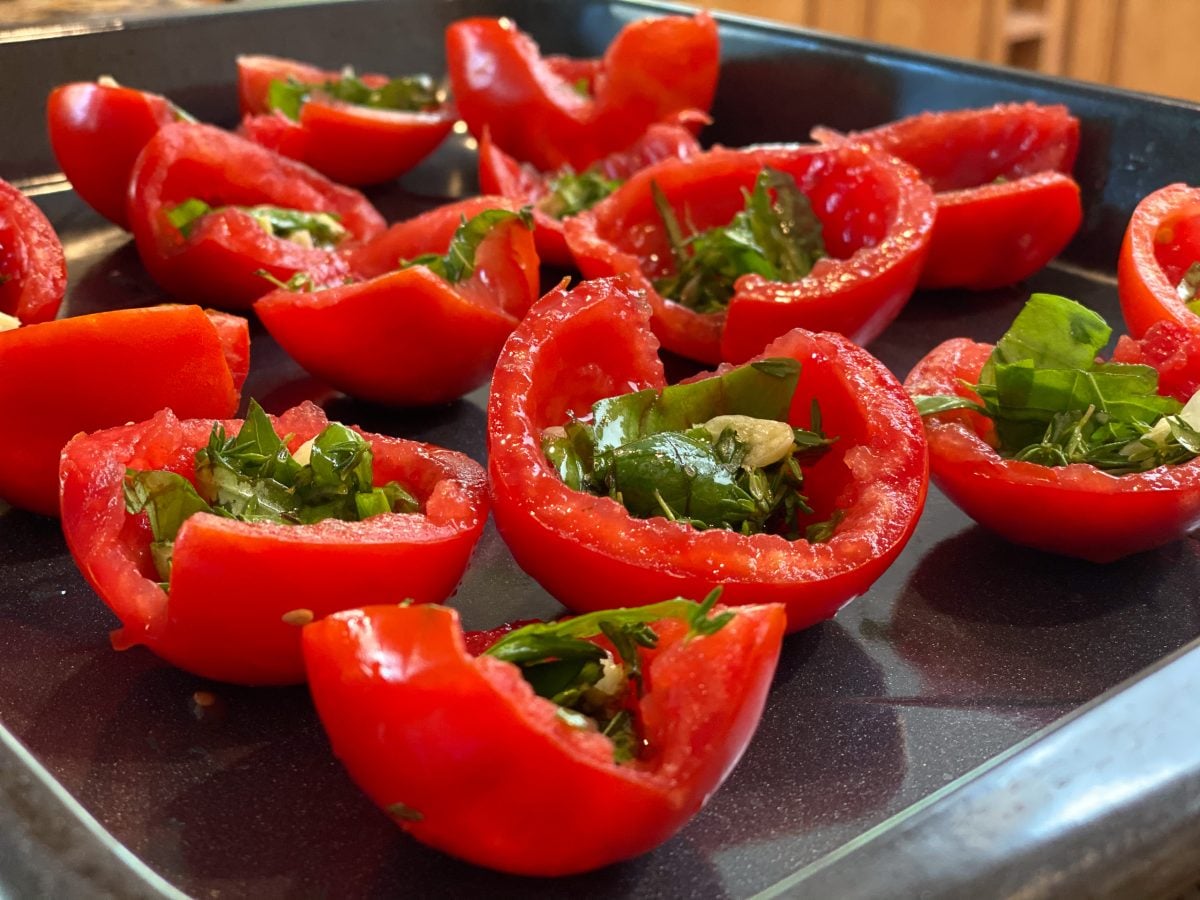
The dinner is a veggie bowl, where all the veggies also are the bowl. It’s simple to make, looks wonderful on the table, and is ideal for reheating as a lunch option.
To prepare this dish, slice a bell pepper of any color in half lengthwise and remove the seeds. Place the bell pepper on a baking tray and pour some olive oil on top with a little salt. Bake the pepper for 10 minutes to soften it. While this bakes, prepare the stuffing by browning your choice meat (ground turkey or beef) and adding it to the mixture of diced onion and minced garlic.
Combine this with rice (or quinoa), a can of diced tomatoes, and season with cumin, paprika, and salt. Lastly, pull the tray out of the oven and fill each half of the bell pepper with the stuffing and top them with shredded cheese.
Place the stuffed bell peppers back in the oven for 18 to 22 minutes.
The objective is to prepare the bell peppers until they reach ’knife tender’ status, meaning the structure of the peppers is still intact, but they are soft enough to easily cut through. Furthermore, the stuffing must be heated all the way through, and the cheese requires melting and slight browning in a few spots.
To decrease carbohydrates and increase protein in this variant, remove the rice and add one additional can of beans. For the vegetarian option, substitute the meat with lentils, black beans, and cooked grains.
30) Spinach Salad

Spinach Salad, tonight’s reasoning: A salad that actually gets better when you warm it up! The warm toppings cause the spinach to wilt a bit, and the dressing soaks into the leaves instead of just sinking to the bottom of the bowl.
Put a few cups of baby spinach in a bowl. Cook the bacon, drain it on paper towels, and crumble it. Use 1 tablespoon of the bacon fat to sauté the sliced mushrooms for about 4 to 5 minutes on medium-high heat until cooked. Cut one or two hard boiled eggs into pieces.
I will be assembling sliced warm mushrooms, crumbled bacon, sliced eggs, some halved cherry tomatoes, red onion, and wilted spinach. To make the warm bacon vinaigrette, whisk together 1 tbsp of bacon fat, 2 tbsp of red wine vinegar, 1 tsp of mustard, and a little bit of sugar. You should hardly see the spinach, so do not cook it until it is fully wilted and discolored.
To achieve a similar umami flavor impact, you can substitute some of the bacon with anchovies in the warm dressing.
Mushrooms can be swapped for roasted Brussels sprouts or chickpeas.
 Nathaniel’s Pantry Notes: Bottled Dressings Are Mostly Soybean Oil and Sugar
- The base ratio: 3 parts oil to 1 part acid. Three tablespoons olive oil, one tablespoon vinegar (or lemon juice, or both). That’s the math. Whisk in a jar with a lid, shake, done.
- The 4 add-ins that make it actually taste like something. Salt (real, not a dusting), Dijon mustard (1 teaspoon, it emulsifies AND adds depth), a teaspoon of honey or maple, and one allium (a teaspoon of minced shallot or garlic). Five seconds each.
- Variations that work without thinking. Lemon-tahini: skip the vinegar, use 2 tablespoons lemon juice and 1 tablespoon tahini. Italian: red wine vinegar and dried oregano. Asian: rice vinegar, soy sauce, sesame oil, and grated ginger.
31) Tuna Salad
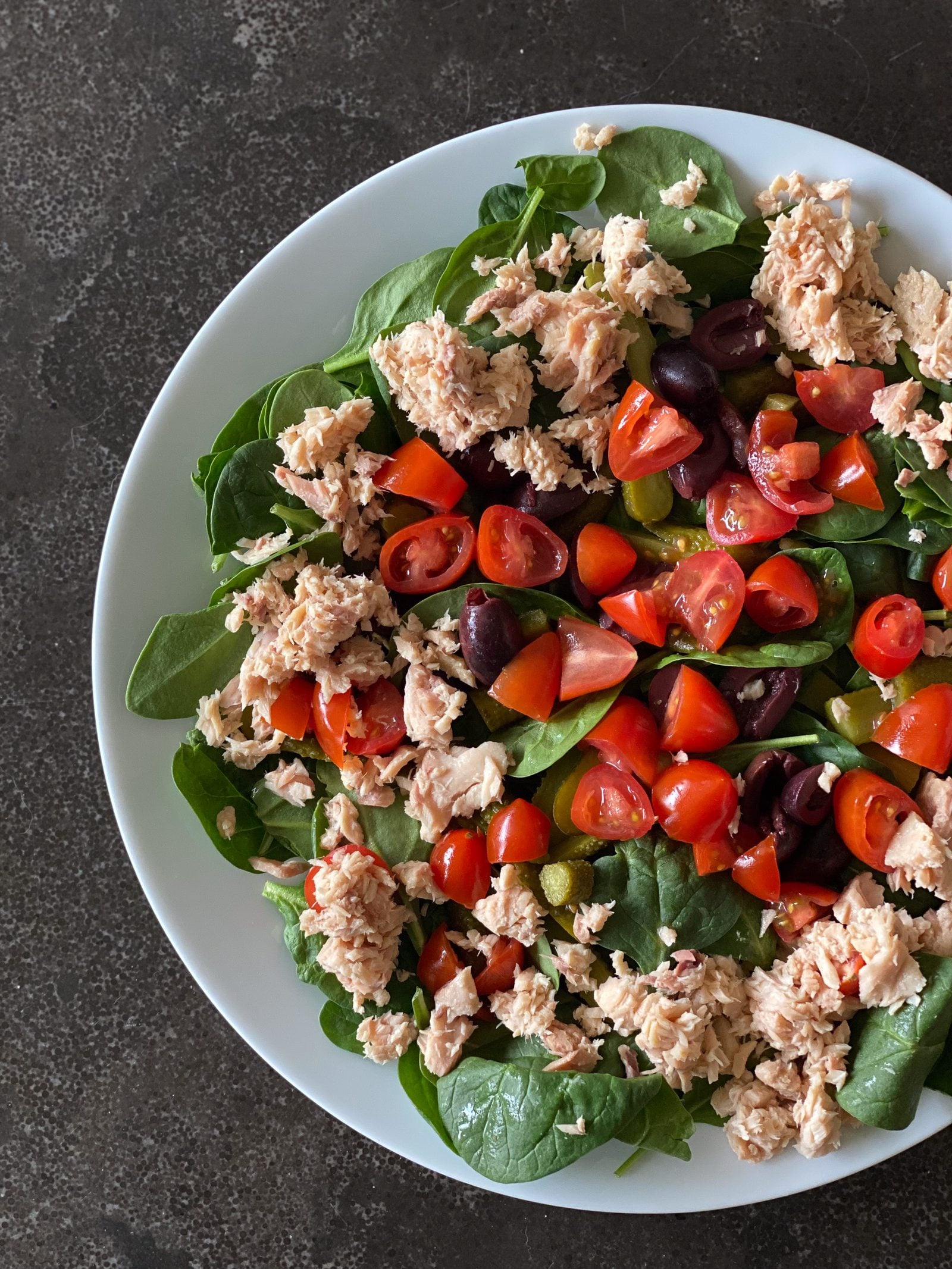
Why is this: You can save money and customize your meal however you want. This lunch was made when I hadn’t made a detailed plan for my meal. As a result, I get to appreciate two cans, gain 10 minutes of my time, and have a sandwich that is better than any option from the vending machine.
Drain the oil from two cans of tuna (one packed in water is lesser, go ahead and fight me on that). Flake into a bowl and add chopped celery and red onion, capers, some lemon juice, 1 tbsp mayo or Greek yogurt, 1 tsp Dijon, and seasoning. Use a fork to mix, but don t break the tuna too much.
You want large pieces of tuna to remain whole. This can go on some sourdough or over a bed of greens. The ideal texture is tuna in chunks, veg giving crunch, dressing enough to bind but not pool.
Salmon in a can is possibly equally nutritious, or even more nutritious, than the tuna, so it can be used in place of tuna. In the Mediterranean tuna salad recipe that is meant to be made without a fridge, instead of using mayo, add another tablespoon of olive oil and a dash of red wine vinegar.
32) Sardines On Toast
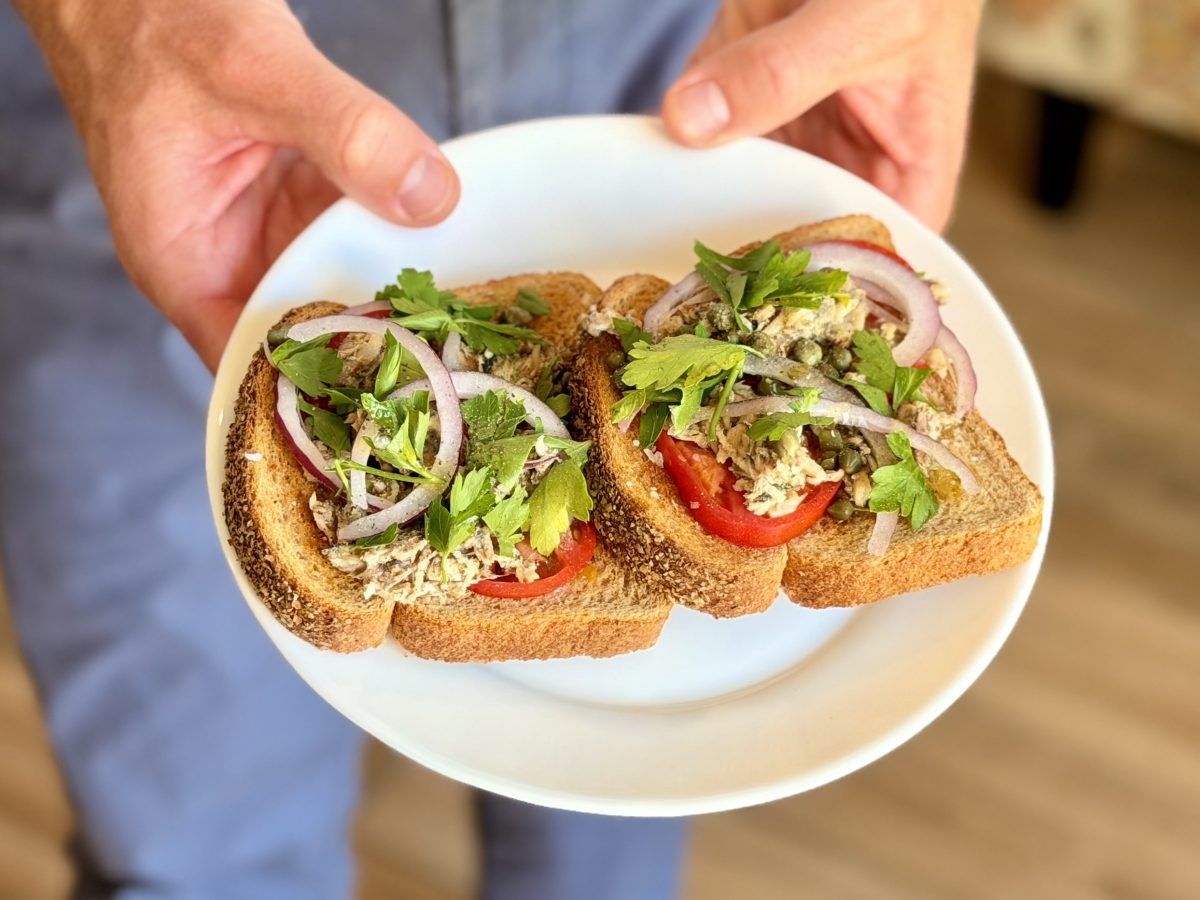
What is there to be afraid of regarding lunch? Lunch is nothing to fear. It is actually the case that sardines in olive oil are one of the most inexpensive sources of protein.
Toast the bread until it is crunchy. Take a clove of garlic, split it, and rub it on the toast. The toast will act as a grater. Then drizzle some olive oil and add 3-4 sardines (drained and in oil) on the toast. Squeeze some fresh lemon juice on the dish. Next, add some black pepper, chili flakes and a bit of freshly chopped parsley or dill.
Texture cue: the whole sardines should remain ( you should see stripes) and the toast should be submerged in olive oil and fish juice as much as possible.
The same ideas apply to tinned mackerel and smoked trout. As for the texture issue, some could try to fork-smashed sardines to create a paste. It could be completely different and could possibly be the solution.
33) Snack Plate
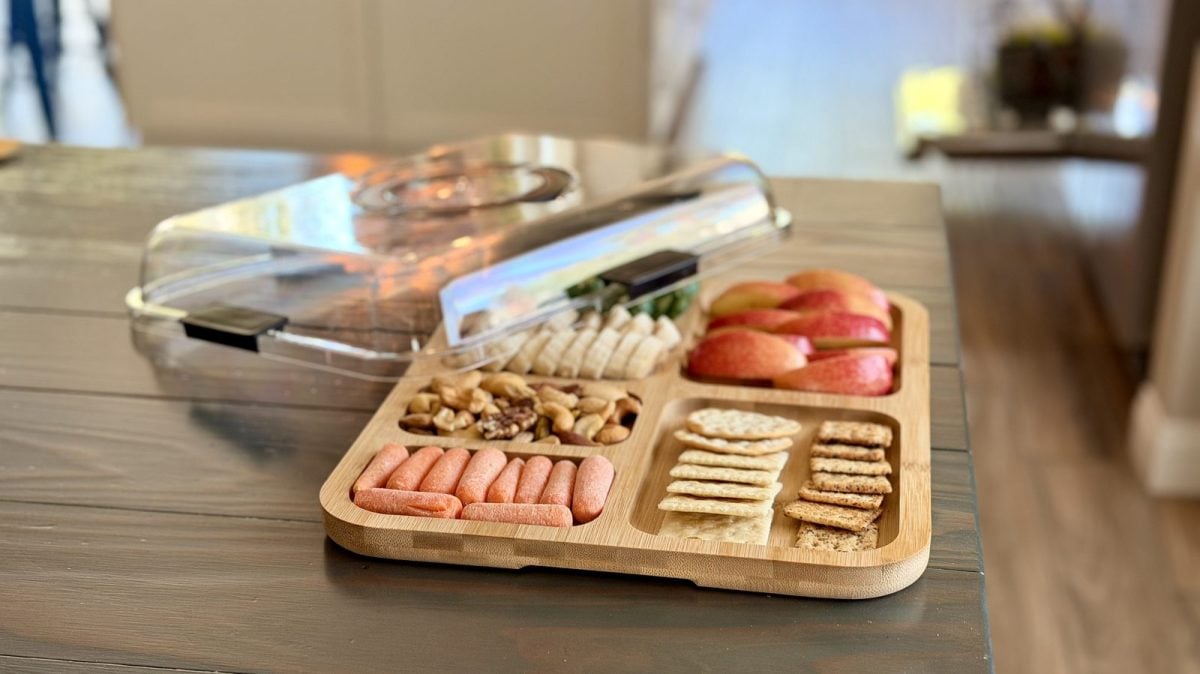
The proposition for Snack Plate: Dinner that doesn’t actually feel like dinner. At times, you might feel like cooking. During those times, a platter with a variety of snacks is often more enjoyable than any ‘dinner’ you will have out of obligation. This is the most common lunch we prepare for the children when we are at home.
A small board or plate may include some combination of the following items: 1-2 boiled eggs, cheese, olives, cucumber, bell pepper, cherry tomatoes, and hummus or mustard and crackers or broken pita and any fruit ( grapes or diced apple or whatever is in season). The piece about the structure suggests, maintain separations (via different small bowls or sections of a plate) so that each individual component is distinguishable and not mixed with any other component. Variety is the main goal here.
If you want a higher protein option, you can replace the cheese with canned fish (sardines, mackerel, tuna). Anchovies on the toast or smoked salmon in the roll-ups turns the platter into a dinner-with-wine kind of thing rather than a snack plate.
34) Carrots And Hummus
Why is this product appealing? It’s a classic. It’s not only the novelty; the crunch-to-cream ratio is perfect and the protein in the hummus sustains you.
When cutting carrots, aim to cut them into a size that will fit into a hummus container. It is important that the cut carrot pieces are thick enough to withstand potential breakage from the scooping action into the hummus. If you plan to store the carrot sticks for a week, place them in a sealed bag with some cold water to keep the carrots crisp. Be generous when taking some of the hummus.
It is preferred that the hummus will stick to the carrot instead of sliding off. If you find your hummus to be on the thinner side, you can either let it strain through a coffee filter for about an hour (this is a cumbersome process), or you can do the easy thing and buy a different brand of hummus that is thicker!
You may replace any crunchy vegetables with, for example, strips of bell pepper, cucumber spears, snap peas, or jicama. Hummus, as an example, may be substituted with labneh, white bean dip, or tzatziki.
35) Hard Boiled Eggs
Reasons for choosing hard boiled eggs include that they contain only 70 calories, they have 6 grams of protein, and eating them requires no preparation. You can simply grab and go as they are already meal prepped for you.
To boil six eggs in one pot without making a mess, start by placing the six eggs in a single layer in the pot. Then, add more cold water so that the eggs are covered by at least one inch. After that, put the pot on the stove and wait until the water is at a rolling boil.
When this happens, cover the pot with a lid and remove the pot from the stove. Leave the pot on the stove covered for 10 to 12 minutes to boil the eggs (for jammy yolks, set the timer for 10 minutes; for completely set yolks, set the timer for 12). To make the eggs easy to peel, put them in an ice bath for 5 minutes.
At 11 minutes, the yolks will all be bright yellow, and barely soft so there will be no green rings (which is a sign they are overcooked). If the eggs are hard to peel, try peeling them under running water. Finally, before serving, sprinkle with chili flakes and flaky sea salt.
For prep day, you can make eggs in the Instant Pot in 5 minutes plus 5 minutes for the pressure release, and they peel even more easier. If you re looking to take your snacking up a notch, soft-boiled eggs take 7 minutes and can go over rice or even on toast.
36) Edamame Snack
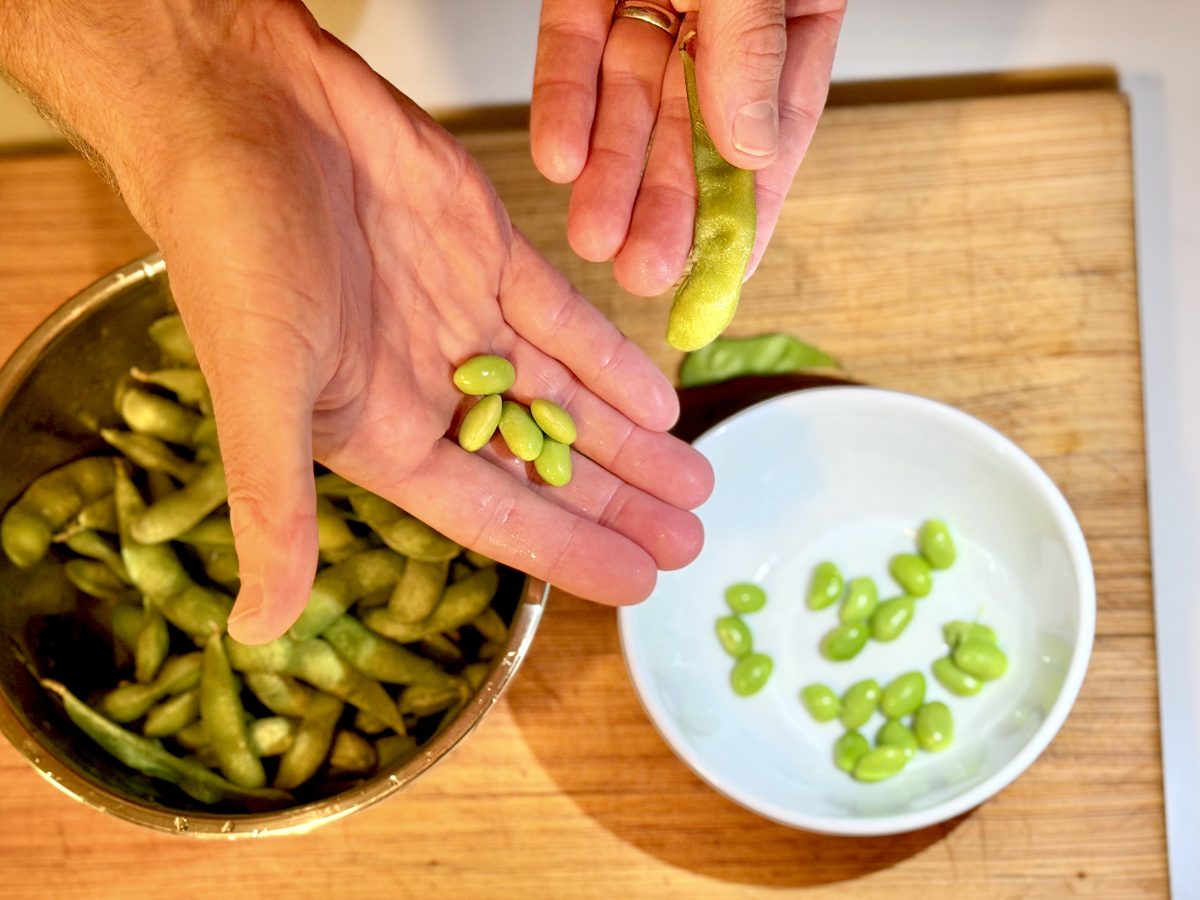
What makes Edamame Snack effective is the fact that it is a hand occupied snack. The squeezing and eating process slows your snacking down and makes you aware of what you are doing.
Buy frozen edamame still in the pods. Boil water with a little salt and add the edamame. Cook them for 4-5 minutes. After cooking, drain the edamame and sprinkle flaky salt on them while they are still hot (the salt will adhere to the wet pods better this way).
To eat them, squeeze the beans from each pod into your mouth! The pods should be bright green in color and soft, while the beans should be firm and provide some resistance when you bite them (if they feel mealy, they are overcooked). For variety, add some chili flakes, sesame seeds, or furikake.
Frozen shelled edamame can be added to salads, grain bowls, or stir-fries. You can also enjoy the same satisfaction with even less preparation with sugar snap peas (raw).
37) Roasted Chickpeas
Here are some reasons to consider trying this snack: It’s crunchy, salty, and savory. Compared to pretzels, this is an interesting relative of the nut family and is healthier. Their success (or lack of) is very drying step dependent.
To begin, rinse and drain a can of chickpeas, then pat them dry with a towel for extra crunch. Be careful not to over dry them, otherewise they will steam in the oven and lost their chewiness. Mixing chickpeas in a bowl with olive oil, salt and seasonings (smoked paprika, garlic powder, cumin, and a little cayenne), then spread them evenly across the sheet pan. Shake the pan and roast the chickpeas for 25 to 35 minutes at 425°F.
They should be a deep, golden brown color and crackle when pressed with a spoon. If they’re soft in the middle, roast them for five more minutes. They will be even more crispy once fully cooled, so be sure to take them out before they lose their crackly texture.
For a variation that is sweeter, you can leave out the paprika and instead add cinnamon, plus a teaspoon of maple syrup. Roasted black beans become a different kind of snack (smokier and earthier).
38) Dark Chocolate And Almonds
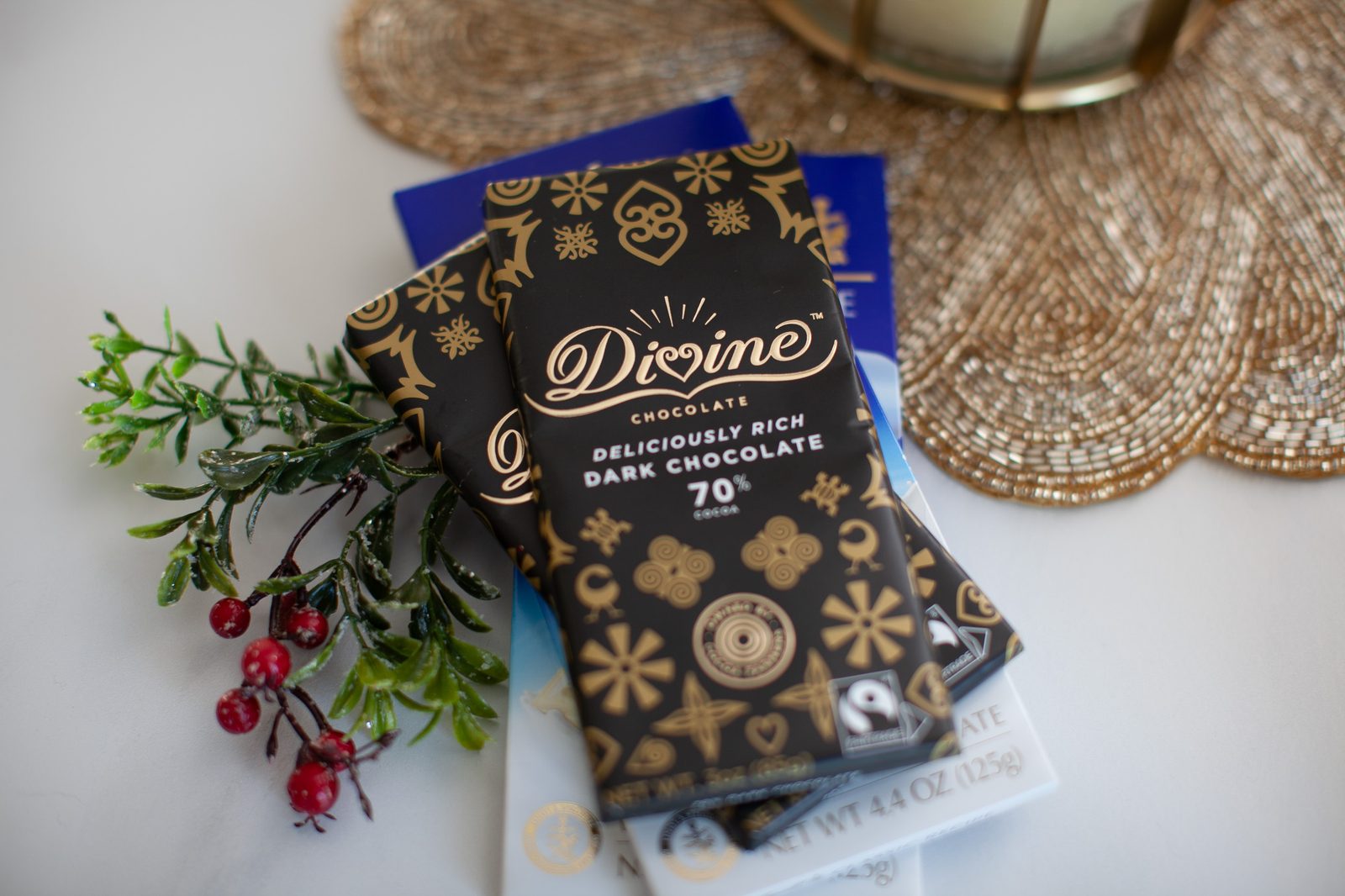
Justify Dark Chocolate And Almonds: Dark chocolate with 70% or higher cocoa content is lower in sugar and will keep your energy levels more consistent. This combination snack consists of mainly healthy fats which won’t cause you to crash. In fact, it will help you power through the rest of your day!
Please use two squares of dark chocolate (70% cocoa content or greater) and combine this with roughly a handful of raw or dry roasted almonds (14 almonds may seem limited, but it is a good portion). A good tip here is portion your food out ahead of time.
The chocolate trick from the fridge always results in someone eating a whole bar. In terms of texture chocolate should snap when it is broken (this means it is well tempered) and the almonds should be crunchy (choose raw, and avoid roasted-and-salted with seed oils). And remember, enjoy your food slowly and drink water when you eat.
Almonds are the least expensive alternative. At 3 p.m. we provide something slightly more sophisticated: a piece of dark chocolate, a couple of pieces of cheese, and some dried cherries.
39) Fresh Fruit Salad
The Fresh Fruit Salad Pitch: With this snack, you don’t have to do anything! The most common reason people don’t eat fruit is because they don’t want to take the time to prepare a fruit salad.
You should cube any fresh fruit that is in good condition. This includes strawberries, melons, pineapples, halved grapes, apples, mangoes, kiwis and berries. Place the fruit cubes in a large bowl and combine gently. Squeeze the juice of one fresh lime over the fruit (this enhances every flavor and keeps the fruit from browning), then sprinkle a small pinch of flaky salt over the mixture.
You can also add a few torn mint leaves if you want. Fruit salad is meant to look visually appealing. If you see a lot of liquid that has collected in the bottom of the bowl, that means the fruit was not fresh, or you blended the salad too far in advance.
To make this suitable for breakfast, add granola and Greek yogurt. For this to become a proper dessert, drizzle some honey on it and add chopped pistachios on top.
40) Trail Mix
What Trail Mix gets you: It’s the perfect snack for hiking and for working, as it’s both easy to carry and easy to eat. Also, it’s better to make your own trail mix instead of buying a mix, as most pre-packaged mixes are filled with sugar from things like sugar-coated nuts, M&Ms, or sweetened dried cranberries.
In a bowl, mix together: 1 cup of raw or dry roasted nuts (including almonds, walnuts, cashews, pistachios, etc.), a 1/2 cup of either pumpkin or sunflower seeds, a 1/2 cup of unsweetened dried fruit (apricots, mulberries, NO sweetened cranberries or raisins), and 1/4 cup of dark chocolate chips or chopped chocolate. Mix and keep in a jar. The mixture for an image reference should be mostly brown and tan instead of jewel colors.
The sugary content of ‘trail mix’ is a result of the different colors in the mix.
To make it salty rather than sweet, take out the chocolate and dried fruit and put in pieces of pretzels, roasted edamame, or sesame sticks. If you want to add a chewy texture without extra sugar, add coconut flakes.
I think I’ve made the cottage cheese bowl and the snack plate the most out of the thirty-eight on the list. They seriously take under a minute to prepare and don’t even require me to get a measuring cup, so also, it feels like cheating, but also, it gets me out of the cupboard at 3:00.
It beats getting a granola bar. The other one I want to try to convince you to make is loaded sweet potato, which sounds boring but is somehow the best lunch I have made in months. Start there! The other thirty-seven will still be here on Thursday!
